
Tag: ZINGERMAN’S CANDY MANUFACTORY
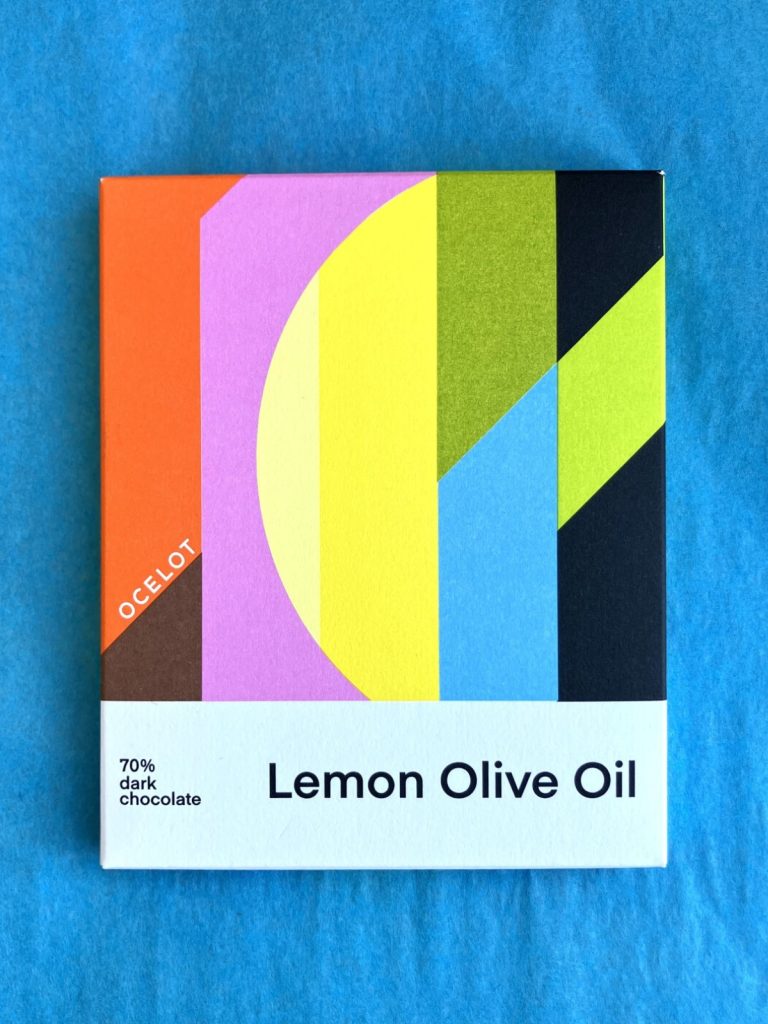
The crew at Ocelot Chocolate is doing some truly wonderful work on the east coast of Scotland in the small city of Dundee. The three bars we began stocking last spring are delicious. And this new arrival took me by delightful surprise!
Like my friend Shawn Askinosie, founder of the amazing Askinosie Chocolate, all of Ocelot’s products are “bean-to-bar”—they work directly with farmers to facilitate the growing and fermenting of better-quality cacao, along with higher quality of life for the growers and their families. Farmers earn a living, you and I get chocolate we love, the land is cared for, and everyone comes out ahead. In the context of what I’ve written about apricots as the symbol for dignity and democracy, Ocelot’s work is a lovely “bowl of apricots” we can appreciate and admire! The folks at Ocelot work to advance the cause of women farmers, protect the native rainforest, and craft compelling, delicious, high-quality dark chocolate. And their packaging is all sustainable, non-toxic, and compostable—including the clear cellophane.
Unlike most of our other craft producers, Ocelot is bringing beans from the country of Congo, more specifically, from Virunga National Park. The majority of cacao from the region that gets to chocolate makers today is made for the mass market, but the Congolese cacao here is anything but. It’s exceptional at every level. Great flavor and also a great story. Part of the National Park’s mission is to provide safety for some of the world’s last Mountain Gorillas. It’s also to offer a safe space for farmers: the Park “seeks to build cacao supply chains in eastern Congo that protect farmers from the effects of armed conflict, helping them get their cacao to market without the fear of violence.”
The story of cacao in the Congo is, in a sense, a good example of turning the terrible into something far more positive. It was brought there in the latter years of the 19th century by the exceedingly cruel Belgian King Leopold. It is an example of what can go wrong when an unchecked autocrat takes control of a country. Leopold never even went to Congo, but throughout his life, he created extractive and abusive working conditions for Congolese people, all used to enhance his own wealth. The primary 19th-century colonial crop was rubber, and Congolese people were forced to work on the plantations solely for the benefit of Leopold’s bank account. When slavery was banned by Brussels in 1889 and 1890, Leopold worked around the restriction by requiring Native peoples to sell their harvests only to the state, i.e., his own business.
In the process, Leopold amassed a huge personal fortune. Atrocities committed in his commercial interest were beyond my ability to imagine. Roughly half the Native population was killed during Leopold’s rule. Since Leopold was given the land personally, it was not controlled by the state at the time. Work practices and treatment of the Indigenous people were terrible. Over time, the Belgian state managed to buy back the land from its own corrupt and greedy king in order to restrict the worst practices. Finally, in 1908, he was forced to sell the land back to the Belgian state.
When the Congo gained independence back in 1960, things began to go in more positive directions, and the quality of the cacao and the coffee both have continually gotten better. Today, the Virunga National Park’s farmers are an uplifting regenerative success story.
The Lemon Oil Chocolate, as I wrote about, is surprisingly delicious! Creamy from the olive oil in a way that sort of resembles dark milk chocolate, but instead of dairy, the Ocelot Lemon Oil bar has the beauty of really great dark chocolate, with aroma and flavor of the lemon olive oil to back into the mix. Part of what makes it special is the quality of the lemon olive oil. It comes from the De Carlo family in Puglia. The family has been working with olive trees on the land for over five centuries. Their oil comes from especially old trees, which means lower yield but more complex flavors! In this case, the combo is wonderful!
Swing by the Candy Store soon and score a taste of this terrific new arrival!
Score your square
P.S. We currently have 7 other flavors from Ocelot as well: Cinnamon Swirl, Sea Salt, Buckwheat, Black Cherry, Blood Orange, Femme/Milk Chocolate, and Olive Oil.
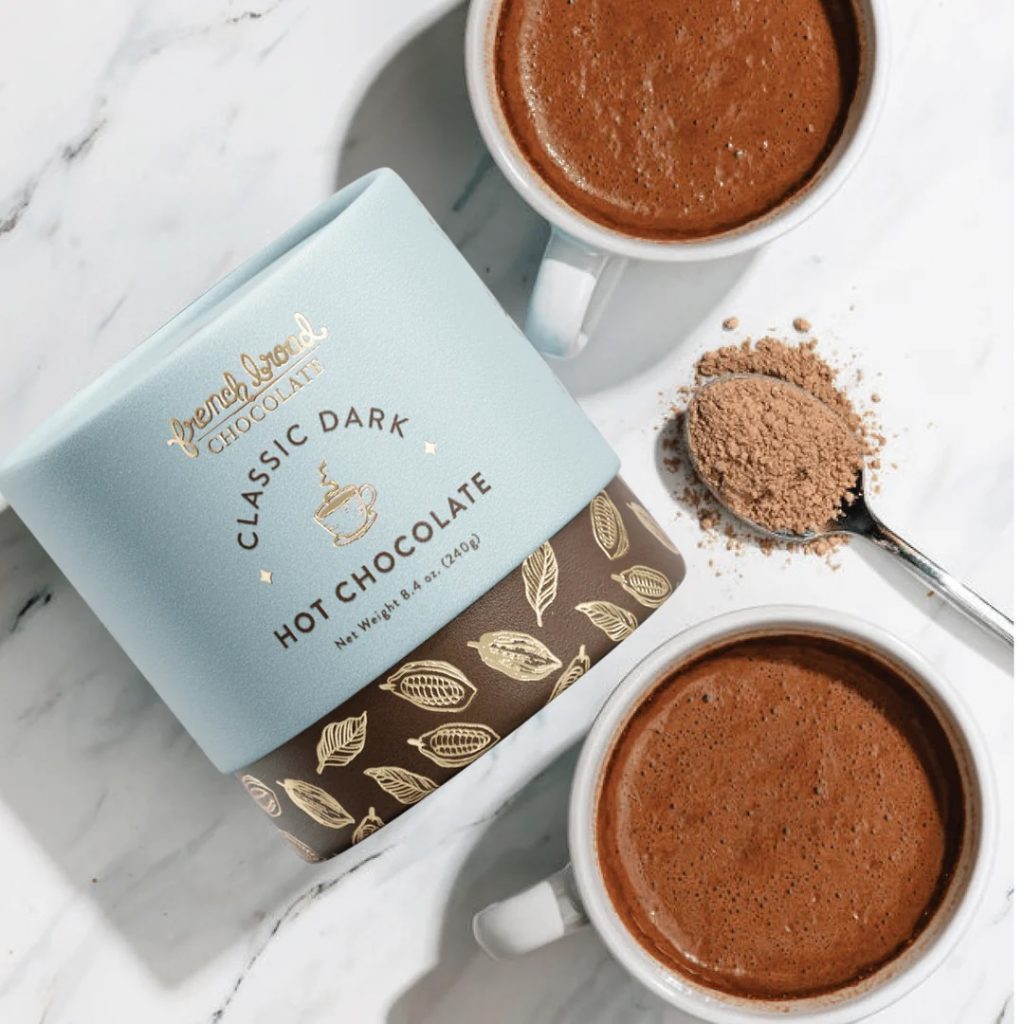
Another great item from French Broad Chocolate at the Candy Store
The same folks whose dark chocolate we’ve all been enjoying so much in the Bakehouse’s Chocolate Cherry Bread, Chocolate Croissants, and Townie Brownies in recent years just shipped us some of their terrific bean-to-bar hot chocolate!
French Broad Chocolate is one of the country’s oldest bean-to-bar makers. They work directly with growers in producing countries to build relationships and assure they have exceptionally high quality beans to work with. Jael (pronounced “jail”) Skeffington and Dan Rattigan got going with chocolate over 20 years ago when they were on a trip to Costa Rica. Long story short, they ended up in Asheville, North Carolina, where, in 2012, they formally started making their own confectionery. We’ve been happily carrying—and eating—French Broad Chocolate products for years now. I’m a big fan of everything French Broad Chocolate does. Jael and I have become friends, which makes sense since French Broad’s values are very aligned with ours here in the ZCoB, and pretty much every product I’ve ever tasted from them is terrific!
Jael shared the story behind this special hot chocolate:
We’ve been making hot chocolate for nearly 20 years, and like most things at French Broad Chocolates, we started by doing it the hard way. In the early days, we made ganache to order, whisking it into hot milk or half-and-half and cooking it down for about four minutes. It was undeniably delicious, deeply rich—and completely impractical for a busy café. Luxurious? Absolutely. Efficient? Not even close. We loved it, but we knew we could do better without losing the soul of the drink.
So we did what we always do: we tasted.
We ran blind tastings and to my genuine surprise, the version I scored highest wasn’t the pure ganache version at all. It was a blend made from shaved dark chocolate, cocoa powder, organic powdered sugar, and just a pinch of salt. Thicker. More chocolatey. More satisfying.
We originally chose powdered sugar for a simple reason: it dissolves completely in hot milk, and nobody wants a gritty cup of hot chocolate. The surprise magic came later. Our organic powdered sugar contains a small amount of tapioca starch to prevent clumping, and in hot milk, that starch gently absorbs moisture, naturally thickening the drink into something closer to a European-style drinking chocolate—plush, lingering, and deeply comforting. The cocoa powder adds depth and intensity without extra sweetness, letting the chocolate shine.
The result is a hot chocolate that’s unapologetically chocolate-forward, rich but balanced, nostalgic yet grown-up. It’s the kind of drink people stop talking mid-sentence to taste, close their eyes, then smile.
Sometimes the best version isn’t the most obvious one. It’s the one that wins the tasting.
I’ll say with certainty that the sipping is as awesome as the story behind it. I like making French Broad Classic Dark Hot Chocolate with whole milk, but word from Asheville is it’s just as good with almond or oat milk! Delicious. Super-clean finish. Just enough sweetness to take the cacao’s naturally bitter edge off, but beyond that, it tastes totally of dark chocolate, not sugar!
Oh yeah, I’ll mention that the Classic Dark Hot Chocolate comes in a beautiful Carolina blue “drum,” so it makes a lovely gift as well!
Catch your cup o’ cocoa
Art Nouveau confectionery and a taste of Paris circa 1900!
At the turn of the 20th century, Paris was a heady place. The country had been at war with Prussia, and things had not gone well. The Dreyfus Affair was dominating the news. The Guggenheim Museum in Bilbao described the city at the time in an exhibition of fin-de-siecle art:
Fin-de-siècle Paris was a time and place of political upheaval and cultural transformation, during which sustained economic crisis and social problems spurred the rise of radical left-wing groups and an attendant backlash of conservatism that plagued France throughout the late 1890s.
In the interest of moving things forward, the Exposition Universelle was put together. A World’s Fair filled with all sorts of fascinating new (and old) things to check out. It was the most modern of the modern, the cutting edge of cultural energy. The style of the fair that year, and of that entire era in Paris, was Art Nouveau. These special candies are firmly planted in that place—the emphasis on lovely, graceful lines taken from nature, plus flowers and fruits and other fine examples of what our planet has to offer.
It’s in that era that a young Jacques Kubli moved from Switzerland to France and set up his candy business in the 13th arrondissement of Paris. His family has been making candy there ever since! Four generations and still going strong! To understand Kubli’s candy, it’s important to let go of the modern images we all have—no convenience-store counters, no TV advertising. This is a taste—literally as well as conceptually—of a memorable era that, on most counts, has long since passed.
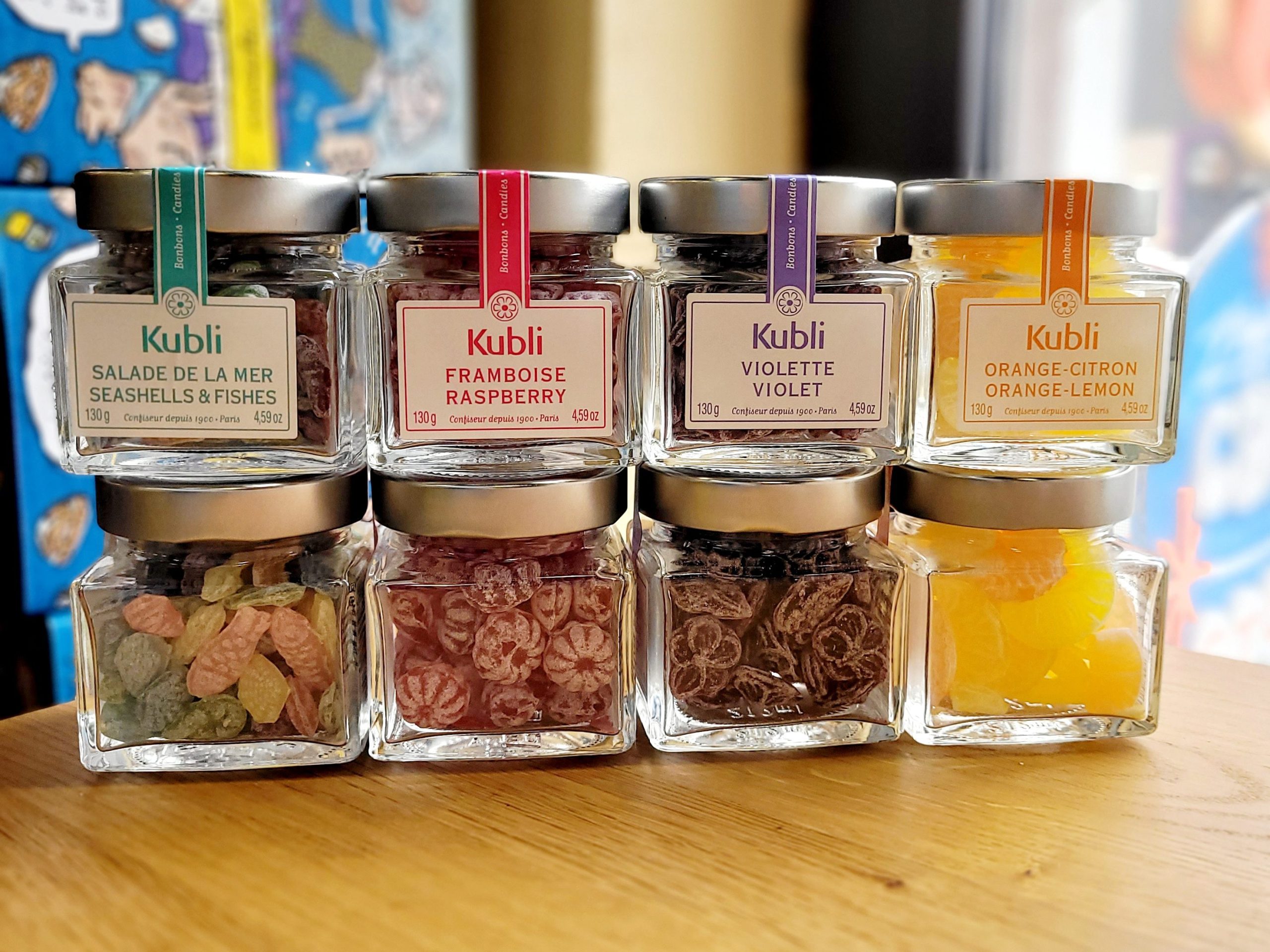
Kubli is the kind of candy that I can imagine Parisian schoolkids—either now or a hundred years ago—getting really excited about. Hard sugar candies with the look of vintage frosted glass. There are raised designs or corners on each molded piece that show in relief. In other words, they are beautiful as well as delicious! All-natural flavors and no artificial colors or additives. And the Kubli crew still uses the same molds they started with at the turn of the 20th century.
Here are some of the flavors we’ve got in stock at the shop now:
- Violet: Very delicious violet flavor! Old-school craft confectionery work at its best. Exotic, enticing, excellent.
- Orange and Lemon Slices: Like lemonade and orange juice in hard-candy form.
- Raspberry: A taste of French fields in the summer. Floral, elegant, excellent.
- Salade de la Mer: This is the French name, which translates to “seafood salad.” It’s tongue-in-cheek, of course. A more straightforward English name might be “Seashells & Fishes.” These are shell-shaped and fish-shaped hard candies that come in five flavors: lemon, currant, strawberry, raspberry, and orange.
Stick a few Kubli candies in your kids’ lunches or stash a bottle in your desk as a small, all-natural pick-me-up. Better still, write your significant other a nice card to thank them for all they do and attach a jar of these jewel-like candies! You could also add them to a Valentine’s basket or just bring them home tomorrow as a way to brighten a cold winter day.
Care for some Kubli?
A Candy Manufactory classic in the making
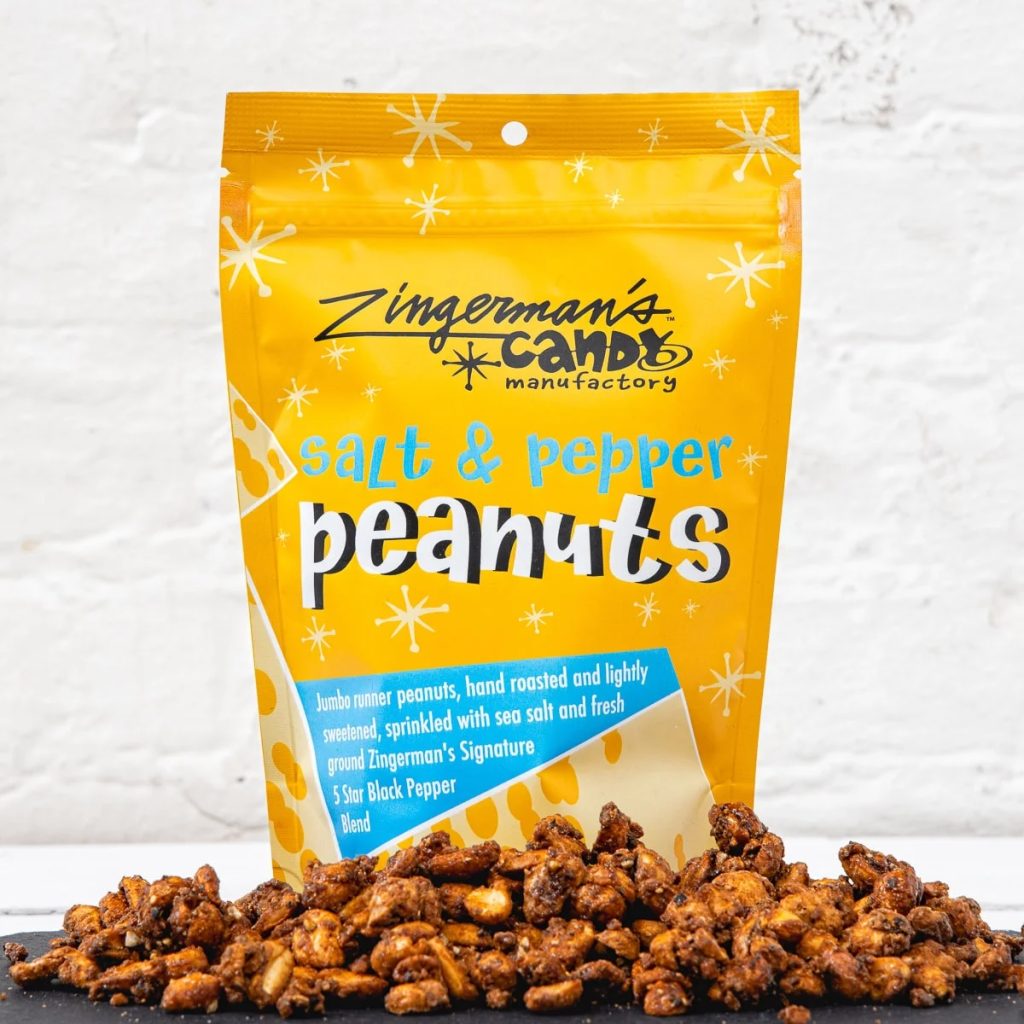
While Miss Kim has been in the headlines and the Roadhouse is renovating (so far, so good—the target reopening date is still February 16), the Candy Manufactory continues to quietly make these terrifically tasty peanuts. It’s easy for them to go unnoticed with all that’s going on in the world at large and in our small corner of it here at Zingerman’s. The Candy Crew does for confectionery what the team at Alabama Chanin is doing for clothing: going back to traditional craft techniques that honor the dignity of the raw material, the dignity of the people who produce them, and the deliciousness and dignity of the finished product.
While the crew at the Candy Manufactory has been crafting these them for years now, I honestly hadn’t eaten any of these Salt & Pepper Peanuts for ages. No real reason—they just sort of fell off my regular “playlist.” That changed last week when I bought a bag to bring home and was reminded of just how darned good they really are. When they first came out a few years ago, I thought they were a 10 out of 10! I’m glad to say they still are!
What makes the Salt & Pepper Peanuts so good? Like so many of our best foods, they’re pretty simple, really. Start with amazing, plump, and flavorful peanuts, French fleur de sel (the highly prized, delicate layer of crystals that form atop natural salt ponds in the sun), and a healthy dose of that super-tasty Five Star Black Pepper Blend put together for us by our friends at Épices de Cru using five different sources of superb black peppercorns (Tellicherry Reserve, Mlamala, Rajakumari, Tellicherry Extra Bold, and Shimoga, in case you were curious). Everything is blended together to make one incredibly complex and exceptionally good flavor.
The Salt & Pepper Peanuts are terrific out of hand. Put a bowl or two out with wine, beer, or anything else you’re up for. I can’t guarantee that having them on the table will help your favorite team to win, but they’re great to snack on while you’re watching a bit of football, basketball or whatever other sport tickles your athletic fancy. They’re also great on salads, as well as on ice cream sundaes. And Allison Schraf, long time manager at the Candy Store, raves about how good they are atop chocolate gelato. You can go in a savory direction, by coarsely chopping them and then using some as a coating for fish or pork chops. Sweet, spicy, savory, and super tasty. Life-changing.
You can pick up the Salt & Pepper Peanuts at the Candy Store inside the Coffee Company and at the Deli. Stock up—they are an easy last-minute appetizer and a great way to perk up a salad. And hey, if a big snowstorm comes and you get stuck at home, you’ll have something tasty to put your mind at ease!
Buy a bag
Tucked inside Zingerman’s Coffee Company—just a few steps past the Bakehouse—sits one of Ann Arbor’s best-kept secrets: the Zingerman’s Candy Manufactory. Retail Manager Allison Schraf, a 20-year Zingerman’s veteran with a palate honed at the Deli, shared that one guest referred to the Zingerman’s Southside collection of shops as “the Diagon Alley of Ann Arbor.” As they explained, “You come around the corner, and suddenly all these Zingerman’s businesses have opened up before you!”
The Candy Store is open to all visitors—unlike Diagon Alley, a special shopping area for witches and wizards that humans can’t see—but it’s still pretty magical. Duck inside and you find 600–700 confections from around the world! “Historically,” Allison says, “every neighborhood had its own candy store. Places that specialized, celebrated, and took pride in sweets. Today, those are rare—and that’s part of what makes this place special.”
Allison sources everything from calissons and pâte de fruits from the south of France, to Sicilian and Belgian marzipan, to real licorice from Scandinavia, and more. Nearly everything is available to taste, especially the shop’s 100-plus collection of craft chocolate bars. “It can be daunting,” she says. “But that’s why we’re your confection consultants. It’s not your job to know everything about our products—that’s ours.”
Valentine’s Day highlights will include J. Patrice bonbon boxes, Belgian marzipan hearts, and charming foil-wrapped Italian chocolates. Guests can even build their own gift boxes, combining candy, coffee, and snacks like pretzels, nuts, and Michigan-made beef jerky from the growing provisions line.
Behind the scenes, Production Manager Jamie LeBoeuf is busy dreaming up what’s next for 2026 and beyond. Expect line extensions and small-batch “special makes”—limited-run sweets that create a buzz every time they appear. “Our peanut butter eggs were a huge hit,” Jamie says. “People are still asking for them, and they’ll definitely be back.” The team is also exploring new brittles and seasonal treats to keep the shop lively and full of surprises.
Jamie is equally excited about the future of the chocolate the Candy Manufactory uses for its own line of candy bars, like the original Zzang!® bar, all made by hand in small batches. The team is exploring partnerships with small, origin-based producers—makers who process cacao from start to finish in the same country where it’s grown. “More of the value stays with the farmers and the community,” Jamie explains. “It supports better livelihoods and results in phenomenal chocolate. There’s more to come.”
From thoughtful sourcing to a passion for preserving the magic of a true candy shop, Allison and Jamie are shaping a confectionery experience you won’t find anywhere else. Whether you’re tasting your way through craft chocolates or snagging that perfect gift, the Candy Manufactory invites you to slow down, savor, and discover something sweet.
This originally appeared in the January/February edition of Zingerman’s News—check out the rest of the newsletter!
A magical confectionery combination from Dubai
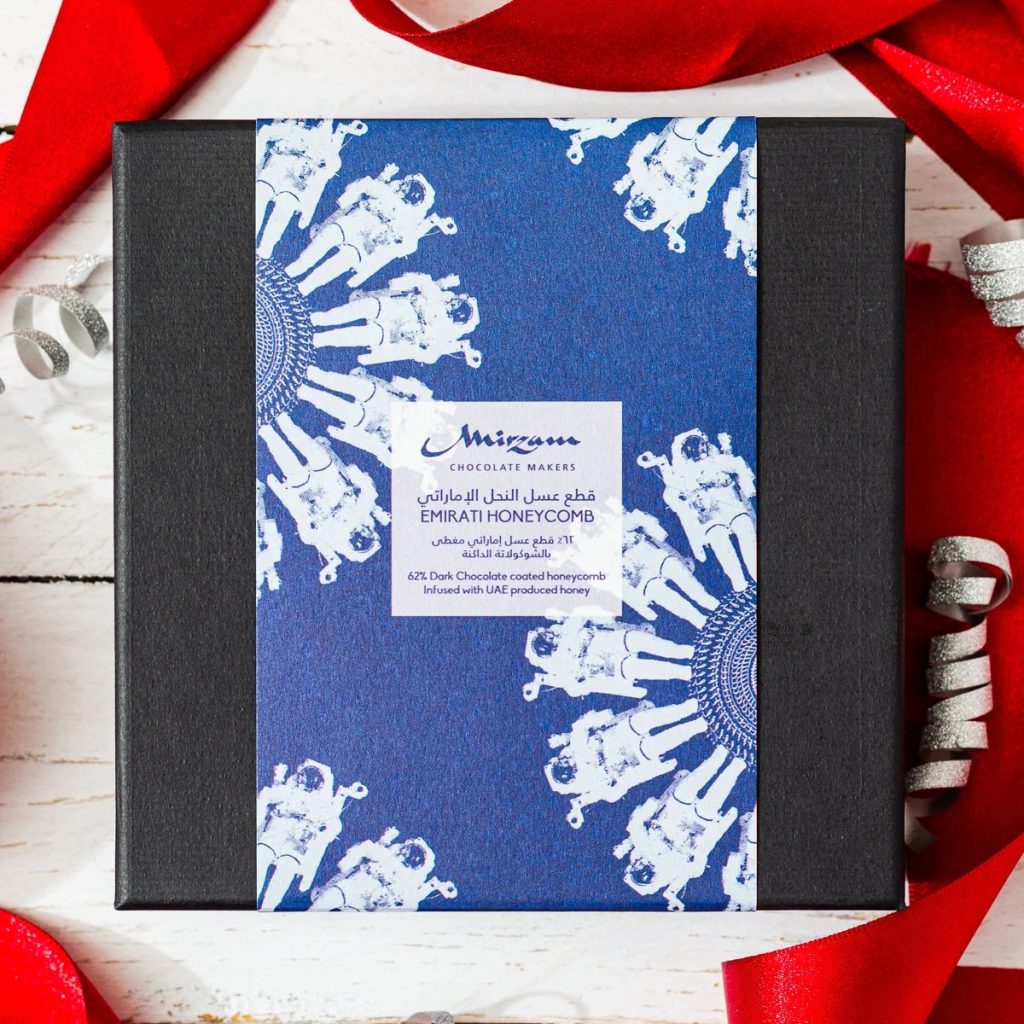
If you’re looking for a gift for someone who loves great food and is intrigued by the unusual, this rare, terrifically delicious, sweet treat from Dubai might just do the trick. I’ve tasted a lot of excellent foods over the last 44 years, but I don’t think I’ve ever tasted anything like this one! The folks at Mirzam in Dubai have been quietly making some of the best chocolate confectionery around. This exceptional combination of spun-honey “seafoam,” dipped into bean-to-bar 62% dark chocolate, is one of the best examples of their cross-cultural creativity. Kathy Johnston, whose leadership has helped make Mirzam the caring, quality-focused place it is, turned me on to it a while back when she wrote:
Our Emirati “Honeycomb” is always a super-popular one over in Dubai. It’s made with local mountain honey which is very dark—and actually more herbal or even medicinal—rather than sweet. The bees are tiny, and don’t have stings, and gather the nectar from ‘Sidr’ tree flowers.
The wild Sidr would be what we here call buckthorn. Known historically as “Jesus’ thorn,” the bark and roots of the bush are highly prized for a host of medicinal purposes as well as for eating. The honey has the same pH level as the human body and hence has long been used for skin issues, infections, inflammation, and digestive complaints. Sidr honey is hard to find and highly prized. (For those in the know about naturopathy, in its home region, it is used much as Manuka honey is used now here in the U.S. and traditionally in Australia.) A 10-ounce jar of the wild Sidr honey retails for around $40, and I’ve seen some go for as much as $80.
To make this rare and magical confection, which is also known as sea candy, hokey pokey, fairy food, cinder toffee, or, as per the name on the package, “honeycomb,” the honey is brought to a light boil with a small bit of baking soda and vinegar. This makes the confectionery equivalent of the kind of foam that forms along the seashore from the waves, hence the name. You can imagine it as a caramelly, dark “honey brittle.” The cooked honey is poured out into big sheets, then broken by hand into smaller chunks. In the process, the “honeycomb” becomes a light, gently crunchy, melt-in-your-mouth confection that’s then dipped into the 62% dark chocolate.
The beautiful box was designed by Saeed Al Madani, who hails from Abu Dhabi, a bit to the south of Dubai. His artwork draws on traditional Arabian art elements, combined with inspiration from the Emirates Mars Mission “Hope Probe.” The Emirati Honeycomb has a lovely, clean finish and a flavor that’s unlike anything else I’ve ever tasted. I’m still savoring it half an hour after I finished eating a small sliver! A great gift for the holidays and a lovely way to ring in 2026 on New Year’s Eve!
Wondering where to find the Emirati Honeycomb from Dubai? It’s displayed on the shelves at both the Candy Store and the Deli.