
Tag: ZINGERMAN’S DELI
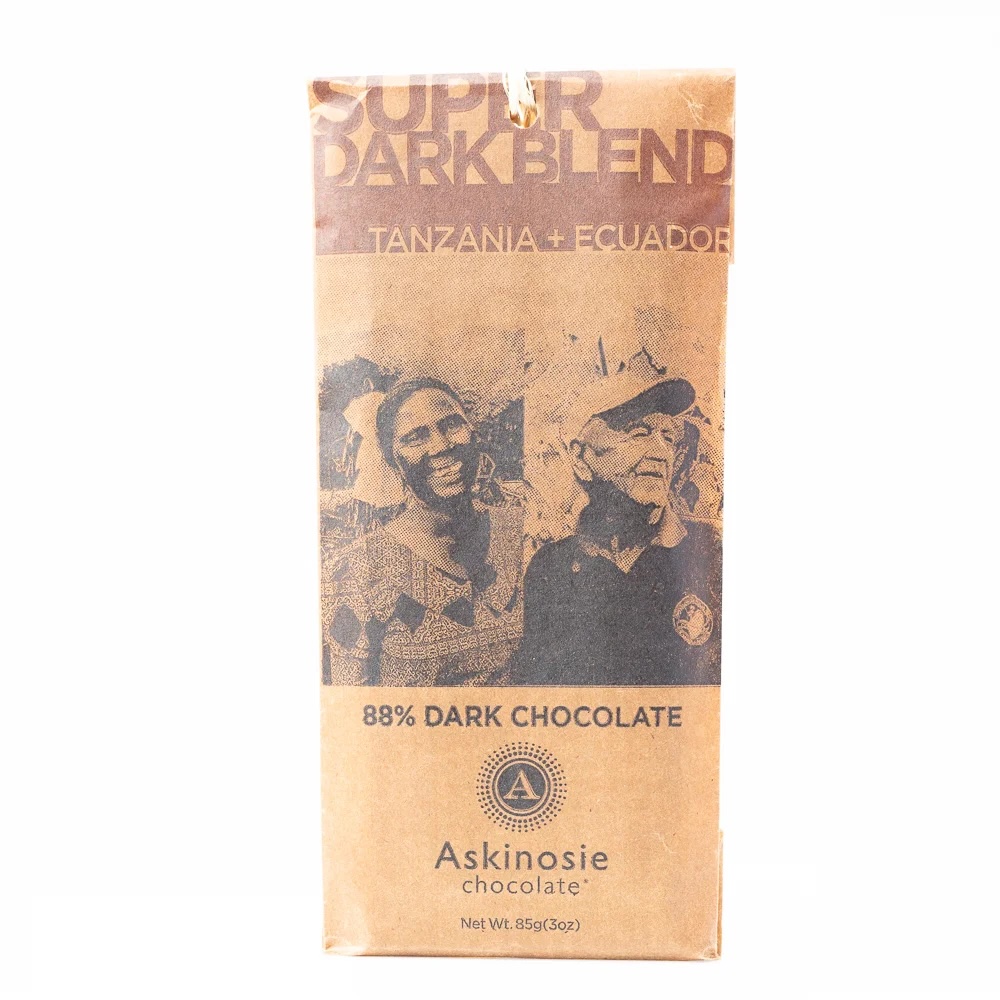
A contributor to happiness at so many levels!
In 1980, while I was still learning to cook the line, Mother Teresa’s team in India rescued a small orphaned boy from the streets of Calcutta. He was adopted in the U.S., where he grew up with the name Jaime Illien. Determined to pay back the world that had given him grace and a second chance at a good life, Ilien began years of work to start what is now recognized worldwide as International Day of Happiness. It has happened every year on March 20, ever since its formal inauguration in 2013. The idea is to actively encourage people to embrace happiness and spread positive feelings in small but meaningful ways, wherever we can. The work is to “encourage and advance the primacy of happiness, well-being, and democracy.”
It turns out that March 20th is also my good friend Shawn Askinosie’s birthday. I can think of no one better suited to have paired happiness and a birthday! I had the pleasure of seeing Shawn, without question one of the kindest, most generous human beings I’ve met, while I was in Austin for the conference on Perpetual Purpose Trusts. As I do everywhere I go, I tasted any number of chocolate bars I happened to see in local specialty shops. To my taste, none came close to the quality, complexity, balance, and finish that I find in every one of the bars I’ve bought from Askinosie.
As he so often does, Shawn’s exceptional spirit of generosity has given us all a gift to mark the occasion. Not surprisingly, it’s chocolate. It’s actually the darkest chocolate bar he’s ever done: 88% cacao! That means that only 12% of every bite is not cacao; a bit of natural sugar and a tiny hint of organic vanilla bean.
This delicious bar is also a first for Shawn because it’s a dual-origin bar. Cacao from two of his longtime sources—the co-op farmers at Mababu, Tanzania, who provide the hard-to-find but delicious Trinatario cacao, and at San Jose Del Tambo, Ecuador, which grows the unique-to-the-region Arriba Nacional. Try each of the single-origin bars on their own—they’re terrific. I eat them both regularly.
To be clear: if you don’t like dark chocolate, definitely skip this one. The Super Dark Blend bar pushes chocolate to its limits. It’s darker than dark—delicious, edgy, and far from milky. Not for the faint of heart. Think of it as the heavy metal of the cacao world—but without the pounding bass. Surprisingly smooth and gentle, it still delivers some of the richest, most intense chocolate you’re likely to try. You could call it the heart of chocolate darkness. I love it. Bold, big, and full of terrific tannins, like a fine, full-bodied red wine. Notes of dark caramel and rich sorghum syrup linger on a long, clean, impressively gentle finish.
If you want to read more about Shawn’s superb work, check out his great book, Meaningful Work, co-written with his daughter, Lawren Askinosie—we have copies on hand at the Roadhouse. Or read about him in Part 4 of the Guide to Good Leading—he’s in Secret #45, “A Six-Pointed Hope Star”! If you like really dark chocolate, I hope—and believe—that you’ll love this bar!
Grab a bar at the Candy Store
Or at the Deli
Tag: ZINGERMAN’S DELI
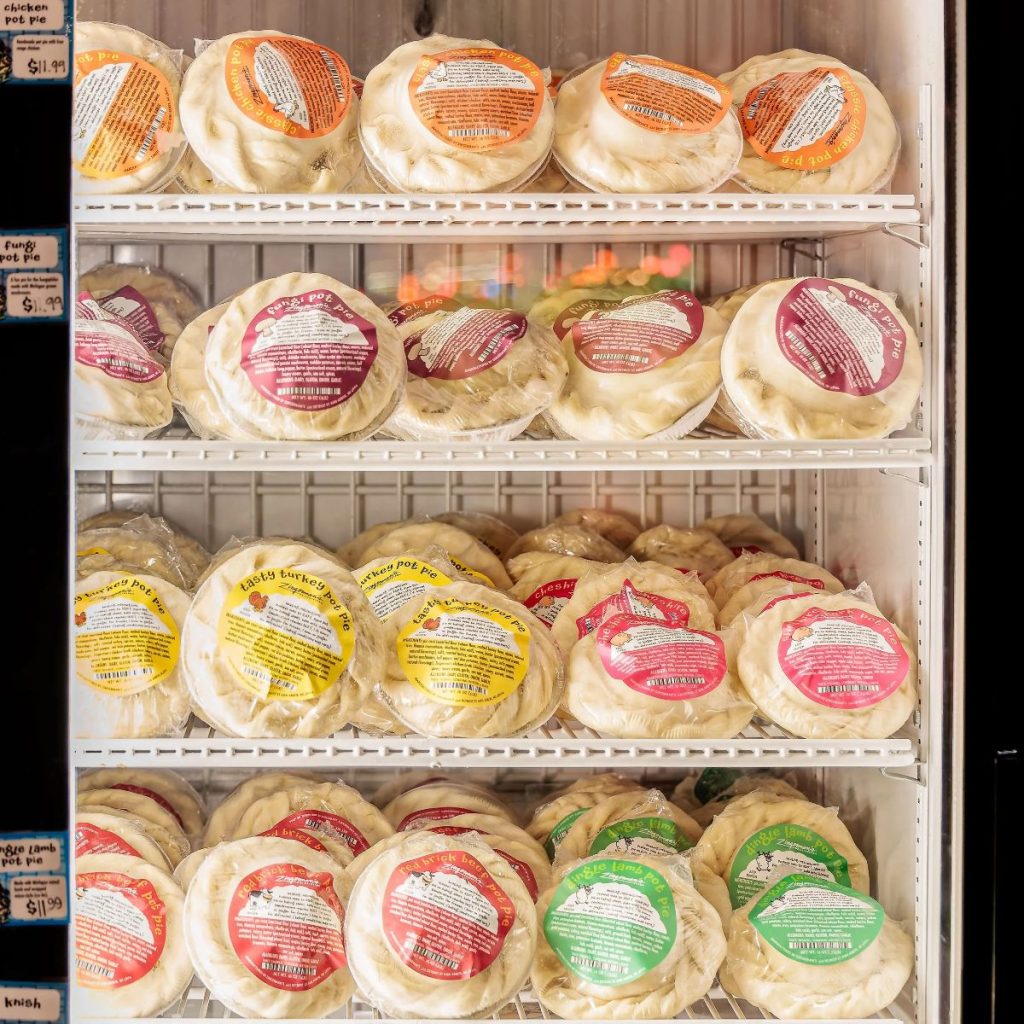
One of the tastiest things about winter in Ann Arbor!
For over 15 years now, the Deli has kicked off the new year with our annual Pot Pie Fest. It’s a great example of how sticking with something you truly believe in can evolve into what many now consider a cherished tradition. The anticipation for this yearly celebration has grown into quite a thing.
Andrew Wilhelme, a longtime member of the Deli’s kitchen team and now also a historical archivist who once worked at the Graduate Library—home to the anarchist Labadie Collection—wrote a beautiful note years ago celebrating the annual arrival of our pot pies. Rather than try to rewrite it, I’ll let his words cast the same inspiring spell on you as they did on me at the time. Here are some excerpts from Andrew’s pot pie piece:
New Year’s Day kicks off our annual Pot Pie Fest. For two months, through February 28, the Deli is awash in a collection of six kinds of handmade pot pies. Each pie is made from scratch. Vegetables, herbs, and meats are chopped and minced, then cooked in butter, thickened with a roux, and drenched in broth and cream to make a rich, savory sauce. As the filling stews, we start preparing the crust. Butter cuts into flour and is bound together with ice-cold water and a pinch of sea salt to make a rich dough. We usually make two or three batches a day from December through February. Once the filling is cooled and the dough rolled, we then set upon the task of assembly. Each pie is made by hand, enveloping a heaping scoop of filling between two folded layers of buttery crust.
For those who aren’t already well familiar with the now-famous pot pie phenomenon, here are the half-dozen varieties we do. All are excellent. Mix and match as you like!
Classic Chicken – Our most popular pie, featuring diced chunks of cooked Amish chicken, chopped celery, carrots, onions, mushrooms, bell peppers, and potatoes, seasoned with some fresh thyme and tossed with housemade chicken stock and heavy cream from Calder Dairy down in Carleton.
Tasty Turkey – Made with pasture-raised turkey from Ferndale Farms. We also add a bit of the uniquely flavorful Turkish Urfa pepper—it’s sundried by day and wrapped and “sweated” by night for over a week to bring out a rich, mellow, earthy flavor and smoky aroma.
Fungi Mushroom – A quartet of Michigan-grown mushrooms (maitake, shiitake, oyster, and button), seasoned with a bit of Balinese long pepper.
Dingle Lamb – A pastie-shaped pie, filled with the wonderful local lamb, potatoes, carrots, celery, onions, and some rutabaga, seasoned with a bit of cumin and rosemary. The idea for this pie was originally inspired by Darina Allen, friend and teacher to both Ari and Rodger, and owner of the famous Ballymaloe Cookery School in County Cork, Ireland.
Red Brick Beef – Basically a hearty beef stew wrapped in a buttery crust. We cut local beef into small pieces, then stew it slowly with dry red wine and diced carrots, chopped celery, onions, fresh garlic, some bay leaves, and a bit of fresh thyme.
Cheshire Pork – This special pie combines sweet, sour, and savory. Chunks of local pork are braised in fresh apple cider along with onions, rosemary, freshly grated nutmeg, lemon zest, and large bites of apples from Alber Orchard. It’s wrapped “miner style,” so no pie tin.
The idea to do pot pies at the Deli started small many years ago, but over time it has become anything but. Today, the Pot Pie Fest is eagerly awaited by a coterie of loyal fans. You can buy the pot pies frozen and uncooked to heat up at your house. You can also order them baked and ready to eat at the Deli. They have a LOT of loyal fans—many of whom buy big! Like one or two dozen at a time! We even have a great group of families who drive up every year from Cincinnati. They make a weekend out of it—shopping at the Deli, visiting the Bakehouse and Creamery, having dinner at the Roadhouse, and, most importantly, driving home with dozens of frozen pot pies to fill their freezers!
Next Wednesday evening, Feb 25, from 5-7pm, the Deli is holding a Pot Pie Pop Up. Preorder is highly encouraged! Pot Pie Fest runs ’til February 28. Stock up now on frozen pies, chow down when you want: the more you buy, the more you save. 10% off 10 or more, 20% off 20 or more, 30% off 30 or more!
Whether you live here in Washtenaw County or a couple hundred miles away like our friends from southern Ohio, you can do the same. Sitting here today, getting ready to run later in drizzly cold weather, I at least can use all the heart and hearth-warming help I can get!
Stock up (and save!)
Tag: ZINGERMAN’S DELI
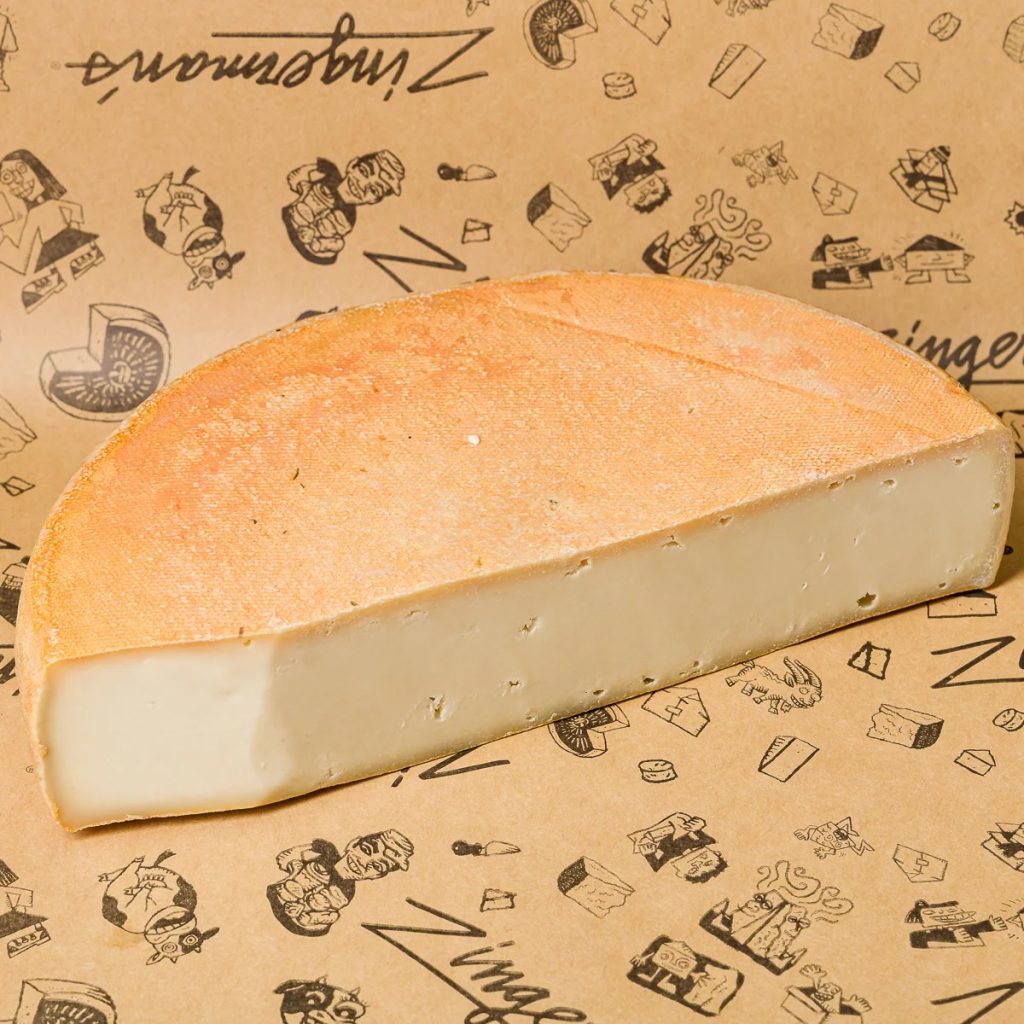
The “Thirteenth Apostle” from a family-run dairy in Quebec
About halfway between Montreal and Quebec City is an artisan dairy that’s worth driving well out of your way to visit.
The Fromagerie du Presbytère began about 100 years ago, when the Morin family began construction on the first buildings of the Louis d’Or Farm. The dairy is now run by the fifth generation of Morins; four of Monsieur Morin’s kids work there. The farm provides all the milk needed to produce their cheeses. The cheeses are aged in an old church, and there’s a shop where locals and travelers alike can grab a bite to eat and buy cheese. Two decades after the modern-day cheesemaking began, the dairy is producing some of the most highly respected cheeses in Quebec.
While the Treizième Apôtre cheese is new to us, cheese is anything but new to Quebec. There are over four centuries of dairy tradition in the province. French colonists, settling on what had been indigenous land, brought cows, sheep, and goats by ship and soon began to make cheeses akin to what they had known at home. In that era, cheesemaking was mostly a home-based activity, so most of the settlers would have been familiar with how to make it. After the British took Canada, many farmers shifted to making cheddar for export to Britain. Over the years, the region became known for its aged cheddars and also for the Trappist-type, washed-rind Oka cheese, which was originally made by monks settling in the area after being expelled from France. When we opened the Deli in 1982, that’s pretty much all there was to be found in the province. Cheesemaking gradually grew, though, and by the late ’90s, there were about 30 dairies in Quebec. Today, the number is nearly double that!
In total, Fromagerie du Presbytère makes a dozen artisan cheeses. This one, Treizième Apôtre, or “Thirteenth Apostle,” is especially awesome! It’s made from raw, local goat milk, in form that resembles a Swiss Raclette: semi-firm, creamy, modest but full of flavor. The Fromagerie actually has winter raclette events, which apparently sell out incredibly quickly.
The quality of the milk is, of course, critical to the cheese. The fact that this is a farmstead cheese means that Monsieur Morin and family manage the process all the way through. They have a herd of Holsteins and Brown Swiss (the same special cows that are used for the remarkable Valserena Parmigiano Reggiano). Morin understands the import: “It all starts with the milk, and the care we show the cheese as we make it.”
Treizième Apôtre is especially versatile: a terrific table cheese and great in cooking as well. It’s got hints of hazelnut and a lovely clean finish that make it intriguing to fans of artisan cheese and a nice offering to novices as well. It melts beautifully in a grilled cheese or a raclette. Melt it over potatoes or grate some on gnocchi. I often just eat it as is, or with some True North Bread from the Bakehouse, a bit of Vermont Creamery Cultured Butter, and some fresh fruit on the side!
Given the situation with American-Canadian trade at this time, supplies are somewhat limited. Swing by soon and grab a wedge to bring home for you and yours! Bon appetit!
Try the Treizième
Tag: ZINGERMAN’S DELI
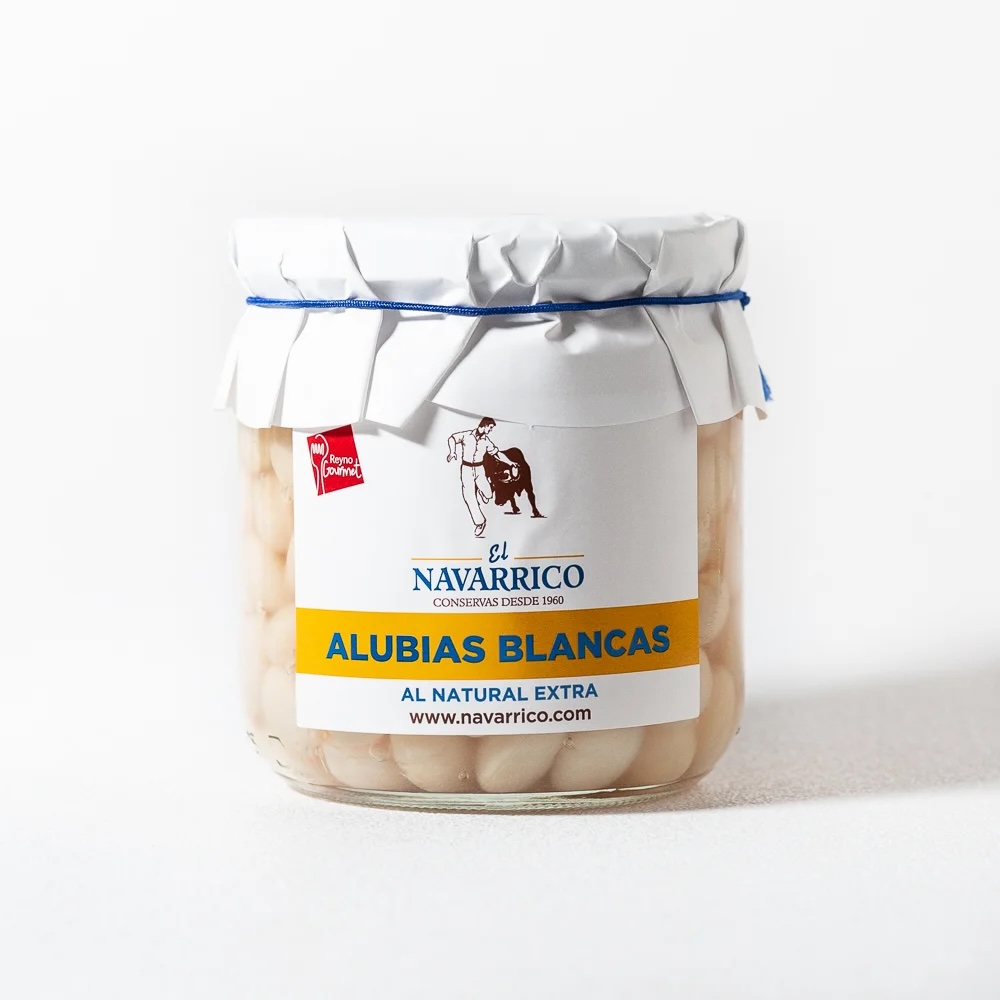
An exceptionally easy dish to prepare and enjoy
If you read what I write regularly, you won’t be surprised to hear me say that the flavor of this dish depends wholly on the quality of the ingredients. They, too, have to be true to themselves. If you like tinned fish, this recipe is a super-simple, really delicious, and very versatile option for your menu at home. The prepared dish can be an appetizer or a main course for either lunch or dinner. I like it at room temperature, but it’s also great heated up.
To make the dish, I start with the following:
- A jar of El Navarrico beans from the Basque Country. They’re cooked, ready to consume, and so tasty that I have eaten them straight out of the jar with little more than salt and pepper and some olive oil. We have two varieties at the Deli. Alubias are smaller white beans, and Judion are big butter beans. Both are tender and terrific!
- A jar of El Navarrico roasted Piquillo red peppers, also from the Basque Country. These small, triangular peppers have been unique to the region for a few hundred years. Other places have started to grow them, too, but they’re not as good! The Basque peppers are so special that they have a Denomination of Origin label on them! They’re smoked over beechwood and peeled by hand—skilled staff wipe the roasted black skin off with small white cloths.
- A tin of top-notch sardines. Ortiz from the Basque Country in Spain would be my top pick, but we have a whole array of amazing offerings on hand at the Deli. All would work well in this dish.
- Full-flavored extra virgin olive oil.
To put the dish together, make sure all of the ingredients are at room temperature. Spoon the beans onto a large plate or a series of small ones. Chop the peppers coarsely and sprinkle them over the beans. Lay the sardines over the top. Pour a fair bit of extra virgin olive oil on top, too.
From there, the options are almost endless. Sea salt and freshly ground black pepper are my go-tos. If you like garlic, add slivers of the fresh stuff to the mix. A handful of chopped fresh herbs would be a nice touch, as would caramelized onion or fennel—or both, if you’d like. A sprinkle of Pimenton de la Vera, the oak-smoked Spanish paprika, is tasty, too! Serve with a lemon wedge on the side.
The smooth texture of the beans, the luscious meatiness of the sardines, the hint of smoke and slight spice of the peppers, and the fruitiness of the olive oil are a super combination. Serve with some good Bakehouse bread (preferably warmed so it soaks up the juices on the plate). If you’re a big bread eater like I am, consider toasting a thick slice of Paesano or Rustic Italian and then putting the beans and the rest on top of it—a beautiful Basque version of British beans on toast!
Shop for supplies
Tag: ZINGERMAN’S DELI

Regenerative, rhapsodic, and really delicious!
While winter is not a great time of year here for fresh produce here in Ann Arbor, this is the season in which, slowly but surely, new-harvest olive oils continue to show up on our shelves. I love them all! Each new arrival makes my culinary day. And this one from the folks at Frantoio Grove is especially fine. The aroma alone is amazing—like smelling salts to bring me back from the stress of the news. Feeling uncentered? Stop for a few seconds and smell the oil!
The Frantoio Grove oil is produced in California, about half an hour south of San Jose. There, the fifth and sixth generations of the Martin family are quietly crafting some of this country’s most delicious olive oil. It’s produced using regenerative farming techniques, and its flavor is beyond terrific. While the 2025 harvest is newly arrived, the Martins are definitely not new to the land. The family began growing grapes on the farm all the way back in the 1870s. The Frantoio Grove olives were planted about twenty years ago now by Jeff (the fifth generation) and Pam Martin. They dove deep into a single varietal—the Frantoio, which is the classic olive of Tuscany, putting in about 3,500 trees that first year. As is the way with olive trees, it took a good five years to get oil—2010 was the first meaningful pressing.
For many years, the Martins grew the olives organically, and then a few years ago, they decided to raise the quality of the oil and their care for the land further. Patrick (the sixth generation) explains how they took it to the next level:
We are the only olive grove + mill like this in the world so far, and we are very excited about the program. We’ll be releasing our flagship oil shortly, which will feature the ROC mark. Our goal is to build resilient ecosystems on the farm and produce robust, high polyphenol oil that is wildly expressive but also low on the bitterness and astringency that comes from stressed trees, and this year, early in our harvest, we realized we had exceeded even our own expectations.
I say with certainty that the Martins have hit their mark. The newly arrived new-harvest oil is totally terrific. Like listening to music on an exceptional sound system, it’s really remarkable—everything about it seems clearer, cleaner, more coherent, and very compelling. It’s intensely green and peppery, but in an especially balanced and surprisingly gentle way. A little nuttiness with lots of low notes to go with the beautiful bitterness that comes with early harvests like this. It has hints of green apple, and I’ve also heard it described as having notes of persimmon and pistachio, too. Whatever descriptors you decide to use, the oil is exceptional.
The 2025 Olio Nuovo is lovely on toast for breakfast, especially when topped with the bright-colored, amazing apricot jam from the South of France that the folks at Olbia make. Great on salads, bruschetta, or the Tuscan way, on a just-off-the-grill steak (rare is how they’d cook it there). I’m an advocate for trying it on a simple spaghetti (Rustichella, Mancini, or Gentile). All you need is oil, garlic if you like, lots of freshly ground black pepper, and some grated sheep milk Pecorino, or, alternatively, a bunch of creamy fresh ricotta.
Buy a bottle
P.S. The “regular” 2025 harvest Frantoio Grove oil which, while not Olio Nuovo, happens to also be amazing! It should arrive at the Deli in the next few weeks.
Tag: ZINGERMAN’S DELI
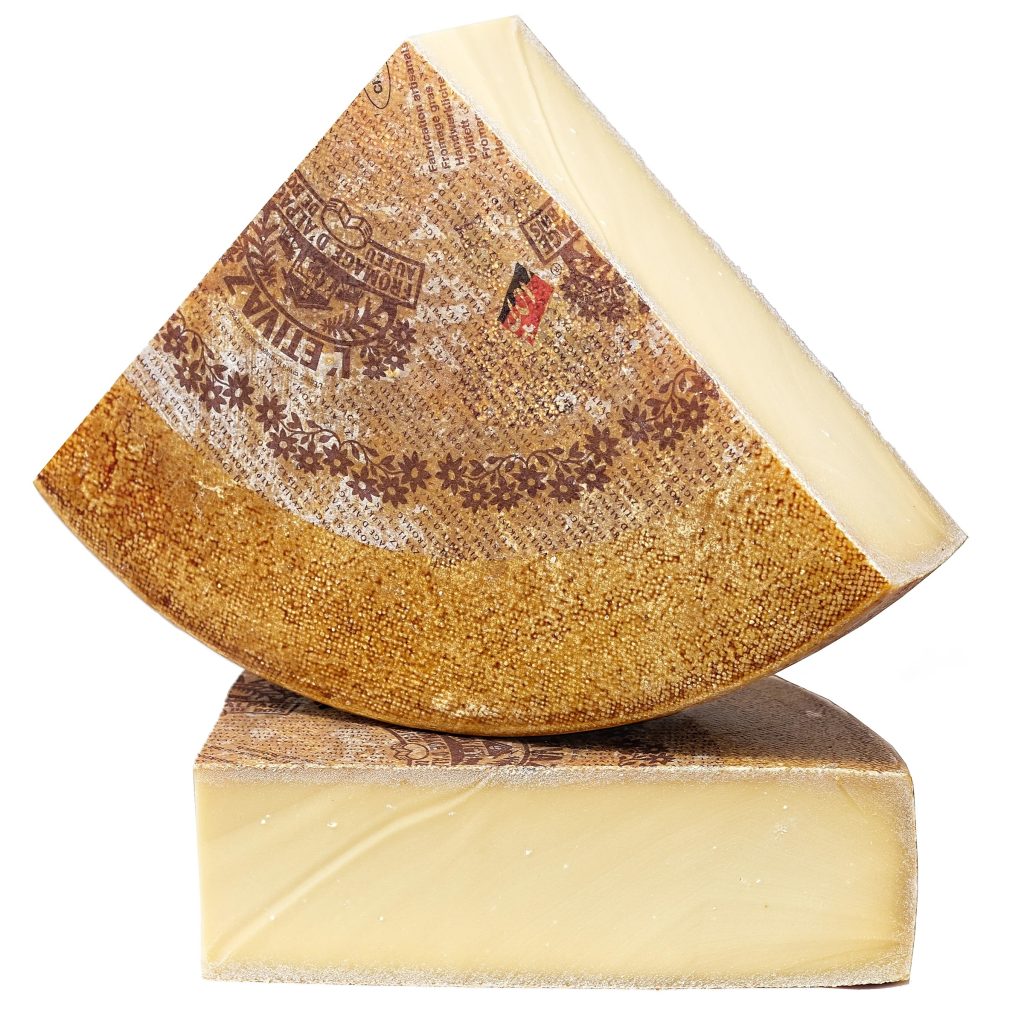
An exceptional taste of 19th-century Switzerland
Once upon a culinary time, a time when attention spans were not in the news very often, a time before websites, cell phones, Instagram, and almost every secret on the planet could seemingly be made visible to anyone willing to sit and scroll long enough, there was an array of unknown treasures one might discover in the course of food-focused world travels. Over 30 years ago, I stumbled upon L’Etivaz cheese while traveling with a small band of cheese aficionados. L’Etivaz was absolutely not on our list of things to check out during the trip. In fact, we’d never even heard of it. Like the white parrot, we spotted it completely unexpectedly. And in the best possible way, both that magical memory and the cheese are still very much with me all these years later.
L’Etivaz was formally brought into existence in 1932. While most of the cheese world back then was becoming more industrialized, around 76 families who farmed the land near the town of L’Etivaz decided to go in the other direction. They turned back toward tradition. Following the frame above, they:
- Knew and cared deeply about their history and tradition.
- Had a clear sense of their values and philosophy.
- Found a way to make this long-aged mountain cheese that kept it very alive, drawing on the old ways for crafting it.
With all that in mind, the families decided to withdraw from what they felt was an increasingly mass-market-focused, government-managed Gruyère program to create their own cheese. They turned away from significant government subsidies, opting instead to keep the magic and lose the “benefits” that modernization promised to bring to the market.
To this day, the production of L’Etivaz remains highly restricted. Interestingly, 72 of the original 76 farms are still making cheese today. Together, they produce just 19,000 wheels of cheese a year. L’Etivaz, by law, can be made only in spring, summer, and early autumn, when the cows are at high altitudes, between 3,500 and 6,500 feet above sea level. The cheese can be made only by those farms, and each farm can use only the milk of its own herd—no milk is ever purchased to make L’Etivaz. The high altitude ensures that the cows are grazing on an amazing array of wild herbs, tiny mountain flowers, and assorted green grasses. No chemicals are allowed at any point in the process, from field to finished cheese, so L’Etivaz is always essentially organic. The cheese must be made using raw milk, which has to be warmed in traditional copper kettles. True to tradition, the heat for the kettles must come from open wood fires!
This newly arrived batch of L’Etivaz that’s on the counter at the Deli this week is particularly special. It’s made by Frédéric and Marina Rosat and their family, high in what’s known in Switzerland as “the Alpage.” Our wonderful importer, Gourmino, who makes so many of our amazing artisan Swiss cheeses possible, shared this: “At the age of 15, Frédéric discovered the magic of making L’Etivaz AOP by helping producers.” Today, Frédéric and Marina have a herd of 45 Brown Swiss cows whose milk they use to make this magical cheese at an altitude of over 4,500 feet. From May 10 to October 10, they craft at most two 80-pound wheels of this artisan specialty each day. They number the wheels throughout the season. The first wheel is No. 1, and they make up to 290 wheels for the whole year. Gourmino selects only wheels from an even narrower production window: June to September, when the grasses and herbs in the Alpage are at their best. The newly made wheels are all hand-salted with Alpine salt for seven days on the mountain and then shipped down to the L’Etivaz co-op building, where all the producers’ cheese goes into the same decades-old brine solution. No other mountain cheese uses this process.
The Rosats have three huts they work out of in the mountains, gradually shifting to higher altitudes to make cheese until the height of summer. Then, they slowly work their way back down the mountains. Doing this keeps their herd on new grass, which must be the grazing equivalent of dining on olio nuovo (really green, new harvest olive oil). They manage grazing and milking in the mornings, then make cheese (over the open fire, of course) in the afternoons.
At just over a year and a half old, the current batch of L’Etivaz has a wonderfully balanced, beautifully full flavor. This wheel is markedly more fruit-forward but is still smooth and creamy, with a hint of brown butter, a lovely bit of salt, and a super-clean, long finish. Surprisingly, it’s subtly sweet in the most balanced way. Not at all salty or bitter, with a smattering of those crunchy bits of crystallized amino acids that some well-aged cheeses tend to get.
You can eat the L’Etivaz on its own. It’s also great on a slice of the Bakehouse’s Vollkornbrot, Dinkelbrot, or Country Miche. Spread on Vermont Creamery Cultured Butter and add a good bit of freshly ground black pepper. Make fondue. Put it in a salad. Eat, enjoy, and help engender the continued health of these deeply committed mountain cheesemakers.