
Tag: ZINGERMAN’S DELI
Enjoy a taste of European travels… without leaving Ann Arbor! Kerrytown Concert House, a non-profit dedicated to the performing arts, has partnered with Zingerman’s Delicatessen to create a special musical series with a side of culinary culture. Each evening of this three-part series focuses on a different country, you’ll enjoy complimentary wines and a guided tasting of a selection of foods from the location, while listening to regional music.

Melodies & Morsels: France Edition
with the irresistible swing of Django Reinhardt’s “Hot Club of Paris” style jazz
Friday, January 23 @ 7 pm

Melodies & Morsels: Italy Edition
with the critically acclaimed Italian folk music of Alla Boara
Thursday, February 19 @ 7 pm

Melodies & Morsels: Ireland Edition
with a journey through Celtic soundscapes performed by Celtic Trio, Selkie
Thursday, March 12 @ 7 pm
All three events will be held at the Kerrytown Concert House, located at:
415 N. 4th Avenue
Ann Arbor, MI
Enjoy Melodies & Morsels with us: kerrytownconcerthouse.com
This originally appeared in the January/February edition of Zingerman’s News—check out the rest of the newsletter!
Tag: ZINGERMAN’S DELI
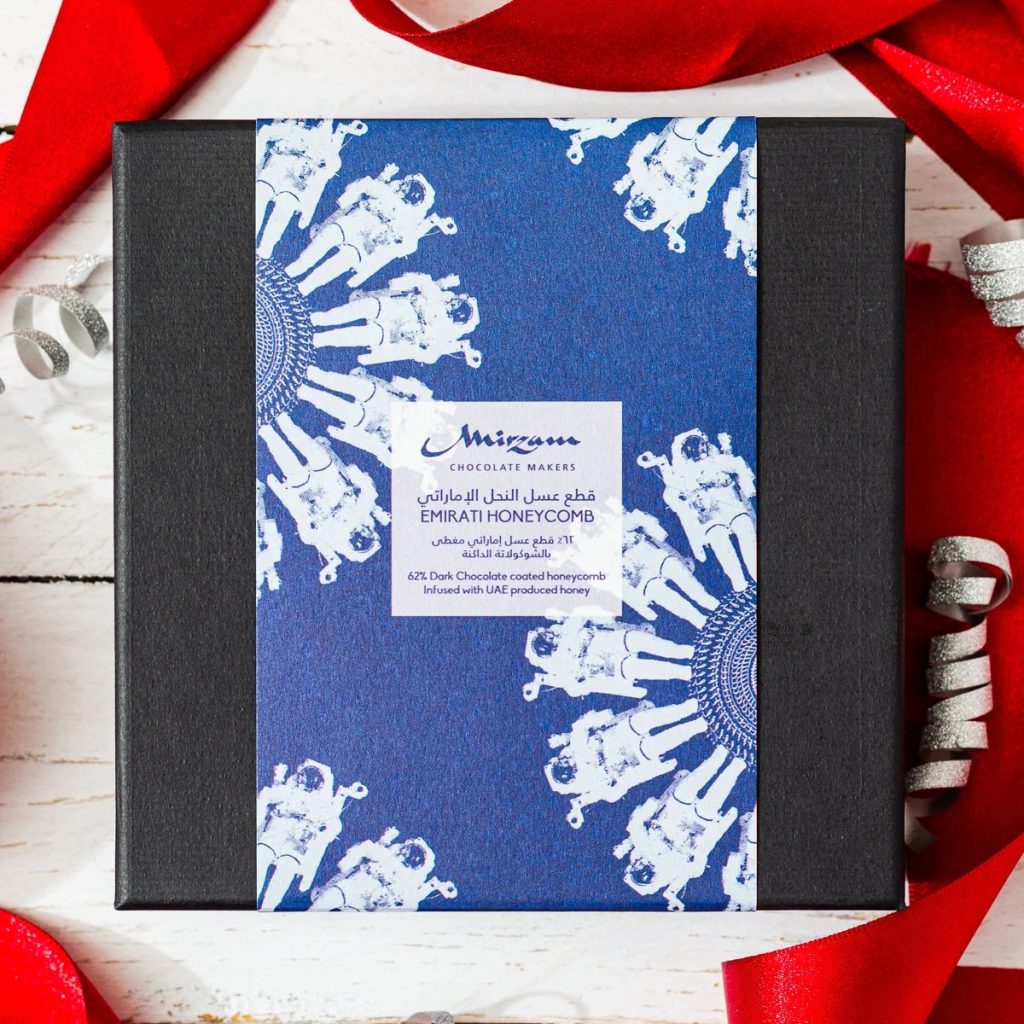
A magical confectionery combination from Dubai
If you’re looking for a gift for someone who loves great food and is intrigued by the unusual, this rare, terrifically delicious, sweet treat from Dubai might just do the trick. I’ve tasted a lot of excellent foods over the last 44 years, but I don’t think I’ve ever tasted anything like this one! The folks at Mirzam in Dubai have been quietly making some of the best chocolate confectionery around. This exceptional combination of spun-honey “seafoam,” dipped into bean-to-bar 62% dark chocolate, is one of the best examples of their cross-cultural creativity. Kathy Johnston, whose leadership has helped make Mirzam the caring, quality-focused place it is, turned me on to it a while back when she wrote:
Our Emirati “Honeycomb” is always a super-popular one over in Dubai. It’s made with local mountain honey which is very dark—and actually more herbal or even medicinal—rather than sweet. The bees are tiny, and don’t have stings, and gather the nectar from ‘Sidr’ tree flowers.
The wild Sidr would be what we here call buckthorn. Known historically as “Jesus’ thorn,” the bark and roots of the bush are highly prized for a host of medicinal purposes as well as for eating. The honey has the same pH level as the human body and hence has long been used for skin issues, infections, inflammation, and digestive complaints. Sidr honey is hard to find and highly prized. (For those in the know about naturopathy, in its home region, it is used much as Manuka honey is used now here in the U.S. and traditionally in Australia.) A 10-ounce jar of the wild Sidr honey retails for around $40, and I’ve seen some go for as much as $80.
To make this rare and magical confection, which is also known as sea candy, hokey pokey, fairy food, cinder toffee, or, as per the name on the package, “honeycomb,” the honey is brought to a light boil with a small bit of baking soda and vinegar. This makes the confectionery equivalent of the kind of foam that forms along the seashore from the waves, hence the name. You can imagine it as a caramelly, dark “honey brittle.” The cooked honey is poured out into big sheets, then broken by hand into smaller chunks. In the process, the “honeycomb” becomes a light, gently crunchy, melt-in-your-mouth confection that’s then dipped into the 62% dark chocolate.
The beautiful box was designed by Saeed Al Madani, who hails from Abu Dhabi, a bit to the south of Dubai. His artwork draws on traditional Arabian art elements, combined with inspiration from the Emirates Mars Mission “Hope Probe.” The Emirati Honeycomb has a lovely, clean finish and a flavor that’s unlike anything else I’ve ever tasted. I’m still savoring it half an hour after I finished eating a small sliver! A great gift for the holidays and a lovely way to ring in 2026 on New Year’s Eve!
Wondering where to find the Emirati Honeycomb from Dubai? It’s displayed on the shelves at both the Candy Store and the Deli.
Honeycomb at the Deli
And at the Candy Store
Tag: ZINGERMAN’S DELI
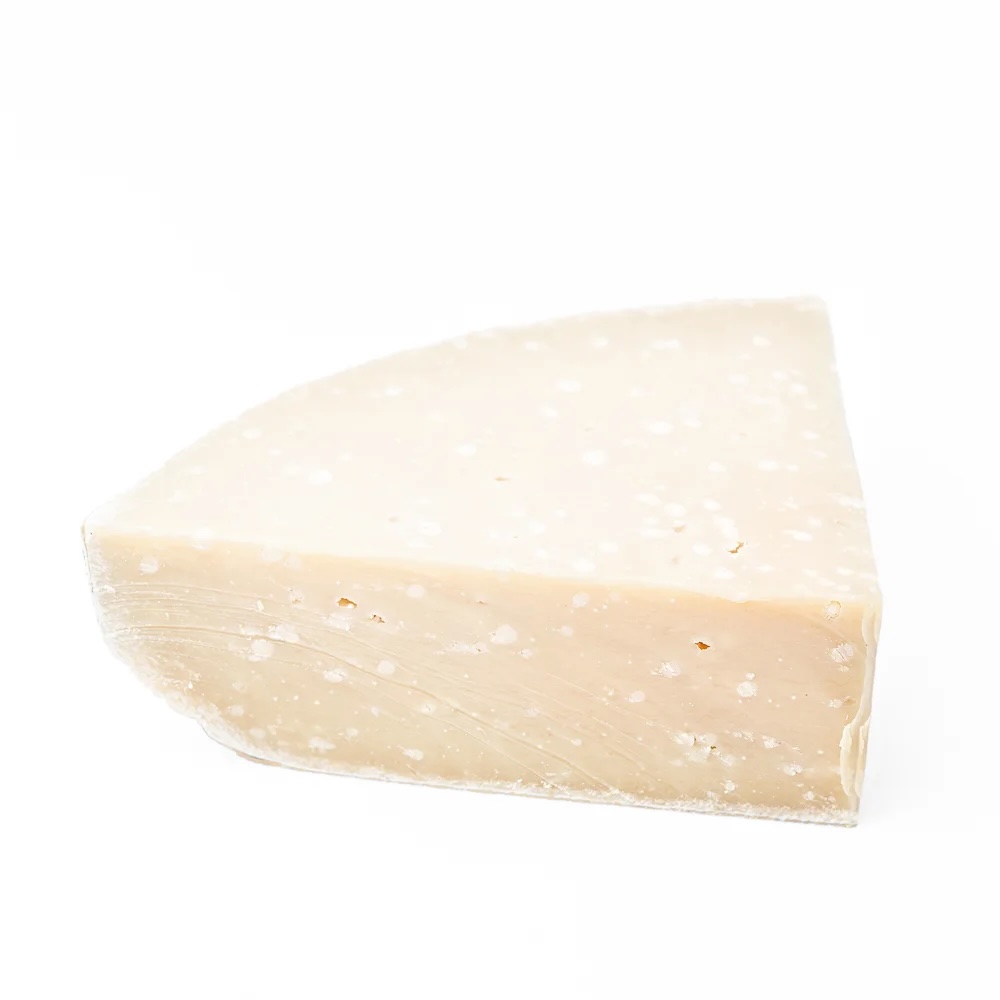
Creamy, caramelly deliciousness from the Netherlands
Looking for an amazing artisan cheese that guests of every culinary stripe are almost sure to like? This remarkable—and remarkably delicious—aged goat cheese from the Netherlands is a great candidate to fill the bill.
Brabander is indeed one of the tastiest aged goat cheeses I’ve gotten the chance to eat in ages! Creamy and smooth, with a goat flavor that’s amazingly accessible and appealing to pretty much every palate. As someone who’s been eating artisan cheese all over the world for over 40 years, I find it fabulous. So, too, do folks who’ve never had a cheese of this quality— sweet, almost caramelly, what’s not to love?
The Brabander cheese comes from the Brabant region in the southern part of the Netherlands, which is along the Belgian border. The cheese is made for, and then aged by, Betty and Martin Koster, who own and run the Netherlands’ best artisan cheese shop—if you’re going to Amsterdam, please stop by L’Amuse and say we sent you! Brabander starts with the milk of the old breed of Saanen goats from a co-op in the region. The young cheeses are then carefully aged by the Kosters to develop their delightful flavor. The maturing is done mostly at ambient temperature (they use the coolers only a few days each year, when the weather gets particularly hot) so that natural air moves around the wheels as they age. And this extra-aged Brabander Reserve gets an additional eight months of maturing to make the flavor even bigger than usual!
Brabander is a bit like the most popular person at a party: Whoever or whatever you pair it with, you can be pretty sure it’s going to get along well. It’d make a marvelous grilled cheese on the Country Miche or Roadhouse bread from the Bakehouse. It’s great in the Dutch style for breakfast: Serve slices of it along with good bread, butter, some hot tea, or with the super-tasty 2025 Holiday Blend coffee I’m sipping on now while I scribe! Or have it for a snack with some Vermont Creamery Cultured Butter and a slice of the Bakehouse’s Vollkornbrot. Brabander pairs perfectly with honey, or if you’re having it for breakfast, with jam. Light, creamy, and compelling in flavor, firm and almost but not quite crumbly in texture, the Brabander is caramelly in a way that would work really well with walnuts or hazelnuts. Throw a few cubes of Brabander on a salad with some of those nuts and slices of fresh apple. Very good on a ham sandwich, too! And a wonderful way to welcome in 2026!
Add Brabander to your bag
Ship some to someone special
Tag: ZINGERMAN’S DELI
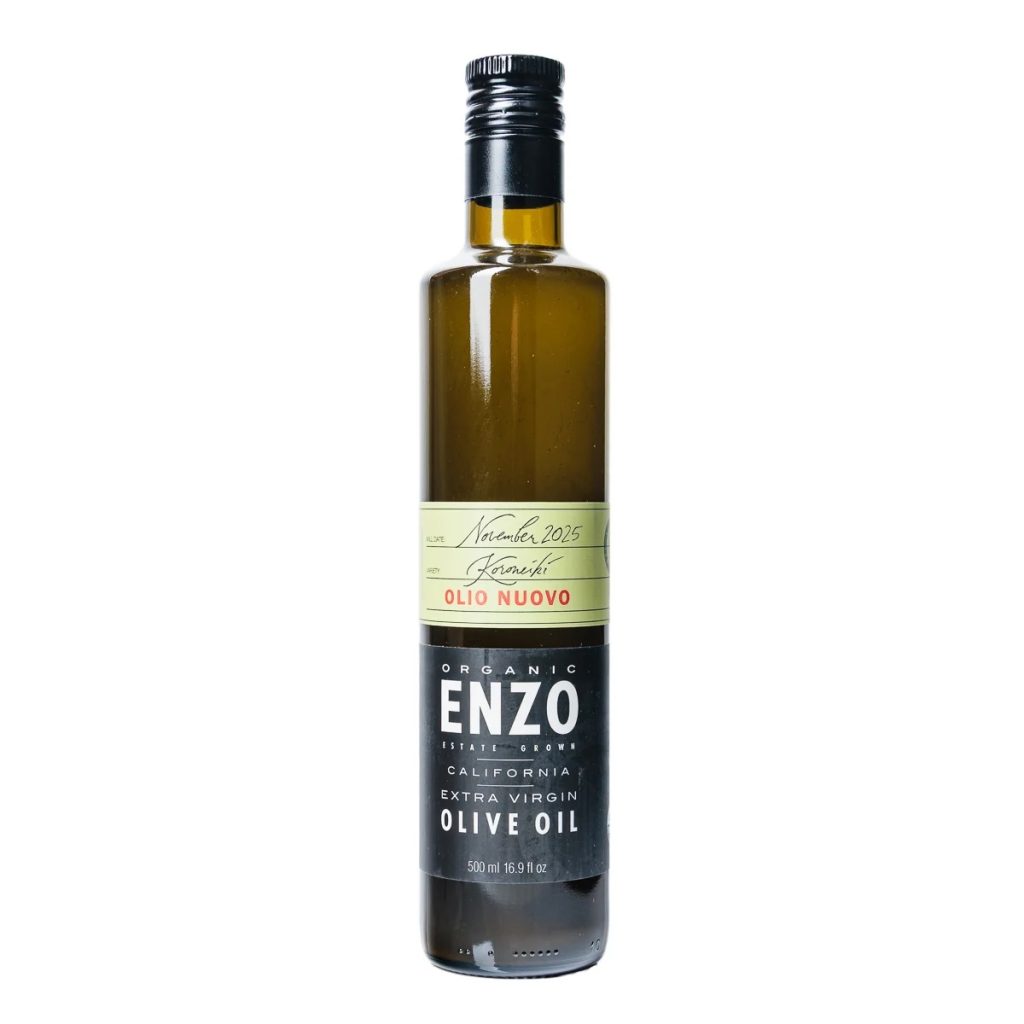
The excellence of Enzo’s early-harvest oil arrives in Ann Arbor
Some foods are so seasonal that they’re only available for a few weeks a year, even in the Industrial Age. Three of my favorites come to mind. Michigan strawberries in June. Fresh Great Lakes smelt in April. And new-harvest olive oil in the fall! Though I could eat all three of them happily year-round, the natural reality is that the window in which we can enjoy them is relatively short!
New-harvest oils are always extra peppery because of the abundance of polyphenols that are present in high ratios right after the oils are pressed. They’re big, bold, and beautiful, with grassy greenness that gives them a considerable wow factor. Unlike wines, which will generally stay stable in the bottle, olive oil softens in flavor a small bit every day. From one day to the next, you probably wouldn’t notice, but by the time the new-harvest oil is a couple months old, it will have lost a fair bit of its natural peppery pungency. It will, mind you, still be delicious—just less intense than when it first came out of the press. Which means that now, not after the holidays, and not next spring or summer, is the premier time to appreciate its full flavor!
One of my favorite times of the annual culinary calendar has officially arrived in Ann Arbor: The first new-harvest olive oil of the 2025 season has hit the Deli’s shelves! This year it’s a super-tasty oil from the Ricchiuti family—the fourth generation to work the family’s farms. Their oil, packaged under the label Enzo, is named for the great-grandfather of Vincent Ricchiuti, the creative successor to this inspiring family legacy. Made from Koroneiki olives, it’s so good that a few years ago it made Food & Wine’s “Five Favorite New California Olive Oils” list.
The new-harvest oil is fantastic on anything you like to drizzle olive oil on—bruschetta, pasta, vegetables, fish, steak! Use it to take your popcorn to a whole new level. Try it on toasted Paesano bread. Pour it onto a nice slice of good feta or a bowl of fresh ricotta. If you want a great breakfast, toast a thick slice of bread, pour on a bit of olive oil, and spread it with one of the wonderful jams or honeys we have on hand. It’s edgy, engaging, and excellent!
One little-known note on new-harvest olive oil: Although they never taught me this in Hebrew school growing up, in the years after we began working with great olive oils, it became clear to me that the Chanukah miracle is actually tied to the arrival of new-harvest olive oil. Think about it. The priests were waiting for more “holy oil” to arrive at the Temple. In pretty much every culture, what is offered first is always the first fruits of a harvest. What time of year are olives harvested in the Northern Hemisphere? And what holiday happens around the same time? Add all these questions together and the obvious answer is that the Maccabees were waiting to bring the new-harvest olive oil to the Temple to relight the Eternal Light with the “holy oil” we hear about when the Chanukah story is told.
By the way, if you want to taste the oil in action, swing by the Roadhouse for the Cal-Fiorentina dry-aged, pasture-raised steak. Finished with a generous dose of the Enzo new-harvest oil, it’s fantastic. To give some context, La Fiorentina is the classic steak dish of Florence. Combining “La Fiorentina” with the California origins of the oil, we got … Cal-Fiorentina!
Whether you’re at the Deli, the Roadhouse, or your house, if you like attention-grabbing green oils like I do, do not miss this one.
Buy a bottle
Tag: ZINGERMAN’S DELI
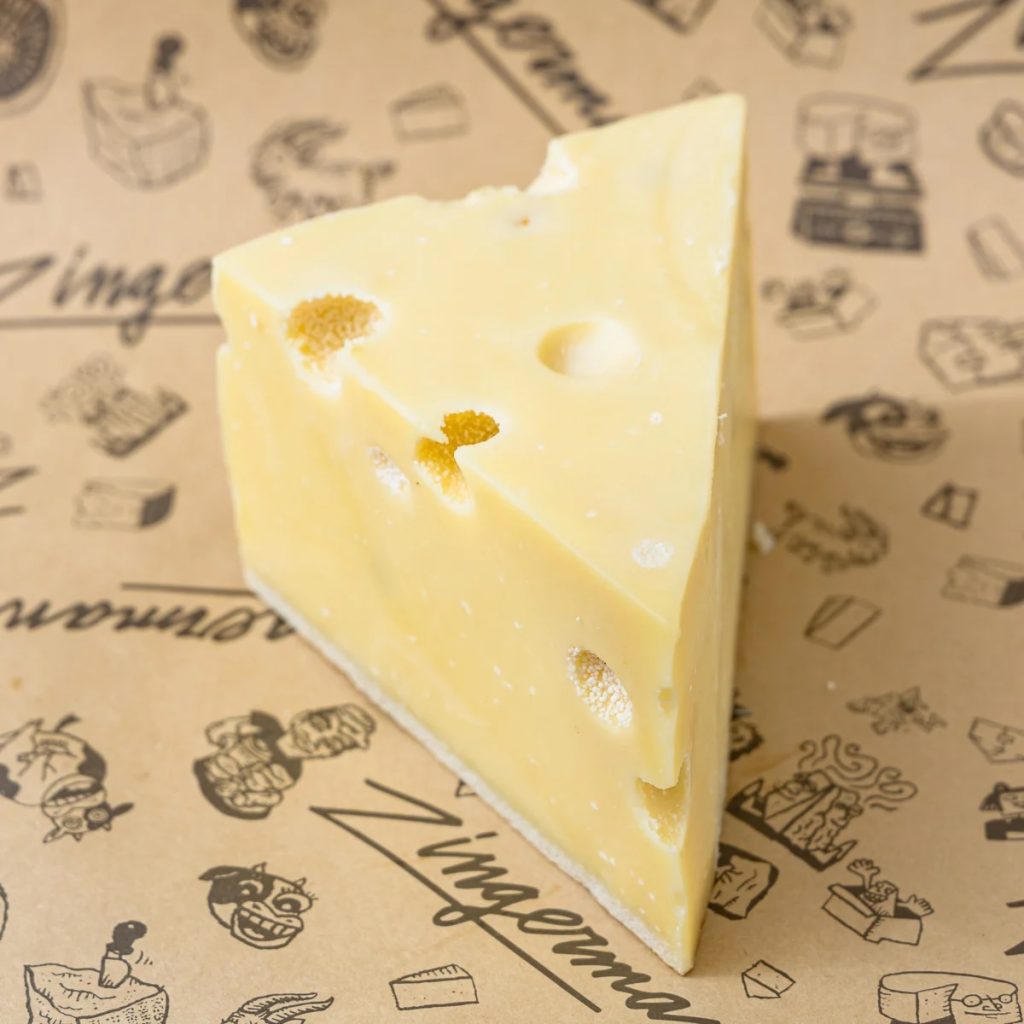
Artisan Swiss mountain excellence at its traditional best
Every once in a while, there’s a cheese at the Deli that is SO delicious that I have a hard time not eating it in great quantities. This week, it’s the Emmentaler Réserve AOP we have in stock from Switzerland! Man is it good! Nutty, bracingly intense without being bitter or strong, subtly sweet and super complex with a great long finish. The cheese is laced with those lovely crystals of the amino acid tyrosine (often mistaken by many as salt)—that happen only at about 18 months of maturing—that give a gentle, subtle crunch when you savor some of the cheese!
What makes this cheese so special? As I discussed in the pamphlet “A Revolution of Dignity in the Twenty-First Century Workplace,” the process of Emmentaler AOP cheesemaking is built on the foundation of dignity at every level. The farmers, the cows, the land, the community, the cheese, and the customers—all are treated with respect and care in this wonderfully regenerative process. It starts with the cows. They graze on a diverse diet of grasses and herbs in open meadows, which gives the milk and the cheese a unique and rich flavor. The herds are small, usually just 12 to 20 cows, allowing farmers to maintain a close connection with each animal. Healthier, well-cared-for cows naturally produce higher-quality milk. The milk itself is raw and delivered to the dairy twice a day. It still arrives in old-school milk cans. Unlike industrial pumping, which is faster but can damage the delicate fat globules in the milk, cans can help preserve quality. The milk is made into cheese within 12 hours of milking, ensuring it’s as fresh as possible when the process begins.
The Emmentaler Réserve we have on hand right now was made by two-time world champion Fritz Baumgartner near the tiny mountain village of Trub, about halfway between Bern and Lucerne.
As a child, I used to spend a lot of time in the cheese dairy and help my father with the cheese production. Now I run the cheese dairy in the second generation and process the milk from the surrounding farms into traditional Emmentaler AOP. In 2017, we were able to expand the business with an organic production line and now also process organic milk from the surrounding farms into organic Emmentaler AOP. … As a cheesemaker, I am very ambitious and aim to produce top-quality products. As a person, I am generous and can hardly say no.
You can see the cheesemaking process on this Instagram post by Gourmino managing partner Joe Salonia. Cheesemaking like this—huge wheels done by hand using artisan techniques—is very hard work! For a hobby, Baumgartner uses beekeeping to take his mind off his daily duties at the creamery.
The wheels of Emmentaler Réserve we have at the Deli, and the cheese I’ve been enjoying for the last week or so, have been aged for an impressive 22+ months or more. The affinage process begins in Goumino’s Langnau Emmental cellars, where the wheels are hand-washed weekly. Later, the best wheels are moved to the facility in Reichenbach Mountain Galleries for what they refer to as “Affinage in the Mountain,” since the cellar is literally carved into the mountainside.
With its many months of maturing, it should be no surprise that the flavor of the Emmentaler Réserve is meaty, concentrated, complex, and compelling. There’s a small touch of sweetness, a good bit of lovely bitterness. Eat it at room temperature to access its full flavor. Great with some of the heirloom apples we can still get around here this time of year! Totally terrific on slices of Dinkelbrot from the Bakehouse spread generously with Vermont Creamery Cultured Butter. Or with some sliced ham on one of the Bakehouse’s Cultured Butter Croissants. Actually, if you like a sweet-savory combination, the sweet nuttiness of the Emmental is a surprisingly great pairing with one of the newly more cultured Juliet Almond Croissants as well!
Anyone who loves full-flavored traditional cheese will, I’m really confident, find the Emmentaler Réserve as compelling as I have! And, if you really like great mountain cheese like I do, I recommend buying more of this stuff than you might think you want—supply is short, flavor is big, and, like I said up top, I’m having a hard time not eating a lot of it!
Tag: ZINGERMAN’S DELI
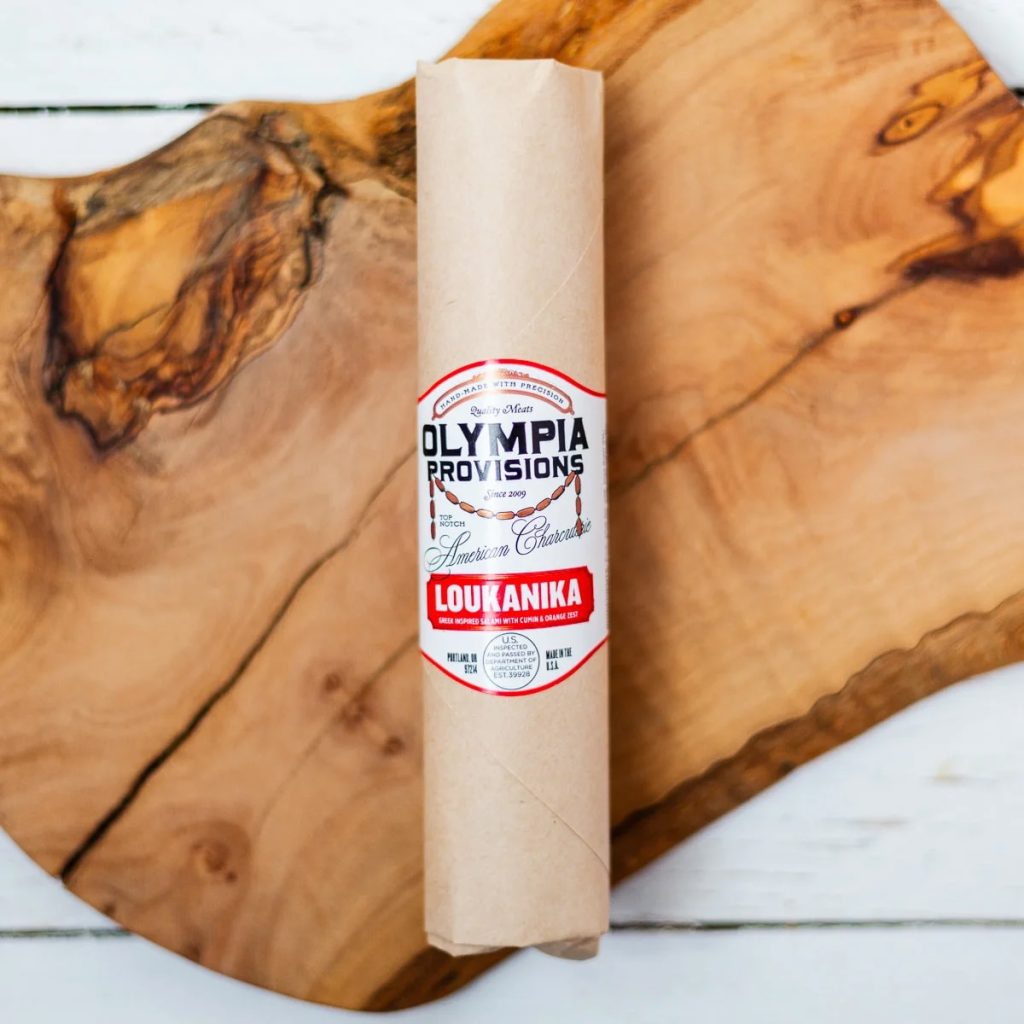
A taste of traditional Greek salami-making from the West Coast
It had been a while since I’d eaten this lovely artisan salami from out west. My mistake—I knew all along it was good, but eating a bit again last week reminded me why I’ve long loved it. In fact, it seems even better than I remembered. Lovely flavors, great aromatics, superb spicing, long finish!
Out in Portland, Olympia Provisions is crafting some of the best of the new generation of American charcuterie. The company was founded by Elias Cairo, his sister Michelle Cairo, Nate Tilden, Tyler Gaston, and Martin Schwartz—all with backgrounds in food and hospitality. Elias and Michelle grew up just outside Salt Lake City, with a Greek father who cured meats at home. All these years later, they’ve turned their father’s personal passion into a profession!
All of Olympia Provisions’ many products are carefully crafted and terrifically tasty. My favorite, though, is this lovely Greek-style Loukanika salami. It brings some of the flavors of Elias Cairo’s Hellenic heritage into play with the thriving charcuterie scene in Portland in the 21st century. Like all of their offerings, the Loukanika salami starts with sustainably-raised, heritage pork—you can taste the quality of these old breeds of pork in the complex, full flavor you get with every bite. Well over 95% of pork in the U.S. is raised in factory farms. Olympia, and the other folks we buy from, are a tiny minority of artisans who are actively working hard to return hog raising to more regenerative practices.
Building on the high quality of the pork, the spicing of the salami is also superb. There’s cumin, garlic, and hints of orange zest—all used to build on an old Cairo family recipe. The Loukanika is naturally fermented (much like a well-made cheese) to slowly develop its flavor, as salami has been matured for millennia now. Like all the Olympia Provisions products—and like all the salami we sell—it has a lively white mold on the outside. This mold is key to fermentation and slow, natural flavor development. When the mold is gone, the salami has almost certainly passed its prime.
Connor Valone, long-time salami selector at the Deli, says,
Elias’ commitment to naturally cased salami, made with pork farmed as sustainably and locally as possible, and filthy rich in penicillium nalgiovense, makes it taste and feel better than anyone else’s salami on the market. Every time I bring one home and unroll that brown paper, I wonder why it’s been so long since the last time.
The Loukanika salami is super tasty and easy to use in a thousand different, wonderfully delicious ways. Great in salami and eggs, and cut into small cubes and tossed into pastas. Cut it into thick slices and serve it up for a snack, or eat it alongside a green salad. I love it with good feta cheese, or a generous spread of Vermont Creamery’s Cultured Butter and some of the Bakehouse’s French baguette. And small chunks of salami are a great way to spice up a green salad—I think it’s one of the most underappreciated ways to take advantage of an artisan salami’s full flavor!