
Tag: ZINGERMAN’S DELI
Let Zingerman’s Cook for the Big Game!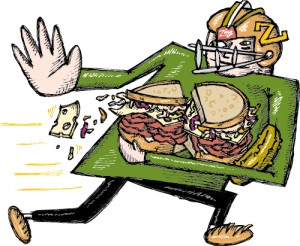
With the University of Michigan celebrating its 134th season on the gridiron, we’ve been planning tailgates since June! Call soon to plan your meal at the Big House! The first step is to check out our 2013 Tailgate menu. We offer everything from Deli sandwiches in our classic red bag to burgers and hot dogs grilled right before your eyes.
Here are just a couple of our options:
- Gridiron Feast: Featuring our famous Deli sandwiches, Zingerman’s redskin potato salad, fresh veggies with our housemade ranch and roasted red pepper sauce, assorted Coke products and our decadent Bakehouse cookies and brownies. $23/person
- Grab and Go Tailgate Bag Lunch: If you are looking for an easy meal for fast-moving football fans, this is for you. It includes a Zingerman’s Deli sandwich, Zapp’s chips, Black Magic Brownie and a pickle neatly packed in an easy to carry bag. $15.50/person (add a bottle of water or Coke product for $1)
We make ordering easy! Call 734-663-3400 to speak to one of our savvy salespeople. Our expert team will be sure to get you really great food with no fuss whether you want a delivery or prefer picking up at the Zingerman’s Deli.
With our curbside pickup service you won’t have to wait in line or find a place to park!

See you at the game!
Have you seen the cool new road sign tables at the Zingerman’s Deli?
Where did they come from?
Here’s the Deli’s Nancy Rucker with the scoop:
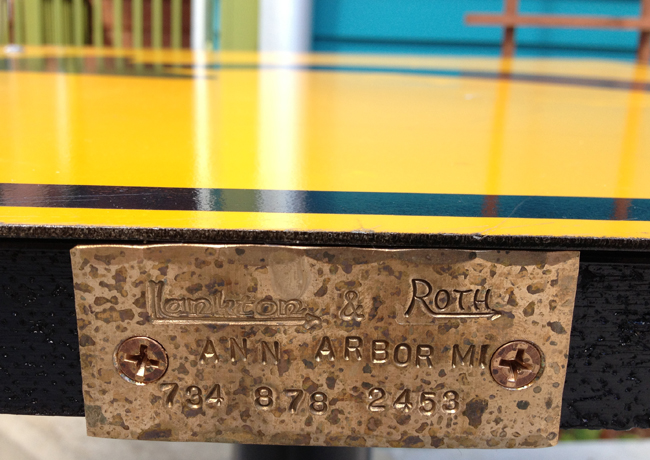
The tables are the new creation of two of the coolest guys I know- Scott Lankton and Jim Roth. These guys contacted us last year during the expansion with a proposal to build new furniture for our patio. We visited Lankton’s Design Studio to see what it was all about and had a chance to see the tables which we liked instantly! However, it was not exactly within our budget to purchase all custom-made tables for the new patio. So we made a deal to buy a few to showcase on our patio.
For information about Scott & Jim’s beautiful, custom-built furniture, check out their website.
From their brochure:
Jim Roth from Hell, Michigan and Scott Lankton from Ann Arbor have teamed up again~ this time to produce an exciting new line of METAL FURNITURE with strong links to the past. All made in the USA. Some pieces are classical, some contemporary and funky, some made with repurposed materials and even road signs!
- Forged, or hammered texture is an important design element in many of these pieces.
- They feature wrought steel bases with tops of polished glass, granite, copper, or wood. Repurposed wood and metal are also used.
- Each table is hand made with fire, hammers, and anvils here in our Michigan Blacksmith Studios.
- Each is signed, dated, and in most cases, one of a kind.
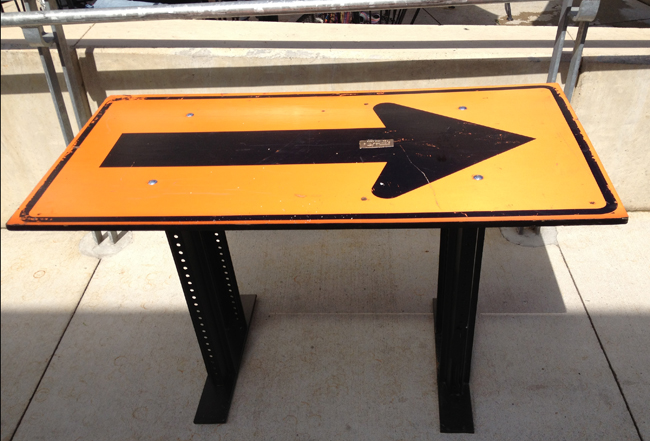
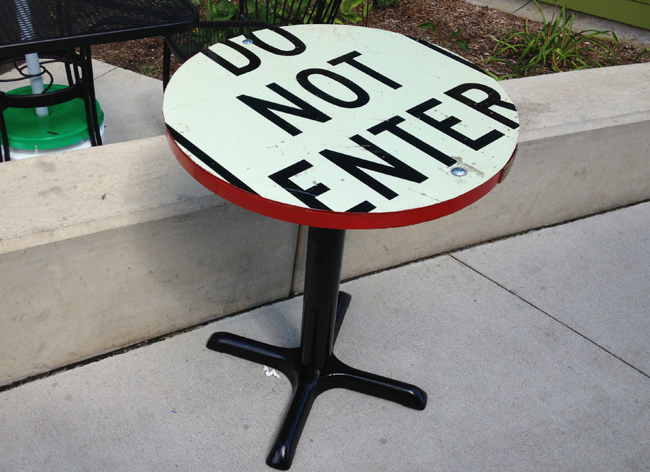
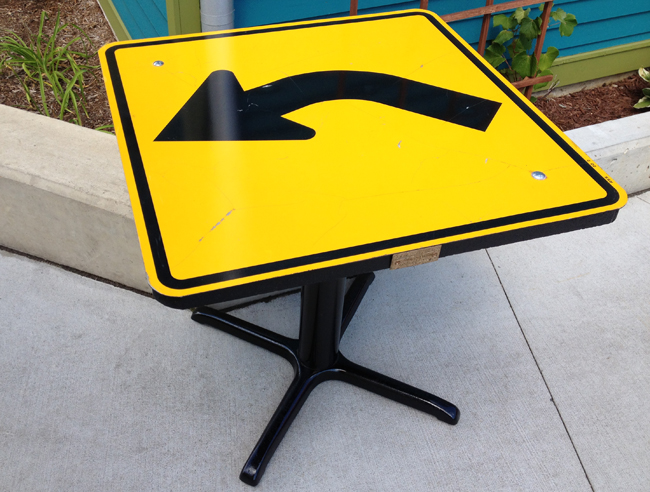
For more about Scott Lankton, check out his site. For more about Jim Roth, check out his Hell Creek Forge site.
Just follow the signs!
Award-winning author Michael Paterniti, whose book The Telling Room recounts his adventures searching for a long-lost Spanish cheese first encountered at Zingerman’s Deli, was interviewed this past weekend by Linda Werthheimer on NPR’s Weekend Edition Saturday.
Paterniti talks about how how Ari’s food-seeking adventures led to his book. From the NPR site: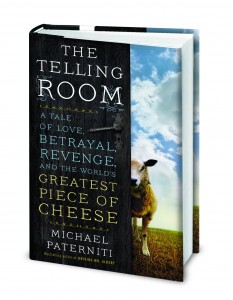
“He had been eating Spanish food and gone to Spain,” Paterniti tells NPR’s Linda Wertheimer, “and then in four paragraphs, in this very short entry about this cheese, Paramo de Guzman, Ari told the story of having met this cheesemaker, Ambrosio, and he had had this conversation about the cheese, and was told that the cheese came from an old family recipe, that it was aged in a cave for a year. And Ari described it as sublime. About 10 years later, when I went on assignment to Spain, I decided to go up to the village and see if I could try a little bit.”
Listen to Linda Werthheimer’s interview with Michael.
On Thursday, September 26, Michael Paterniti comes to Zingerman’s Events on 4th to tell the story first-hand. He’ll be signing copies of the book, as well as copies of the Zingerman’s News that cover its release. We’ll also be tasting an array of very fine Spanish foods, including many of our favorite traditional cheeses.
Watch this space: More event details to come!
A Talk About Tuscany, Color, and the Art of Making Great Olive Oil
Tuesday, August 6th, 6:30pm to 8:30pm
Zingerman’s Events on Fourth
415 N. Fifth Ave in Kerrytown
Every few years we’re fortunate to welcome a very special visitor. A person particularly insightful and talented, creative and caring, and eager to share what he or she has learned with our community. Michael Zyw is one of those people. His art is internationally acclaimed. His olive oil is terrific. And he does it all—pruning, painting, picking, pressing and choosing his color palette—on his small farm near the picturesque Tuscan coast.
Poggio Lamentano was a pioneer; it was already winning acclaim back in the early ’60s, an era when extra virgin olive was just a gleam in the eye of most of the world’s gourmets. The food writers of that era fell in love with it. Elizabeth David called it, “one of the supreme pleasures of my life.” MFK Fisher was a big fan as well: “Excellent in every way and exactly to my taste.” The oil is classically Tuscan—peppery, green, big, beautiful, delicious.
Crafting a world-class oil is a huge achievement, but working with olive trees is Michael Zyw’s morning work. In the afternoon, his artistic endeavors with canvas and glass are as exceptional as his oil. Michael’s art, as was that of his father, Alexander Zyw, has been praised throughout the art world, inspiring such quotes as, “extraordinary paintings incarnate the essence of the art of Aquarelle, in which profuse colour diluted in water arrives at its perfected image. It can be likened to a photo, which can instantly manifest delicate visual impressions born of an observation of reality in continuous movement,” and ” . . . has realized blocks of Murano crystal within which colours have been captivated . . . communicating the living visual impressions of his bright imagination.”
Clearly, this is a man of many talents. On August 6th, the worlds of art, olive oil, and the food of the Tuscan countryside will converge at the Zingerman’s Deli for a very special evening. Please join us.
Seats are limited, so sign up today!
$30/person, call 734-663-3400 to reserve a seat or online below.
New Cooking classes this year!
Over the years we’ve occasionally tapped into the skills and experience of our colleagues in the Zingerman’s Community and our friends in the food world at large to develop unique cooking classes at BAKE! This year we have a handful of special classes covering everything from traditional Korean cooking to a classic American Thanksgiving (which happens to be taught by a Brit!).
Pot Pie with Rodger Bowser
Meet seventeen year veteran, chef and managing partner of Zingerman’s Delicatessen, Rodger Bowser. He’ll lead you in making their famous chicken pot pie, including the aromatic filling and the flaky crust. Rodger will also demonstrate a fall-flavored green salad to compliment your pot pie. Head home after class and enjoy the comforting meal you created. Sharing optional.
Oct 3, 12:30p – 4:30p
Oct 3, 5:30p – 9:30p
Korean Bossam with Ji Hye Kim
Meet the woman behind San Street, a blossoming Zingerman’s business bringing traditional Korean food to Ann Arbor, currently by way of food carts and pop ins. In this class you’ll make two types of kimchi—the traditional fermented cabbage dish and another more fresh and quick version. She’ll demonstrate the curing and roasting of pork belly and make ssamjang, the accompanying dip. This meal together is called bossam. Ji Hye will share her years of research with you including the history of kimchi, ssamjang and the importance of fermented food in Korean cuisine.
Oct 16, 12:30p – 4:30p
Oct 16, 5:30p – 9:30p
Thanksgiving Dinner With Kieron Hales
Kieron Hales, Chef at Zingerman’s Roadhouse, has probably made more turkey, stuffing and gravy during his tenure at the Roadhouse than any of us will ever make in our entire lives! Come and learn from him how to do it up right!! Don’t be surprised by his British accent. He’s now a Yankee by choice! This class will be a combination of hands- on cooking, demonstration, tasting and lots of discussion. We’ll teach you to roast a turkey, discuss how to choose one and explore brining. Next we’ll make a stuffing, gravy (no lumps allowed) and a delicious side dish.
Nov 6, 12:30p – 4:30p
Nov 6, 5:30p – 9:30p
Roadhouse Classics with Alex Young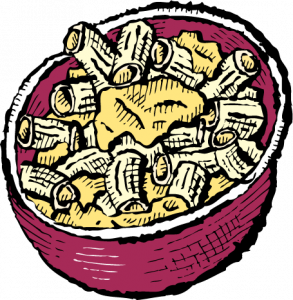
Learn to cook with Zingerman’s own James Beard Award-Winning Chef Alex Young. He’s ready to teach two Roadhouse favorites – Classic Mac ‘n Cheese and Ancho Beef Chili. You’ll learn how to make a classic and useful béchamel sauce, how to properly choose and cook pasta and how to think about creating variations of this basic recipe. Onto the chili, you’ll hear all about Alex’s adventure into cattle raising and how to develop depth of flavor in a dish like chili. You’ll receive a hero’s welcome from friends and family after this class.
Jan 16, 12:30p – 4:30p
Jan 16, 5:30p – 9:30p
A word from Amy Emberling, Zingerman’s Bakehouse partner:
Seven years ago when Frank and I started BAKE! we had no idea if anyone would come to a class. We didn’t write a business plan, or even “run the numbers.” We took a leap of faith and built a teaching bakery because we were inspired by the idea. We had a desire to connect with our customers in a new and different way. We wanted to share our baking knowledge in a fun and supportive atmosphere, so that people could bake successfully at home. Our idea blos- somed beyond our wildest expectations. Many of you come to class frequently (often with friends and family) and you’ve really advanced your baking knowledge and regularly bake at home. That was our number one objective and wow, it’s happening!
Many thanks for sharing your love of baking with us.
-Amy
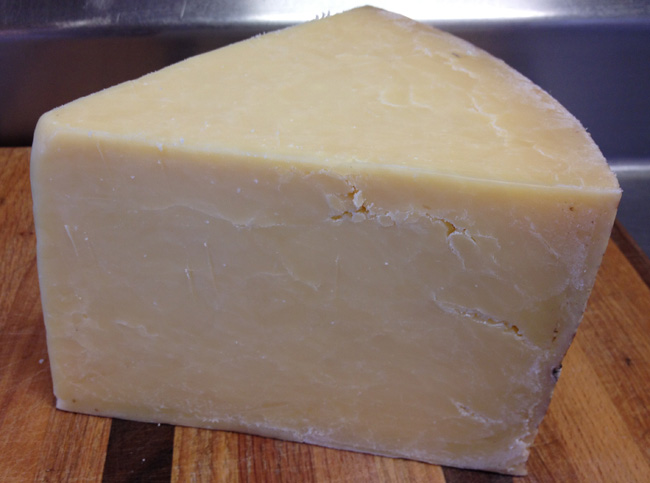
The Zingerman’s Deli has just broken open a wheel of delicious Montgomery Cheddar! This is some of the best cheddar in the world, fans of the curd should definitely stop by for a taste!
Zingerman’s Mail Order partner Mo Frechette sums it up:
English Farmhouse Cheddar
Universally imitated, never replicated. The original cheddar.Like the British Empire, cheddar conquered the world—it’s the planet’s most widely copied cheese. Ironically, with so much emphasis on imitation, the original has become an endangered species. It’s rarely found in this country and is worlds apart in character from its copycat cousins.
Montgomery’s is one of only three farms in its ancestral homeland making truly traditional farmhouse English cheddar. Big, clothbound drums are made by veteran cheesemaker Steve Bridges every day except Friday. All the milk comes from Jamie Montgomery’s herd of just under 200 Holstein-Fresian cows, which graze on a nearby hill rumored, incidentally, to be the site of Camelot. Their cheeses have a golden color, a warm, flaky texture and a penetrating, memorable flavor. Each one is spoken for—they’re taking no new customers.
Once, at a bar in London, someone told me “Cheddar should be like a neighbour’s party,” which is a line I don’t quite understand but have never forgotten. It is a totally appropriate way to describe the easy, unforgettable flavor of Montgomery’s cheddar.
Last year, Zingerman’s Deli cheesemonger Chad Hayes toured several creameries in southwest Britain, Montgomery’s among them. Read all about his adventure on his Cheese Trippin’ blog.
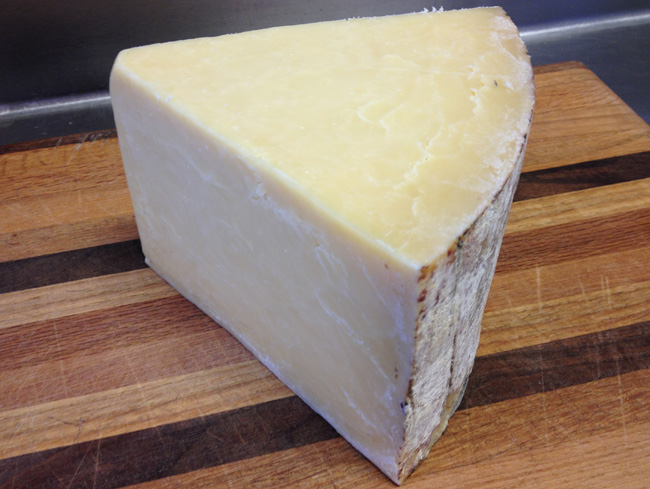
“If I could come back as a mouse, I’d like to live in your place! That English Farmhouse Cheddar is the best I’ve ever had!”
– Ellen from Creston, Iowa