
Tag: ZINGERMAN’S DELI
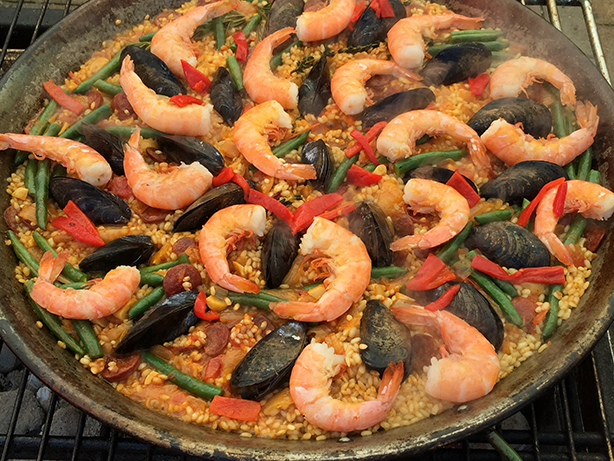
We’ve been throwing our annual Fiesta de España for 32 years! Over the decades, it’s grown bigger and bigger with hundreds attending—and the paella, the delicious rice dish from Valencia, Spain, has begun to sell out faster and faster. So, this year, we’ve decided to match the community’s enthusiasm for our celebration of delicious Spanish cuisine with not one, not two, but three paella parties on the Deli’s patio on September 17, September 24, and October 1.
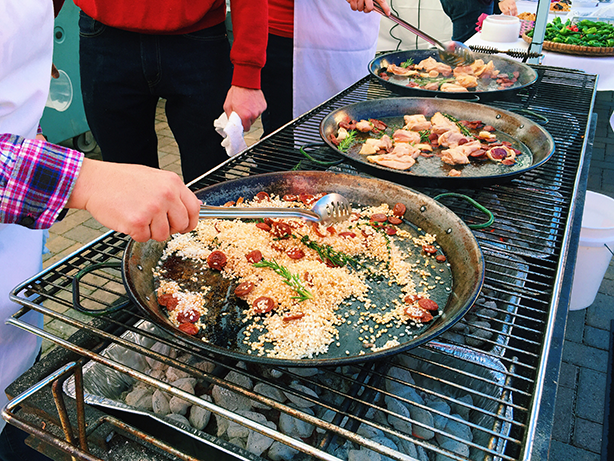
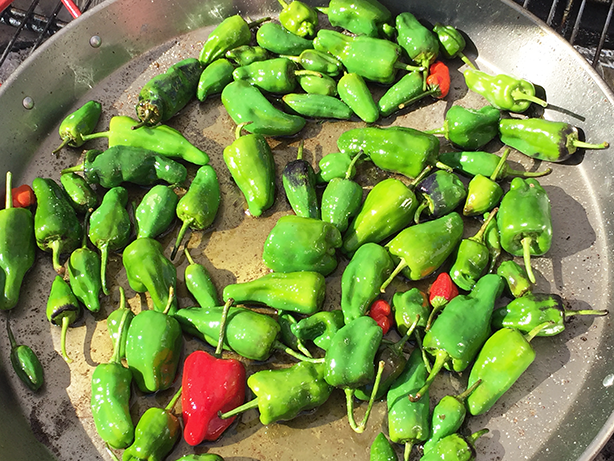
Festivities for each event begin at high noon with a free step-by-step presentation from Chef Rodger on how to prepare paella. Then, the eating begins! Rodger and his crew will be cooking up three types of traditional paella—chicken/chorizo, seafood, and vegetarian—all grilled over mesquite. And those in the know will be lined up to accent the dish with blistered padrón peppers from northwestern Spain, which are mostly mild (though you do get a hot one once in awhile).
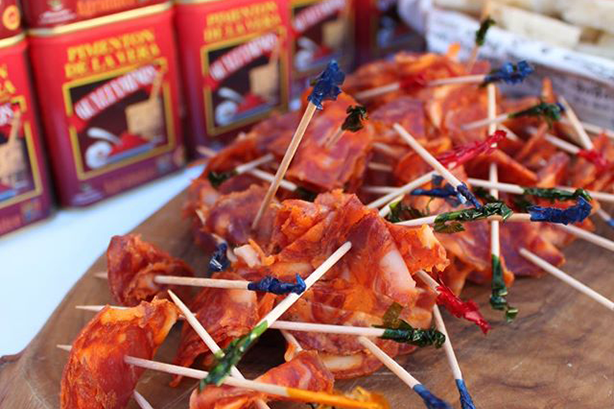
We’ll also be featuring samples of Spanish products, and items to purchase and take home, including tuna, spices, and a DIY Paella Kit–all you’ll need to get you started making paella at home (It includes a 32nd Annual Paella Party t-shirt, 18” paella pan, bomba rice, paprika, saffron and recipe booklet. Priced at $95, with a value of $120.)
Another first and exclusive to the paella parties: we’re also very excited to be featuring two special desserts from Zingerman’s Bakehouse for this year’s festivities: torta de santiago and miguelitos. “Our partners at the Deli have been putting on this great event for years, but we didn’t make any Spanish desserts. We thought it would be fun for us to learn something new and join in on the paella party experience!” says Bakehouse co-owner Amy Emberling.
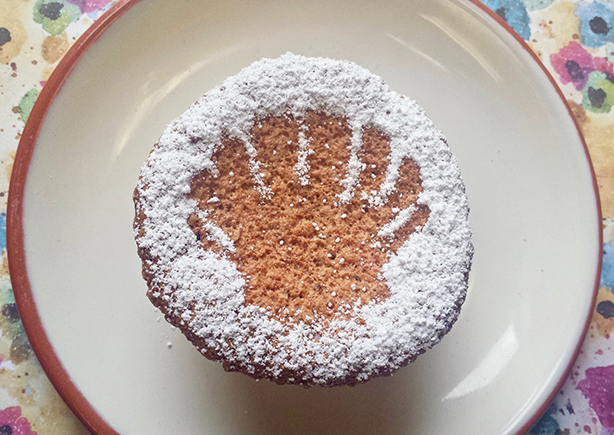
On the lighter side of the dessert spectrum, both are inspired by traditional Spanish recipes and, Nina P. from the Bakehouse says they provide the perfect ending to hearty paella. The torta de santiago is a simple, almond meringue cake with lemon zest, and while it’s often made with almond extract, we create its distinct flavor with very special Douro fried almonds that are sold at the Deli. The miguelitos is dark chocolate cream sandwiched between crisp hand-made puff pastry and topped with a sprinkling of cocoa sugar. Bring a friend, so you can get both and share!
And don’t forget the real Valencian-style tiger nut Horchata –RAAAAWR! We also have the best Spanish drinking chocolate for sale at the Next Door.
Join us on the Deli patio September 17, September 24, and October 1 for our 32nd Paella Party! You can RSVP by clicking the links to the dates above, but there’s no charge to watch the demonstrations, which start at 12pm sharp for each event. All paella is sold by the pound. See you there!
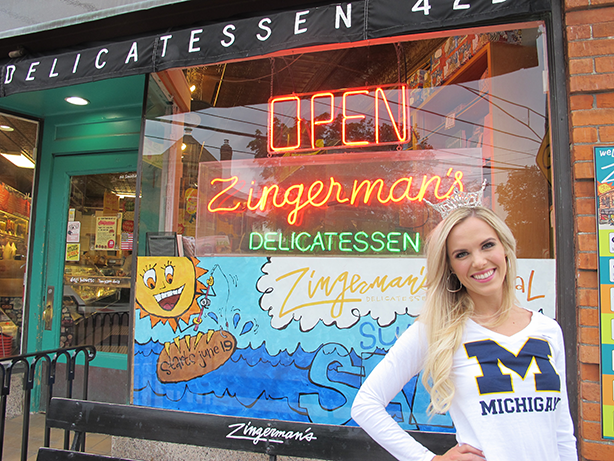
Heather Kendrick is a Deli alum—and she’s also Miss Michigan 2017! The former Deli employee of five years was crowned on June 17 and is on her way to compete for the title of Miss America later this summer. She was kind enough to share some Deli memories, her road to becoming Miss Michigan, what it’s like to perform a Lady Gaga song on violin, and how she’s preparing for next month’s Miss America competition.
Zingerman’s: Tell us a bit about yourself.
Heather: I’m from Port Huron, Michigan, originally. I started playing violin at a very young age and hated it. My family always loved Zingerman’s, so whenever we had a chance to come over to Ann Arbor, we always made a Zingerman’s stop—I remember my favorite sandwich ever was #62 Jay’s BBQ Chicken. I went to school over that way and ended up liking violin a little bit more as time went on. When I was 14, I applied to Interlochen Arts Academy and ended up finishing up my high school degree there. From there, I came to Michigan for my undergrad, and when I was deciding on schools, really what drew me to Michigan was a great violin teacher and a wonderful research university, but I though, “Oh my gosh, if I go Michigan, I can work at Zingerman’s!” That was a huge determining factor.
Z: Do you remember your first day at the Deli?
H: My first day at the Deli was the Notre Dame football game “Under the Lights”, so it was outrageous on a Saturday. But, then I started going to school at Michigan and studying violin and Music Education, and my time at Zing really just opened my eyes to how important organizations are to society and how much good they can do. Ari actually encouraged me to apply to the Organizational Studies program at Michigan, and I did that and really got interested in arts organizations. I feel so mentored by everyone at Zingerman’s—I learned so much about life and about being a good person from my experiences working there.
Z: So, now you’re the director of an arts program at the University?
H: Yes! Now, I run a program at the School of Music, Theater and Dance called the M-Prize Chamber Arts Organization. It’s an international chamber music competition that we host at the School of Music, and we bring ensembles, between two and ten members, from all over the world to compete for prize money and presenting opportunities. We partner with UMS, the University Musical Society, so we bring back our winners to perform at a UMS Chamber Arts Series concert the following year. We also bring them back to do guest artist residencies with our students, so I coordinate those. We have the largest prize pool for chamber music in the world. It’s very exciting stuff! But that was the only reason I stopped working at Zing. I would have worked there forever. I try and come back for a graduation weekend or around the holidays, and I come to the Speaker Series [Lectures at ZingTrain] all the time. I’m a fangirl.
Z: How long have you been competing in pageants?
H: I started competing in 2013, and I did my first local pageant. In the Miss America organization, there’s a national level, which is Miss America, and then there’s a state level right below that, and then below that is the local level, which would be a county pageant. When I was younger, I was performing a lot, playing the violin, and I was pretty personable. I had gotten the question of “Have you ever considered doing this because this could be good scholarship money going into college?” I thought, “Oh my gosh, no.” I was totally a hippie and went to art school, and I was not a pageant girl. Then, I really thought about it, and thought, I have the talent part down, it’s a great opportunity to practice my interview skills, and you know, I have a prom dress, so I’ll just throw my hat in the ring. I did my first local pageant, and I didn’t win, but I did well. I thought it was a great experience—I didn’t win but a great girl did—and the next year, when it came around again, I just thought, I’m just going to give it one more shot. I did, and I won, which was very exciting. Then I had the opportunity to go to Miss Michigan.
Z: How did that go?
H: I went to Miss Michigan in 2014, and it was a wonderful experience. I met a lot of friends, and it’s a very cool thing to compete on the state stage for the title of Miss Michigan. I didn’t make it to the top 10 that year, I didn’t place or anything, but I really learned so much and had a great experience. At that point, I kind of closed the door and thought, back to school, I want to finish my degree, I love my job at Zing. And actually that summer, the door opened up for me to take on the Program Director job with M-Prize, so I ended up going to school part time, and I was working full time. It was universal forces aligning because if I had won in 2014, I would have never had that opportunity to be a director of a program while I’m in school. Then, this past fall, I saw that the Miss Washtenaw pageant was coming up, so I thought, oh my goodness. I have all the clothes, it’s been a while, but I’m also getting too old to compete because the cutoff age for the Miss America organization is 24, so this will be my last year. I thought, I’m just going to do it one more time. What’s the hurt? It’s a Saturday, it’d be a blast. I did it, and I won!
Z: What are some of the responsibilities of being Miss Michigan?
H: We all have our own personal platform. Within the Miss America program, every woman who competes has their community service platform that they will promote during their year of service. Actually the platform program was created by our former Miss Michigan, who went on to win Miss America in 1988, named Kaye Lani Rae Rafko. My platform is keeping the arts in education, advocating STEAM, which includes the arts among science, technology, engineering and math. My main objective for this year is to promote STEAM, to promote the arts and education in our state, and hopefully, greater. And then also, a personal goal of mine is to figure out a way to pursue legislation to make the arts a requirement for graduation in public schools. That’s my goal! And then also, the Miss America organization is a partner with Children’s Miracle Network, so as Miss Michigan, I’m the state ambassador. I’ll be traveling to the different Children’s Miracle Network hospitals throughout the state.
Z: We loved your performance. How did you choose to do “Bad Romance”?
H: I am a classically trained violinist, and something else that inspired me about the program was that I can play my talent, but I only have 90 seconds to be entertaining and be relevant. It’s really difficult to get on stage and play classical violin for 90 seconds and make an impact. I actually perform with an electro-pop violin and DJ in a band called Nuclassica, and it’s a band out of Detroit. It’s a group of friends of mine, and we all found each other. My friend Jordan Broder is the creator of the group and the artistic director….When we were brainstorming together, he said, “We’ll come up with an arrangement. We’ll work on it together.” It was just such a blast to go through that process, and we decided on “Bad Romance.”
Z: When do you start preparing for Miss America?
H: I’ve given myself a couple days to get home and get re-acclimated, but our Miss America paperwork is due next week, so I’m working hard on that. I leave on August 28, and then we’re there for two weeks. Miss America finals night is September 10, so that’s when it’s on TV…Obviously, it’s quick. It’s coming up, it’s the end of summer. We’re all so excited, and then, of course, my intention is to go and come back with the crown, and at that point, I’d be all over the place and would not be coming back to Ann Arbor immediately. But, if I was to come right back to Ann Arbor afterward, then I have a full seven or eight months to be Miss Michigan and that really lets me focus on my platform and be more visible around the state and really do good with my year. I’m excited to be able to focus on Miss America for now, and then, hopefully be Miss America in September. But if I’m not Miss America, then I can come back and really focus on being the best Miss Michigan I can be.
We wish Heather the best of luck! If you’d like to see Heather’s perform “Bad Romance” at the Miss Michigan pageant, you can check it out here.
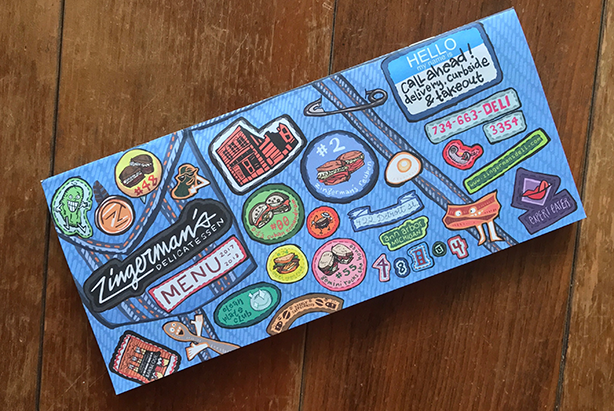
Our 2017 Deli menu is hot off the presses, and we wanted you to be the first to know! We update it every year to introduce new items, edit some existing items and, sometimes, say goodbye to items. Plus, we just like to freshen the look up to reflect what our artists are inspired by in the moment.
Here are 7 awesome things to look for on the new menu:
1. A great new look
The new look is the work of Deli retail staff member and artist Victoria Samra and our lead graphic designer Maddie Zavala. A denim jacket with patches featuring iconic Deli imagery appears on the cover, and much to the enjoyment of Deli Managing Partner Rodger Bowser, the Deli’s black and white tiles are weaved throughout the design.
Victoria says she was inspired by a “1980s Punk Rock and biker” aesthetic. “Patches and pins have become a fun way to express your identity and achievements. So I guess I was trying to translate the feeling of belonging and being ‘alt,’” explains Victoria.
Maddie was inspired by Victoria’s work in more ways that one. “I am in love with Victoria Samra’s brain. She comes up with the most rad and bizarre concepts and tucks them into her presentations as ‘wildcards,’” says Maddie. “The denim jacket and patches direction we went with for the menu also happens to be one of her wildcards. The artwork lent itself perfectly to patches, buttons, and other design elements that tied the whole piece together beautifully. Working on this menu actually inspired me to go out and buy a denim jacket with food pins and patches!”
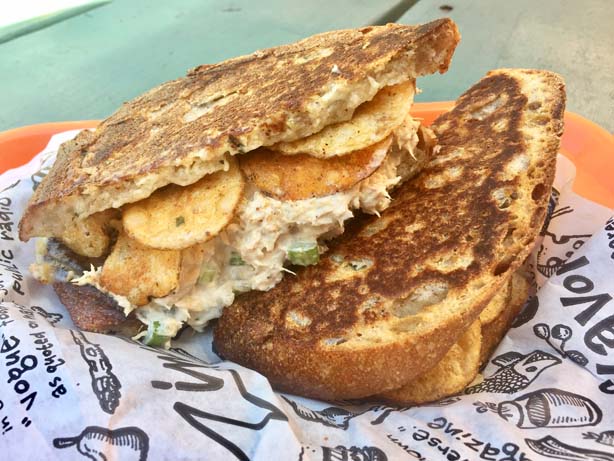
2. A delicious new sandwich
Our June Sandwich of the Month, Hangry Henry’s Fish and Chips, was a hit, and now it’s part of the permanent menu! For Rodger, all the sandwich stars aligned for the new creation. He’d been wanting a sandwich that included three things—Zingerman’s potato chips, our fantastic tuna salad (featuring pole and line caught American tuna. It’s really the best!), and Zingerman’s Bakehouse True North bread—and was a little shocked at how great it all worked out! Added bonus: it includes our house-made ranch dressing and Cabot cheddar cheese while the chips featured are our smokey barbecue flavor. It’s destined to satisfy even the hangriest among us.
3. More True North bread
If you ask Rodger about True North bread, be prepared to hear him gush! He thinks it’s absolutely the best new bread from Zingerman’s Bakehouse. Being such a big fan, he’s been looking for more ways to include it on the Deli menu, so he made a pretty big change, switching from whole wheat to this naturally leavened bread made from hard red spring wheat from Grand Traverse Culinary Flours in Traverse City.
You’ll find True North on these sandwiches:
#5 Rodger’s Big Picnic
#94 Amazing Grace’s Family Shroom
#61 T.L.B.B.L.T
#207 Hangry Henry’s Fish and Chips
He knows this is a big change, and change is hard! But we think that even the most dedicated devotees to cult-hit sandwiches like Rodger’s Big Picnic (there’s a lot of you out there), will agree that this particular change is good.
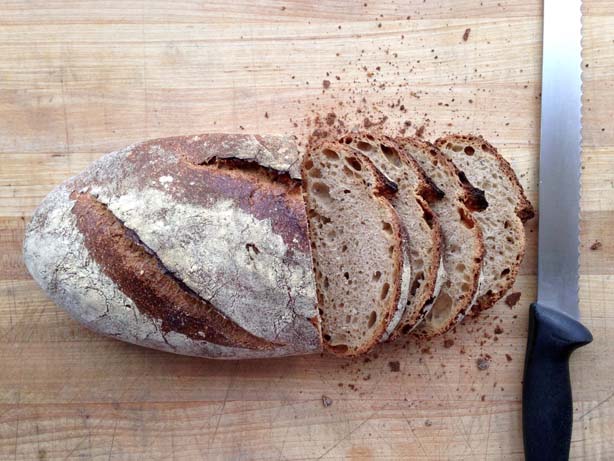
4. Gluten-free bread
We heard your pleas, and we’re making dreams come true: you can now switch out the bread on any sandwich to gluten-free. This new option comes by popular demand (you’ve asked in person, you’ve asked on Facebook and Twitter), and we’re happy to offer this to our guests! The Bakehouse started making this tasty bread made without wheat flour this year. It’s crafted with a special flour blend of potato, rice, sorghum, tapioca and buckwheat, and it also has eggs, honey and olive oil. You can also order loaves of it from Zingerman’s Bakehouse.
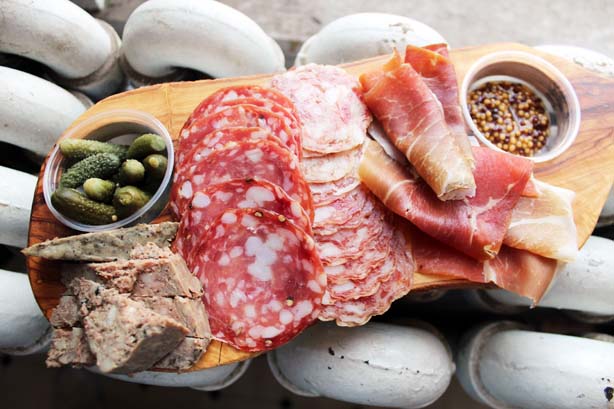
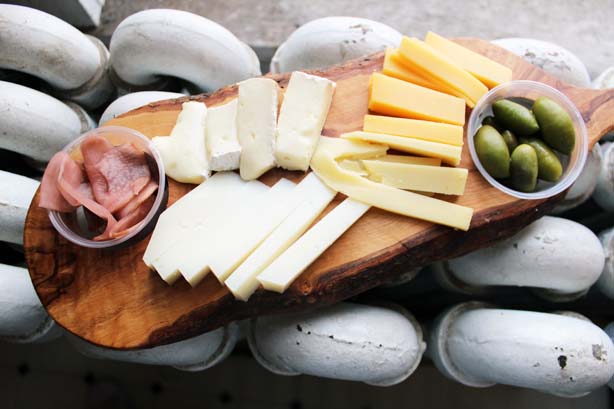
5. Cheese and charcuterie
Did you know we offer cheese and charcuterie boards? We do! But, we admit, it’s been a
a bit of a secret—until now. You’ll find these world-class plates on our menu (in the
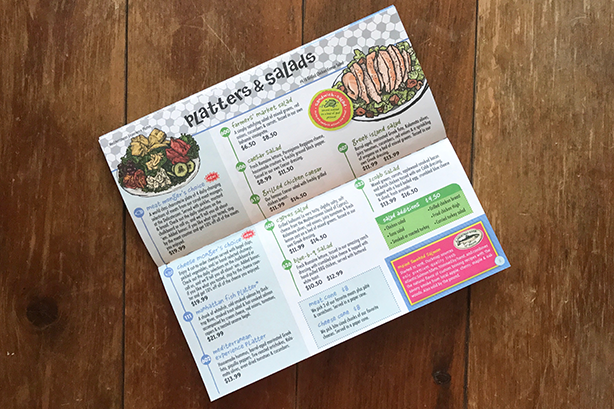
Platters and Salads section, page 8), which include a changing selection of meat
and cheese hand-picked by the our mongers (you know, those nice people behind the deli counter who are always tempting you with samples), plus delicious extras, like bagel chips, pickled vegetables, mustard, and bread. It’s great for sharing with the whole table, and if you like what you taste, you can get 10% off any of the selections to take home!
6. Did someone say fried chicken?
We did! Our salads are made even better with additions like grilled chicken and smoked turkey as well as chicken, tuna, and curried turkey salad. For the new menu, we’ve upped the protein ante with a tasty fried chicken thigh. About half of our menu developments come about organically in the kitchen, driven by our staff’s eating habits. We’ve been special ordering fried chicken on our own salads for a while, so we figured guests would probably love the option, too. Let us know what you think!
7. Es Alpukat
Say what? Es Alpukat is a smooth, creamy, slightly sweet smoothie from Indonesia, and it’s available at the Next Door. It’s made with avocado, Deli cold brewed coffee, and sweet honey. We blend it with ice, so it’s very refreshing! It’s been a cult favorite at Zingerman’s Coffee Company on the South Side for a few years, so we thought we’d offer it on this side of town, too!
Now that you’ve read about the new menu, come by and take a look—and give the new items a try! Our new menu is also online, and we offer delivery and curbside pickup. Call us to place your order: 734-663-3354.
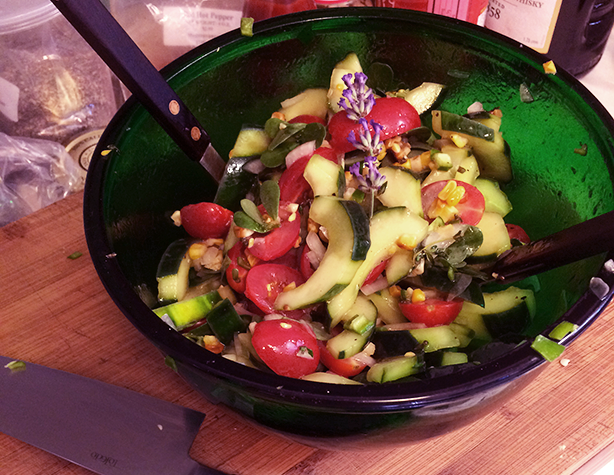
It’s the best time of year to go to the farmers’ market, in my opinion. There are so many fresh vegetables and fruits that I end up staggering back to my car, juggling several different bags of fresh produce. Since it’s been a little hot lately, one of my favorite things is to make a big salad to snack on midday or serve alongside my lunch or dinner. One of the simplest ones that I find myself making quite often is a fresh cucumber amd tomato salad.
I start with fresh cucumbers. I like to remove the seeds, so I cut them in half lengthwise and use a spoon or small scoop to remove the seeds. You should also taste a slice of the cucumber. Right now, they are young and fairly tender, but later in the season the skin can get tough and bitter. If you don’t care for the flavor or texture of the skin, just use a vegetable peeler to remove some or all of the skin before cutting the cucumbers into bite size pieces.
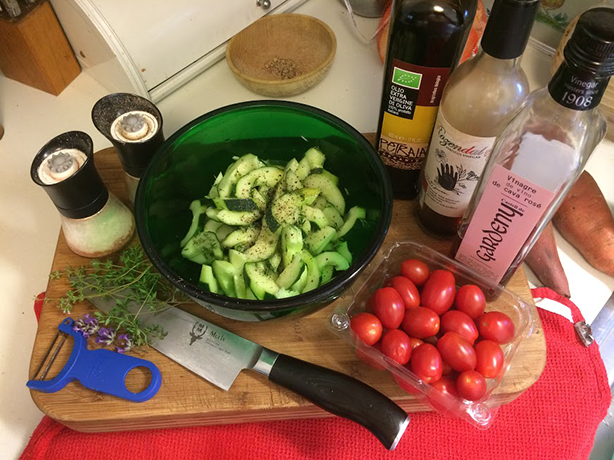
I like to coat the cucumbers in just enough olive oil to coat them, adding a little salt, fresh ground pepper, and any fresh or dried herbs. In this version, I used some fresh thyme leaves. Once that is combined and lightly coated with oil, add a few shakes of vinegar to the bowl and re-toss the cucumbers. One again, tasting the cucumbers is your best bet for getting the ratio of olive oil to vinegar that you like. I prefer a more tart flavor, so I go a little heavy handed on the vinegar. You can also add a little sugar if you like a sweeter version, or choose a fruity, less acidic vinegar for your vinaigrette.
Once you have the right flavors in the cucumbers, toss in the tomatoes to coat them (the tomatoes are more tender, so I like to mix them less so they don’t break apart) and any other fresh ingredients that you like. I had some flowering lavender, and I added just a few of those as well as some purslane that I’ve just started trying to experiment with. I love the tender and firm petals the purslane has—they make a nice contrast with the crispy cucumber and the softer tomatoes.
You can cut the cucumbers any way you like them, generally keeping the pieces bite size. Same goes for the tomatoes. To me, cooking is all about experimenting with different flavors and textures. I often find myself randomly looking through my cupboards and my herb garden as I’m deciding what flavors I want to combine, which is pretty dependent on what mood I’m in.
Cucumber & tomato salad recipe
cucumbers (depending on size and your appetite, one cucumber can generally feed two people)
fresh tomatoes ( I used grape tomatoes cut in half, but you can use whole tomatoes and chop them into bite- size pieces)
olive oil (I used Petraia from Italy)
vinegar (I used Rozendal hibiscus and Gardeny cava rose)
sea salt
fresh ground black pepper
any other fresh or dried herbs or flowers you want to add
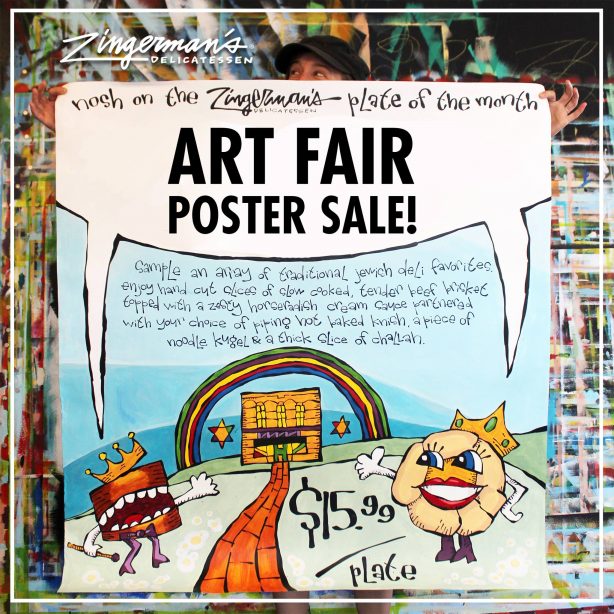
It’s time for Art Fair. Don’t miss our Poster Sale—there are over 1,000 one-of-a-kind posters to choose from!
Hand-painted promotional signs are pretty rare these days, but here at Zingerman’s we’ve worked to preserve this true artisan craft in the same way that we work to preserve artisanal food production. We have a whole team of in-house artists who create the one-of-a-kind posters we hang in the Deli, using acrylic paint and tyvek paper. When we’re done with them, we offer this art to you.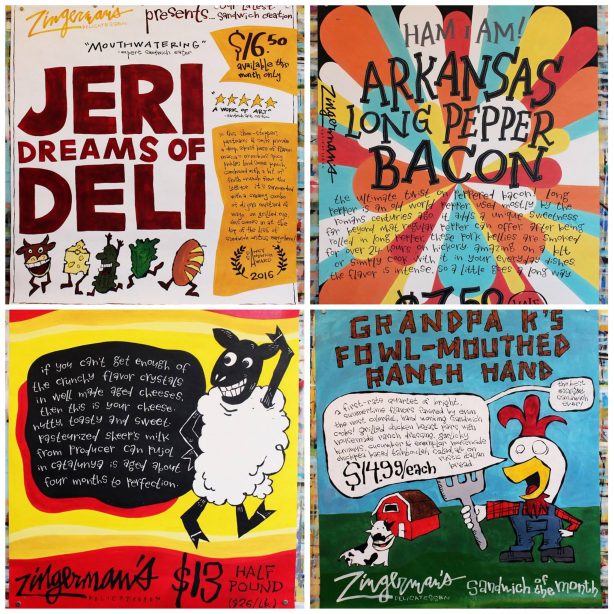
As Ann Arbor celebrates art with one of the largest outdoor art fairs in the nation, we’re celebrating, too, by offering $50 off all of our one-of-a-kind, hand-painted posters from July 17 through 23! Just use the discount code: ARTFAIR. This year, we’ve put our entire archive online—we’re talking decades worth of unique, colorful posters: over 1,100 to choose from! You can sort by colors, size and categories, like cheese, olive oil, sandwiches and more.
Shipping is free in the continental U.S., and the posters make a great gift for the art enthusiast foodie or Zingerman’s fan in your life.
Click here to visit our Art for Sale online shop.
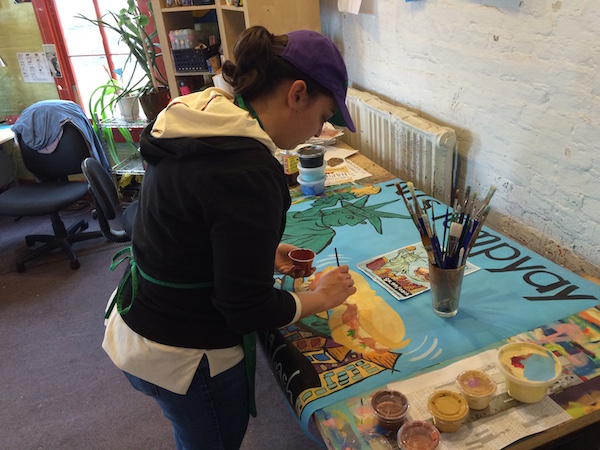
Want to see how the posters are made? Go behind the scenes and meet the Deli artists here.
Our entire archive of hand-painted posters is currently on sale! Get $50 off until July 23, 2017. Use code ARTFAIR at checkout. Browse the collection here.
Lots of fun stuff around Zingerman’s this week. Don’t miss a moment! Take a look:
Miss Kim Happy Hour | Tuesday-Friday 5pm-7pm
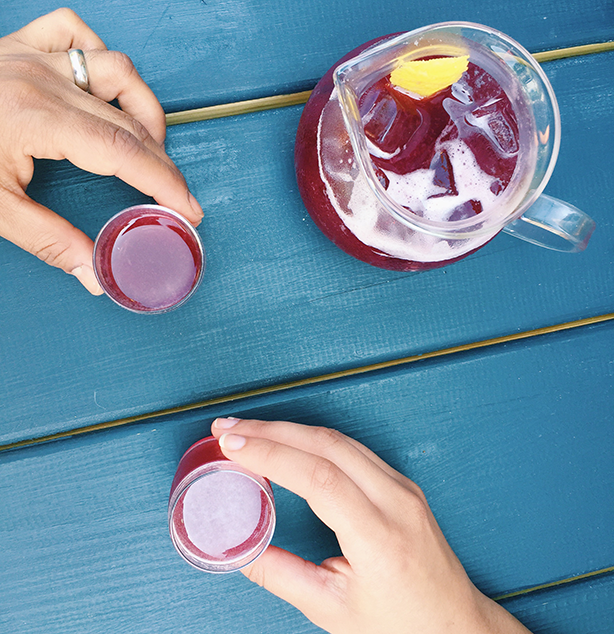
Come relax at Miss Kim! We’re hosting happy hour almost every day of the week. Get $1 soju shots and 1/2 off Flight’s Delight (our delicious soju punch, pictured above). We also have daily snack specials. Miss Kim is located at 415 N 5th Ave.
Greyline Art Fair Happy Hour | Friday 7/21 3pm-8pm
Looking for a respite from the heat? Needing a pick-me-up from all your art-collecting? Come to our Art Fair Happy Hour at Greyline! We’ll have our full bar plus our special crushed ice slushies (both alcoholic and N/A available) as well as some snacks for purchase. And since we didn’t want to miss out on all the Art Fair fun, Zingerman’s will be selling their hand painted posters! We’re transforming our venue into an art gallery featuring many of the unique posters you’ve loved seeing at the Deli. In honor of Art Fair, posters are $50 off! You can also get the deal online. Browse the catalog and use code: ARTFAIR.

Cornman Farms Farm Fest | Sunday 7/23 12pm-4pm
Cornman Farms is hosting its 2nd Annual Farm Fest in honor of Zingerman’s 35th Anniversary this Sunday. It’ll be an afternoon of family fun featuring yummy treats, live music from Thurderwüde, cookie decorating and more. We’ll be serving complimentary water and herbal infused iced tea. We will also have a cash bar available for sodas, beer, wine and seasonal cocktails. Only $10—get your tickets today.
And coming soon…
August Specials Premiere | July 25 7pm-8pm
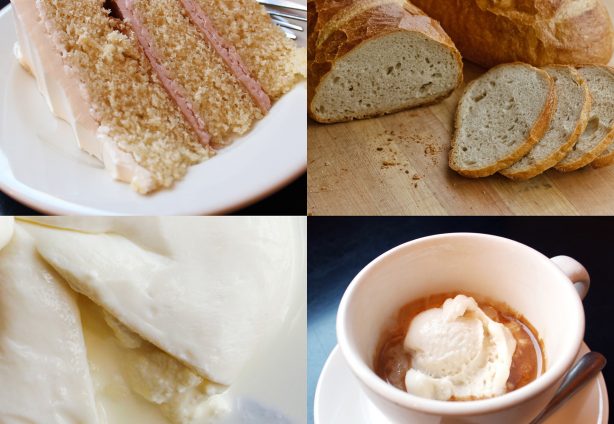
You can get a sneak peek at next month’s featured products at the Deli and get to taste ‘em too! Our August Specials–Buttermilk cake and Jewish rye bread from Zingerman’s Bakehouse, Zingerman’s Creamery Burrata cheese and Next Door’s Drink of the Month, the Affogato, to name a few. In this casual class setting, we’ll discuss the story behind the food as well as taste a few of the products. We will go over the tasting process that your favorite retail folks do on a daily basis. Let’s learn and taste some great food. Just $15—reserve your seats right here.
Wine & Cheese Pairing | July 27 6pm-8pm
Do you know what wine to pair with that perfectly melting triple cream brie? The Creamery does! Join Tessie, our resident Certified Cheese Professional and wine lover for an evening of tasting and exploration. We’ll taste through a spectrum of wines from our favorite vintners paired with wine-friendly artisan cheeses. Bread and additional accompaniments from our new Cream Top Shop will be provided. This tasting is for cheese lovers 21+. $35 per person—reserve your seats right here