
Tag: ZINGERMAN’S FOOD TOURS
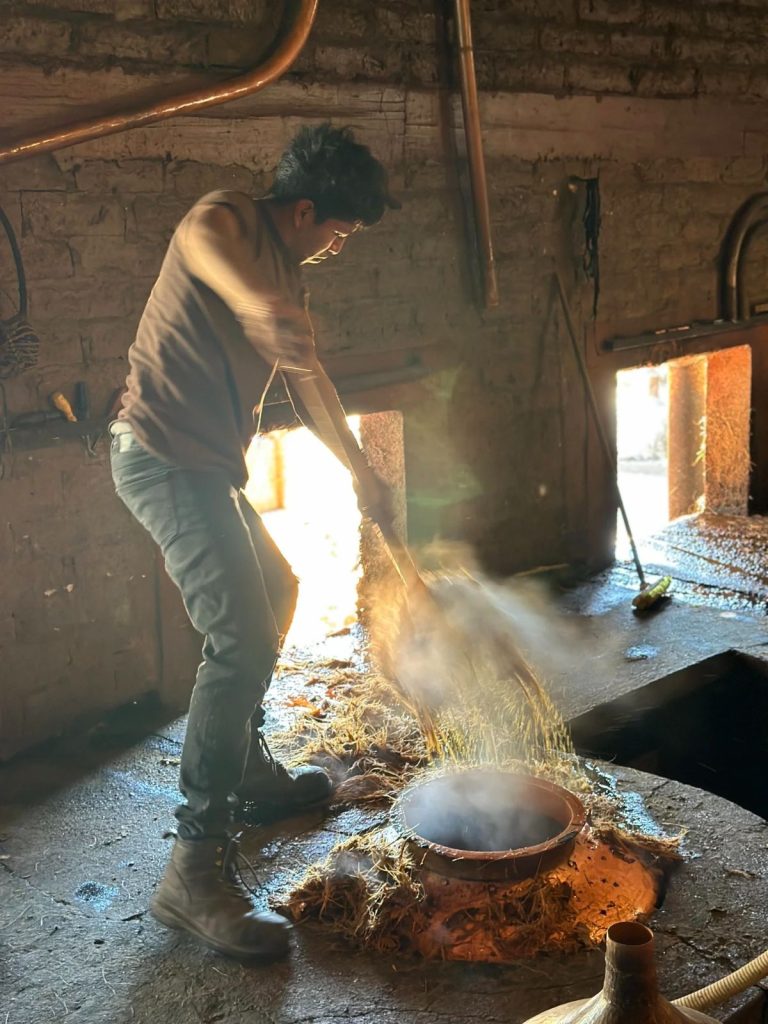
Sign up soon for the culinary adventure of a lifetime!
Feeling the urge for an exceptional new experience? Love to eat great food and sip great wine? Love to learn? Ready to do something special soon? Great news! We’ve just released the 2027 Zingerman’s Food Tours schedule. As always, it’s a diverse mix of destinations that are close to our hearts—places we’ve come to know well over the years and where we’ve built deep relationships—along with a couple of exciting new additions to the tour list: Turkey and Japan.
My friend Lisa Donovan, the chef, writer, and author of Our Lady of Perpetual Hunger, shared this about why she loves traveling so much:
I feel most comfortable when I’m in a space where I’m being challenged, learning something different and new, meeting people who have very different backgrounds and experiences than I do. … Travel makes me better, more understanding, more compassionate, more empathetic. It certainly inspires my work in food, and my writing.
My own experience has been much the same. I’ve learned so much over the years by heading to places far and wide. Learning about food, drink, and culture is, in my experience, a whole other thing when we’re actually there, immersed in it, than it is when we’re reading online or through books. Kristie Brablec, long-time Managing Partner at Food Tours, does exceptional work. She spends years thoughtfully curating each tour into a kind of “best of” experience for every delicious destination we visit. I recently got to experience a mini version of the remarkable work she’s done in Oaxaca and, I’ll tell you straight up, it was terrific. I’d head back in a heartbeat.
Kristie has this to say about the 2027 tour lineup:
Each year, our journeys are shaped by what we love most — extraordinary food, meaningful connections, and immersive experiences that take you beyond the guidebooks and into the heart of a place. The 2027 season is no exception. From bustling markets and countryside kitchens to shared tables with artisans, farmers, and chefs, these trips are designed for travelers who believe food is one of the best ways to understand the world.
Our 2027 collection features returning favorites you know and love, along with exciting new destinations we’ve been dreaming about for years. Whether you’re craving pasta in Italy, fermentation in Northern Europe, spice-filled streets in Oaxaca, or unforgettable meals across Asia, there’s an adventure waiting for you.
With all that said, here’s the 2027 schedule:
- Oaxaca, Mexico (Winter) — February 1–8, 2027
- Tuscany, Italy (Spring) — April 19–26, 2027
- Ireland — May 18–26, 2027
- Japan (Spring) — NEW — May 20–30, 2027
- Piedmont, Italy — June 7–13, 2027
- South Korea (Summer) — with Miss Kim Chef & Managing Partner Ji Hye Kim — June 22–July 1, 2027
- The Taste of Denmark — NEW ITINERARY — August 24–31, 2027
One of Kristie’s favorites! If you’re in Copenhagen, take time to visit the National Museum where so much of what Knud Rasmussen gathered in his travels can now be seen.
- Turkey — NEW — September 20–29, 2027
- Tuscany, Italy (Fall) — October 4–10, 2027
- Hungary — October 10–18, 2027
- South Korea (Fall) — October 26–November 4, 2027
- Sicily, Italy — October 31–November 10, 2027
- Oaxaca, Mexico (Fall) — November 7–14, 2027
- Japan (Fall) — NEW — November 18–28, 2027
Seriously—every single tour is terrific. The meals and experiences are the kind that even someone like me wouldn’t find on my own. As Kristie says, “Spots on our tours are intentionally limited to keep the experiences personal and immersive. We encourage you to explore the full details and reserve early!” From talking with many people who’ve traveled with us, these tours are, quite literally, life-changing. Take a look at the schedule and see which super-tasty destination feels right for you and yours.Questions? Visit zingermansfoodtours.com or give Kristie a call at 888-316-2736. She’d be happy to chat!
More adventure
Tag: ZINGERMAN’S FOOD TOURS
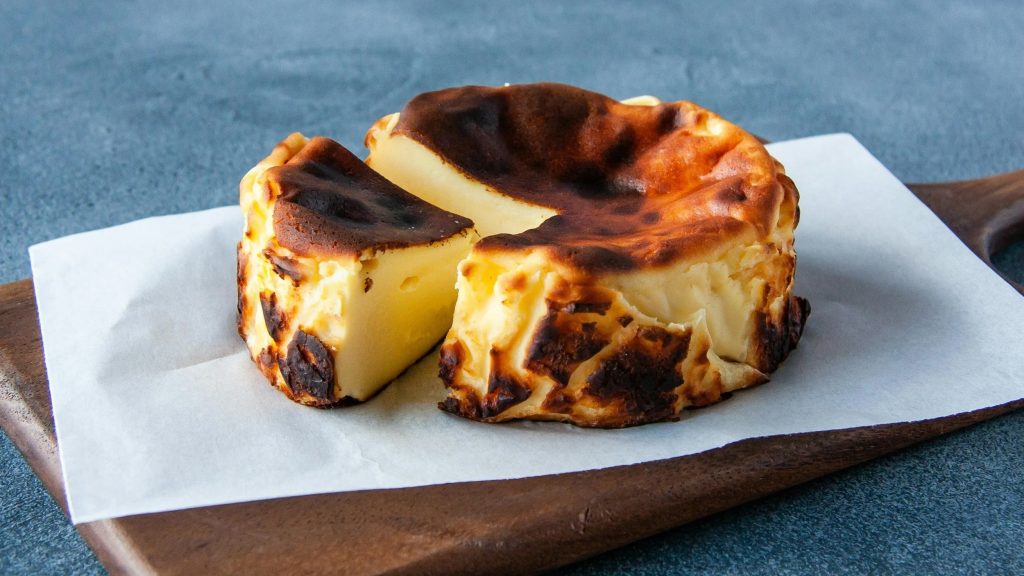
An incredible gift for a travel lover who loves to eat!
Although few Americans know it, Basque culture is the oldest in Europe. It has a longer, richer, more complex history than any other culture on the continent. As Mark Kurlansky, author of the fantastic book The Basque History of the World, writes, “They are a mythical people, almost an imagined people.” To that I’ll add “mysterious and inspiring.” For me, the Basque Country is an ideal destination—an incredible culinary culture and a long anarchist tradition to boot! For most people, the combination of great eating, great art, great history, incredible scenery, a hint of Hemingway, and a whole lot of wonderful regionally produced wines makes a visit like this pretty unbeatable.
It also happens to have some of the best food on the planet! In The New York Times travel section, Caitlin Raux Gunther wrote this about culinary culture in the Basque Country:
Food forms the fabric of local life. Eating well is a priority throughout Spain’s northern autonomous community, and seems, to some local chefs, even more so now. The region is an endless feast. Culinary destinations beckon.
When you take this terrific week-long trip with Food Tours Managing Partner Kristie Brablec and crew, you will immediately gain access to some of those amazing but hard-to-access culinary destinations. The ones you and I would almost certainly miss when we go on our own, but with Kristie and crew’s years of research and planning, make it onto the list of places this small group of culinary explorers will stop!
What’s on the Tour list? The full itinerary is here, but these are a few of the highlights that caught my attention:
- Taking a specially arranged cooking class at the Central Market of Bilbao to prepare Pintxos (the very traditional and very popular Basque version of tapas)
- Visiting a winery and its vineyards, where the uniquely Basque Txakoli wine is made
- Heading to an award-winning sheep creamery for a lesson on a special style of Basque cheese-making
- Eating in some of the restaurants in the Basque Country
- Learning the history of sheepdogs and the basics of Basque sheep herding
- Tasting special Basque hard ciders
- Learning about the widely revered black beans of the town of Tolosa—they’re so good that people order them from all over, and the new-crop beans sell out quickly almost every year
- Take in the beauty of the coastline and the magical enormity of the mountains.
- Taste some of the best fish—both fresh and tinned—you’ll find anywhere
If you’re trying to think of a gift that will make 2026 unforgettable in the best possible way, a seat or two on this ama-Zing Food Tour is an ideal way to go! Head into a local shop to buy a Basque beret, say hi to Jai Alai, ponder some traditional pintxos, enjoy some of the freshest fish you’ll ever have, and so much more!
Book a Basque trip
Tag: ZINGERMAN’S FOOD TOURS
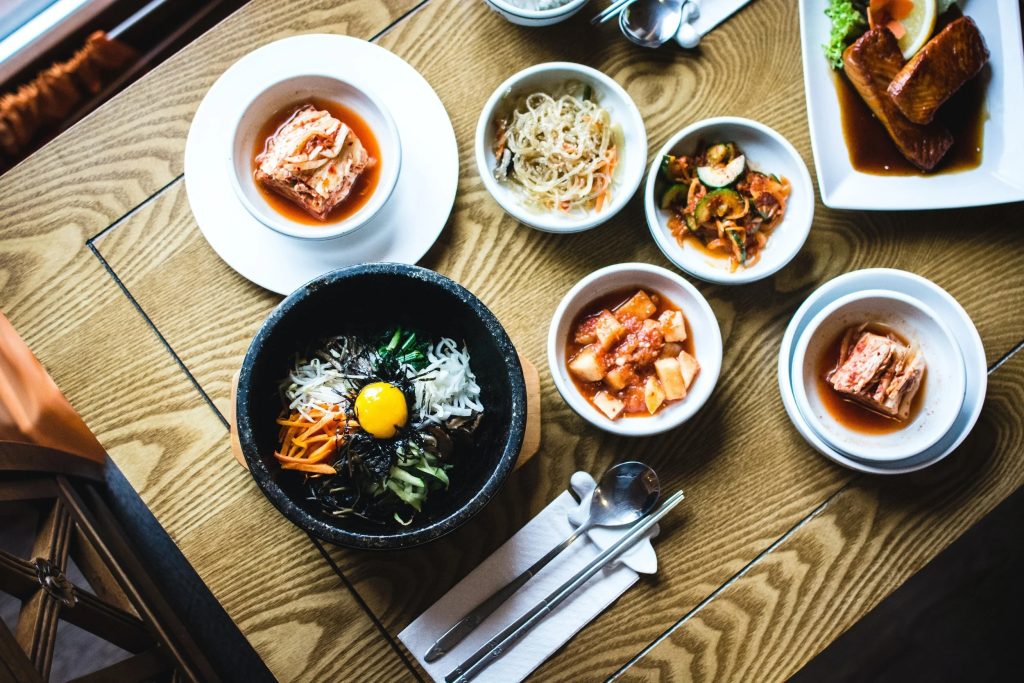
A rare chance to experience exceptional food and culture
Looking for a life-altering gift to give someone you love? Here you go!
A couple of years ago, the New York Times did an in-depth travel piece singing the praises of an in person exploration of a visit to South Korea. As writer Adam H. Graham points out, “The secrets of rural Korea are not widely known, even to many urbanite Koreans.” A Zingerman’s Food Tour with Ji Hye Kim, Miss Kim’s magical chef and managing partner, is a way to access those secrets.
Ji Hye grew up in Korea and has so much perspective to share. As Graham notes, there are “rural areas where English isn’t widely spoken,” so having someone fluent in the language, the culture, and the cooking is a huge plus. And there is a lot to visit. Here’s Graham’s recommendation: “Beyond [the capital city] Seoul’s sprawl … explore tranquil thatched mountain hamlets, peaceful Buddhist temples and unhurried ‘slow food’ towns in rural South Korea.” That’s just what this very special, limited-seating trip is all about.
Ji Hye has quietly become one of our country’s leading experts on Korean culinary cultures. She’s now one of the go-to cognoscenti that journalists call when they need insight into the exceptionally intricate, fascinating, and super-flavorful culinary traditions of the peninsula. This trip lets 15 lucky folks tap her knowledge all week, in a way that will stay with them for the rest of their lives.
There are two Food Tours to Korea in 2026. The first, set for May 11–20, has just a few spots left. The second tour is October 22–31. There are a few more spots, but not that many more. Either tour is guaranteed to give you a remarkable experience that will change your views on what is possible in Korea.
Kristie Brablec, longtime managing partner of Zingerman’s Food Tours, will be there as well to add her extensive travel experience and insight to the mix. Not long ago, Kristie interviewed Ji Hye about the trip:
She talked about the incredible diversity across regions. She recalled following her mother and aunts through traditional markets in Seoul, learning to barter with fruit vendors and vegetable sellers, and sneaking tteokbokki from street carts when her mother wasn’t looking. There are traditions like temple cooking, the haenyeo grandmothers on Jeju Island, who still dive for abalone and sea urchin, and so many more. Even though Ji Hye grew up in Korea, she said she herself didn’t realize how varied and nuanced Korean food truly was until she returned as an adult, a chef, and a Korean American reconnecting with her family’s history.
She’s most excited for travelers to taste the bibimbap of Jeolla Province. She also talked about the incredible freshness of Jeju seafood. And she lit up describing street food in traditional markets: tteokbokki, knife-cut noodles, hand-mixed bibimbap, and as many dumplings as you can manage. And perhaps most unique of all, she can’t wait to introduce travelers to a Buddhist temple lunch, where the simplicity of the dishes belies the depth of flavor created through handcrafted sauces, seasonal ingredients, and ancient techniques.
As you look at where to invest your time and money in the coming years, consider these deliciously deep dives into behind-the-scenes Korean culture. There is so much to learn, so much to explore, so much that we will never see or know without actually going. Take it from Ki Soon Do, prestigious Grand Master of Jang, the traditional fermented sauces of Korea that Ji Hye is so passionate about:
Foreigners are only beginning to understand Korea and Korean food. We want to share it with the world as a way to help preserve these old traditions.
Book now while there are still seats available. They will not last very long!
Save your spot
Tag: ZINGERMAN’S FOOD TOURS
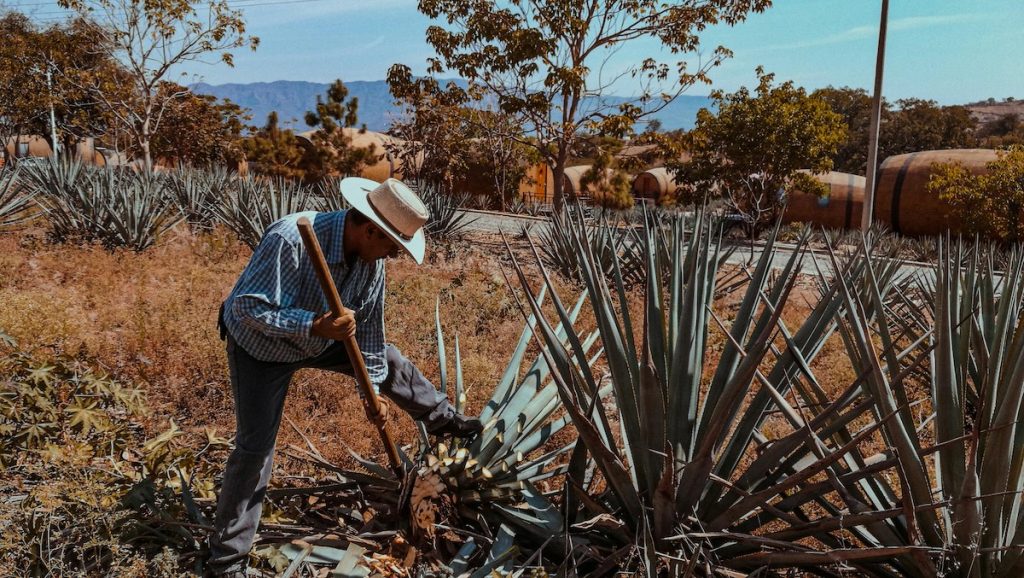
Chocolate, coffee, culture, mole, mountains, and more!
If you’re ready for a week of exceptional eating in a completely different cuisine, digging into incredible history that goes back thousands of years, and surrounding yourself with bright colors, kind people, and beautiful sights—all in a magical mid-sized town in southern Mexico—check out the Zingerman’s Food Tour that Managing Partner Kristie Brablec has put together to take 12 fortunate folks to Oaxaca. Oaxaca is, quite simply, an outstanding place to go.
I had the pleasure of spending a week in Oaxaca last winter and all I can say is, “Wow!” Amazing food, the historical home of mole, beautiful weather (like 80°F, dry, and sunny every day), fascinating history that goes from ancient times to late 19th century anarchists to modernist galleries, an array of authentically artisan shops, and an impressive number of exceptional coffee shops—you can seemingly get a really fine shot of espresso every couple blocks. Oaxaca has great museums, abundant markets, excellent restaurants, and superb small shops—what more can I tell you? It’s a positive place to be! By the end of my week, I was wondering if we should look for a house there!
As I mentioned earlier, Oaxaca seems to have almost everything I’m intrigued by. The food is extraordinary—Anthony Bourdain once said that “in Oaxaca, ancient indigenous traditions and ingredients define … but also the food.” Its history is equally compelling, shaped by repeated efforts to build healthy non-hierarchical communities. Author Staughton Lynd writes about the many “experiments in government from below” that have happened in Oaxaca over the centuries. For those of us who live—like I do—in places with cold winters, it’s my kind of weather, with no humidity and a wealth of warm sun. Plus, Oaxaca is wonderfully walkable.
The Zingerman’s Food Tour kicks off with a compelling class on mole-making to get you into the Oaxaca spirit of the region’s classic sauce. Follow that with an in-depth field trip to a local maker of artisan mezcal. There are mountain hikes, a visit to a remarkable regenerative farm, a class about Oaxacan chocolate-making traditions (replete with plenty of tasting), a visit to Zapotec archeological sites, amazing market visits, and so much more! Kristie is incredibly passionate about Oaxaca, and that passion shines through!
Tag: ZINGERMAN’S FOOD TOURS

Spend a week eating and drinking with us in the Mediterranean
You might not want to tell the owner of X, but the Colombian author Gabriel Garcìa Màrquez (who won the Nobel Prize the year we opened the Deli in 1982) once said, “Going to Sicily is better than going to the moon.” For a whole lot less than one would need to spend to score a seat on SpaceX, you can spend a week in Sicily next spring with Zingerman’s Food Tours (ZFT). While you won’t be able to see the whole planet from Palermo, you will see some truly exceptional sights that I’m pretty sure you’ll remember for the rest of your life. And, while I won’t suggest that a visit to the moon wouldn’t be memorable, I feel completely confident saying that the food and drink on the Zingerman’s Food Tour will be way, way, way better than what they serve in outer space! So good, I suppose, you could even say it will be out of this world!
Many 21st-century people mistakenly form their understandings of travel destinations based on the political construct within which those places are currently a formal part. Far more often than not that leads to false assumptions and missed opportunities. A deeper study of history, though, gives a more accurate picture, greater cultural and culinary understandings, and amazing experiences. As one example, French Catalonia, from whence the Banyuls vinegar hails, has alternatively been part of various Spanish and French kingdoms over the centuries, and, for a time, was also an independent principality. Sicily is certainly one of those places as well. While the island is currently part of the same political construct as Rome, Milan, and Florence, the reality is that for far longer it was, proudly, just itself. In fact, the Kingdom of Sicily existed for over six centuries up until 1860, three times longer than Sicily has been one of the regions of Italy.
When one mentally detaches Sicily from the rest of the Italian boot, it can be understood in a wonderfully different way. Having been to the region more than a few times, I think about it as part of a magical culinary triangle—Tunisia to the south, southern Greece to the east. Sicily a bit off center left to the north. Sicily, in that setting, brings together significant influences from North Africa and Greece; Arabs and Europeans; Christianity, Islam, and Judaism. It has olive oil, wine, honey, exceptional produce, and amazing almonds. It has pasta shapes and styles not found anywhere else in Italy. British historian Vincent Cronin called Sicily “an island lying outside time, where past events endure in an external present, a beach on which the tides of successive civilizations have heaped in disorder their assorted treasure.” In my own experience, it’s a magical, one-of-a-kind place with out-of-the-way gems and hidden culinary jewels. Exactly the sort of place that’s ideally suited to spending a week on Zingerman’s Food Tour.
The ZFT trip to Sicily this spring starts the week of U of M’s graduation. If you aren’t going to the commencement, then consider taking this beyond-terrific trip. The tour is six days and focuses on the eastern side of the island of Sicily. Visit amazing restaurants, learn from incredible home cooks, sip at wonderful wineries, commune with the culture, the history, and how to cook the food! Some of the highlights include:
- A visit to the amazing artisanal chocolate producer Antica Dolceria Bonajuto. If you want to experience what chocolate making in Europe would have been like four hundred years ago, this is the place to do it. And the chocolate is terrific!
- An amazing lunch all built around Bonajuto’s artisan chocolate.
- A visit to Taormina, the ancient city founded by the Greeks but with the influence of Romans, Normans, Arabs, and more.
- Visit the remarkable volcanic Mount Etna.
- Partake in the bounty of the fertile plains of volcanic soils—grapes, vegetable fields, and pistachios spread out from the slopes of Mount Etna.
As you consider whether or not to go, I’ll remind you of what Johann Wolfgang von Goethe said nearly two hundred years ago,
To have seen Italy without having seen Sicily is not to have seen Italy at all, for Sicily is the clue to everything. The purity of the contours, the softness of everything, the exchange of soft colors, the harmonious unity of the sky with the sea and the sea to the land … who saw them once, shall possess them for a lifetime.
Save your seat to Sicily
Tag: ZINGERMAN’S FOOD TOURS

Truffles, wine, hazelnuts, cheese, chocolate, and more!
Looking for a life-changing adventure? Something that will provide you with marvelous memories of great food and great people that you will carry with you for the rest of your life? Curious about crafting your culinary and cultural wisdom? Consider this, then: while students are settling into their dorm rooms to start the new semester at the end of August, you could be landing in Turin to take a weeklong excursion in Piedmont with Zingerman’s Food Tours! Heading out at the end of the summer way is one of the best times of year to travel—you beat the bulk of the summer heat and also the height of the tourist season.
I’ve probably been to Piedmont at least 10 or 12 times over the years. While it’s well off the beaten tourist track, it’s long been one of my favorite places to travel to. Without question, Piedmont has some of the best food and wine you’ll find anywhere in Italy. If you want a literary recommendation to enhance what I’m offering here, the region’s elegant capital city of Turin was much appreciated by both Friedreich Nietzsche and Mark Twain. The region is located in the upper northwest corner of Italy, butting up against Provence to the west and Switzerland to the north. The name Piemonte is derived from the old local language and means “the foothills of the mountains.”
Although it’s very much part of Italy, the region really has more in common with eastern France and the foothills of the Alps than it does with other, more distant, parts of Italy like Sicily, Sardinia, Calabria, or Puglia in the south. Seth Sherwood wrote in the New York Times last winter,
With the Alps as a background, Turin, Italy’s fourth-largest city, is elegant, photogenic and rich with history. Grand squares and former royal palaces abound in this northern Italian crossroads, nicknamed Little Paris, which was briefly Italy’s first capital after the country’s unification in 1861. … the city is awash in earthly pleasures. Both gianduja chocolate and vermouth were invented there, and can be sampled among the historic coffeehouses, chocolate shops and aperitivo bars that line the city’s arcaded shopping boulevards.
The tour to Piedmont is a terrific way to taste the jewels of the region’s cuisine. There are truffles and anchovies, and an array of world-class cheeses that are little known outside the area. The wines, such as Barolo, are widely acclaimed. And don’t forget the fantastic hazelnuts, considered the best in the world, which will show up in any number of dishes during the course of the tour. There is also an amazing chocolate tradition—when you’re in Turin try the Bicerin, the classic coffee drink of the town and a favorite of French writer Alexandre Dumas. It’s one-third each of espresso, hot chocolate, and cream, all layered lovingly in a glass so you can clearly see each layer. You’ll also find lots of the terrific artisan chocolate hazelnut spreads that we love so much around here, like the super tasty Noccioliva (featured right now on our Summer Sale) we use so regularly at the Coffee Company and Roadhouse. The region even has its own ancient language called Piemontèis or Lenga Piemontèisa.
The tour starts with a wine class presented by tour cohost Bernardo Conticelli—Bernardo just came to Ann Arbor to visit us for the first time and was the guest star at a series of great events we held around the ZCoB last month. There’s also an old-school stone polenta mill, a century-old cheese shop that’s been selling artisan cheese for so long it makes the Deli look like a new arrival on the food scene, a day trip to go truffle hunting, and then a whole truffle-focused meal! Oh yeah, in the spirit of schools starting up for the fall semester, there are also formal lessons at Slow Food University.
Lots of wine, a whole lot of chocolate, and loads of good learning. There’s a whole range of really great highlights—check out the delicious details! If you’re looking for a life-altering, incredibly tasty, educationally inspiring, culturally rich, wisdom-building way to spend a week, check out this trip today! If you go on the trip, I’ll forecast that you’ll still be reminiscing about it fondly for years!