
Tag: ZINGERMAN’S MAIL ORDER

A sweet-spicy meal you can make at home in under 20 minutes
Sometimes small things we find can alter our sense of the world. The Mahjoub family’s hand-rolled, sun-dried couscous is one of those. I came upon their offerings at the Fancy Food Show in New York City—a place where one goes in great part to find new things. For almost 20 years now, the connection that came from that meeting has had a meaningful impact on both the ZCoB and the Mahjoubs. Their products are now integrated into nearly every ZCoB business. And without question, into my home cooking. I reference them more than once in the pamphlet “A Taste of Zingerman’s Food Philosophy.”
From the first day I tried it, I knew I’d found a new understanding of just how good couscous could be. I also learned just how easy it is to make. It is—even just eaten alone with a little olive oil, salt, and pepper—a remarkable meal. Basically, you bring water to a boil with a little sea salt, add couscous, stir, cover, and turn off the flame. Wait 12 minutes. Fluff with a fork. Eat up! You will find some of the tastiest couscous you’ve ever tried.
To start this particular dish, cook a good amount of the Mahjoub’s M’hamsa (which means “by hand”) Couscous. When the couscous is done, gently take it out of the pan and put it into a large mixing bowl.
Meanwhile, in a separate smaller bowl, make the vinaigrette. Mix a small bit of vinegar with a couple spoonfuls of the lovely Leelanau Apricot Preserves I wrote about last week from American Spoon Foods up in Petoskey. Add some great olive oil—we’re big lovers of the Mahjoub family’s organic extra virgin oil made from the uniquely Tunisian Chetoui olives. For obvious reasons, it’s an ideal ingredient for this dish! Add a bit of the Mahjoub’s spicy, superb Traditional Harissa. Alter the ratio of apricot preserves to harissa to get to the balance point of sweet and heat that’s right for you.
Add the vinaigrette to the couscous. Coarsely chop a fair bit of fresh parsley and fresh mint. Coarse chop some toasted hazelnuts. You can also use a different nut if you like—almonds, walnuts, or the Ziba baby pistachios we have from Afghanistan work really well. Add the nuts and the chopped herbs to the dish. Assess salt and pepper levels to your taste and adjust accordingly.
Pit some fresh, ripe apricots and break them into small bite-sized pieces. Add them to the dish. And add pieces of high-quality cooked chicken. If you have it grilled, all the better—the smoke from the grill goes well with the sweetness of the apricot and the happy heat of the harissa. Grilled shrimp would be good too!
This dish can be served hot for a main course or held at room temperature to serve as a salad. If you leave the meat out, it can be held without refrigerating for a while if you’re considering taking it on a picnic! Enjoy.
Pick up Les Moulins Mahjoub products at the Deli
Tag: ZINGERMAN’S MAIL ORDER

Amazingly good anchovy sauce from Italy’s Amalfi Coast
If you, like me, have a high affection for anchovies, this special sauce from a tiny village on the Amalfi Coast could take your affection for these fine little fish to new heights!
About an hour south of Naples, Cetara is known in the food world for having some of the best seafood in Italy. Old-school anchovies are one of its specialties. Fresh little fish are cleaned as soon as they’re off the boats (which are out fishing only a single night at a time), filleted by hand, and then layered with coarse sea salt into barrels. When the barrel is full, the top is replaced, and rocks are set on it to add steady, gentle pressure. The curing takes at least until the next season a year later, sometimes longer. As the weights press the slowly curing anchovies, liquid collects in the barrels. (Colare means “to drip” in Italian, hence, “colatura.”) Before the finished anchovies are taken out to sell, the slightly fermented liquid is drained off, aged in wood for a bit longer, and then you and I can buy it.
You could actually call colatura convenience food. With a small bottle of it on your counter, some pasta, and a salad, you can craft an exceptional, really world-class meal in minutes. Our colatura comes from the Delfino family, who began bottling the centuries-old “local secret” in 1950. On this side of the Atlantic that year, the McCarthy hearings were starting in Washington; in Asia, the Korean War was under way. In Cetara, though, things were pretty much as they’ve always been. Fishing every day, good cooking every evening, and church every Sunday. The Delfino family are the same folks who make the inspiring IASA peperoncino that I love so much, the beyond amazing spicy red pepper sauce I wrote up last week on that wonderful IASA Taco at the Roadhouse. We also have another colatura on hand from the small family-owned firm of Rizzoli Emmanuele as well.
Using colatura really couldn’t be simpler. Cook some pasta with less salt than you usually would since the colatura will bring its own salinity to the supper. I like bucatini—Rustichella or Gentile brands. Meanwhile, mix some extra virgin olive oil in a bowl with some colatura (at about a two-to-one ratio). Add chopped fresh parsley, some slivered garlic, and some peperoncino. Add a touch of the pasta cooking water and whisk until it’s smooth. When the pasta is very al dente, take it right out and mix it ASAP with the oil and colatura mixture. It’s very good topped with toasted breadcrumbs.
Alternatively, try brushing the bread of a grilled cheese (fresh mozzarella is marvelous) with colatura while it’s still hot, right after it comes out of the pan. Toss cubes of olive oil-fried Paesano or Rustic Italian bread with colatura and black pepper to make the best Caesar salad croutons you’ll come across. Rolando Beramendi, my friend, food guru, author of Autentico, and all-around really good guy, has a wonderful recipe in his book for a thick, hearty farro soup that gets finished with a drizzle of colatura. Colatura is also excellent drizzled over fish, sautéed or roasted vegetables, or mashed potatoes.
Send Colatura to your cousin in California
Tag: ZINGERMAN’S MAIL ORDER

Made in Milwaukee since 1880
A few weeks ago, the New York Times published a piece by Dan Berry that ran with the title, “Farewell to a Lost Love of Lunches Past: Liverwurst.” The headline was sad, but in truth, caught me by surprise. Barry writes that his beloved liverwurst “is disappearing right in front of me.” As is so often the case, the perspective from New York is not exactly holistic. If you live here in Ann Arbor you can just walk into the Deli pretty much any day of the week and find plenty of wonderful Usinger’s liverwurst displayed front and center in the specialty foods meat case. If you live out of town, we’re happy to ship you some as soon as you order it!
Going back to the first few months of 1982, I’d read about Usinger’s as we were getting ready to open our doors. Back before the web, research was a lot more challenging, but nevertheless we were determined to assemble the best possible selection of full-flavored and traditional foods. All signs seemed to point to Usinger’s being pretty terrific. “The best in the country,” many said. The week we opened, the New York Times ran a piece by renowned food writer Mimi Sheraton about her search for high-quality liverwurst. After looking nationwide but finding few great products, she’d almost given up. Then she said, she stumbled on Usinger’s:
Made without preservatives and still in natural casings, the varieties produced by this 102-year-old concern in its Milwaukee factory can still be considered gastronomic triumphs.
As you might imagine, I called for samples. The flavor backed up all the advance PR—Usinger’s liverwurst was lovely. Delicious. Down to earth, definitely traditional, and very full flavored. Forty-two years later, Usinger’s stuff is still terrific.
Fred Usinger came to the U.S. in 1880, right around when cream cheese was first being made in upstate New York, from his hometown of Wehen in southern Germany, northwest of Frankfurt. In Milwaukee, Mr. Usinger began making sausage at the butcher shop of Mrs. Julia Gaertner on what was then the high end of Milwaukee’s shopping district. A few years later, he bought the shop from her, changed the name, and it has been Usinger’s ever since.
We regularly stock both Usinger’s Braunschweiger and Hessiche Landleberwurst. The former is the more lightly smoked of the two. Braunschweiger is bigger in size, but milder in flavor. Basically, it’s a pâté in a natural pork casing; a finely ground pork version of chopped liver; it’s just fresh pork liver, pork, onion, beef fat, and spices, smoked lightly over hickory.
Hessiche Landleberwurst, which is listed on our website as “Smoked Liverwurst,” is made of pork, pork liver, pork fat, salt, onions, and spices. It’s “double smoked” in the style of the German state of Hesse, with plenty of good pork fat and a healthy dose of cracked black pepper, and comes in a golden-colored natural casing. Spicier, smokier, and a bit moister than the Braunschweiger, it’s terrific for sandwiches or snacks, for casual picnics, or very fancy get-togethers.
At the Deli we also have Usinger’s Liver Sausage, listed as “Fresh Liverwurst.” The same pork liver and sweet onions but not smoked! All three are amazing!
The natural casings Usinger’s uses are rarely seen these days but are critical to the quality of the finished product. They allow the pork and liver to breathe and smoke to properly penetrate. Same goes for the old school, careful grinding that Usinger’s does. Modern industrial versions extrude the meat leading to a pasty, bitter product.
All of the Usinger’s liverwursts go great on sandwiches with some Swiss mountain cheese, Raye’s yellow mustard (from the last stone mustard mill in the U.S., in Eastport, Maine), and a slice of sweet onion. Great too on the Caraway Rye bread from the Bakehouse with some long-cooked, caramelized onions!
Dan Barry wrote in the Times, “I know, I know. I know that liverwurst is still out there to be found, in some delicatessen display cases … but its gradual vanishing feels like something removed from life’s menu.” Here in Ann Arbor, thanks to the folks at Usinger’s in Milwaukee, great liverwurst is very much alive and well. Maybe I should ship some to Mr. Barry to lift his liverwurst-loving spirits! Or I might suggest he go back to the New York Times pages to the winter of 1997, when another writer in the “paper of record” shared with readers that Usinger’s, though not in New York City, was nevertheless “generally considered to be the Tiffany’s of sausage makers.”
Usinger’s at the Deli
And at Mail Order
Tag: ZINGERMAN’S MAIL ORDER
. 
Find deep discounts during the Summer Sale at Mail Order and the Deli
Every July, at Mail Order and the Delicatessen, we drastically discount dozens of products (nearly one for every day of summer) and savvy shoppers gather their go-tos like preserves and olive oil. The Summer Sale is an annual tradition that folks look forward to all year, for stockpiling staples (like Ortiz tuna from Spain, the perennial best-seller) to be sure, but also to plan ahead for future gift-giving. (Did you know? When you shop online at zingermans.com, you can purchase items during the sale and schedule to ship them at a later date!)
With so many items on sale, it can be hard to know where to begin. Start with these 10 Summer Sale highlights:
 Lemon Olive Oil – Look for Colona Lemon Oil at the Deli or Agrumato Lemon Olive Oil at Mail Order. In both cases, the artisans actually press olives and citrus together—no citrus-flavoring or infusing here. Brush it on top of almost any just-broiled fresh fish. Wonderful in vinaigrettes, marinades, or drizzled over simple pasta or good bread. Lynn O. shares, “The lemon oil elevates everything I put it on from salad to popcorn.”
- Zingerman’s Peranzana Olive Oil – Made by Marina Colonna on her ancient estate a little over 100 miles due east of Rome in Italy’s Molise region from hand-picked Peranzana olives pressed the same day they’re taken from the tree.
- Col. Pabst Worcestershire Sauce – This sauce recipe was created by Colonel Gustave Pabst, son of Pabst brewery founder Captain Fredrick Pabst. Kate Quartaro, Gustave’s great-granddaughter, has used the recipe to create a small batch Worcestershire sauce. It has more than 20 ingredients, including malt amber lager from Milwaukee’s own Lakefront Brewery. Guest Jean T. dubbed it “delicious” and admitted to enjoying it “just by the spoonful standing at my kitchen counter.”
- Brooklyn Delhi Achaars – These plant-based, small-batch sauces are rooted in time-honored Indian culinary traditions and layered with a modern spin, like using less salt, so the flavor of the produce is really able to shine through.

- Koeze Peanut Butter – Made on the other side of the state in Grand Rapids, Jeff Koeze sources great Virginia peanuts, blanches and roasts them, adds a touch of sea salt, and then grinds them. The result is an intensely flavorful traditional peanut butter with far more personality than the commercial stuff. Guest Robert D. declared, “The Koeze Peanut Butter is the best out there. It is the platonic ideal of peanut butter.”
- Organic Portuguese Sea Salt – This delicate salt comes from the southern tip of Portugal, where sea salt has been collected and exported since the 11th century, though was waning in popularity. The folks at Belamondil have revived the traditional methods—refashioning salt pools and harvesting with centenary salt pans. This has restored the local ecosystem in the process, helping to bring birds like egrets and herons back to the area.
- Marcona Almonds – The king of the almonds, these rich, meaty Marconas from Spain are skinned, oil-roasted, and then kissed with sea salt. Not only is Mail Order’s Brad Hedeman never without a couple of bags in his pantry, he admits to storing them at the top of the pantry so his kids don’t spot them! (Lest you think this is harsh, guest Sara S. lamented, “I should have ordered more bags of the Marcona almonds. My ten-year-old ate them all in about 15 minutes!”)
- Pistacchiosa – Sicilian pistachios are blended with extra virgin olive oil to give this sweet spread an exceptionally smooth texture. Spoon it over cheesecake, drizzle over fresh goat cheese, or spread on warmed bread. (Or go for a spoonful straight from the jar!). At a Deli tasting event, the Bakehouse’s Corynn Coscia’s then-6-year-old rated it a 100 on a scale of 1 to 10.
- Wild Fennel Pollen – Fennel pollen is exactly what it sounds like—pollen from the flowers of a fennel plant! Sweet, pungent, and everything best about fennel. Delightful with fresh cheeses, ripe tomatoes, and pork. Guest Alicia C. raved, “Used a little of the Wild Fennel Pollen to season my whole roast chicken and it took the flavor and aromatics to a whole new level! This truly is a magic spice that makes anything you put it on so much more wonderful! Where has this been all my life?!”

- Moon Shine Trading Co. Tupelo Honey – This honey comes from north Florida, along the Apalachicola River basin, where bees feed on the pale green flowers of the Ogeechee tupelo, a shrubby tree that grows in the swamps. Beekeepers mount hives on 14-foot platforms, then harvest the honey on barges! The resulting honey is fruity and floral, smooth and pourable—a real treat on pancakes!
The annual Summer Sale goes through July 31 (If you like last-minute shopping, you have until midnight Eastern time.) So load up on all of these items and loads more full-flavored, deeply discounted foods and gifts. Fill the freezer. Cram the cabinet. Get ahead on gifting.
Shop the Summer Sale in person at the Deli or online at shop.zingermansdeli.com for pick up or local delivery. Shop from Mail Order online at zingermans.com to ship an order anywhere in the country.
Should you be reading this in August, well, mark your calendar for next year’s Summer Sale!
This originally appeared in the May / June edition of Zingerman’s News.
Tag: ZINGERMAN’S MAIL ORDER
An early chance to buy a whole bunch of great Christmas gifts
In 1838, the year after the barn at Cornman Farms was built, Filippo Barbero had begun working as a baker at the church of Mombercelli, about fifteen miles south of the small city of Asti in northern Italy. Forty-five years later, Filippo’s son started the bakery as a business. Later still, Filippo’s grandson Davide grew the company—it’s his first initial that’s on the logo. Today in 2022, D. Barbero crafts some of the best northern Italian confectionery around; torrone of all sorts, Columba cakes for Easter, and panettone for Christmas.
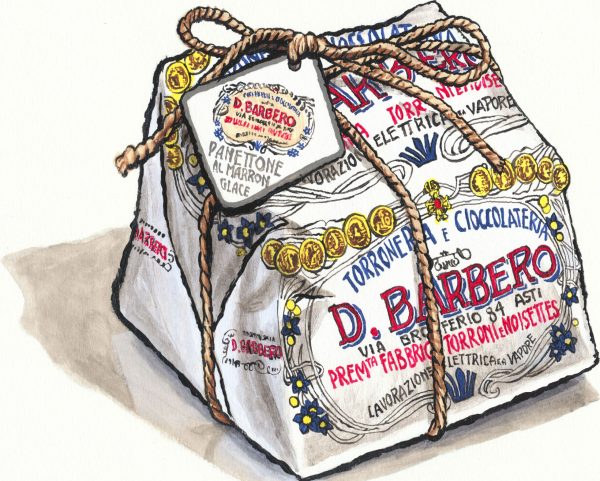 A few weeks ago, we got a special shipment of an exceptional panettone from D. Barbero. It’s studded with one of my long-time favorite confections, small pieces of marrons glacés. Cooked chestnuts that are soaked in sugar syrup, then dried and rolled in sugar, are what we might say was the medieval equivalent of gifting a box of great chocolates back in the days before chocolate arrived in Europe. The panettone isn’t just delicious; the decorated paper wrapping is wholly beautiful! Ideal for gifting to office groups, cake-loving cousins, long-time loyal clients, food-focused friends, or the neighbor you know next to nothing about.
Panettone, if you don’t already know it, is probably the most prominent of modern-day Italian Christmas breads. Panetto means a small cake; panettone a bigger small cake. Its origins likely go back to Roman times, and it became popular centuries later as a specialty of Milan. Its nearly overwhelming modern-day popularity dates to the years following the starting of the Barbero family bakery. They were, it seems, “ahead of their time,” and all these years later continue to craft exceptional products. Light, delicate, exceptionally aromatic, redolent of real Madagascar vanilla, sweetened with acacia honey, and laced with small bits of those marvelous and magical marrons glacés.
How to Eat Panettone
What do you do with panettone? Eat it and appreciate it! In Italy, many millions of them are given as gifts. Once you have one, just opening the package alone will enhance your day. I brought one of these home the other day in order to write about it. I opened it, took a small bit out to taste, and then rewrapped it. The aroma was evident as soon as I opened the door to come into the house the other evening!
You can just tear off a piece and eat it—imagine the lightest, richest, most angelic challah you’ve ever had. Unlike most challah, which are made without dairy, panettone is loaded up with butter—making it richer and silkier in texture. You can toast it lightly as I did this morning or even make it into French toast for Christmas morning or any other day you want to start in a special way.
Panettoni are made at the beginning of each season to last through the holiday, so buying now is a great way to get ahead of the holiday game.
Ship a panettone to your pal in Peoria
Want more from Ari?
Sign up for Ari’s Top 5 e-newsletter and look forward to his weekly curated email—a roundup of 5 Zing things Ari is excited about this week—stuff you might not have heard of!
Tag: ZINGERMAN’S MAIL ORDER

Every year, Zingerman’s hires hundreds of individuals for the holiday season. We increase our people power by 30 percent in November and December, topping out at about 1,000 organization wide, to help manage increased orders, seasonal product production, events, and daily retail traffic.
Of all the businesses in the organization, Zingerman’s Mail Order brings on the most employees for the rush—a 24-hour-a-day operation that includes servicing phone and online orders as well as packing thousands of shipments of artisanal foods (we sell more Sour Cream Coffee Cake than you ever can imagine). There are plenty of perks, including a starting wage of $11/hour, free meals, discounts, and paid breaks. For some employees, there’s another plus: many who start as temporary Mail Order employees stay on and become permanent members of the team.
Val Neff-Rasmussen is a great example. A holiday hire back in 2010, Val got her start answering phones in the Service Center – today, she’s the Marketing Specialist at Mail Order, a position she helped create for herself. The job combines her love of food with her talent for writing, and she also gets to travel the world in search of great food!
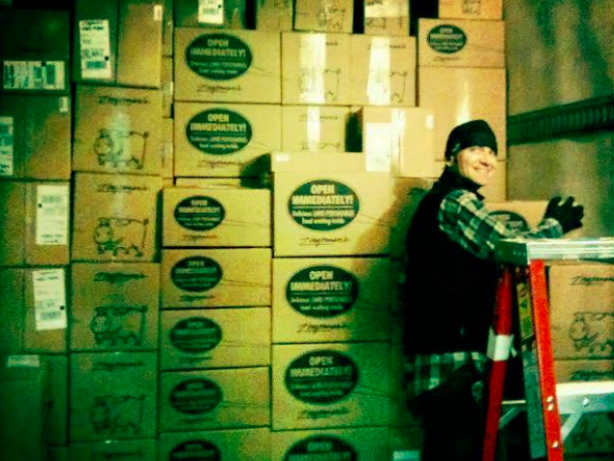
Val says she was able to move up by “leaping” at every interesting opportunity that came her way—she believes that opportunities abound in her business, so long as one is willing to really go for it.
“I feel like I’ve gotten everything I’ve asked for because one, I asked for it and two, I worked for it, but I’ve also realized that there’s a third piece: when the opportunities were offered to me, I said ‘yes’,” she explains.
Samaan Webster, who was just hired last holiday season, echoes Val’s sentiment. “Not even just here, but in any business in the ZCoB (Zingerman’s Community of Businesses), you have those opportunities to move up and work up,” he says, adding that he hopes to be at Mail Order for the foreseeable future and would like to take on new responsibilities.
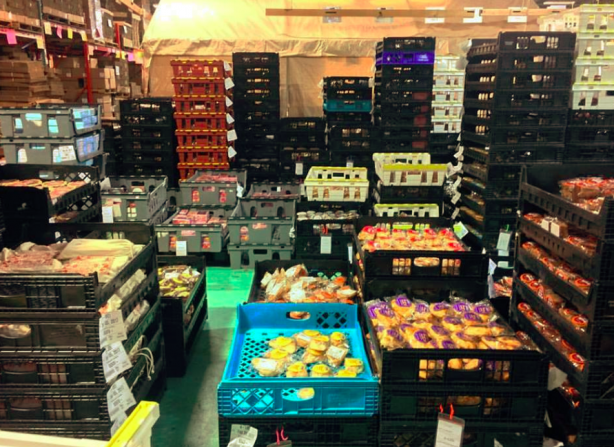
The bond he’s created with co-workers and the “inviting” company culture are two of the biggest reasons Samaan would like a future with Zingerman’s. He says he’s had other enjoyable jobs, but as he puts it, “There’s just something about Mail Order. I was just, like, ‘No, I need to stay.’”
Warehouse Manager J Atlee, who worked his first holiday season back in 2005, says he stayed on because, from the start, he felt like something was definitely different than other companies he’d worked with. “It was mainly the culture,” he explains. “You know, we worked hard, we did a lot of intense work, but the culture underlying it was positive. It was embracing, and it was very welcoming.”
Want to be part of the Mail Order holiday team? Pay starts at $11, and there are full- and part-time opportunities. We have spots in the Service Center and the Warehouse. Our other businesses are also looking for seasonal help—check out all Zingerman’s job opportunities our jobs page.