
Tag: ZINGERMAN’S MAIL ORDER

Every year, Zingerman’s hires hundreds of individuals for the holiday season. We increase our people power by 30 percent in November and December, topping out at about 1,000 organization wide, to help manage increased orders, seasonal product production, events, and daily retail traffic.
Of all the businesses in the organization, Zingerman’s Mail Order brings on the most employees for the rush—a 24-hour-a-day operation that includes servicing phone and online orders as well as packing thousands of shipments of artisanal foods (we sell more Sour Cream Coffee Cake than you ever can imagine). There are plenty of perks, including a starting wage of $11/hour, free meals, discounts, and paid breaks. For some employees, there’s another plus: many who start as temporary Mail Order employees stay on and become permanent members of the team.
Val Neff-Rasmussen is a great example. A holiday hire back in 2010, Val got her start answering phones in the Service Center – today, she’s the Marketing Specialist at Mail Order, a position she helped create for herself. The job combines her love of food with her talent for writing, and she also gets to travel the world in search of great food!
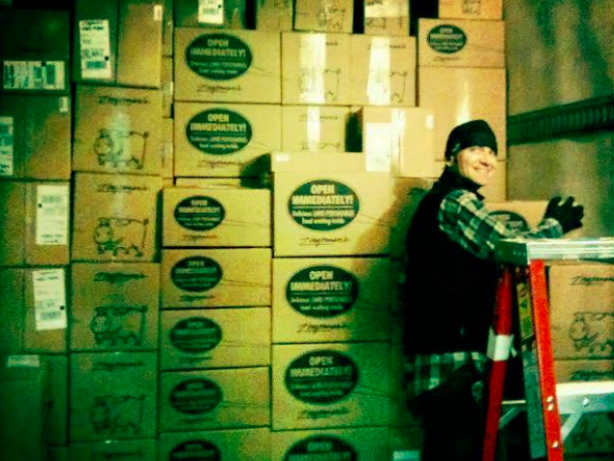
Val says she was able to move up by “leaping” at every interesting opportunity that came her way—she believes that opportunities abound in her business, so long as one is willing to really go for it.
“I feel like I’ve gotten everything I’ve asked for because one, I asked for it and two, I worked for it, but I’ve also realized that there’s a third piece: when the opportunities were offered to me, I said ‘yes’,” she explains.
Samaan Webster, who was just hired last holiday season, echoes Val’s sentiment. “Not even just here, but in any business in the ZCoB (Zingerman’s Community of Businesses), you have those opportunities to move up and work up,” he says, adding that he hopes to be at Mail Order for the foreseeable future and would like to take on new responsibilities.
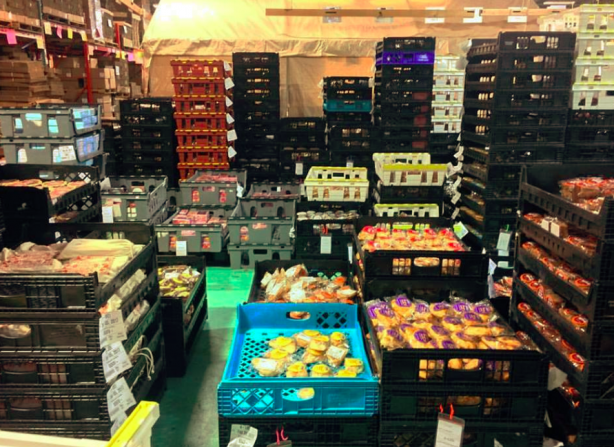
The bond he’s created with co-workers and the “inviting” company culture are two of the biggest reasons Samaan would like a future with Zingerman’s. He says he’s had other enjoyable jobs, but as he puts it, “There’s just something about Mail Order. I was just, like, ‘No, I need to stay.’”
Warehouse Manager J Atlee, who worked his first holiday season back in 2005, says he stayed on because, from the start, he felt like something was definitely different than other companies he’d worked with. “It was mainly the culture,” he explains. “You know, we worked hard, we did a lot of intense work, but the culture underlying it was positive. It was embracing, and it was very welcoming.”
Want to be part of the Mail Order holiday team? Pay starts at $11, and there are full- and part-time opportunities. We have spots in the Service Center and the Warehouse. Our other businesses are also looking for seasonal help—check out all Zingerman’s job opportunities our jobs page.
Last month, we celebrated Women’s History Month by asking the women partners of Zingerman’s Community of Businesses to give us their best advice. We posted their responses on our Zingerman’s Community Instagram and thought it’d be fun to recap their wise words here. Here’s what they had to say:
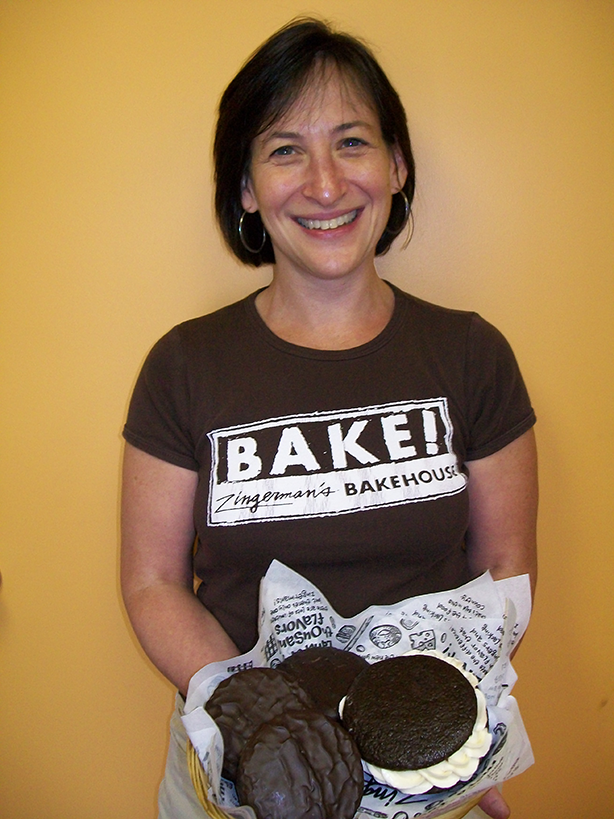
Amy Emberling, Co-Managing Partner of Zingerman’s Bakehouse
“During my first experiences in the food world in the late 1980s, it was clear that in some restaurants gender bias lived strong, as is the case today. I thought it was bizarre. I just ignored it and forged ahead. I recommend this as a strategy. Don’t engage with it except if necessary to call it out. Don’t embody it!”
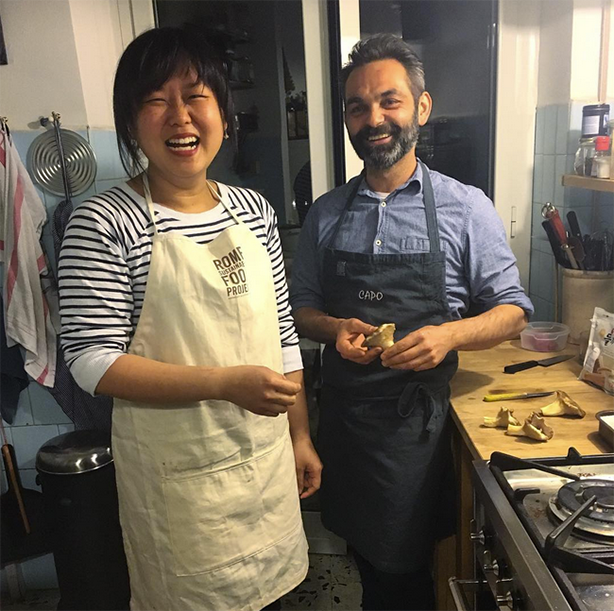
Ji Hye Kim, Managing Partner of Miss Kim
“I am not a native speaker. I am not a native. I’ve been a woman all my life, and I’ve been an immigrant ever since the age of 13. I had fancied myself as a fighter, with this idea that I have to go after what I want, because no one ever is going to hand it to me. In much of my personal experience, this has been true. But I know that with the right people and community like Zingerman’s, I can tune out all the noise, even internal ones calling me to be a fighter. I can just focus on being a leader and building something wonderful and delicious together.”

Aubrey Thomason, Managing Partner of Zingerman’s Creamery
“Do not be afraid, do not back down. If they tell you that you are loud, direct, abrasive, and competitive, you are probably doing it right! There are times to be soft and times to be hard, and over time you will learn to balance those things. But first you need to know what you are talking about, be fearless and direct, command attention.”
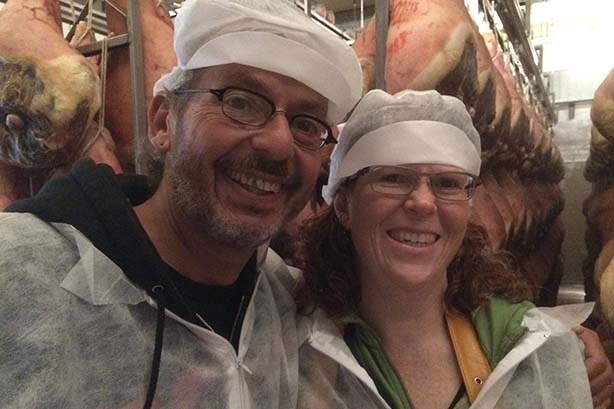
Grace Singleton, Co-Managing Partner at Zingerman’s Deli
“If I was going to give advice to any woman trying to move up the ranks or own their own business, I’d say believe in yourself first and foremost—you can do anything you set your mind to. Work hard. Nothing great comes easy, don’t lose sight of your goals—it’s easy to get sidetracked—and don’t be afraid to ask for help from others by sharing your vision of success.”
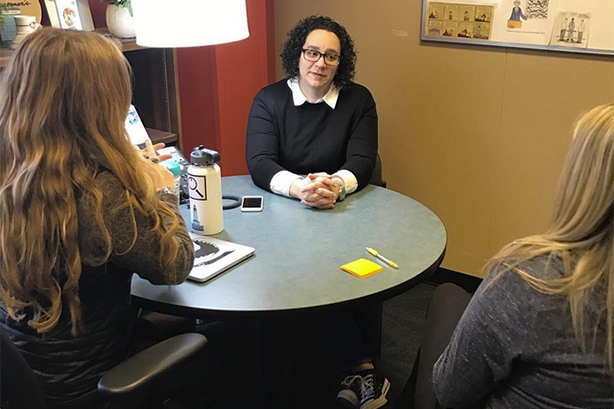
Toni Morell, Co-Managing Partner of Zingerman’s Mail Order
“Never let anyone tell you what is and is not possible. You can be confident and kind, strong and humble. You only learn from your mistakes—you will make them, so get ready to learn. Don’t be afraid to say what you think. You don’t have to know all the answers, but be willing to admit when you don’t. Let your passions guide you. You set the organization’s tone, so be careful you are setting the right one.”
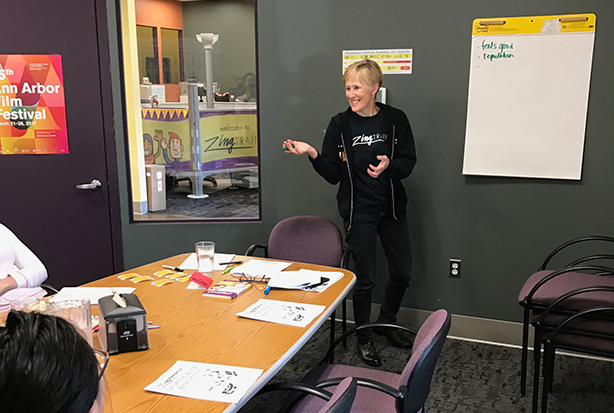
Maggie Bayless, Managing Partner of ZingTrain
“I grew up in an academic family and for years thought there was something a little sleazy about being in business—that corporations were out to take advantage of people. As I found myself in a variety of different jobs, however, I began to see that there were good businesses as well as bad businesses….Now, 23 years after starting ZingTrain, I have the opportunity to meet entrepreneurs and business leaders from around the world, and I’m completely convinced that small businesses can be an incredible catalyst for positive social change.”
Lined up end to end, the cans would cover about 2 miles!
You may be thinking:
34,000 tins? It’s just tuna…
In your mind you’re imaging the stuff you buy from your big box grocery to make a really sad tuna salad you have to eat outside so as not to draw the ire of your coworkers. You couldn’t be further from what we’re talking about here.
Our tinned fish comes from all over the world. The most popular of which is Ortiz Bonito Tuna from Spain and was definitely the favorite this past Summer Sale. Tinned fish from Spain is a culinary experience on par with eating caviar straight from the jar. We’re happy to have turned so many customers on to the line-caught, albacore tuna which is hand-cleaned, olive oil packed that just gets better with age.
Last fall I went to visit Ortiz in Zumaia, the fishing town off the Bay of Biscay, and tasted through a dozen batches of tuna before I landed on this one, the juiciest and sweetest catch of last summer.
– Mo Frechette, Zingerman’s Mail Order Partner
Zingerman’s Mail Order Summer Sale typically starts in June. Customers are able to stock up on their favorite items, including Ortiz Bonito Tinned Fish, for about 6 weeks.
Don’t miss this great sale!

Our once-a-year sale on meats, cheeses, chocolates, and much more ends this coming Thursday, March 31st!
Are you fond of bacon? How about a subscription to the Quarterly Bacon Report Food Club? Or, for the true fan, try Bacon All Year Club and enjoy the Year of Living Baconly.
For the cheese aficionado, we’ve got Cheeses of the World, or how about a great deal on our delicious Manchester from Zingerman’s Creamery?
If you’re looking for sweet treats, try some amazing Spanish Chocolate Dipped Figs, or a Bon Bon Bon Chocolate Box from one of our favorite local chocolatiers, or some Spanish Dark Drinking Cocoa.
These humongous discounts will disappear very soon. Reserve yours now, and fill your fridge with the treats, the must-haves, the go-tos, and the you-deserve-these foods that make life all that much better!
Don’t miss the Spring Sale at Zingerman’s Mail Order!
See you soon!
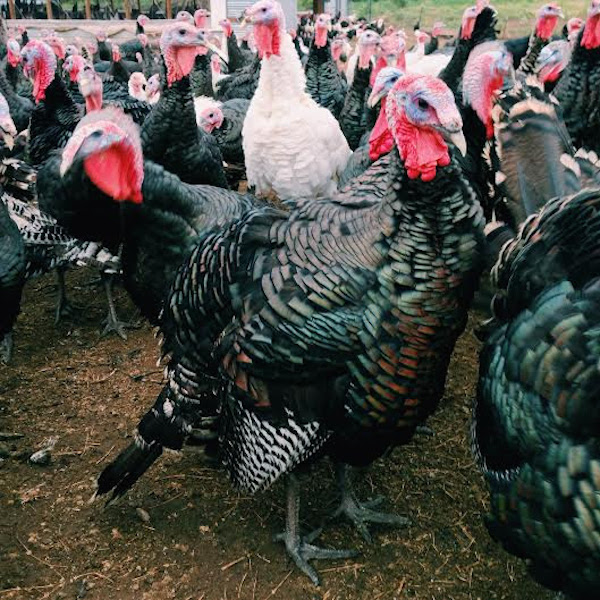
The Thanksgiving turkey most of us are used to is very different than the turkey that would have been on our table a hundred years ago. They look different: today’s commercial turkeys are all white with a broad,  distended breast; traditional turkeys range from white to tan to bronze to black and have a longer, leaner body. They act differently: most turkeys today have been bred to live in close confinement with little movement; traditional turkeys trot, strut, run, roost, and fly (Les Nessman was right). They taste different, too: grocery store turkeys are pumped full of brine so they’re not completely bland; traditional birds have a bigger, more robust flavor.
Luckily, there are still a few opportunities out there to taste the turkeys that our grandparents grew up with.
That’s thanks to the hard work of farmers like Frank Reese and Bill Niman. Frank, the godfather of the heritage breed turkey world, raises them on his 180-acre farm in Lindsborg, Kansas. He’s a fourth-generation turkey farmer, an impressive length of time to do anything, let alone raise turkeys. But more impressive than his own family history is that of his turkeys: he can trace back nearly a hundred generations, all the way to 1917 for his Standard Bronze turkeys. Along with the Bronzes, he raises a handful of other heritage breeds that were popular fifty years ago but have all but disappeared today: Narragansett, Black, White Holland, Bourbon Red. Thanks to Frank’s work, more and more farmers—including Bill Niman, a pioneer in the world of humanely raised beef and pork at his former company, Niman Ranch—are beginning to raise heritage breed turkeys, too.
Today, one breed of turkey dominates more than 99% of Thanksgiving tables: the Broad Breasted White. It’s a fitting name. The breast is so large that the turkey has trouble standing, let alone walking. Forget flying. They can’t mate naturally so they have to be artificially inseminated. The birds suffer severe disfigurement: their claws, wings, beaks, and snoods—the fleshy part that hangs from the top of a turkey’s head—are clipped to keep them from fighting (or at least to keep them from doing much damage to each other when they do fight, an inevitability since they’re kept in tight, crowded spaces). White feathers are favored because darker feathers can leave small dark spots on the meat when the bird is plucked. That doesn’t sound like such a bad thing except that white-feathered turkeys are less disease resistant so they’re fed antibiotics their entire lives. They’re not given any hormones, but that’s only because those hormones were banned due to health concerns—not for the turkeys, but for the people eating them.
If all of this is starting to make you depressed, you’re not alone. I was too. Until I met Frank’s birds.
Heritage breed turkeys, like the ones that Frank and Bill raise, are a totally different animal.
Heritage turkeys must be able to do three things:
1. Mate naturally. Frank spends February and March helping to set the Valentine’s Day mood for his turkeys. He separates each breed into its own barn, turns on the heat lamps for the only time all year, and lets nature take its course. Apparently, turkey hens don’t require chocolate or roses.
2. Live outdoors, moving around normally and enduring whatever weather comes along. Frank and Bill keep their turkeys in barns at night for protection from coyotes, but every morning the turkeys are let out to spend their days strutting around the yard, flying over fences, chasing rabbits that come too close, and, at least when I visited Frank’s farm, pecking inquisitively at unfamiliar humans. They eat bugs and wild grasses and any rodents they catch (turkeys are omnivores) as well as a bit of supplemental corn and soy, but they’re never fed any antibiotics. To allow them to get along out in the elements, Frank and Bill never clip their turkeys’ claws, beaks, wings, or snoods.
3. Grow slowly. Frank and Bill’s birds take six months to grow to their full size, a natural growth rate for turkeys. By contrast, Broad Breasted White turkeys take half that long to reach full size, which is great news for the team in accounting but not so good for the bird’s welfare—or its flavor.
The difference in flavor between industry birds and heritage birds is like the difference between Wonderbread and a loaf of French Mountain Bread.
Active lifestyle, varied diet, and a longer lifespan all add up to more flavorful meat. Heritage turkeys taste richer, more like turkey, if that makes sense. The breast, while less plump, has flavor that’s a far cry from the bland meat we’re used to. Frank’s turkeys have won taste competition after competition across the country, including ones held by the New York Times and America’s Test Kitchen. In our kitchen here at Zingerman’s, Bill’s turkeys from his new company, BN Ranch, were a big winner in our own turkey taste test. This year we have three-hundred whole, frozen turkeys that will ship just in time for Thanksgiving. They make for a stunning, delicious, honorable centerpiece to your meal.

A Tangy tonic for what ails ya!
For centuries grandmothers have been prescribing vinegar as a panacea for ailments ranging from hiccups to dandruff to tummy aches to arthritis. The link between vinegar and medicine is so established that the Italian word balsamico actually comes from the same origin as the word balsam in English: a resinous liquid with medicinal benefits. Perhaps, then, it should come as no surprise that when Dana St. Pierre suffered from bad allergies as a teenager, his German grandma suggested he try mixing apple cider vinegar with a bit of fresh horseradish and honey. The tonic tasted terrible—but it was effective. So effective, in fact, that he kept drinking it for years.
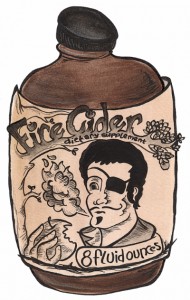
Over time, he tried adding in other ingredients to make it more palatable. When he lived in Phoenix he started added lemons and oranges from his backyard to the mix. But this story really begins in 2010, after Dana had moved back to his hometown of Pittsfield in western Massachusetts. That fall he made three 5-gallon jugs of hard cider. One of them went a little too hard and turned into vinegar. Dana took that vinegar and played around with a dozen recipes. After subjecting his friends to plenty of pungent taste tests, he settled on a mix of honey, horseradish, orange, lemon, onion, ginger, habanero, garlic, and turmeric. Fire Cider Vinegar was born, and it wasn’t just good for use as medicine. It earned itself a spot in the pantry.
These days, the recipe starts with unfiltered, raw, certified organic apple cider vinegar. Dana and his team of five take that vinegar and add in the citrus, roots, and spices. Everything mixes and mingles together at ambient temperature for six weeks. Then the seasonings are filtered out and a bit of honey is mixed in. The result is a cloudy, amber vinegar that packs a serious, complex punch.
All of the ingredients in the mix are organic except for the honey. To get a honey to be certified organic, you have to be able to prove that all of the fields within the area a bee might visit for nectar are certified organic. A bee will fly up to about four miles from its hive, so that means the hive would need to be in a circle of certified organic fields that’s at least eight miles in diameter. That’s pretty uncommon in the US (or anywhere, for that matter), so to make Fire Cider Vinegar they use a local Massachusetts raw wildflower honey.
The flavor of the vinegar starts a bit sweet from the honey, then moves to a vinegary, citrusy tartness, then gets warm from the ginger, and then hot from the habanero. It tingles across the tongue and the roof of the mouth, and then tickles down the throat. The flavor lingers for a long, long time—and just when it starts to fade you realize you want to taste it again.
Five ways to rev up your cooking with Fire Cider Vinegar:
- Whisk up a punchy vinaigrette with a peppery olive oil to dress spicy greens like arugula
- Stir a bit into lemonade or iced tea for an afternoon pick-me-up with a kick
- After sautéing Brussels sprouts or broccoli in a bit of bacon fat, use a splash of Fire Cider Vinegar to deglaze the pan
- Mix some into a cool, refreshing gazpacho for just a hint of heat
- Muddle half a jigger of Fire Cider Vinegar into a cocktail like a spicy Manhattan or a perked up Hot Toddy
Fire Cider Vinegar is available from Zingerman’s Mail Order!
Enjoy!