
Tag: ZINGERMAN’S MAIL ORDER
Summer sale goodie!
A friend and I went to the grocery one evening in search of ice cream and hot fudge. The ice cream part was easy; we picked a good one right away. The chocolate sauce was another story. We spent a lot of time reading all of the ingredient lists looking for the one with the fewest (and most pronounceable) ingredients. The one we finally settled on was okay, but nothing to write home about.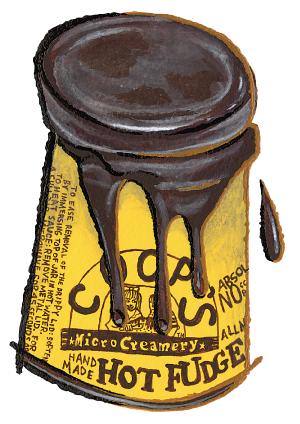
When I asked Marc Cooper—who goes by Coop—what he was looking for when he created his hot fudge , he told me he wanted something all natural. There’s no legal definition of “all natural” but Coop’s personal definition is that there are no chemicals used in any part of production, and all of the ingredients are processed as gently as possible.
Let’s start with the chocolate.
Cocoa powder is simply ground up, roasted cacao beans with most of the fat (in the form of cocoa butter) removed. To get “natural” cocoa powder, that’s all there is to it. The flavor ends up being very bitter and pretty acidic, much like cocoa beans themselves. However, around 90% of all cocoa used today is alkalized (also sometimes called Dutch processed, because it was invented by a Dutch guy). Alkalized cocoa has been treated with chemicals to make the cocoa less acidic. It has a milder flavor and darker color. Alkalization also makes cocoa more soluble, so it’s easier to mix it into liquids, making it especially popular for use in ice cream and with dairy products.
Coop uses a natural, unalkalized cocoa powder to avoid that chemical processing. Each new harvest of cacao beans is a little different from the one before due to weather and processing conditions, so periodically he’ll test out new cocoas to make sure he’s got one that gives the rich, complex, chocolatey flavor he wants. He’s opted for a cacao from Ivory Coast which is processed into cocoa powder in Holland. When he tried making his hot fudge with cocoas from Central and South America a few months back, he found it created a more fruity flavor that didn’t have the richness he wanted.
Besides the chocolate, there are only four other ingredients.
The first two are cream and butter. It took Coop a while to find the dairy products he wanted. Most commercial dairies these days pack the cows in tightly and then either feed them antibiotics to prevent disease or ultra pasteurize the milk to kill off any pathogens. (Take a look the next time you’re picking up milk at the grocery; nearly all organic milk, which comes from cows that haven’t received preventative antibiotics, is ultra pasteurized.) Ultra pasteurization is different from regular pasteurization in that it heats up the milk much hotter for a shorter period of time. The process can make the milk shelf stable for months, but it changes the flavor and texture of milk. In particular, it can alter the whey proteins that give milk its creaminess, requiring the addition of congealing agents like guar gum or carrageenan to achieve the original texture. Coop uses cream and butter from a local Massachusetts dairy that pasteurizes more gently. There are no congealing agents, nothing added, nothing removed.
The last two ingredients are white cane sugar and brown cane sugar (which is actually just white sugar with some molasses mixed back in). Coop prefers to use cane sugar rather than beet sugar since all beet sugar in the US is GMO. He’s also careful to only use sugar that is processed in the US because a lot of the cane sugar processed in other countries is treated with charred cow bones (which help to take out the natural tan color of sugar to make it snowy white; American-processed cane sugar uses charcoal instead). Most chocolate sauces contain corn syrup (either instead of or in addition to sugar) which helps to keep them from recrystallizing and becoming grainy; Coop uses the molasses in the brown sugar to achieve this effect.
Coop is a poster child for small batch production.
A while back, one of those TV shows about how things are made gave Coop a call. They were interested in featuring his hot fudge production in an episode. “They like to see a lot of production lines and machinery,” Coop told me. “When I told them all I have is two vats that each produce about four gallons of hot fudge at a time, they decided not to come and film us.” Coop and his three employees produce three or four double batches of fudge per day, four days a week—that adds up to about 1,200 jars weekly. On the side of each jar you’ll find the hand-written initials of the person who made that particular batch.
Coop’s hot fudge business was actually an off-shoot of the ice cream shop he opened a few decades ago. “I wanted to be able to keep my staff busy in the off-season,” Coop told me, so he started playing around with a hot fudge recipe. His plan worked, and the hot fudge became so popular that about five years ago the fudge production split off from the ice cream shop to become its own business.
And how does it taste?
Coop’s hot fudge is thick, luscious, intensely chocolatey. It’s insanely good heated up—microwave the whole jar or a smaller bowlful for a minute or less and you’re good to go. And then what to drizzle it on? “Our hot fudge will make any ice cream better,” Coop told me proudly. Then he added, perhaps a bit apologetically, “even Zingerman’s gelato.”
There are a lot of products we sell that I’d say you could eat on a spoon out of the jar. This one tops that list; I never put the spoon in the sink without licking it first. I’ve drizzled it over coffeecake and strawberries. It’s killer slathered on toast. Or chocolate covered pancakes?!

Coop’s Hot Fudge is part of our big Summer Sale at Zingerman’s Deli and Zingerman’s Mail Order through July 31. Try this chocolate wonder today!
a challenging year for olives
Our spring shipment of imports arrived at our warehouse a few weeks ago. Each year, this delivery is the one that includes our newest harvest of olive oils—in this case, we just got the 2014 harvest. It takes until May for the new oils to arrive because after the olives are picked and pressed around November the oil is left to settle for a few months to naturally decant out any sediment, and then it takes several weeks for the oil to make its way across the Atlantic on the boat. This year our import was missing a lot of the oils we usually bring in.
It wasn’t a surprise that the oils were missing. 2014 was an epically bad year for olives in Europe. Spain’s olive harvest was down 50%. Italy’s harvest was down about 35% overall, and in some regions, like Tuscany, it was down nearly 90%. What happened?
Blame it on the weather.
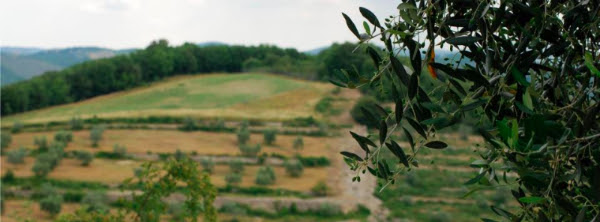
Let’s talk about Italy. The winter of 2013-14 was mild. So mild, in fact, that it did not kill off the insects that chow down on olives. Then summer 2014 was rainy and humid, giving the insects the perfect conditions to proliferate. The larvae hatch inside olives, feasting on the fruit and boring holes that let in fungi and bacteria that give the olives an off, moldy flavor. As if all that weren’t enough, in September a hail storm hit the countryside and knocked much of the not-yet-ripe fruit to the ground.
With all this bad luck, it seems like an olive farmer should pray for a cold, insect-killing winter and a hot, dry summer. But not too cold. Tuscans still talk about the winter of 1984-85, when three weeks of frigid weather killed off most of their olive trees. (They also tell me that winters like that come around about every 30 years or so—which would mean we’re due to have one any time now.) And not too hot and dry, either. The south of Spain had a terrible drought last summer that decimated their olive harvest.
Too little water, no olives. Too much water, no olives. Too cold, no olives. Too warm, no olives. Rather than being a surprise that there was such a horrible harvest in 2014, it’s beginning to feel like it’s a miracle there’s ever a good harvest.
OK, I get it, the harvest was terrible. But what does that mean for an olive oil enthusiast?
For the majority of inexpensive grocery store olive oil there probably won’t be a huge impact. The price may go up a bit, but most olive oils on the market—including most extra virgin oils—are made with a blend of olive oils from who knows how many sources. Take a look the next time you’re in the olive oil aisle at the store. While the bottle may proudly announce that it’s “imported from Italy” on the front, if you turn it around to the back it may say something like, “Made with select, high quality extra virgin olive oils from Italy, Spain, Tunisia, and Greece.” There’s also no clear indication of when any of the oil was pressed. Those oils—from different countries and possibly even different years—are all blended together to get a consistent (read: boring) oil without a whole lot of flavor. If one of their sources of oil had a bad harvest, they’ll just supplement the supply from somewhere else.
For olive oils grown and produced on a single estate the situation is far more dire. It doesn’t just mean that there’s less oil available. In many cases it means no oil at all. Nearly all of the oils we sell come from a single estate, so there was a huge impact for us. By the time farmers went to harvest the olives, there wasn’t much fruit on the trees. And in many cases, like at Tiburtini in the Italian region of Lazio and at Cacchiano in Tuscany, what little fruit there was made oil of such poor quality that they shut down the mills and decided not to press any oil at all. We have a collection of a couple dozen or so olive oils that we have sold every year for a decade or more, but this year we don’t have nine of our regular oils because none was produced last year. With other oils, such as the crowd-favorite Maussane, we have our whole year’s supply in stock right now, and when it sells out, it’ll be gone ’til May 2016. (That is, assuming this fall’s harvest is a bit more successful!)
Rather than leave our olive oil shelves empty, we’ve decided to bring on a handful of new oils in a one-time-only olive oil pop up shop.
We taste dozens of new olive oils every month. We bring on maybe two new ones a year. But right now in our pop-up shop we have eleven new extra virgin olive oils. It’s unprecedented! We’re excited about the newcomers, but they’re only here for a limited time. When they sell out, that’s it, they’re gone. I just tasted all of ’em; here are a few notes on some of my favorites:
Ol Istria Leccino Olive Oil comes from the Porec region of Croatia. Made from just one kind of olive, Leccino, it’s soft, fruity, and buttery. Outstanding on simple dishes, like fresh mozzarella with a few ripe tomatoes.
Weka Olive Oil comes to us from New Zealand by way of some former New Yorkers. It’s made with the varietals of olives you typically find in Tuscany and is likewise bold, grassy, a little bitter, yet soft and supple in the finish.
Capirete Olive Oil comes from the Andalusia region in southern Spain. It’s made from picual olives and has a nice green banana aroma and a mild but bright flavor that’s an excellent match for fresh greens—or a grilled steak.
Tondo Olive Oil is from the southeastern corner of Sicily. Made from Tonda Iblei olives, this one is complex and nuanced, starting soft and sweet then building to big, fruity, and finally slightly bitter notes.
Read more about all of our new oils in our pop-up shop on the Zingerman’s Mail Order website.
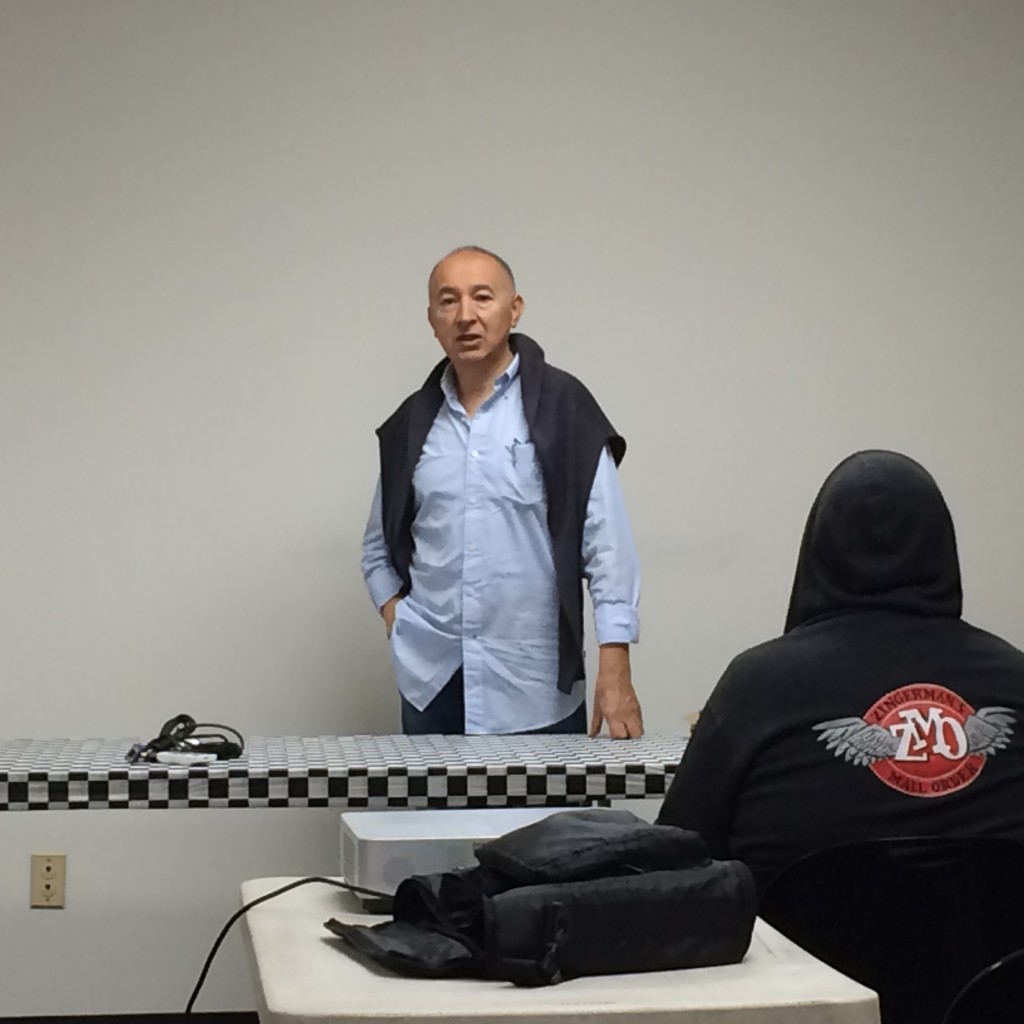
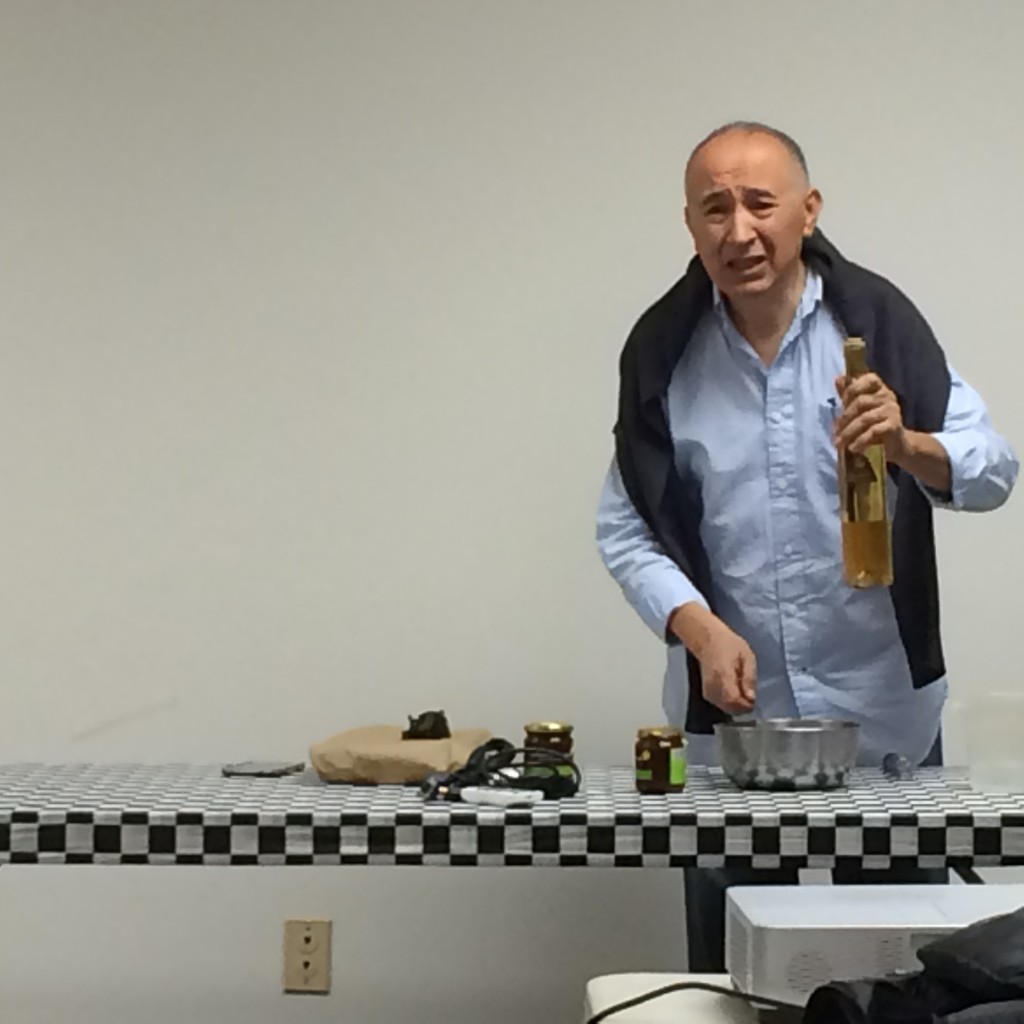
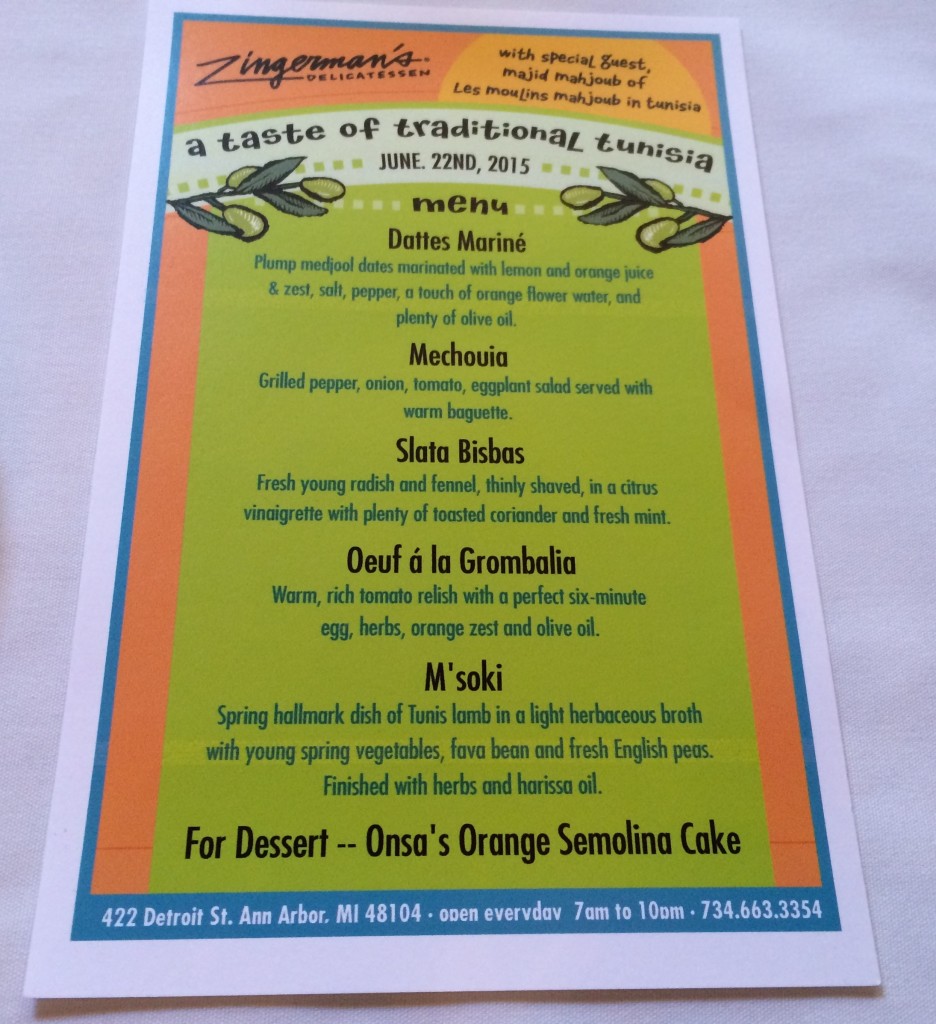
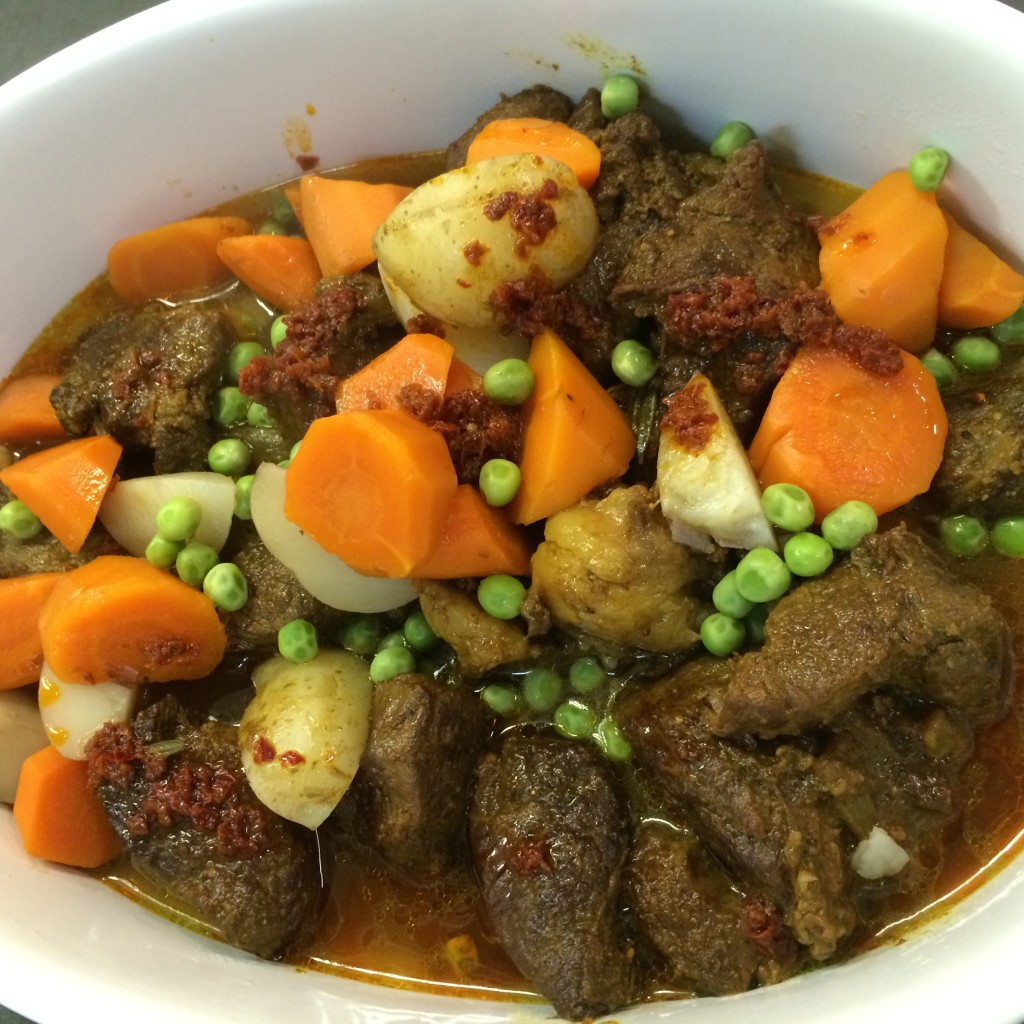
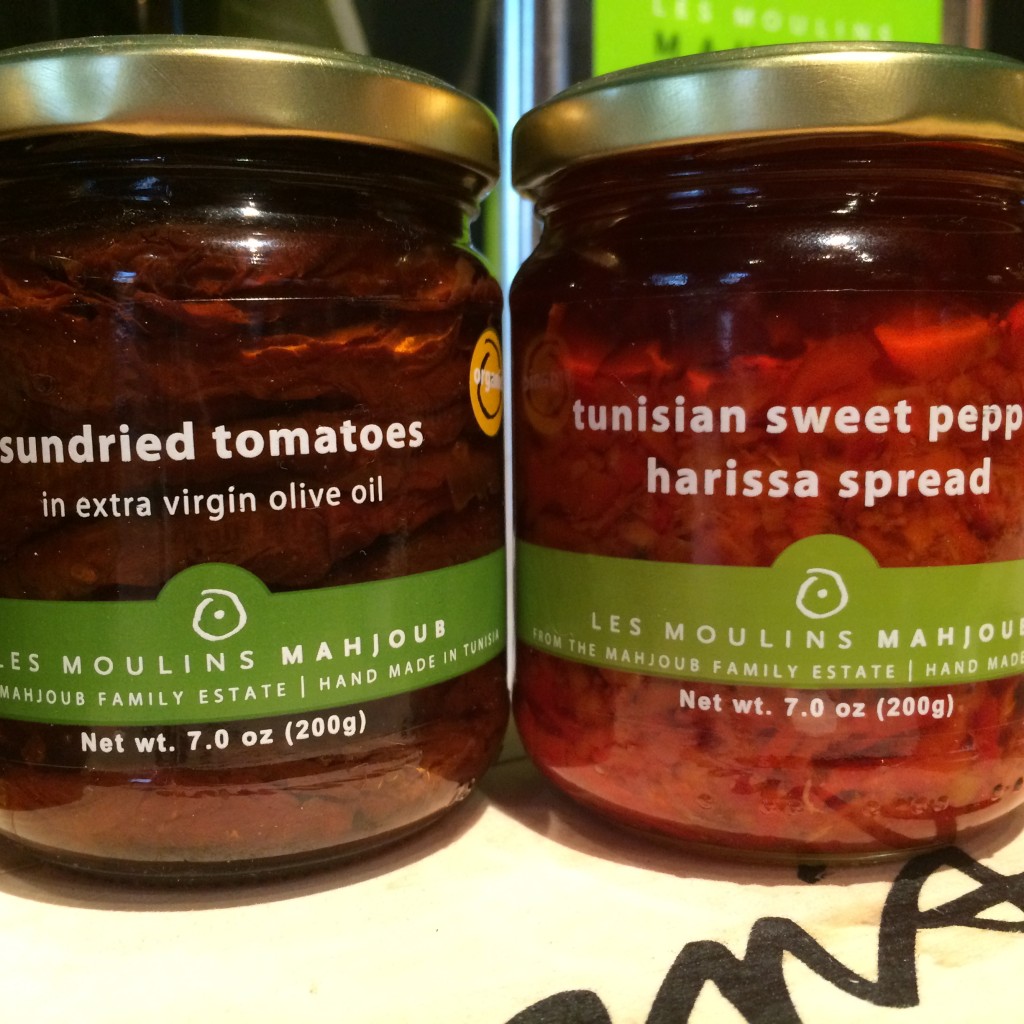
This past Monday, we were privileged to have a visit from our friend, Majid Mahjoub, owner of Les Moulins Mahjoub, purveyors of fine Tunisian foods. Mr. Mahjoub was in town for our Taste of Traditional Tunisia at Zingerman’s Events on 4th during the evening. But first, he took some time to share his traditional foodways with Zingerman’s staff on Monday morning:
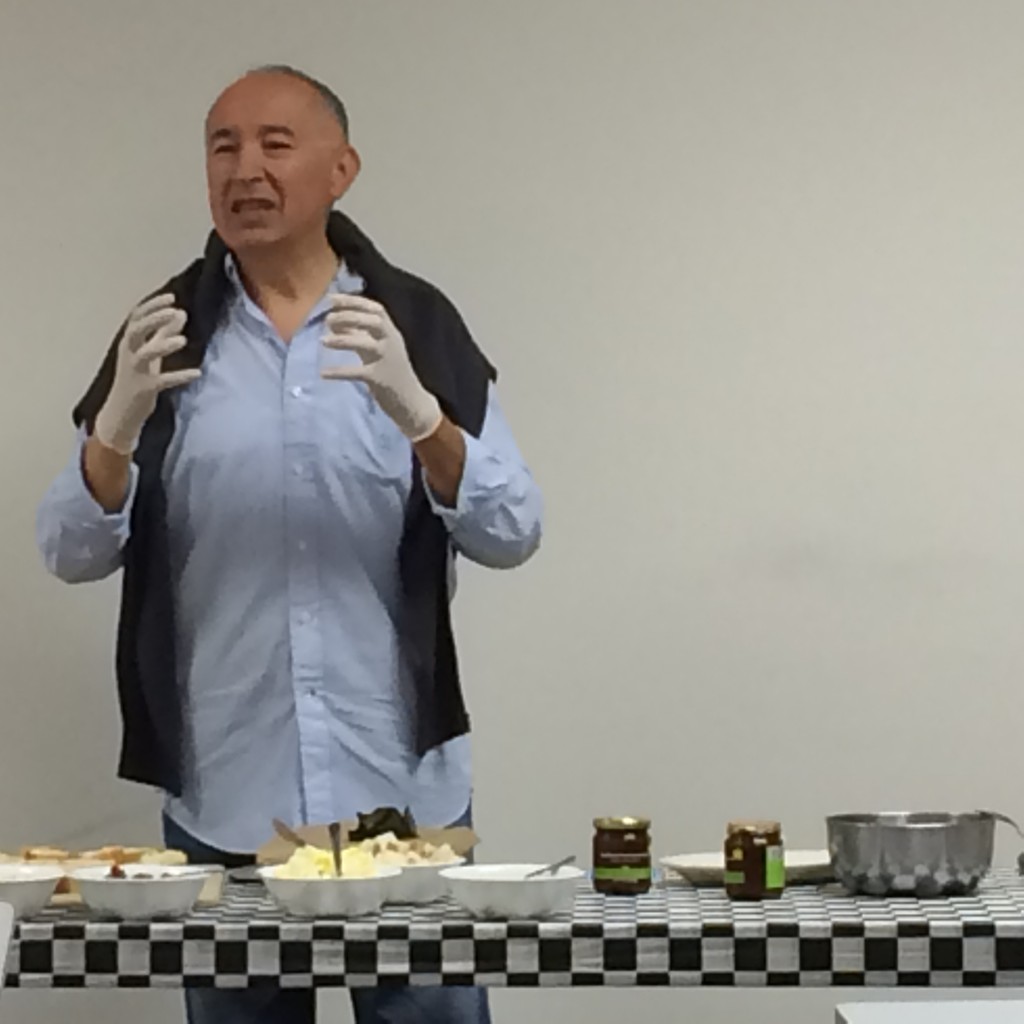
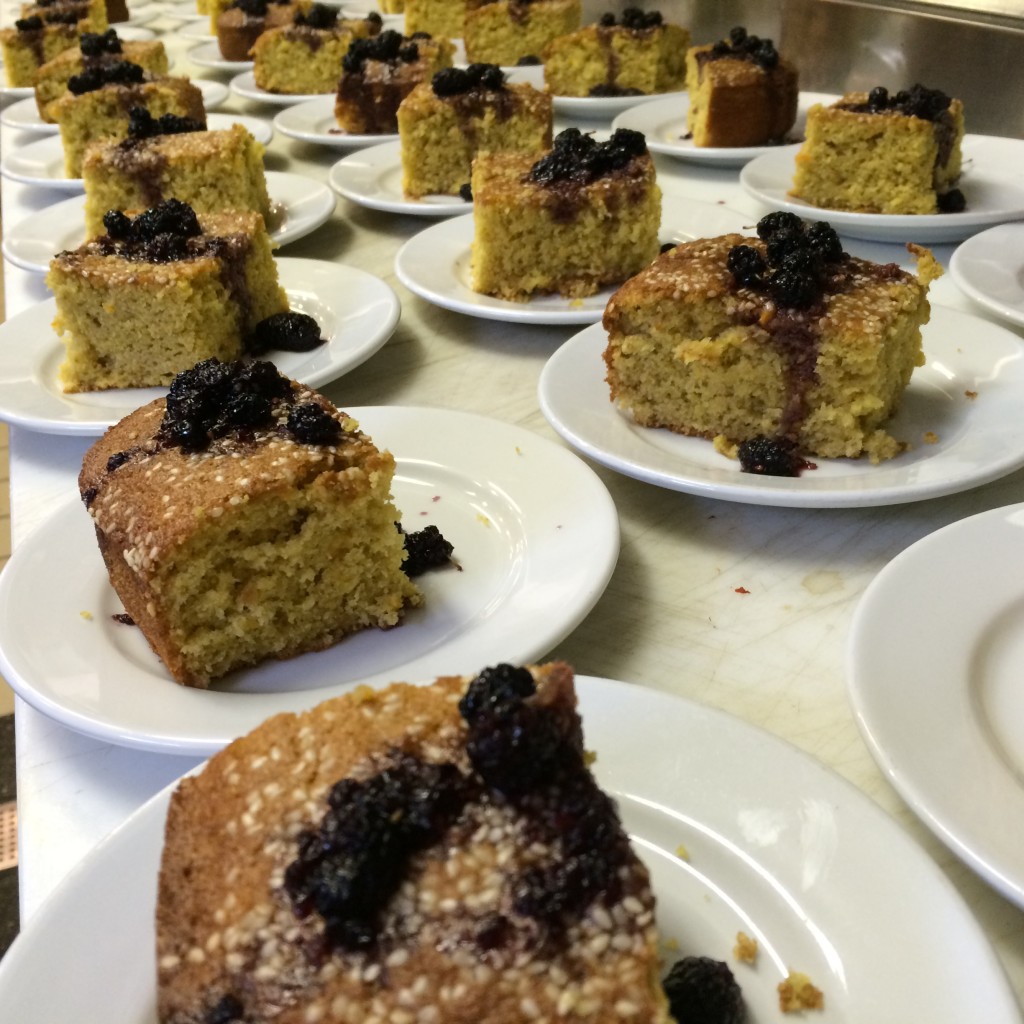
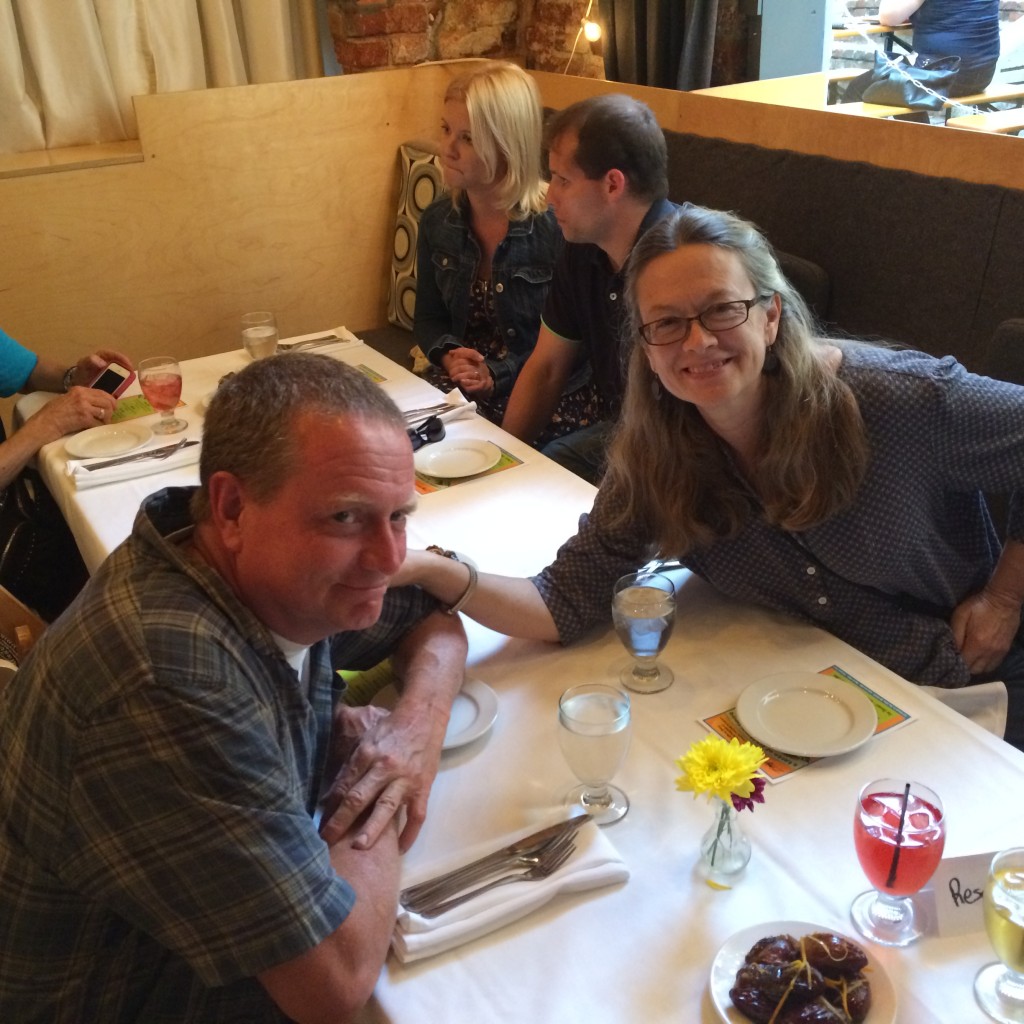
After a delicious tasting for staff and a brief respite, it was off to the Taste of Traditional Tunisia dinner at Zingerman’s Events on 4th:
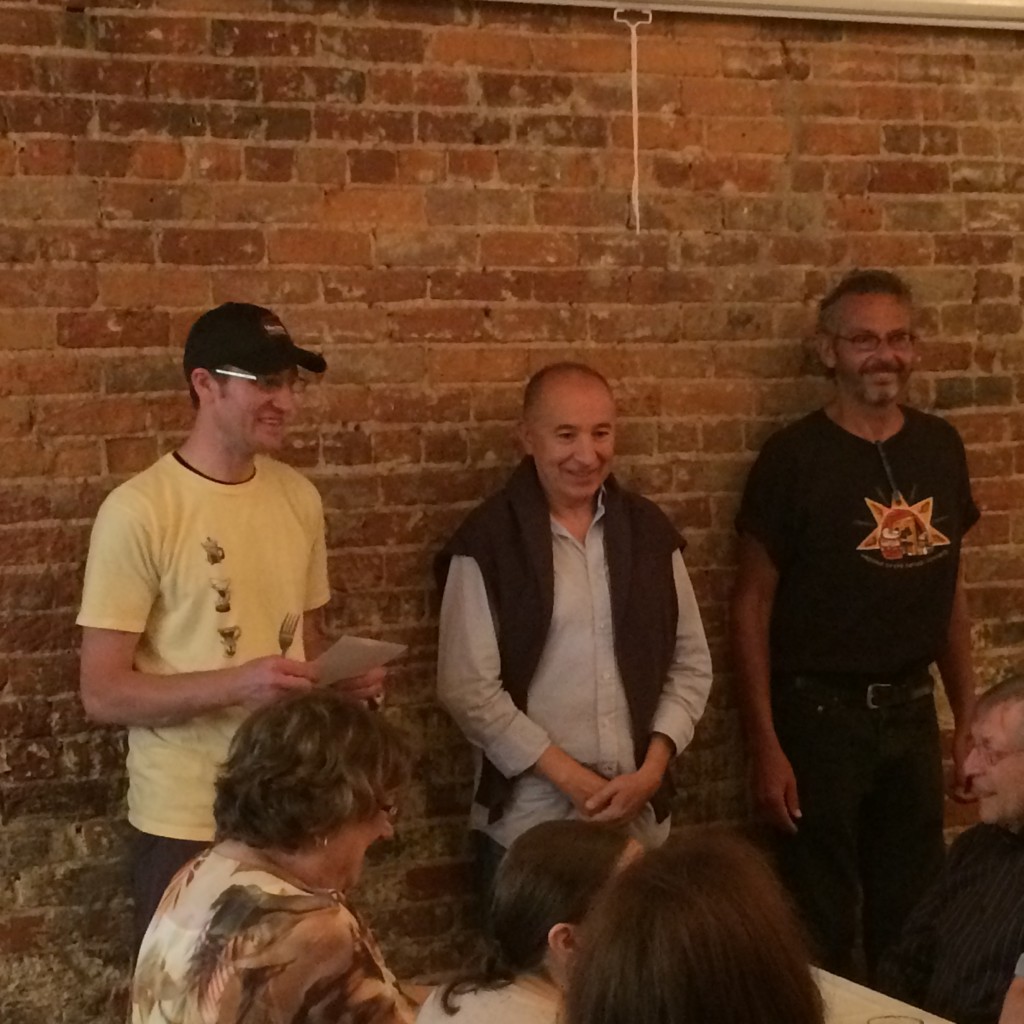
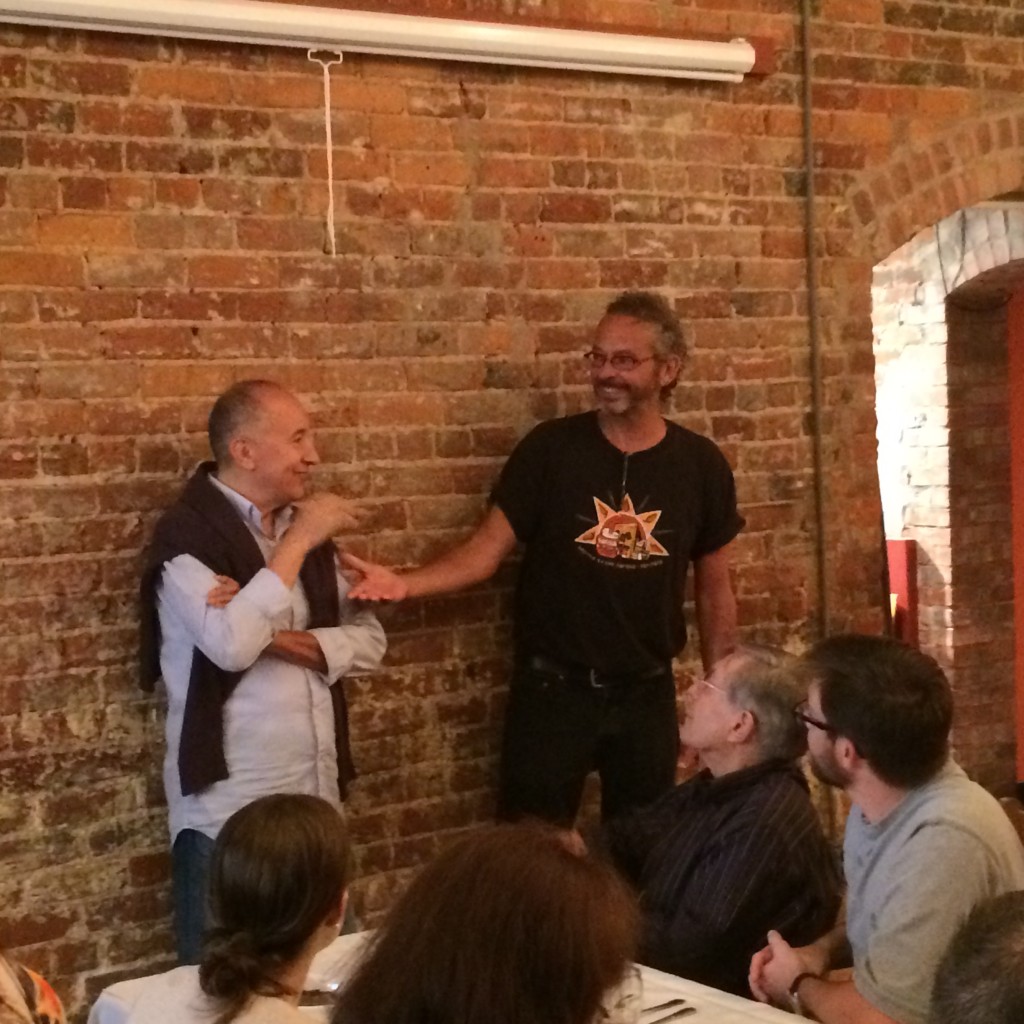
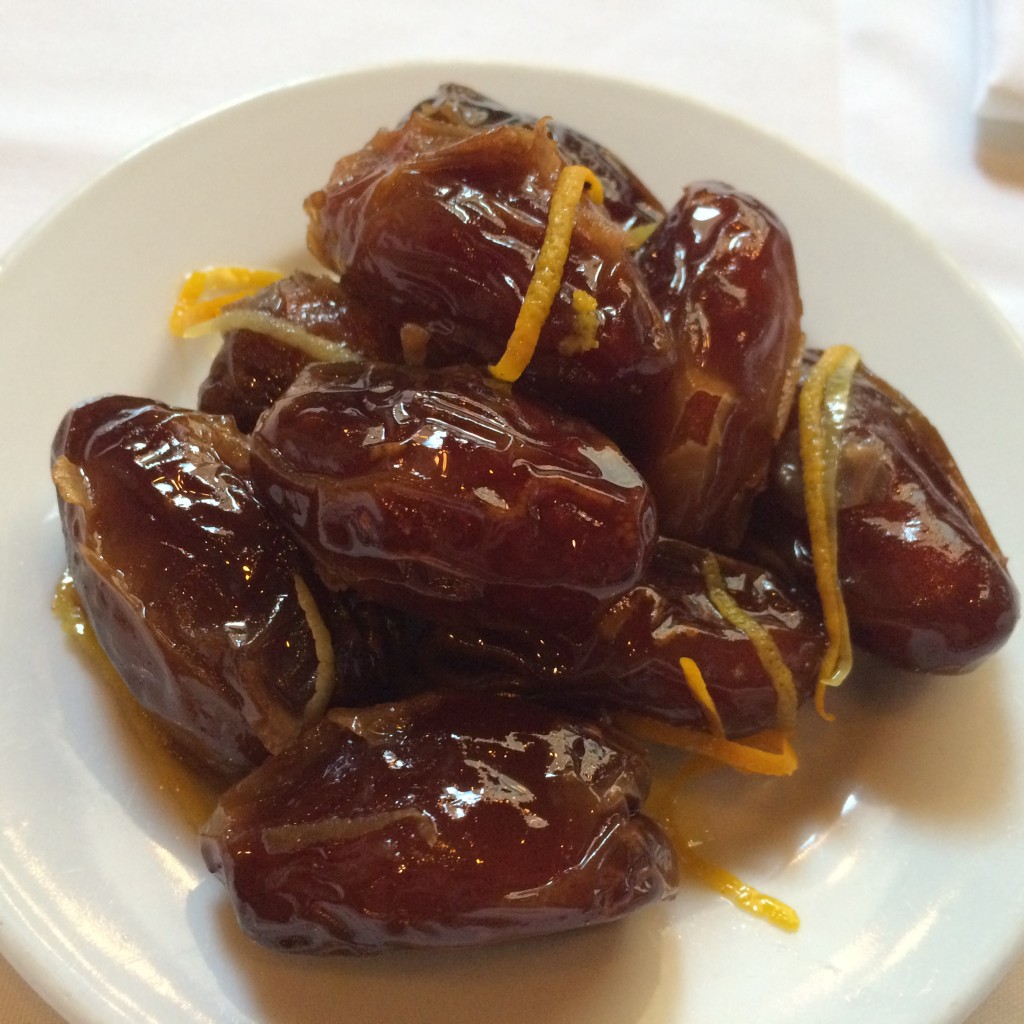
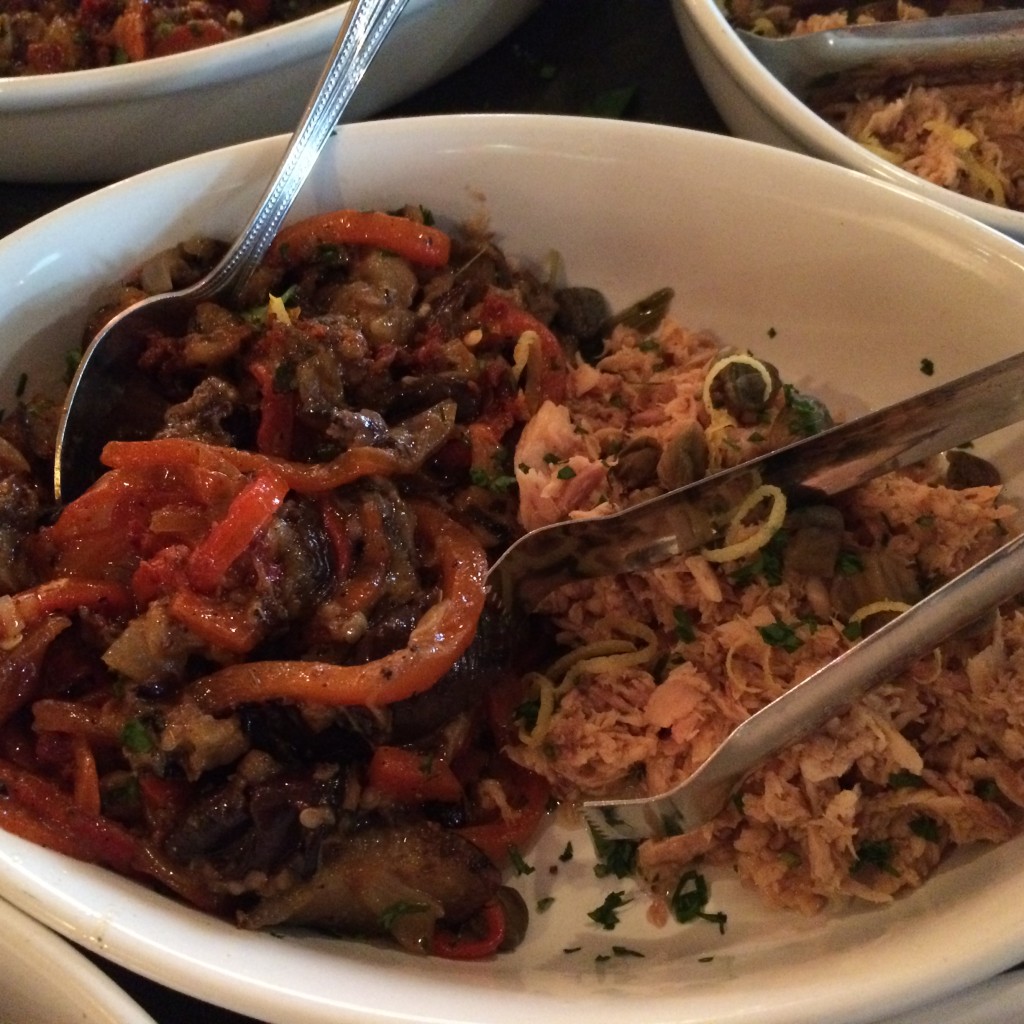
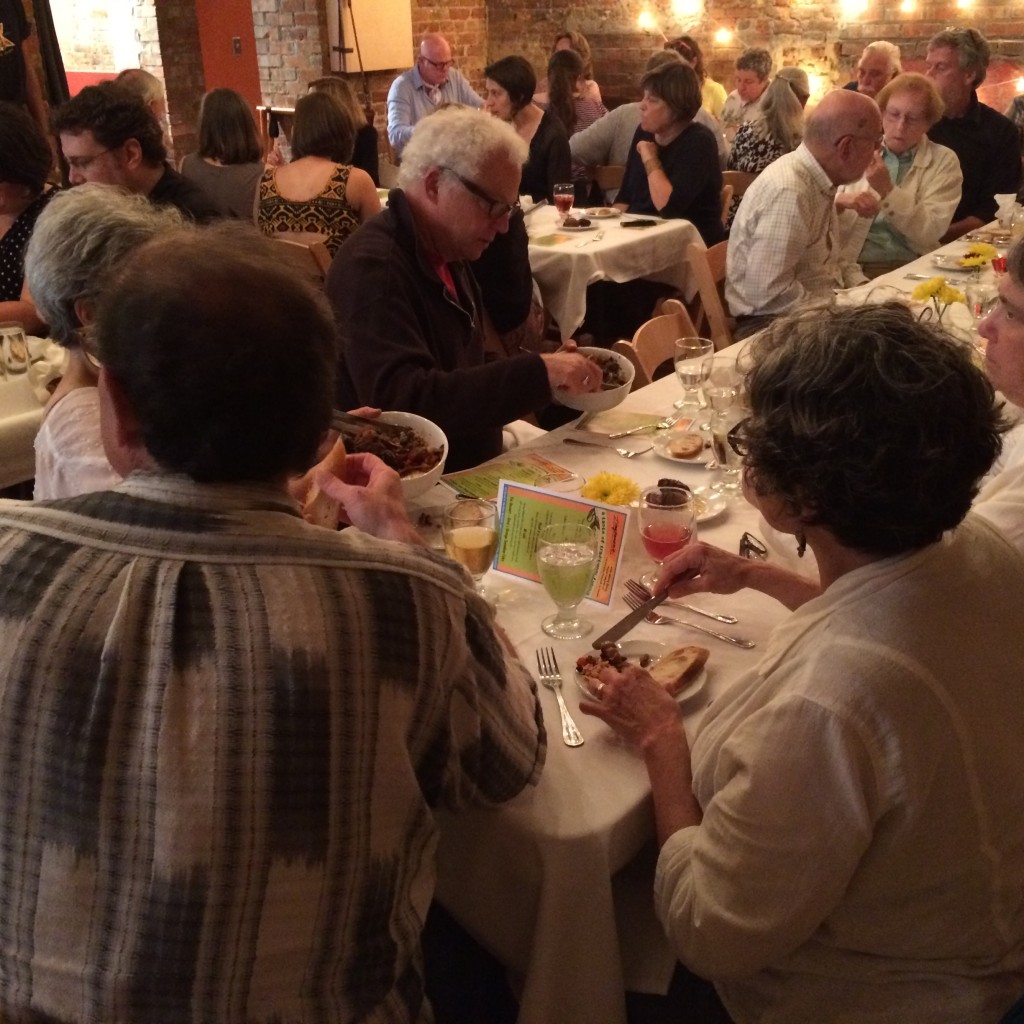
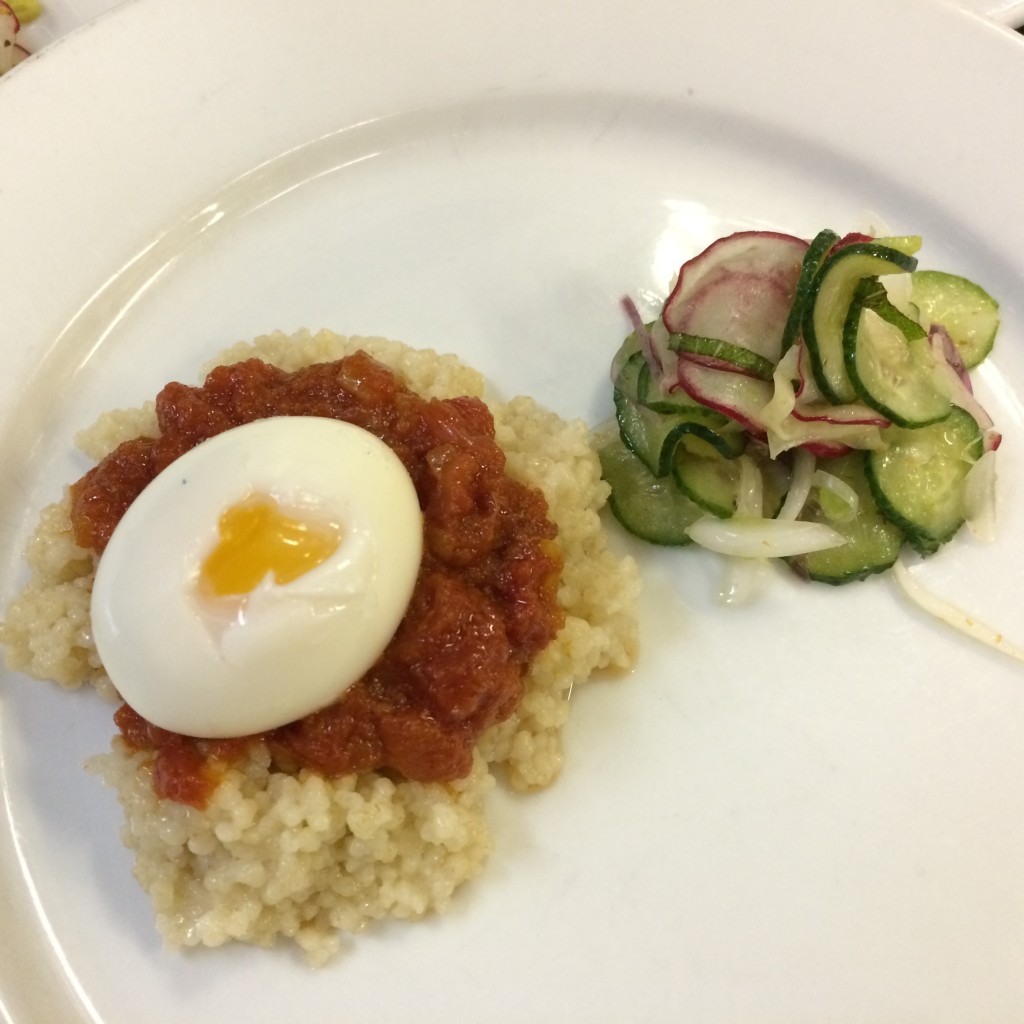
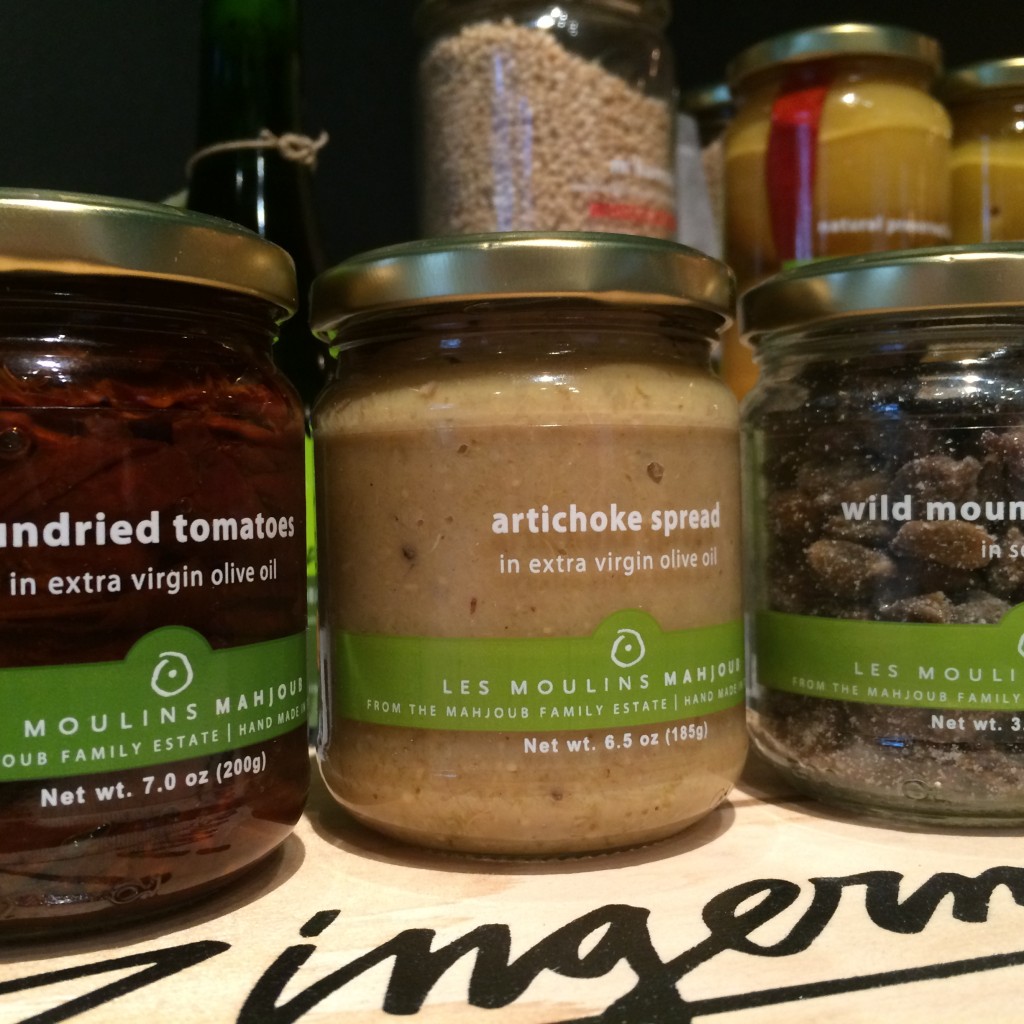

A very big thank you to Majid Mahjoub for making the long journey to share his food and traditions with Zingerman’s!
See you soon!
I scream, you scream, we all scream for gelato!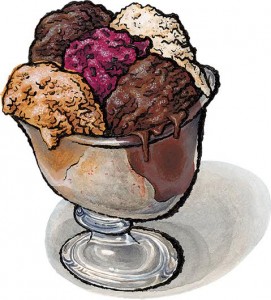
Gelato is Italy’s version of ice cream. It is to American ice cream what Gucci is to Levi’s. Most Italian towns have at least a few gelaterie, tiny shops that sell nothing but gelato. Big cities will have dozens of them. They’ll usually have at least a dozen flavors prominently displayed, everything from sexed up standards like super dark chocolate to more exotic flavors like Marron Glacé (candied chestnut) or Torrone (nougat). When you pick a flavor, they’ll pile it into a cup or cone using a paddle that looks more like a spatula than a scoop. You eat it with a brightly colored, shovel-shaped spoon that’s as long as a toothpick and as wide as a cheap emery board. But before you pick a flavor and dig in, you have to pick which gelateria to visit.
There are a few factors to pay attention to when choosing a gelateria. Avoid gelato with DayGlo colors. Stay away from gelato mounded six inches above the tub, it probably has tons of stabilizers to help it keep that shape. Don’t go for the spot that has little jars of Nutella or tiny plastic fruits stuck in the gelato to show you which flavor is which. If the menu tells you where ingredients come from, like having IGP hazelnuts from Piedmont or DOP pistachios from Bronte, you might have found a good one. But the best indication of all is a long line—or, since this is Italy, a big, disorganized crowd.
The crowd knows. Those people waiting understand that a particular gelateria makes ice cream with luscious texture and big, bold flavors. And that’s the thing about gelato: when it’s really good the flavors are more direct and pure than American ice cream. The hazelnut tastes like freshly toasted hazelnuts. The strawberry sorbet tastes like fresh, ripe strawberries. I’m sure if Zingerman’s Creamery were tucked away on some narrow, cobbled, Italian alley, it would have a crowd stretching around the corner.
Gelato is made with only four major ingredients so you can’t skimp on any of them and get great flavor.
Zingerman’s gelato maker Josh starts with milk from Calder Dairy, located about an hour down the road from Zingerman’s Creamery in Carleton, Michigan. Calder has a herd of 113 cows that are known by names, not numbers. They’re never given any hormones or subtherapeutic antibiotics. The milk is gently pasteurized and not homogenized, a process that agitates the milk to distribute the cream more evenly rather than allowing it to rise and separate. The result is that Calder produces a richer, creamier, sweeter milk.
To the milk, Josh adds cream from Guernsey Dairy in Northville, Michigan—the same source our Bakehouse uses for the sour cream they stir into every Sourcream Coffeecake. Then he mixes in demerara brown cane sugar. He adds pinch of stabilizer to help the gelato maintain its texture when frozen for a few weeks, and then all that’s left is to add the flavor. And oh, those flavors! His peanut butter gelato is made with Koeze’s atonishing Cream Nut Peanut Butter from Grand Rapids, Michigan. His dulce de leche gelato is made with a super thick and creamy dulce de leche caramel we get direct from Argentina, its home base.
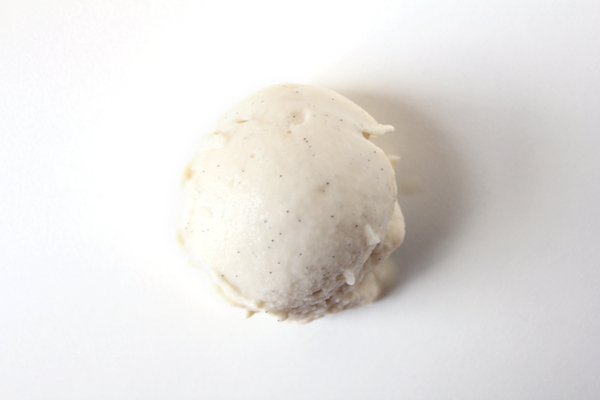
In spite of great variety, Josh’s vanilla gelato is probably my favorite. “Before I started making gelato, I thought vanilla was just white and sweet,” Josh confessed to me the other day. I’d say that’s a pretty apt description of a lot of vanilla ice creams, but not so with Josh’s. He uses Madagascar Bourbon vanilla—and lots of it!—and the result is a rich, earthy, woodsy flavor that lasts and lasts.
What’s the gelato maker’s favorite flavor?
Burnt Sugar. That’s not because it’s the easiest to make—in fact, Josh calls it “a thorough pain in the ass.” He loves it because it takes sugar, one of the three base ingredients of gelato, and transforms it into an entirely different flavor. He starts with white cane sugar and cooks it with water in a big pot. Over the course of an hour, the water boils off, the sugar melts, and then just as it starts to burn he pulls it off the stove and adds additional water to make a syrup and keep it from hardening into a sticky hard caramel mess. “I put on gloves, and I should probably wear goggles too. Then I yell to get people out of the way. It’s so hot that when I add the water it boils upon impact. It’s like this insanely hot exercise of sweating and trying not to get it on your skin while it cools in the sink.” The burnt sugar syrup tastes like the top of a crème brûlée. The gelato flirts with the line between sweet and bitter. It’s sugar utterly transformed, and the end result is super smooth and creamy with an autumn orange-yellow color and a complex, intriguing flavor.
– Val
You can find our amazing gelato at Zingerman’s Creamery, and the Zingerman’s Deli Next Door coffeehouse. We can also ship gelato through Zingerman’s Mail Order.
Add some sweetness to the winter chill!
Professional Presents
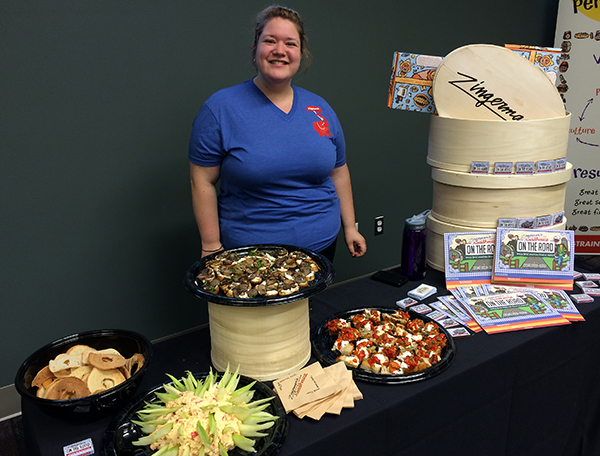
You may not know it, but Zingerman’s Mail Order has a department of concierge dedicated to corporate gift-giving. In fact, we have been helping companies send the very best gifts for the last twenty years!
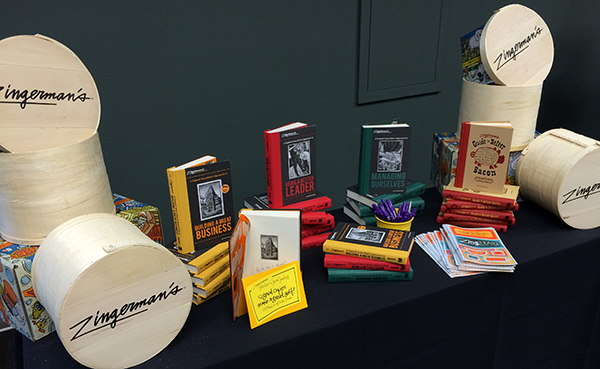
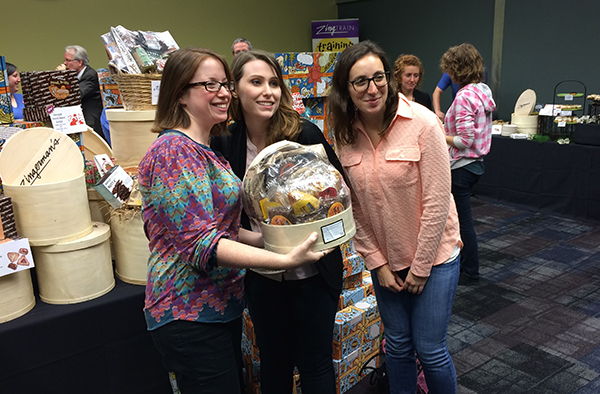
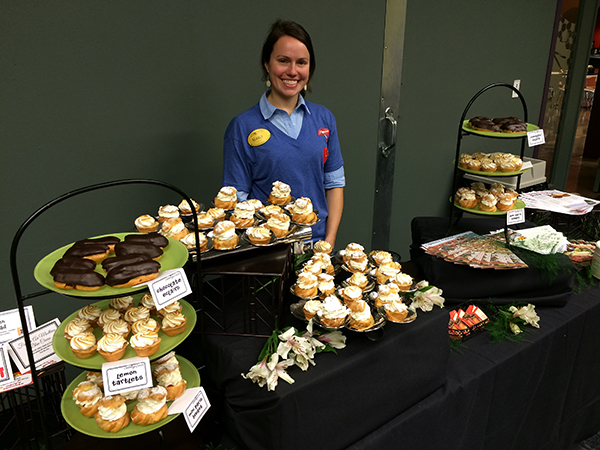
This past Friday afternoon our crack team of corporate gift concierges held their annual Professional Presents open house to kick off the gifting season. Great food was served, champagne flowed, gifts were given away, and general gifting merry was made. We do this each year, and it’s a great way for your company to try our new and classic foods, see our latest gifts, and meet your concierge.
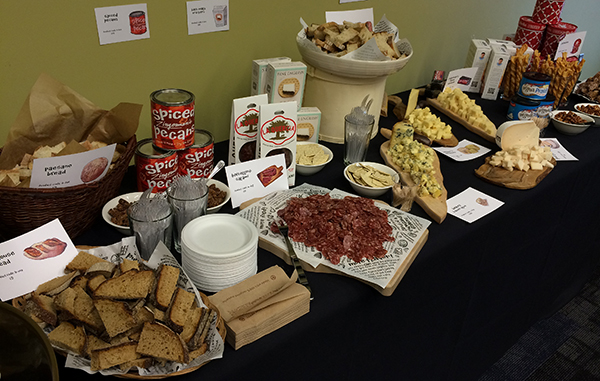
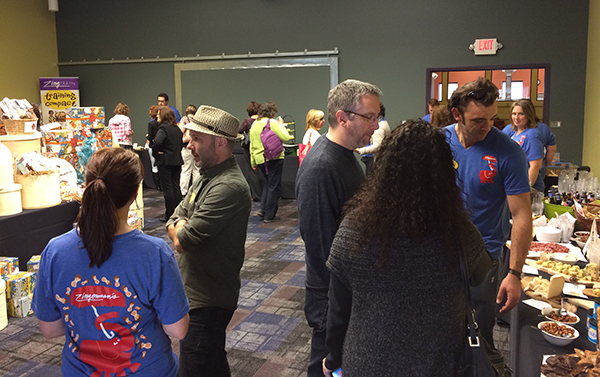
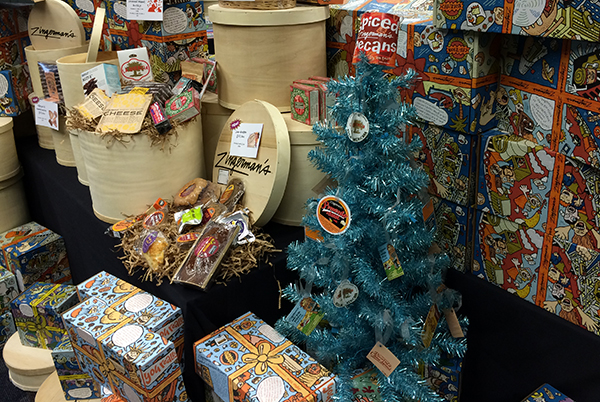
Didn’t make it this year? That’s ok, there’s still time! Call 866.260.6169 or email [email protected] to discuss your corporate gifts this year and get on our RSVP list.
See you soon!
Fromagerie No. 25
Frutière a Comté des Hospitaux Vieux
Place de la Marie
The truck leaves at 3 am to collect milk from ten producers across three villages. Each farmer has about forty Montbeliard cows. This pickup run is called Ramassage. The old method, called La Coulée, where producers delivered their own milk, is practiced by at just a few frutières of the thirty-four in the area. By AOC rules, the milk must be processed within twenty-four hours. May is the big milk month.
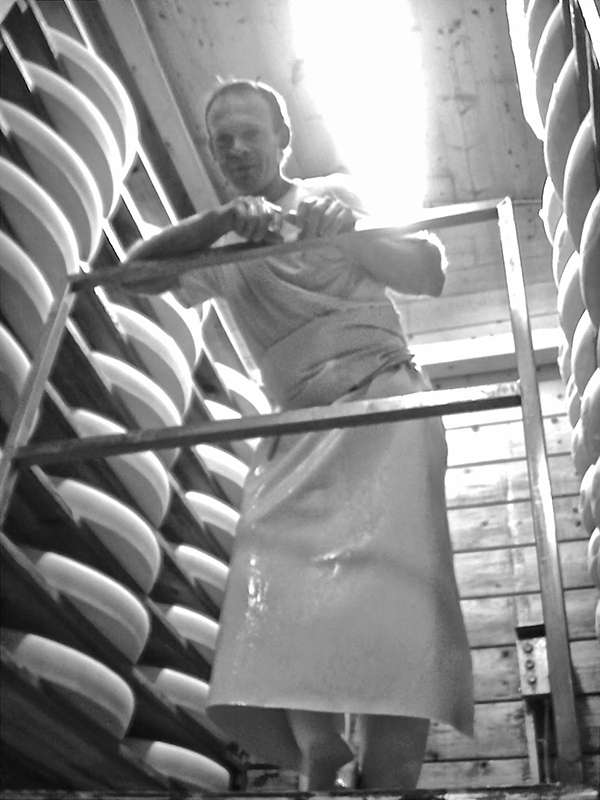
Fromagerie No. 25, built in 1920, is run by one man, Sebastian Muller. He makes twelve wheels a day seven days a week, using 1.6 million liters of milk per year. It’s about average for a cheese maker that delivers to Marcel Petite, but small in the scheme of things. A big Comté fruitiere makes 5 times as much. The work for the cheese maker, like that for cheese makers everywhere, is endless. Sebastian can arrange for a few days off only if he reroutes his milk to another fromagerie, or gets another cheese maker to substitute for him. He extended his wet arm for us to shake. He works very fast, with few words to us. He’s probably not used to company.
The milk truck is hooked up outside in the small parking lot on the hill overlooking the valley. It has a long hose and the milk is pumped in. Inside, where things are wet and smell sweetly ammoniated, the milk isheated by a radiator and delivered to one of two big copper vats. Rennet is added, curds form, and Sebastian cuts them with a rectangular wire mesh, kind of like a big hard boiled egg slicer. This releases water. The temperature raises to 55 C, drying and cooking the curd. When the curd passes the test—the cheesemaker puts his hand in and no curd sticks to it—it’s ready to pump overhead into the cheese molds.
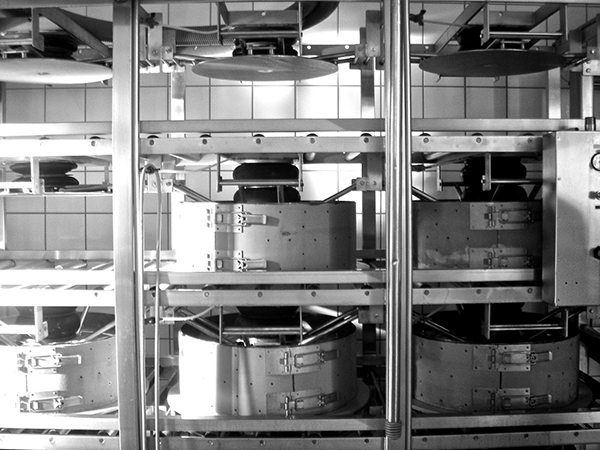
Until now the curds have been treated gently. The next process is brutal. A big vacuum hose lifts the curds ten feet in the air and shoots them fifteen feet across the arched ceiling, unceremoniously plopping them in one of four mold machines. Pressed for eight hours, held in their mold until the next morning, they’re ulimately brought to “The nursery” where they practice being cheese for three to four weeks, washed daily with morge, a brine made of water and the scraped crust of older cheese. It’s the mother culture of the cheese maker, like a bread starter is to a baker, one of the things that gives a cheese from a single fromagerie its unique flavor.
The baby cheeses are—ironically bigger now then they’ll be when they “grow up”, since they lose water—are stored on spruce shelves, which the skin of comté enjoys as it turns to rind. The shelves are rough cut, harvested when the sap has drained from them. You can see thick, raw grains across the boards. That lets a little bit of air pass under the cheese as it rests; wheels don’t stick. Marcel Petite’s trucks visit every month to pick up young wheels.

Marcel Petite
Fort Lucotte de Saint Antoine
“You feel like you’re coming to the center of the cheese world: of industry, quantity, quality.” – Jason Hinds, Essex St. Comté
The road leads up through the village, past some hills and a small forest. The fort is built underground, alone and invisible, marked only by a ten foot tall door built into a hill. You park and enter by walking across a moat. The smell is warm butter and pine. You’re ushered up to the lunch room first, for espresso, the cheese halls flash by on your left. A few of the staff are reading papers, eating cheese, drinking a 1998 Cotes du Jura, part of which has found its way into a plastic water bottle. Windows open onto the Mont d’Or, leaves umber and rust, but the grass is still very green. It’ll be that way until first snow in December.
Cheeses arrive from the fruitières regularly, 80% of which are in the mountains, along the Swiss border. The hills were forested ten centuries ago, now cows graze on them. First stop is the top level, La Maternelle, another nursery. Wheels are doused with sea salt to draw out more water, washed with cool water to keep the “wrong” bacteria from being active. Today there are about 25,000 wheels. They’ll stay there for 6 months when they’ll come down and join the 35,000 wheels in the lower rooms.
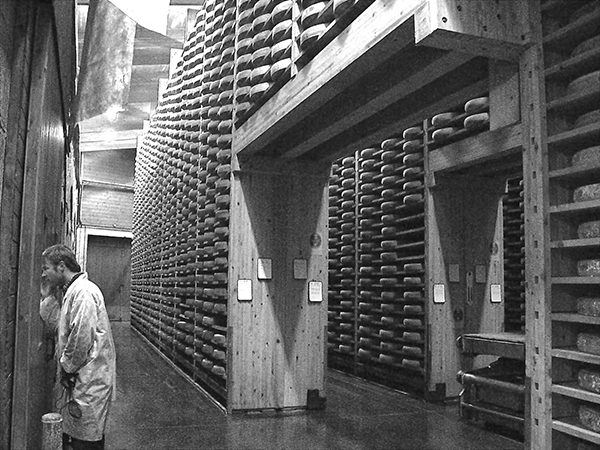
Lights, camera—but nothing prepares you for entering the Church of Cheese. The main room of the fort, once a covered garden, holds 9,000 wheels of comté, each three feet across, seventy pounds, rising twenty feet high under a cathedral ceiling. The wheels look like rounds of wood or stone, in various stages of growth, their surfaces sometimes smooth, other times mottled, molded, warty, covered in patterns that look like lichen, rust, sandstone or bird shit. Absolute silence, once in a while broken by the whir of little electric hand carts. Or the lonely cheese washing robot that haunts the aisles. Little rooms are off to the side. They used to hold 52 soldiers each, now they store 900 wheels of comté.
I’m escorted by the affineur, called the chef de cave Claude, and his other half, Phillipe Goux, head of sales. Claude is dressed in white jacket and white hat, with nothing more than a note pad and cheese iron as tools. Mr Goux, born in Jura, eats comté two or times a day. He prefers younger cheese.
The fort has its own micro climates. There are no heaters or humidifiers, just the bricks and the earth outside them. Grass grows in some areas. Claude taps, touches, tastes. He’s trying to figure out where to send the cheese next. To the dryer room? The warmer one? Much of his life is devoted to deciding what’s best for a wheel, 60,000 decisions, one kind of cheese, endlessly repeated. Each wheel will only be with him for a year or so but more will come. He’s developed a strange coding system to keep track of each wheel’s journey. He scratches it the edge of the wheel with his iron. A little window. A cross. Codes for him alone.
We taste thirteen cheeses. The routine is always the same. Claude walks along the aisle, guided by the codes. He picks one wheel, tilts it out of its cubby, rubs its top quickly, in circles. Tap tap tap the top, insert the iron on the edge of the wheel, turn, remove. Smell. Pause. Take a piece, between thumb and forefinger, pass around. Everyone follows, on cue. Take a bit of paste, warm it, replug the whole, use the paste as a cement to seal it.
Dominic Coyte, Essex Street Comté’s selector, grades cheeses 1 to 5 for flavor, texture, longevity. Anything above 3 is fair game for him to buy. Sometimes a cheese that was asleep a month ago comes alive. FIFO doesn’t work, sometimes a November cheese is ready before an August. We don’t touch the cheese, only taste. If Dom chooses a wheel Claude marks “ESSEX” on the side with his iron.
The conversation is spare and clear. “I like it. It’s not as dry.” Maybe it seems that way because of the language barrier; we’re English speakers, they’re French. Maybe it’s because I’m with a bunch of Brits.
- No 25. August 2005. Sweet. Full. Sour. Vegetal. Spicy at the end. Meat. Roasted, especially onions. Cream. Nut. Cocoa powder. Caramel. Wet.
- No 4, Oct 2005 Lovely. Nutty. Full mouth.
- No. 7. September 2005. Dried prune. chocolate. Long flavor. Made by Christophe Parent in Narbief, Frutiere 747.
Marcel Petite, the man, started aging “just” 2,500 cheeses in 1966. He waged an uphill battle trying to change local cheese tastes from warm, fast-matured cheeses with big holes inside (like Swiss Cheese) to longer-aged cheeses with no holes, aged in cooler climates. Today Marcel Petite, the company, houses 60,000 wheels in Fort St Antoine, 80,000 wheels in another facility in Grenoble. Fort St Antoine, built in the late 1800s for the Franco Prussian wars, failed spectacularly when it deployed as part of the Maginot line in World War II. The French government sold it off, now it matures the country’s best cheeses, most from the Jura’s top fifteen mountain fruitières.
– Mo
Marcel Petite’s amazing Comté is available for order through Zingerman’s Mail Order. And Zingerman’s Deli is also featuring an extra aged version as part of their Vive la France promotion which lasts through the month of October!