Skip to content

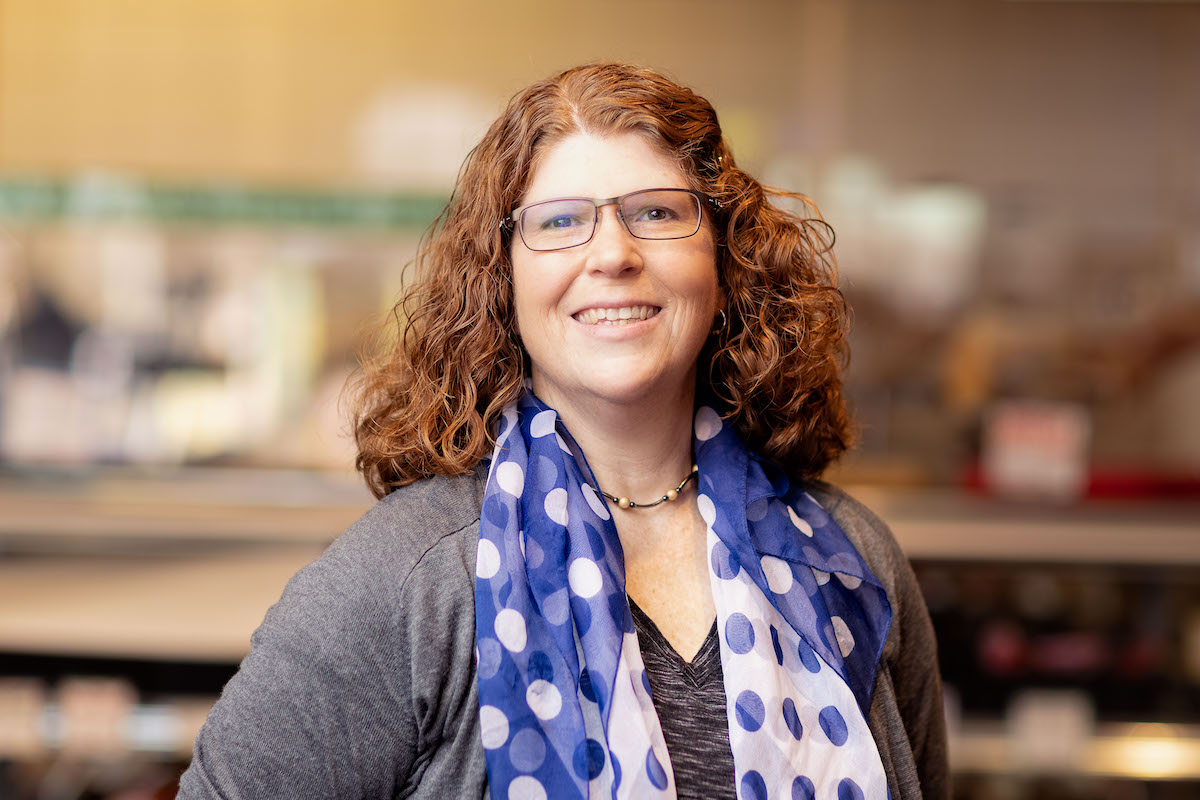
Photo of Grace Singleton Headshot

We’re governing with grace… and Grace (Grace Singleton, that is!)

“Is Zingerman’s still run by its founders?” you ask. That’s a great question. We’ll answer with a tale, both old and new (just like our pickles!). What began with the Delicatessen, founded in 1982 by Paul Saginaw and Ari Weinzweig, now includes 11 food and service businesses, 18 managing partners, 800 employees, and a council of leaders among leaders (hang tight, we’ll explain that in a minute).

An Overview of Zingerman’s Governance

Since 1994, the Zingerman’s Community of Businesses (ZCoB) has been steered by our Partners Group (PG), a group that includes Ari and Paul, the ZCoB’s managing partners (the individual business owner-operators), and staff partners (staff members who own a Community Share; they serve two-year terms). As Ari explains:

It’s where we govern the Zingerman’s Community of Businesses—we use consensus decision-making there to lead the organization. The PG makes decisions on organization-wide issues, like deciding to approve our new 2032 Vision or our new Statement of Beliefs. Or if there was, in a strange sci-fi sort of scenario, just for conversation’s sake, let’s say a global pandemic, the PG is where we would decide how to deal with it.

One important piece that the 2032 Vision outlines is the ZCoB’s evolution of governance:

… we’ve seen a successful transition from Ari and Paul as founders heading the Zingerman’s Community of Businesses (ZCoB) to a mode of governance that will last beyond the tenure of any individual. While long-time ZCoB leaders continue in important roles, a couple of new “generations” of insightful, collaborative folks have stepped forward.

That mode of governance is the Zingerman’s Stewardship Council, a five-member group created in 2020 as part of a succession plan to transition the leadership of the organization from its founders to the other managing partners. To be clear, the Partners Group isn’t going anywhere, rather, as Ari says, “The Stewardship Council is filling the role Paul and I have filled for many years as ‘leaders among leaders.’” He adds:

Our main focus in doing this work with the Stewardship Council is, by far and away, looking at how we can do what we do here at Zingerman’s ever more effectively. We want it to be a way to help lead the ZCoB in becoming an ever-bigger contributor to the community of which we’re a part. We want to support succession and inspire future success. We’re committed to creating a governance model that will help both the organization and everyone in it to thrive for many decades to come.

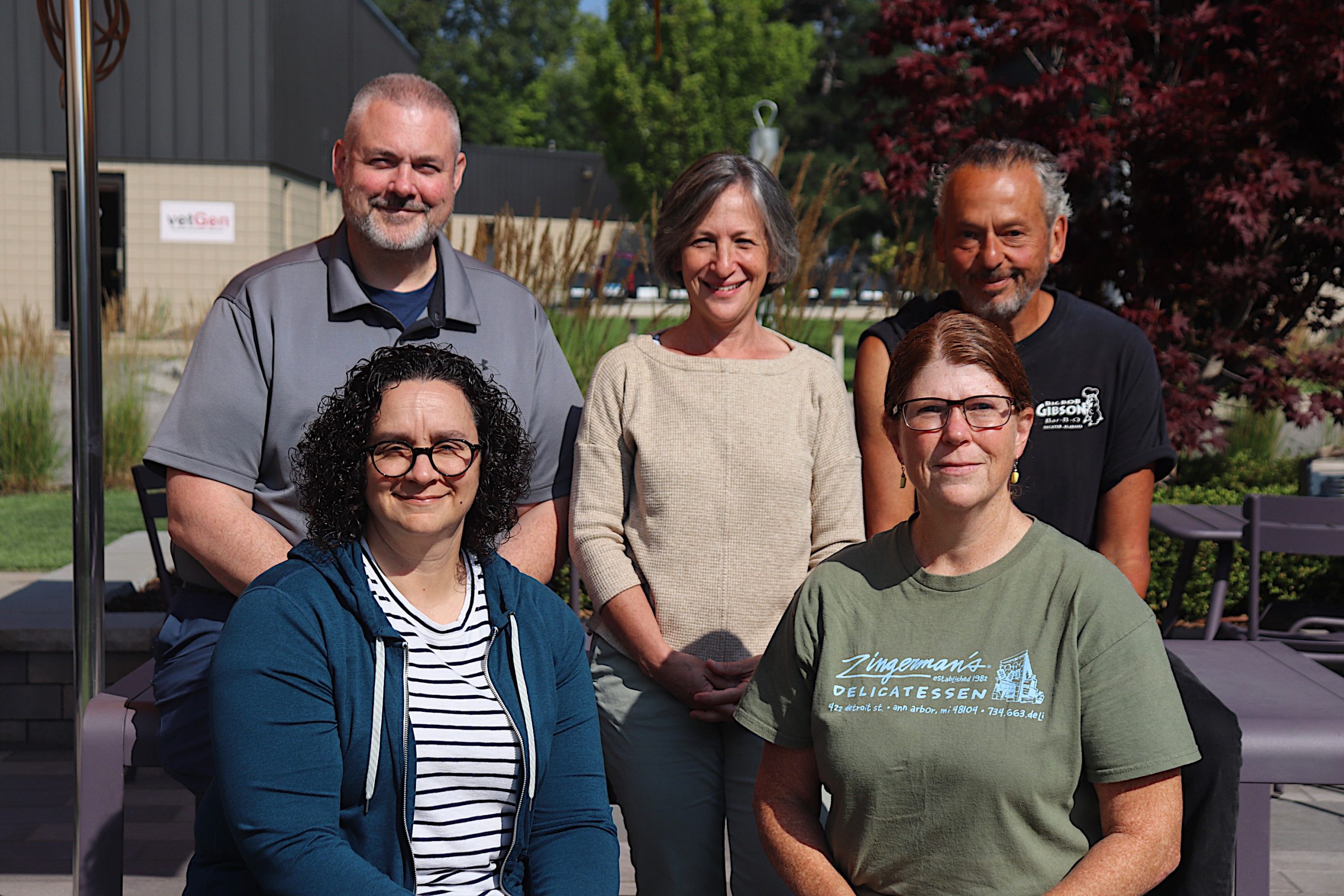
Photos of the stewardship council members.

The original council members include Amy Emberling, Zingerman’s Bakehouse co-managing partner; Toni Morell, Zingerman’s Mail Order co-managing partner; Tom Root, Zingerman’s Mail Order co-managing partner; Ron Maurer, Zingerman’s Chief Administrative Officer and Zingerman’s Service Network managing partner; and Ari Weinzweig. Council members serve three-year terms, and just like the Partners Group, decisions are made using consensus. In June of 2023, we reached the end of the first set of three-year terms. The Council has been designed so that one of these original managing partners will come off each year—the first was Ron Maurer who has his eye on retirement in 2023 after more than two decades with the organization—and a new one is selected. Ari explains how that happens:

Our agreed-upon process for selecting members is that Paul and I, as co-founding partners, consult with our staff partners (since they’re not eligible to be on the Council) and others whose views we value, to make the decision. After a LOT of conversation, and honoring what we believe is the best decision for the organization, we chose the next member. 

This time, Ari and Paul offered the spot to Grace Singleton, co-managing partner of Zingerman’s Deli since 2004. Grace knew from the beginning that she was destined for a life full of food (and she may or may not have thought the food industry would be glamorous thanks to a New Orleans restaurant where she received special treatment, sitting at the captain’s table and sampling Frangelico (a hazelnut liquor) at the age of 13!).  Grace received her culinary degree at Paul Smith’s College in New York and managed restaurants across Ohio (we don’t hold this against her) and Michigan.

She found her way to Ann Arbor for the role of general manager at the Gandy Dancer and became a fan of Zingerman’s Deli. Eventually, she made the jump, calling it “the very best job in the food industry,” and in 2004, she stepped up from retail manager to co-managing partner. Since then, Grace has overseen the gold level LEED-certified Deli expansion project (2010–2014), the opening of Zingerman’s Greyline event space (2016), the addition of virtual tasting events for fans around the country (2021), and more, all while continuing to lead the day-to-day of Deli catering and retail specialty foods. (Impressive, right?!) Of this new role and her latest opportunity to impact the Zingerman’s organization and the Ann Arbor community, she says:

I’ve been here for more than 20 years and I’m really invested in the transition of our CEO’s roles. Ari in particular set the stage with his dedication to doing business differently and how we govern is an important part of that. I look forward to working toward our future with this committed group.

Want to read more? Ari wrote about Grace’s addition to the Council and the work of the Stewardship Council in Ari’s Top 5, his weekly e-newsletter, saying, “Success leads to succession work which, when done well, helps create more success. It’s a very virtuous and very inspiring cycle to be a part of.”

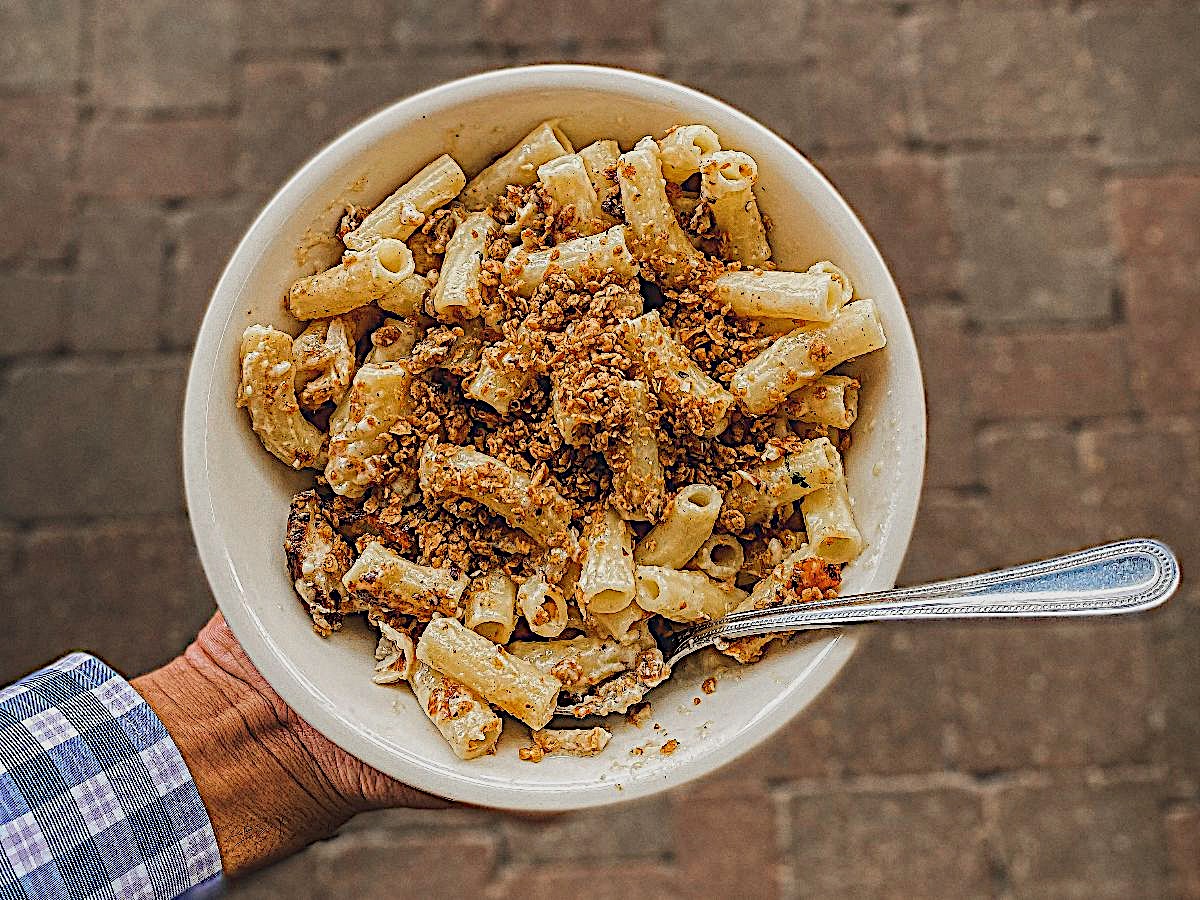
Fried Chicken Mac & Cheese at the Roadhouse.

A perfect pairing comes together

In Secret #39, in Part 3, Managing Ourselves, I wrote a whole essay about creativity. It was a subject that, oddly, in all our many years in business, I’d given little thought to until, suddenly, during the economic collapse of 2009 and ’10, we started getting a bunch of requests for me to do a keynote talk on the subject. The curious thing is that, in all my years here, I’d never once taught anything about creativity. In truth, I was stumped. I felt like fleeing, but instead, I started studying. My creative inquiry into creativity eventually evolved into the 53-page essay, “Creating Creativity” which was published as Secret #39!

One of my big learnings in my study of the subject was that creativity is mostly about connections. Not necessarily who you know, but about putting things together in ways that they haven’t otherwise been combined. In my love for simple models that help me—and maybe you—get my mind around complex concepts without dishonoring the natural complexity of the world around us, I started to look at three kinds of creativity:

  1. “Creativity Forward” – The easiest example to share might be high-tech innovation. Back in 1982, Open Book Management would have an example as well.
  2. “Creativity Back” – We do a lot of this here in the ZCoB. It would include finding old, unused, or under-used ideas and putting them back to work. The Bakehouse’s fresh milling and the Creamery’s handmade Cream Cheese are two easy examples.
  3. “Creativity Sideways” – Here’s what I wrote about it in the essay:

    [Creativity sideways] generally seems to come in two forms. Often, it’s merely finding something that’s commonplace within its own culture but, when introduced into unfamiliar territory, is transformed into an attention-getting, creative act. … We do a lot of this sideways creative work at Zingerman’s. … The Hungarian foods we’re working on at the Bakehouse would certainly fit.

    The other sort of sideways shift of creativity comes when two already well-accepted ideas or ways of working are put together in a totally new way, resulting in an innovative approach or product. … The classic historical example is of Gutenberg using wine press technology to print books … using Emma Goldman’s ideas to help run a progressive 21st-century business.

It’s this last kind of creativity that I’m thinking about here. The story goes back about 15 years now. In one of those unintended moments of connection, I was standing by the buffet table at ZingTrain after folks had happily consumed a lunch catered by the Roadhouse. I can’t recall which seminar I was teaching that day, but I do remember that down near the far end of the table were two of those big foil pans used to hold hot food. One had held a whole bunch of the Roadhouse’s really well-known Mac & Cheese (made with the marvelous Mancini maccheroni and that Vermont-cheddar-based bechamel sauce). By the time I got there, the pan was pretty much empty—only a few lonely noodles and a little cheese were left around the edges.

The other pan, to its left, had held fried chicken. That was pretty much gone, too. All that was left were a bunch of those itty-bitty little crumbs of crust that fall off when the actual pieces of chicken have been consumed. Looking down at the almost-empty pans, I suddenly had this thought that the two—Mac & Cheese and fried chicken bits—would be a beautiful thing if you put them together. I tried a few bites right then and there by putting together the small bit of each that was left. It was terrific. It went on as a special the next day and we sold 20 orders in two hours. It hasn’t come off the menu since.

If you’ve never had Fried Chicken Mac & Cheese, let’s just say it’s pretty marvelous. Little bits of fried chicken cooked into, and sprinkled on top of, a plate of creamy Roadhouse Mac & Cheese. The pepperiness of the fried chicken bits—we use that wonderful, small-farmTellicherry black pepper we get through Épices de Cru—serves as the counterpoint to the creamy Mac & Cheese.  And it all melds marvelously with the moist bits of fried chicken. (I like the dish for breakfast, topped with an over-easy egg!) Fried Chicken Mac & Cheese may not be as monumental a connection as the printing press, but I have a feeling this one is here to stay!

The Fried Chicken Mac & Cheese was the long-time favorite (always with a side of hot sauce) of Roadhouse server Danny Patterson. Danny moved away at the start of the pandemic and sadly, passed away earlier this year. His loss is felt by many. I’ve chosen to remember him by his big smile, his laughter, and his joy every time a serving of this super tasty dish went out into the dining room!

 Make a reservation at the Roadhouse
P.S. Fried Chicken Mac & Cheese makes a marvelous carryout item too! Call to place an order to-go at 734-663-3663. The Roadhouse also caters this creative combo—email [email protected].

 Want more from Ari?

Sign up for Ari’s Top 5 e-newsletter and look forward to his weekly curated email—a roundup of 5 Zing things Ari is excited about this week—stuff you might not have heard of!

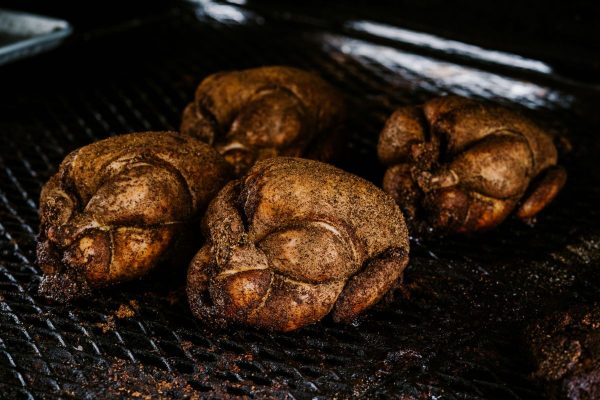
Pit-Smoked Whole Chickens from the Roadhouse. Great, weekday meal for barbecue lovers.

Great, weekday meal for barbecue lovers

If Fried Chicken is the superstar singer on the poultry part of the Roadhouse menu, the Pit-Smoked Chickens would probably be the bass player. They’re happily in the background, grounded, steady, and really really good at what they do. And while that Fried Chicken is really really fantastic, I’ll offer that I eat far more of the Pit-Smoked Chicken. Honestly, it’s one of my favorite products in the ZCoB!

If it’s Monday, Tuesday, Wednesday, or Thursday, give some thought to swinging by and picking up one of these exceptional oak-smoked chickens from the Roadhouse. I can say from a LOT of personal experience that they make an exceptional evening meal! A whole Amish chicken, rubbed with our freshly ground, farm-to-table Tellicherry black pepper and salt, put on the pit to smoke slowly over smoldering whole oak logs for about three or four hours. We’ve had them on the carryout menu for the last few years, during which time they’ve been a very regular item at our house.

All you need to do is call ahead to order one, then swing by the Roadhouse and pick it up. (You can also just come by, but we’re only doing a limited number of these every day so … if it were me, I’d order ahead to make sure I got one.) The Roadhouse crew puts a bit of butter atop the bird, then wraps it really well in foil so you can get it home in good shape. Best bet, I think, is just to unwrap and eat. If you want to heat it up, either stick it in a hot (350° F) oven in the foil for a bit, or you can microwave it (after you take it out of the foil!) for a few minutes if you want to go more quickly. Since Tammie and I eat dinner late at night, we did the latter, and it worked out just fine.

The big news here though is that you can now get the Pit-Smoked Chickens inside the restaurant for dinner. We’re still on that same limited-times and limited-days schedule—Monday through Thursday, dinner only, and, when we’re out we’re out. The beautiful oak-smoked, Tellicherry black pepper-dusted bird comes plated with side dishes that make it a great dinner and a great deal! Start out by snacking on a glass of those incredible single-origin peanuts we’ve been getting from Elisha Barnes in Virginia and a small salad. Finish the evening off with a scoop of that Roadhouse Joe-lato!

If you have leftovers, I’ll share that they’re awesome for adding to soup or salad, making into smoked chicken salad, or just nibbling on out of the fridge when you need a snack. Tammie and I take the bones that are left behind and boil them with an array of vegetables to make a magically terrific broth. (When we serve it, we drop on a spoonful of that IASA peperoncino!)

Once again, the Roadhouse only smokes a limited number of these pit-smoked whole chickens Monday through Thursday. They come out in time for dinner and it can’t hurt to order ahead and have us hold one for you. It’s hard to believe a chicken could be life-changing but this might be it.

Make a reservation at the Roadhouse

Want more from Ari?

Sign up for Ari’s Top 5 e-newsletter and look forward to his weekly curated email—a roundup of 5 Zing things Ari is excited about this week—stuff you might not have heard of!

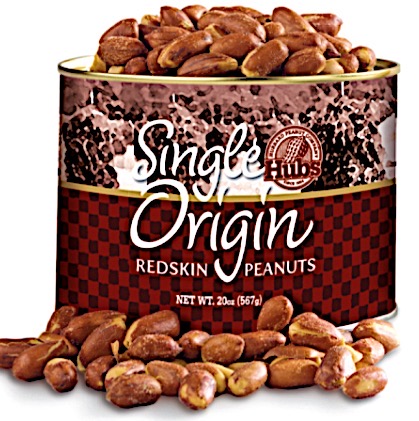
peanuts overflowing from a checkered black and red tin on top and on the side of the peanut tin.

Peanuts Farmed and sun-cured as they were a century ago

Whether they’re in our heads, our homes, or our organizations, ecosystems in nature will almost always attract unto themselves. As permaculturist Toby Hemenway writes, “Life builds on life. … serendipities we never hoped for—a surprising new wildflower, a rare butterfly … will grace our lives almost daily.” Food writer Robin Kline lives in Iowa, but she is a long-time part of the Zingerman’s ecosystem. A couple of years ago, Robin turned me onto the work of Gareth Higgins—thanks to Robin, Gareth and I are now good friends.

He came here to speak at the Roadhouse last fall and will be back again to do more events in early December (details to come). A few months after Robin told me about Gareth, she emailed to tell me about some newly available single-origin peanuts from Virginia. I wasn’t really on the lookout for a new source. We’ve long been happy with the high-quality peanuts we’ve been buying for decades now. That all changed when I tasted the new ones—they were so darned delicious! I’m not normally a big peanut eater, but I found myself reaching back in the can over and over again to have a few more! A year down the road, those amazing peanuts are debuting this week at the Roadhouse! The flavor, and the story behind them, have absolutely enhanced the energy in my internal ecosystem. I forecast they will have a similarly positive impact on yours!

The nuts come to us from the folks at Hubs, the third generation of the Hubbard family’s firm in Farmville, Virginia. Back in the mid-’50s, Dot Hubbard developed what’s evolved over the years into “the specialty peanut market.” She took the extra time to hand-select the largest peanuts from each local farm’s delivery and then dip them in hot water before blister-frying them in her kitchen. She and her husband, H.J., began shipping their peanuts by mail. Nearly 70 years later the company is run by their grandson, Marshall Rabil. Marshall has been working hard in recent years to take the company to new heights and he, like me, has an affinity for small, specialty experiments. I’m thrilled that Robin Kline cared enough to steer me so effectively to this one.

Since these single-origin peanuts epitomize our philosophical approach to food, we debuted them at the event for “A Taste of Zingerman’s Food Philosophy.” They’re completely in line with our definition of quality (see the piece I wrote a few weeks ago on the subject here). They’re remarkably full-flavored—they have loads of complexity, balance, and finish. And they’re very traditional—this is the way high-quality peanuts would have tasted 100 years ago! They’re grown by Elisha Barnes, a fourth-generation farmer in Virginia. Barnes is beyond passionate about his peanut growing, and his connection to community, history, and the land. He’s been into it since he was a child: “The first time I got hooked on farming I was six years old.” Through farming and his upbringing, Barnes has developed a life philosophy that fits well with our own: “My father taught us how to treat people and how to be honest. He taught us integrity.” Both his passion and his principles are reflected in the excellence of the peanuts!

While Elisha Barnes’ farm isn’t certified organic, he uses no chemicals on the land. He harvests the peanuts using a 100-year-old picker, equipment he has had to modify regularly to make it work with his 50-year-old tractor. The peanuts are made particularly special because Barnes still uses the old way of curing them which is known as “shocking.” Just-dug nuts, left on the vine as they grew, are wrapped about around five-foot-high poles to sun-dry out in the field (think corn shocks). They’re left to cure for about six weeks before they’re brought in, cleaned, and brought to Hubs to get that patented blistering, roasting, and salting.

A hundred years ago, pretty much every peanut farmer worked this way. Today Elisha Barnes is the only one still doing it. It makes a big difference in the flavor. Barnes says, “It creates the sweetest, highest germination rate peanut there is. You see, [flash] drying takes out part of the germination quality, and it takes out the sweetness. It takes part of the quality out of the peanut. But I want to keep that.” In the spirit of a holistic internal ecosystem, Barnes says,

Tilling the soil, it teaches a spiritual lesson. Do your part, invest in the land and the land will give you an increase. We are a fourth-generation farm. My father, my grandfather, my great-grandfather all farmed peanuts. I am right now the only farmer anywhere around that actively shocks peanuts like this. … It’s rewarding. It’s an honor. Who would’ve ever thought that the son of a sharecropper would be standing on the land that he now owns and farming peanuts the way that my father and his father did. That speaks volumes for me.

I am indebted to Hubs for coming on board with me and allowing me to be able to raise this and allow it to be financially beneficial so that I can continue to do this growing. Hubs hopes the single-sourced specialty peanut will remind people of their roots. It has already given one farmer exactly what he needs! My daughter says that I’m a dinosaur that refuses to die. The chapters of my life will close with me farming the way I want to farm.Aside from all the work on growing peanuts, supporting Elisha Barnes in this way is also a small step toward helping to restore Black farmers to the land.

Today, in 2023, Black farmers account for only 10 percent of what Black farmers owned and worked a century ago. Barnes says, “Southampton County, at the turn of the century, was primarily Black-owned.” Today Barnes is one of only a few Black farmers left working local lands. A couple years ago, Barnes and his oldest brother bought back his father’s 52-acre spread in Courtland. He says proudly, “This past year, I raised peanuts on the family farm for the first time in 30 years.”

In the spirit of what I wrote last week about Charles White, Elisha Barnes says of his commitment to these traditional techniques of farming, “Maybe just maybe I’ll inspire somebody to take just a little bit of this old history and keep it alive.” I’m pretty confident his hope will be fulfilled many times over in the coming years. Swing by the Roadhouse soon and enjoy some of these amazing peanuts soon! Flavor is big, but supplies are limited!

P.S. For more on the painful history of what has happened to Black farmers in the U.S. check out Leah Penniman’s work at Soul Fire Farm in this talk, her book Farming While Black, and Pete Daniels’ book, Dispossession.

Want more from Ari?

Sign up for Ari’s Top 5 e-newsletter and look forward to his weekly curated email—a roundup of 5 Zing things Ari is excited about this week—stuff you might not have heard of!