
Tag: ZINGERMAN’S ROADHOUSE
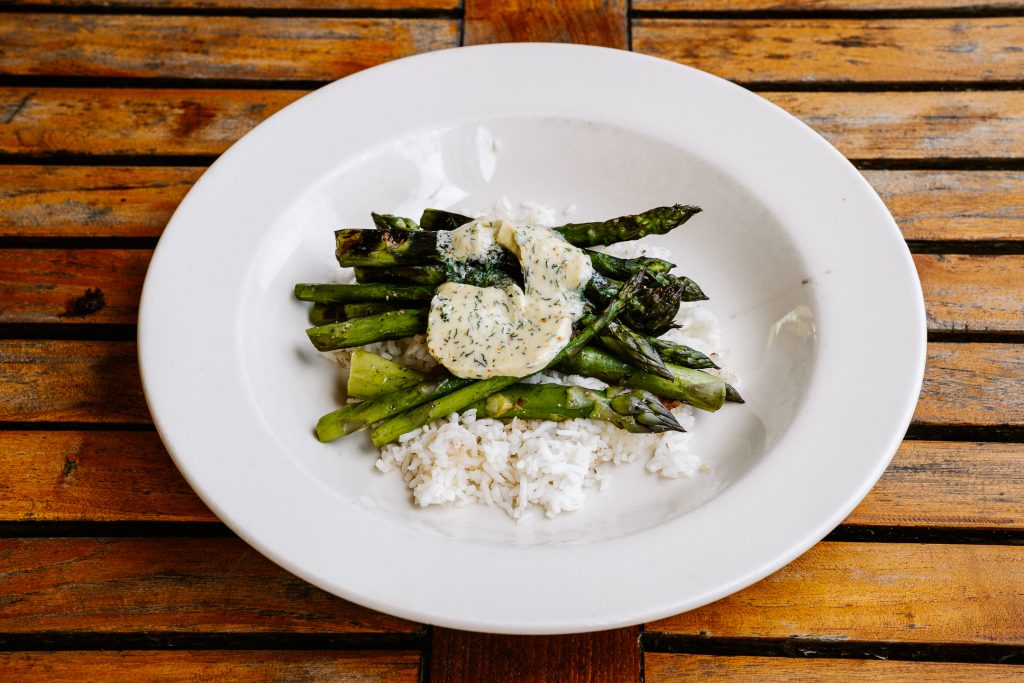
A wonderful spring vegetarian entrée at the Roadhouse
’Tis the season! Asparagus is finally arriving here in Southeast Michigan after the recent days of chilly, gray weather, and since we have it for only about a month, it’s time to take advantage! The Chef’s Garden writes that “asparagus represents the hope of renewal and the optimism of what spring might bring.” And from the website Farmer-ish:
Nothing says you have hope for the future like planting asparagus. If you plant it from seeds, it takes three years before you can harvest any fruit. If you use crowns or plants, it takes two. And an asparagus plant lives for 15-20 years, so putting them somewhere means you cannot use that area for anything else for up to two decades.
This tasty asparagus-focused main course is on the monthly specials list at the Roadhouse. For someone like me (and maybe you) who doesn’t eat a lot of meat and who, like food writer Micki Maynard, loves to see seasonal vegetables front and center, it’s a pretty terrific meal: a big handful of local asparagus, blanched and then grilled over oak, served over a bunch of that incredible organic Carolina Gold rice from Anson Mills, and topped with fresh-tarragon-scented Vermont Creamery Cultured Butter. If you’re in the mood for something more, it’s easy to add grilled chicken breast, broiled salmon, grilled wild-caught North Carolina shrimp, or a piece of dry-aged steak cooked on the oak-wood-fired grill.
Tarragon is not necessarily the most widely popular of fresh herbs around these parts, but Roadhouse Head Chef Bob Bennett and I are both longtime fans. Although it’s familiar by name to most every cook, to my taste, fresh tarragon is underappreciated and underutilized. There’s something almost magical to its aromatics, with its delicately bitter mintiness. As writer N. M. Kelby says, “Tarragon, with its gentle licorice, reminds us not to forget that miracles are possible.” (In these challenging times, there are many tangible action steps we can take, as I discuss above—and there’s little risk in adding a course in culinary miracles to our positive toolkit.)
The 13th-century Arab botanist Ibn al-Baytar wrote about tarragon’s use both as a culinary ingredient and as a sleep aid. Its cultivation in Europe dates only to the late 1500s, when it came to England from Siberia. In France, where it’s often called “the king of herbs,” tarragon is perhaps most famously used in Béarnaise sauce. It arrived in the U.S. in the early years of the 19th century, and it’s best known in American culinary history for its starring role in green goddess dressing, made in the 1920s at the Palace Hotel in San Francisco to honor the hit play of the same name. Tarragon is usually described as being licorice-like, but it’s also beautifully buttery, aromatic, and lively, with a bit of that “fresh-cut grass” quality one often gets from new-harvest olive oils. Honestly, I think I’m sort of stuck on the aroma. I love it on most everything!
The Carolina Gold rice is, of course, truly remarkable—as wondrous an eating experience as savoring seasonal local asparagus each spring. Imported in the 17th century from West Africa—where rice cultivation had been done regularly and done well for hundreds of years—it was grown by enslaved people in South Carolina. Its fame meant that Carolina Gold was both served in the royal courts of Europe and prized on the plates of Americans of that era who “knew how to eat.” The wealth it created, however, went to the European planters, not the people who did the work to grow it.
After Emancipation in the U.S. in 1863 (giving rise to the high-hope period of post-Civil War Reconstruction that Sherrilyn Ifill describes in the lead essay), this super delicious but very labor-intensive varietal began to fade from use. What had been world-renowned in 1820 had essentially been forgotten by 1920 (coinciding with the Jim Crow era that robbed hope from so many African Americans). Fortunately, in the year 2000, some seeds were discovered in a seed bank in Arkansas, and, thanks to the good work of historian David Shields, Glenn Roberts from Anson Mills, and a handful of others, the old Carolina Gold rice was restored to production. What we get from Anson Mills today, in 2026, is organically grown, field-ripened (a lot of rice nowadays isn’t really fully ripened), and cold-milled for freshness right after we order it—and the germ (oil) is left in, which makes it way more flavorful.
Last but not least is the amazing asparagus—one of the highlights of the culinary calendar here in Michigan. So good, so green, so fresh, so delicious! The oak-wood smoke from the grill makes it even more special still. The lovely, herbaceous tarragon butter melting atop the hot-off-the-grill beef or asparagus is something to behold. Order a couple of buttermilk biscuits—made with that amazing Vermont Creamery Cultured Butter—on the side and dip the corner of one into the bits of butter that drip onto the plate.
This dish would be ideal—weather permitting—for a Father’s Day meal (book soon to reserve a table). As award-winning author Barbara Kingsolver writes,
Respecting the dignity of a spectacular food means enjoying it at its best. Europeans celebrate the short season of abundant asparagus as a form of holiday. In the Netherlands, the first cutting coincides with Father’s Day, on which restaurants may feature all-asparagus menus and hand out neckties decorated with asparagus spears.
P.S. The tarragon butter and asparagus show up on another entrée, too, this time alongside New York strip steak. And though it’s not on the menu … asparagus on a burger with tarragon butter would be awesome as well—an herb-enhanced version of the classic Wisconsin butter burger.
P.P.S. This tarragon mustard from France is beyond fantastic! It goes great in a vinaigrette on grilled asparagus with a little chopped hard-cooked egg.
Tag: ZINGERMAN’S ROADHOUSE
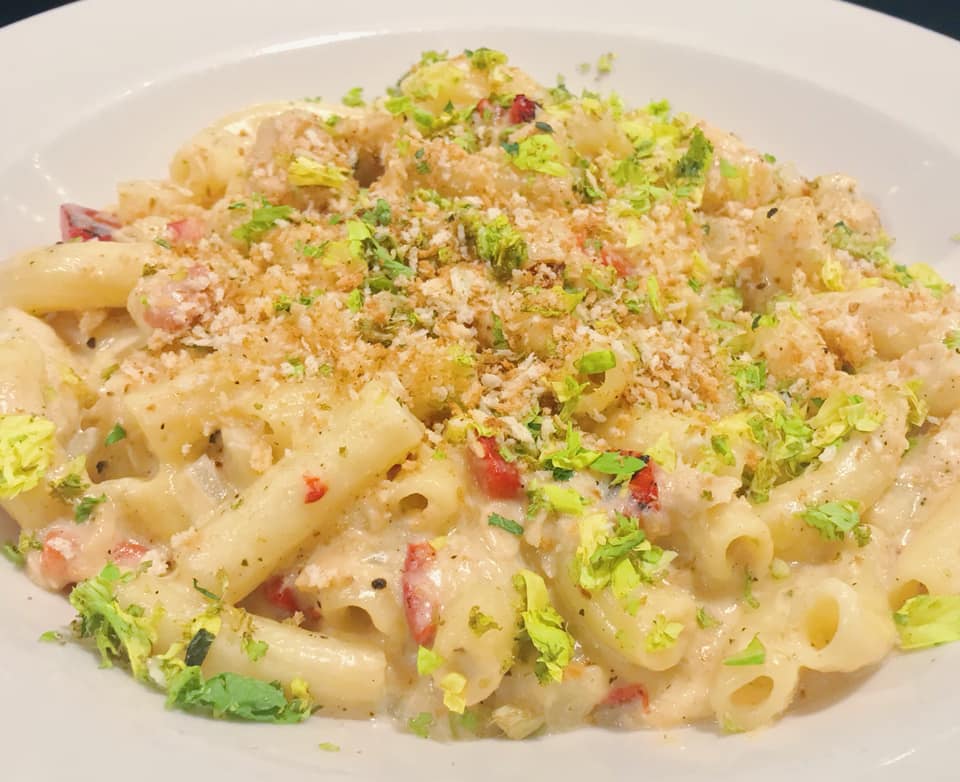
A meal that’s easy to make at home in a matter of minutes
I probably shouldn’t be surprised anymore that the best ideas so often start out as silly jokes. The Pimentuna casserole began about a decade ago with a bit of light culinary humor and ended up as a classically delicious, go-to, make-at-home Zingerman’s dish.
The whole thing started when my significant other, Tammie Gilfoyle, had the good idea to mix our Zingerman’s Pimento Cheese with tuna. I tried it, and she was right: it was terrific. This grew into the highly popular Pimentuna melt sandwich that ran as a special at the Roadhouse for a while, grilled on one of my Bakehouse favorites, Roadhouse Bread.
Making Pimentuna really couldn’t be much easier. Start with a container of Zingerman’s Pimento Cheese, and mix it with roughly the same volume of really good tuna. You can adjust the ratio, of course, to fit your taste. Add salt and pepper as you like, and you’re ready to go. Enjoy it in a sandwich or as a salad!
A year or so after all that, we were still joking around—this time with the notion that we ought to turn our new mix into a Pimentuna casserole. I would be a throwback to, and a takeoff on, the tried-and-true mid-20th-century classic. This sounded a little crazy at first, too, but then it started sounding better and better … and I decided to make it, tossing the Pimentuna with the Mancini family’s marvelous bronze die-extruded, slowly dried maccheroni.
The Roadhouse crew had the great idea to seal the deal by topping the dish with a handful of Zingerman’s Black Pepper Potato Chips to add some crunch. What can I say? Killer! Comforting, compelling, and definitely worth taking a few minutes to make for lunch!
Tag: ZINGERMAN’S ROADHOUSE
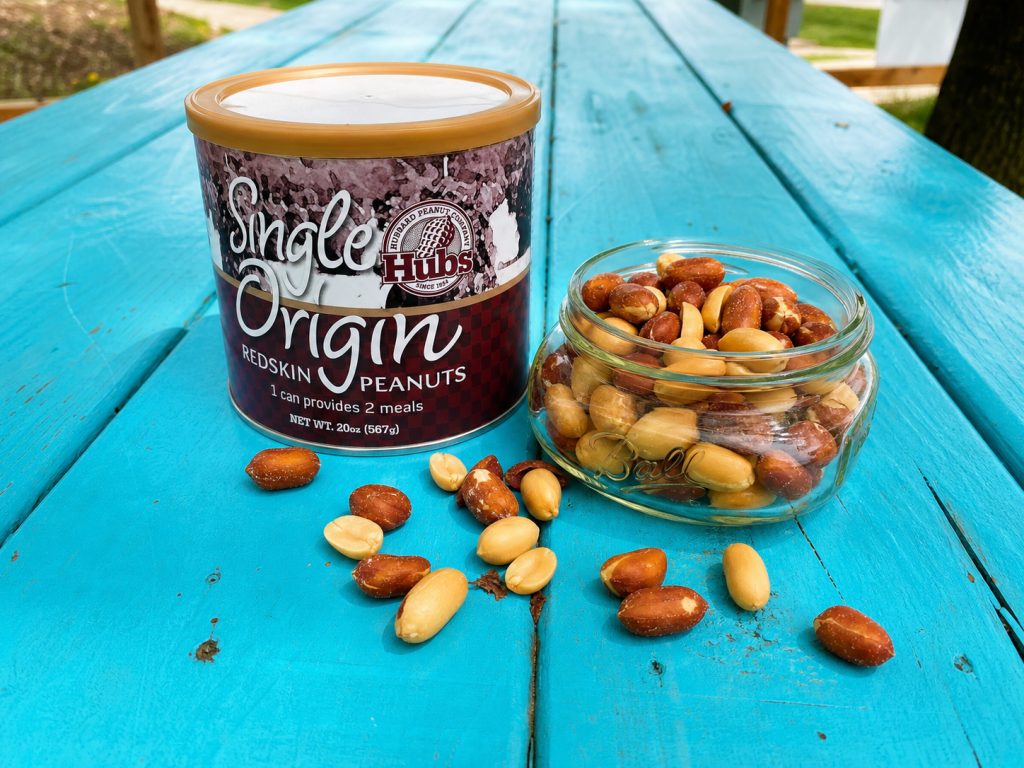
Farmed and sun-cured, just as they were a century ago
They’re coming about six weeks later than last year, and, to be honest, I was beginning to feel a bit anxious that there wouldn’t be any this year. Happily, my fears were unfounded. The amazing single-origin peanuts grown by Elisha Barnes—and shocked in the sun, just as they’re supposed to be—are en route to the Roadhouse as I write.
Though they’re grown only by Barnes, the nuts come to us through the folks at Hubs, the third-generation Hubbard family farm in Farmville, Virginia. Back in the mid-1950s, Dot Hubbard helped develop what’s evolved over the years into the “specialty peanut market.” She took the extra time to hand-select the largest peanuts from each local farm’s delivery and then dip them in hot water before blister-frying them in her kitchen. She and her husband, H.J., began shipping their peanuts by mail, and now, nearly seven decades later, the company is run by their grandson, Marshall Rabil. Marshall has been working hard in recent years to take Hubs to new heights, and he, like we at Zingerman’s, has an affinity for small, specialty experiments, as well as a strong commitment to doing the right thing. Which is why there’s a very limited amount of these peanuts—and why I feel incredibly fortunate that we got our hands on them.
Since the single-origin peanuts epitomize our philosophical approach to food, we debuted them at the event for “A Taste of Zingerman’s Food Philosophy” a few years back at the Roadhouse. They’re fully in line with our definition of quality (see the piece I wrote on the subject here). They’re remarkably full-flavored, with loads of complexity, balance, and finish. And they’re very traditional—this is how high-quality peanuts would have tasted 100 years ago! Barnes, a fourth-generation farmer in Virginia, is beyond passionate about his peanut growing and his connection to community, history, and the land. He says he found his vocation as a child: “The first time I got hooked on farming, I was six years old.” And through his upbringing and farming, he has developed a life philosophy that fits well with our own: “My father taught us how to treat people and how to be honest. He taught us integrity.” Both his passion and his principles are reflected in the excellence of his peanuts!
While Barnes’ farm isn’t certified organic, he uses no chemicals on the land. He harvests the peanuts using a 100-year-old picker, equipment he’s had to modify regularly to make it work with his 50-year-old tractor. What’s particularly special, though, is that Barnes still uses the old method of curing peanuts, which is known as “shocking.” Just-dug nuts, left on the vine as they grew, are wrapped around five-foot-high poles to sun-dry out in the field (think corn shocks). They cure for about six weeks before being brought in, cleaned, and transported to Hubs to receive that patented blistering, roasting, and salting.
A century ago, pretty much every peanut farmer worked this way. Today, Barnes is the only one still doing it. And these techniques make a major difference in the flavor. “It creates the sweetest, highest-germination-rate peanut there is,” Barnes says. “You see, [flash] drying takes out part of the germination quality, and it takes out the sweetness. It takes part of the quality out of the peanut. But I want to keep that.” In the spirit of maintaining a holistic internal ecosystem, he adds:
Tilling the soil, it teaches a spiritual lesson. Do your part, invest in the land, and the land will give you an increase. We are a fourth-generation farm. My father, my grandfather, my great-grandfather all farmed peanuts. I am right now the only farmer anywhere around that actively shocks peanuts like this. … It’s rewarding. It’s an honor. Who would’ve ever thought that the son of a sharecropper would be standing on the land that he now owns and farming peanuts the way that my father and his father did? That speaks volumes for me.
I am indebted to Hubs for coming on board with me and allowing me to be able to raise this and allowing it to be financially beneficial so that I can continue to do this growing. Hubs hopes the single-sourced specialty peanut will remind people of their roots. It has already given one farmer exactly what he needs! My daughter says that I’m a dinosaur that refuses to die. The chapters of my life will close with me farming the way I want to farm.
Supporting Elisha Barnes’ work is also a small step toward helping to restore the rightful place of Black farmers in the U.S. According to research, Black farmers have lost nearly 90% of their land over the last 100 years. “Southampton County, at the turn of the century, was primarily Black-owned,” Barnes explains. Now he is one of only a few Black farmers left working local land. A few years ago, he and his oldest brother bought back his father’s 52-acre spread in Courtland. “I raised peanuts on the family farm for the first time in 30 years,” he notes with pride.
Speaking of his commitment to traditional farming, Barnes says, “Maybe, just maybe, I’ll inspire somebody to take just a little bit of this old history and keep it alive.” Personally, I’m pretty confident his hope will be fulfilled many times over in the coming years. Swing by the Roadhouse soon to enjoy some of these stellar peanuts (with $2 oysters for Happy Hour from 2 to 6 p.m. Monday through Friday)! The flavor is big, but supplies are limited. Savor every exceptional nut!
Tag: ZINGERMAN’S ROADHOUSE
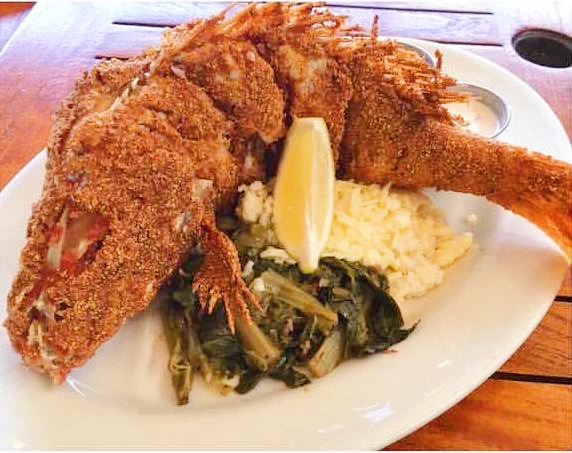
The story of a kind man I never met and the catfish for which he became famous
It’s true: the cat is back! If you come to the Roadhouse this month, you might be happy to see that the fried whole catfish has returned to what so many of you believe is its rightful place on the menu. I’m glad it has—I tried some the other day for the first time in a long while and was reminded of just how tasty it truly is: moist, meaty, delicate, with the crunch of the super flavorful Anson Mills artisan cornmeal on the outside, and a sprinkling of garlic salt that adds a bit of culinary embroidery to an already excellent dish. It’s served up alongside Anson Mills grits (made with a different corn and a different milling texture than the cornmeal); long-cooked, bacon-braised collard greens; and a ramekin of mustard coleslaw. Having this classic fried catfish for dinner would be the start of a great night!
In “A Taste of Zingerman’s Food Philosophy,” I encourage all of us (myself included) to “get curious about the story behind your food.” Without knowing the story, I always say, the food may be fine—but we’re missing so much of the background that makes it what it is. Just as knowing a person only by their job title or as an offshoot of their family tree does them a disservice, the same goes for food. We need to learn the backstory to truly understand and appreciate what we’re eating. American ethnomusicologist Alan Lomax, who spent much of the 20th century recording little-known traditional music to preserve it for posterity, believed that “traditional songs are the poetry of everyday people.” In a culinary context, dishes like this fried catfish offer a similar cultural richness; they are culinary poetry from the back kitchens of our country. And every time we serve the catfish at the Roadhouse, I come back to the story of a man named Joe Burroughs.
In his Southern community of Albertville, Alabama, Burroughs was known to most folks as “Uncle Joe.” I never met him, but he was the father of my longtime friend Peggy Burroughs Markel, who for many years has co-led the Zingerman’s Food Tours to Tuscany and also Morocco. After he passed away in 2008, Peggy shared his beautiful story with me.
Uncle Joe went to college at Auburn, then joined the Army during World War II, where he spent most of his time in Italy and North Africa. His worldview was influenced greatly by what he experienced there. Joe often expressed how the Italians reminded him of his own people, who grew gardens and loved to cook even when times were tough. His heart was cracked open by the beauty of Italy, which inspired him to write poetry and sculpt in alabaster. And while he was glad to return home after the war, the memories of Italy were forever on his mind and present in countless tales he told again and again throughout his life.
Joe went to work for South Central Bell as a telephone man and supervisor who taught others how to be fearless high up on a telephone pole on cold, stormy nights. His “men” loved him, just as they had when he was a first sergeant in communications for the Army. In his private life, he was a gentleman farmer and a caring family man with a creative, artistic side that he expressed through gardening and cooking. He took over kitchen duties from his wife on the weekends, serving fried catfish on Friday night, steaks on Saturday, and omelets on Sunday. He was also a master at growing and pickling peppers.
Peggy remembers this about her father:
He had a passion for frying catfish. The Tennessee River was a stone’s throw away, and he went there often to visit a good friend whom we called Uncle Charlie. Charlie had a boathouse on Pole Cat Hollow, an offshoot of Guntersville Lake, where theTennessee Valley Authority created 800 miles of shoreline around the foothills of the Appalachians. We grew up swimming in the river, boating, waterskiing, and chowing down on catfish, hush puppies, and home brew. After all, we lived in a dry county. My dad liked his beer, and we had to drive to the next town to get it. We had two refrigerators out back by the barbecue pit. One was for beer, and the other was a smoker. If you got them mixed up, you’d open the fridge door and find catfish hanging upside down by their tails.
The Tennessee River was a goldmine for catfish—catfish farms were not even invented yet. I can still remember how proud I was as a kid to learn how to take my fork and go up the spine of a freshly fried, still-steaming fish; filet it; and dab it into some homemade “goush,” an equal mix of ketchup and mayonnaise. It was so good. My sisters and I would turn on Elvis Presley and “do the mashed potato.” There wasn’t a Friday night that I didn’t go out on a date smelling like fried fish.
At that point, Mama made my dad start cooking it outside the house. There he built his domain. His cast-iron deep fryer, full of Mazola, kept the fires burning until everyone had their share. The bone plates were stacked high. All our friends came willingly. It was the place to be for the best food in town—“Uncle Joe’s famous catfish” right in our own backyard. He was inspired and designed a room off the house and thought to start a small café complete with a conveyor belt, designed to take the fried fish to people sitting around the bar. He was ahead of his time.
Joe Burroughs, I realize now in the context of my lead essay, found a way to weave a bit of his passion, purpose, and life dream into his weekly routine—and he loved it! Uncle Joe died peacefully in his sleep in the second week of July 2008, prompting Peggy to share this reflection: “The lesson for me? Kindness and gentleness are the key to happiness and a peaceful passing.” Joe never did build the café he envisioned, but, in the spirit of Alan Lomax’s work to record people who might never otherwise have been heard, I really wanted to have his catfish on our menu. And all these years later, it still plays a vital role in the Roadhouse rotations.
This coming October 24 would have been Joe Burroughs’ 110th birthday, and the catfish dish is a tribute to the kindness, gentleness, and generosity with which he moved through the world. Sharing his story here is another of my “secular prayers”—offered in the hope that we can all come together caringly around good food the way Uncle Joe did for so many years. When you raise your forkful of delicately fried catfish at dinner, consider making a quiet toast to Joe and the joy he brought to so many. And if you want to truly channel Peggy’s childhood, we’ll happily bring you ketchup and mayonnaise so you can enjoy some Burroughs family “goush” to go with it.
Order your catfish
Tag: ZINGERMAN’S ROADHOUSE
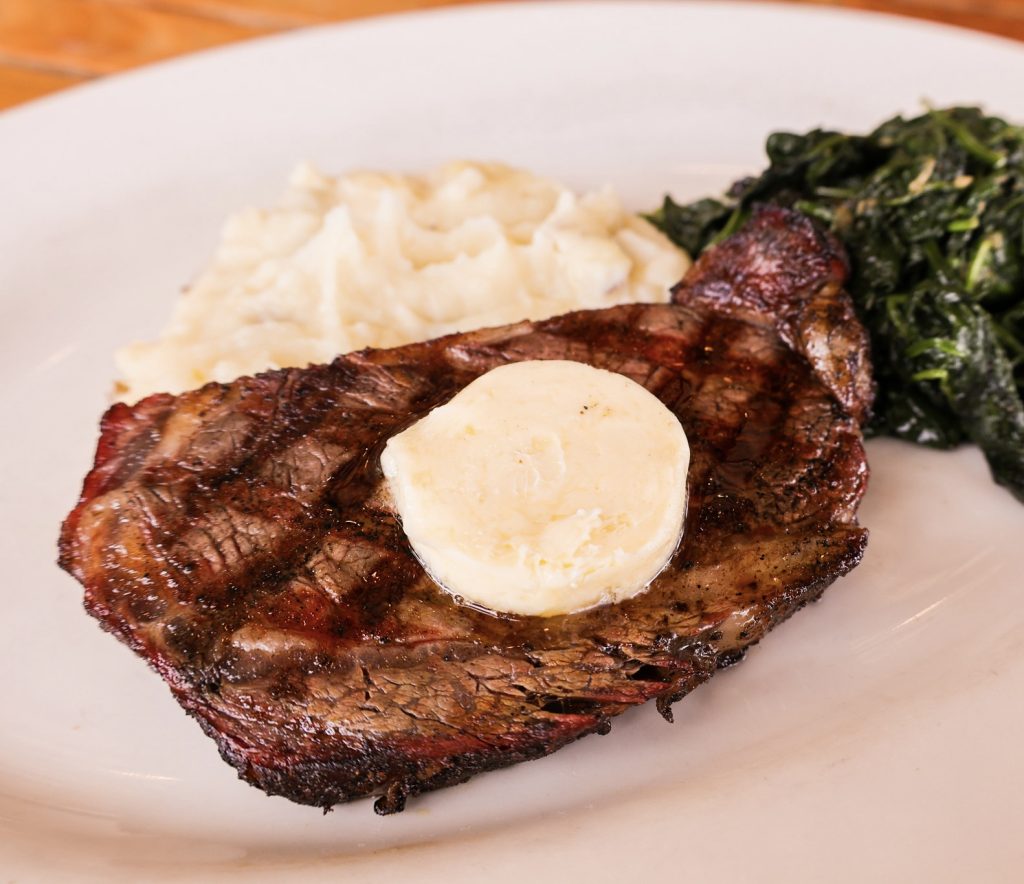
A marriage of steak and barbecue is a beautiful thing to behold
If you’re not in the mood for cooking at home, here’s a dinner that takes us many weeks to get ready, but all you need to do is drive over (or bike or walk if you live nearby now that the weather has warmed up) and order it! When it appears on the menu, as it has this month, it is almost always a hit!
The Smoked Ribeye was introduced for the first time about five or six years ago. Each time we take it off the menu for a few days, people start asking for it again. As a result, it’s appearing on the dinner menu now with a high degree of regularity.
So what’s a Smoked Ribeye? Someone described it to me last summer as “the best possible marriage one could imagine between steak and barbecue!” Hard to argue with that. A little bit of smoke, a nice piece of beef, a whole lot of flavor.
It begins with pasture-raised beef from a couple of farms within an hour of here. The beef is dry-aged—the way all good butchers would have done 60 or 70 years ago—for about a month, and then butchered from whole sides right here in the Roadhouse kitchen. For the Smoked Ribeye, we start by seasoning the beef with a mix of cayenne pepper, paprika, salt, and freshly ground Tellicherry black pepper. The whole piece is then smoked here on the pit over smoldering whole oak logs for about two hours. When you order a Smoked Ribeye for supper, we finish it on the wood-burning (or “live fire” as many folks are now saying) grill. We typically serve it up with mashed potatoes and sautéed spinach, but, of course, you can switch up the sides if you want (a little mac and cheese, maybe?).
Is it good? Yes! Really good! So many people have told me the Smoked Ribeye is one of the tastiest pieces of beef they’ve eaten in ages! A few have said “ever.” Longtime Roadie from years past Chris Domienik once told me, “It’s one of the best things on the menu. The smoke gets totally into the steak and it’s just so juicy and … it’s just awesome!” I took a Smoked Ribeye home for Tammie to try the one evening, and my whole car was perfumed by the smokiness. Neither she nor I eat much meat, but the Smoked Ribeye was so compelling it was gone in minutes! Smoky, savory, rich, meaty, and pretty darned marvelous! Served with a pat of Vermont Creamery Cultured Butter—it’s darned delicious! Swing by soon and check it out!
Make a reservation
Tag: ZINGERMAN’S ROADHOUSE
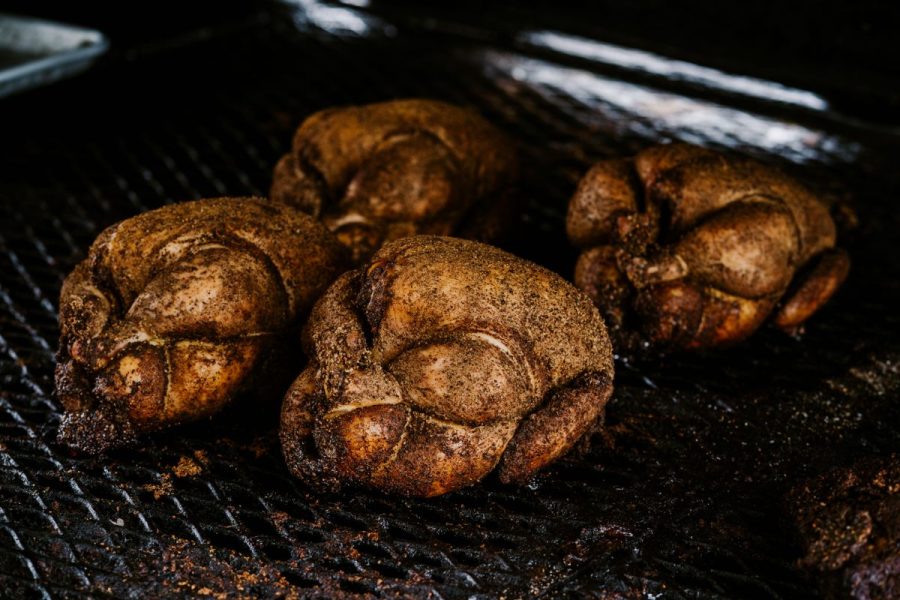
Great weekday meal for barbecue lovers to eat in or take out
Looking for some great-tasting comfort food? Some of the best smoked chicken anywhere? We may have done a lot of renovations on the kitchen and bar area in recent months, but the Roadhouse’s menu classics remain the same. Having just tasted some of the Pit-Smoked Amish Chicken the other night, I’m reminded again of how darned delicious it is. Rick Strutz, one of the long-time managing partners at the Deli—someone who’s probably tasted pretty much everything in the Zingerman’s Community over his 25 years plus in the job—says the Roadhouse Smoked Chicken is one of the best things in the ZCoB. I agree.
Which is why, if it’s Sunday, Monday, Tuesday, Wednesday, or Thursday, I’d recommend giving some thought to swinging by and picking up one of these exceptional oak-smoked chickens from the Roadhouse. I can say from a LOT of personal experience that they make an exceptional evening meal! A whole Amish chicken, rubbed with freshly ground Tellicherry black pepper and salt, smoked slowly over smoldering whole oak logs for three or four hours. We’ve had them on the carryout menu for the last few years, during which time they’ve been a very regular item at our house. All you need to do is call ahead to order one, then swing by the Roadhouse and pick it up.
Sunday through Thursday, you can also get the Roadhouse’s Pit-Smoked Chickens inside the restaurant for dinner. The beautiful, oak-smoked, Tellicherry black pepper-dusted bird comes plated with side dishes that make it a great dinner and a great deal! Man, is it good! If you have leftovers, I’ll share that they’re awesome for adding to soup or salad, making into smoked chicken salad, or just nibbling on out of the fridge when you need a snack. Tammie and I take the bones that are left behind and boil them with an array of vegetables to make a magically terrific broth. (When we serve it, we drop on a spoonful of IASA peperoncino!)
Once again, the Roadhouse only smokes a limited number of these whole chickens in time for dinner Sunday through Thursday. It can’t hurt to order ahead and have us hold one for you. It’s hard to believe a chicken could be life-changing, but this might be it. It’d be awesome, I’ll add, for either an Easter dinner or a Passover Seder as well.