
Tag: ZINGERMAN’S ROADHOUSE

On most nights, you’ll find Ari pouring water at The Roadhouse, but he’ll be taking a break from such duties on Wednesday, October 5. That’s when he’ll be hosting “My Beliefs about Cooking,” a very special dinner in collaboration with chef and partner Alex Young.
The dinner will put Ari’s essay on his beliefs about cooking from his new book, Zingerman’s Guide to Good Leading, Part 4; A Lapsed Anarchist’s Approach to the Power of Beliefs in Business, into practice with a menu of traditional, full-flavored dishes, seasoned with a lot of fun and thoughtfulness that you’ve come to know as the Zingerman’s way.
Feast your eyes on this delicious menu:
Roadhouse Hamburger Au Poivre
Zingerman’s Bakehouse
Roadhouse Bread and True North Bread
with Kerry Gold Butter
Roasted Fall Carrots and Boston Marrow Squash
Octopus and Cous-Cous
made with fresh soy beans from Cornman Farms
Zingerman’s Creamery Vanilla Gelato
with the Poirier Cane Syrup
Grilled Halvah and Chocolate Sandwiches
made with Askinosie chocolate
It’s going to be a great night of eating and sharing—and it may even get you thinking about your own beliefs about cooking. Tickets are still available, $75 per person. You can reserve your seat here.
Tag: ZINGERMAN’S ROADHOUSE
When we think about traditional food, we tend to view it as something complex, as something toiled over. An image comes to mind of an Italian grandmother, rolling out the dough for pasta, painstakingly shaping it. There is familial warmth and a dusting of flour, hands work the dough and words of encouragement are laid down as it’s stretched out on a drying rack, the grandmother hoping to pass on her technique to her family. It is the endeavors that people put into making food that makes it taste so good, that work into the historical character of a regional dish.
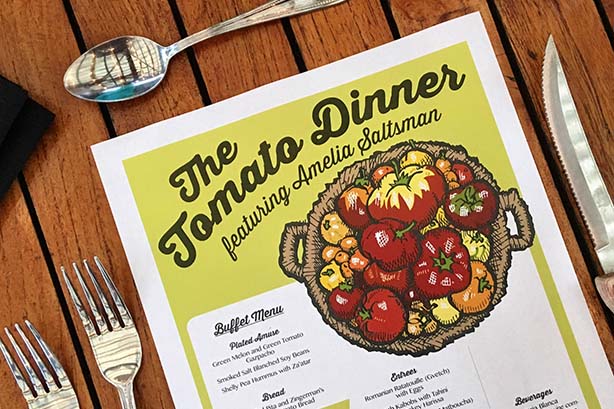
When we consider foodways and a desire to get back to traditional methods of creating cultural recipes, it can seem overwhelming and elaborate, leading to a belief that not just anyone can cook anything so rooted in our past. While Ari Weinzweig definitely challenges this belief cycle in his latest book, Zingerman’s Guide to Good Leading Part 4: A Lapsed Anarchist’s Approach to the Power of Beliefs in Business, there is another author who connects the past with a contemporary approach to food and cooking while protecting the integrity of time-honored cuisine. Amelia Saltsman, the author of the Seasonal Jewish Cooking: A Fresh Take on Tradition cookbook, brought a profound perspective on how we regard food and traditional cooking during our Tomato Special Dinner #200 at Zingerman’s Roadhouse earlier this month.
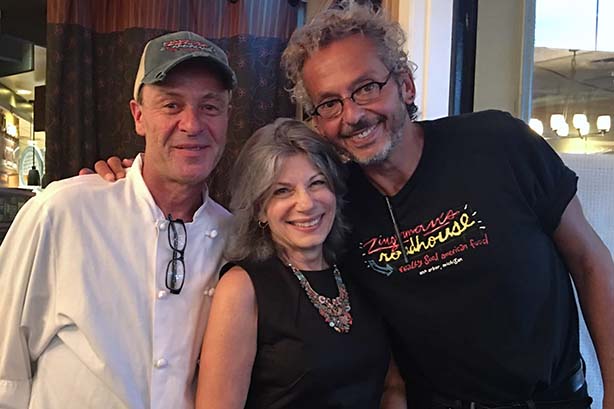
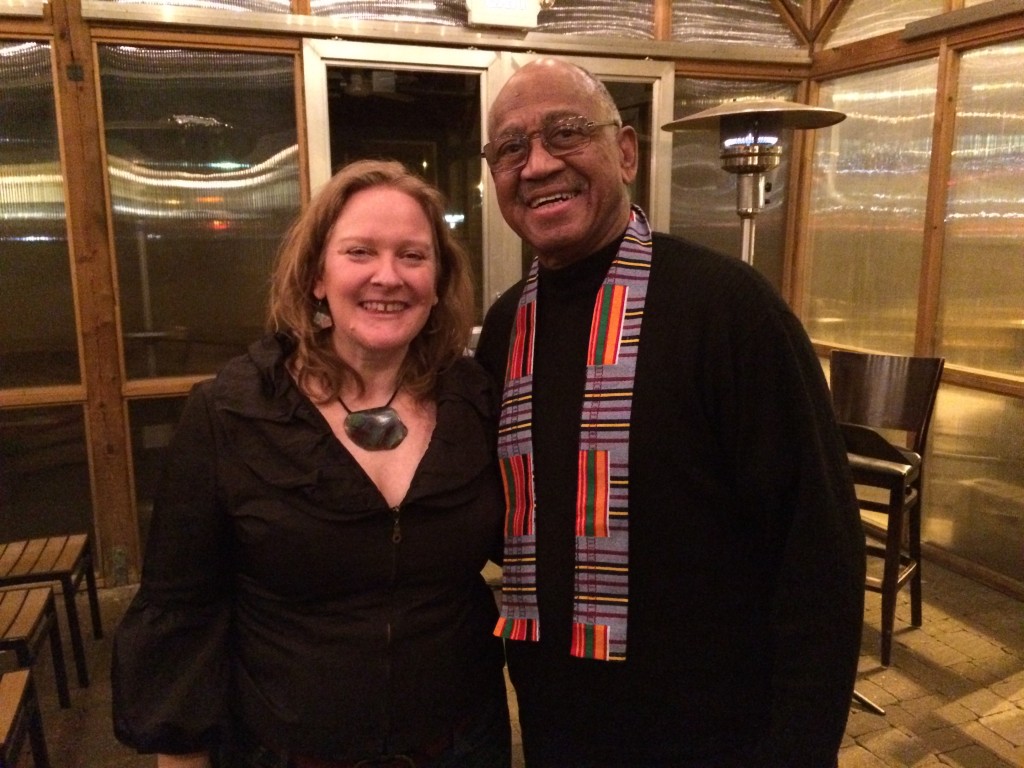
Amelia Saltsman with Chef Alex Young and Ari
The foremost idea that Amelia reminded us of is that cooking good food started in a territory sense. Historically, people cooked what was available to them, locally and seasonally. When we get back to our roots, by embracing what is right in front of us, we can welcome the idea that simple ingredients will bring the best flavor. We do this at Zingerman’s Roadhouse with our menu when we explore various foodways and focus on what makes them unique. By incorporating ingredients that represent the character of their regions and their producers into our dishes, we protect their integrity.
While it sounds straightforward in theory, many cuisines have transcended into something more global as cultures have expanded over time. Taking just into consideration, for example, the cultural crossroads of the United States, Amelia muses that “food morphs into something that is bigger than the sum of its parts.” While she intends with her book to explore Jewish food as a regional, cultural cuisine, she admits that there is not just one region to promote. She contradicts a romanticized notion of Jewish culture that stems from just one facet, when in truth, it is richly layered by so many different regions and sub-regions, each place having a different impact on flavor based on the ingredients that are within reach.
Coming from a mixed background (Syrian, Iraqi and Romanian), Amelia embodies the intricacy of the different paths that Jewish cuisine has taken. With her book, she conveys the idea that by opening up to the diversity of Jewish food, she is unlocking the depth and flavors of a myriad of places. She says that when we think about variegated heritage, it is important to remember that “it is not the hallmark card of what we think culture looks like.” She is connecting the memories and stories of people from all over and questioning the idea that Jewish food is just one type of cuisine.
Concerned that some believe Jewish cuisine is heavy or bland, Amelia insists it actually stems from a history that holds treasures of flavors that are waiting to be unearthed. She shared a memory of her Romanian grandfather making salata de icre (known as ikra in Israel), a spread made with cured fish roe emulsified with oil and lemon. The result, she says, is a briny, creamy delicate spread that is exquisite when layered on black bread with a little bit of garlic. Top it off with fresh tomatoes and cucumbers from your garden, and it becomes a heavenly alternative to processed mayo. By digging up recipes like ikra, we can tap into the abundance of flavor that is present in Jewish cuisine.
Amelia also touched on the importance of agriculture. She talks about the “beautiful synchronicity of the 21st century sustainable approach to our food with ancient traditions and blessings”, how the seasons roll together with the holidays and the harvest. Her book is divided into six micro-seasons that tie together Jewish traditions with the earth’s annual cycles. Farming itself, she says, is an ancient art, but many of the practices are are still sound.
Just as The Roadhouse’s Chef Alex Young focuses on the importance of terroir, people can continue to produce food that is healthful, yet full of flavor. By paying attention to what is immediately around us, we can discover that the ingredients in food that we source from local farms do not need anything extra. In the same way our ancestors created delicious recipes using what was available to them, we can buy from the local farmers’ market and recreate the satisfying, nutritious meals that seemed so daunting before.
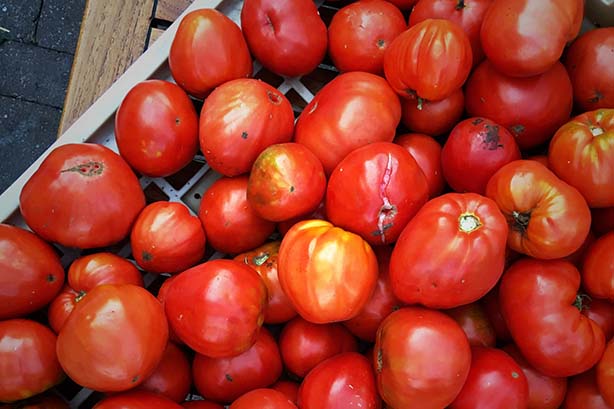
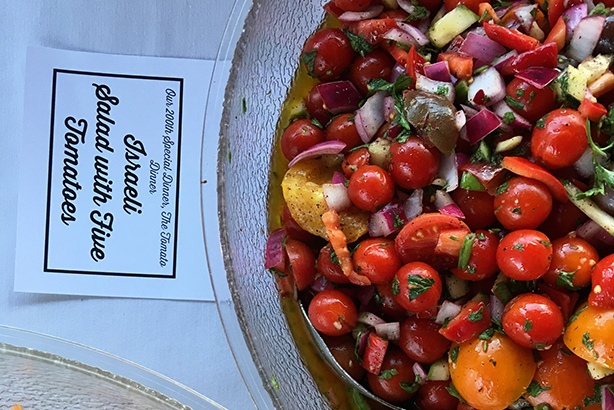
The heirloom tomatoes we brought in from Cornman Farms for the Tomato Dinner are a perfect example of how to achieve this–each variety of tomato brings its own essence of taste with no need for frills. At the dinner we offered really good olive oil and sea salt to enhance the tomatoes, or there was an option to create a Caprese salad with our homemade fresh mozzarella and hand-picked basil. Similarly, Amelia creates her recipes by “letting the ingredients tell her what to do”. While the recipes come from a long-established place in time, she adapts her techniques to a modern sensibilities.
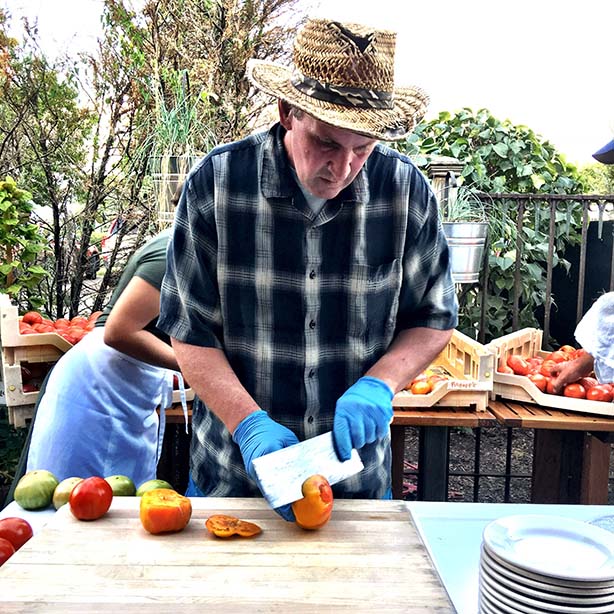
Chef Alex and team hard at work
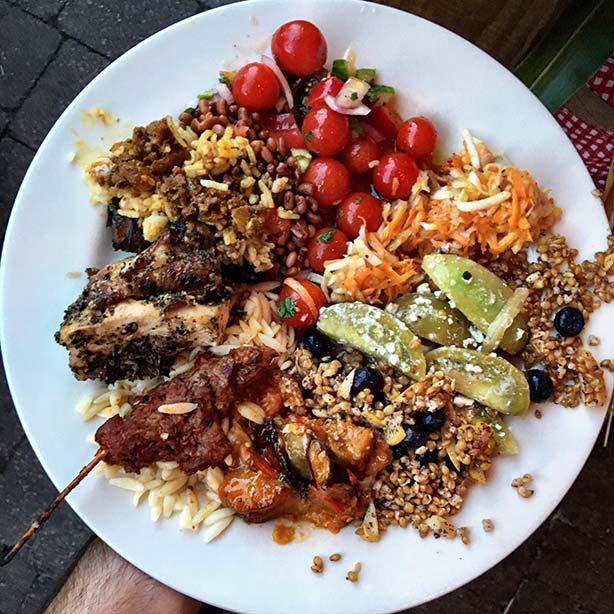
While nearly all the ingredients used at the dinner came from Cornman, Amelia hand -carried precious strands of golden barhi dates from California, making sure that the just under-ripe fruits stayed delicately intact. Fresh and crisp, with a slightly firm texture, the dates were so unique in comparison to what we typically eat in the Midwest. Chef Alex prepared Amelia’s dates in a luscious wheat berry salad with plump blueberries and a splash of freshly squeezed orange juice. The nuttiness of the wheat berries brought an early autumn subtlety to the dish.
Amelia’s recipes, each one capturing a story from her incredible Jewish heritage, made the Tomato Special Dinner #200 more than just a success—it was a momentous event for Zingerman’s Roadhouse. It was one more opportunity for us to learn about the rich and soulful foodways we are constantly searching out. With Ari and Amelia connecting us with the importance of regional, full-flavored food, and Chef Alex’s talents to incorporate his cherished product from Cornman to recreate the depth of Amelia’s heritage, the Tomato Dinner achieved great heights for our Roadhouse family.
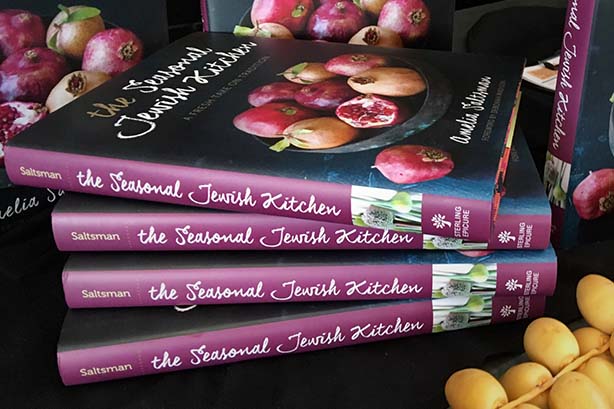
To recreate the delicious recipes we featured at the Tomato Special Dinner #200, pick up a copy of her beautifully written and illustrated cookbook. In the meantime, our heirloom tomatoes from Cornman Farms still brighten many of our dishes at Zingerman’s Roadhouse, so there is still time for you to come in and enjoy them!
Tag: ZINGERMAN’S ROADHOUSE
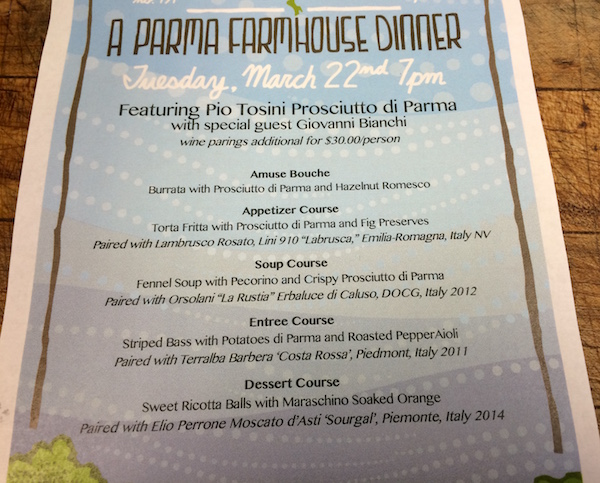
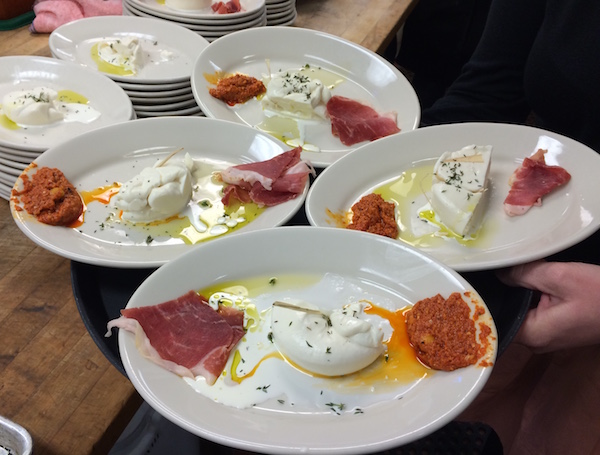
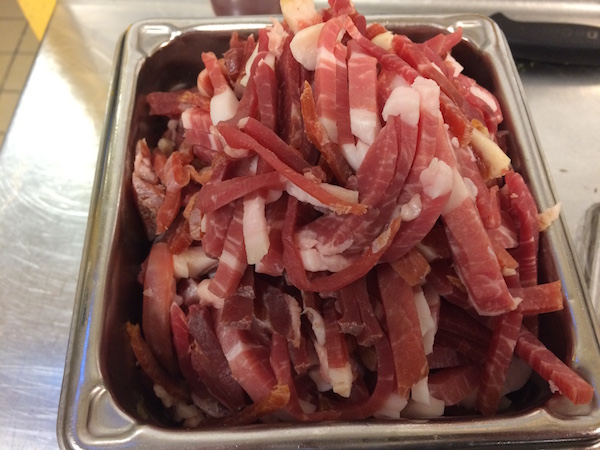
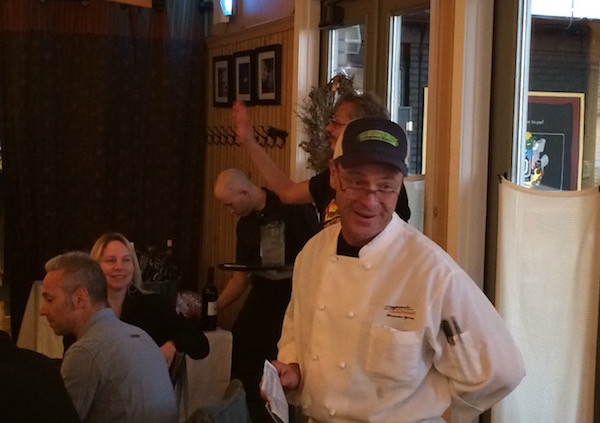
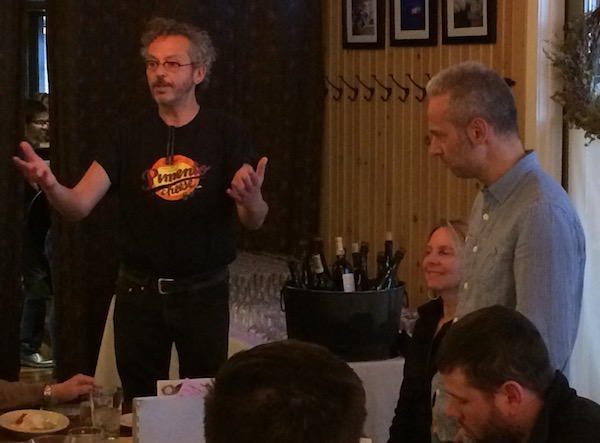
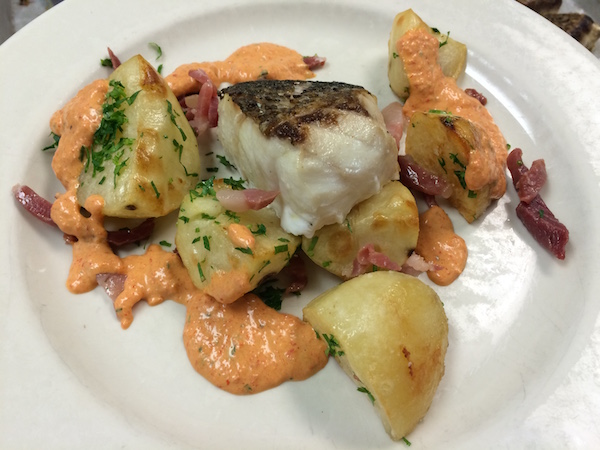
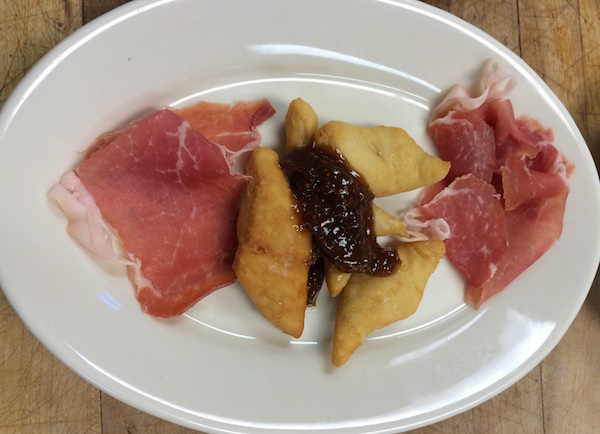
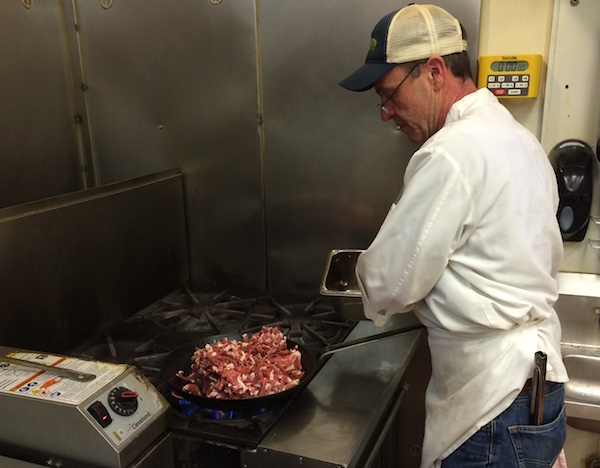
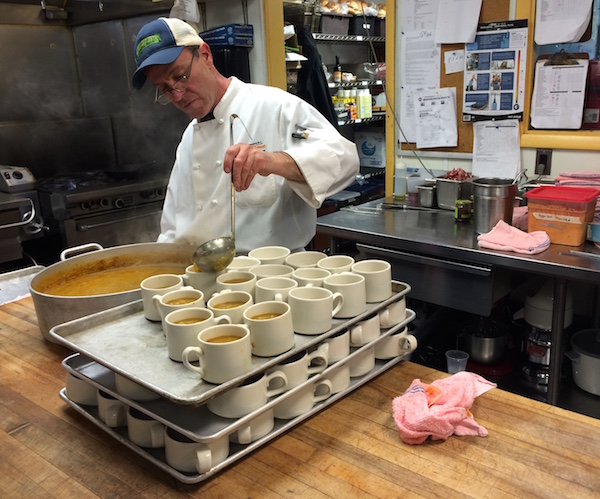
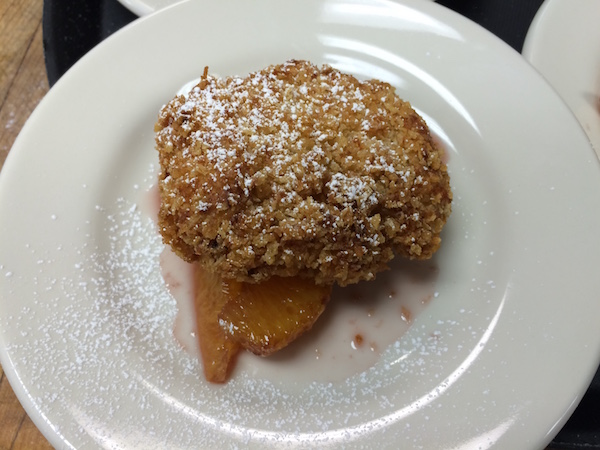
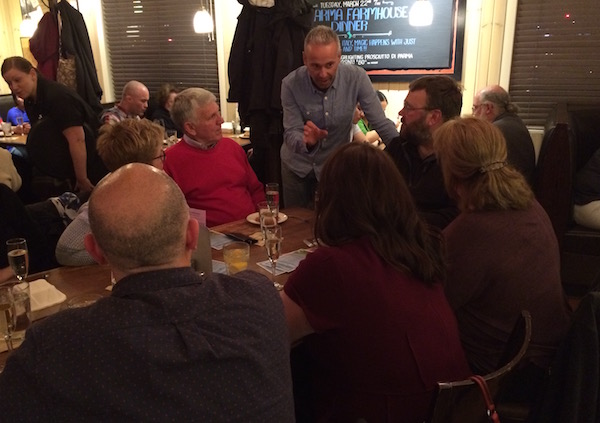
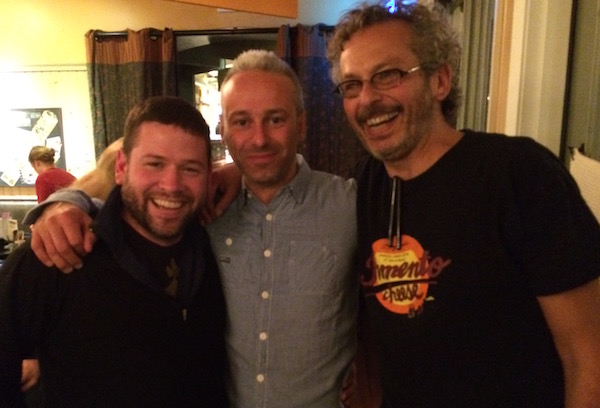
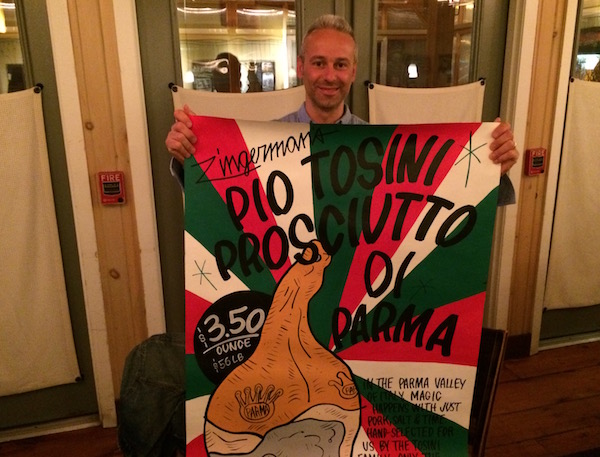
This past Tuesday, Zingerman’s Roadhouse was very pleased to welcome Giovanni Bianchi of world-renowned Pio Tosini Prosciutto di Parma. Executive Chef Alex Young and Giovanni collaborated on a menu that highlighted the complex flavors of this wonderful ham.The Prosciutto, cured in the town of Langhirano, Italy, bears the honorable mark of the Consorzio del Prosciutto di Parma signifying its exceptional quality and rigorous curing processes. The family-owned and operated Pio Tosini company has become one of the most credible and sought-after producers of Prosciutto di Parma and has been in operation for over 80 years.
There are only four ingredients that go into this ham: Italian pigs, salt, air, and time. At Pio Tosini, a curing time of over 500 days (more than 100 days longer than typical prosciutto production) allows for slow and even salt penetration, assuring the sweetness of the hams. Each ham is trimmed, deboned by hand and personally selected. As we say at Zingerman’s, you really can taste the difference!
See you soon!
Tag: ZINGERMAN’S ROADHOUSE
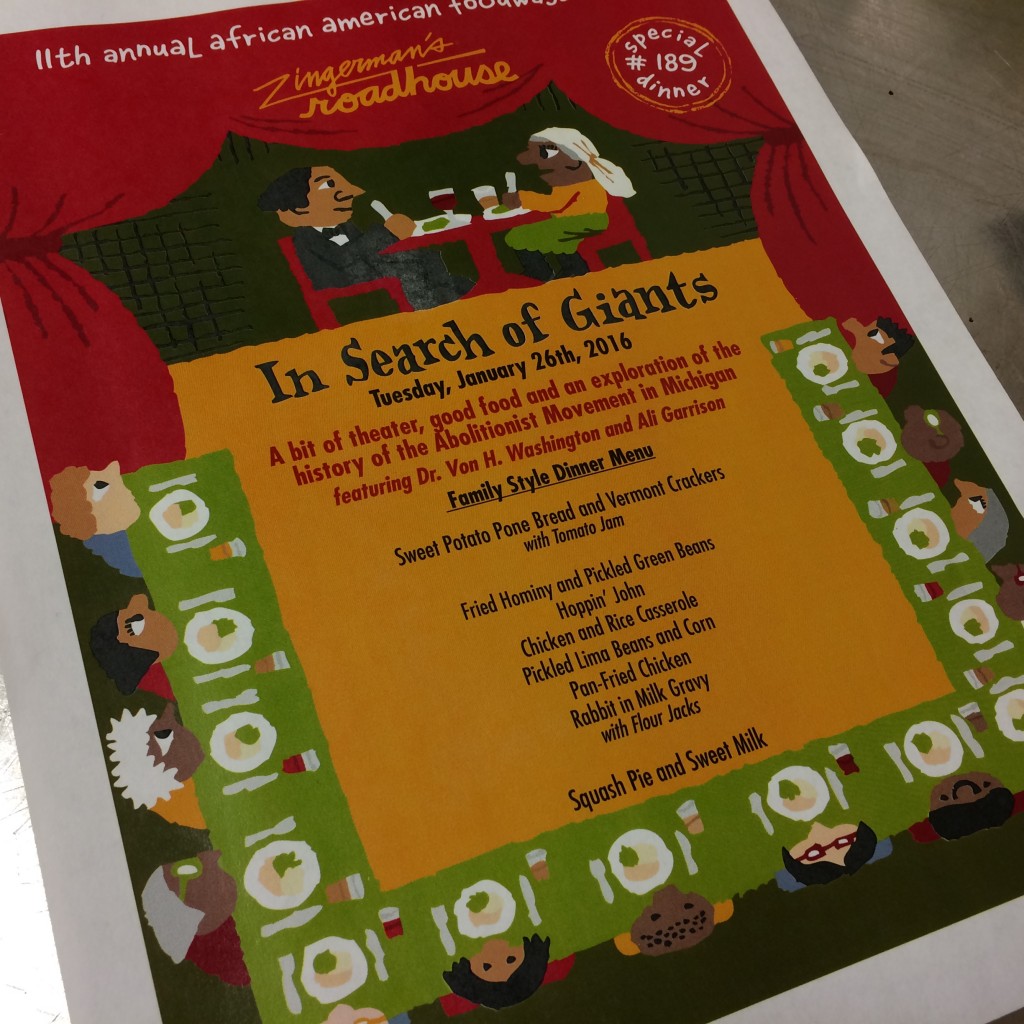
Last night’s 11th Annual African American Foodways Dinner at Zingerman’s Roadhouse was a wonderfully intimate dinner that gave a whole new meaning to the term “dinner theater.
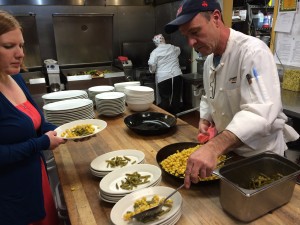
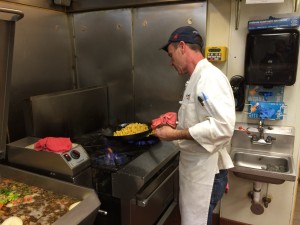
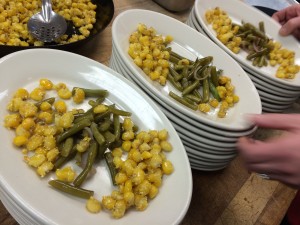
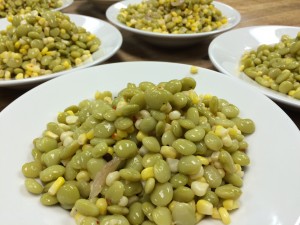
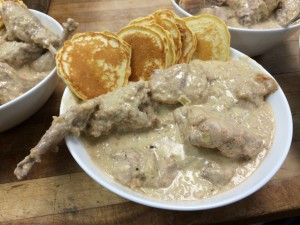
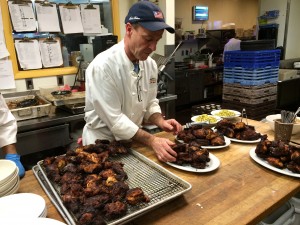
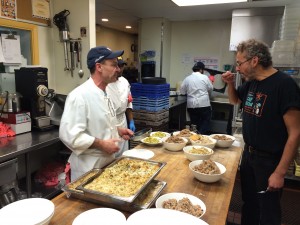
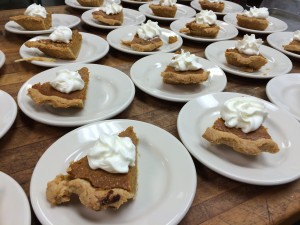
This year’s feast was based the recipes and foods common to Western Michigan in the middle of the 1800s, and Roadhouse Executive Chef Alex Young created a wonderful multi-course meal evoking this period. In keeping with the spirit of the evening, the meal was served family-style. The meal began with Sweet Potato Pone Bread and Vermont Crackers served with tomato jam, followed by fried hominy and pickled green beans, and then fresh rabbit in a rich milk gravy served with flapjacks. The next round brought big bowls of Hoppin’ John and pickled Lima beans with corn. Platters of beautifully fried chicken followed. To top it all off, diners enjoyed slices of lovely squash pies made especially for the dinner by Zingerman’s Bakehouse.
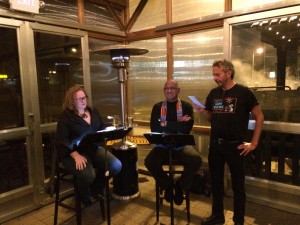
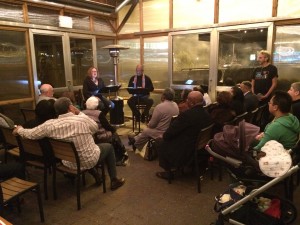
After the meal, guests were entertained this year with a special performance by Dr. Von H. Washington, a professor in Western Michigan University’s Department of Theatre, and Toronto-based mezzo-soprano (and former Zingerman’s employee), Ali Garrison. The pair presented a dramatic scene written especially for the dinner; a theatrical reading based on their research for Dr. Washington’s play, “In Search of Giants.” The play comes to the Arthur Miller Theatre on the University of Michigan’s North Campus Thursday, January 28th.
In the scene presented, Washington and Garrison play two Abolitionists, Henry Bibb and Pamela Thomas, meeting in January 1845 at the Underground Railroad Station in Schoolcraft, Michigan near Kalamazoo for a kitchen table conversation about food, freedom and human interaction. Ali Garrison is a direct descendent of Dr. Nathan Thomas, noted Michigan abolitionist whose home was a prominent stop on the Underground Railroad.
This year’s dinner was a wonderful tribute to the people of another place and time, whose contributions to the abolitionist movement through the Railroad and other activities helped bring thousands to new lives of freedom.
See you soon!
Tag: ZINGERMAN’S ROADHOUSE
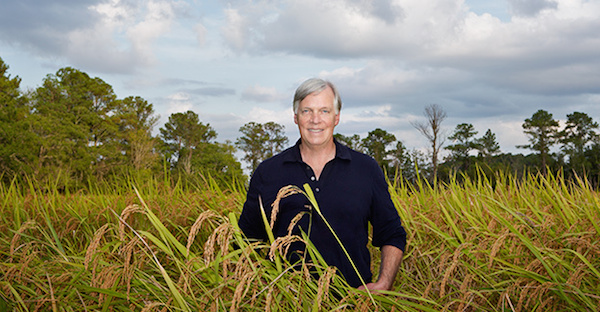
In 1998, Glenn Roberts sold almost all his earthly possessions and went in search of heirloom varieties of corn, rice, and wheat. His mission: to grow, harvest and mill these antebellum varieties organically and restore them to a viable economic existence. And so he founded Anson Mills, and the culinary world was forever changed. Glenn’s attention to detail, his commitment to grow organically, and his determination to mill the grains as carefully as they’re grown attracted well-known chefs who began to use and promote his products. Today Glenn works with over 30 growers in six states to reproduce these heirloom grains.
On Tuesday, November 10, 7pm, Zingerman’s Roadhouse Chef Alex and Glenn will cook up a menu that reveals the subtle character of each grain and emphasizes the invaluable place that each has in the South.
Please join us for this rare visit by the man who Food Republic called “The Guy To Know For Heirloom Grains In America.”
DINNER MENU
- Chestnut Flour Goat Cheese Ravioli with Sage and Lemon
- A Flight of Grits: Gourd Seed, Flint and Dent
- Poly-Crop Flour Biscuits with Benne Cream and Butter
- Petite Rouge Peas (pre 1812) and Country Ham
- Lamb “Osso Buco” Posole
with green chiles, nixtimal corn and salsa rojo - New Crop Rice Grits Souffle with maple and Cream
Tag: ZINGERMAN’S ROADHOUSE

Put on your cape and sink your fangs into a spooky night of fun and good food at the 10th Annual Vampires’ Ball hosted at Zingerman’s Cornman Farms on Friday, October 30th, 6-1130pm. Vampires’ Ball is a festive, upscale gathering featuring food prepared by James Beard Award-Winning Chef Alex Young of Zingerman’s Roadhouse. Funds raised at Vampires’ Ball benefit Food Gatherers Community Kitchen and Job Training Program.
Dinner Package (6:00 – 11:30 PM): $200 each (limited quantity available)
- Drinks and appetizers
- Seated, multi-course dinner prepared by Chef Alex Young in the farmhouse and dessert from Zingerman’s Bakehouse
- All items included in the Drinks & Dancing package
Drinks & Dancing Package (7:30 – 11:30 PM): $60 each
- Dancing and entertainment, including music, costume contest, tarot card reading, and photobooth
- Two complimentary drink tickets
- Late-night snacks from Zingerman’s Roadhouse
- Premium goody bag
Sponsors
Batty Benefactor:

Ghoulish Gift:



With special thanks to:

About the Food Gatherers Community Kitchen and Job Training Program
The mission of the Food Gatherers Community Kitchen is to engage and nourish our entire community. Located in the Robert J. Delonis Center, Food Gatherers staff and volunteers serve more than 100,000 meals to people in need each year.
The Community Kitchen Job Training Program provides low-income and at-risk youth (ages 17-21) with instruction in basic culinary arts, food safety, work ethics and life skills. Students build firm foundations for success in future careers while decreasing the chances of entering the shelter system or other emergency services.
The Food Gatherers Community Kitchen and Job Training Program are essential efforts in our overall plan to alleviate hunger and eliminate its root causes in our community.