
Tag: ZINGERMAN’S ROADHOUSE
A Harvest Dinner to Fund Local Community Outreach Programs
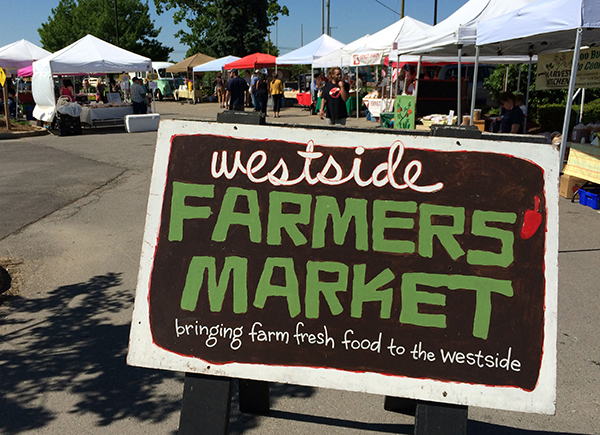
Now in its 10th year, the Westside Farmers’ Market brings incredible, locally-sourced food to Ann Arbor’s Westside every Thursday afternoon during the summer. Zingerman’s Roadhouse is proudly supporting the market with a celebratory fall harvest dinner featuring Westside Farmers’ Market vendors to raise funds for three new Market outreach programs in 2016:
- School to Market program in collaboration with Agrarian Adventure
- Senior Community transportation to the Market
- Educational Market group tours
The vision for these three programs is to increase market access and awareness throughout the Westside community while improving the Westside Farmers’ Market long-term sustainability. Your support will help make this vision become a reality.
James Beard award-winning Chef Alex Young has created a menu featuring the beautifully grown produce and sustainably raised meats from Westside’s vendors. The meal will also feature Laurentide wine pairings, one of our favorite vendors from Leelanau, Michigan. We invite you to enjoy the peak flavors of the season at this fundraising dinner, and we look forward to seeing you each week at the market!
Dinner Menu
APPETIZER
Stamatopoulos & Sons Olive Oil and Zingerman’s Baguettes
paired with Laurentide Pinot Noir Rose 2014
SALAD COURSE
Seedling Peach and Chile Salad
paired with Laurentide Riesling 2013
ENTRÉE COURSE
Lex’s Roast Chicken and Kambucha Squash Gratan
paired with Laurentide Chardonnay 2013
DESSERT COURSE
Mindo Chocolate Souffle
Zingerman’s Creamery City Goat Cheese with Apples and Honey
paired with Laurentide Emergence White 2013
See you there!
Tag: ZINGERMAN’S ROADHOUSE
Chef Alex Serves Up Dinner for 120 at the USA Pavilion
Alex Young, Executive Chef at Zingerman’s Roadhouse and a member of the U.S. State Department’s American Chef Corps, has been recruited to join the schedule of guest chefs at the James Beard American Restaurant in the USA Pavilion at ExpoMilan 2015.
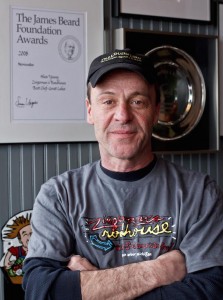
The restaurant, located atop the Galleria Vittorio Emanuele II, a four-story double arcade and national landmark in central Milan, will provide a showcase for notable American chefs to show off some of the gastronomic delights of our country. The Beard Foundation has invited chefs from all over the U.S. to showcase the finest American ingredients and cuisine in a series of five-course, regionally focused prix-fixe menus. Chef Alex will step into the kitchen on Friday, September 11th, and Saturday, September 12th.
The theme of this year’s Expo is ‘Feeding the Planet: Energy for Life,’ an idea that particularly resonates with Alex. “The planet’s population is estimated to be nearly 9 billion people by 2020. And we have to find a way to make healthy, sustainable agriculture work to feed all those people.” Appropriately, the James Beard Foundation selected chefs based in part on their commitment to sustainability, as well as their unique culinary talents.
Alex hopes ExpoMilan 2015 will help raise awareness of the importance of sustainable farming methods to help keep the planet fertile and productive for a growing population. With that in mind, he chose to focus his Expo menu on how grains can be made more nutritious by using traditional processing methods. “For example,” he says, “sprouting, fermenting, or souring grains helps to begin the breakdown of the grains, releasing all of the stored nutrients within.”
The planned fare for the evening will include such Zingerman’s Roadhouse favorites as BBQ oysters, goat cheese canapés with bacon-pepper jam, and fried green tomatoes. Entrées will include pulled pork served with Appalachia red grits and braised mustard greens, and planked river trout served with roasted potatoes and sautéed kale. And, in keeping with his emphasis on grains, Chef Alex will prepare a traditional New Mexico posole soup made with corn processed using the ancient nixtamal method, buttermilk-graham bread made with soured grain, and a salad made with soured, parched, and sprouted oats.
Chef Alex will have a full kitchen staff at his disposal at the James Beard American Restaurant, as well as the familiar help from San Street Chef Ji Hye Kim, and Ethan Young (Alex’s son), who works in the Zingerman’s Roadhouse kitchen.
If you happen to be in Milan this September, please stop in an say hello!

Tag: ZINGERMAN’S ROADHOUSE
Twice the fun!
Zingerman’s is celebrating Cinco de Mayo with two tasty events next week that will bring a little bit of Mexican sunshine to the Mitten.
Cinco de Mayo Cocktail Class at Cornman Farms: Terrific Tequila
Tequila is a truly unique liquor distilled from the agave plant and made only in certain regions of Mexico. This spirit is at once sweet, peppery, grassy, and spicy. It can be smooth, dynamic, complex and invigorating. Tequila is the spirit of Mexico, literally and figuratively! Tequila is great in lively and refreshing cocktails and pairs well with complex, spicy foods in a way that most liquors simply can’t. On Tuesday, May 5, 7pm, we’ll explore this liquor that is both exotic and familiar to the American bar scene. We’ll learn about the history of tequila and different varieties of the liquor. We’ll make three distinct cocktails; each will highlight tequila in a different way. We’ll also enjoy farm-fresh snacks created by our own talented culinary team. Guests will end the evening with recipes and the know-how to craft these tasty tequila cocktails at home.
Cinco de Mayo Dinner at Zingerman’s Roadhouse
Join the Roadhouse for a journey into the Mexican State of Campache. Located in the Yucatan Pennisula, Campeche has long been referred to as the lesser-known jewel of the peninsula, with its lush fish markets and intermingling of Spanish, Mayan and Mexican cultures.
Roadhouse Chef Bob Bennett, a longtime Roadie and student of Mexican culture, takes us on a stroll through the streets of Campeche with stories of Campechano culture, Mayan history and of course, food.
MENU
APPETIZERS
Calamares Rellenos
fried calamari stuffed with smoked sausage
Camarones en Chilimole
shrimp served with a charred chili sauce
SOUP
Sopa de Lima
chicken and lime soup
ENTRÉE
Pompano en Verde
fresh-caught pompano served with a tomatillo and parsley sauce
-OR-
Carne el Pastor
pineapple and chili marinated sliced pork loin
SIDES
Chile Tamulado
Arroz Negro
DESSERT
Flan de Manzana del Anacardo
cashew apple custard
See you soon!
Tag: ZINGERMAN’S ROADHOUSE
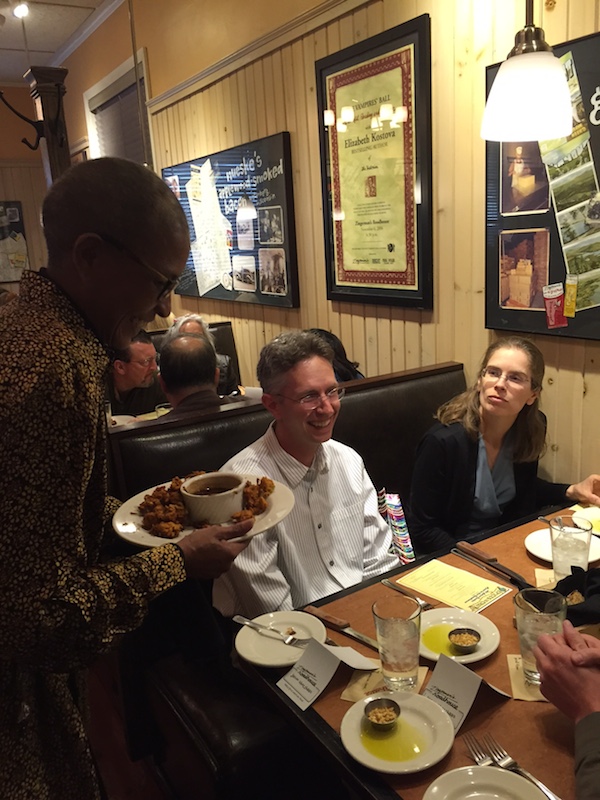
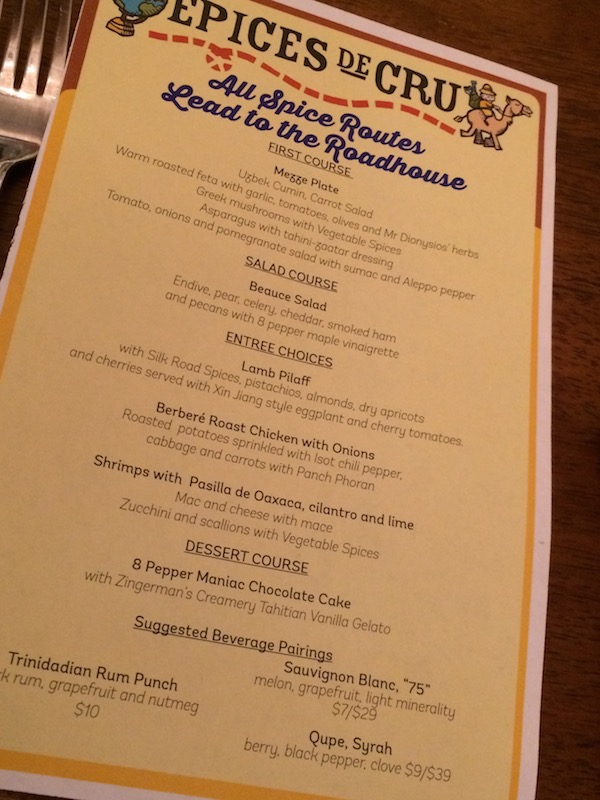
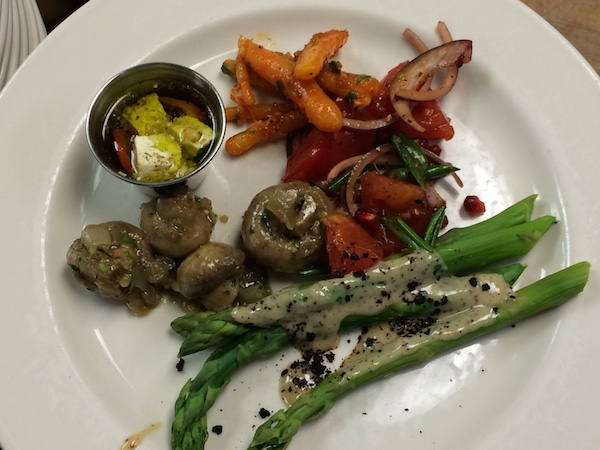
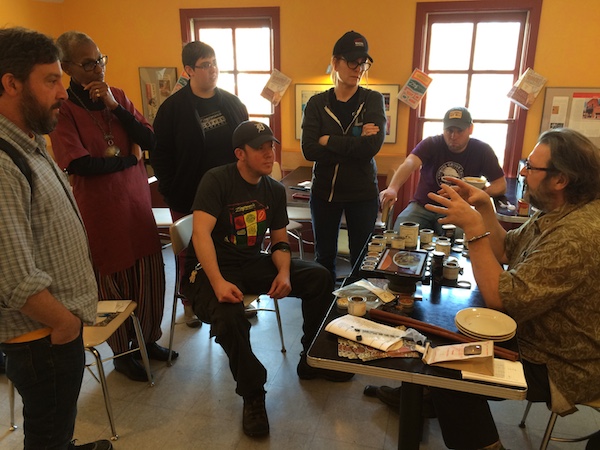
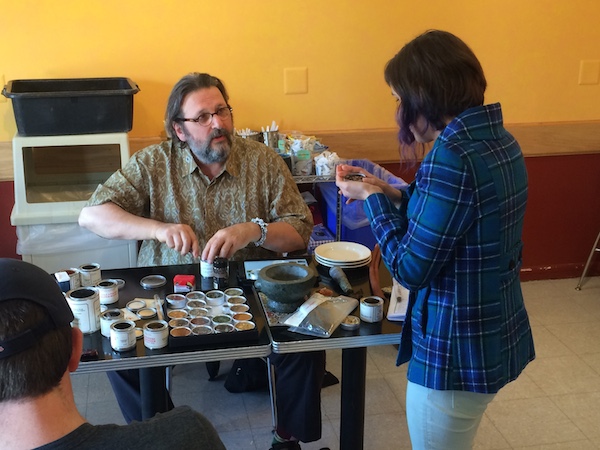
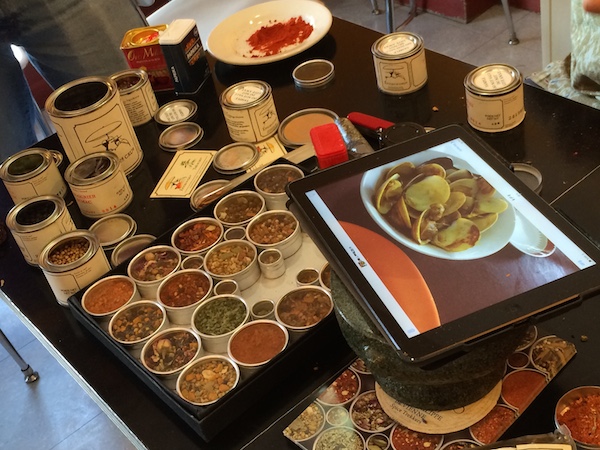
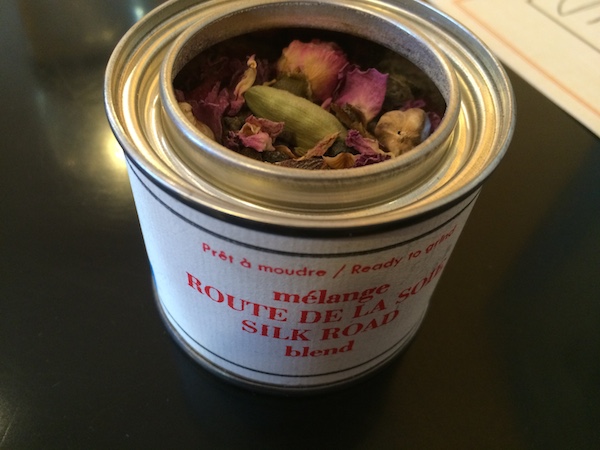
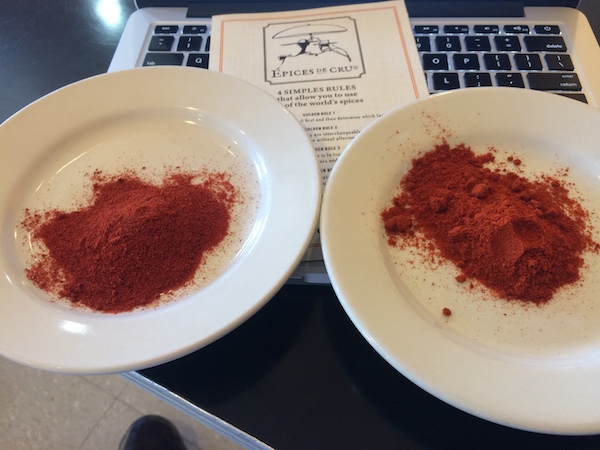
Spice Trekkers share the love
This week we’ve been very fortunate to welcome our friends the de Vienne family for a several days of talking, eating, learning, and laughter. Based in Monréal, the Spice Trekkers have been encouraging people to learn about spices and grind their own for over a decade. “Spices have an undeserved reputation for being complicated,” says founder Ethné de Vienne: “It seems like people are waiting for permission to get creative with spices. Spices have few rules. We just want to tell people it’ll be fine, just start cooking!”
We thought it would be great if they could show us what they mean, so we asked them to visit Ann Arbor for a series of workshops aimed at exploring the use of whole spices in cooking. In addition, they shared their knowledge with Zingerman’s guests in special dinners at the Roadhouse, and the Deli, as well as a class at Zingerman’s BAKE!
Here are some highlights:
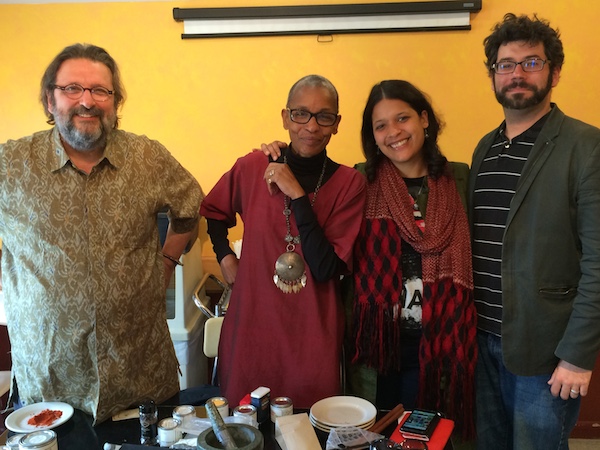
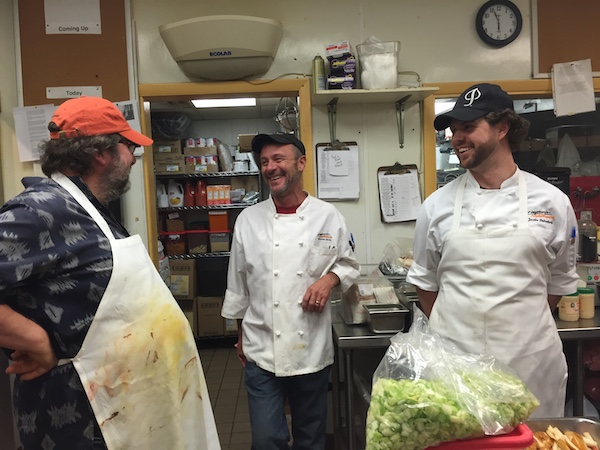
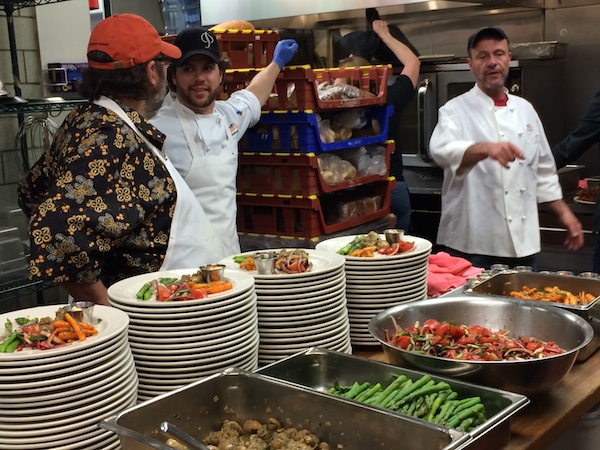
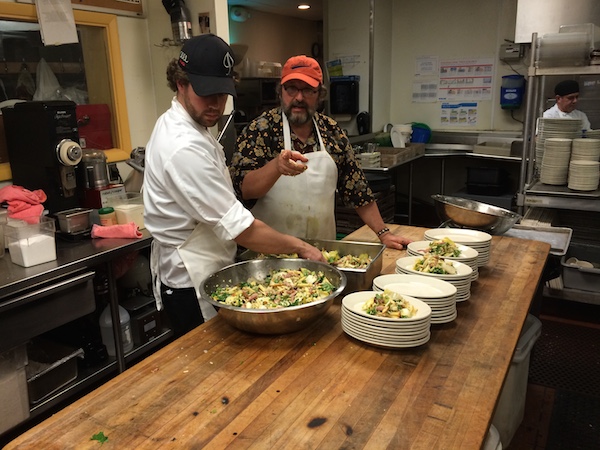
Merci beaucoup amis!
Tag: ZINGERMAN’S ROADHOUSE
Whole Spices Featured at Weeklong Series of Events in April
This month, Zingerman’s welcomes Canadian spice importers Épices de Cru to Ann Arbor for a series of workshops aimed at exploring the use of whole spices in cooking. The week will culminate in a trio public events at Zingerman’s Roadhouse, Zingerman’s Deli, and Zingerman’s BAKE!
Épices de Cru approaches spices in three unique ways. First, their spices are always sold whole, which protects purity and freshness. Second, they purchase directly from growers on sourcing trips, which ensures fair trade practices and consistent quality. Third, they source spices from traditional growing regions, or terroirs, which have historically produced the most flavorful products. “We believe in listening to the people who actually live the food we’re trying to make,” says owner Philippe de Vienne.
The Montreal-based company was founded by the de Vienne family, and has been encouraging people to learn about spices and grind their own for over a decade. “Spices have an undeserved reputation for being complicated,” says Épices de Cru founder Ethné de Vienne: “It seems like people are waiting for permission to get creative with spices. Spices have few rules. We just want to tell people it’ll be fine, just start cooking!”
Both Zingerman’s and Épices de Cru share the belief that home cooks can make better food by grinding spices themselves. Says Zingerman’s founder, Ari Weinzweig, “Thirty years ago the idea that everyone you knew would be grinding fresh beans to make coffee every time they brewed it home was almost unimaginable.”
Ari first encountered the Épices de Cru shop in Montreal’s Jean-Talon Market several years ago, and has long wanted to bring their spices to Zingerman’s. Last year, he learned they were finally looking for distributors in the U.S. “I was immediately excited,” he said, and invited the family to visit Ann Arbor in 2014 and share their knowledge of traditional spices. The visit was a resounding success, and Zingerman’s has since incorporated Épices de Cru spices into several dishes.
(Read Ari’s essay about the Spicetrekkers in the March/April Zingerman’s Newletter.)
For this year’s visit, Zingerman’s and Épices de Cru have scheduled three public events to showcase the wonderful and aromatic world of whole spices this April:
All Spice Routes Lead to the Roadhouse
Tuesday, April 14th, 7:00 pm at Zingerman’s Roadhouse
Roadhouse Chef Alex Young teams up with Montreal-based Spicetrekker Philippe de Vienne to create an unforgettable menu. Join us for a bit of spice history, a bit learning about how to use spices in your own kitchen, a good dose of spicy storytelling, and a really good meal!
Sorry, this event is already full.
Get on the waitlist
The Ins and Outs of Spices: How To Find, Store, And Serve The World’s Best Spices!
Wednesday, April 15, 6:30pm, at Zingerman’s Events on Fourth
Visiting spice trekkers Marika, Philippe and Ethné de Vienne voyage from Montreal to share over thirty years of incredible spice travels, travails, and terrific tastes with us. The results of their work are an almost overwhelming list of special stuff that we’re privileged to offer for sale at the Deli and for tasting on this exceptional, educational and enlightening evening.
Sorry, this event is already full.
Get on the waitlist
Baking with Spices
Thursday, April 16, 2015 6:00pm, at Zingerman’s BAKE!
Go beyond vanilla and nutmeg! Don’t miss this one-time opportunity to learn from the Spice Trekkers, who’ll visit BAKE! all the way from Montreal. The de Vienne family, spice experts and engaging speakers from Épices de Cru, have traveled the world to bring the best spices to North America and they’ve learned a lot along the way. They’ll walk you through the sites and smells of an array of baking and dessert spices that can breathe new life into standard recipes. Teaming their knowledge with our baking expertise, we’ll then sample a couple baked goods comparisons so you can taste the difference.Together we’ll demonstrate how good quality fresh spices and grinding your own at home can dramatically improve the flavor of your baked goods.
Sorry, this event is already full.
Get on the waitlist
See you soon!
Tag: ZINGERMAN’S ROADHOUSE
Habitat for Humanity of Huron Valley press release:
Habitat for Humanity of Huron Valley and Zingerman’s Roadhouse partner with local artist to raise funds for families in need
ANN ARBOR, Michigan — Habitat for Humanity of Huron Valley will partner with Zingerman’s Roadhouse and local artist Suellen Parker of Case Island Glass to raise money for and awareness about the issue of affordable homeownership in our community beginning Thursday, February 12, 2015.
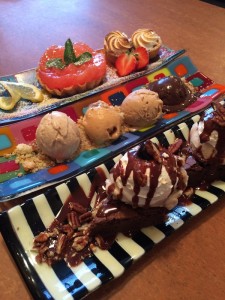
Zingerman’s Roadhouse is excited to offer the opportunity to dine at their restaurant and purchase a dessert delivered on a Case Island Glass custom plate that customers will get to take home. Proceeds will benefit Habitat for Humanity of Huron Valley and will go to work immediately to assist with their homeownership program, helping local families become homeowners. This exclusive opportunity to purchase a dessert and receive a unique work of art for $50 to support your local Habitat will begin Thursday, February 12, 2015 and will continue until supplies last. Parker will donate 500 of her original “glass-fused” plates that are food and heat safe, with three different designs to choose from (photos of plates included). Parker’s work has been featured at the Art Institute of Chicago and Smithsonian Magazine, in addition to other well-known art fairs. The goal is to sell all 500 plates and raise enough funds to renovate a home in Washtenaw County this year.
Sarah Stanton, Executive Director for Habitat says, “Suellen’s work is well known and her work is beautiful. We did a similar fundraiser a few years back, and we immediately thought of approaching Zingerman’s Roadhouse as a partner in the fundraiser this year. When we met with the leadership at Zingerman’s Roadhouse and described the possible project, they were immediately on board to raising money to help families in need in our community.”
Habitat for Humanity of Huron Valley will renovate 18 homes for 18 families in need this year, in addition to helping hundreds of families through their various Home Improvement Programs. The need for affordable homeownership in Washtenaw County is greater than ever before, and Habitat is grateful for partners like Zingerman’s Roadhouse and Case Island Glass who go above and beyond to help families right here in our community.
To make a reservation at Zingerman’s Roadhouse, please visit www.zingermansroadhouse.com or call 734-663-3663 (FOOD) for more information.
####
About Habitat for Humanity of Huron Valley
Established in 1989, Habitat for Humanity of Huron Valley’s (HHHV) mission is to enrich our whole community through a legacy of affordable homeownership for low-income families. HHHV has built or renovated over 160 homes in Washtenaw County. Habitat homeowners qualify for an interest-free mortgage from Habitat, make a $1,000 down payment, and put in at least 250 hours (per adult household member) of “sweat equity” building their home. Habitat has expanded by launching a Home Improvement Program to offer programs such as Refrigerator Replacement, Furnace Test and Tune, Critical Repair and Weatherization, Exterior Home Improvement Projects, and a Veterans Program. This fiscal year (July 1, 2014 – June 30, 2015) HHHV will renovate 18 homes and offer Home Improvement Programs to hundreds of low-income families in already targeted neighborhoods. To learn more, donate, or volunteer, visit www.h4h.org.
Media Contact:
Sarah Stanton, Executive Director Habitat for Humanity of Huron Valley
Phone: 734-677-1558
Email: [email protected]
About Suellen Parker of Case Island Glass
Suellen Parker, holder of a degree in art from Boston College and owner of Case Island Glass, LLC, creates her pieces by a process known as “glass fusing”. The process involves heating carefully sized pieces of glass with the same COE to high temperatures, causing the pieces to melt or “fuse” together. Each piece is handmade and fused, often involving several separate firings. Parker’s work has been featured at the Art Institute of Chicago and Smithsonian Magazine, in addition to other well-known art fairs. To learn more, visit caseislandglass.weebly.com.