
Tag: ZINGERMAN’S ROADHOUSE
Dr. Betty Brown-Chappell is our special guest at this year’s 10th Annual African American Foodways Dinner at Zingerman’s Roadhouse on Wednesday, Janury 28 at 7pm. Don’t miss it!

One of the things I love about living in this community is that we have such a plethora of powerfully creative, inspiring, intelligent individuals who are so willing to share of themselves and their life’s learnings. Being around great people, people who are willing to follow their own path, to speak their minds in caring and constructive ways, to work hard to make a positive difference in the community and the world is, in itself, energizing. The difference that these special people have made and are making inspires me learn and contribute more every day!
Dr. Betty Brown-Chappell is one of those people. Her teaching, writing and community work are all inspirations for the rest
of us. She has worked hard making her own way in the world, fighting through racial barriers, glass ceilings and the disadvantages that come with growing up poor where access and resources are so often limited.
This year we’re excited to have Dr. Brown-Chappell as the speaker at our tenth annual African American foodways dinner at the Roadhouse. The event will celebrate Dr. Brown-Chappell’s recent release of her book, Open Secrets: A Poor Person’s Life in Higher Education. Chef Alex Young has crafted a menu that pays homage to her country roots—she grew up in a farm family near South Haven. “Strawberry Lessons and Blueberry Blessings” will pull from some of the food stories in Dr. Brown-Chappell’s book as we continue to pay homage to the great culinary contribution of the African American community in this U.S. The dinner will combine good food, good conversation and stories and insights from Dr. Brown-Chappell. We hope you can join us to pay homage to her work, and to the foodways of the African American farm community. Below is a bit of an interview I did with Dr. Brown-Chappell. Hopefully it leaves you hungry for more! Hope to see you at the Roadhouse on January 28th! – Ari
Ari: Can you tell us a bit about your new book, Open Secrets: A Poor Person’s Life in Higher Education?
Dr. Betty Brown-Chappell: It is a memoir of my experiences as an African American woman during some of America’s most tumultuous times – 1946 to present.
Because I want to be part of the solution to the problem of low graduation rates for those who, like me, may be the first in their family to attend or graduate from college and who may come from a low-income background I also provide some lessons I have learned in higher education. I have also tried to provide some of the hard-fought lessons I learned during my journey for folks in high school, college or graduate school; families, friends and counselors may also learn from these lessons.
You grew up in southwestern Michigan. What was that like?
The area was very rural – you might say “rough and tumble.” We did not have lights, indoor sanitation, or running water for much of my early childhood years; we lived on a dirt road. Also, the predominantly white population was at times violently racist. As a young child I was physically assaulted on the playground and taunted with racial epitaphs. There was even an instance where some neighbors set a fire in our backyard. Over many years our white neighbors and schoolmates stopped the violence.
Most Americans know little about the story of African American farmers in this country. It’s been a very difficult road – sadly there are so few African Americans still farming. Can you tell us more about that?
The African American families that I knew in the southwestern part of Michigan during my childhood generally farmed part-time. My father and his friends often worked in light industrial jobs that supported the automobile industry. Once they completed an eight-hour shift at the foundry, then they returned to their farms to work for several hours. Like most of the women in the area my mother was a housewife with a large broods of children, eight, to care for.
I learned in 2013 that my parents were part of the 70,000 farmers of color who were discriminated against by federal and local loan practices. Farm loans had been subsidized by the U.S. Department of Agriculture for many decades, but Black farmers were systematically excluded from the benefits of federal banking policy. In 2012 over a billion dollars was offered to repay these farmers, yet with our parents deceased no one in the family knew that we should apply for the reparations. Taken together with the trend to concentrate farming into large corporate entities, this historic discrimination in loan practices effectively prevented many African Americans from operating viable farms in today’s economy. This is a simplified version of the many obstacles African American farmers have experienced.
In your book you have chapters titled “Strawberry Lessons” and “Blueberry Blessings.” Tell us more.
Virtually no day goes by without news media that bemoan the loss of the middle-class. The African American families of my childhood who entered the middle class were able to do so not only because they worked day and night for what proved to be a living wage, but also because they were very frugal. They literally learned to spin straw into gold! These two chapters recount my family’s dependence on and gratitude for access to the lower-middle class due to the yield’s of these two crops. My experiences as a child farm worker led me to be an optimist: many things are possible with creativity and hard work. I also learned to enjoy and appreciate the nutrients provided by fresh foods. I can’t wait until it’s time to plant my backyard vegetable garden next spring!
Can you share a few of the lessons that you have learned?
Two lessons have been particularly important to both me and to my students at Eastern Michigan University: (1) To complete a degree you need support. Friends and family regardless of your financial situation will be important, but be grateful to whoever provides you with support. (2) Mentors can make or break the student who seeks a degree; students should seek them out, treat them with respect, and allow them to provide guidance.
What is the struggle of “twoness” that you mention?
This idea originally was used to describe the experience of Jewish citizens as they attempted to “melt” into the American culture. Black scholars built on the concept to mean “ . . . blacks operate with a “twoness” of behavior where one uses knowledge, manners, dress, and verbal cadences of the dominant culture to navigate in professional situations . . . while one alternatively speaks, acts, and dresses appropriate to the Black world where one most likely passes all non-professional time.”
Throughout your life – life most African Americans—you have experienced bias and prejudice. Can you reflect on that?
A student recently asked me which of the three types of discrimination that I have experienced, classism, racism, or sexism has presented the greatest obstacle for me. My answer was classism because I have done without the necessities of life – that is experienced poverty – as a child and young adult. To me poverty is largely intransient in America and is no longer an “in” topic for civic discussion. Yet child poverty among the innocents, young children, will dictate their life chances in many ways during adulthood. Classism also means that large swaths of our society who have means stick together, help each other out or trade favors. But the poor have a lot less to help each other with.
The menu this year will reflect a lot of the diet that you grew up with in South Haven, MI. What was the food like in your childhood?
We lived in an area with an abundance of wildlife such as pheasants and rabbits that my father shot and my mother served for dinner. Probably what offset our extreme poverty (besides the assistance of relatives) was that we generally had adequate nutrition such as fresh or canned fruits and vegetables from our farm. While our protein sources were also the pigs, cows, and chickens we raised we also ate a lot of navy beans. As migrants from Texas and Kentucky my parents brought many recipes from that region: sweet potato pie, candied yams, corn pudding, or fruit cobblers. My father was a cook in the Navy during WW II and he insisted that we have fish once a week. Seafood was a rare treat. Some of the foods they favored such as fried okra or rhubarb pie I have never been able to stomach…
See you at the Dinner!
Tag: ZINGERMAN’S ROADHOUSE
Second Cornman Farms Tomato Dinner at Zingerman’s Roadhouse!
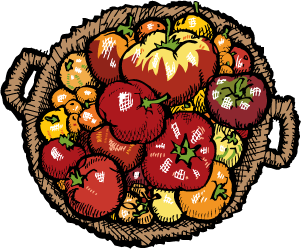 You asked for it! Due to overwhelming demand, we’re adding another Cornman Farms Tomato Dinner on Wednesday, August 27, at 7pm. Here’s your chance to relish the outstanding Cornman Farms succulent heirloom tomato varietals!
This dinner is easily the highlight of the harvest season, and our Cornman Farms Tomato Dinner showcases the best of the farm’s tomato crop. Chef Alex and the farmers have been caring for the tomatoes all through the spring and early summer, and now we get to benefit from their hard work. The tomato bar makes its return: numerous tomatoes varieties, handmade fresh mozzarella, really good olive oil, balsamic vinegar and fresh grown basil. You’ll want to fill your plate as many times as you can! Fresh Cornman Farms beef and pork round out this late summer feast, making it a meal to remember. Spaces for this dinner will likely go as fast as the first, so reserve your seat today!
See you soon!
Tag: ZINGERMAN’S ROADHOUSE
This Tuesday, June 24, 6pm, our friends Gábor and Carolyn Bánfalvi, owners of the premier Hungarian food tour company, Taste Hungary, will join us at Zingerman’s Roadhouse for an evening of Hungarian food, wine, and personal stories about life in this still emerging Eastern European country.
They recently took a few minutes to answer some questions about their business, Hungarian wines, and this Tuesday’s wine tasting.
Tell us about your tour company, Taste Hungary.
Our company specializes in personalized and authentic food and wine tours, mainly in Hungary. We offer several types of walking tours in Budapest, as well as full-day wine and food tours in other wine regions of Hungary and Austria. We love to introduce visitors to the local foods and wines which they would not find on their own, and to the people who create these foods and wines. This is still a relatively unknown region to American travelers, and we hope to make our tours experiences that our clients will remember for a lifetime.

What is it about Hungarian food and wine that you find compelling?
Before I began to write about Hungarian food, and then guided food and wine tours, I spent many years discovering it myself! What I love about Hungarian cuisine is that it perfectly combines simplicity and elegance. Even the dishes with the most complex flavors are created with the simplest ingredients and techniques. It’s a cuisine which has a large repertoire of dishes that is underrated and still little-known outside of the region.
How about a short introduction to Hungarian Wine? How is it unique?
Hungary has a very long and illustrious tradition of winemaking, but the industry was destroyed during Communism. It’s come along way over the past two decades, but there is still much work to be done. Tokaj wines are one thing that makes winemaking in Hungary unique. In the 18th century the Tokaj region became the world’s first delimited wine region, and its sweet wines were considered the best in the world and exported all over Europe.
Today, both the small family operations and the state-of-the-art foreign-owned wineries are once again producing excellent wines. However, their challenge is now finding a place in the market for them. While there are many other things that make winemaking in Hungary unique—such as the indigenous grapes and the different terroirs—keep in mind that the borders in this region of the world have changed so many times over the centuries. So winemaking in Hungary actually has more similarities with its neighbors than differences.
Can you recommend some wines that you feel capture the essence of Hungary?
Hungary produces a wide range of wines, from all of the major international varieties to some indigenous varieties that are only planted on a few acres. In Hungary there are 22 official wine regions, and there are many wonderful wines produced in the country—most of which are not available outside of the country. For me personally, the wines that capture the essence of Hungarian winemaking are: the crisp dry furmints from Tokaj, the luscious sweet wines from Tokaj, the mineralic whites made from the hárslevelű and juhfark from the tiny region of Somló, the aromatic whites from the Lake Balaton area, the smooth reds from Szekszárd, and the Cabernet franc from Villány.

Your tour company recently won a wine & spirits award. Can you tell us more?
Yes, we were so thrilled to have won in the category of Best Contribution to Wine & Spirits Tourism at Drinks Business Awards recently. The Drinks Business Awards are awarded annually by The Drinks Business magazine, a leading UK drinks trade publication, which recognizes companies from around the world in different categories. As a small family company, we were so honored to be recognized for our achievements and chosen among so many other worthy (and larger) companies from around the world. We think this award is also a recognition that now is the time for the Hungarian wine industry to make a stronger push at finding its place in the world markets.
What can our guests expect at the Hungarian Wine Tasting?
The wine tasting will be a chance to get to know some of the most exciting wines and wine regions from Hungary. We will taste five different wines from different regions, which demonstrate the range of flavors and wine styles which are being produced in Hungary today. In addition to explaining the wines, Gábor will also tell stories about the history and culture of Hungarian wine, and the talk about the directions that winemakers are going in today.
Gábor and Carolyn will be busy while they’re visiting us! On Wednesday, June 25, they’re leading a Hungarian Home Cooking class at Zingerman’s BAKE!, and then on Thursday, June 26, they’re teaming up with Zingerman’s Deli Chef Rodger Bowser to create a Hungarian Feast at Zingerman’s Events on 4th. These events are sold out, but you can add your name to the waiting list by following the reservation links.
See you soon!
Tag: ZINGERMAN’S ROADHOUSE
Sample Hungarian vintages with our expert guests
 On Tuesday, June 24, 6pm, join us at Zingerman’s Roadhouse for an evening of Hungarian food, wine, and personal stories about life in this still emerging Eastern European country. Our fiends Carolyn and Gábor own the premier food tour company in Hungary today, Taste Hungary, and Carolyn is the author of the rich and highly informative book The Food and Wine Lover’s Guide to Hungary. We’ve been traveling and tasting with them in Hungary for four years, and last fall we partnered with them to lead our first public food tour to Hungary (our next Hungary food tour is May 2015).
Winemaking began in Hungary with the Romans and today is a thriving industry with both small and large producers making a full range of dry red and white wines as well as famous sweet dessert wines. If you think Hungarian wine is Bull’s Blood come and learn the more in-depth story. Enjoy a guided tasting of 5 wines along with Hungarian appetizers.
Check out Gábor & Carolyn’s other June events: a dinner at Zingerman’s Delicatessen and BAKE! Class at Zingerman’s Bakehouse.
See you soon!
Tag: ZINGERMAN’S ROADHOUSE
Tamar Adler will visit Zingerman’s next week for two great events!

The Sardine Dinner at Zingerman’s Roadhouse
Sardines are the most underestimated fish in the great blue sea. They are glittering and glorious when fresh; salty and seasoned when tinned. They are among the most prolific and sustainable fish to put on our plates. Join us on Tuesday, June 17, 7pm, for a celebration of the humblest and happiest of fish, in all its forms, with the sardine enthusiasts and philosophers, Ari Weinzweig, and Tamar Adler, author of An Everlasting Meal.
Cooking from the Tin at Zingerman’s Events on 4th
On Wednesday, June 18, 6:30pm, Chef Tamar Adler, formerly of Chez Panisse, joins us for an evening centered around sardines in the tin. Fresh seafood like sardines, as well as octopus and tuna, isn’t easy to come by in the freshwater Midwest. Tamar walks us through some recipes and ideas for making really good food quickly using tinned seafood, and you’ll leave with a new appreciation for those beautiful little tins that are buried in your cupboard plus a few ideas for how to use them at home.
An Everlasting Impression
For as long as I can remember, I have been a fanatical cookbook collector. Based on my last count, I’m tallying about fifty-five titles and the number just keeps on growing. In the midst of books starring celebrity chefs like Alice Waters, Ina Garten, and Jacques Pepin is, in my opinion, the most important book of the bunch; a skinny burgundy volume entitled An Everlasting Meal by writer and chef Tamar Adler.
I first heard about Tamar’s book while browsing one of my favorite food blogs during my junior year of college. This particular blogger listed Tamar’s book on one of her “favorites” lists for the summer of 2011. Unfamiliar with the title or the author, I performed a quick Google search and was instantly floored by Tamar’s resume. Editor at Harper’s Magazine, cookbook author, chef at Chez Panisse and Prune restaurants. She was living my dream life! I was sold and promptly ordered myself a copy of her book. Two days later, I entered into a brief period of literary paradise where Tamar’s book did not leave my hand.
Using stunning prose and approachable cooking tricks, Tamar takes her readers on a journey through the kitchen by sharing easy tricks for crafting quick meals out of “nothing,” and finding joy in the simplest of foods. The book is broken up by various “how to” chapters with MFK Fischer-inspired titles, such as “How to Boil Water,” “How to Season a Salad,” “How to Fry the Littlest Fish,” and shows readers how to get the most out of their kitchens by looking at everyday ingredients and cooking techniques in new ways. In Tamar’s world, a can of sardines holds as much allure as a tin of fine caviar, kale stems and carrot tops aren’t considered scraps but rather the base for a vegetable stock, and stale bread is no longer seen as disposable but as the star of an Italian bread salad or thickened soup. Her approach to food is simple and her voice pragmatic, providing anyone—novice or amateur—with the tools they need to become an artist in the kitchen.
Despite cooking with frequency and grocery shopping more times a week than I can count, my crazy foodie self still slips into some major culinary slumps from time to time. Just as I tend to do when looking at my closet, I will often look into my pantry—well stocked mind you—and see nothing. Tamar’s book is helps appease such anxiety. In one of the later chapters, she reflects on this common sentiment and poses a question in response:
“How do you fall in love with [food], or if t has never made you truly happy, fall in love with it for the first time? My answer is to anchor food to somewhere deep inside you, or deep in your past, or deep in the wonders of what you love.”
Tamar’s approach to cooking and eating does exactly that by combining passion for food with an anchored sense of love and curiosity. While reading An Everlasting Meal, Tamar seemed to take on the role of my foodie fairy godmother, watching over me and assuring me that no matter what happened in the kitchen, I had the power to create something beautiful. Since finishing the book, I feel a renewed sense of calm in my kitchen. The pantry no longer daunts me, but now presents an ever-changing array of possibilities. Humble dishes don’t feel like “settling” anymore, but rather have become some of my favorite food indulgences. I can honestly say that there are few dishes I find more satisfying than a soft boiled egg, a hardy pot of beans, or a whole tin of sardines atop toast. Thank you Tamar for helping reshape my love for cooking and making my kitchen the best place to be.
— Maddie
Tag: ZINGERMAN’S ROADHOUSE
The Spice Odyssey: A Special Dinner With Gary Paul Nabhan
 Gary Nabhan takes us on a vivid and far-ranging journey across time and space in this fascinating look at the relationship between the spice trade and culinary imperialism. Drawing on his own family’s history as spice traders, as well as travel narratives, historical accounts, and his expertise as an ethnobotanist, he will share the critical roles that Semitic peoples and desert floras had in setting the stage for globalized spice trade.
Mr. Nabhan is an internationally renowned nature writer and ethnobotanist, food and farming activist, and works to preserve the connections between biodiversity and cultural diversity. He was a pioneer in the local food movement and seed-saving community as co-founder of Native Seeds/SEARCH, and was among the earliest researchers to promote the use of native foods in preventing diabetes.
Gary currently serves as the W.K. Kellogg Endowed Chair in Sustainable Food Systems at the University of Arizona Southwest Center, where he works to ensure a continuing nutritious, sustainable and climate-resilient food supply in the Southwest. Using his farm in Patagonia, Arizona as a base to experiment with orchard keeping, forging for local wild foods, and creating a habitat for pollinating species in the region, he was worked to create “a radical center” for collaborative conservation among farmers, ranchers, indigenous peoples and environmentalists in the West. Gary is also engaged with several food justice and farming alliances, including Sabores Sin Fronteras, Santa Cruz Valley Heritage Alliance, Wild Farm Alliance, Renewing America’s Food Traditions, and the Borderlands Habitat Restoration Initiative.
As an Arab-American essayist and poet, he is author or editor of twenty-four books, many of which have been translated into multiple languages. He has been honored with a MacArthur “genius” award, a Lannan Literary Fellowship, a Southwest Book Award, the John Burroughs Medal for nature writing, the Vavilov Medal, and several honorary degrees and lifetime achievement awards.
Please join us on Tuesday, June 3, 7pm, as Gary visits the Roadhouse for a very special dinner. Gary and Chef Alex Young have created a menu that emphasizes local, traditional, and sustainable ingredients. After dinner, Gary will discuss the importance of biodiversity and sustainable practices in growing and maintaining a bountiful, nutritious food supply.He earned a BA in Environmental Biology in 1974 from Prescott College in Arizona, and has since made the state his home. He went on to get both an M.S. in Plant Sciences (Horticulture), and a Ph.D. in the interdisciplinary Arid Lands Resource Sciences from the University of Arizona.
His book The Spice Odyssey is available for purchase.