
Tag: ZINGERMAN’S ROADHOUSE
A symbol of dignity and democracy supports Democracy Now!
Last spring, I was reflecting on how much good community work in the country is still framed in negative terms. There are a lot of “antis”—all well-intended—but the approach is still largely oppositional. Thinking on all that I’d written in The Power of Beliefs in Business, I was reminded that while focusing on what we’re against is common, it’s rarely very effective. That reflection set me searching for a positive symbol for the good, non-partisan, pro-people work so many are doing to support dignity and democracy.
Around that same time, I read—or, more accurately, reread—Ukrainian writer Lyuba Yakimchuk’s poignant poem “Apricots for Donbas.” When I came to the line, “Where no more apricots grow, Russia starts,” I realized she had given me an unexpectedly powerful solution for my search. As a longtime student of Russian history, I’ve long been clear that I didn’t want to be in autocratically-run Russia. What had never occurred to me, though, was to think about apricots. Sure, I’d always liked them, but I’d simply never considered them in this context. A couple of days later, I went with my instincts. Reminding myself regularly that in challenging times like the ones we’re living in, it’s important to take positive actions, not just slide into being a well-meaning bystander. I decided I would make apricots a symbol of dignity and democracy. Why not? They’re positive. They’re peaceful. They’re delicious. They’re beautiful. They’re natural. I knew I didn’t want Russia. I opted for apricots.
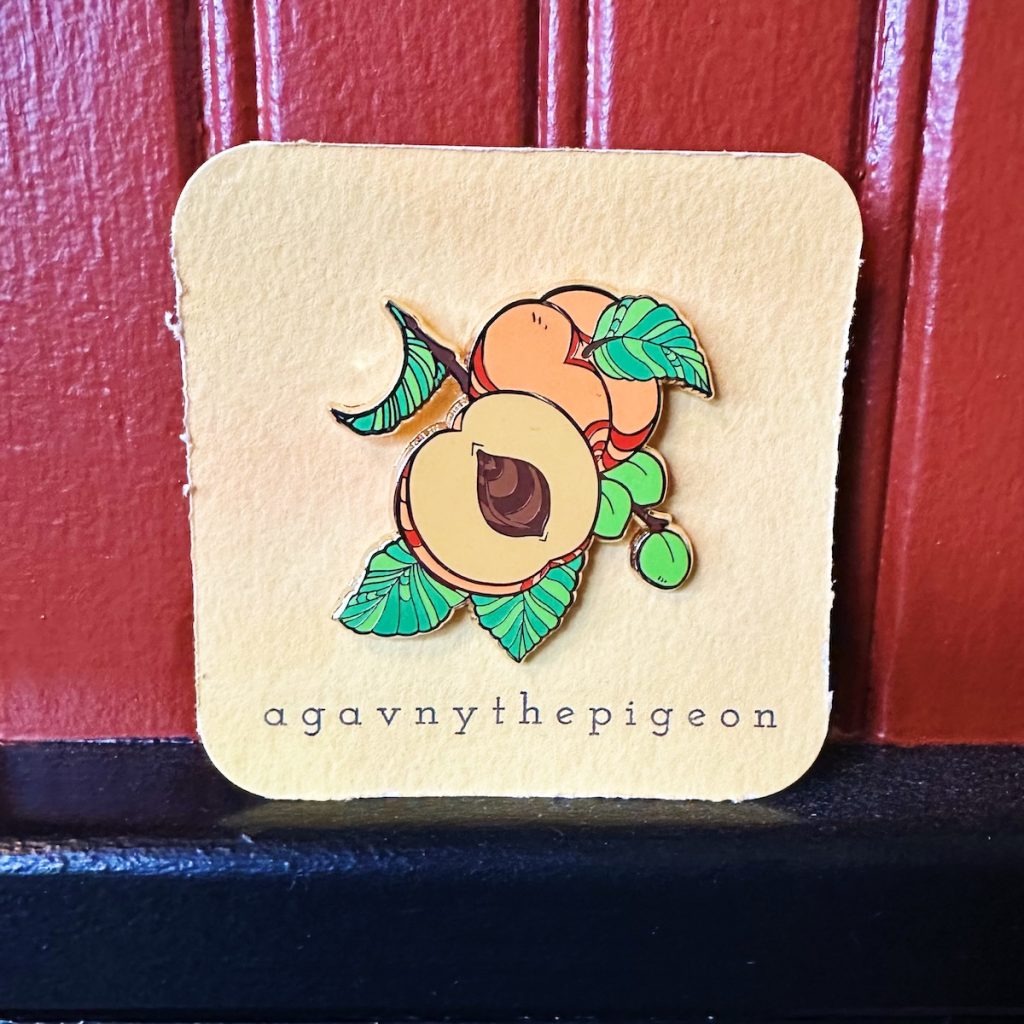
My first move, sometime in the second week of May last spring, was to find an apricot pin to put on my jean jacket. I looked online and came across dozens. I went with my gut and picked one that came from an artist named Agavny. I knew nothing about her, but I really like her pins, so I ordered it up. I waited a week or so, and when it arrived, I stuck it on my jacket. Almost immediately, I began to get queries and compliments. Most went something like, “Wow, that’s nice! What is it? I would always answer directly: “It’s an apricot. It’s the symbol of dignity and democracy.” The response I got back, nearly every time, was something like, “That’s awesome! I love that!” After a few weeks of kind comments and encouragement, I decided to take the next step. The amazing Ian Nagy drew an apricot for the cover of “Why Democracy Matters.” From there, Ian’s illustration went onto t-shirts, hoodies, and more, which, thanks to Rishi Narayan and the creative crew at Underground Printing, we could ship straight to people’s houses. We donate the proceeds to Democracy Now!, a non-partisan non-profit.
While Ian was working on the drawing, I ordered some more pins from Agavny—I figured I could just give them away to folks I knew and start spreading the word. That went so well, that in a month or so, I ordered more. Late last fall, I had the thought to reach out to Agavny directly. I would buy a bunch myself and then bring them to the Roadhouse, where the crew could sell them and donate the entire amount from each sale to Democracy Now!. She loved the idea. We made it happen. Of course, the pins arrived a few days before the renovation started. Now that we’re back at it full bore in the restaurant, the pins are up on the host stand for sale! Like the items from Underground Printing, all the money from each pin you buy goes to Democracy Now!
It happens, by one of those wonderful coincidences the world can offer, a bit of artisan magic we might say here, that Agavny doesn’t just make great apricot pins, she’s an awesome artist with a wonderful worldview. An Armenian American, her full name is Agavny Vardanyan. She was born in L.A. into an immigrant family, and she’s lived there her whole life. Her name, Agavny, means “dove” or “pigeon” in Armenian, and she has been passionate about promoting Armenian culture, history, and art throughout her life. She illustrates, she’s worked on an Armenian children’s book, designed props for stage sets, done a lot of animation, and more. You can see some of her lovely work here.
In the fall of 2020, seven months into COVID, a second apocalyptic catastrophe hit the Armenian community when the Artsakh War between Armenia and Azerbaijan started. Many Armenians came under attack in the Caucasus. As Agavny shared in an interview in March 2022 with VoyageLA,
The War in my homeland Armenia in the Fall of 2020 has been one of the biggest challenges in my life and the lives of all Armenians I know. With the opposing side having far more technological advancements than our own military, seeing the names and ages of soldiers we lost was like living through hell every single day. The lack of international aid from countries that had all the power in the world to stop this war showed many Armenians that our tiny island of land could very easily be lost to us if this attack was so easy to turn a blind eye to.
She decided to raise money for the community in Armenia by making and selling artisan pins, posters, and more. For the pins, she started with three based on the red, blue, and orange of the Armenian flag. “My first pin was the red pomegranate, followed by the blue Gentiana Verna flower, and the third, of course, being the apricot with its scientific name appropriately being Prunus armeniaca.” She taught herself how to hand-make her original artisan pins by putting together polymer clay, acrylic paint, UV resin, and, of course, the pin backs.
The apricot pin is the one I ordered four years later. I loved it at the time, and, having learned more about Agavny’s inspiring worldviews, passion for Armenian culture, and compassion for those who are suffering, I now love it even more. She actually organized a digital charity zine called “Split Pomegranate, Sacred Seeds” where over 90 writers and artists got together, and donated proceeds to Armenian charities supporting Artsakh refugees and more! She shared, “Our project gained enough love that I ended up opening preorders for physical copies—and altogether with digital and physical sales we raised nearly $4000.”
If you live in town, you can swing by the Roadhouse and buy a couple of Agavny’s artisan apricot pins. In fact, buy as many as you want! If we sell out, I’ll buy more, and we’ll do the donation thing again! If you live out of town, you can just go to Agavny’s Etsy site, where I first found them last spring.
Part of what I appreciate about Agavny is how deeply she cares about her community. As she says,
Tragedy is something Armenians have lived through before, and in some sad way, we have become used to it. But through music, film, writing, and art, we strive to keep our culture alive, to put a voice onto those emotions. I hope I can contribute in any small way.
And now, in a wonderful way, her pins contribute twice over—first on her end to support the embattled Armenian community in the Caucasus, and then when you buy one at the Roadhouse, we donate again to Democracy Now!
Here’s to Agavny, apricots, dignity, democracy, and good things to come.
P.S. If you’d like to buy any of the t-shirts, hats, hoodies, Carhartts, kids’ shirts, etc., you can find them online through our friends at Underground Printing. The backstory of the apricot in all this is right here. And now, with this wonderful relationship with a creative and caring artist like Agavny, the story has gotten even better!
P.P.S. The newly released “Why Democracy Matters” pamphlet, with Ian Nagy’s amazing apricot drawing on the cover, is on the counter right next to the pins. The two together would make a great gift for anyone for whom dignity and democracy matter!
Tag: ZINGERMAN’S ROADHOUSE
Celebrating SafeHouse Center, Nueske’s, and an amazing Corgi
On Tuesday evening, March 31, we’ll gather to support SafeHouse Center, our local shelter for survivors of domestic abuse. It’s an especially meaningful evening for me—it marks the 11th annual Jelly Bean Jump Up, held in honor of my beloved Corgi, Jelly Bean. When she passed away in the spring of 2015, we wanted to celebrate her loving spirit in a way that would serve the community, just as she brought so much joy and generosity to our lives for 17 years. Because SafeHouse Center does such important work—and because we live nearby, where the staff would often see Jelly Bean and me running past—we chose it as the cause to commemorate her memory.
This year’s dinner feels especially meaningful—it will be a bit of a redux of Camp Bacon, the fundraising event we ran annually for the 10 years leading up to Covid. We had educational speakers, cooking classes, special dinners like this one, and a bacon street fair at the Ann Arbor Farmers Market. This dinner is also a great opportunity to celebrate the wonderful relationship we’ve built with the Nueske family over the last 44 years.
Eleven days from today, we will celebrate the 44th anniversary of what has evolved over the years into Zingerman’s Community of Businesses. A deep heartfelt thanks to all of you for your encouragement, support, and patience over all these years. One of our Guiding Principles talks about our dedication to long-term relationships—many of you have been with us from the beginning. That is also true of many of our suppliers. In fact, March 15 will also mark the 44th anniversary of cooking Nueske’s applewood smoked bacon. Their commitment to quality, generosity of spirit, shared values, and dedication to dignity in every direction have made our connection with the Nueske family one of the most rewarding elements of those 44 years. If being kind, caring, and doing the right thing are the way human beings are meant to be—and I believe that from the heart—then Nueske’s, per what I wrote last week, are wholly unordinary in the best possible ways.
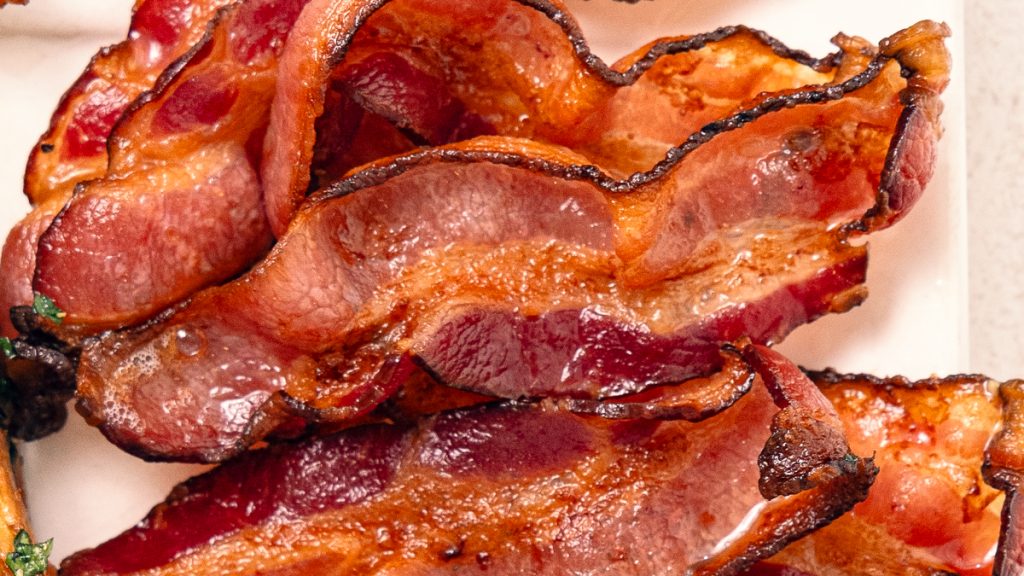
If you eat bacon and you’ve come to Zingerman’s regularly over the years, the odds are high you’ve already appreciated the wonderful meaty, gently salted, subtly sweet, beautifully smoky deliciousness that Nueske’s bacon has always been about. If you want a big-time testimonial about this bacon, take it from the late and very great writer, R.W. Apple, who put in print in The New York Times that Nueske’s was “the beluga of bacon, the Rolls-Royce of rashers.”
Tanya Nueske, granddaughter of the founder, Robert Nueske, is as passionate about her product as you’re going to get. Even though she’s been around applewood smoked bacon her entire life, she still loves to talk about it, sell it, and eat it. “I eat bacon so much. I eat it plain all the time. Basically, we use bacon with everything!”
“What we do is a very old tradition,” she told me. “My grandfather started selling the bacon in 1933. He started out smoking over applewood. And he had a way of doing it and a style that came from his grandparents.” Robert’s parents, Wilhelm and Wilhelmina Nueske, came to Wisconsin from Prussia in 1882—exactly 100 years before we opened the Deli.
Given all that I’ve already said over the years and in “A Taste of Zingerman’s Food Philosophy” about raw materials, it’s no surprise that bacon this good starts with special pork. Nueske’s sources higher-quality hogs, crossbred with Pietrain pigs because of the latter’s excellent lean-to-fat ratio. We’ve been working with our suppliers for well over 25 years. And we still hand-trim everything.”
The Nueskes cure fresh slabs of bacon in brine, hang them to dry for a day or so, and then smoke them for at least another day. Tanya says, “When you smoke slowly over genuine applewood embers for a full 24 hours, the sweetness of the smoke really has a chance to permeate each cut of meat and impart our signature flavor.” They approach the smoking process as a craft:
We design our smokehouses ourselves and have them built for us. The smoking is all hand-controlled by the smokemaster, but it’s still a very artisan thing. … The smokemaster will tell you that each smokehouse is different. And we still use actual applewood logs. People should know that “applewood smoke” can mean almost anything these days—apple juice, apple smoke flavoring, liquid smoke. … But we only use real logs of Wisconsin applewood.
Without question, over all these years, Nueske’s has proven one of the most popular foods we’ve got for sale anywhere in our organization. Its flavor is on the mellower side, with soft sweetness from the applewood that I think amplifies the natural sweetness in the high-quality pork the family goes to such lengths to source. We sell lots of it for folks to take home to cook in their own kitchens, and we also use it extensively here in our own businesses. If you come visit, you can try it on any number of sandwiches at the Deli, in the collard greens at the Roadhouse, or the Potato Bacon Rétes at the Bakehouse. It’s become a big hit on what we call the 24-7 Burger—the bacon, having been smoked for 24 hours, sitting astride a couple slices of 7-year-old Wisconsin cheddar, which in turn has been melted over a burger of freshly ground, dry-aged, Roadhouse beef. (It’s not on the actual menu right now, but just ask, and we’ll happily make you one!)
Whether you’re just buying some Nueske’s bacon to enjoy at home, coming into the Deli to eat a an amazing BLT, or better still, are able to join us for this special dinner on March 31, thank you for caring, thank you for supporting us over all these years, and thank you for supporting SafeHouse Center in their ever more important work!
See you there?
P.S. If you can’t make the dinner, and/or don’t eat meat, you can still support the Jelly Bean Jump Up for Safehouse Center through our silent auction, or donate directly to Safehouse.
P.P.S. Nueske’s bacon is part of Mail Order’s annual spring sale! Same great bacon as always, but for the next few weeks, at a really great price! Stock up!
Tag: ZINGERMAN’S ROADHOUSE

Dozens of oysters are cracked open to toast the occasion
Last Wednesday afternoon, after six weeks of being closed for intensive and extensive renovations to the kitchen and a host of elements in the dining room, the Roadhouse quietly reopened for regular business. We are all so, so excited to be back! We missed you! Just as you may well have been missing the Roadhouse over the last month and a half, we’ve been missing it too. So many tasty dishes, so much comfort, so much full flavor.
One item in particular we’re especially excited to serve again is our array of fresh oysters on the half shell. On any given day, the Roadhouse stocks two, three, four, or even five different varietals, and we move through about 1000 of the bivalves on an average week It’s hard to know in advance exactly which oysters will be available when these enews comes out—so much depends on the weather in the various estuaries from which they come—but I asked a few members of the Roadhouse crew to share their favorites. Their guidance gives the rest of us a good sense of what to look forward to!
Head chef Bob Bennett:
One of my longtime favorites is the Beausoleil oyster. It is nearly always on our list. I think it just has a nice balance of brine that is welcoming to newer oyster eaters while still having enough flavor to stand up to being smothered with cocktail sauce.
Sous chef Chris Chiapelli:
I would say Beausoleil is probably the standard for most people because they are usually the biggest ones out there, but my personal favorite is a tie between Malpaque and Island Creek. The Malpaque is a nice blend of salty and sweet, while the Island Creek tastes really clean and buttery to me. Did you know there are over 150 varieties of them throughout the world? Lots to choose from!
Managing Partner Lisa Schultz:
Beausoleil is fabulous and probably my favorite. Just the right amount of brine, not too sweet, and generally the right amount of “meat” to gain the trust of beginners and satisfy connoisseurs alike. Back in 2005, when I was dining at the Roadhouse with a friend, Ari brought me a few as an extra mile. I fell in love with them on the spot. Ever since, I order them every time I’m out for oysters, and they’re available.
Thinking about oysters also reminds me that the Roadhouse’s Happy Hour is back in full swing. Monday through Friday, from 2 to 6 pm, we’ve got a host of drink specials and fun food deals to ease you into the evening.
And yes—the $2 oysters that have earned Happy Hour such well-deserved acclaim are back too!
Let us save you a seat
Tag: ZINGERMAN’S ROADHOUSE
You may be thinking, “I know about the Roadshow. What the heck is the SideShow?” What a wonderful question. Happy to offer a good answer to go with it.
The SideShow is a coffee trailer pop-up that’s across from the Roadshow during the month and a half that the Phoenix Construction Crew is renovating the building. The SideShow—along with Greyline, which is offering Sunday brunch and Sunday and Monday dinner—is serving up the Coffee Company’s classic Roadhouse Joe, espresso, cappuccino, and a small selection of Bakehouse pastries. We’re also stocking the Roadhouse-renowned New Mexico fire-roasted Green Chile Breakfast Burritos and egg sandwiches.
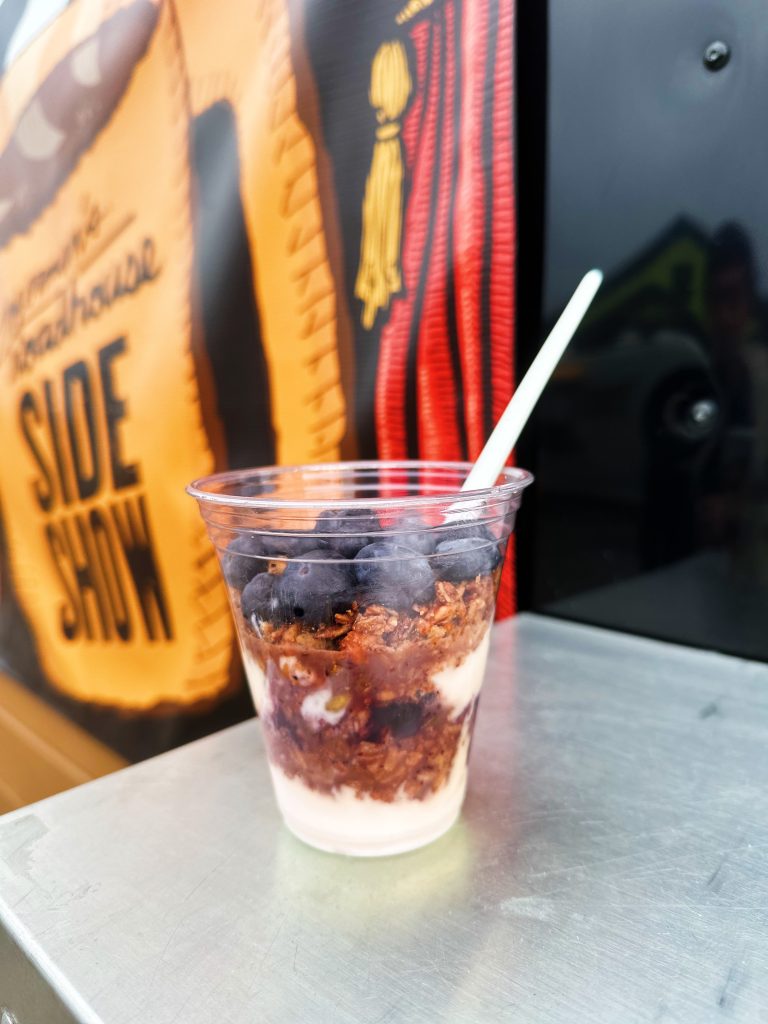
On top of all that, the SideShow is debuting one of the tastiest things we’ve added at the Roadhouse in a while: an exceptionally good Granola and Yogurt Parfait. Like so much of what I like best, it’s super simple but also super delicious! Zach Milner, one of the wonderful Roadhouse dining room managers, is currently doing a stint as manager of the SideShow. Here’s what he says about these wonderful new offerings:
I’ve loved parfaits ever since I was a kid. Something about a crunchy granola to mix in with creamy yogurt—it’s just a perfect cup of breakfast. Opening up a pop-up during the Roadhouse’s renovation, I saw an opportunity to bring in the best granola I’ve ever tasted, G’s Granola from the Deli. And then, when Ari showed me the Bellwether yogurts, I was in love instantly. You mix these two things with my favorite fruit, blueberries, and you have a richly nutritional meal and/or snack that will keep you coming back for more. I start my SideShow shifts every morning with one, and I hope you can join me in enjoying this new creation I hope to see on our menus well after the renovation.
The key, of course, is the quality of the ingredients. Let’s start with the yogurt. We use what, to my taste, is one of the best yogurts anywhere: A2 Organic Jersey Milk Yogurt from Bellwether Farms in Sonoma County, California. Man, it is so, so, so good!
What makes it so special? The quality of the raw material might well be the biggest driver. It’s made with milk from the family’s herd of Jersey cows, generally acknowledged in the cheese world to give the creamiest, most delicious milk. The Callahan’s Jerseys naturally produce milk containing only A2 protein, which, I’ve been learning, might be easier for many lactose-sensitive people to digest. The yogurt is thick and creamy, but it’s made without adding any thickeners.
Next up in the parfait is a bit of blueberry jam—just enough to add a touch of sweetness to the otherwise unsweetened yogurt and a touch of color to offset the creamy white color. We get it from the folks at Blackberry Patch in South Georgia, who have been crafting artisan jams since 1988. Like American Spoon and the French firm of Olbia, whose apricot jam I wrote about last week, Blackberry Patch relies on a high fruit content to make the full flavors that we’ve come to count on at the Roadhouse over the many years we’ve been serving their products.
Last but definitely not least is Zach’s favorite, that super-fine G’s Granola from the Deli. The recipe for it came from Deli chef and co-managing partner Rodger Bowser’s wife, Giedra. “I used her home-sized recipe and figured out how to make large batches. We cook it really dark, in a nice single layer,” Rodger explains. I agree with his assessment! It really is great. The base ingredients are organic oats from the Grainery in Kalamazoo, where they mill old-school whole oats. As Rodger says, “If you made this with industrially milled ‘rolled oats,’ it would be a totally different product.” It’s got a range of nuts and seeds—almonds, walnuts, pecans, pumpkin seeds, and cashews. Coconut oil-based instead of butter-based, so there’s no dairy. No white sugar, just Michigan maple syrup and organic Muscovado brown sugar from the Indian Ocean island of Mauritius. Last but not least, it’s enhanced with real vanilla, Indonesian Korintje cinnamon, and some sea salt.
Ready to try the SideShow Granola and Yogurt Parfait? We’re open Monday through Friday, 7 am to 1 pm. Swing by soon—only four and a half weeks of construction to go! Thank you all for your kindness, patience, and support.
See the full SideShow menu
Tag: ZINGERMAN’S ROADHOUSE

Pardon Our Dust
After years of dreaming and planning, we’re rolling up our sleeves and renovating our building!
We’ll be temporarily closing for approximately six weeks, starting January 4, 2026, to make these necessary improvements.
Our beloved building has served us well for 22 years (and served others well prior to that—built in 1958, it was originally a Bill Knapp’s!), but now it’s in need of a little TLC. When we reopen, you’ll find the same Roadhouse charm you love—just brighter, comfier, and better than ever.
COMING SOON:
• Updated, more comfortable seating
• A completely reimagined bar room
• All-new flooring and lighting
• Acoustic improvements
• Energy-efficient kitchen equipment and coolers
“I feel like we are opening a new restaurant. Outside of our tried-and-true food recipes, there is very little in our restaurant that isn’t getting a fresh start. I’m excited to welcome back both our longtime guests and first-time diners to show them around.” — Chef Bob Bennett
“We’re so excited about the projects happening around the restaurant this winter. We just finished picking out fabrics, paint colors, light fixtures, sound-absorbing mechanisms, and more—I believe it will feel like a new restaurant in many regards. Do come by to enjoy our new look and feel, perhaps for a delicious post-Valentine’s Day celebration in February. I hope you like it as much as I already do!” —Lisa Schultz, Managing Partner
Craving the Roadhouse While We Renovate? We’ve Got You Covered
Sunday Brunch • Sunday Dinner • Monday Dinner
Enjoy your Roadhouse favorites at Zingerman’s Greyline at 100 N Ashley St.
Plus, keep an eye out for:
• A Roadhouse food truck parked along Stadium Blvd, serving Zingerman’s coffee drinks, Bakehouse pastries, and a limited breakfast menu
• Rotating chef-crafted dinner selections available for pick-up to reheat at home (location & times TBD)We look forward to serving you, albeit a little differently, for the next few weeks and can’t wait to have you back at the Roadhouse in mid-February!
For more information about our service offerings and closure updates, please follow @zingermansroadhouse on Instagram and Facebook, or check back regularly at zingermansroadhouse.com.
Tag: ZINGERMAN’S ROADHOUSE
The excellence of Enzo’s early-harvest oil arrives in Ann Arbor
Some foods are so seasonal that they’re only available for a few weeks a year, even in the Industrial Age. Three of my favorites come to mind. Michigan strawberries in June. Fresh Great Lakes smelt in April. And new-harvest olive oil in the fall! Though I could eat all three of them happily year-round, the natural reality is that the window in which we can enjoy them is relatively short!
New-harvest oils are always extra peppery because of the abundance of polyphenols that are present in high ratios right after the oils are pressed. They’re big, bold, and beautiful, with grassy greenness that gives them a considerable wow factor. Unlike wines, which will generally stay stable in the bottle, olive oil softens in flavor a small bit every day. From one day to the next, you probably wouldn’t notice, but by the time the new-harvest oil is a couple months old, it will have lost a fair bit of its natural peppery pungency. It will, mind you, still be delicious—just less intense than when it first came out of the press. Which means that now, not after the holidays, and not next spring or summer, is the premier time to appreciate its full flavor!
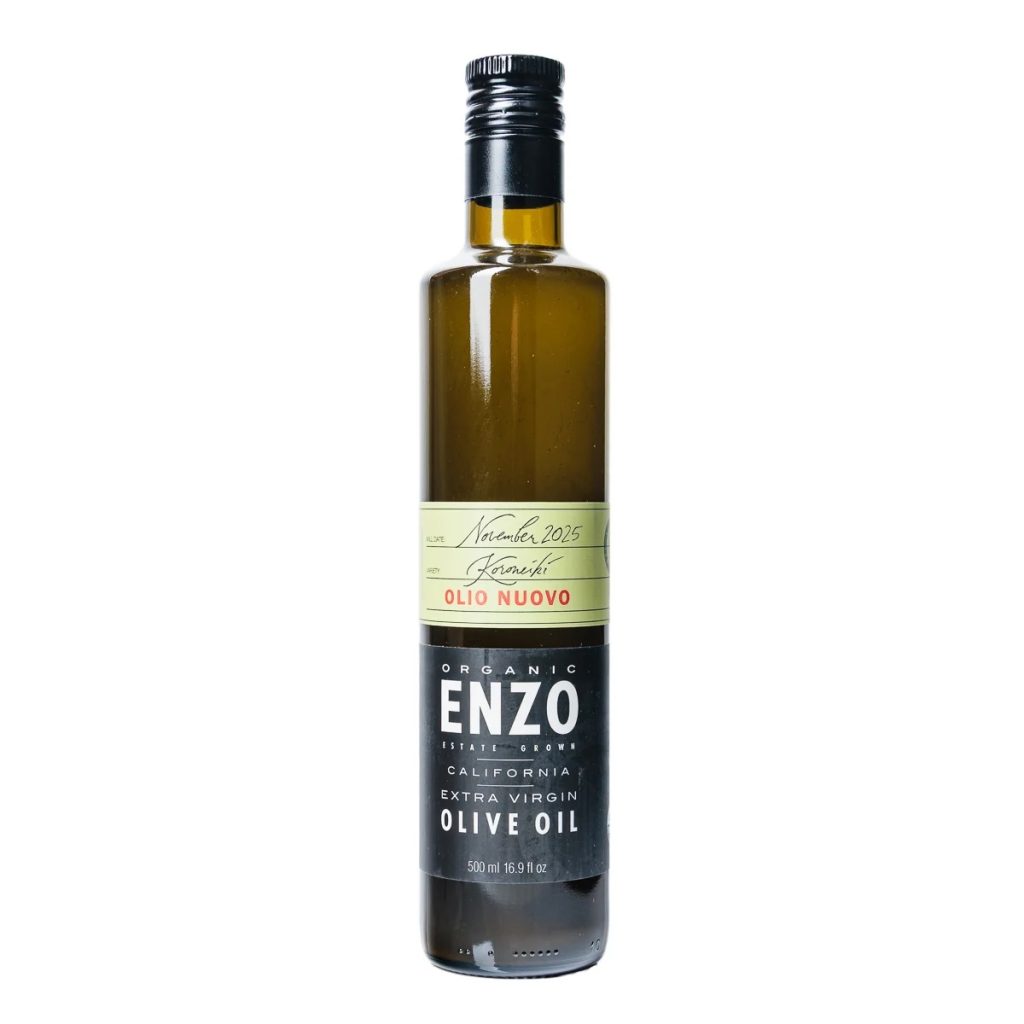
One of my favorite times of the annual culinary calendar has officially arrived in Ann Arbor: The first new-harvest olive oil of the 2025 season has hit the Deli’s shelves! This year it’s a super-tasty oil from the Ricchiuti family—the fourth generation to work the family’s farms. Their oil, packaged under the label Enzo, is named for the great-grandfather of Vincent Ricchiuti, the creative successor to this inspiring family legacy. Made from Koroneiki olives, it’s so good that a few years ago it made Food & Wine’s “Five Favorite New California Olive Oils” list.
The new-harvest oil is fantastic on anything you like to drizzle olive oil on—bruschetta, pasta, vegetables, fish, steak! Use it to take your popcorn to a whole new level. Try it on toasted Paesano bread. Pour it onto a nice slice of good feta or a bowl of fresh ricotta. If you want a great breakfast, toast a thick slice of bread, pour on a bit of olive oil, and spread it with one of the wonderful jams or honeys we have on hand. It’s edgy, engaging, and excellent!
One little-known note on new-harvest olive oil: Although they never taught me this in Hebrew school growing up, in the years after we began working with great olive oils, it became clear to me that the Chanukah miracle is actually tied to the arrival of new-harvest olive oil. Think about it. The priests were waiting for more “holy oil” to arrive at the Temple. In pretty much every culture, what is offered first is always the first fruits of a harvest. What time of year are olives harvested in the Northern Hemisphere? And what holiday happens around the same time? Add all these questions together and the obvious answer is that the Maccabees were waiting to bring the new-harvest olive oil to the Temple to relight the Eternal Light with the “holy oil” we hear about when the Chanukah story is told.
By the way, if you want to taste the oil in action, swing by the Roadhouse for the Cal-Fiorentina dry-aged, pasture-raised steak. Finished with a generous dose of the Enzo new-harvest oil, it’s fantastic. To give some context, La Fiorentina is the classic steak dish of Florence. Combining “La Fiorentina” with the California origins of the oil, we got … Cal-Fiorentina!
Whether you’re at the Deli, the Roadhouse, or your house, if you like attention-grabbing green oils like I do, do not miss this one.