
Tag: ZINGERMAN’S ROADHOUSE

An Interview with Joan Nathan
Meet Joan Nathan, world-renowned authority on Jewish cooking, James Beard and IACP award-winning author of 11 cookbooks, New York Times and Tablet Magazine contributor, star of the PBS television series Jewish Cooking in America with Joan Nathan, University of Michigan alum, and friend of Zingerman’s.
We’ve followed Joan’s career and admired her work since she met our founder Ari’s mother in the kosher section of a Chicago grocer in the ’90s. Joan shines a spotlight on the spectrum of flavors and traditions of Jewish food that exist all around the world, something near and dear to our hearts here at Zingerman’s.
I sat down with Joan in advance of her upcoming tour for the release of her twelfth book, My Life in Recipes (Knopf, 2024). Her trip includes stops at The Temple Emanu-El Streicker Cultural Center in New York City, Akasha restaurant in California, The Smithsonian in Washington D.C., and Ann Arbor to visit us (and you?) at Zingerman’s Roadhouse on May 7! After our interview, I found myself missing my grandmother, daydreaming about traveling more, and wishing I could tear into a warm loaf of challah with Joan.

Sara Hudson
Zingerman’s Creative Services Director
Sara: Your newest book, My Life In Recipes: Food, Family, and Memories is part memoir, part cookbook, and organized almost like a travel diary. How did the idea to present your story that way come about?
Joan: I thought, “What should I do next?” I told myself this is the time to stop and do a last book. I’ve had a really interesting life. My editor suggested I do a totally new kind of book that nobody’s ever done. Very often chef memoirs put one recipe at the end. She said, “Why don’t you do a memoir and recipes?”
Sara: Tell me about the process of creating the book.
Joan: The process took a few years. I started writing, but my husband got very sick and he died. And then, of course, there was Covid after that. At first, I couldn’t do anything for several months, but then I went to visit my daughter in New Orleans and I started writing. I got up very early in the morning and wrote in bed, which I love to do. I would take long walks and think about what I had written. Then I’d put it all away and take a break. In the end, my editor cut 30,000 words. I had so many stories to tell! Putting it all together amazed me.
Sara: Some of my favorite parts of the book are the old photos, diary entries, and letters to your family. Who do we have to thank for saving all of those?
Joan: My mother saved everything for me. When I went to France as a student, when I went to Israel to work—she saved all my letters. I saved my diaries. I wrote my diary in French when I was studying in France—I can’t believe I did that!
Sara: As you collected your life stories was there anything you thought, “I can’t believe that happened!”?
Joan: We tried to keep the stories to be only about food but there are certain things I wanted to include, like the time I met Marilyn Monroe. I found it in my diary from when I was 12 years old. I saved her autograph. It’s framed in my house.
Sara: What led you to this full life of travel and learning?
Joan: Maybe this is because of my parents, but I’ve always felt I could do whatever I wanted to do. I thought, “Just do what you want in life. I mean, just go for it.”
Sara: Tell us about one of your favorite more recent trips.
Joan: I was taken with cinnamon because in the Geniza, a hidden trove of ephemera in synagogues and mosques in the Middle Ages, I found mention of the spice. For my 70th birthday, I told my husband I wanted to go to Sri Lanka with the whole family because that was the home of cinnamon. Before I go anywhere, I find families to go to see and see the place through their eyes. I went on my own to a family in a neighboring town that worked in the cinnamon industry. They were making something just like a cinnamon babka on the side of the street. I use that recipe in the book.
Sara: For the most part, you have been baking a loaf of challah every week since the 1970s. Does anyone ever bake it with you?
Joan: That’s a good question. My assistant Hannah is a very good baker. She’ll help me and I’ll learn from her. I rarely buy a challah. Most of the time I do make it. It’s not very hard to do once you know how and it can be done very quickly. My hands in the photo on the cover show I’ve been making it for a long time! I try to have a Friday night dinner either at my house or somebody else’s every week, and I make the challah.
Sara: I love the recipe in the book you call Seasonal Challah. What inspired that?
Joan: That just happened. I live in Martha’s Vineyard in the summer and I have a big garden with lots of herbs. So I took whatever seasonal herbs there were and put them in my challah dough. I thought it was really good, and if you make it at home, you can do that. There’s tarragon in my garden and it’s one of my favorite herbs, but I like to save it for other things besides challah. You have to have a strong flavor to get through the baking. I like using basil in the summer and rosemary in the fall. I also like putting anise in my challah which makes for such a wonderful flavor. But I don’t like raisins in challah. Raisins are for stuffed cabbage, with onions, pine nuts, Italian spinach, and sardines.
Sara: What do you have planned for your upcoming book tour besides your visit to Ann Arbor and the Zingerman’s Roadhouse dinner?
Joan: I’m giving speeches in San Francisco and New York. Ruth Reichl is interviewing me at an event at Temple Emanu-El for 1,000 people!
Sara: What are you looking forward to about coming back to Ann Arbor for the first time in more than a decade?
Joan: Ann Arbor was a big part of my life when I was in school there. It was natural that I would come back to it for this book. I’m looking forward to going back to my own history, but some of the places I frequented in Ann Arbor decades ago aren’t there anymore. It’s just sort of a memory, but Ari’s made Ann Arbor so much more tantalizing with what has grown from the Deli through the years. I need to see Zingerman’s. I’m looking forward to seeing how it has yet again morphed into something more, because it has every time I visit. I’m looking forward to seeing Ari. This is fun for me to see because I’ve been following Ari for years after meeting him in the early ’90s on a book tour. I just looked at a photo of him. He never had gray hair when I was there and he’s got a little gray hair now. I do too, but I cover it.
Joan proudly read me an excerpt from Jewish Cooking in America that references Zingerman’s:
When I first heard about Ari Weinzweig’s Delicatessen in Ann Arbor, Michigan, I couldn’t believe it was a deli in the home of my alma mater. It’s not really a deli, but more of an International Food Emporium like New York’s Zabar’s with the definite Jewish touch. Mr. Weinzweig, a dropout PhD candidate, has taken an academic and appetizing interest in updating Jewish recipes like mushroom and barley soup going back in history to the 19th century Eastern European version similar to that served at New York’s Second Avenue Deli.
Sara: What will be on the menu when you host a special dinner and book signing at Zingerman’s Roadhouse?
Joan: Smoked Whitefish Spread, Galilean Hummus, and Syrian Mahammar all served with bagel chips, Armenian Stuffed Grape Leaves, Mediterranean Salmon with preserved lemon and za’atar, and much more. For dessert, Ann Arbor Schnecken, those wonderful sticky buns they used to serve at Drake’s that Frank Carollo also made at Zingerman’s Bakehouse. [Editor’s note: You might know them today as Obama Buns!]
Sara: One chapter title stood out to me: “Jerusalem: Learning About Living and the Meaning of the Meal.” What do you think the meaning of a meal is?
Joan: When you sit down with a person of a different background, maybe with different beliefs, I try to take the time to watch the meaning of food within that meal. In that chapter, I talk about going to an Arab home. The first thing served is coffee before the meal. It leads into the meal. People just relax and as you talk to each other things sort of slow down. It’s not just in Arab homes, but Jewish homes in the Middle East and everywhere. You start slowly, whet your appetite, get to know people as human beings, and enjoy a meal together. I’ve really seen this around the world, the importance of food and sharing it with a stranger.
Sara: How do you approach your recipes?
Joan: The traditional food and recipes I study have been made the same for thousands of years, carried down from generation to generation. Sometimes we need to freshen them up a little bit. That’s what I try to do in my books, so there’s a little bit of added color and a little less fat, but the essential taste is there and that’s the important thing.
I think all of us live too disconnected from what other people’s reality is and so that’s what really interests me, trying to get the humanity of everyone. That’s what I’ve tried to do for my whole life. I get a high from finding a recipe, but I don’t get excited by fancy schmancy restaurants. Maybe that’s why I like Ari so much, I have a feeling he’s the same way. He’s discovering artisan food producers and highlighting those people. That’s what I like to do.
Sara: You’ve traveled a lot and experienced different cultures, languages, and flavors. What was the common thread in those experiences and recipes?
Joan: Humanity. Pride in what you’re making. I notice that universally.
Sara: If you were to go back and add another chapter of what you’ve been eating or making at home since completing the book, what would you include?
Joan: Wow. That’s a tough one. I think I put it all in the book. I might have added the story of another adventure I’ve been on. Or I might have added something like brownies or chocolate chip cookies because my kids really like them, but you can get recipes for those anywhere. Actually, I have an update of a children’s book coming out in November I did with my grandchildren called A Sweet Year. Every grandmother is going to want to buy this book because the photos of my grandchildren are so good and I include fun things: a pomegranate punch, how to make cheese and butter, recipes for what I named East Coast and West Coast Brownies.
Sara: What do your grandchildren ask you to show them how to make?
Joan: They like to perfect making eggs in the microwave, it’s sort of like sous vide. They experiment with different toppings and make faces with the eggs and Challah. We make pesto and pasta from scratch together all the time. I’ve even shown them how they can make their own fresh cheese.
Sara: I want to show you this well-worn Cooking with Joan pot holder that’s hanging in our kitchen here at Zingerman’s Service Network. You’re here with us.
Joan: Oh my gosh! Look at that. I don’t even have one of those. I hope I get to meet you. You’ve really done your homework. Thank you so much.
Sara: Thank you so much for your time. Congratulations on the book. We’ll see you at your dinner!
Tag: ZINGERMAN’S ROADHOUSE
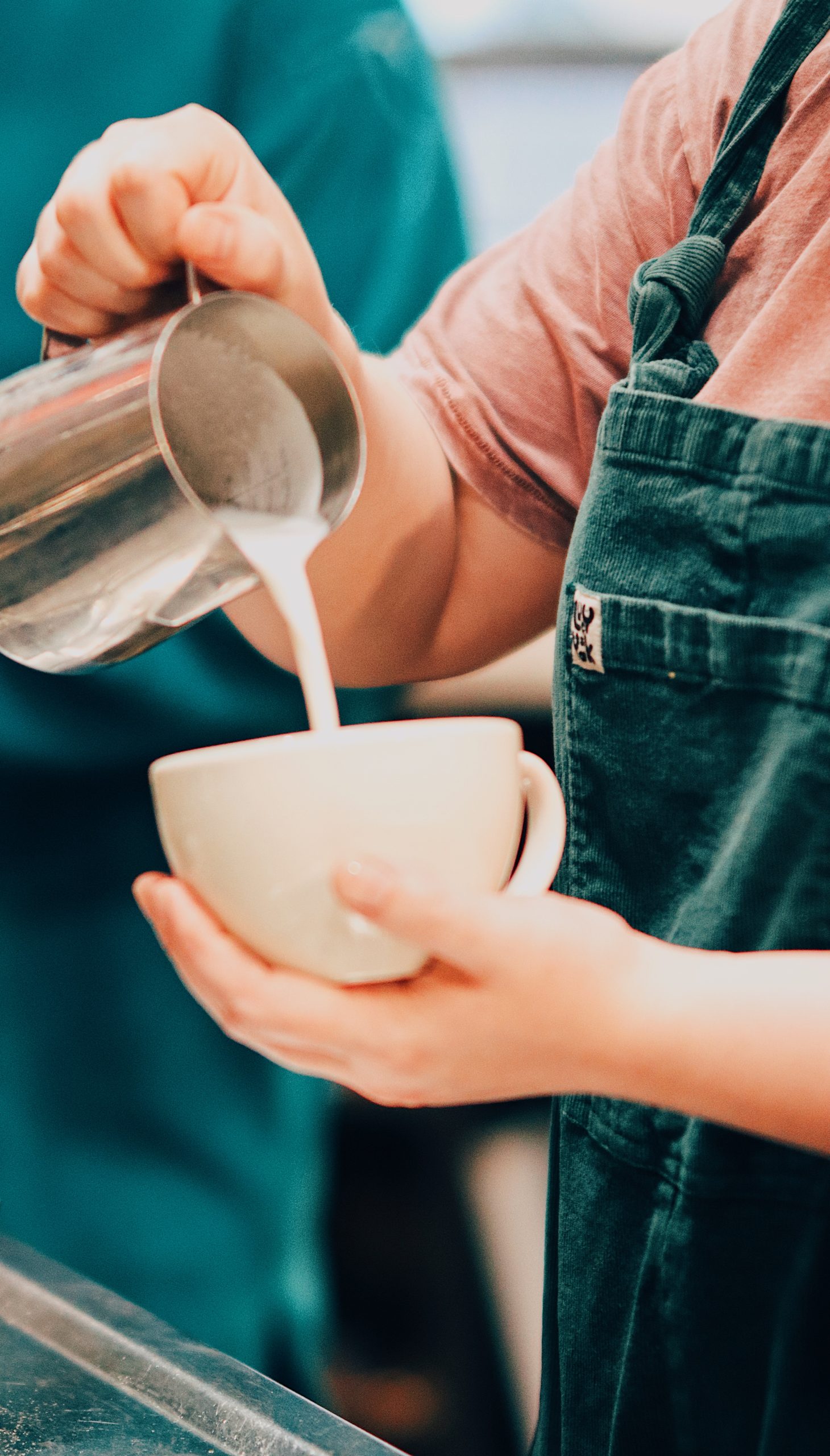
The Coffee Blend Creating a Buzz Around the Zingerman’s Community
Roadhouse Joe Coffee is the house brew at Zingerman’s Roadhouse, specially created by Zingerman’s Coffee Company for the Roadhouse’s 2003 opening. (Are you new to Zingerman’s? The Roadhouse is our full-service restaurant and bar on Ann Arbor’s west side, known for its mac and cheese, barbecue, and more.) As Zingerman’s co-founder Ari Weinzweig tells it:
Back then, we were already working to get going on what was soon to be opened as Zingerman’s Roadhouse. Our intention, as per the vintage neon sign (done by Mark Chalou, “Mr. Neon,” with old neon tubes he found in a warehouse in Detroit), was to serve “Really good American food.” To go with it, we knew we would also need a really good American cup of coffee, a cup that consistently would please nearly every (no one gets ’em all) palate. The result was—and still is, decades down the road—Roadhouse Joe.
Roadhouse Joe is beloved in its original form, of course, but its popularity has continued to grow throughout the Zingerman’s Community of Businesses (ZCoB), too, as over the years, Roadhouse Joe has evolved to be a key ingredient in other Zingerman’s-made products. Here are all of the ways you can enjoy it, from the original coffee blend that started it all to an improvement made from a buzz-worthy switch and more.
1. Roadhouse Joe Coffee
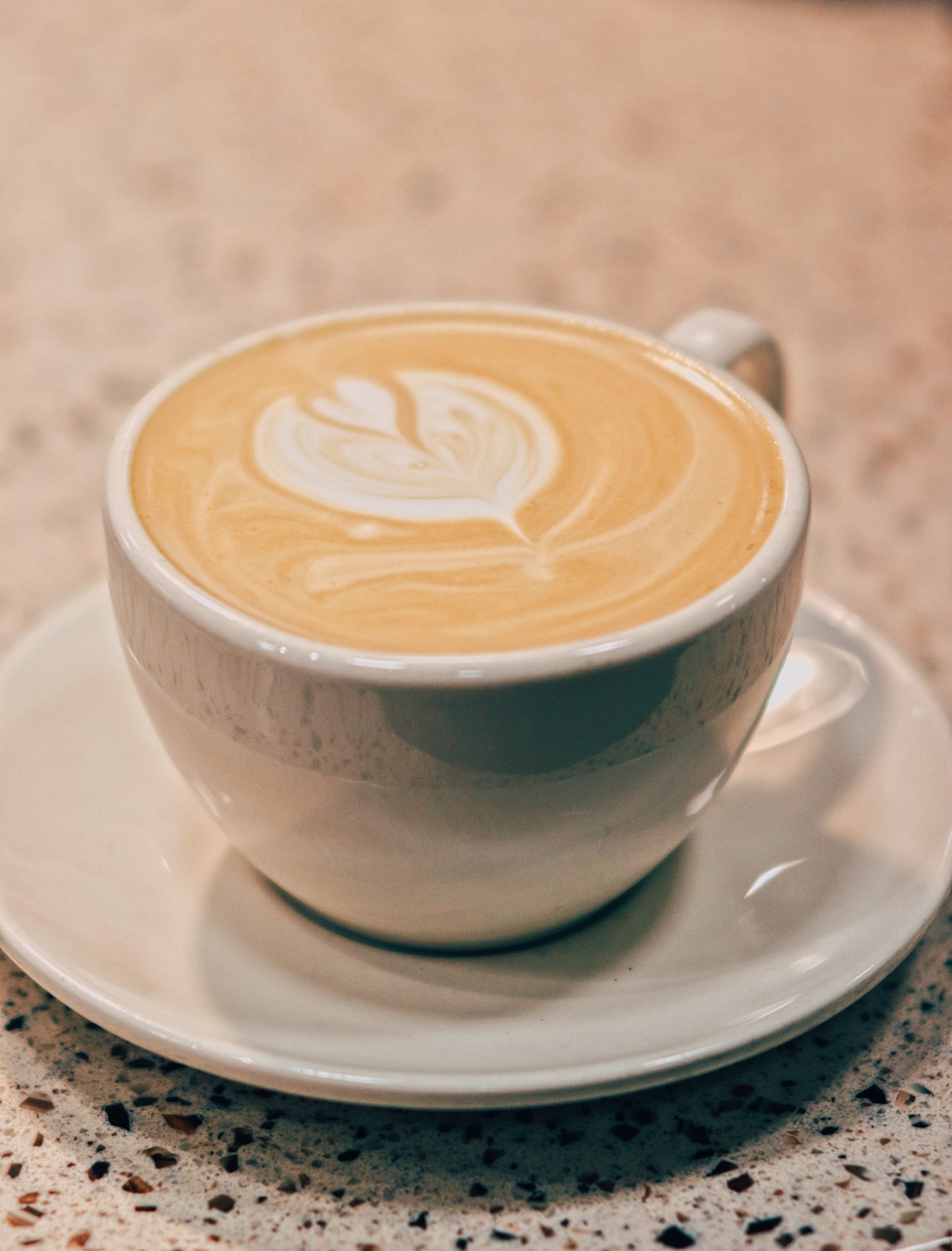
Comprised of not just one type of bean, but an ever-evolving combination, Roadhouse Joe has remained one of the Coffee Company’s most popular blends since its debut. “The point of a blend—as opposed to the many single origins we do,” Ari explains, “is that we can adjust it a bit regularly to keep the flavor profile consistent.” Currently, the Roadhouse’s signature coffee (psst: weekly breakfast Blue Plate Specials include a free cup!) is a crowd-pleasing blend of Papua New Guinea, Costa Rican, Indian, and Brazilian Peaberry beans. Designed to complement food from breakfast through dessert, the Coffee Company describes this blend as emphasizing body and balance over sharpness and acidity. Steve Mangigian, long-time managing partner and head roaster at the Coffee Company says,
I believe today’s Roadhouse Joe is one of the best blends on the market. It’s smooth, rich, full-bodied, clean, and craft-roasted to highlight the nuances of each of the coffees in the blend. India for a little pepper and spice, Brazil for its nuttiness, Costa Rica for the body and richness, and Papua New Guinea for adding a solid base of cocoa; all designed to complement each other when it strikes the palate!
Enjoy a cup at the Roadhouse or visit the Coffee Company to taste the difference in brewing methods. At the Coffee Company, you’ll notice their Big Brew Board, a board that outlines the different flavor profiles each type of coffee can have depending on its preparation. Of the Roadhouse Joe, the Coffee Company crew says, “Amazing in a Chemex, which highlights the sweetness and complexity. The Aeropress gives it a wonderful thicker body with a nice dried fruit finish. In the press pot, we noted flavors of rye, wood, and spice.” To brew up a batch at home, pick up some beans at the Coffee Company or Deli, or ship a bag to your favorite coffee connoisseur.
2. Rhode Island Coffee Milk
Coffee milk is a cold drink made with coffee syrup and milk. The Roadhouse’s version starts by slowly cooking Roadhouse Joe coffee and sugar until it reduces to a rich, thick syrup, and then the housemade syrup is mixed with milk and cream from Calder Dairy. As the name suggests, coffee milk is the official beverage of Rhode Island, but it has a pretty solid local following, too, at least among Roadhouse regulars. And, interestingly enough, it actually has a local connection, too. Janice Longone was an esteemed food historian who most of her life in Ann Arbor. She hosted a radio show, “Adventure in Gastronomy,” on Michigan Radio, founded the Culinary Historians of Ann Arbor, and donated her extensive culinary archive to the University of Michigan, which became the Janice Bluestein Longone Culinary Archive. And, as she mentioned one day in passing to Ari, her uncle invented coffee milk. As Ari explains:
Jan’s Uncle Meyer was a Russian-Jewish immigrant who loved to tinker with things. And, according to legend, he took the Rhode Island love for strong, sweet coffee—likely based in the heavy concentration of both Italians and Portuguese people living there—and turned it into a cold drink.
Head to the Roadhouse to try Ann Arbor’s take on an East Coast classic. When the weather’s nice, we recommend sipping yours outside in Roadhouse Park.
3. Red Rage Barbecue Sauce
Red Rage also made its debut when Zingerman’s Roadhouse opened, but the recipe had been in development for years—decades, actually! This barbecue sauce was created by Chef Alex Young, a James Beard Award-winning chef, and former Roadhouse managing partner and chef, when he was just 13 years old! As the story goes, like a typical teenager, Alex invited friends over one day when his parents were out of town. In perhaps a not-so-typical teenage move though, it was a hundred people that were invited over… for a barbecue! He made the first version of the Red Rage we know and love today (and presumably ticked off his folks in the process!). Its name is likely due to the fact that it’s a tomato-based sauce with a kick, but we like the idea that it could have originated from a rager that had Young’s parents seeing red!
The recipe has been tweaked slightly over the years, mainly to swap in higher-quality ingredients, as we love to do here at Zingerman’s. Its fantastic full flavor comes from spices (like Turkish Urfa pepper, Tellicherry black pepper, chipotle peppers, and Mexican piquin peppers) that are balanced out with some sweetness (Muscovado brown sugar, molasses, and honey) and acidity (ketchup and apple cider vinegar), plus some pilsner and Roadhouse Joe coffee, of course. Don’t let the name (or those chile peppers) leave you concerned that indulging in a little BBQ will leave your mouth on fire. As Mo Frechette, Zingerman’s Mail Order managing partner says, “There is heat, but it’s a creeping, seeking heat that never gets in the way of the food.”
Head to the Roadhouse to enjoy Red Rage on a rack of ribs. Ship a bottle to a fellow BBQ lover from Mail Order, or order a few for yourself and pick up your order from their Warehouse Shop. Or mix up a batch for yourself at home. Use it on your favorite barbecued meats of course, but also try it slathered on a burger, drizzled into a burrito, swirled into mac and cheese, or as a more flavorful stand-in for ketchup with fries.
4. Spicy Coffee Rub
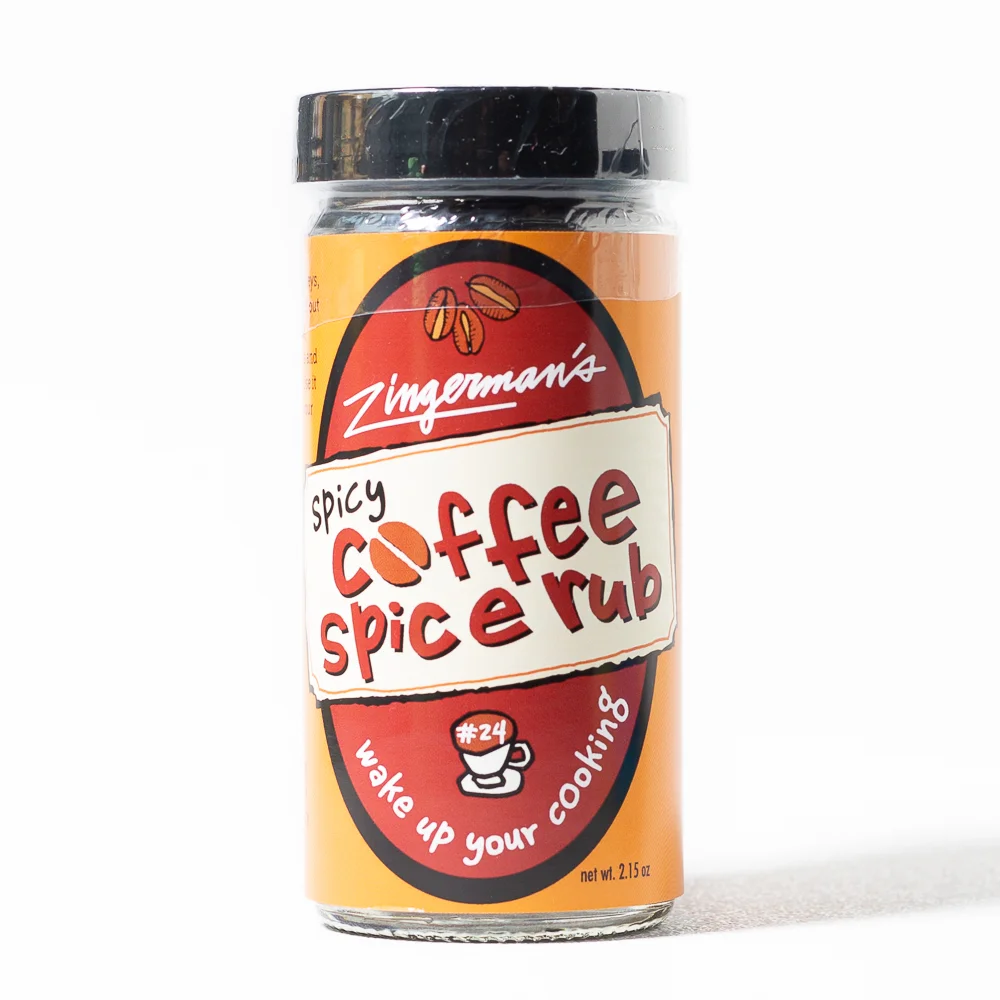
This intensely flavorful blend is packed with Urfa pepper, Tellicherry black pepper, cloves, sea salt, and yes, Roadhouse Joe coffee. Just like Red Rage, the Spicy Coffee Rub was created by Alex Young a few years after the Roadhouse opened. Young developed it with turkey in mind, so it was initially used on roast turkeys and a turkey sandwich dubbed the Dexter Reuben. Francine Maroukian lauded the blend in Esquire magazine as a way to make your Thanksgiving turkey memorable, saying, “One little jar will leave your turkey succulent and beautifully browned. Believe us, your guests will appreciate the gesture.” (Should you prefer to let someone else handle the bird, coffee spice-rubbed turkey reappears on the Roadhouse’s Thanksgiving To-Go menu—and, fair warning—then quickly sells out). The spice blend’s versatility was quickly uncovered though, so over the years it’s been featured in all sorts of Roadhouse specials including chicken, pork, and wild boar.
If you’re ready to wake up your cooking, grab a jar of Spicy Coffee Rub at the Deli or have Zingerman’s Mail Order ship you one. Follow Ari’s lead and try it on catfish, potatoes, or roast chicken (find his recipe for Roast Chicken with Bacon and Spicy Coffee Spice Rub on page 200 of Zingerman’s Guide to Better Bacon).
5. Coffee Gelato (aka Roadhouse Joe-lato)
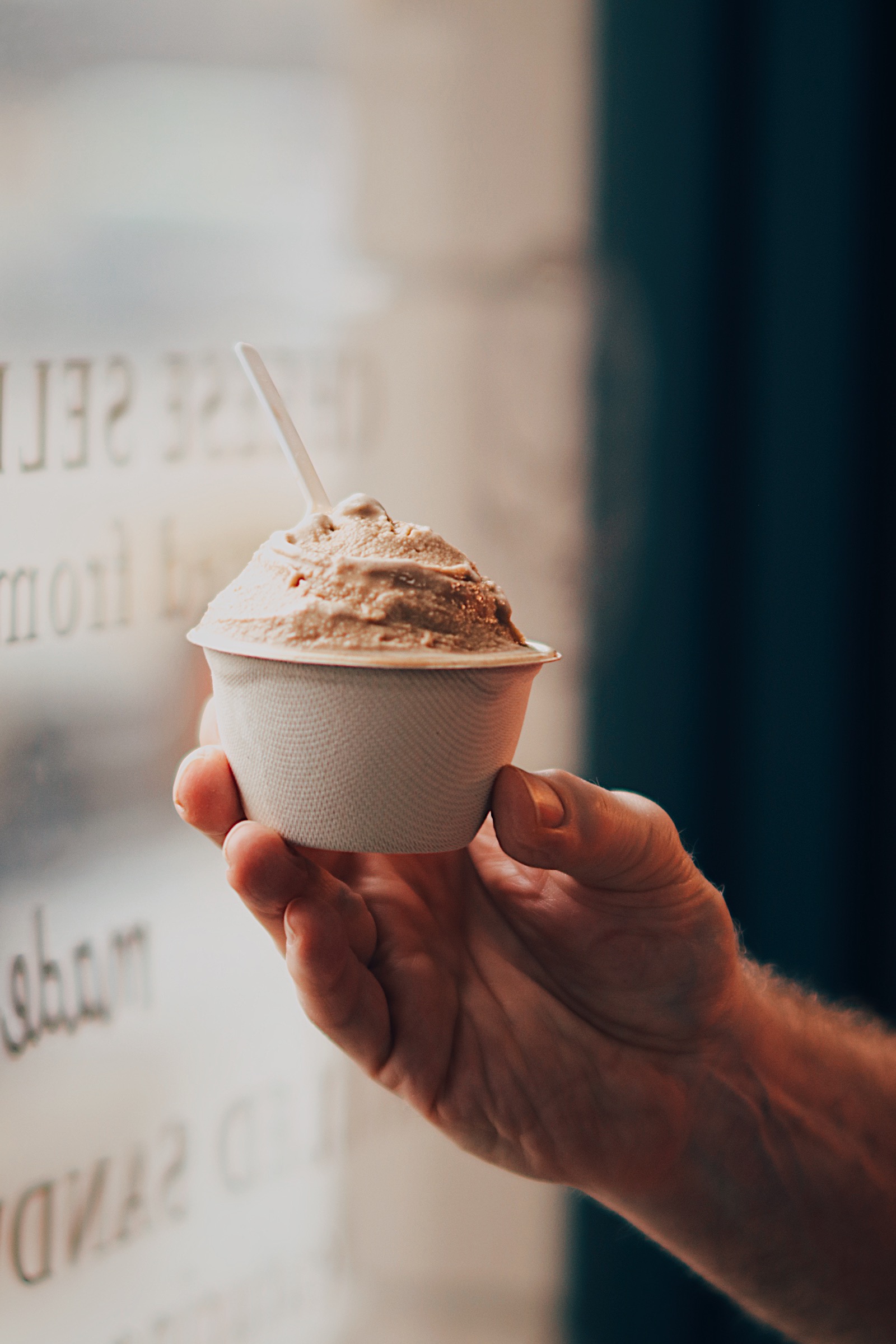
It doesn’t take much to imagine Roadhouse Joe’s smooth flavor churned into a creamy batch of gelato, especially if you typically take your coffee with a splash of cream or milk. Luckily for all of us, there’s no imagination necessary, since that’s what the Creamery is doing! In 2023, they updated their coffee gelato to feature Roadhouse Joe—quickly earning itself the nickname of Roadhouse Joe-lato. Using this best-selling brew along with milk and cream from Calder Dairy—one of the last farmstead dairies in Michigan—and demerara sugar created a gelato with a jolt of big, well-balanced coffee flavor. Gelato & Retail Manager Lexi Stand declares, “It tastes so good!”
Pretty sure we don’t need to tell you how to savor a scoop of gelato, but just in case… try one straight up, paired with another Creamery gelato like Vanilla or Chocolate Hazelnut, or doused in espresso for an affogato with serious pick-me-up power. Pick up a pint at the Cream Top Shop or the Deli, or enjoy a scoop for dessert at the Roadhouse. Flavors in the Creamery’s case vary, but when you spot the Coffee Gelato you can enjoy a scoop or two on the spot. Or, enjoy it in one of the many other ways they finesse their frozen treats, like in a shake, malt, float, or frozen cooler—in which the flavor of your choice is blended with any soda flavor.
6. Mothfire RoHo Joe Stout
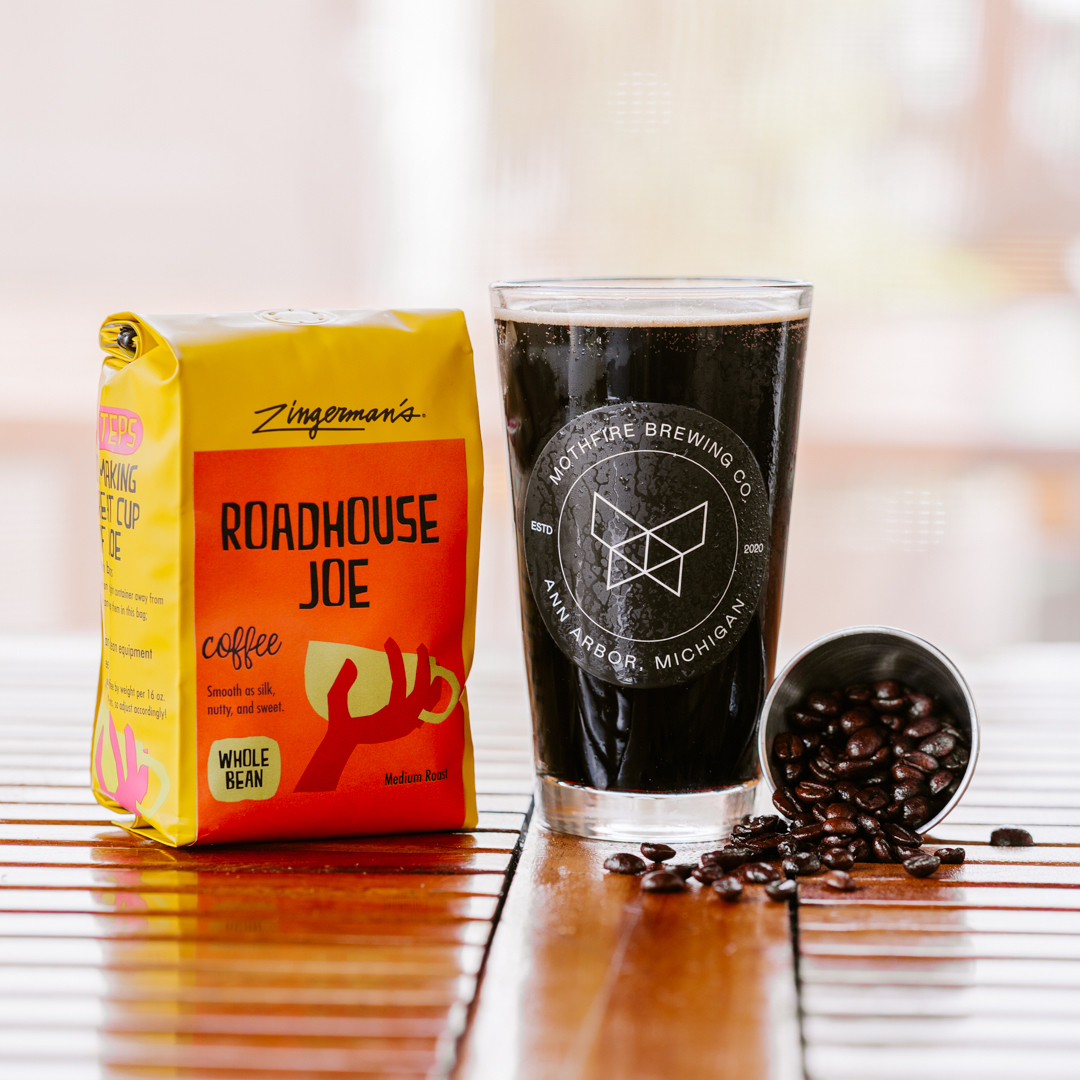
Not only has Roadhouse Joe conquered flavor sensations from savory spices to sweet treats, but it’s also proved that it can move from coffee mug to pint glass (or tulip glass as the case may be, but you get what we were going for, right?). Mothfire Brewing Company has been making a rich, roasty stout with Roadhouse Joe since 2021. This flavorful collaboration began at the picnic tables in Roadhouse Park, when Mothfire head brewer Alexis Jorgensen started envisioning what the recipe might look like. As Ari describes:
The beer really is something special. When you sip the stout, the coffee comes through without dominating the whole drink; it hints clearly of coffee, and yet it’s something else altogether. The RoHo Joe Stout has a good hint of vanilla, a touch of sweetness, and all the grain-forward fullness you’d expect in a good stout!
The sweetness is due to the brew, of course, but perhaps also to the bond of Ann Arbor townie businesses who share a passion for great ingredients and community. As Noah Kaplan, one of Mothfire’s founders, elaborates:
We believe that craft breweries are an essential part of a community’s culture. A place to create beers and atmospheres that are truly unique to the region, and a place to bring people together. We focus on collaboration, creativity, and quality craftsmanship. We also focus on using local ingredients and building on local culture.
We definitely don’t need to tell you how to drink a beer. (Other than to enjoy this sensational sipper responsibly, but you already know that.) Try the RoHo Joe Stout on draft or pick up a 4-pack at the Roadhouse. Cans are also available at Mothfire Brewing Company, select Plum Market locations, and (soon) other Zingerman’s locations.
Who knows where Roadhouse Joe might moonlight next!
To keep up with the buzz on all of the latest happenings in the Zingerman’s Community, follow us on social media: @zingermanscommunity on Instagram and Facebook, and @zingermans on X (formerly Twitter).
Tag: ZINGERMAN’S ROADHOUSE
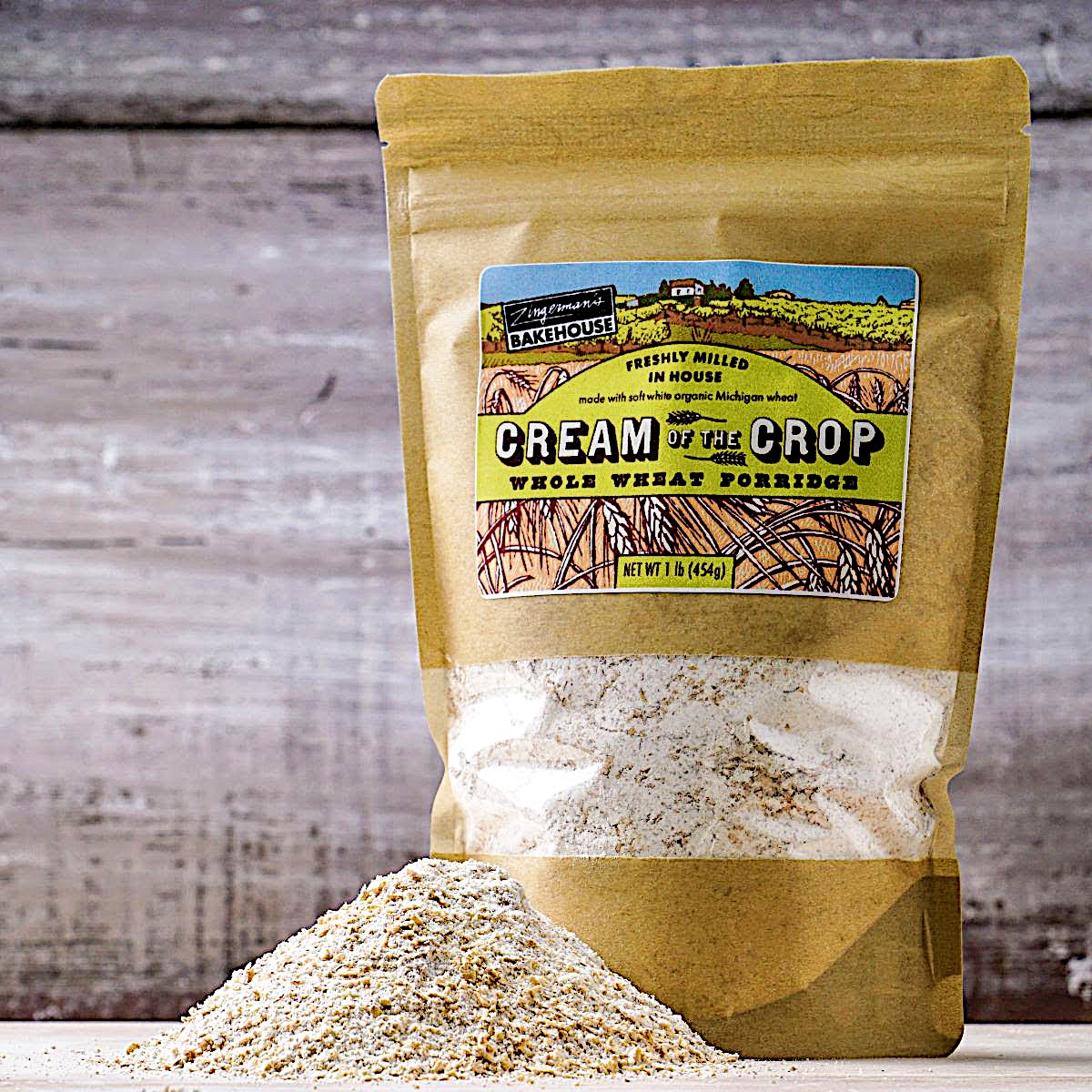
Freshly milled wheat from the Bakehouse
makes a wonderful meal
|
|
|
Tag: ZINGERMAN’S ROADHOUSE
 |
|
|
|
|
Tag: ZINGERMAN’S ROADHOUSE
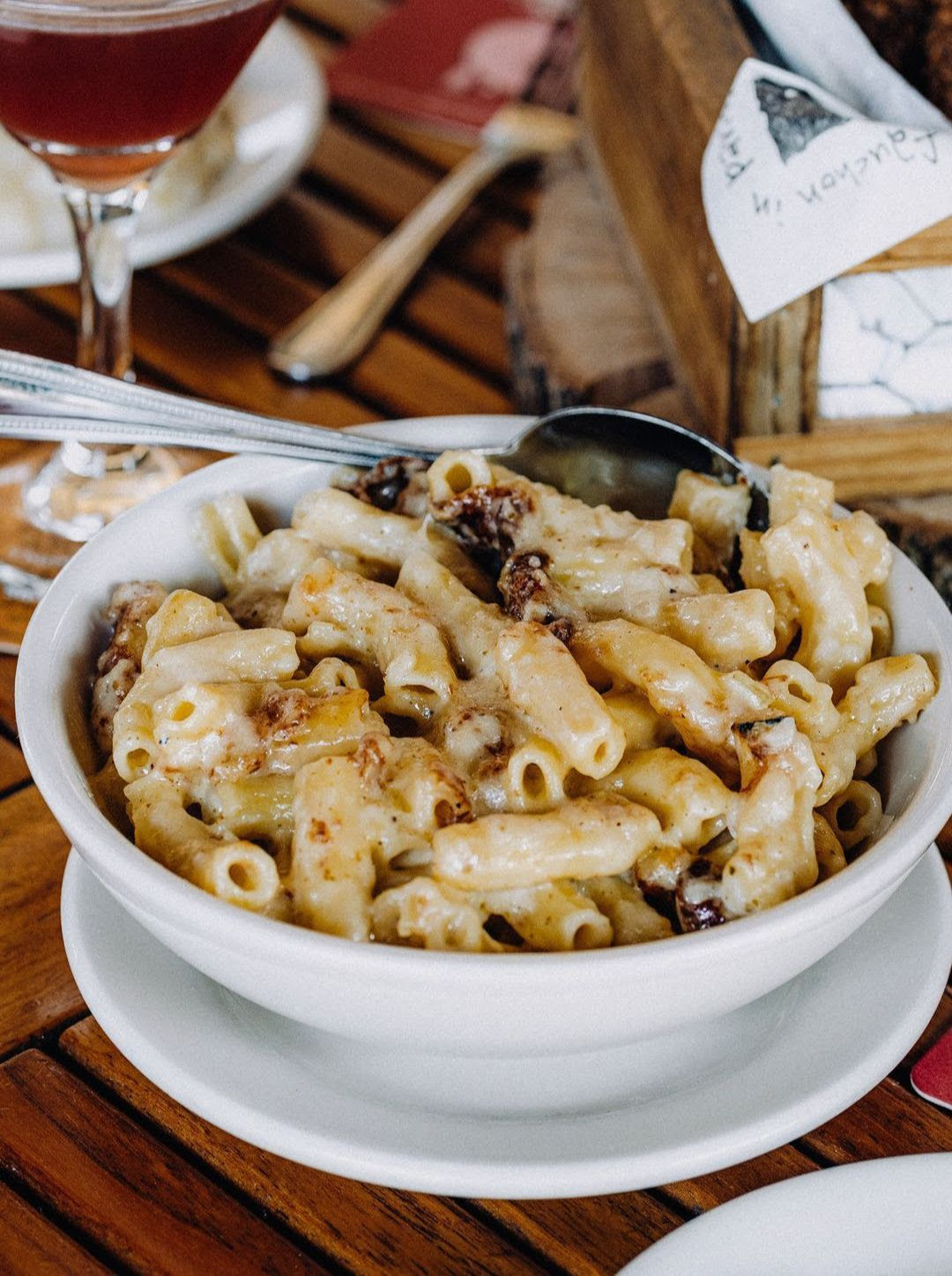
Miss Kim and the Roadhouse offer up delicious deals
|
Tag: ZINGERMAN’S ROADHOUSE
 |
|
|
|
Want more from Ari?Sign up for Ari’s Top 5 e-newsletter and look forward to his weekly curated email—a roundup of 5 Zing things Ari is excited about this week—stuff you might not have heard of! Follow us on social media: Instagram, Facebook and Twitter, @zingermanscommunity. |