
Tag: ZINGERMAN’S ROADHOUSE
A Beginner’s Guide
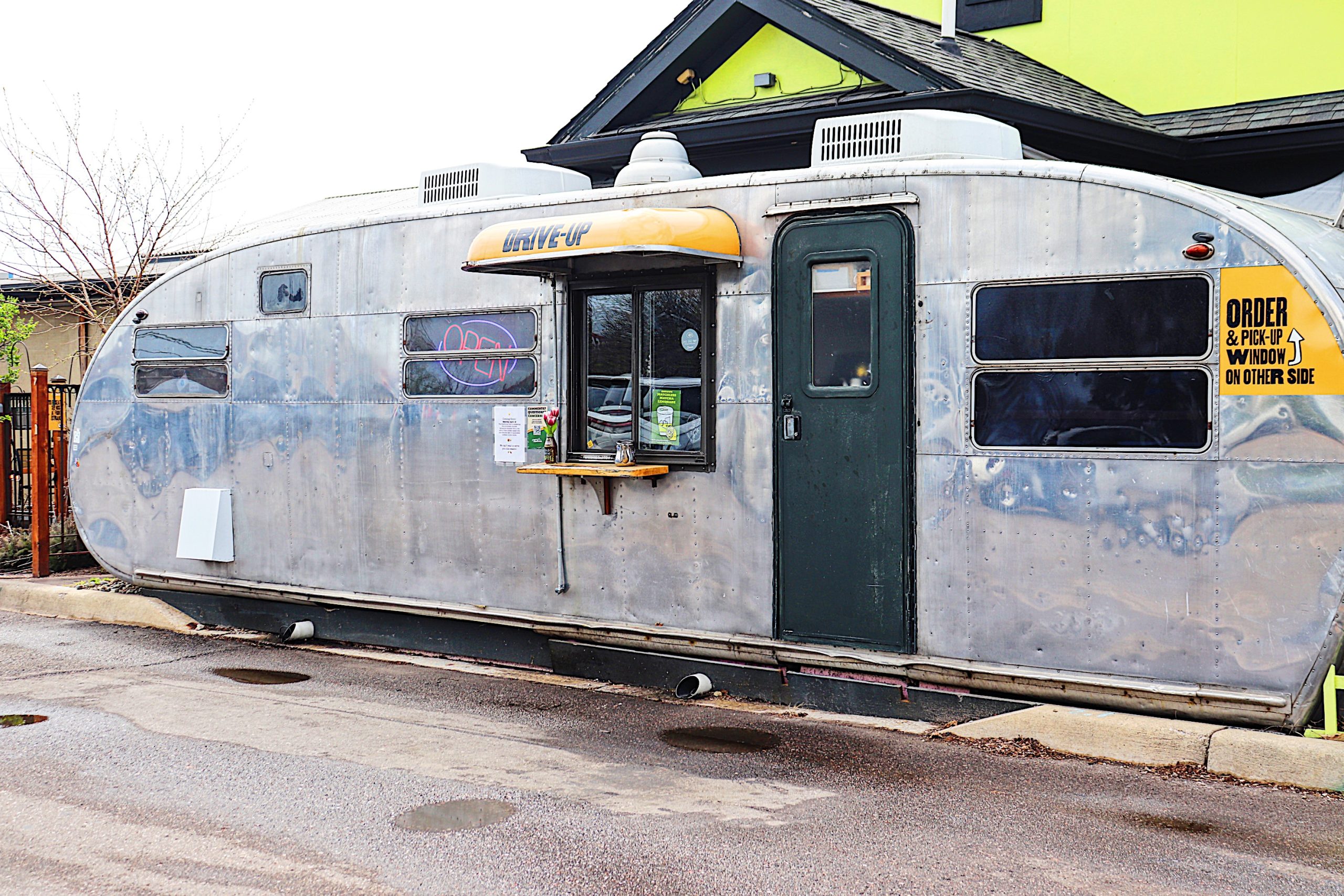
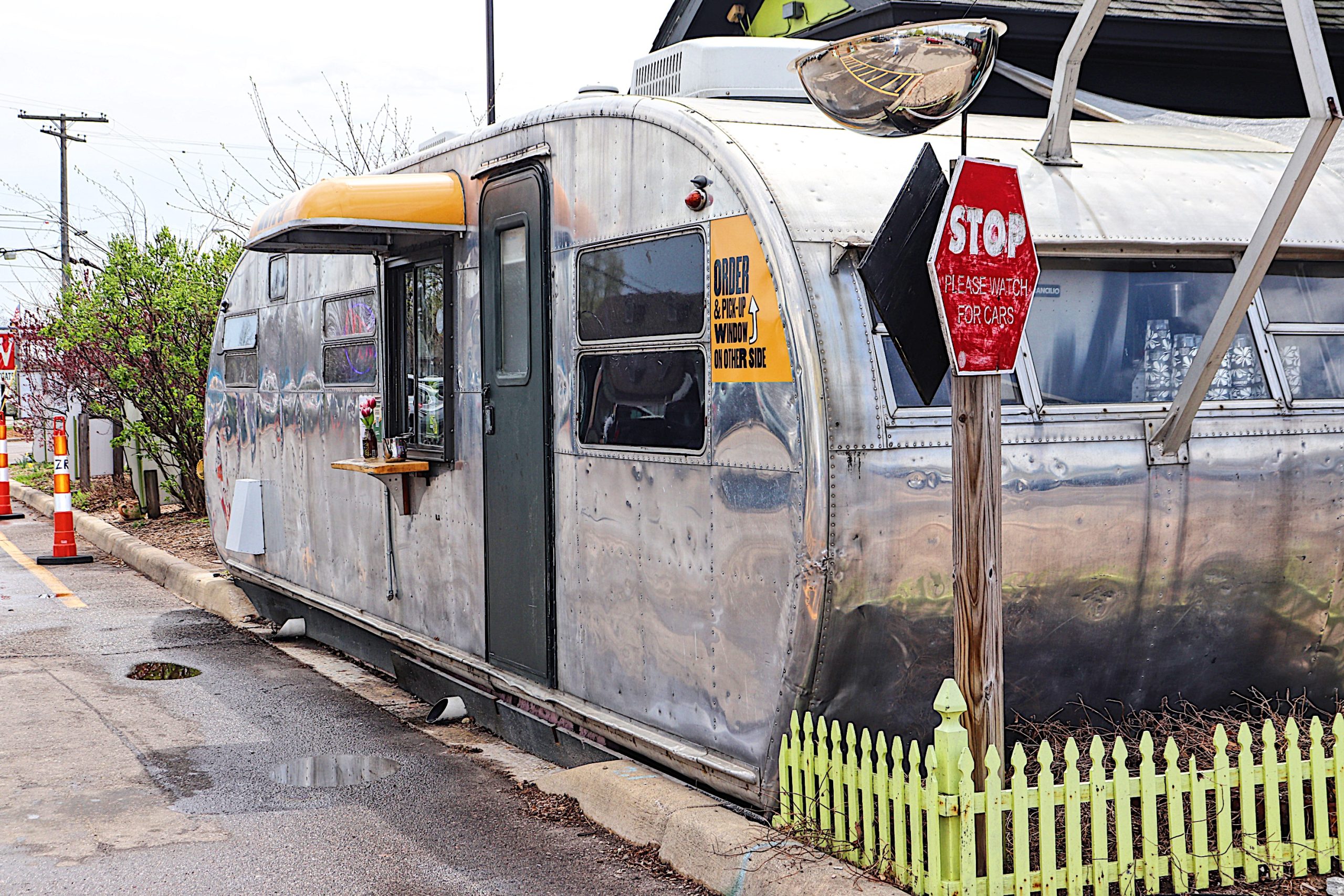
Have you ever pulled up to Zingerman’s Roadhouse and wondered what the silver tea-pot-looking thing is in the front? That’s Zingerman’s Roadshow! It was established in 2004 as the to-go destination for Zingerman’s Roadhouse. The silver 1952 vintage Spartan trailer attached to the front of the Roadhouse today is a destination for drive-through Zingerman’s fans. Would we be Zingerman’s if we did not serve our guests their latte and croissant in style?
The Roadshow has come a long way over the years, and some are new to its charms, so here is a beginner’s guide to Zingerman’s Roadshow. Come along as we walk you through some insider tips, fun facts, and the best ways you can fully take advantage of what Zingerman’s Roadshow has to offer.
Check out the menu online before arriving
The first tip of the beginner’s guide to Zingerman’s Roadshow is that we highly recommend looking at the menu before arriving to maximize your experience. The Roadshow, not your typical drive through, with a menu board and loudspeaker, offers the convenience of enjoying high quality artisan food from the comfort of your car and on-the-go. It would be best to call ahead, pre-order, then pick up your order at the drive through. This will save you time and let you enjoy great food with little to no waiting time upon arrival.
No worries though if you are unable to call ahead to place an order. If you want a quick coffee and snack, then ordering right at the window of the Roadshow works great as well! Walk up guests can order from the Roadhouse Express menu. Did you know there are two menus to choose from at the Roadshow? There is the Roadshow and Roadhouse Express menu that can be found in one place. Check out the express menu here. That leads us to our next point, the menu.
Which menu should I order from?
The Roadshow menu items are prepared more quickly in the Roadshow itself, and are for our guests who want a quick bite. Guests who are using our drive through may wish to order from the Roadshow menu. The Roadshow also offers the Roadhouse Express menu, which includes items from the main-in-house menu that can be prepared in a shorter amount of time. Food from this menu will be served to you in 30 minutes or less. Guests who order from our walk-up window, who wish to dine in the Roadhouse Park, or who would like to order from the Roadhouse menu but do not want to wait too long may wish to order from the Roadhouse Express menu.
What to do when you arrive to the Roadshow
Now that you know all the amazing and tasty food options available, what do you do when you first arrive at Zingerman’s Roadshow? At the Roadshow, you are guaranteed to receive personalized and friendly service. For your convenience, there is no need to get out of your vehicle. When you arrive at the Roadhouse, just pull around to the Zingerman’s Roadshow. Staff will come out to your window and take your order.
You can expect your food to arrive in between five and six minutes when ordering a quick bite. If there is a need for a longer time, guests can pull into designated parking spots and receive their food in 30 minutes or less. Right across the parking lot there is the Roadhouse Park. Even though full service from the Roadhouse is not offered at the Park, it is the perfect way to have an office day to just work and relax in a pleasant atmosphere with delicious food. With the warmer weather, you can order to-go and enjoy your meal outside. After placing your to-go order from the Roadshow walk-up window, our staff will bring your order out to you in the Park when it is ready.
Breakfast Options at the Roadshow
The Roadshow is open at 7am seven days a week. The Roadshow breakfast menu is served from 7am to 11am daily. If you arrive for the Roadshow breakfast, there are plenty of to-go options. Their famous breakfast burrito, the Diez y Uno, is a menu item that you will be sure to love. It is made to order with farm fresh eggs, green chiles, Nueske’s applewood smoked bacon, and Ig Vella’s Monterey Jack cheese, all wrapped in a tortilla. Did you know that the Roadshow sells about 1000 burritos per month? It is safe to say, the breakfast burrito is a must-try when you visit the Roadshow for breakfast. Never be afraid to order extra bacon as well! In need of breakfast for your little one? No problem. Your kiddo can dig into the Kid’s Breakfast Burrito, just a smaller version of the Die z y Uno without the chiles. Perfect for those smaller appetites!
Another popular option is the Smoked Salmon Bagel, layered with hand-ladled Zingerman’s Creamery cream cheese, smoked salmon, and your choice of healthy toppings, such as capers, lettuce, spinach, cucumbers, tomatoes, and onion. All served on a toasted bagel of your choice.
If you are in need of a speedy snack to kick start your day, snag some of the Breakfast Noshers, such as toast from the Roadshow. Feast on artisanal bread from Zingerman’s Bakehouse baked fresh every morning and toasted to perfection, spread with farm butter or with organic peanut butter. The Roadshow can make toast from any kind of specialty Bakehouse bread available that day, just ask about our offerings!
The breakfast pastries are sure to not disappoint. Enjoy a large assortment of Zingerman’s Bakehouse pastries made fresh and ready to serve every morning to you with a smile. Find your favorite from our extensive list of Croissants, Cinnamon Rolls, Scones, and more! Fun fact, at 5pm, these delicious pastries are 50% off. Who can say no to that?
You can also indulge in the hand-made coffee cakes made with love by Zingerman’s Bakehouse. These coffee cakes can be enjoyed by the slice or grab a whole one for the road. Sour Cream, Hot Cocoa, Lemon Poppyseed, and a special seasonal flavor are all options you can choose from.
The Breakfast Sammie, made with farm-fresh scrambled eggs, Nueske’s applewood smoked bacon, and melted Cabot cheddar cheese served on either toast, a brioche bun, or freshly baked butter croissant, is another delicious breakfast option.
It gets even better! Quench your thirst with a wide selection of beverages such as a classic cappuccino or latté, Rhode Island Coffee Milk, or fresh-squeezed orange juice and lemonade. Prefer your coffee drink flavored? We make all our syrups in house! The Roadshow uses espresso and coffee exclusively from Zingerman’s Coffee Company.
Guests can create their own drink as well. All staff have gone through Zingerman’s Coffee Company training, how to pull and serve espresso, and how to taste the coffee and rate it so you can be sure your coffee will taste great!
Lunch and Dinner Options at the Roadshow
Enjoying all the yummy breakfast options? Let’s dive into the lunch and dinner menu. Served from 11am until close at 9pm, there are lots of delicious options such as the house-made Tuna Melt using line-caught tuna salad, melted with Chalet Swiss cheese, served on toasted Bakehouse sourdough bread.
Need something hearty but quick? Our Sea Island Sweet Potato Fries, made with sweet potatoes hand-cut and twice cooked served with house-made spicy mayonnaise, is a popular option. Did you know we can make them gluten-free? The Roadhouse Garden Salad, a refreshing healthy option, made with organic mixed greens, topped with cucumbers, carrots, and house-made salt-and-pepper croutons, with your choice of dressing on the side.
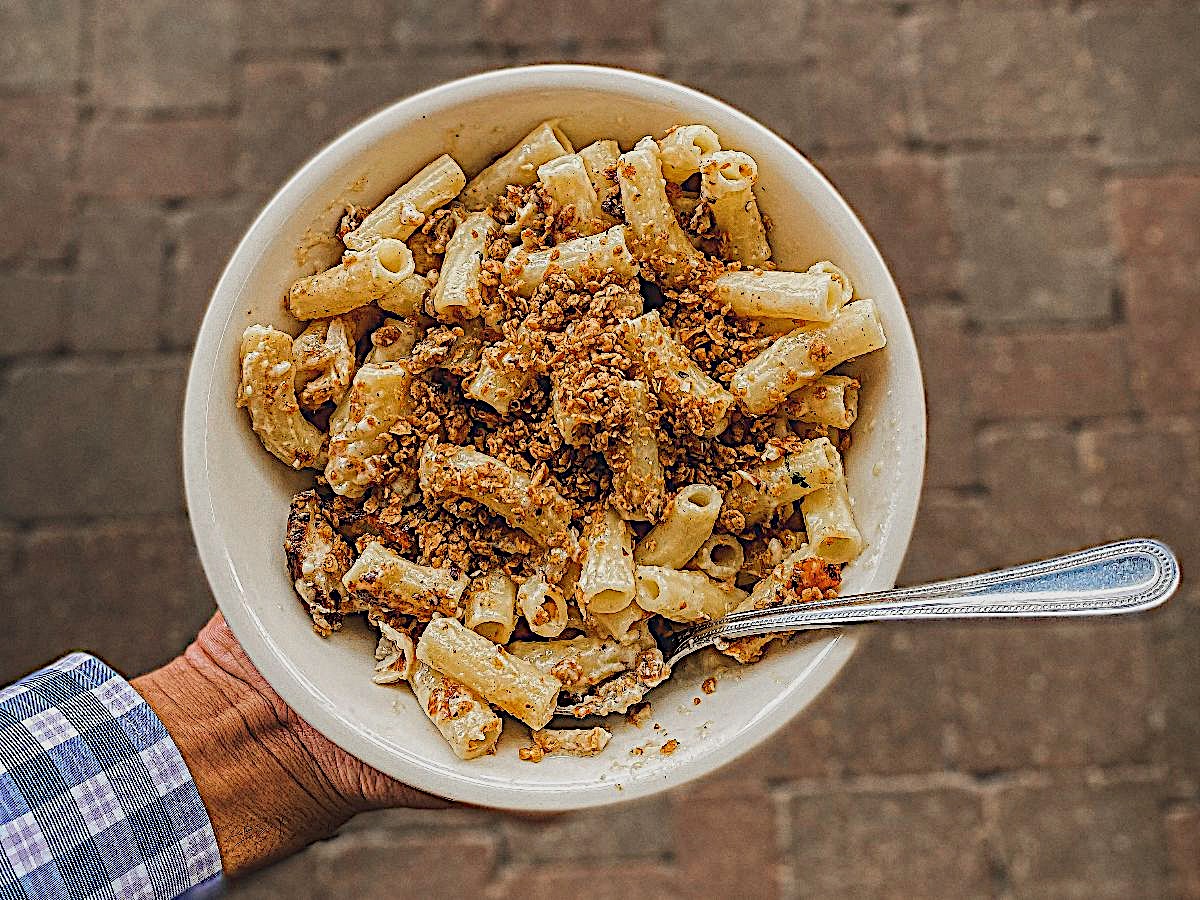
The Roadhouse Macaroni & Cheese is a huge favorite as well, available on the Express Menu. House-made béchamel sauce and lots of Cabot cheddar cheese caramelized with Mancini pasta. You can never go wrong with this cheesy goodness.
A BBQ Pork Sandwich, pit-smoked pork dressed with Eastern North Carolina BBQ sauce on a brioche bun with yellow mustard coleslaw, or a Turkey Cucumber Wrap made with Sy Ginsberg’s sliced turkey breast, sliced cucumber, lettuce, and house-made ranch dressing wrapped up in a flour tortilla, are all wonderful options that can be made to order from the drive through window of the Roadshow.
Who knew delicious food like a Carolina Gold Rice Bowl, made with Anson Mills’ Carolina Gold rice topped with the Roadhouse pit-smoked pork, tasty Millican Texas pecans, seasonal pickled veggies, fresh avocado slices, and garnished with the famous Roadhouse Red Rage BBQ sauce, can be ordered on-the-go?
How to stay connected
Hopefully, this guide to Zingerman’s Roadshow will help you navigate the to-go destination for the Roadhouse. Our rule of thumb, if you want a main meal, dine at the Roadhouse. If you are looking for a quick coffee and snack, then you can order right at the window of the Roadshow.
Stay up to date with all things Roadhouse and Roadshow by subscribing to the newsletter. See you soon at Zingerman’s Roadshow!
Follow us on social media, Instagram, Facebook and Twitter, @zingermanscommunity.
Tag: ZINGERMAN’S ROADHOUSE
|
|
|
|
|
Tag: ZINGERMAN’S ROADHOUSE
|
Want more from Ari?Sign up for Ari’s Top 5 e-newsletter and look forward to his weekly curated email—a roundup of 5 Zing things Ari is excited about this week—stuff you might not have heard of! |
Tag: ZINGERMAN’S ROADHOUSE
|
|
Tag: ZINGERMAN’S ROADHOUSE
|
|
Tag: ZINGERMAN’S ROADHOUSE
A talk about energy by Anese Cavanaugh in Ann Arbor—Tuesday, March 28!
In his beautiful new book, The Creative Act: A Way of Being, renowned music producer Rick Rubin writes,
There’s a time for certain ideas to arrive,
and they find a way
to express themselves through us.
What Rubin has suggested is a wonderfully succinct way to frame the story of Anese Cavanaugh and her connection to the Zingerman’s Community. Anese arrived in our lives at just the right time; over the years her ideas about energy have absolutely found a way to express themselves in the way we show up in the world every day. Our lives and our work are wholly better for it!
 The next chapter in this story will be written—with loving, positive energy—at an event on the evening of Tuesday, March 28 when Anese will be at the Roadhouse for a talk about her most recent book, Contagious You. Co-sponsored by ZingTrain and the Roadhouse, the latter will serve appetizers (including a great fennel-based salad named for Anese), offer Anese’s books for sale, and create space for us all to come together. Anese will bring her positive energetic presence, a wealth of insight, and a host of highly practical approaches that every one of us can benefit from. What we’ve learned from Anese—and effectively woven into both our systems and our culture at Zingerman’s—has altered our organization for the better. I believe it can do the same for you.
Writer George Saunders says, “We might think of a story as a system for the transfer of energy.” Which is exactly what’s taken place in this now 15-year-old tale of organizational improvement. Over the years we have transferred, and translated, Anese’s energy, and her understanding of how powerful human energy can be, into tangible improvements in Zingerman’s ecosystem. I have no hesitation in saying that over the years its benefit has been felt by hundreds of thousands of humans (probably, you!) who come here to shop, eat, drink, learn, and/or work. Because of that energy work, sales improved, stress levels reduced, conflict management is easier, and tensions are lower. Outside the workplace, families and friendships have benefitted as well. The changes don’t directly earn headlines, but I can say with confidence that because of our increased attention to energy, everything just feels, and actually is, better.
In a very wonderful way, this work is very much win-win. Unlike fossil fuels, when the energy of one person goes up, the energy of those around them is almost always increased as well. The way that we have adapted and integrated her approaches gives Anese an energetic boost as well. If you’ve come to eat or shop over the years, you’ve likely benefited from it as well. Energy, as I’ve learned from Anese, begets energy. The energy we each put out into the world will nearly always come back to us in kind. As Anese says, “It’s contagious!” Here’s a bit of what she has shared on the subject:
The leader sets the tone by the mood and energy he or she brings into the room or into any conversation. Simplest way to look at this is that we’ve (likely) all had the experience of being in a conversation with someone else where we’re in a good “space,” the person we’re talking with isn’t, and all the sudden (or slowly) we start to feel our mood, our space, and energy shift/drop/deplete. We’ve just matched that person’s energy. Their energy is contagious. People do it with us, we do it with them. We’re all contagious. This super power can be used for good or evil.
The beginnings of this story from the Zingerman’s perspective actually go back to 2007, a few years before Anese and I had even met. Here in the ZCoB, we had just completed a couple of years of steady work to write and eventually agree on what became our 2020 Vision (for more on that vision, see “The Story of Visioning at Zingerman’s”). One of the sections in the vision was about our collective commitment to having more fun at work. Here’s an excerpt:
We Put The F U in Fun
We have successfully quantified fun, measured fun, and improved our fun factor by at least 380% since 2007. We actively teach people how to have fun at work. We have games to increase the volume of fun we experience and reward ourselves with added fun. Organizations from around the world come visit us for seminars, to take notes, to see fun in the works, to bring new ideas and techniques back to their own businesses.
The F U is not what you might be thinking. It actually stands for “Follow Up.” Anese’s approaches turned out to be the tool we needed to quantify, measure, and improve in tangible ways.
Here’s the back story. Shortly after we formally rolled out the 2020 Vision, folks in the ZCoB began to take this newly-documented commitment quite seriously! Over the course of the next couple years, a series of informal meetings, planning groups, and casual chats commenced, all in an effort to appropriately increase our fun level. Within a matter of months, we found ourselves in deep conversation, and often in significant disagreement about what actually was, or was not, fun! Things that seemed like a blast to one person, another perceived as anything but. In the process, tensions rose, fun did not. My first reaction to the dissonance was to get frustrated, but channeling Paul’s saying—“When furious, get curious”—I tried to figure out what we were doing organizationally that was leading to this well-intended bit of dissonance.
I soon realized that we’d had much the same problem earlier in our organizational life around the issue of defining quality. Everyone was all for it, but we had no agreement on what the word actually meant. We didn’t want buzzwords or superficial marketing messages; we were looking for something specific, a tangible definition that we could count on to help us frame what I would now call our philosophy about food and cooking.
Back in 1991, when we were working on our Guiding Principles, after many long conversations, we agreed that here at Zingerman’s “quality” would mean “full flavored and traditional food” (you can read much more on this in the forthcoming pamphlet, “A Taste of Zingerman’s Food Philosophy”). Nearly 20 years later, we found ourselves in much the same situation when it came to fun—everyone was all for it conceptually, but we had no clarity at all on what “fun” actually meant in a collective context!
Somewhere in the course of all these back-and-forth conversations about fun, I was fortunate enough to meet Anese. It was at an Inc. Magazine conference back in 2008. Her work around energy immediately and intuitively felt right to me! Energy, in an ecological sense, was all over the news. But human energy as she was talking about it, was a subject I’d never given any thought to. I started to understand that although Paul and I were probably pretty good at managing our energy on our own, we had no way to explain what it was we were doing, or why we were doing it. We were able to model it with a fair degree of effectiveness, and we hoped the people we hired would pick up on what we were doing. But there was nothing in our job expectations that detailed anything at all about energy.
Over the course of the next year or so, I started to see that what Anese was teaching about energy management just might offer us an answer to our struggle to get clear on fun. Positive energy is simply more fun to be around. And it was clear to me that anywhere good work was happening—basketball teams, jazz bands, restaurants, or not-for-profits—the energy was positive. One could feel the difference! It was part of what drew many people to Zingerman’s. The challenge was how to get the clarity around that feeling we had given to food back in 1991.
Anese gave us the answer. She showed us how the energy with which we show up every day has a huge impact on the way we, and everyone around us, work. She helped us understand that we are all, often unconsciously, creating the culture of which we are a part. And that, if we choose to accept the challenge, we all have both the power and ability to manage our own energy more effectively. From which, a year or so after I met Anese, we had the wisdom to define fun at Zingerman’s as “positive energy.”
Equally important, at the same time we also agreed to make positive energy a performance expectation. In other words, positive energy is not just something we model, or something that we leaders need to do, or that service staff are expected to do, but rather something we ALL commit to when we take a job at Zingerman’s. It’s not just something we would hope for; it’s what we agree to when we get hired. We then had the detailed definition and the tangible tools we needed to make the “quantifying, measuring, and improving” that we had written into the 2020 Vision possible.
There’s a well-known Buddhist saying that goes, “When the student is ready, the teacher will appear.” Looking back, this is exactly what played out here. The ZCoB was ready, and Anese appeared. Our formal definition of fun and our now regular teaching and talking about energy all evolved from what we learned from Anese. Now, as we get ready to honor our 41st anniversary next month, it’s almost impossible to imagine Zingerman’s without it. Rick Rubin, who is a practicing Buddhist, writes:
Some ideas may resonate,
others may not.
A few may awaken an inner knowing
you forgot you had.
Anese’s insight is exactly the sort of thing that Rubin is writing about. Although very few people in the work world talk about the impact of human energy, everyone is at least subconsciously sensitive to it. We are all born with energy and we understand it as infants long before we can speak our first words. Whether we’re aware of it or not, everyone responds to energy. It’s true in the work world, it’s true at home, it’s true with animals. (I experience it daily at home with dogs—say the same exact words with different energy and you’ll get wholly different responses!) People I respect like Robin Wall Kimmerer and my (girlfriend-farmer) Tammie Gilfoyle tell me it’s true for plants as well. Energy, I’ve learned from Anese, is everywhere. It can’t be eliminated, and it’s impossible to have human interaction without it. As I learned from Anese, we can, however, manage energy. As she showed me, we all have the “power.” The challenge is to learn how to use it in positive ways.
I’ve written a great deal about our adaptation and application of Anese’s teachings in a couple of the essays in Part 2 of the Guide to Good Leading series—Being a Better Leader. I share my learnings about why energy management is essential to everything we undertake. You’ll also find the write-up of our “energy recipe”—the three elements of energy that we talk about to everyone in the organization, and our four-step recipe for managing that energy. Thanks to the creative work of Jenny Tubbs, we have the two Secrets in the form of a single $9.95 upside-down pamphlet (in book terms, it’s called a tête-bêche), which means we can improve our energy by having fun flipping from cover to cover: Secret #20 on one side, Secret #21 on the other! Here’s a bit of what I say about energy in the pamphlet:
While I’m interested in global warming and alternative fuel sources, they’re definitely not my areas of expertise. What I’m talking about here—what I learned from Anese—is that I need to pay very close attention to the energy that I bring with me to any interaction I have. To become mindful as well of the energy level that every person in our organization brings with them every day to their work; the impact that that energy—high, low, upbeat, angry, flat, furious, or fantastic—has on their co-workers, customers, and everyone else they come into contact with; the energy that one can sense—for better or for worse—within a minute and a half of walking into a business. Good energy, I realized after meeting Anese, is a hallmark of good leadership. You can feel its presence almost immediately in any well-run organization.
Here in 2023, I teach our energy recipe in every session of the Welcome to ZCoB new staff orientation class. In the spirit of each of us having 100% responsibility, I remind everyone that we are all, me included, fully responsible for the quality of the energy we bring to work. Today, we talk about energy management almost as easily as we talk about the weather. Nearly everyone here has some understanding of it. It’s in our language, our systems, our shift notes, our hiring practices, and a host of training classes. None of that was true back in 2007.
After all these years of working with it, it’s clear to me now that energy is impacting, and is impacted by, all of the various elements of the organizational ecosystem (email me if you’d like the drawing). You can feel the difference between positive and negative beliefs; you can feel the difference between hope and despair; you can feel the difference between someone who is pursuing a vision to which they are committed and someone who is just getting through the day; you can feel when you are being treated with dignity and when you aren’t. I learned from Anese that only a small bit of what people take from any interaction with us will be the words we speak. Nearly all of our impact comes from our energy. Everyone, whether they’re conscious of it or not, can feel the difference.
Last week, I taught the Welcome to ZCoB orientation class for new staff twice. By the time folks get to the class, they’ve generally worked for at least a few weeks, and often longer. Reflecting back while writing this piece, I’m realizing that one of the most common comments from the attendees is on how different the energy is in the ZCoB from what they had experienced in previous jobs. Last week, a new ZCoBber who works in one of the kitchens, commented with a smile: “I knew something was different here from the day I got here. Now with all this information in the class, I understand why.” Another new staffer happily shocked to hear about the work with energy said: “This is one of my passions outside of work, but in every other job I’ve had to pretty much hide it. Everywhere else people thought I was crazy. Here, you teach it to everyone!”
The industrial model of businesses is that the boss is supposed to extract as much work as possible from the staff while paying as little as “the market” allows them to get away with. What we have learned from Anese—again, in much greater detail in the energy pamphlet—is one more way we’ve learned to do the opposite. To embrace the impact that energy has on all of us, to create an ecosystem where, when we do our work well (I say that knowing we all, myself included, fall short regularly) everyone—customer and coworker—involved in an interaction leaves feeling better than when they got here. In essence, it’s the energetic equivalent of regenerative agriculture. Instead of burnout, we leave work more often than not excited about coming back the next day to do more.
Scholar, naturalist, scientist, and teacher Stephen Harrod Buhner echoes Anese’s approach. He uses the term “feeling,” but in essence, it’s the equivalent of the energy that Anese has taught us to pay such close attention to. Buhner says,
Feeling, in the sense that I use it, is very specific. It is what happens when you walk into a restaurant with a friend and suddenly stop, look at your friend, and say, “This place feels weird. Let’s leave.” Everybody has experienced some form of this. … All humans have the capacity to sense the meanings inside anything they encounter, whether it be a place, a person, a communication, a book, a painting, a song. We feel it. The ability to sense meanings is at root a feeling thing, not a thinking thing.
As Buhner points out, not only is energy awareness not encouraged, but many of us were actually trained out of it.
As we are schooled, we are trained to think but not to feel; we are, in fact, trained out of our feeling sense as we grow, trained to believe it is useless, an impediment to clear thought. In one very real sense, we have allowed the most psychologically damaged of the reductionists to structure how we approach the world, scientifically and culturally. We literally train our children to lose their capacity to feel the world around them, to have an integrated capacity for feeling. … What we have lost in consequence is an essential element of our humanity.
Anese offers us a way to reclaim this essential element of our existence. While Western thought, to Buhner’s point, has worked to discourage energy awareness, there are many places where it remains front of mind. The author Amastra, writing in Ethiopia: The Journey, taps into the theme of energy as well. As he describes it, the book is “my very personal, particular feel of Ethiopia.” What he writes about is very much the sort of special energy I hope you will feel when you walk into any Zingerman’s business. Amastra shares:
It’s hard for me to put into words the feeling that the land in Ethiopia evokes in me. It has such a distinct, unique feel. Something shimmering, a light feel and at the same time a feeling that one is in a place very profound and multi-layered that you could only just begin to scratch the layers to understand it.
In his new book, Rick Rubin reminds us that we will do well in life to “Look for what you notice but no one else sees.” The energy work we have learned from Anese is one of those things. It’s available to anyone who chooses to pay attention and, as Anese would say, set their intention, but still, very few organizations have taken advantage of the opportunity. Having worked with this approach to energy management for all these years now, I will say with confidence that while the long-term cost is very low, the impact on individuals, organizations, families, and communities is very positive. Making positive energy a performance expectation, and teaching everyone here how to manage their energy, has made a very meaningful difference.
Rubin writes,
To live as an artist is a way of being in the world. A way of perceiving. A practice of paying attention. Refining our sensitivity to tune in to the more subtle notes. Looking for what draws us in and pushes us away. Noticing what feeling tones arise and where they lead.
. . .
Attuned choice by attuned choice, your entire life is a form of self-expression. You exist as a creative being in a creative universe. A singular work for art.
Rubin is writing about art, but it’s all totally true too for what we’ve learned from Anese over the years. Anese, in that sense, is an energy artist of great proportion. Her art is, in great part, helping the rest of us to access the energy artist we have inside us. Rubin says: “The best artists tend to be the ones with the most sensitive antennae to draw in the energy resonating at a particular moment.” This is indeed Anese. She offers us our tools to make real for ourselves what Rubin is writing about, all day, every day.
The upcoming book event with Anese is, I write now with a smile, the long-awaited rescheduling of something we’d set up around the arrival of Anese’s latest book, Contagious You all the way back in 2020. The book came out at the start of that year and we wanted to set something up to support the rollout. So we organized the event for Anese’s new release for June of 2020 at the Roadhouse. Clearly, that didn’t happen (see “Working Through Hard Times” for more on what those early months of the pandemic were like here). Thirty-three months later, the book event is back on! The book is now three years old, but the content and its impact are as important as ever.
If you don’t yet know Anese’s work, the talk on the evening of March 28th will be a good entree into her approaches to energy. Here, it took us about a year to decide to put Anese’s teachings to work, but I’m sure glad we did. We could have missed the moment. As Rick Rubin writes:
Each of these moments
is an invitation
to further inquiry:
looking deeper,
zooming out, or in.
Opening possibilities
for a new way of being.
If you can carve out a couple of hours to come to the Roadhouse to meet Anese and hear her speak in person, you too might leave with “a new way of being” in the world. If the impact her teaching has on your life and your organization is half of what it’s contributed to me and the ZCoB it might be one the best two-hour investments you will likely ever make! As Anese writes at the end of the acknowledgments of Contagious You, “Thank you all for showing up.”
Order tickets for the event before they sell out!
Want more from Ari?
Sign up for Ari’s Top 5 e-newsletter and look forward to his weekly curated email—a roundup of 5 Zing things Ari is excited about this week—stuff you might not have heard of!