A beautiful Hungarian “biscuit” for breakfast, lunch, or dinner
In a sense, I can see now that our nearly 15-year commitment at the Bakehouse to make Hungarian baked goods one of our signatures is a strong example of a Promise Beyond Ableness—“When we aim for what we do not yet know how to do—but, if achieved, it would increase the ableness and performance of our beloved people, places, or causes.”
We made that promise back in 2010. Sixteen years later, it has played out very much as we envisioned. In 2026, we’re regularly baking about two dozen traditional Hungarian specialties, and nearly all of them have developed large, loyal followings—not only among the area’s significant Hungarian community, but also among folks like me who likely would never have known these pastries at all if we weren’t making them here.
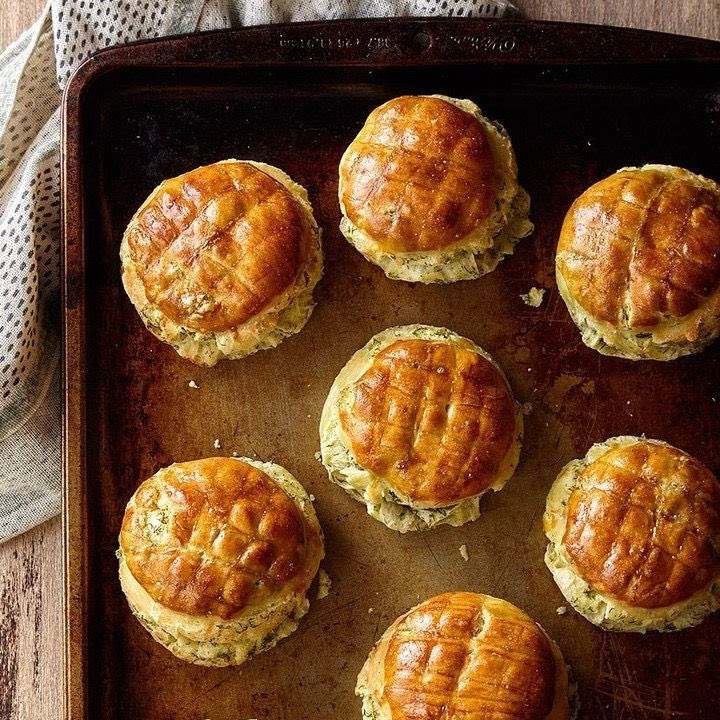
Although aficionados have been enjoying them for years now, the Pogácsa (pronounced “poh-gotcha”) at the Bakehouse seem to have become all the rage. The word seems to have hit the street: these butter-laden, sour-cream enriched, dill-scented Hungarian “biscuits” are really, almost ridiculously, good! While they’ve been little known here—outside of our Hungarian-American communities, which know them well—Pogácsa are probably one of the most commonly served foods in Magyar culture. Mimi Sheraton lists them in her book, 1000 Foods to Eat Before You Die: A Food Lover’s Life! Thanks to the Bakehouse, you can knock the list down to 999!
Pogácsa are basically perfect little bites of buttery goodness. Made with sour cream, eggs, butter, and the layering of dough, Pogácsa are light and tender. In the marvelous, deservedly award-winning cookbook, Zingerman’s Bakehouse, co-author and Bakehouse co-managing partner Amy Emberling explains, they’re “rich and delicious rolls made in Hungary…eaten at breakfast, for a snack, for appetizers, or to accompany dinner. If you want to make a true Hungarian meal, Pogácsa are an essential component.”
The lovely green herbiness of the dill brightens up the buttery base of the Pogácsa beautifully. You can do anything with Pogácsa you would with biscuits. They’re great as they are! I also like to split them and toast them in a pan with a bit of Vermont Creamery Cultured Butter (yes, they’re already buttery to begin with, but more butter is better!) until the cut surface turns a beautiful golden brown. You can serve them on the side with almost any meal, morning, noon, or night. Use them to make Pogácsa sandwiches—a little bacon or sliced ham would be great. I like them with bits of cured ham like Prosciutto di Parma or cured, smoked, Speck—it takes about 20 seconds to put together, and it’s a truly terrific culinary combination.
They’re excellent as well to put a fried egg on, sprinkled with a pinch of hot Hungarian paprika. If you like, smash a just-cooked small potato onto one side of a split Pogácsa—sprinkle it with salt, pepper, olive oil, and a bit of Hungarian paprika and you’ll have a lovely hot potato and Pogácsa sandwich. Pogácsa are particularly good with the Liptauer cheese, and they’re also great with butter and anchovies or cream cheese and sardines. They’re also good with sweets—I’m really happy eating them with a combo of butter, honey, and black pepper. Or try one spread with our great artisan cream cheese and honey.
Stop by the Bakeshop and put a Pogácsa in your pocket! If you’re thinking of serving them for a big gathering, I’d suggest ordering ahead so we can make sure to have enough ready for you! One guest bought four dozen of them the other day—I believe Pogácsa have the potential to become, as they already are in Hungary, as popular as buttermilk biscuits that we make at the Roadhouse. They’ll be on special for the rest of February!
A taste of Zingerman’s Food Tours here in the ZCoB!
If you’ve ever found yourself considering the idea of signing up for one of those amaZing Zingerman’s Food Tours, but haven’t yet decided to do it, here are a couple of chances to have a taste locally! While managing partner Kristie Brablec is the maestro who makes the tours happen, each trip is actually a collective coming together of great people who put their heads, their hearts, and their souls into making the week of tasting, learning, laughing, and connecting into the super special event it always ends up being. Next month, one of the key contributors to our Italian and French food tours will be right here in Ann Arbor to do two Zingerman’s events.
Bernardo Conticelli is coming into town the third week of June! On Thursday evening, June 20, he’ll be doing a class at BAKE! that features a pair of much-loved culinary treats—pizza from the wood-burning oven at the Bakehouse and champagne from some of the finest sparkling wine houses in France! That class has, unfortunately, already sold out, but the following night, June 21, Bernardo will be at Cornman Farms to do a very special, one-time-only Tuscan wine dinner with co-managing partner and chef Kieron Hales. The menu includes a whole range of amazing dishes that will bring some serious tastes of the Tuscan countryside to Cornman.
Antipasti include an array of Italian cheeses and cured meats, housemade grissini and crostini, pickled vegetables, and more! Panzanella salad with roasted tomatoes and mozzarella comes next And that in turn will be followed by a trio of marvelous main courses:
Anatra Alla Scappi: slow-cooked duck with plums, ham, nutmeg, cinnamon, and plenty of red wine
Beef Braciole: thin beef rolled with prosciutto and slow-cooked with tomatoes
Zuppa Di Valpelline: savory Savoy cabbage stew with Fontina cheese, bacon, and marjoram
Add in artisan polenta, roasted leeks, tiramisu, and a great talk by Bernardo, and you’re pretty much assured of an amazing evening, the likes of which are hard to find around here, but are replicated regularly on the other side of the Atlantic for folks who come on one of the tours.
To give you a bit more background, Bernardo was born and raised in Florence. He has degrees in Political Science and Wine Marketing. He’s also the official Champagne [France] region Ambassador to Italy, and he teaches wine classes in English, Italian, and French. Making marvelous olive oil is his passion project. Or maybe they’re all his passion projects. Quality and care very clearly mark them all! He has a small farm outside Florence, too. Bernardo brings a rare and wonderful combination of expertise, humility, passion, and purpose to everything he undertakes—all accompanied by an exceptional palate! He sums up his life up to this point like this: “I work in wine for passion, I produce olive oil for love, I grow vegetables for fun, I eat and drink for pleasure.”
Coming to one of these two events will give you a little taste of Food Tours’ terrific work. You won’t need a passport to join and you don’t have to clear customs. Come meet Bernardo and Kristie! Eat, drink, and enjoy. We feel fortunate to have him here in town next month!
If you’re intrigued, sign up soon—spots will almost certainly sell out!
NYT writer Eric Kim and award-winning author
Matt Rodbard come to Miss Kim
On Tuesday, April 30, Ji Hye and the Miss Kim crew will be hosting a pair of nationally known food writers! Together, they will put together a marvelous meal that will almost certainly sell out! I figured I’d give you the heads up here before all the seats are gone!
Ji Hye Kim is, of course, the wonderfully talented, creative, award-winning, and culinarily skilled scholar-chef-managing partner at Miss Kim. For this one evening only, she’ll be joined by a couple of comparably creative cooks.
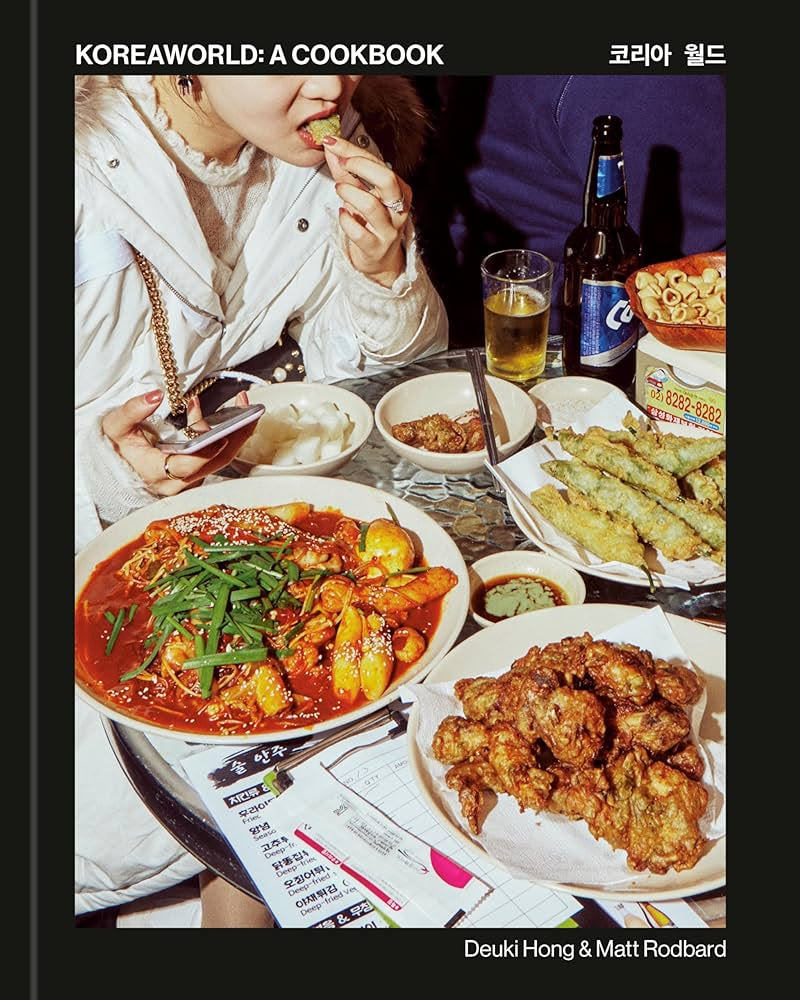
Matt Rodbard has quite the resume, including his most recent book, Koreaworld: A Cookbook. He’s won a wealth of awards, and has had articles in all the big names of 21st century American journalism: the New York Times, Wall Street Journal, Fodor’s, Travel + Leisure, Saveur, GQ, and Bon Appétit. As you might have extrapolated from that exceedingly impressive list, he has a passion for food and culture, and his knowledge is vast.
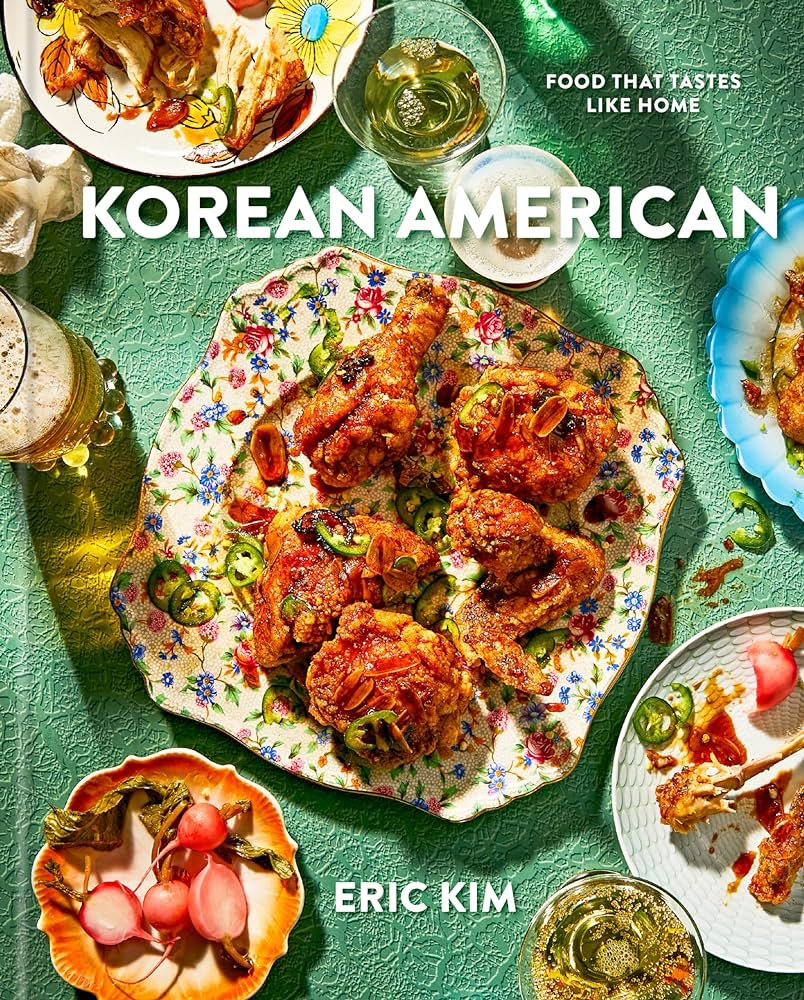
Eric Kim is prominently featured in the New York Times food section pretty much every month. He’s had pieces published in well-known publications like Bon Appétit, Food & Wine, and The Best American Food Writing. His terrific debut cookbook, entitled Korean American: Food That Tastes Like Home, made the New York Times bestseller list instantly!
Each seating that evening will begin with a compelling conversation between Ji Hye and the two guest authors about the history and importance of traditional Korean cooking, both in Korea itself and then here in the U.S. After that you will get to eat a remarkable three-course meal inspired by some of the recipes in the books, but, of course, with the typical Miss Kim twist!
The best part of all? You get to take one or both books home when you buy a ticket! The dinner and a copy of Koreaworld (signed) will be $125. Add on a copy of Eric Kim’s awesome Korean American for an additional $25.
Freshly milled wheat from the Bakehouse
makes a wonderful meal
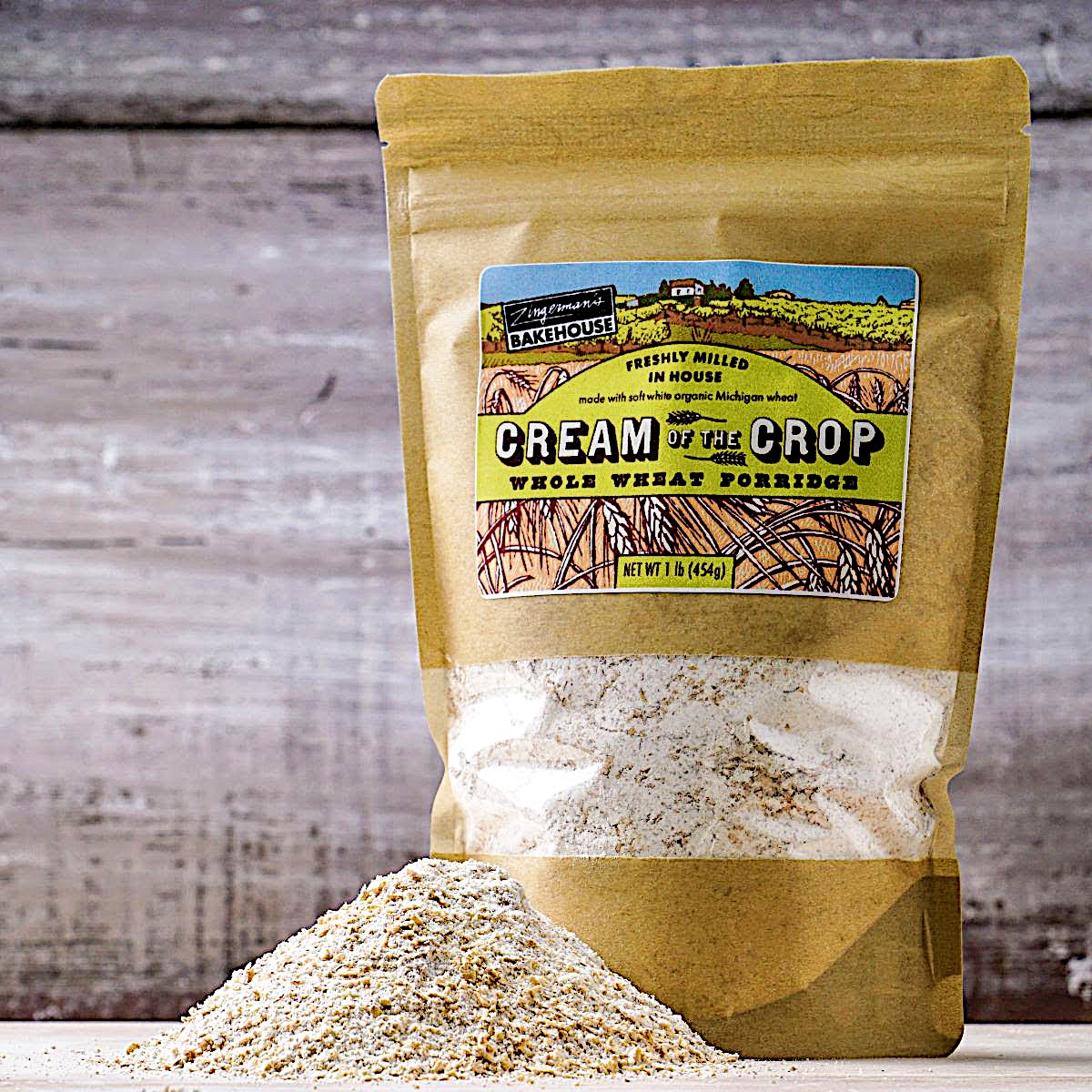
Who knew? A lot of people might have. Just not me. But now, after over 40 years of working in the food world, I know—a bowl of hot farina, made from freshly milled wheat, makes for a seriously marvelous, world-class meal. It’s a delicious artisan return to what a well-made wheat porridge would have been like back when Malinda Russell was writing in Paw Paw in the second half of the 19th century. When we first came out with Cream of the Crop freshly milled whole wheat porridge at the Bakehouse a few years ago, I was excited for our Cream of Wheat-loving customers. It was obviously an enormous quality improvement over the standard commercial offerings! Topped with butter and maple syrup, honey, or fresh fruit, it’s pretty fantastic.
This month, the Roadhouse has it on the breakfast menu as well, topped with a bit of that terrific Vermont Creamery cultured butter. If you come by in the morning during the week, you can have your farina sweetened, of course, with real maple syrup. Alternatively, you could ask for it the way I would eat it: I skip the syrup and enjoy it with just that amazingly flavorful cultured butter and then a bunch of that fantastic farm-to-table Tellicherry black pepper added after the bowl is brought to the table. Or, instead of the butter, you could opt for some of the terrific Séka Hills olive oil we get from northern California on top. Mind-blowing! Tasting it this way the other day, it was so good that I went back and added more oil and pepper. Essentially, I realized, it’s a bit like a “bruschetta in a bowl!” So good! Alternatively again, add a fried egg on top!
For historical context, the commercially packaged Cream of Wheat debuted at the 1893 World’s Columbian Exposition in Chicago which opened on the 1st of May. On May 5th of that year, a stock market crash started what came to be called the Panic of 1893 and a serious depression followed. Part of the response locally came from Detroit Mayor Hazen Pingree, who created what came to be called his “Potato Patch Plan” which called for community gardening on vacant land in the city to help folks feed themselves. So little is new!
You can also buy bags of the Cream of the Crop (uncooked) at the Bakehouse to make at home too. Thanks to everyone at the Bakehouse for making it possible to add a wonderful dish to our weekly cooking routines! And to the Roadhouse for getting on the menu so we can all just walk it and order it up ready-cooked!!
PS: The first images that came to mind when I began thinking about “farina” were of the late Mimi Fariña and Richard Fariña. Mimi was a folk singer and the sister of Joan Baez; Richard was also a singer, a really fine lute player, and the author of the classic ’60s novel I’ve Been Down So Long It Looks Like Up to Me. Here’s a clip of their music!
Want more from Ari?
Sign up for Ari’s Top 5 e-newsletter and look forward to his weekly curated email—a roundup of 5 Zing things Ari is excited about this week—stuff you might not have heard of!
Follow us on social media: Instagram, Facebook and Twitter, @zingermanscommunity.
Tag: ZINGERMAN’S
A big bowl of Southern comfort
in this wonderful seafood stew
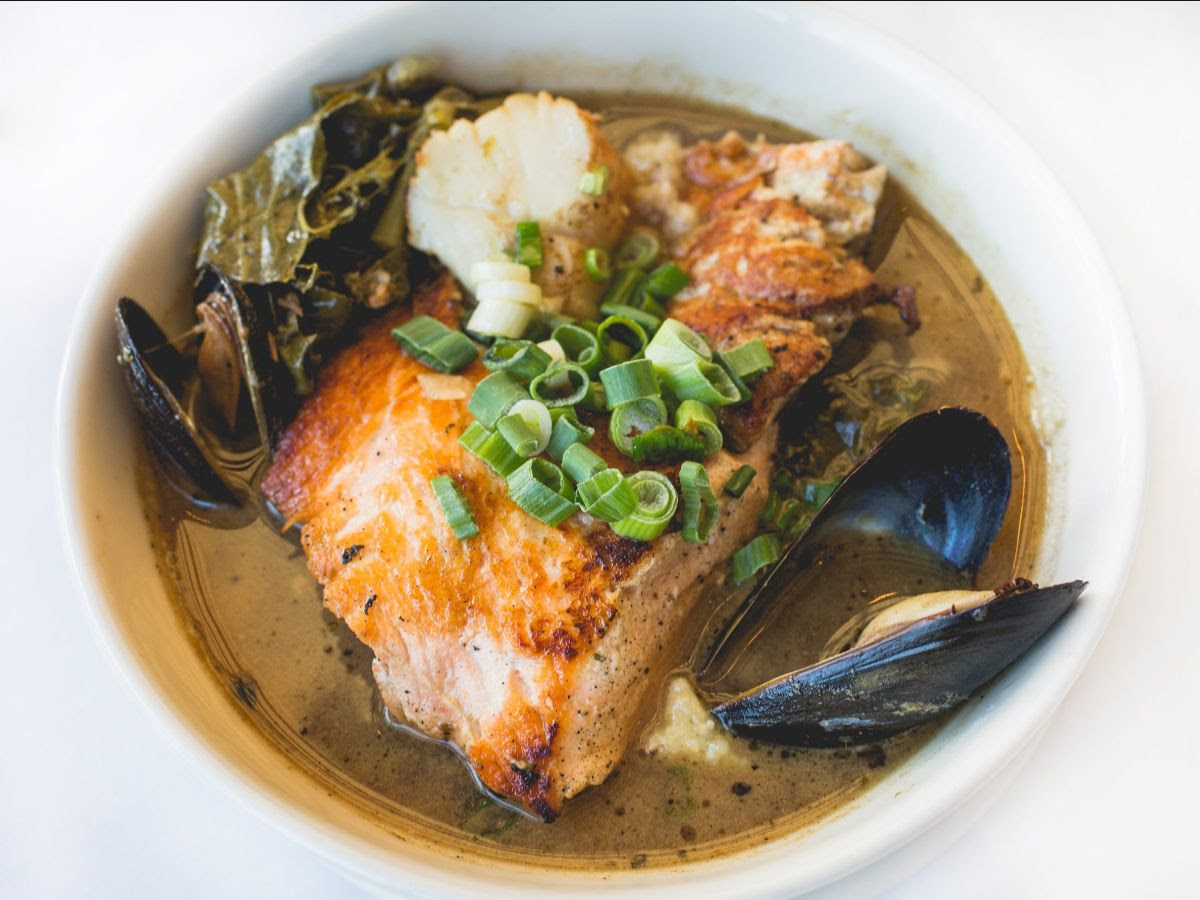
Without a doubt, one of my favorite foods from the Roadhouse—and I get to eat a lot of good food—is the Creole Potlikker Fish Stew. We’ve been serving it for nearly a decade now, and with each passing week, I think it accumulates even more loyal fans. In the spirit of Natural Law #10, since no one else (to my knowledge) makes this dish anywhere in the country, Potlikker Fish Stew is wholly unfamiliar to most new customers. Its strength? It’s well on its way to becoming a signature dish, worthy, I believe, of national attention.
While hardly any of us up here in the north have ever heard of it, down South, potlikker is pretty much an iconic culinary staple. For those who are just now learning of it, potlikker is the broth from the long-cooked, loaded up with bacon, and collard greens we make every day at the Roadhouse. It’s basically a bacon-spiked, slightly spicy, vegetable broth. In the South, potlikker is powerful stuff—the Southern equivalent of chicken soup, the way I see it.
Aside from its socio-culinary context, potlikker has an important role to play in American history. Culinary historian, accomplished author, and friend, John T. Edge explains its significance in American political history:
The Potlikker and Cornpone Debate of 1931 began when Julian Harris, an editor of the Atlanta Constitution, verbally assailed Huey Long, governor of Louisiana and United States senator-elect, over the question of whether cornbread should be dunked or crumbled into potlikker. The debate quickly escalated, and, for approximately twenty-three days, between February 13 and March 8 of 1931, engaged most of the South and much of the nation. Extensive newspaper accounts and correspondence from the time illuminate the primary themes of gender, race, class, and regional chauvinism that inform this debate.
To make this special Creole Fish Stew, we use the potlikker to poach some seafood—selections vary daily, and you’re welcome to ask. Usually, it’s three or four fish, and often some of those amazing day boat scallops we get in from the East Coast. The whole dish comes together beautifully, all poured and bubbling hot over the amazing traditionally-grown and stone-ground grits we get from Anson Mills. Dishes like this have West African roots—a fish stew served over a starch; lots of fish, lots of leafy greens. Swing by the Roadhouse, order a bowl, breathe in the restorative aromas, and enjoy a moment of quiet, comfort, and calm while you eat.
P.S. If you come late afternoon, the Roadhouse Happy Hour runs from 2 to 6 pm, Monday through Friday. A host of drink deals, special Texas tacos, fried pickles, and more!
Sign up for Ari’s Top 5 e-newsletter and look forward to his weekly curated email—a roundup of 5 Zing things Ari is excited about this week—stuff you might not have heard of!
Follow us on social media: Instagram, Facebook and Twitter, @zingermanscommunity.
Tag: ZINGERMAN’S
Miss Kim and the Roadhouse offer up delicious deals
It’s time for the annual Ann Arbor Restaurant Week menu, which means cool meals and delicious deals at both Miss Kim and the Roadhouse! It’s Ann Arbor’s bicentennial to make the Restaurant Week work even more fun! Anyone around Ann Arbor likely needs a good excuse to get out of the house after the last week of this weather that’s well beyond frigid, and Restaurant Week is a really good reason to come out! Here’s a menu overview (check the websites or give us a ring for more details):
Three courses for $34 per person. Choose an item from each course! Many of the dishes are gluten-free and soy-free. (Note that Miss Kim is closed on Tuesdays.)
First Course
Smashed Potatoes – spiced with Korean Chile flakes, they seem to be nearly everyone’s favorites!
Fried Broccolini – broccolini with an amazing anchovy sauce caramel, walnuts, fried onions, and cilantro.
Arugula and Asian Pear Salad – I love this one! Fruit and spice and everything nice.
Second Course
Korean Fried Chicken with Sesame Rice – lightly battered and fried chicken with either a Sweet Chili Glaze, Sweet Soy Glaze, or Korean Chili Spice Blend
Korean Fried Tofu with Sesame Rice – the Miss Kim classic that Food & Wine magazine made famous!
Chicken or Tofu Bibimbob – a Miss Kim classic, the traditional one-dish meal of Korea
Third Course
One of our super tasty and equally lovely cupcakes from the Bakehouse or housemade Mochi Cupcakes!
Three courses for $35 per person for lunch, $50 per person for dinner.
First Course
The appetizer for both lunch and dinner is Really Wild, Wild Rice Fritters – We created this dish to honor the people who lived on the land that is now Ann Arbor for centuries before European arrival. Fritters made with really wild, wild rice from Cass Lake in Minnesota. Served with spinach pesto, Bellwether Farms ricotta cheese, and arugula microgreens.
Second Course for Lunch
“Chicken-Fried” Mushroom Pierogi – Srodek’s vegetarian potato pierogi with IASA peperoncino, butter, and herbs, topped with “chicken-fried” Maitake mushrooms.
Ham-Chester Sandwich – Nueske’s applewood smoked ham, Creamery Manchester cheese, and Wisconsin pear-mostarda on grilled Bakehouse Sourdough.
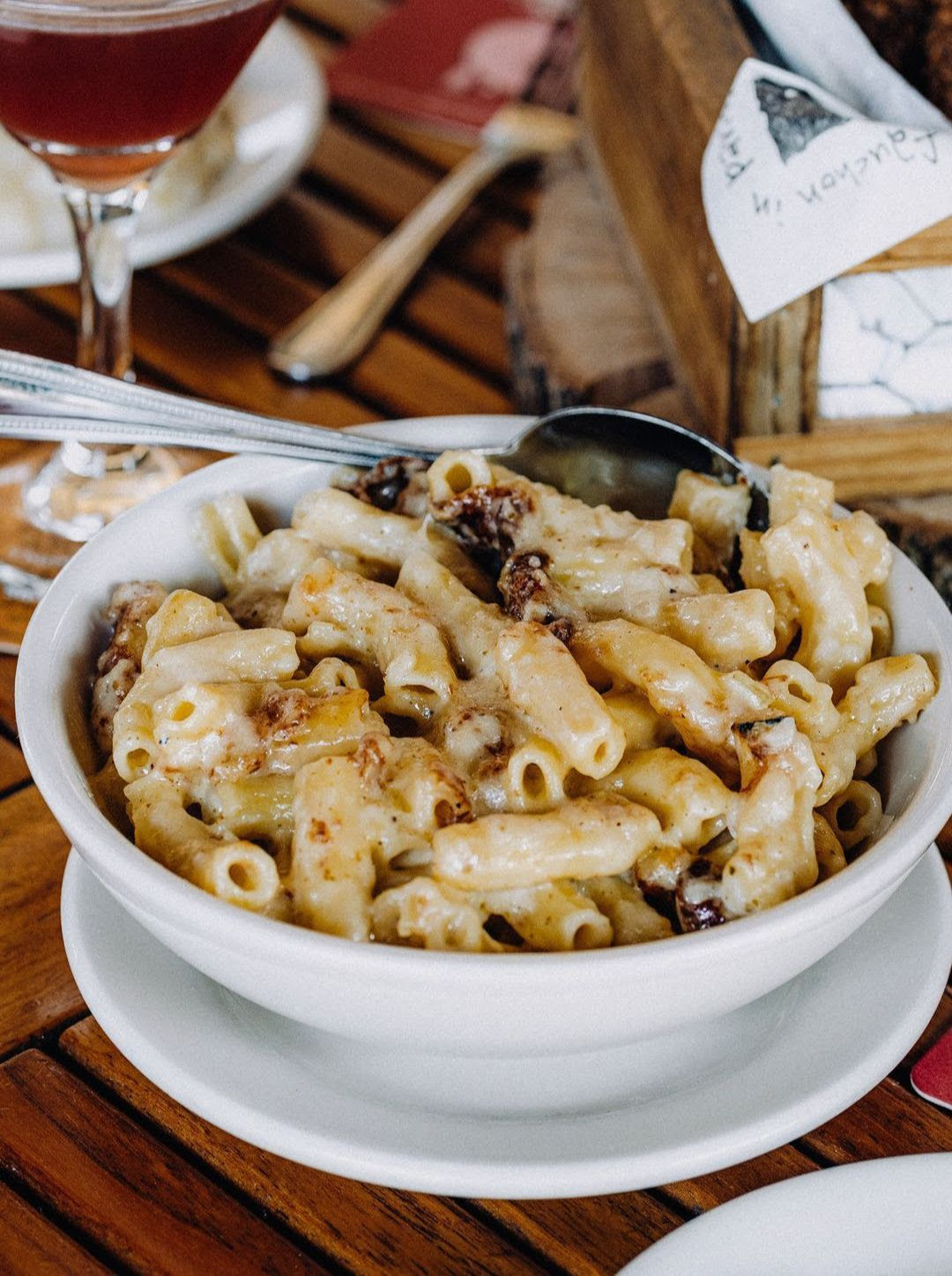
Roadhouse Mac & Cheese Comb with Soup or Salad – a side of Roadhouse macaroni made with a creamy Cabot Vermont cheddar cheese white sauce, caramelized with Mancini farmstead pasta from the Marche region of Italy. Served with your choice of soup or mini salad.
Second Course for Dinner
Shrimp & Grits – amazing wild-caught North Carolina shrimp with sautéed peppers, onions, and smoked Andouille sausage, all served over Anson Mills’ heirloom grits.
Short Ribs & Red Beans – Creole-style short ribs topped with a bacon and scallion salad, served with Camellia red beans (a New Orleans classic) over Carolina Gold rice.
“Chicken-Fried” Mushroom Pierogi – Srodek’s potato pierogi with IASA peperoncino, butter, and herbs and topped with “chicken-fried” Maitake mushrooms
Third Course for Both Lunch and Dinner
OMG Cupcake from the Bakehouse – chocolate cupcake stuffed with dark chocolate ganache, topped with dark chocolate buttercream frosting, and glazed in chocolate!
Sign up for Ari’s Top 5 e-newsletter and look forward to his weekly curated email—a roundup of 5 Zing things Ari is excited about this week—stuff you might not have heard of!
Follow us on social media: Instagram, Facebook and Twitter, @zingermanscommunity.