Skip to content

A whole lot of carrots and cream cheese frosting.

A whole lot of carrots and cream cheese frosting

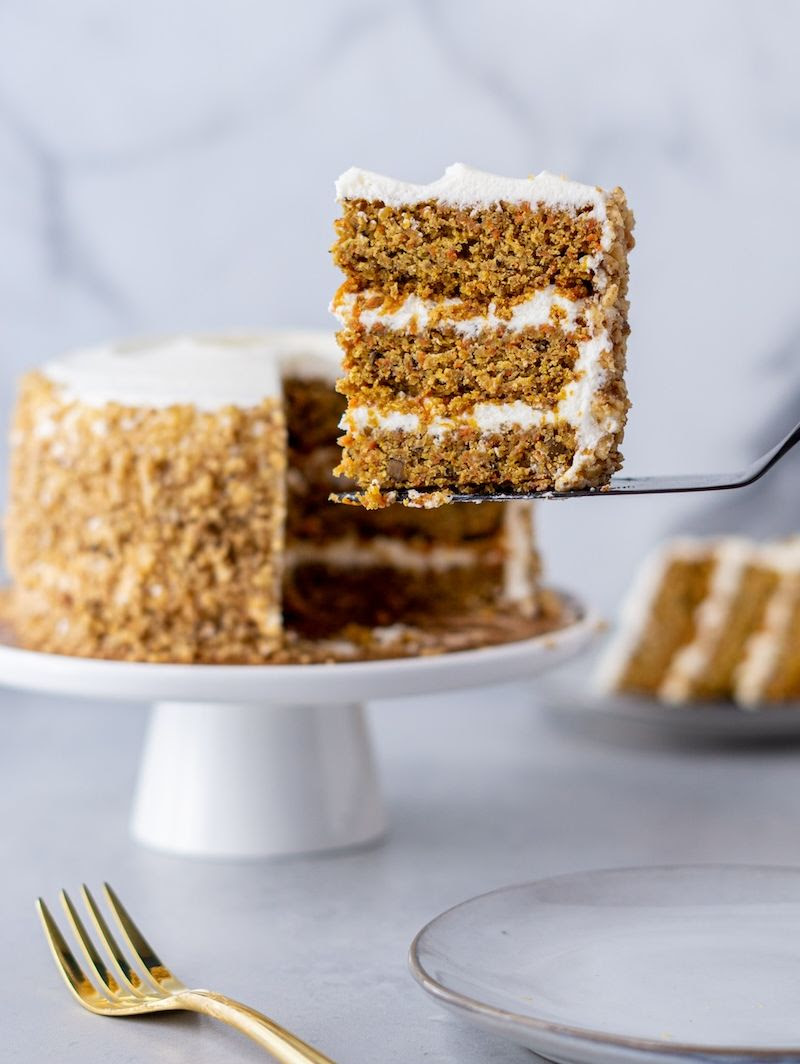
The Bakehouse 24 Carrot Cake is impressively excellent. Being more of a savory treat fan, it had been a while since I held a plate with a whole slice of cake, but with this one, I tried a bite, smiled, and went back for more! If you need a cake for an upcoming birthday party, a Tuesday evening get-together, or a Sunday afternoon coffee klatch, an empathic act for someone experiencing a trying time, consider ordering one today.

Carrot Cake was once known as “Passion Cake”—with that in mind, we also do them as wedding cakes. What a wonderful way to mark a very special occasion. If you’re thinking of booking a wedding, check out Cornman Farms and Greyline for wedding sites soon, or reach out to the Roadhouse to book a room at the restaurant. We’re already reserving spots for next year! The Deli, Roadhouse, and Miss Kim would all love to talk about catering, bridal showers, or pre-wedding meals as well!

While empathy is a relatively recent idea, carrot “puddings” have a history going back to at least the 11th century in the Middle East, and then later, in England. The late food writer Molly O’Neill once wrote that George Washington was served a carrot tea cake at Fraunces Tavern in lower Manhattan on November 25, 1783, during what came to be known as “British Evacuation Day.” Carrot cake became particularly popular in Britain during WWII when homebakers needed alternatives to sugar, which was being rationed. It took off in the U.S. in the second half of the 20th century as a healthier dessert option. Today, in 2024, carrot cake is an American cake classic.

Here in the ZCoB, the Bakehouse crew says of the 24 Carrot Cake:

We grate nearly 30 pounds of carrots to make one batch of this cake. All those carrots add an incredible moistness and a fresh sweetness to this classic. Combine that with toasted walnuts, aromatic spices, and the complex flavor from freshly milled grains … you get a great cake that’s totally delicious on its own. Cover it with a generous amount of cream cheese frosting and it becomes irresistible.

It has a wonderful amount of our cream cheese frosting. Not too much. But as the great chef and food writer Edna Lewis once said, “No one has ever complained to me that there’s too much frosting on their carrot cake.” For an additional delight, drizzle with a bit of maple syrup or sorghum, or maybe add a dollop of whipped cream and some chopped spiced pecans.

Swing by the Bakehouse or the Deli to grab a slice soon! It goes great with that beautifully smooth coffee we’ve got on feature from Honduras that’s this month’s Roaster’s Pick from the Coffee Company (see below)!

Order yours for pick up
P.S. If you want to make the Bakehouse’s beautiful 24 Carrot Cake as cupcakes at home, the recipe is in the lovely new Celebrate Every Day.

Want more from Ari?

Sign up for Ari’s Top 5 e-newsletter and look forward to his weekly curated email—a roundup of 5 Zing things Ari is excited about this week—stuff you might not have heard of!

Follow us on social media:  Instagram, Facebook and Twitter, @zingermanscommunity.

Sparkling wine and the king of cheeses come together to make one terrific meal.

Sparkling wine and the king of cheeses
come together to make one terrific meal

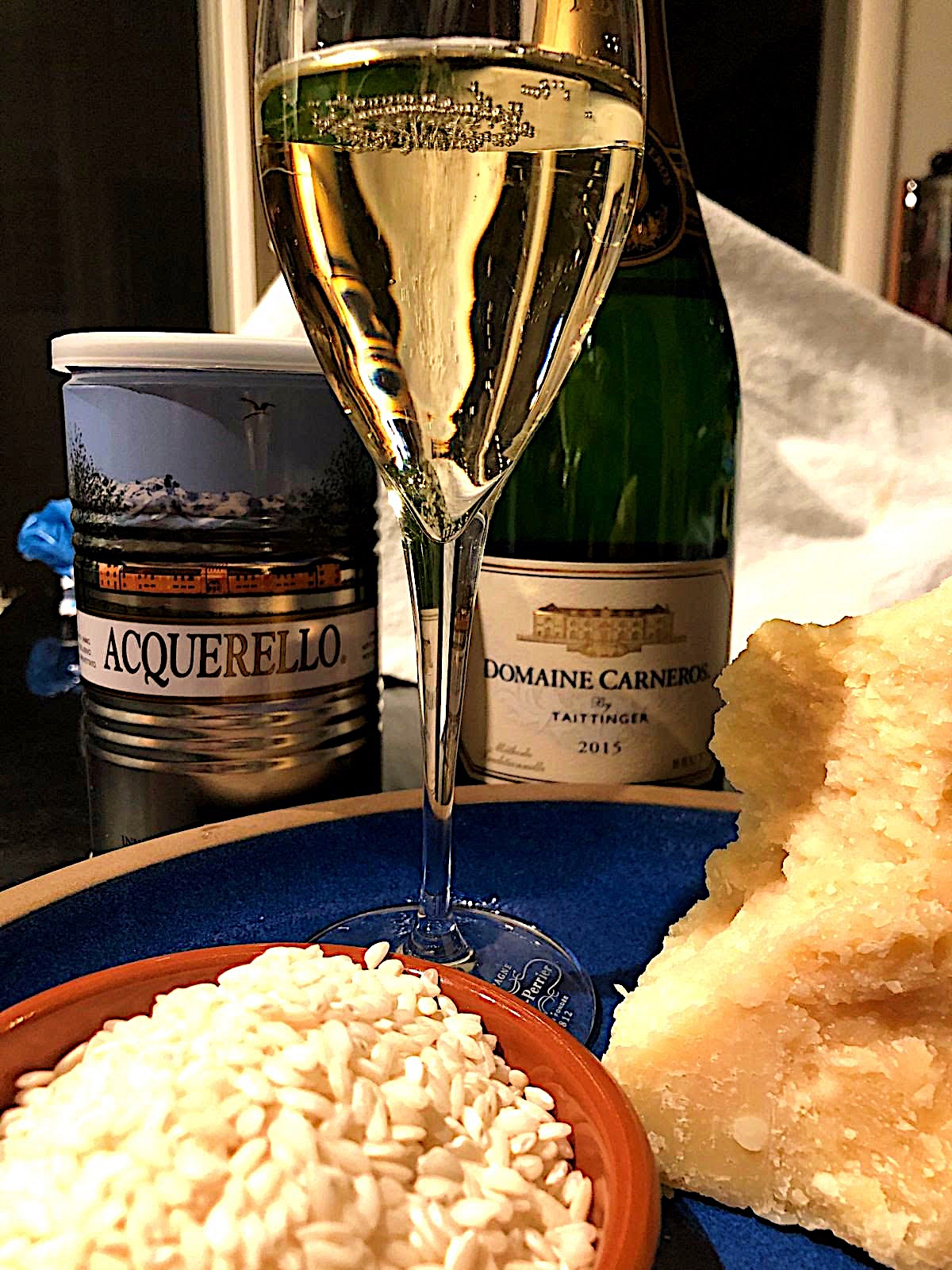
I learned this dish probably two dozen years ago from Laura di Collibiano, the woman who’s helped to revive the production of the terrific olive oil Tenuta di Valgiano estate in the western part of Tuscany. She makes it, she said, whenever she has “leftover champagne.” You can of course also let some sparkling wine go flat overnight just to make the risotto—the flatness is important—if the sparkling wine is still freshly opened the heat of the alcohol will dominate the dish.

Risotto, I should say, has long been one of my favorite cold-weather dishes to make. In northern Italy, people eat risotto as often as folks in the rest of the country eat pasta. And, although it can understandably feel intimidating to make risotto if you didn’t grow up with it, it’s actually not very hard to do. If you have a copy on hand, the chapter on Italian rice in Zingerman’s Guide to Good Eating will walk you through the whole process in a great deal of easy-to-understand detail. We have Parmigiano Reggiano cheeses and Carnaroli rice at Deli and on Mail Order’s website that would be ideal for the dish!

INGREDIENTS

4 cups chicken broth (you may not end up using it all)—we sell great housemade bone broth at the Deli. You can also use vegetable broth to make the dish vegetarian.

2 1/2 cups flat champagne or flat sparkling wine

Rind pieces from Parmigiano Reggiano cheese (optional)

2 tablespoons butter, plus more to taste

1 small onion, peeled and finely chopped (about 3/4 cup)

1 cup Italian rice, preferably Carnaroli or Arborio

4 ounces Parmigiano Reggiano broken into 1/4-inch chunks

2 tablespoons finely chopped Italian parsley—rinsed and squeezed dry

Sea salt

Freshly ground Tellicherry black pepper

1/4 cup grated Parmigiano Reggiano, for serving

DIRECTIONS

  1. Combine the chicken broth with 2 cups of the champagne. If working with an unsalted broth, add sea salt to taste. If you have some Parmigiano Reggiano rind on hand, put a piece into the liquid. Bring broth and champagne mixture to a boil, reduce heat only slightly, and simmer for about 10 minutes. Reduce heat slightly again.

  2. Melt 2 tablespoons of butter in a large saucepan over medium-high heat. Sauté the onion in the butter until soft and golden (don’t brown or the onion will become bitter).

  3. Add the rice and stir well. Sauté for a couple of minutes until the rice is very hot and shiny. Add the remaining 1/2 cup of champagne. Stir until it’s been absorbed by the rice. Add 1/2 cup of the broth-champagne mixture. Stir until absorbed. Repeat the process over and over again until the rice is tender but still firm.

  4. The risotto is done when the rice is al dente, about 18 minutes from when it first went into the pan. Add a touch more butter and one last 1/2 cup of the broth-champagne mixture. (If you’ve used up all the broth you can use hot water at this stage.) Stir, yet again, then remove from the heat.

  5. Add the parsley and Parmigiano pieces and mix well. The cheese should still be in chunks—don’t let it melt into the dish. Let stand for a minute. Add salt to taste.

  6. Serve in warm bowls. Top with the additional Parmigiano Reggiano cheese and a generous dose of black pepper atop each bowl. Serves two generous main courses or four appetizers.

The whole dish can be made in under half an hour and you can probably play with your kids or read your emails while you’re stirring! The result is a great dinner! Because the two featured ingredients here—Parmigiano Reggiano and bubbly—are already so special, it’s a great way to impress company or convey the importance of any event (such as New Year’s Eve!), or in truth, just to make another otherwise remarkable mid-winter evening into some special. I like to celebrate every day as if it were a holiday—cooking this dish for two on a Tuesday evening is a wonderful way to enhance the quality of any relationship! Cheers!

Pick up some Parmigiano Reggiano
And Carnaroli rice

Want more from Ari?

Sign up for Ari’s Top 5 e-newsletter and look forward to his weekly curated email—a roundup of 5 Zing things Ari is excited about this week—stuff you might not have heard of!

Follow us on social media:  Instagram, Facebook and Twitter, @zingermanscommunity.

Zingerman’s Spiced Pecans. An annual holiday classic handcrafted across the ZCoB.

An annual holiday classic
handcrafted across the ZCoB 

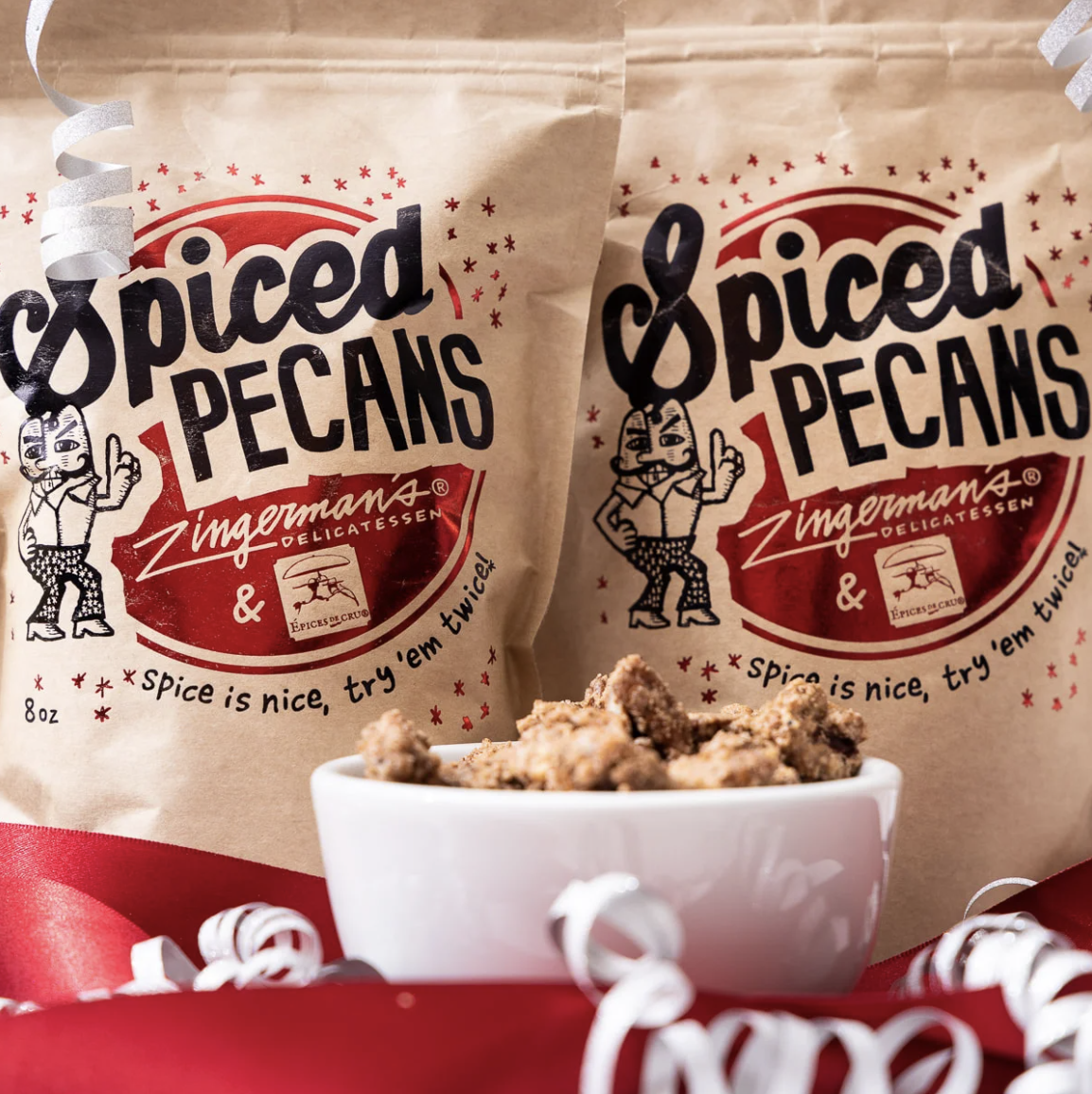
I can’t remember when we first started making spiced pecans a holiday treat. What I do know for sure though is that over the years, they’ve become a Zingerman’s classic—people start asking me in August when they’ll be available.

In our never-ending effort to always improve what we do in small but meaningful ways, I’m happy to say that spiced pecans are literally tasting better than ever! About 10 years ago now, we took the pecans themselves up a notch too, when we started buying them from the South Georgia Pecan Company in the town of Valdosta. The firm today is owned and run by the Work family who bought it a year after we opened the Deli (i.e., 1983), but for historical context, the company was started in 1913 by one of the first Jewish families in town, the Pearlmans.

The pecans are pretty darned delicious—fresher tasting, and a small, but meaningfully, bit more flavorful than what we’d been getting. (We sell the pecans at the Deli in their un-spiced, natural form. Pick up a bag next time you’re in!) After being toasted with butter, the pecans get tossed—while still warm—with lots of freshly ground Tellicherry black pepper, Jamaican allspice, ginger, Indian cloves, and other enticing spices.

The spiced pecans are delicious, just as they are. Bring a bag in the car or on the plane if you’re traveling. If you put a bowl of them out at most any gathering, they’re pretty sure to be gone before you know it. They’re also excellent in the kitchen—try them chopped, then tossed onto gelato, mashed sweet potatoes, roasted carrots, or green salads. They pair particularly well with blue cheese—I love them with the Roquefort—and also with fresh slices of pear or apple. Coarsely chop some and toss them on top of rice pudding or noodle kugel. Or try sprinkling some atop your holiday stuffing.

They make a great little nibble when you’re partaking in a bit of bourbon, too. In the spirit of how we have long defined “full flavor” here at Zingerman’s (see “A Taste of Zingerman’s Food Philosophy” for more on this), the Spiced Pecans have a wonderful complexity. They are nicely balanced so that the flavor of all the spices, butter, and nuts come together as you eat. And they have a lovely long finish that you can savor long after you’ve stopped eating.

Available at the Deli, the Candy Store, and Mail Order.

Pick up pecans
Ship some spice

Want more from Ari?

Sign up for Ari’s Top 5 e-newsletter and look forward to his weekly curated email—a roundup of 5 Zing things Ari is excited about this week—stuff you might not have heard of!

Follow us on social media:  Instagram, Facebook and Twitter, @zingermanscommunity.

The Zingerman’s Food Tour to the Untamed Island of Sardinia.

A guided week-long visit to one of the more exceptional places to eat and drink in all of Europe

The week before last I wrote about some wonderful sardines we have from the folks at Fishwife (you can find them at the Deli and at the Roadhouse). This week, it’s Sardinia, the island, since I’ve got the Zingerman’s Food Tour on my mind that’s coming up the first 10 days of May 2024. If you’re looking for a life-changing gift to give to someone you love, consider scoring them a spot on this tour. It’s a remarkable week in a remarkable place. In fact, Sardinia is so special you may end up wanting to move there. That’s what happened to the great mid-20th century Italian folksinger, Fabrizio de André.

De André, also an introvert, was known in his homeland as “the poet of Italy.” Think Bob Dylan, Leonard Cohen, or Willie Dunn. De André was active in mid-20th century protest movements and his fame rose when his songs were adopted as anthems of the protests that swept Italy in 1968. Although De André grew up in the lovely environs of Liguria, the remarkably beautiful Italian Riviera, as soon as he spent time on Sardinia he was smitten:

This land is magic, it gives joy to the spirit, even when you go back home exhausted. It nourishes and doesn’t leave space for bad thoughts. To live in this dimension is the most simple but also the most profound way to live on earth. … [Sardinians] are people looking at the future with respect of the past.

Joe Capuano, long-time purchasing manager at Zingerman’s Mail Order, is also the tour leader for this special trip to Sardinia. He loves it too! Here’s what Joe wanted to share:

Lobster, octopus, mussels, and sea urchin can all be found at the markets and restaurants. One unique specialty of Sardinia is the Bottarga di Muggine, the roe of Mediterranean mullet. The mullet “caviar” is cleaned, cured in sea salt, pressed, then dried. The result is a delicacy with a salty flavor and a dense, silky texture. And one of the stops on the tour is a restaurant where every dish highlights the bottarga. There are also specially selected vineyards, one of which uses Vermentino grapes grown in the hard Sardinian soil with abundant sun, a windy climate, and temperature changes through the day and night that give birth each year to Vermentino di Gallura.

And that’s only the beginning. There’s pasta making, amazing cheese, the traditional island flatbread, Pane Carasau; cooking lessons, walking tours, and a whole lot more! In the spirit of what we will learn from Gareth Higgins next week, great stories are sure to be started—stories you will be telling for many years to come. Still not sure? Fabrizio de André said:

Life in Sardinia is probably the best a man can wish: twenty-four thousand kilometers of forests, countryside, shores immersed in a miraculous sea, this corresponds to what I would suggest God to give us as Paradise.

Score a spot

Want more from Ari?

Sign up for Ari’s Top 5 e-newsletter and look forward to his weekly curated email—a roundup of 5 Zing things Ari is excited about this week—stuff you might not have heard of!

Follow us on social media:  Instagram, Facebook and Twitter, @zingermanscommunity.

A Quartet of Compelling Pumpkin Products
for the Holiday

Tasty treats to take your day to more delicious places

Party Time Pumpkin Pie from the Bakehouse

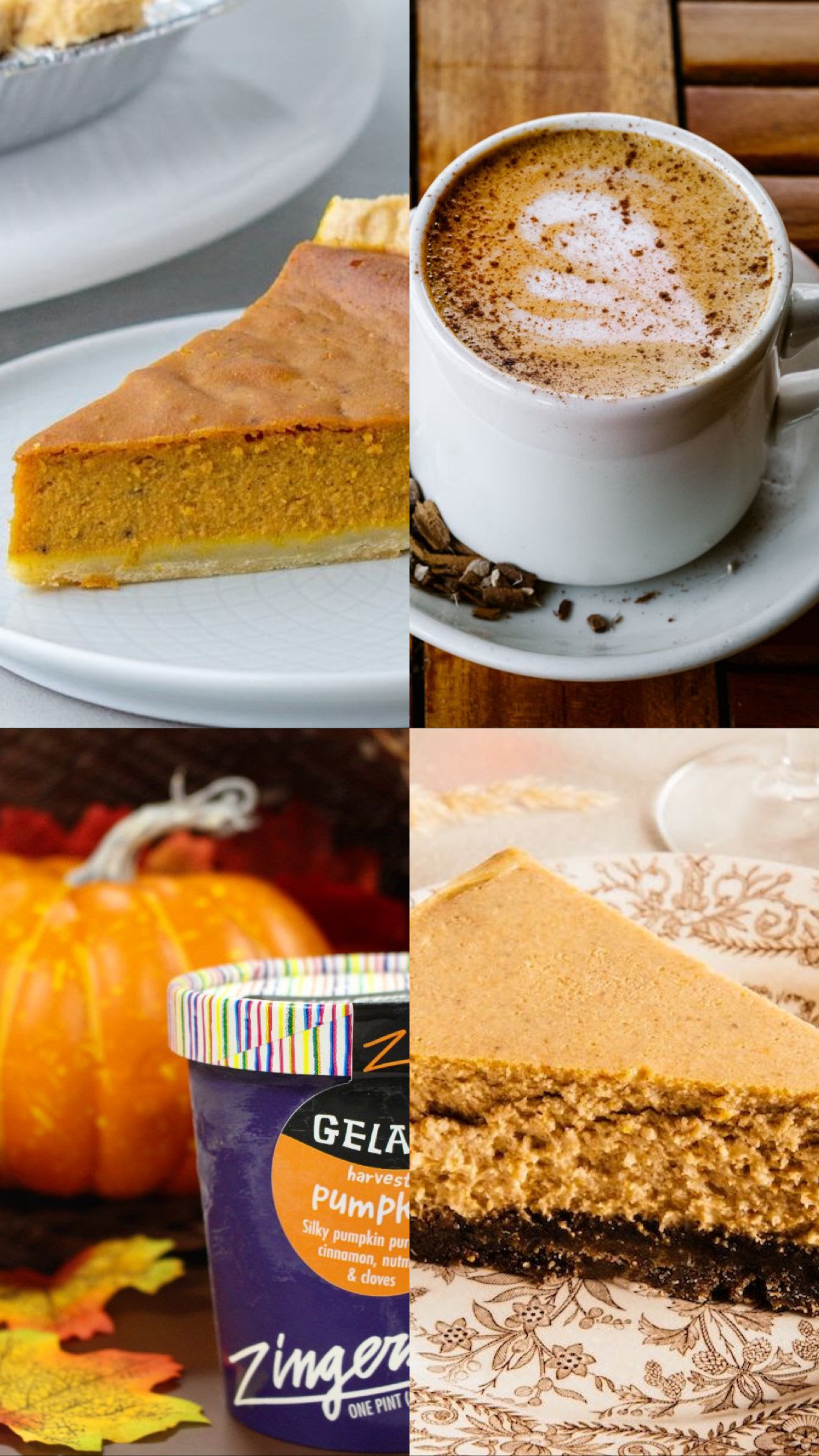
A classic coming together of Native American and European and Asian culinary influences—features a creamy filling of pumpkin (native to the Americas), spiced with cinnamon, ginger, and cloves from Southeast Asia, enhanced by heavy cream in an all-butter crust (both of which arrived in North America with Europeans). The Bakehouse’s Party Time Pumpkin Pies are only lightly sweetened with local honey—part of what appeals to me about them is that they aren’t, to my taste, overly sweet. I like to take mine up a notch with a drizzle of sorghum syrup, a sprinkling of toasted walnuts, or cinnamon-scented whipped cream (or all three!).

Harvest Pumpkin Gelato from the Creamery 

Smooth pumpkin purée spiced with cinnamon, nutmeg, and cloves, blended with a bit of the Creamery’s classic Burnt Sugar syrup. Super tasty! It’d be great with a bit of ground espresso or shaved chocolate sprinkled over top. Or turn it into a great fall sundae—a Bakehouse Ginger Jump-Up cookie for a base, a scoop of this great Harvest Pumpkin Gelato, a little whipped cream, and a ribbon of dark sorghum syrup poured over top!

Pumpkin Spice Latte from the Roadhouse 

A slowly simmered blend of Muscovado brown sugar, pumpkin purée, real vanilla bean, and Épices de Cru’s compelling Pumpkin Pie Spice—Indonesian cassia, Jamaican nutmeg and ginger, Sri Lankan cinnamon, and Jamaican allspice. All then blended with whole milk from Calder Dairy and a couple shots of the Coffee Company’s Espresso Blend #1 from the Daterra Estate in Brazil. Customers have been raving about this all month.

Pumpkin Cheesecake from the Bakehouse

wrote a bunch about how terrific the Pumpkin Cheesecake is a few weeks back. To my taste, it really is one of the best things we make in the entire ZCoB. That ginger cookie crust is just fantastic! Terrific, too, sprinkled with a bit of freshly ground (not brewed) espresso?!

P.S. We also have the Épices de Cru Pumpkin Pie Spices at the Deli for you to cook with at home too!

P.P.S. On the savory side of things, here’s a reminder that Bakehouse will be doing a Special Bake of one of my favorites, the Walnut Sage Bread, this Friday and Saturday, November 16 and 17.

Want more from Ari?

Sign up for Ari’s Top 5 e-newsletter and look forward to his weekly curated email—a roundup of 5 Zing things Ari is excited about this week—stuff you might not have heard of!

Follow us on social media:  Instagram, Facebook and Twitter, @zingermanscommunity.

First Flush Darjeeling Tea from the Lingia Estate. The first picking of the 2023 spring harvest hits the Deli’s shelves.

The first picking of the 2023 spring harvest
hits the Deli’s shelves

In the “ABC of Zingerman’s Food Philosophy” that you’ll find in the new pamphlet, “A Taste of Zingerman’s Food Philosophy,” you’ll see this superfine tea under “D”:

D is for Darjeeling. More specifically, First Flush Darjeeling Tea. This is the very limited supply of Darjeeling tea that comes from the first harvest of the spring season each year. … To this day, First Flush Darjeeling remains one of my favorites of all the fine foods we sell, and each spring I wait eagerly for the new season’s arrival.

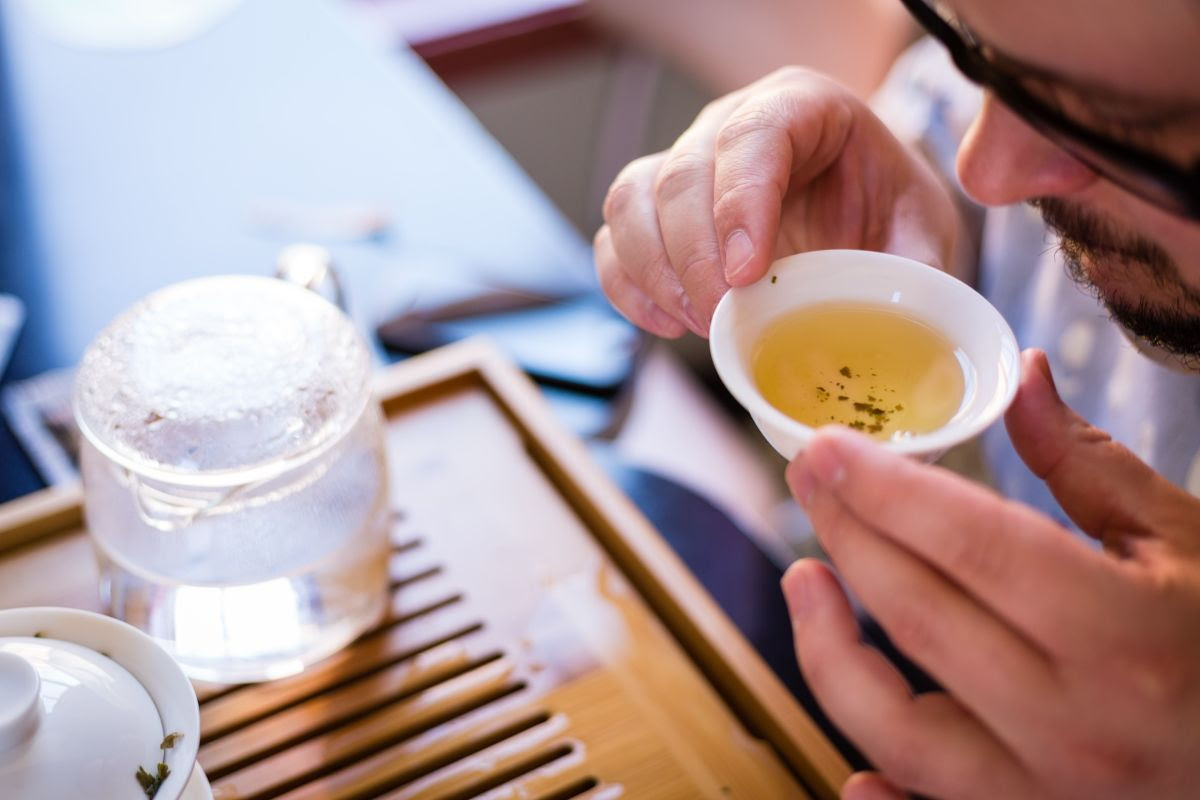
That last bit led me to write this piece right now. The 2023 First Flush has just come in! It’s a tea that tastes like no other, one that evokes emotion, calls up my creative spirit, and comforts me all at the same time. If, as Chitra Banerjee Divakaruni writes, each day has a smell, right now it’s the aroma of the 2023 First Flush that accounts for the aromatic activity of the whole last month for me. Even before it’s been brewed, the aroma is enticing. Fresh, lively, aromatic, and hard to walk away from—I keep sticking my nose back in the bag to get just one more sniff before I head off to do other things.

We start our selection process each year by tasting a range of samples from different gardens, or estates. For the last few years, Jackson Konwinski, Tea Buyer at Zingerman’s Deli, has ably led the work. How does he do it? He explains:

Selection for me involves tasting the different offerings next to each other, always with two steepings to see how the tea evolves. I look for a tea that has some of the classic Darjeeling flavor notes (citrus, spice, brisk finish) but that brings something extra and unique to the table. This year, it was the flowery nose and other fruits on the palate. I also insist on a tea that re-steeps well. Teas that were in the running after the first infusion have been pushed aside when the second steep fell flat. 

This year, we really liked the tea from the Lingia Estate. Lingia was founded in 1867 when a couple of German missionaries picked a small plot of land to plant in the western part of the Darjeeling district, about 30 miles from what’s now the border with Nepal. At the time the two set their tea saplings into the soil, it was the first known tea-growing activity in the area. Back in the middle of the 19th century, the British government was determined to plant enough tea to significantly reduce England’s dependence on China, which was the sole source of tea up until the British began to plant it on their newly conquered Indian colonial land in the 1850s. Darjeeling was the first region to be planted in the drive to create an independent and dependable source to meet the ever-growing demand for tea in the U.K.

The Lingia teas today are grown at an altitude of at least 2800 feet, all the way up to 6000 feet. Higher altitudes generally mean the plants work harder to grow and the tea leaves that come from them are more flavorful, and this lot is selected from the leaves picked at the highest altitudes in the garden. The tea is certified organic, and all of the harvesting and oxidation work to make the tea is traditionally done by hand, what’s known in the trade as “Orthodox production.” You need to hand-pluck something like 11,000 shoots to make a pound of good tea, just two leaves and a bud from the tip of each branch.

The flavor of the 2023 tea is superfine. In fact, thanks to Kevin Gascoyne and his colleagues at Camellia Sinensis, our longtime tea importer in Montreal, we’ve been able to get our hands on a tea that is, literally, a superfine tea. It’s formally graded as SFTGFOP, which stands for Superfine, Flowery, Tippy, Golden, Orange Pekoe. TGFOP is typically what’s available and is, in its own right, excellent. The superfine is simply next level.

We’re lucky to have it. Gascoyne says it’s “bright and lively, the sustained liquor leads us to saline (soy) and fruity (green grape) notes as a base for the explosive floral notes of roses, typical to this terroir.” And there’s a particular taste of the terroir where the Lingia Estate is located that’s known to bring a “rose flavor that cannot be replicated anywhere in the Darjeeling hills.” I think the tea is terrific—edgy and excellent, almost like a coming together of the best of black and green teas in a single cup, with a nice level of tannins and a lovely bit of what Jackson says reminds him of grapefruit.

I’ve long thought of First Flush Darjeeling a bit like free jazz—intentionally a bit out of balance, thought-provoking, attention-getting, inspiring in the best possible way. Like free jazz, it’s not for everyone, but for the right people—of which I’m clearly one—it’s an inspiration.

Try a terrific tea

Want more from Ari?

Sign up for Ari’s Top 5 e-newsletter and look forward to his weekly curated email—a roundup of 5 Zing things Ari is excited about this week—stuff you might not have heard of!

Follow us on social media:  Instagram, Facebook and Twitter, @zingermanscommunity.