Skip to content

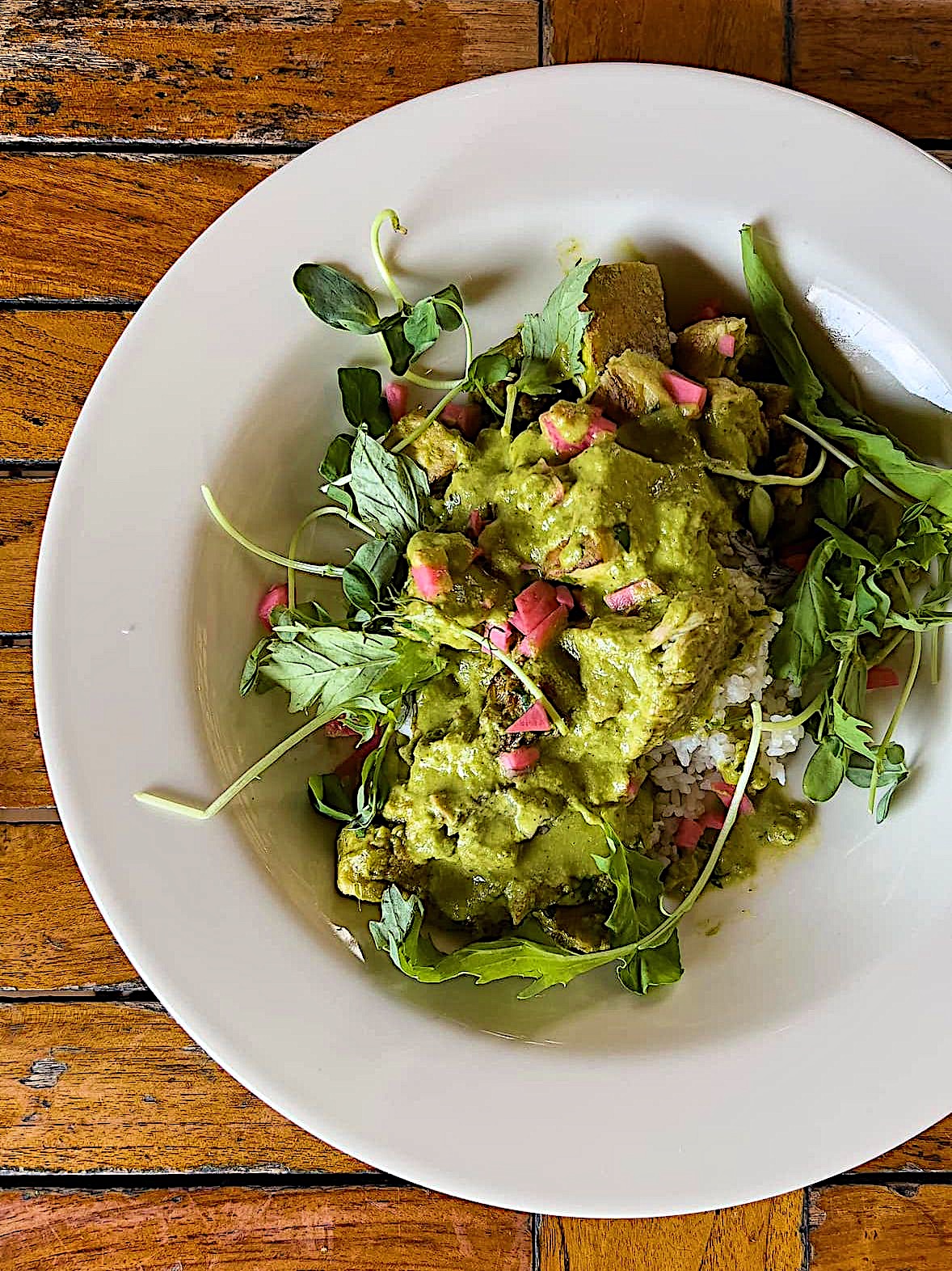
Local Lion's Mane Mushrooms, Basil and Pine Nut Pesto, and Carolina Gold Rice.

Great summer vegetarian supper at the Roadhouse

This summer special features some lovely local produce and the world-class, historically-significant, organic Carolina Gold Rice we get from Anson Mills down in South Carolina.

The main feature of the dish is the organic local Lion’s Mane mushrooms we’ve been getting from the fine folks at Stoney Creek Mushrooms. When the local Lion’s Mane come in, they’re huge—about the size of a head of cauliflower! The flavor is earthy, delicate, and delicious. The rice is less visually striking but no less delicious! It dates to the 17th century when it came to the Carolina coast from West Africa where it had been widely and skillfully grown for centuries. Carolina Gold (the name comes from its color when it’s still in the husk, in the field, shimmering in the sun) is the rice that made so many South Carolina planters wealthy, wealth that of course came via the unpaid labor of enslaved Africans.

West Africans were the tech minds that made the rice growing work. After Emancipation in 1863, the low yield/high labor of Carolina Gold, like most heirlooms, made it less appealing to farmers looking to make money and by 1920 it had completely disappeared from commercial sale. Seeds were found in a seed bank in Arkansas in 2000 and thanks to the folks at Anson Mills and a handful of others, it’s made a comeback. What we get from Anson Mills is field ripened (to bring out the rice’s natural full flavor), milled only when we order it to retain full flavor, and the germ (brush up on your grain anatomy here) is left in which a) makes it a perishable product and b) significantly enhances the flavor.

The crowning touch on the dish is the pesto. It starts with some beautiful, exceptionally aromatic, organic basil that’s coming in from a series of local farms, most particularly Tantré Farm in Chelsea and Tamchop Farm in Dexter. We take the fresh basil leaves and turn them into a pesto in the Roadhouse kitchen with olive oil, fresh garlic, Parmesan from Wisconsin, pine nuts, and a bit of Tellicherry pepper. The dish comes together beautifully—the gentle nuttiness of the rice, the herbal brightness of the pesto, and the delicate earthiness of the Lion’s Mane mushrooms. Swing by for lunch or dinner!

Make a reservation at the Roadhouse

P.S. If you’re dining on a Tuesday, the Roadhouse offers any bottle of the 36 artisan American wines on its list at 30% off (this offer is extended every day for take-out orders!). The majority of the wines on the list are made by winemakers or wineries led by women or folks from underrepresented minorities—a great way to make diversity come alive in a practical and very tasty way!

P.P.S. We’ll be paying particular tribute to traditional African American foodways at the special dinner at the Roadhouse on Tuesday, September 12th. My friend, author and historian Adrian Miller will be the guest speaker and the event will be used to raise funds for NEW Center!

 Want more from Ari?

Sign up for Ari’s Top 5 e-newsletter and look forward to his weekly curated email—a roundup of 5 Zing things Ari is excited about this week—stuff you might not have heard of!

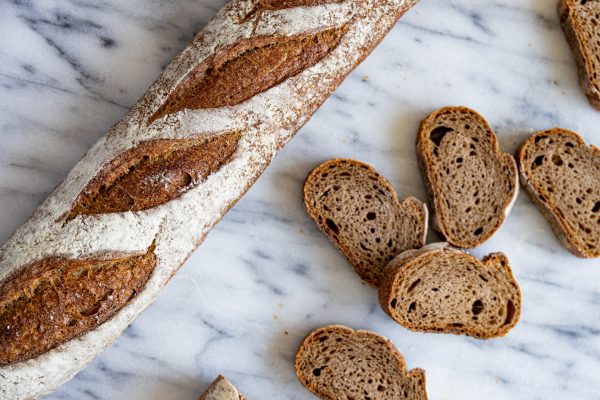
A beautiful and delicious bread to brighten your day.

A beautiful and delicious bread to brighten your day on August 18 & 19

One of my all-time favorite Bakehouse breads will be available this coming weekend! You can buy a Chestnut Baguette (or two) on August 18 and 19 at the Bakeshop and Deli. Feel free to order ahead to be sure there’s a loaf waiting for you. I’ll be picking up a couple for our house! James Beard once said: “Good bread is the most fundamentally satisfying of all foods; and good bread with fresh butter, the greatest of feasts.” The Chestnut Baguettes from the Bakehouse backs up James Beard’s statement in a big way!

Baking with chestnut flour is wholly uncommon in the U.S. in the 21st century, but it’s got a long history in Italy, France, and central Europe where chestnuts were used for almost all sorts of cooking. Chestnut flour was often what people who couldn’t afford the more costly wheat would work with. In Ukraine, chestnuts are considered a symbol of prosperity, fertility, and also longevity.

(The story there, which dates to the 19th century, is yet another example of Russian imposition and acting with anything but grace, followed by creative Ukrainian resistance.) In the Lunigiana region of Tuscany, wheat was grown on the valley floor, so the only flour readily found in the mountain areas was ground from locally grown chestnuts. The region has long been known as “The Land of the Moon and the Bread Tree”—the latter is a reference to the chestnut.

The typical Casola Marocca bread of the area is now enshrined in the Slow Food Presidium. Chestnut flour-based breads were also popular in Liguria (the Italian Riviera), where Rocco and Katherine Disderide, the Italian immigrant couple who built the Deli’s building in 1902 had come from. In that sense, I feel like the Bakehouse’s Chestnut Baguettes have come full circle. Unfortunately, chestnuts in the U.S. fell prey to a massive blight in the early years of the 20th century and were almost totally eradicated. Michigan, I’m happy to say, has been the center of the American chestnut revival over the last decade or so.

To make the baguettes, we work with local chestnut flour from the folks at Treeborn, about half an hour or so west of here in Jackson. We blend that with freshly milled Michigan hard red spring wheat. No commercial yeast is used—just the flour, filtered water, and sea salt—which means that the baguettes are naturally leavened. The finished loaves are lovely, the color, in fact, of chestnuts. The flavor is nutty, full, subtly sweet, with a long, lovely finish that pairs well with an endless list. The baguettes are great with the Creamery’s fresh goat cheese or Manchester cheese. Toast a slice and top with olive oil and fresh Bellwether ricotta and some chestnut honey. If you toast slices on the grill to pick up a bit of woodsmoke, that’s wonderful too. Or just tear off a chunk and eat it as is!

Treeborn is located in the Rogers Reserve, land that was donated to Michigan State University by Ernie and Mabel Rogers in 1990. Determined to right what had gone so wrong in the American ecosystem, the Rogers gifted the land for the express purpose of supporting the revival of the American chestnut. Treeborn today has the only commercial chestnut peeling line in the Western Hemisphere, technology that makes this work possible.

As of the 2012 U.S. Census of Agriculture, Michigan is the country’s leading producer of chestnuts. Maybe when the ZCoB hits its 100th anniversary in 2082, local license plates will say “The Chestnut State.” And this beautiful baguette will be one of the state’s signature dishes, something travelers regularly take back with them to demonstrate what is possible when good people do good work in the world!

Pre-order for pick up at the Deli


P.S. If you want to make the baguettes at home, the recipe is in the Zingerman’s Bakehouse book on page 228.

                                                                       Want more from Ari?

Sign up for Ari’s Top 5 e-newsletter and look forward to his weekly curated email—a roundup of 5 Zing things Ari is excited about this week—stuff you might not have heard of!

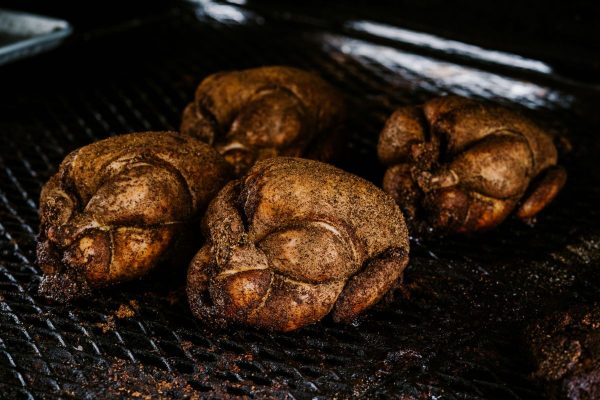
Pit-Smoked Whole Chickens from the Roadhouse. Great, weekday meal for barbecue lovers.

Great, weekday meal for barbecue lovers

If Fried Chicken is the superstar singer on the poultry part of the Roadhouse menu, the Pit-Smoked Chickens would probably be the bass player. They’re happily in the background, grounded, steady, and really really good at what they do. And while that Fried Chicken is really really fantastic, I’ll offer that I eat far more of the Pit-Smoked Chicken. Honestly, it’s one of my favorite products in the ZCoB!

If it’s Monday, Tuesday, Wednesday, or Thursday, give some thought to swinging by and picking up one of these exceptional oak-smoked chickens from the Roadhouse. I can say from a LOT of personal experience that they make an exceptional evening meal! A whole Amish chicken, rubbed with our freshly ground, farm-to-table Tellicherry black pepper and salt, put on the pit to smoke slowly over smoldering whole oak logs for about three or four hours. We’ve had them on the carryout menu for the last few years, during which time they’ve been a very regular item at our house.

All you need to do is call ahead to order one, then swing by the Roadhouse and pick it up. (You can also just come by, but we’re only doing a limited number of these every day so … if it were me, I’d order ahead to make sure I got one.) The Roadhouse crew puts a bit of butter atop the bird, then wraps it really well in foil so you can get it home in good shape. Best bet, I think, is just to unwrap and eat. If you want to heat it up, either stick it in a hot (350° F) oven in the foil for a bit, or you can microwave it (after you take it out of the foil!) for a few minutes if you want to go more quickly. Since Tammie and I eat dinner late at night, we did the latter, and it worked out just fine.

The big news here though is that you can now get the Pit-Smoked Chickens inside the restaurant for dinner. We’re still on that same limited-times and limited-days schedule—Monday through Thursday, dinner only, and, when we’re out we’re out. The beautiful oak-smoked, Tellicherry black pepper-dusted bird comes plated with side dishes that make it a great dinner and a great deal! Start out by snacking on a glass of those incredible single-origin peanuts we’ve been getting from Elisha Barnes in Virginia and a small salad. Finish the evening off with a scoop of that Roadhouse Joe-lato!

If you have leftovers, I’ll share that they’re awesome for adding to soup or salad, making into smoked chicken salad, or just nibbling on out of the fridge when you need a snack. Tammie and I take the bones that are left behind and boil them with an array of vegetables to make a magically terrific broth. (When we serve it, we drop on a spoonful of that IASA peperoncino!)

Once again, the Roadhouse only smokes a limited number of these pit-smoked whole chickens Monday through Thursday. They come out in time for dinner and it can’t hurt to order ahead and have us hold one for you. It’s hard to believe a chicken could be life-changing but this might be it.

Make a reservation at the Roadhouse

Want more from Ari?

Sign up for Ari’s Top 5 e-newsletter and look forward to his weekly curated email—a roundup of 5 Zing things Ari is excited about this week—stuff you might not have heard of!

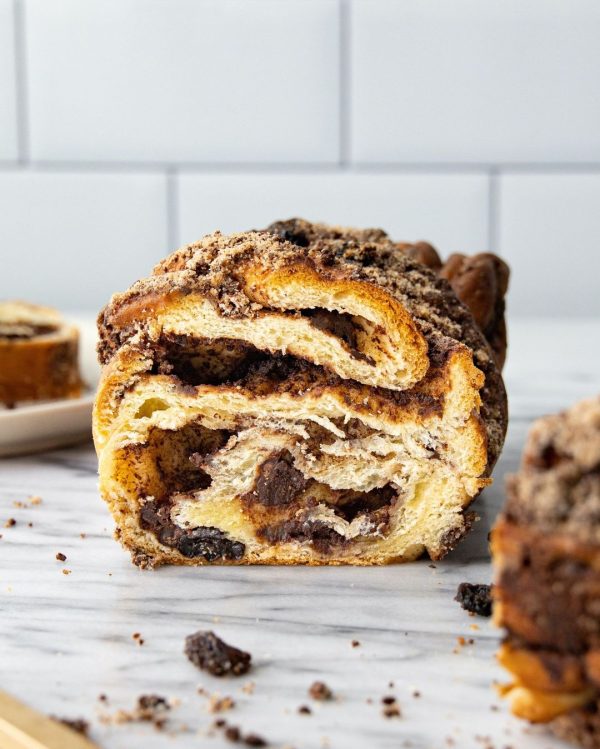
A taste of zingermans bakehouse babka at zingermans bakehouse.

A taste of Zingerman’s Bakehouse Babka could be just right

More and more over the years people bring or send a Zingerman’s gift—a taste of Tree Town, it’s a terrific way to convey their own commitment to high quality and an easy way to share some of their connection with the community here in the Ann Arbor area. Sour Cream Coffee Cake, which we’ve been making for over 35 years now, is probably the most popular way to do that. Magic Brownies, which we’ve been making for almost that long, are another favored choice. I’d like to propose a third option, something that might well make for a great taste of Zingerman’s and Ann Arbor: the Bakehouse’s Chocolate Babka. While it’s not well known in the Midwest, in New York, Babka has long been a big deal. I tend to be a bit skeptical about trends in Tinsel Town, but folks on the East Coast could well be onto something with their regular Babka-eating.

While Babka is pretty easy to pronounce, it’s not easy to make. Melissa Clark, writing in the New York Times, says that:

Baking a chocolate Babka is no casual undertaking. The Eastern European yeast-risen coffee cake has 14 steps and takes all day to make. But the results are worth every sugarcoated second – with a moist, deeply flavored brioche-like cake wrapped around a dark fudge filling, then topped with cocoa streusel crumbs.

If you’re from New York, the odds are reasonably high that you’re well familiar with Babka. If not, you’re in for a treat. Babka is traditional Jewish “sweet bread,” akin you could say to a light-textured coffee cake, or maybe a bit denser piece of Italian panettone. It starts with a rich, slow-rise yeasted dough made with lots of butter, real vanilla, and fresh egg yolks. That in turn is sprinkled with chocolate “crumble” and orange-syrup-soaked raisins, all of which get formed into a fine looking swirled loaf, and then baked off to a golden brown with a sensual cinnamon-sugar crust. The Bakehouse crew adds a good dose of dark chocolate on top and rolled into the middle as well. It’s already got a LOT of loyal fans, and it seems to be gaining more momentum all the time.

Babka’s history? Its roots are in Eastern Europe, very likely indigenous to Ukraine, where it would have been a part of an ancient fertility symbol used in the matriarchal system once in place in the region. The old forms of the Babka were likely much larger, somewhere from the size of a modern day panettone on up to some a few feet high. The original name was likely “baba,” meaning “grandmother”; with the “modern era’s” smaller sizes the name shifted to the diminutive, “Babka,” meaning “little grandmother.” Up until the 20th century, it’s unlikely that Babka would have had any chocolate in it, since chocolate came from the Western Hemisphere and became popular in Europe only late in the 19th century.

Earlier versions of Babka would likely have been closer to the Eve’s Apple Babka we make at the Bakehouse (a special bake coming in August). For those who want to return to the older, more true to traditional type offering, this is it. Still, I know, chocolate is likely to take the cake. Susana Trilling, author of the excellent cookbook, Seasons of the Heart, and creator and cooking teacher extraordinaire of the Oaxacan cooking school of the same name once wrote me to say that, “… bar none, Zingerman’s Bakehouse makes the BEST Babka I have ever eaten!! It was incredible.”

The Bakehouse’s Chocolate Babka will be available all summer on Wednesdays, Fridays and Sundays.

Bag A Babka At The Bakehouse
Ship This Sweet To Your Sis
P.S. If you want to try making Babka at home, the recipe will be in the Bakehouse’s forthcoming cookbook, Celebrate Every Day, due for release October 3rd. Pre-order here!

Want more from Ari?

Sign up for Ari’s Top 5 e-newsletter and look forward to his weekly curated email—a roundup of 5 Zing things Ari is excited about this week—stuff you might not have heard of!


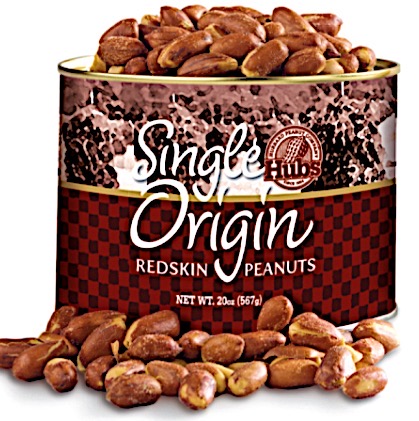
peanuts overflowing from a checkered black and red tin on top and on the side of the peanut tin.

Peanuts Farmed and sun-cured as they were a century ago

Whether they’re in our heads, our homes, or our organizations, ecosystems in nature will almost always attract unto themselves. As permaculturist Toby Hemenway writes, “Life builds on life. … serendipities we never hoped for—a surprising new wildflower, a rare butterfly … will grace our lives almost daily.” Food writer Robin Kline lives in Iowa, but she is a long-time part of the Zingerman’s ecosystem. A couple of years ago, Robin turned me onto the work of Gareth Higgins—thanks to Robin, Gareth and I are now good friends.

He came here to speak at the Roadhouse last fall and will be back again to do more events in early December (details to come). A few months after Robin told me about Gareth, she emailed to tell me about some newly available single-origin peanuts from Virginia. I wasn’t really on the lookout for a new source. We’ve long been happy with the high-quality peanuts we’ve been buying for decades now. That all changed when I tasted the new ones—they were so darned delicious! I’m not normally a big peanut eater, but I found myself reaching back in the can over and over again to have a few more! A year down the road, those amazing peanuts are debuting this week at the Roadhouse! The flavor, and the story behind them, have absolutely enhanced the energy in my internal ecosystem. I forecast they will have a similarly positive impact on yours!

The nuts come to us from the folks at Hubs, the third generation of the Hubbard family’s firm in Farmville, Virginia. Back in the mid-’50s, Dot Hubbard developed what’s evolved over the years into “the specialty peanut market.” She took the extra time to hand-select the largest peanuts from each local farm’s delivery and then dip them in hot water before blister-frying them in her kitchen. She and her husband, H.J., began shipping their peanuts by mail. Nearly 70 years later the company is run by their grandson, Marshall Rabil. Marshall has been working hard in recent years to take the company to new heights and he, like me, has an affinity for small, specialty experiments. I’m thrilled that Robin Kline cared enough to steer me so effectively to this one.

Since these single-origin peanuts epitomize our philosophical approach to food, we debuted them at the event for “A Taste of Zingerman’s Food Philosophy.” They’re completely in line with our definition of quality (see the piece I wrote a few weeks ago on the subject here). They’re remarkably full-flavored—they have loads of complexity, balance, and finish. And they’re very traditional—this is the way high-quality peanuts would have tasted 100 years ago! They’re grown by Elisha Barnes, a fourth-generation farmer in Virginia. Barnes is beyond passionate about his peanut growing, and his connection to community, history, and the land. He’s been into it since he was a child: “The first time I got hooked on farming I was six years old.” Through farming and his upbringing, Barnes has developed a life philosophy that fits well with our own: “My father taught us how to treat people and how to be honest. He taught us integrity.” Both his passion and his principles are reflected in the excellence of the peanuts!

While Elisha Barnes’ farm isn’t certified organic, he uses no chemicals on the land. He harvests the peanuts using a 100-year-old picker, equipment he has had to modify regularly to make it work with his 50-year-old tractor. The peanuts are made particularly special because Barnes still uses the old way of curing them which is known as “shocking.” Just-dug nuts, left on the vine as they grew, are wrapped about around five-foot-high poles to sun-dry out in the field (think corn shocks). They’re left to cure for about six weeks before they’re brought in, cleaned, and brought to Hubs to get that patented blistering, roasting, and salting.

A hundred years ago, pretty much every peanut farmer worked this way. Today Elisha Barnes is the only one still doing it. It makes a big difference in the flavor. Barnes says, “It creates the sweetest, highest germination rate peanut there is. You see, [flash] drying takes out part of the germination quality, and it takes out the sweetness. It takes part of the quality out of the peanut. But I want to keep that.” In the spirit of a holistic internal ecosystem, Barnes says,

Tilling the soil, it teaches a spiritual lesson. Do your part, invest in the land and the land will give you an increase. We are a fourth-generation farm. My father, my grandfather, my great-grandfather all farmed peanuts. I am right now the only farmer anywhere around that actively shocks peanuts like this. … It’s rewarding. It’s an honor. Who would’ve ever thought that the son of a sharecropper would be standing on the land that he now owns and farming peanuts the way that my father and his father did. That speaks volumes for me.

I am indebted to Hubs for coming on board with me and allowing me to be able to raise this and allow it to be financially beneficial so that I can continue to do this growing. Hubs hopes the single-sourced specialty peanut will remind people of their roots. It has already given one farmer exactly what he needs! My daughter says that I’m a dinosaur that refuses to die. The chapters of my life will close with me farming the way I want to farm.Aside from all the work on growing peanuts, supporting Elisha Barnes in this way is also a small step toward helping to restore Black farmers to the land.

Today, in 2023, Black farmers account for only 10 percent of what Black farmers owned and worked a century ago. Barnes says, “Southampton County, at the turn of the century, was primarily Black-owned.” Today Barnes is one of only a few Black farmers left working local lands. A couple years ago, Barnes and his oldest brother bought back his father’s 52-acre spread in Courtland. He says proudly, “This past year, I raised peanuts on the family farm for the first time in 30 years.”

In the spirit of what I wrote last week about Charles White, Elisha Barnes says of his commitment to these traditional techniques of farming, “Maybe just maybe I’ll inspire somebody to take just a little bit of this old history and keep it alive.” I’m pretty confident his hope will be fulfilled many times over in the coming years. Swing by the Roadhouse soon and enjoy some of these amazing peanuts soon! Flavor is big, but supplies are limited!

P.S. For more on the painful history of what has happened to Black farmers in the U.S. check out Leah Penniman’s work at Soul Fire Farm in this talk, her book Farming While Black, and Pete Daniels’ book, Dispossession.

Want more from Ari?

Sign up for Ari’s Top 5 e-newsletter and look forward to his weekly curated email—a roundup of 5 Zing things Ari is excited about this week—stuff you might not have heard of!

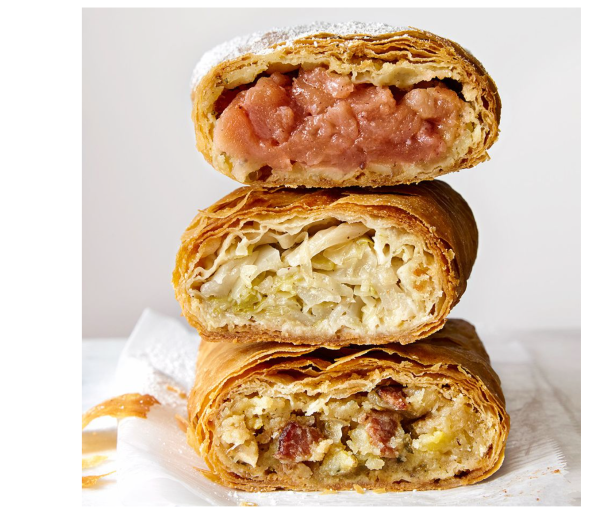
Cabbage and goose fat retes stacked on top of each other, 3 retes stacked on top of each other with cabbage and goose fat inside of them.

Super tasty, traditional Hungarian savory strudel served up May 5-7

Cabbage Rétes (the middle one pictured above) is a favorite Hungarian flavor we discovered during our time in Budapest ten or twelve years ago. The strudel’s filling has just a few ingredients—cabbage, goose fat, salt, and pepper—but lots of flavor. Why goose fat? Geese are a favorite protein in Hungary, and it’s possible to find all things goose in the meat markets. Goose fat is understandably a commonly used fat. It adds a distinctive roasted poultry flavor to this savory treat.

In Hungary, what most Americans call strudel is known as “rétes” (pronounced “ray-TESH”). Over the last few centuries, there’s been quite an argument going on between Austrian and Hungarian historians as to who should get the culinary credit for the invention of strudel. Quite clearly whoever came up with this amazingly wonderful so-thin-you-can-read-the-paper-through-it pastry filled with most anything you can imagine—deserves appreciation from both sweet and savory lovers. Writer George Lang said that the strudel was actually a legacy of the Turkish influence on the region.

While strudel’s delicacy might reasonably be taken as a mark of something that started in high society, Lang let us know that, “In Hungary, strudel is a village specialty, and even in luxury restaurants it’s always a farmer girl from the provinces who’s hired to make it.” Others have called it “the pride of Hungarian cooks.” Tina Wasserman, author of Entrée to Judaism for Families, suggests that the cabbage rétes was a big part of Hungarian Jewish eating—the use of goose fat in this recipe in place of pork speaks to Wasserman’s write-up.

Speaking personally, the Bakehouse’s Cabbage Rétes is a longtime favorite of mine! Amy Emberling, co-managing partner at the Bakehouse said of the strudel-making process: “The dough is one of those wonders of the baking world that is rewarding to make. It’s like a magic trick!” A slice of rétes makes an easy meal, accompanied by a salad and/or soft scrambled eggs (as I did this week with a bit of fresh goat cheese from the Creamery and sprinkled with some Hungarian paprika). When she first moved here from San Francisco, many years ago, my girlfriend-farmer-life partner Tammie Gilfoyle told me that “the rétes are like God’s gift to the Bakehouse!” In the context of Robert Pirsig’s appeal for us to accept Quality as a universal truth, the rétes could then be a terrific example to prove the point—both subjectively (full-flavored and traditional) and objectively, it’s awesome!

Come by the Bakehouse May 5, 6, or 7, or call to reserve them: 734-761-2095.

P.S. If you want to make this marvelous rétes at home, the recipe is in Zingerman’s Bakehouse cookbook (on page 237)—the book is a great gift for Mother’s or Father’s Day, made even better maybe by pairing it with the new pamphlet on Zingerman’s food philosophy. Amy, Corynn, Lee, and LJ are working hard on getting a second Bakehouse book, entitled Celebrate Every Day: A Year’s Worth of Favorite Recipes for Festive Occasions, Big and Small, out this fall! Stay tuned!

Want more from Ari?

Sign up for Ari’s Top 5 e-newsletter and look forward to his weekly curated email—a roundup of 5 Zing things Ari is excited about this week—stuff you might not have heard of!