
Tag: ZINGERMAN’S
|
|
|
|

|
Let Zingerman’s Do the Work, a Flavorful Fête Awaits
Hoping to host a holiday gathering? Thinking about a tailgate? Wondering about a wedding? Contemplating a corporate event? Talking about team building? Planning a picnic? Brainstorming a blowout birthday?
Whatever you’re celebrating, we’re ready to help you plan a memorable private event! From showers to graduation parties, bar and bat mitzvahs to business functions, retirement celebrations to reunions, anniversaries to laid-back get-togethers with friends, and everything in between. Whatever the special occasion, whatever the size of your group, we have you covered.
Gather up your group and get ready for an experience full of good fun, great flavor, and stellar service with Zingerman’s.
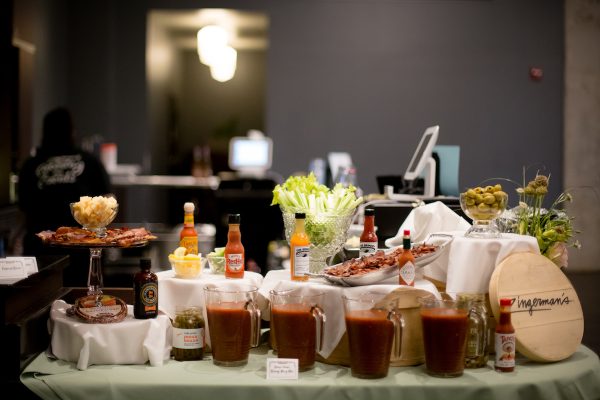
Zingerman’s Deli & Catering
Paul Saginaw and Ari Weinzweig opened the Deli in March of 1982, in a historic building near the Ann Arbor Farmers Market. The Deli got its start with a small selection of great-tasting specialty foods, a host of traditional Jewish dishes, and a relatively short sandwich menu. Today, Zingerman’s is an Ann Arbor institution. It’s a source of great food and great experiences for thousands of visitors every year. Managing partners Grace Singleton, Rick Strutz, Rodger Bowser, and the whole Deli crew serve up thousands of made-to-order sandwiches. The Deli also stocks an exceptional array of farmhouse cheeses, estate-bottled olive oils, varietal vinegars, smoked fish, salami, coffee, tea, and much, much more.
From its inception, Zingerman’s has been committed to delivering the most flavorful, traditionally made foods to its customers, presented in an entertaining, educational, and service-oriented setting. The Deli has consistently worked to improve the quality of its food, find more authentic ingredients, and improve techniques in an ongoing effort to offer up ever-more flavorful food. They’ve always believed that their customers can tell the difference between mediocre and marvelous.
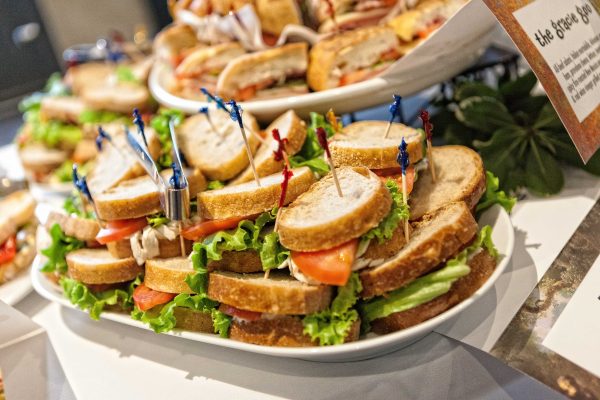
Zingerman’s Catering and Events puts together the simply sensational for both small parties and large events, serving everything from corned beef to caviar, charcuterie to champagne, party platters to wedding cakes from Zingerman’s Bakehouse. Their event planners will help you work out every detail, whether you’re putting together an intimate gathering or a party for thousands. In addition to the dozens of off-site events they plan every year, Zingerman’s Catering hosts full-flavored festivities at their new location, the Greyline, in the historic bus depot space on Ashley St at the intersection of Huron St.
Ready to talk to Zingerman’s Catering and Events about an event at one of their venues or one of yours? Call 734.230.2300 or email [email protected].
The Deli can also work with you to create a unique tasting experience with Zingerman’s experts—you pretty much have your pick from anything they sell or make! Take a deep dive into the history and variety of one single topic, like cheese, chocolate, olive oil, or tea. Or learn about some of their favorite pairings (think chocolate and tea or olive oil and pasta) and explore what works well together and why.
Ready to schedule a private tasting event or cooking demo with the Deli? Please fill out their inquiry form.
We had a great time and thoroughly enjoyed the food, beverages, venue, and most importantly, the staff. Thank you for working with us on the vegan menu and for your professionalism throughout the entire process. You and the rest of the staff were all wonderful and we received nothing but positive feedback about Greyline. I’m glad we were able to showcase Zingerman’s vegan options and will definitely recommend the venue for future events. —Noelle G.
BAKE!
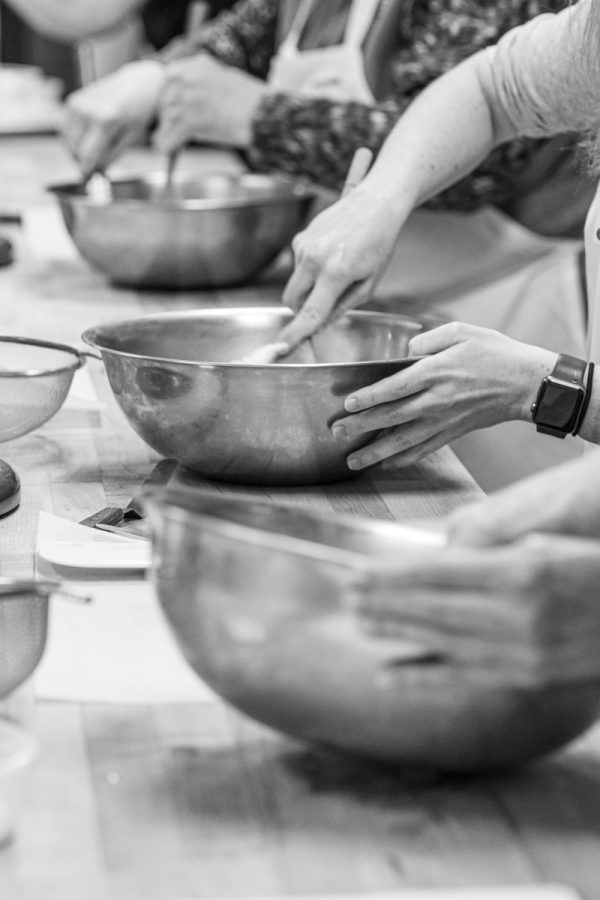 Zingerman’s Bakehouse brings traditionally baked breads, pastries, and cakes to food lovers in Ann Arbor and across southern and central Michigan (and across America through partner business Zingerman’s Mail Order!). Run by managing partners Amy Emberling (an original Bakehouse staffer) and Jaison Restrick, the Bakehouse also has a teaching kitchen (BAKE!) for home bakers of all different skill levels.
BAKE! has an extensive list of recipes and courses and offers dozens of different bread, pastry, cooking, and cake classes year-round. Private classes can be chosen from their extensive list of class offerings or customized by mixing and matching your favorite elements of different classes. Whatever you select for your group will be action-filled, fun, and informative; classes are jam-packed with techniques, recipes, and inspiration to make again at home and are available both in-person and virtually. For in-person events, they’ll provide the apron, the ingredients, and the instructions—and do all the measuring and clean up! Virtual events can happen anywhere you have internet and a kitchen! bring your group together in our kitchens or from the comfort of your own home.
Ready to set up your private BAKE! class? Fill out a class request form now.
So cool and so interesting! The cooking classes are so fun to do with friends. Highly recommend for a great time and laughs! —Hockey Mom 7
Miss Kim
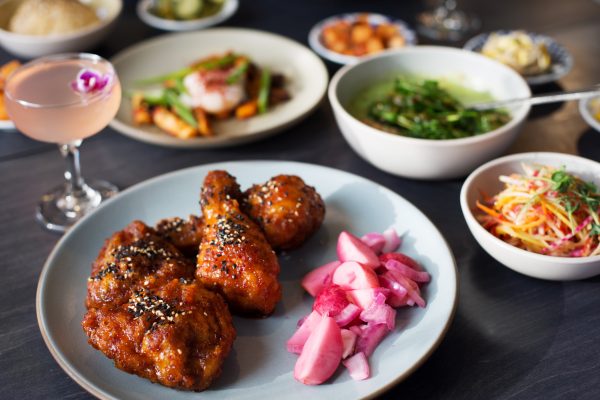
Miss Kim is helmed by managing partner and award-winning chef Ji Hye Kim. (She’s a three-time James Beard Award semifinalist, for Outstanding Chef in 2022 and Best Chef in the Great Lakes region in 2020 and 2023!) Her restaurant is set in Ann Arbor’s historic Kerrytown district, off of a cobblestone courtyard. Interior brick walls, rich wood tables, and sleek metal chairs provide a modern and neutral backdrop for your event. You’ll enjoy delicious dishes in a charming locale.
Miss Kim serves fresh, modern interpretations of traditional Korean dishes. They rotate seasonally and are made from scratch from local ingredients whenever possible. It just so happens that traditional Korean cuisine, more often than not, is already free of common allergens. Food allergies and dietary restrictions are met with respect and happily accommodated.
Ready to start planning your private party at Miss Kim? Email [email protected].
Thank you so much for getting us all prepped and ready and getting us kicked off at Miss Kim tonight. It was a great venue, great food, great staff, and just an overall well-done event. Our people loved it all, and didn’t want to leave! — David L.
Cornman Farms
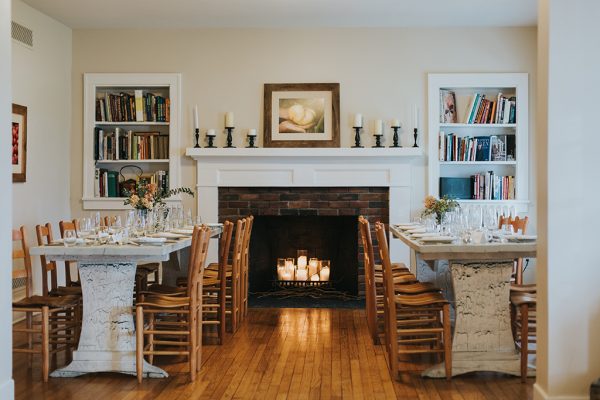
Set on an idyllic 27 acres, Zingerman’s Cornman Farms is a historic, multi-award-winning event space, wedding venue, and working farm. With sprawling fields, lush gardens, and historical buildings restored from their 1834 foundations, managing partners Kieron Hales and Tabitha Mason offer a warm and inspiring atmosphere for meetings and celebrations of all kinds. Host your event here and feel like you’re a world away (even though you’ve barely left Ann Arbor).
In addition to providing a beautiful background for all sorts of events, Cornman Farms also offers unique farmstead experiences. With the Farmhand Program, your group will enjoy an educational tour and farm-fresh snacks, while gaining a new appreciation for farm-to-table food. With Cook for a Cause, your group will make nutritious farm-fresh meals in a hands-on experience with Chef Kieron that will be delivered to local families in need.
Ready to start planning your private event at Cornman Farms? Fill out this inquiry form, call 734.619.8100, or email [email protected].
Everything was wonderful! Cook for a Cause was a wonderful client appreciation event for our firm. It’s a wonderful event that is fun and also gives back to a great cause in our community. Everyone walked out of the event feeling inspired, grateful, and of course, FULL! 🙂 The Cornman Farms team was easy to communicate with and went above and beyond to serve our guests! Chef Kieron’s passion for the property was so contagious. Our clients raved about his tour and his storytelling. Thank you to Chef Kieron and Tabitha for everything. We can’t wait for our next event at Cornman Farms! —Rachael D.
Roadhouse
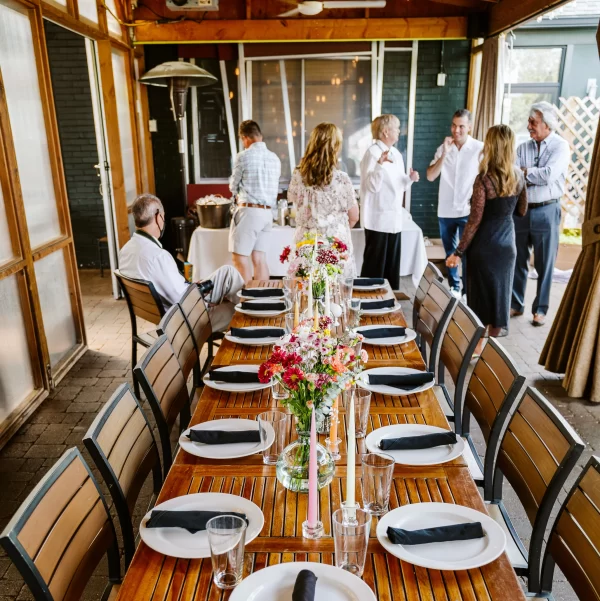
The Roadhouse opened in 2003 with the vision of bringing really good American food to the community by using only the best available ingredients. They’ve worked hard to create their own truly unique food culture, transforming high-quality ingredients into traditional, full-flavored dishes. And the Roadhouse crew is known for their above-and-beyond commitment to service. (They’ve earned two James Beard Award nominations for Outstanding Hospitality!)
Run by managing partner Lisa Schultz, with chef Bob Bennett at the helm of the kitchen, the Roadhouse draws in regulars from all over, whether they’re coming from right down the block or making sure to pop in during their annual visit to Ann Arbor. Guests love the good food, amazing service from staff they know and trust, and the casual and fun atmosphere. The Roadhouse Catering team is ready to help you customize your event and deliver attentive, enthusiastic service to your guests. Host your event in one of their spacious and welcoming private rooms or at your venue of choice!
Ready to start planning your private event at the Roadhouse? Fill out this inquiry form now.
You and your team are amazing…so engaging and welcoming to guests, and not to mention you all have incredible food execution. — Hannah N.
Zingerman’s Creamery
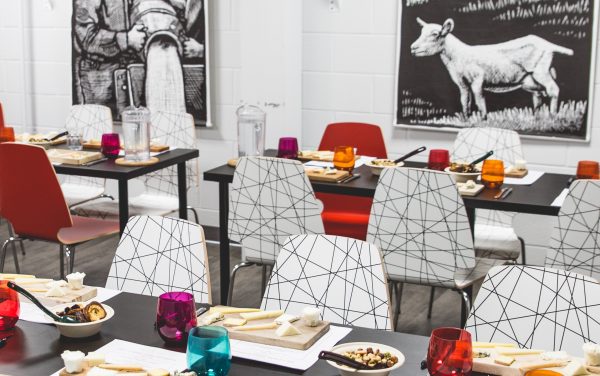
Helmed by owner Arend Elston, Zingerman’s Creamery is dedicated to creating fabulous-tasting hand-crafted cheese and gelato. They only use the highest quality milk from equally dedicated, small-scale regional farmers. Their retail store, the Cream Top Shop, is located on the southside of Ann Arbor. There you’ll find their award-winning cheeses and gelato, a selection of American farmhouse and artisanal cheeses, beer and wine, grilled sandwiches prepared to order, and more.
They offer private hands-on cheesemaking classes—have fun while learning valuable techniques and skills! Participants make mozzarella and burrata cheese in the Creamery just like their Master Cheesemakers. Afterward, you’ll enjoy a cheese-tasting party with an assortment of fresh and aged cheeses and you’ll go home with all the cheese you made to enjoy later! Dairy lovers from all over can take partake in the Creamery’s virtual private events. Each participant receives a tasting kit and a member of the Creamery’s team will guide your group through sampling.
Ready to start planning your private event with the Creamery? Please call 734.929.6450 or email the Creamery at [email protected].
Honestly, it was a really unique event that the group really enjoyed. It was fun to have a more thoughtful wine and cheese night with some unique cheeses. Sam’s positive attitude and knowledge really was the icing on the cake. The cheeses he selected were delicious and interesting and he was well-prepared to teach us about them. Also, the kits really gave everyone a chance to try a lot of food. The portion sizes were great. —Brittany B.
Zingerman’s Mail Order
The online shop for Zingerman’s food, gifts, and more, led by managing partners Mo Frechette, Toni Morell, and Tom Root. Zingerman’s Mail Order sends extraordinary, traditionally-made foods anywhere in America. They specialize in items like hearth-baked breads, handmade cheeses, varietal coffee, estate-bottled olive oils, customized professional presents, and so much more.
Mail Order offers private, custom virtual events for your crew. Enjoy an hour of tasting and learning about Zingerman’s products, like cheeses, tapas, or sweet treats. You’ll choose your foods, they’ll nestle everything in a colorful gift box and ship it to your doorstep. During the event, their expert sets the scene by sharing the history of the food and the folks making it. And then they’ll guide your group through the tasting like a flavor sherpa. By the end, everyone will be happy, knowledgeable, and full.
Ready to start planning your private event with Mail Order? Email [email protected] or call 888.636.8162 to start planning your event.
Brad is a wonderful, thoughtful, insightful, engaging, and knowledgeable host. The team was impressed by the quality and variety Zingerman’s has to offer. Looking forward to booking future events with Zingerman’s! —Kathryn F.
Whether your private event is a small gathering of friends or you’re planning for a crew of a thousand or two, we want you to feel that choosing to host with Zingerman’s was the best decision you made. To make that happen takes food that knocks your socks off and a friendly, knowledgeable staff that truly caters to you. We’ve got that covered. We look forward to making your event a special one, let’s get started!
Eight ways—some small, some large—that might make your loved one’s day
If you’re looking for a range of good Valentine’s gift ideas, here’s a generous handful that are in my mind from around the ZCoB!
J. Patrice Chocolates at the Candy Store and the Deli
Beautiful, tasty classic chocolates on hand at the Candy Store for you to select for your loved one to open and be wowed! Jamie LeBeouf is the highly skilled longtime manager of the Candy Manufactory confectionery kitchen. J. Patrice is her super tasty chocolate “solo album,” making beautifully decorated and highly delicious handmade chocolates. Over the course of 20 years, Jamie has been perfecting her skills—studying confectionery and even running her own chocolate shop in Beirut and then in Kuwait! My favorite is the Arabic Coffee, but all of the two dozen varieties are wonderful. For Valentine’s, Jamie made a gift-boxed large Milk Biscotti Heart, and also a 2-piece chocolate heart gift box (Passionfruit and Raspberry Rose)!
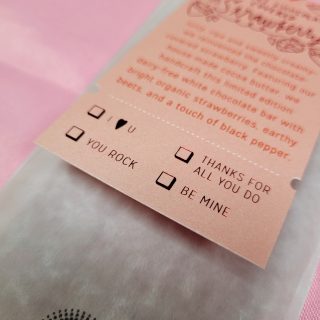 Shawn Askinosie’s new White Chocolate Strawberry Bar
If someone you know is a white chocolate lover, they are likely to love this special new offering from my good friend Shawn Askinosie. I’ve been eating a lot of Shawn’s Super Dark 88% chocolate of late, but this lovely Valentine’s bar is essentially its spiritual opposite. Both are excellent, but this one is light, fruity, buttery, and beautiful to boot. Unlike most white chocolate, which is mass-produced, Shawn and crew craft their own from Tanzanian and Philippine cacao. Add a bunch of strawberries and a small touch of black pepper, stick it into beautiful packaging, and there you have it. Lovely to look at it, even better to eat! At the Deli and the Candy Store.
Please Brie Mine Bries from the Creamery—topped with a raspberry preserves heart!
Handmade little rounds of brie made from local cow’s milk from Calder Dairy. The pale white rind of the cheese is stencil cut with a heart across the center that’s lovingly filled with a bit of raspberry preserves. Delicious and beautiful both! Pair with a glass of wine, a baguette, or a few of those wonderful artisan Winter Wheat Crackers from Madison, all of which the Cream Top Shop stocks regularly!
Valentine’s Flowers at Cornman Farms
Thanks to the good folks at Little Workshop Floral, the Farm will have beautiful bouquets for the Valentine’s Day festivities. Order online, swing by, and pick up!
Come have Valentine’s Dinner at the Roadhouse
An enticing offering of Valentine’s dinner specials will be on the menu for the holiday. There’s much more to see online, but here are three that I’d come in to eat:
- Georges Bank Scallops & Tomato Risotto – Made with seared Georges Bank Sea Scallops and Chris Bianco’s organic Di Napoli tomatoes.
- Meatless Maitake Mushroom Ragu & Polenta – Local enoki and maitake mushrooms, braised with herbs and broth served over Anson Mills’ heirloom, organic Otto File polenta.
- Pepper Steak & Herbed Polenta – Tellicherry-pepper-crusted New York steak served over herbed Anson Mills’ Red Flint Polenta Integrale. Topped with a fresh scallion and bacon salad.
Plus, the “regular February specials,” including the Wild Caught Shrimp and Smoked Chicken Gumbo below, AND the whole of the regular menu to boot. Book soon—it gets busy!
Zingerman’s Food Tours
Want to give a Valentine’s gift that will always be remembered? This could be the ticket! The North of Ireland, whence Gareth Higgins and Gerrie both hail, will be coming up in the fall of 2023! The trip sounds beyond terrific. Long time ZCoB friends and co-hosts for this trip to the North, Kate McCabe and Max Sussman from Bog & Thunder, join the Zingerman’s Food Tours team to visit world-class cheesemakers, regenerative farmers, fisherfolk, and craft distillers as well as dive deep into the amazing history of the region. There’s also Tuscany, Paris, Sicily, and so much more!
Zingerman’s Guide to Good Leading books and pamphlets!
While I know sweets are what comes first to mind for most folks giving Valentine’s gifts, there are those, like me, for whom a carefully chosen book (or two) with a touching card attached is much more exciting than sweets. Any of the Guide to Good Leading books or pamphlets are a show of support, positive belief, and commitment to the growth of your life partner. If you like red, we have a little Valentine’s book bundle set up—Being a Better Leader, “The Art of Business,” and “Bottom Line Change.” Looks great! If you order online at Zingerman’s Press, Jenny Tubbs has generously offered to wrap and tie it with a red ribbon. Show your love through the gift of learning! Want to go big? The “All the Pamphlets” set—artisan pamphlets of various colors, all bundled together—is guaranteed to blow the mind of the leader you love if they love to read and learn.
A Quartet of Corgi Cookies
You read about them last week! They’re at the Bakehouse, Coffee Company, Roadhouse, and Deli all month. A portion of sales from each beautiful, and tasty cookie, goes to the Jelly Bean Jump Up to support SafeHouse Center. I just gifted two this morning to help someone who was having a hard day!
Want more from Ari?
Sign up for Ari’s Top 5 e-newsletter and look forward to his weekly curated email—a roundup of 5 Zing things Ari is excited about this week—stuff you might not have heard of!
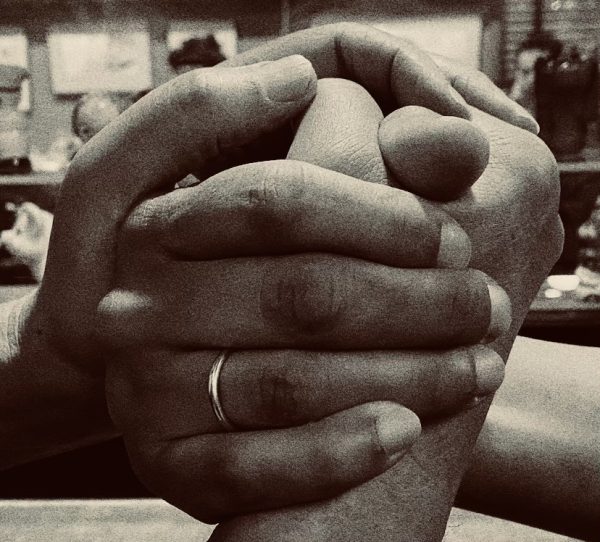
Last Thursday morning, on the 18th of January, nearly 90 ZCoBbers gathered for our monthly Zingerman’s-wide huddle at ZingTrain. About halfway through the get-together, as per the agenda, Paul and I formally announced that, in essence, we were “giving away the store.”
Don’t worry. The statement was serious, but it was said with a sense of deep calm, and a big smile. We haven’t gone crazy, and the company remains, as it has for nearly all of our 41 years, in pretty healthy shape. In the best possible way, no, we’re not going anywhere. In fact, that’s the point.
While the phrase “giving away the store” is usually used to connote poor negotiation skills, in our case, “giving away the store” is actually a big, big win. It’s something like ten years of challenging conversations and a whole bunch of very complex work coming to fruition in a formal sense, which is why, although much of our organization has been involved in the project for quite a while (using Bottom-Line Change®), we can now formally share it more widely with the world.
The announcement in question is that we have formally rolled out what has come to be called a Perpetual Purpose Trust. In essence, it means that Paul and I are, over a period of many years, giving the Zingerman’s “brand”—aka “the intellectual property”—to the business. For the moment, we’re calling this project quite simply “Zingerman’s Perpetual Purpose Trust” (ZPPT), but if a better name comes up in the next few weeks, we could change that. The content, though, is what counts, and that is a done deal. It’s an uncommon, but wholly uplifting, way to handle the long-term succession of the organization that remains true to the way we’ve tried to manage the business since we opened all the way back in 1982.
The point of the Perpetual Purpose Trust is to keep Zingerman’s in the Ann Arbor area, contributing in caring and meaningful ways, for many years to come. It is designed to stay grounded in the community, to benefit the people who work in it, and to give some sense of security that the organization will stay true to our long-standing Guiding Principles and Mission Statement. And it’s about continuing to work with all those things we love to engage with here at Zingerman’s: vision, hope, positive beliefs, inclusion, equity, long-term sustainability, a service mindset, dignity, continuous improvement, and commitment to community. It won’t be perfect (nothing is), but it’s meant, as per the name, to be perpetual. I won’t be here myself, but if all goes well, I hope that in 2082 the Zingerman’s Community will still be here, alive, and well, celebrating its 100th anniversary.
If you want the nickel version of all this, here are the highlights of the presentation:
—1. Over the coming years, this program will make Zingerman’s intellectual property (IP) self-owned. (The Zingerman’s businesses themselves are not part of this, and will continue, as they have been for years, to be co-owned and led by their very able managing partners with support from us and the rest of the ZCoB.) Very importantly, through the ZPPT, we will ensure that Zingerman’s brand WILL NOT be sold to any outside company! No going public, no franchising, no big “cash event,” no selling the business to some huge company on the West Coast that wants to buy us! Eventually, of course, Paul and I will be gone, but the purpose and spirit of the organization can now stay put. And the other great leaders who have already been actively and effectively participating in running the ZCoB so ably will continue on apace.
2. Through this program, we will gradually be paying out more and more of the profit from the intellectual property to Community Share owners (staff who own a share in the IP). Over the next 20 years, that share will gradually increase so that over half of the profit from the intellectual property will go to Community Share owners, people who, by definition, are actively working at Zingerman’s!
3. Along with the work we’ve already done to create our now 30-month-old Stewardship Council (more on this soon) and 30 years of consensus decision-making by our Partners Group to run the organization, ZPPT will allow for a sustainable, thoughtful, planned transition for me and Paul to move onward, upward and outward in intentional and sustainable ways. I’m not going anywhere for a while, but it’s good to get out front of these things!
4. This program will continue what we wrote in our 2032 vision about sharing ownership more and more widely. As Robin Wall Kimmerer says, “The more something is shared, the greater its value becomes.”
5. This work will help make our 2032 vision a reality, while living our Mission, Guiding Principles, and Statement of Beliefs, making the ZCoB a more and more attractive place to come and work. Joining a business where you get to own a share in your first year, where you can come to meetings and meaningfully share your views from the get go, and where, from day one, you really can make a difference, we hope, will benefit both those who work here and the business.
6. In the ecosystem metaphor, the idea of the ZPPT is to set up a structure that supports the organization as an “old-growth forest,” one that will continue to benefit the community of which we’re a part and the people in the ZCoB for decades to come.
Backing up a bit, for context, last week’s essay on solidarity was mostly about theory. The very important idea that each of us needs to actively work to advance our organization’s health; and that without that work, those organizations are likely to wither and die, often far more quickly than most people would imagine. This week, I want to write about practice. The ZPPT is a very practical, real, and (I hope) meaningful way to show solidarity for our organization. Rather than extracting and exiting, the idea is to enhance the whole and create greater equity (as opposed to the national trend towards greater and greater economic inequity) in the process.
Poet Richard Blanco says, “Every story begins inside a story that’s already begun by others. Long before we take our first breath, there’s a plot underway, with characters and a setting we did not choose, but which were chosen for us.” In the spirit of which, although the event at hand happened last Thursday morning, I’m going to start the story of the ZPPT a century or so earlier, at the end of the first week of spring 1915. On June 27 of that year, the second year of WWI, the woman the world now knows as Grace Lee Boggs was born in Providence, Rhode Island. Boggs went to Barnard for her undergrad, then on to Bryn Mawr where she earned her Ph.D. in philosophy in 1940. Even with a degree in hand, she had a hard time finding work. As had been true for most of U.S. history, it was not an easy time to be an Asian American. Later in her life, she shared that, “Even department stores would say, ‘We don’t hire Orientals.’” Fortunately for the world, she persevered, turning a challenging situation into a lifelong commitment to creating positive change. President Obama said of Boggs, “Grace learned early on that the world needed changing, and she overcame barriers to do just that. She understood the power of community organizing at its core—the importance of bringing about change and getting people involved to shape their own destiny.” She was most certainly one of the sorts of “elders” I wrote about last week. Grace Lee Boggs passed away in the fall of 2015, but in the back of my mind, her spirit was quietly present at our huddle last week. Throughout the hundred years of her life, she was very much an inspiration. I hope that the work we are doing here will, in some small way, follow in her footsteps.
In fact, even Grace Lee Boggs’ birthday was aligned with positive social change. It’s unlikely that either of her parents, both relatively recent immigrants from China at the time, would have known that the day their new baby girl was born was, coincidentally, also the 46th birthday of another immigrant, Emma Goldman. (That year Emma was out on a national speaking tour, campaigning, controversially, in support of women’s right to birth control and reproductive freedoms.) Both of these amazing women worked, each in their own way, to help make the world a better, more equitable, and more caring place to be. I don’t know that the two of them ever met—Emma Goldman died in Toronto the same spring that Grace Lee Boggs got her graduate degree—but Boggs certainly knew, and drew from, Goldman’s work. Both Boggs and Goldman are featured (along with a couple dozen great leaders like W.E.B. DuBois, Sojourner Truth, Pablo Neruda) in a book for young readers entitled, Firebrands: Portraits of Activists You Never Learned About in School. In the spirit of what I wrote last week, Grace Lee Boggs was very committed to community, to democracy, to dignity, to the development of what she referred to as “more human human beings.” Like us, she loved ideas, and yet, at the same time, she was also about actually doing the down-to-earth work to make those ideas come alive: “We can begin by doing small things at the local level, like planting community gardens or looking out for our neighbors.” All of which, we hope, will also be embedded in, and emerge from, this newly unfolding part of our organizational history.
David Whyte, an Irish-Anglo poet, was born in the fall of 1955, when Grace Lee Boggs was 40. Whyte went on to become a writer and thinker—another wise human whose work has inspired me endlessly. In Crossing the Unknown Sea, Whyte writes:
It seems to me that each of us must identify in our personal history those who represented freedom in the world, those who managed to live just outside the rules, who seemed not beholden to the forces that held others in place. … someone who seemed to exude freedom by the way they lived, who was not a slave to all the truths repeated so easily by others, who had a breath of spontaneity in their lives.
Grace Lee Boggs was, for me, one of those people. I wanted to weave her story in here for context, because it is my very sincere hope that Zingerman’s will fill a similar, spiritually-uplifting, Boggs-ian, bill for others as we continue to move down the river of our history into our collective future. I look to Grace Lee Boggs here because in a sense she models what I hope for the ZCoB—that it can live a rich and full life, contributing to the community in tangible and intangible ways, finding joy and making a difference for well over a century.
In an interview with Krista Tippett for On Being, released exactly two months after Boggs’ 100th birthday on August 27, 2015, Boggs elaborated on her beliefs, beliefs that quietly underlie the idea of the Zingerman’s Perpetual Purpose Trust program:
The opportunity that we now have to reimagine everything, to reimagine work, to think of it as productive not only of things, but of well-being, to think of governance in a different way, to think of education in a different way. What an opportunity, what a time to be alive.
…
There are so many creative energies that are part of human history that have been lost because we’ve been pursuing the almighty dollar. … We no longer recognize that we have the capacity within us to create the world anew.
…
There’s something about people beginning to seek solutions by doing things for themselves, by deciding they are going to create new concepts of economy, new concepts of governance, new concepts of education, and that they have the capacity within themselves to do that, that we have that capacity to create the world anew.
Bo Burlingham is the caring, creative thinker and business journalist who wrote the book Small Giants back in 2005, as well as the article that ran in Inc. Magazine about the ZCoB 20 years ago this month. Given that Bo’s been a positive part of so many hallmarks of ZCoB history, it was great that he generously joined us on the Zoom link last Thursday when we did the ZPPT presentation. Bo being there was timely, too, because his most recent publication happens to be about this very subject of succession. Finish Big: How Great Entrepreneurs Exit Their Companies on Top has been helpful to a wide range of business owners beginning to think about how to handle the work of “What’s next?” When Bo’s book was published, Perpetual Purpose Trusts were barely beginning to be known. The main options then available—and still, by far, the most common today—were selling the business, leaving it to family, or creating what’s called an “Employee Stock Ownership” plan. (The latter has upsides, and also some issues that make it unattractive for us—I’m not an expert, but I’m happy to share if you want to talk more.) With those paths to succession in mind, Bo recommends in the book that founders/owners getting ready to think about “exiting” begin by:
Coming up with a number—that is, the amount of money you’d be happy to walk away with when the time comes—and a time frame. Stage two is strategic. It requires learning to view your company as a product itself, not just as a deliverer of products or services, and then building into it the qualities and characteristics that will maximize its value and allow you to have the kind of exit you want.
These are, to Bo’s credit, exactly the sorts of succession plans that you and I see in the press pretty regularly. Every few months I read about another values-driven, community-based company selling, usually to some multinational corporation whose offices are, more often than not, half a world away. For many people, this is the right way to exit. Long-time Ann Arborites will know all too well, said with respect for all involved, that this is what happened with Borders. With good intentions, the founders sold the company to a much bigger business in 1992. You likely know the rest of the story. That outcome is the opposite of what we hope to create here. Instead of selling, we wanted to find a way for the ZCoB to settle in. In the spirit of Jeannette Armstrong and Timothy Snyder, whose work I referenced extensively last week, the intent of the ZPPT is to help create a healthy thriving institution of an organization—one that is far greater as a whole than what any of us as individuals can do on our own—that is rooted in the community for many decades to come!
You may, perhaps, have heard recently that Patagonia (which is WAY, way bigger than we are) is also doing a Perpetual Purpose Trust when they released the info last fall! I was happily surprised to hear the news—I’ve had the idea of doing something like this on my mind ever since I stumbled on the concept something like 10 years or so ago when I was reading E.F. Schumacher’s 1973 book, Small is Beautiful: A Study of Economics as if People Mattered. I can’t recommend Schumacher’s work too highly for many reasons, but it was particularly influential in the context of what I’m writing about here: Small is Beautiful changed my beliefs about succession planning and what is possible.
On page 264 of my very well-worn first edition paperback (I’ve read it so many times, the book actually requires a rubber band to hold it together), Schumacher tells the story of the Scott Bader Commonwealth in the U.K. The chemical goods firm was founded in 1923 by a Swiss immigrant to Great Britain named Ernst Bader. Bader’s small business grew steadily and successfully for many years. In 1951, as the company was approaching its 30th anniversary, for pretty much the same reasons we are doing it here, Mr. Bader created a version of a Perpetual Purpose Trust. If you want to learn more, there’s a wealth of great information about how Scott Bader Commonwealth works on its website, along with information about how they are celebrating their 100th anniversary. Even back in 1973 though, when the trust had been in place for just a little over 20 years, E.F. Schumacher was already saying:
Scott Bader—and a few others—remain as small islands of sanity in a large society ruled by greed and envy. It seems to be true that, whatever evidence of a new way of doing things may be provided, “old dogs cannot learn new tricks.” It is also true, however, that “new dogs” grow up all the time; and they will be well advised to take notice of what has been shown to be possible by The Scott Bader Commonwealth Ltd.
I took Schumacher’s advice to heart. Reading about the work of the Scott Bader Commonwealth inspired us to investigate the Perpetual Purpose Trust. We have adapted the ideas to our own ecosystem, and how we do it here will be a bit different from the way it plays out at Patagonia and at other places that are following this path. The point, though, is the same—to really make businesses into community-based organizations that have the legal and financial structure that honors their people, their purpose, and their place. While profits of course matter, they are, as I’ve written elsewhere, only one part of what makes an organizational ecosystem healthy.
The main points of what Perpetual Purpose Trusts make possible were summed up pretty well in a piece in the New Yorker earlier this year. The details shared in the article are different from the way we’re doing it here, but the concept, intention, and format are still aligned with our approach:
A perpetual-purpose trust [is] a trust that exists not for the benefit of particular individuals but to fulfill some purpose. … The trusts become the legal owners of these businesses, and the business owners now have a fiduciary duty to fulfill its purposes … Perpetual trusts last indefinitely, preventing future owners from discarding pro-social policies in favor of higher profits.
In 2010, in the Citizens United v. Federal Election Commission case, the Supreme Court granted corporations legal protections previously reserved for people. Since then, it’s been hard to resist a natural question: If corporations are people, what kind of people are they? One answer, bleak but justifiable, is that they’re psychopaths, devoted entirely to maximizing profits at the cost of everyone else, including their employees. [Some] unusual business owners … show the limits of this generalization, as do many other socially conscious companies. But as long as pro-social companies are vulnerable to acquisition by larger firms and investors who are likely to disregard their social mission, they will remain ephemeral exceptions to the profit-first rule. They will last only as long as their founders are able to keep working, and to avoid accepting investments with strings attached.
This last bit is exactly what the Perpetual Purpose Trust here will help us avoid. Our hope in doing this work as we are is to steer completely clear of the kind of “cash event” that, while it enriches owners, sooner or later, nearly always leaves communities and colleagues without the richness that a community-minded organization had been contributing. In the context of the organizational ecosystem metaphor, I would compare that sort of approach to clear-cutting. You grow the trees, you harvest them, and when you’re ready, you take the money you “earned.” The problem is that the ecosystem is poorer for it. Canadian author and Professor of Forestry Ecology Suzanne Simard says:
When a mature forest is burned or clear-cut, the planet loses an invaluable ecosystem and one of its most effective systems of climate regulation. The razing of an old-growth forest is not just the destruction of magnificent individual trees—it’s the collapse of an ancient republic whose interspecies covenant of reciprocation and compromise is essential for the survival of Earth as we’ve known it.
Borders, as I mentioned, is the well-known Ann Arbor version of this. Nationally, you could think of Whole Foods—opened in the fall of 1980, which, like the Deli, was once a single community-based store in Austin. Said with respect for some of the great people who still work there, you know how that story goes. The work of the ZPPT is about going in the opposite direction. Instead of clear-cutting, we want continuity in the community. Rather than clear-cutting with me and Paul retiring to warmer climes with a lot of cash, the ZPPT work will, we hope, help to make it possible for the ZCoB to be the metaphorical equivalent of the sort of old-growth forest Suzanne Simard describes:
An old-growth forest is neither an assemblage of stoic organisms tolerating one another’s presence nor a merciless battle royale: It’s a vast, ancient and intricate society. There is conflict in a forest, but there is also negotiation, reciprocity and perhaps even selflessness. The trees, understory plants, fungi and microbes in a forest are so thoroughly connected, communicative and codependent that some scientists have described them as superorganisms.
Perpetual Purpose Trusts like this are still a relatively new option for business owners like us looking at succession. There are, right now, only a handful of them in the U.S., but the work of Scott Bader in Britain—now celebrating its centenary and still going strong—reinforces my belief that this isn’t just an idea that sounds good, but actually a very sound idea. As we have so many times in our organizational history, we are choosing the road less traveled, in the belief that it will create the kind of “new concepts of economy, new concepts of governance, new concepts of education” that Grace Lee Boggs spoke of. And that as she believed, they can give us the “capacity to create the world anew.”
Speaking of opting for newly-created, alternative, and off-the-beaten-path plans … in August 1915, the same year that Grace Lee Boggs was born, Robert Frost published his poem “The Road Not Taken” in The Atlantic. Frost’s framing has been an unconscious theme throughout all our years in business. We’re very, happily, familiar with roads less traveled. In the long run they have led us to excellence, while in the near term they often mostly elicit eye rolls. Responses when we rolled out the 2009 Vision in 1994—where we declared to the world that we were staying local, deciding not to franchise or open all over the country, and have actual managing partners who owned a big part of their business—ranged from shock to surprise to some serious head shaking. In hindsight, that’s the first of many times we decided to “give away the store.” And that one sure seems like it’s worked out reasonably well. We hope the best for this new part of our organizational path as well.
Whatever we have created here at Zingerman’s is, of course, a product of the collective efforts of all the many terrific managing partners, thousands of ZCoB staff and suppliers, and what must now be many millions of caring customers over the years, all of whom have given of themselves to help make Zingerman’s what it is. Without you, none of this would be possible. I appreciate you ALL deeply. I also want to share very deep appreciation here to our amazing attorney, Gary Bruder, who’s done extensive work to make the ZPPT program a reality. I could write an entire essay on the remarkable way that Gary brings together grace, good business sense, care, effective adherence to ethics, and legal acumen. He is, I will suggest here, the sort of “more human human being” of whom Grace Lee Boggs wrote.
During the years that we’ve actively been working to make this happen, we have been ably guided by Natalie Reitman-White and the folks at Alternative Ownership Advisors in Portland, Oregon. I will highly and happily recommend them to any of you who are interested. (Tell them I said Hi!) And of course, last on this list, but definitely not least, enormous appreciation to Paul. Forty-one years ago this week, we were working to renovate the Deli building to be ready to open as we had planned in mid-March. We made our deadline—March 15 will mark our 41st anniversary. To come to this point and still be spiritually and strategically aligned as partners is something truly special.
In 2011, in what would turn out to be her final book, entitled The Next American Revolution, Grace Lee Boggs wrote:
The main reason why Western civilization lacks Spirituality, or an awareness of our interconnectedness with one another and the universe, according to Gandhi, is that it has given priority to economic and technological development over human and community development.
We have tried, for 40-plus years at Zingerman’s, to humbly and caringly cook, serve, and sell good food, make a positive workplace for all involved, and diligently pay our debts as we do it—all the while actively supporting spirit, honoring interconnectedness, and contributing positively back to both. The idea of the Perpetual Purpose Trust is to create a construct that gives the Zingerman’s Community of Businesses a good chance to keep doing it for many decades to come. As E.F. Schumacher says, our commitment remains to do it all “as if people mattered.”
In the On Being interview released in the summer of 2015, Grace Lee Boggs said:
We are living in a time of enormous changes, and we have the opportunity to change our thinking, to change our philosophy, by responding to and really trying to understand what’s happening, what time it is on the clock of the world. … You can see the possibility of giving up, of moving forward, making a little leap. … We have now the opportunity to rediscover who we are.
This step, creating a Perpetual Purpose Trust for Zingerman’s intellectual property, is small in the scheme of the world, but still very important in the context of our little Community of Businesses here in Ann Arbor. It is, I hope, exactly the sort of positive change Grace Lee Boggs believed was possible. To give back and go forward together, instead of giving up and getting out. It’s taken us 10 years to get here, but our hope is that we can help Zingerman’s continue on as a thriving, healthy, imperfect organization, supporting the people who work here and being a positive anchor in our community for 10 times that long. If things go well, I hope we can, like the Scott Bader Commonwealth and Grace Lee Boggs, hit a hundred.
Grace Lee Boggs said of her husband, the activist and writer Jimmy Boggs, that he “used to remind us, revolutions are made out of love for people and for place.” That is certainly our motivation here. I’ll send you off with a statement from Grace Lee Boggs that seems right for the moment. A good reminder for us, and maybe for you too:
A revolution is to create new truths about human beings and society. There is no proof really that the road you are taking is the “true” one.
You have to make it true.
When I doubt myself, as I will inevitably do every day as we move forward, I will remind myself of Grace Lee Boggs’ very wise words.
Here’s to trust, a positive sense of perpetuity, and a lot of good Zing-things to come.
Want more from Ari?
Sign up for Ari’s Top 5 e-newsletter and look forward to his weekly curated email—a roundup of 5 Zing things Ari is excited about this week—stuff you might not have heard of!
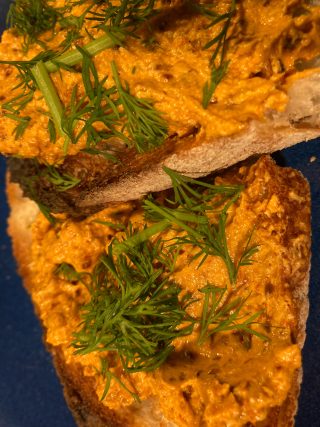
Handmade Tunisian Harissa combined with handcrafted Creamery Cream Cheese
 Fifteen years or so ago, we did a T-shirt at the Roadhouse to promote our then-new Pimento Cheese. In a bit of one-line visioning, we wrote “Pimento Cheese Capital of the Midwest.” (The T-shirt is a Zingerman’s classic and one of my favorites, and as of last month, you can buy one!) At the time, we were just getting going with Pimento Cheese and hardly anyone in Ann Arbor even knew what it was. Today it’s one of our top-selling items at the Roadhouse and Deli. Mail Order ships it regularly, and the Creamery wholesales it to retailers and restaurants all over the country.
Given that there are many thousands of pimento cheese recipes in the U.S., I started to think about other cultures that have created similar spreads that combine cheese and chiles. They don’t call them “pimento cheese,” but they could. Our long-standing love for Liptauer at the Creamery, I realized, was actually an affinity for what we could well be calling “Hungarian Pimento Cheese.” What follows is a “recipe” for a pimento cheese we aren’t yet selling, but I’m pretty sure we probably ought to be. In the meantime, you can make it at home in a matter of minutes, as I did the other day. It’s incredibly easy to make something so delicious that you might well find yourself, as I have, making it over and over again.
The “Tunisian Pimento Cheese” calls for two world-class ingredients, products that are so special that the choice of brand to be used will, to be clear, make a BIG difference. Each is exceptional. First up is the handmade Cream Cheese from Zingerman’s Creamery. Using milk from the herd of the good folks at Calder Dairy in Carleton, it’s made simply with rennet (to separate solid curd from liquid whey), a bit of added cream, and sea salt. I had some again the other day for the first time in a few months and was reminded anew just how amazingly excellent it is. Creamy, full-flavored, mouth-filling, and a really fine long finish.
The other ingredient is the traditional Harissa from the Mahjoub family in Tunisia. It’s a family recipe that goes back for generations. Majid Mahjoub shares, “From a very young age, my parents taught me that this recipe comes from very far away. We, the children, learned a lot, but I believe that our parents learned even more, from theirs.” Other than the spices, all of the ingredients in the harissa are grown, organically and sustainably, on the Mahjoub family farm. Three different peppers, all carefully hand seeded and sun-dried; tomatoes handled similarly (the sun-drying makes a big difference); extra virgin olive oil (the one Tammie and I cook with daily at home); with a small bit of garlic, coriander, caraway seed, and some sea salt.
If there is one star of this savory confection, it would probably be the Baklouti pepper. While all chile peppers arrived in Africa only after Columbus’ first encounter with the Americas, over the last few hundred years the Baklouti has become as integral to Tunisian cooking as the Piquillo to the Spanish Basque Country or Paprika to Hungary. It’s named for the town of Bekalta, on the country’s east coast, which, since it’s a port city could well be the place the pepper first made its presence known on Tunisian shores. Large red tapering pods, hot but not mind-blowingly so, and appropriately very flavorful.
The creamy mildness of the cream cheese is an ideal foil for the spicy complexity of the harissa. Making the spread is about as simple as it gets. I like a ratio of about two parts cream cheese to one part harissa, but you can vary that up or down depending on how intense and how spicy you like your food. Thin with a small bit of extra virgin olive oil. Garnish if you like with some chopped fresh herbs—dill, mint, basil … any or all would be good. Eat and enjoy!
Because both of these products—the Creamery’s Cream Cheese and the Mahjoub’s Harissa—are made very much as they would have been a hundred years ago, what you and I will taste when we try this is much the same as we would have experienced back in 1896 when the Mahjoub family first started to sell the public what they had long been making and eating at home. It’s great as is on crackers. Beautiful on a baked potato. Lovely stuffed under the skin of roasted chicken. Super tasty on a sandwich and it makes a great grilled cheese. You can even use it to toss with pasta. This “Tunisian Pimento Cheese” is spicy, creamy, and, like the original Pimento Cheese, pretty much darned good on everything! It’s also, I’ll warn you, addictive!
You can find the Cream Cheese at the Creamery, Bakeshop, Deli, and Roadhouse, as well as on Zingermans.com. The Moulins Mahjoub Harissa is both at the Deli and online for shipping as well.
Want more from Ari?
Sign up for Ari’s Top 5 e-newsletter and look forward to his weekly curated email—a roundup of 5 Zing things Ari is excited about this week—stuff you might not have heard of!