
Tag: ZINGERMAN’S
Local canines and cats star on this annual calendar!
This week marks the start of the 8th annual Jelly Bean Jump Up, our yearly fundraiser for SafeHouse Center. The bulk of the event will actually take place in the winter—February and a couple really cool events in March—but we’re getting things moving now by putting out the Jelly Bean Jump Up Calendars for 2023. They feature a whole host of dogs and cats from around ZCoB, including four from our house (Pepper is the cover boy; Blu, Eva, and Chance Edward Chance are inside) as well other wonderful pets from around the ‘CoB, like Stacy Walsh’s super cute little pup Mocha in December and Melaina Bukowski’s Frankie in October.

The earliest paper calendars date back to Gutenberg’s invention of the printing press. Three years before American independence, publisher Robert Aitkin invented what’s said to be the first commercially available planner. Paper calendars became popular during the Industrial Revolution, after the end of the American Civil War. In ancient times, calendars had mostly been painted on walls, carved into stones, etc.; the early paper offerings were really only for those with enough money to afford them. Industrial scale printing on paper—both calendars, and their personal corollary, “the planner”—was a way to democratize what had previously been pretty much an upper-class resource.
The Jump Up started in the winter of 2016, after the death of my much-loved Corgi, Jelly Bean, the previous spring. If you’ve lost a beloved companion (person or pet), you will likely have some sense of what I was going through. She and I had been together for a remarkable 17 years. (If you want to see the obituary I wrote for her, drop me an email.) Although grief can feel overwhelming, there are ways to slowly, gently, shift it—painfully, at times—into something constructive.
I wanted to take the pain and put it into a positive program that would benefit the greater good. Marsha Ricevuto, who knew Jelly Bean well and cared for her so many times when I went out of town over the years, suggested the idea of a “Jump Up.” Nine months later it happened. Tammie and I wanted to do it for SafeHouse, in part because we live nearby and all the staff would see Jelly Bean and me jogging every day, but more importantly, because providing a safe space for the victims of domestic abuse as SafeHouse does is so important. And now the Jelly Bean Jump Up is an annual tradition to help support those whose lives and safety are under threat in our community.
Looking ahead, this year’s Jump Up will wrap up on March 14—the day before our 41st anniversary— when we will do a special dinner at the Roadhouse, featuring Marie Rose and the wild Alaska salmon from Shoreline that I wrote up last week. Marie, who found her vocation in fishing, is also a big supporter of this cause:
Just as we aim to be mindful of how we harvest and handle wild salmon in Alaska, we also strive to foster partnerships that help to support the safety and well being of the communities in which we operate. Organizations like the SafeHouse Center that provide resources for survivors of sexual assault and intimate partner domestic violence are essential for fostering a healthy community. We are grateful to work alongside Zingerman’s to help fundraise for this important cause.
You can find the calendars at the Coffee Company, Deli, Bakehouse, and Roadhouse. If you’d like to have some shipped, send an email to Melaina who coordinates all our community giving and she’ll get you set up. In fact, right when they came back from the printer, Jenny Santi at the Deli said:
A guest from New York called the Deli about Jelly Bean Jump Up calendars. We didn’t have them yet, so I’ve been emailing with him and finally was able to sell him one and get his mail address so we could put it in the mail for him. He thanked me and said the calendar was a gift for his daughter, who is “obsessed with this calendar and its cause!”
The calendars sell for $20. If you want to give more, that’s great. If you can’t afford the $20, we’ll figure out a way to make it work together. ALL the proceeds go to SafeHouse. Every dollar makes a difference!
Want more from Ari?
Sign up for Ari’s Top 5 e-newsletter and look forward to his weekly curated email—a roundup of 5 Zing things Ari is excited about this week—stuff you might not have heard of!
Great Zingerman’s gift for a T-shirt lover you love!

Given that he was born and raised in Japan and I grew up in the American Midwest, author Haruki Murakami and I seem to have a surprising number of things in common. As I wrote about last summer, we each run every day, write a lot, and got our career starts in food service. We both, I’ve learned from reading, also have prodigious piles of books and music. The thing I didn’t know until Tammie told me last year is that he and I both have a LOT of T-shirts. Murakami, much to my happy surprise, even did a book about his—Murakami T: The T-Shirts I Love. He writes that:
T-shirts are one of those objects that just naturally pile up. They’re cheap, so whenever an interesting one catches my eye, I invariably buy it—plus people give me various novelty T-shirts from around the world. Which is how, before I even realized it, the number of T-shirts in my life has skyrocketed, to the point where there is no room in my drawers for them anymore.
It sounded so familiar that I laughed out loud when I read it. Maybe you can relate. If you, like me and Haruki Murakami, have a hard time turning down a great T-shirt that you know you don’t exactly need but really like—or if you know someone like me or Murakami who has a hard time resisting a good T-shirt—we now have a great way for you to have at it.
This new option came online thanks to the creative thinking of the folks at Underground Printing here in Ann Arbor. Rishi Narayan, the co-founder, has been a big Zingerman’s fan for years and we’re very appreciative of Rishi’s work as well. As you’ll see in this piece, we have a great many shared values. I smile too when I think about Underground Printing because they originally opened up at 1114 S. University in Ann Arbor, the same building in which, back in 191l two young anarchists, Abraham Seltzer and Eugene Chatterton, ran a restaurant for a year called “Seltzer and Chatterton.” Underground moved across the street a few years ago when the building was going to be replaced by a high rise, but the positive anarchist spirit still resides in their organizational culture.
Last year Rishi and crew came up with this creative new program: We put the T-shirts on these sites. You order. They print what you want and ship it straight to you!
There are two Zingerman’s T-shirt stores up right now, and maybe more on the way. On the Deli site, there’s the long-popular Zingerman’s Deli Rainbow Unicorn shirt, illustrated by Ian Nagy. And I’ve always loved the one from Next Door with a lovely visual listing of coffee drinks across the front, illustrated by a former Deli staffer named Kayo. Just this week, we added a special new hoodie, also beautifully done by Ian, that’s dedicated to my late, deeply appreciated, and much-missed friend Daphne Zepos. You can read about Daphne’s far too early passing in the Epilogue of Part 3. Part of her legacy is the Daphne Zepos Teaching Endowment—it was created out of a vision she dictated when she was in her final days. $10 from each shirt goes to the fund.
The Roadhouse T-Shirt shop has the new and beautiful “Blacks in Culinary” T-shirt that I and others have been wearing of late. It’s taken from a section of Patrick-Earl Barnes’ amazing art piece of the same name that’s hanging on the north wall of the Roadhouse’s “Fireplace Room.” We donate $10 from the sale of each shirt to the African American Cultural and Historical Museum of Washtenaw County! You’ll also see the great Roadhouse “cartoon” shirts—the Biscuits, the Nashville Hot Chicken, and the New Mexico Green Chiles. Additionally, you’ll find, for the first time, a new, black and blue version of the Belief Cycle T-shirt some of you have seen me wearing. The original was created by Underground as an appreciation for me after I spoke to their leadership team about beliefs a few years ago! Many folks have asked to buy a shirt with the Belief Cycle, and now you can!
If you’re looking for a different gift, or you just, like me and Haruki Murakami, have a hard time passing up a good T-shirt, check out these two sites and order up soon! Maybe, now that I think about it, I’ll order some to send to Mr. Murakami in appreciation of his wonderful work!
Shop Deli T-shirts
Shop Roadhouse T-shirts
P.S. Here’s a podcast I did with Rishi! For historical context, it was recorded in January 2020, and released two weeks after the start of the pandemic!
Want more from Ari?
Sign up for Ari’s Top 5 e-newsletter and look forward to his weekly curated email—a roundup of 5 Zing things Ari is excited about this week—stuff you might not have heard of!
An early chance to buy a whole bunch of great Christmas gifts
In 1838, the year after the barn at Cornman Farms was built, Filippo Barbero had begun working as a baker at the church of Mombercelli, about fifteen miles south of the small city of Asti in northern Italy. Forty-five years later, Filippo’s son started the bakery as a business. Later still, Filippo’s grandson Davide grew the company—it’s his first initial that’s on the logo. Today in 2022, D. Barbero crafts some of the best northern Italian confectionery around; torrone of all sorts, Columba cakes for Easter, and panettone for Christmas.
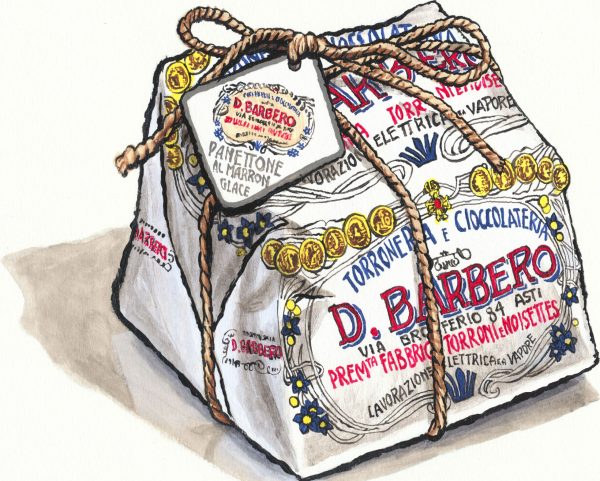 A few weeks ago, we got a special shipment of an exceptional panettone from D. Barbero. It’s studded with one of my long-time favorite confections, small pieces of marrons glacés. Cooked chestnuts that are soaked in sugar syrup, then dried and rolled in sugar, are what we might say was the medieval equivalent of gifting a box of great chocolates back in the days before chocolate arrived in Europe. The panettone isn’t just delicious; the decorated paper wrapping is wholly beautiful! Ideal for gifting to office groups, cake-loving cousins, long-time loyal clients, food-focused friends, or the neighbor you know next to nothing about.
Panettone, if you don’t already know it, is probably the most prominent of modern-day Italian Christmas breads. Panetto means a small cake; panettone a bigger small cake. Its origins likely go back to Roman times, and it became popular centuries later as a specialty of Milan. Its nearly overwhelming modern-day popularity dates to the years following the starting of the Barbero family bakery. They were, it seems, “ahead of their time,” and all these years later continue to craft exceptional products. Light, delicate, exceptionally aromatic, redolent of real Madagascar vanilla, sweetened with acacia honey, and laced with small bits of those marvelous and magical marrons glacés.
How to Eat Panettone
What do you do with panettone? Eat it and appreciate it! In Italy, many millions of them are given as gifts. Once you have one, just opening the package alone will enhance your day. I brought one of these home the other day in order to write about it. I opened it, took a small bit out to taste, and then rewrapped it. The aroma was evident as soon as I opened the door to come into the house the other evening!
You can just tear off a piece and eat it—imagine the lightest, richest, most angelic challah you’ve ever had. Unlike most challah, which are made without dairy, panettone is loaded up with butter—making it richer and silkier in texture. You can toast it lightly as I did this morning or even make it into French toast for Christmas morning or any other day you want to start in a special way.
Panettoni are made at the beginning of each season to last through the holiday, so buying now is a great way to get ahead of the holiday game.
Ship a panettone to your pal in Peoria
Want more from Ari?
Sign up for Ari’s Top 5 e-newsletter and look forward to his weekly curated email—a roundup of 5 Zing things Ari is excited about this week—stuff you might not have heard of!
Creating a culture where people act like they care and care enough to act
 Roya Hakakian was born back in 1966, into a Jewish family in Iran. Hakakian was 13 in 1979 when the ultra-orthodox Moslem regime took power and many previously well-accepted freedoms were taken away. She remembers women, suddenly unable to dress as they wished, going into the streets to protest. It was a time when speaking up or saying what needed to be said would likely land one in jail, or at the least earn you a summons to the local police station. When Hakakian was 19, she escaped Iran with her mother, and after a year of moving around Europe, made it to the U.S. Today, Hakakian is a well-known poet, author, and journalist, a woman who Harry Kreisler, in Political Awakenings, called one of “the most important activists, academics, and journalists of her generation.” In recent weeks, Hakakian has found herself again watching women demonstrate on the streets of her homeland, prompted this time by the tragic death in prison of 22-year-old Mahsa Amini.
Hakakian’s first book, which came out in 2004, was entitled, Journey from the Land of No. While Hakakian was writing about what she had experienced in Iran, her title had me thinking about how many modern organizations have created their own less-extreme-than-Iran versions of the “Land of No.” Places where those who hold power prefer passivity from those on the front lines, where higher-ups hold decision-making for themselves, and where new staff will almost never take initiative. Workplaces where people are afraid to take action to do what they know full well needs to be done.
Reflecting on this got me wondering: what can we all do to keep from making our businesses into “Lands of No?” How can we, instead, create workplaces in which taking the initiative is encouraged and expected? Where people take direct action rather than holding back while they wait for direction. Organizations in which, as we wrote in our 2032 vision, we can “Start with Yes.” A place where people understand and believe that when they decide, of their own volition, to take small actions of dignity, kindness, helping others, and building hope can add up to have hugely positive, even revolutionary, implications in the long term. Where, in the best possible way, most all of us regularly have Roya Hakakian’s insightful statement in mind: “No one can predict how a revolution starts.” I believe Hakakian is correct. The next good deed someone at Zingerman’s does could change the course of our organization. Only hindsight and history majors many years from now will know.
Why have some people stood aside while others opted to act? Why do some speak up for dignity when others do nothing? Why do so many people act helpless instead of being helpful? Writers, like Hannah Arendt, George Orwell, Erich Fromm, and others have written volumes about the subject. I’ve been reflecting on how we take those lessons from the literally life-threatening situations in which they’re happening and transpose them, at of course a smaller and less risky scale, into what we do at work every day. How do you create companies where people don’t tolerate untruths? Where people understand what Russian poet Yevgeny Yevtushenko shared during the Soviet era: “When truth is replaced by silence, the silence is a lie,” and as a result, most people will take a deep breath, embrace their understandable discomfort, and still effectively say what needs to be said.
It’s clear to me that living in harmony with the Natural Laws of Business contributes. Certainly teaching #7—“Successful businesses do the things that others know they should do … but generally don’t”—encourages folks to “go the extra mile.” It’s clear to me too that people with high hope, positive beliefs, who are believed in, treated with dignity and respect, who are clear on their organization’s vision and how they fit into it, people who work with strong systems, are getting effective training, who are led by Servant Leaders, etc. are simply much more likely to want to engage and take positive action. Here in the ZCoB, we have, imperfectly, created a culture in which, more often than not, most people who work here will do the right thing, even in the face of anxiety or adversity. There are many other organizations, and communities, around the world, in which this is also the case. Why? Why are so many in Iran continuing to risk their lives protesting in public but in Russia, it’s only a tiny minority? Why does Russian society seem to lean towards disengagement and apathy, when, by contrast, Ukraine’s culture has devoted itself to the revolution of dignity and engages in positive activism? Why do staff in so many organizations look the other way or wait for their boss, when so many here in the ZCoB will take a deep breath, think things through, get help, and then go out and break the rules when they need to do what’s right?
One of the many long-time marketing techniques we use here at Zingerman’s is what we’ve come to call “primary message.” As we define it, it’s the one thing—taken from what is usually a long list of positive attributes—that we believe will be most likely to make someone decide to purchase a product. We try to do them for each of our biggest selling offerings. We also chose one, many years ago, for our organization overall: “You really can taste the difference” is the primary message for what we make and sell. It’s an expression of our belief that anyone interested can tell the difference between good and bad, great, and good. And that, although our industry has often suggested that customers can’t tell the difference, we believe people are smarter and more capable than many “experts” give them credit for.
We also chose a “primary message” to share internally: “You really can make a difference.” Our hope, both explicitly and implicitly, is to effectively get this message into the hearts and minds of everyone who comes to work here. It’s not a trick. We really believe it. Everyone matters, their work matters, and seemingly small decisions very often add up to have very big impacts. We want to get across our belief that one doesn’t need to be in charge or have a fancy title to have great insight. That even on your first day what you do can make a big difference. And that a good idea or a deep concern, regardless of where it came from could, as Roya Hakakian has written, start a revolution.
Reflecting on all this, I can see now that we have a wealth of ways in which we systemically support this sort of proactive approach to work. Open book management, open meetings, Bottom Line Change, effective facilitation in meetings so everyone’s voice will be heard, and ways for people who have concerns to systemically (aka, “due process”) appeal to someone else all contribute. We have “Four Steps to Going Direct,” and a class on Courageous Conversations. We talk about emotion regularly and about going forward in the face of understandable fear to do the right things. One of the big contributors to this cause is the decision we made early on to allow—actually to encourage—every staff member, from their first day forward, to do whatever they needed to do to make things right for a customer. It’s the third step of our long-standing “Five Steps to Handling a Customer Complaint.” While getting help is encouraged, of course, for all of us (I ask for it regularly), no one needs permission from anyone else to replace a product, give a refund, authorize a redelivery, etc.
I remember very vividly, like thirty years ago, when I was teaching the Welcome to ZCoB orientation class. One of the participants was in his teens and his previous job had been at a big chain box store. As I was going over this approach to handling complaints, he spoke up. “You’re joking right?” he said with dismay. I insisted I meant it. “Seriously?” he asked skeptically. “Yes, seriously,” I responded. He still wasn’t convinced that I actually meant what I was saying. Finally, I asked why he was so skeptical. “In my last job,” he said, “I knew what to do to fix customer problems. But if I would have done it, I’d have gotten fired.” I shook my head and laughed a bit. “Here,” I answered, “you’ll probably get promoted!”
The place he had previously worked was one more example of what Russian writer Vladimir Sorokin refers to as “The Pyramid of Power,” a place in which power and authority are consolidated at the top, where front-line people have little or no say, and if they do speak up, they get in a more socially acceptable form of trouble than what usually happens to people who speak out for peace and human rights in more physically dangerous settings. Instead of spreading dignity, the Pyramid foments fear and uncertainty. It disempowers and encourages passivity. It’s a model, Sorokin says, in which
Power had to be strong, cruel, unpredictable, and incomprehensible to the people. The people should have no choice but to obey and worship it. And a single person sits at the peak of this dark pyramid, a single person possessing absolute power and a right to all.
From everything I have experienced, the Pyramid of Power is a terrible way to run an organization. Bosses get rich and become famous, but everyone around them—and the ecosystem as a whole—surely suffers. Instead of positive action, people on the front lines wait for orders to come, and respond to problems with apathy and shoulder shrugging. (This model of centralized power and authority is pretty clearly one of the Russian army’s big problems as it struggles in Ukraine.) Doing what you’re told takes priority over doing what’s right or telling the truth. The only people who make a difference in the Pyramid are the ones at the top, the ones who hold all the power. Over time, staff members grow cynical and cite their helplessness in the face of “policy.”
Here we want to create the opposite. Our approach, as you know, is about dignity and equity. Instead of the Pyramid, we want partnership. Our ideal is to help people make decisions quickly and effectively. In the case of a customer complaint or a potential problem where there’s clearly urgency at hand, the last thing we want to do is make a smart staff member and a frustrated customer wait a day or two for a manager to weigh in. We want to create an ecosystem in which doing the right thing becomes routine. It takes good systems, training, practice, an embrace of imperfection, and persistence. As Octavia Butler once said, “First forget inspiration. Habit is more dependable. Habit will sustain you whether you’re inspired or not. Habit will help you finish and polish your stories. Inspiration won’t. Habit is persistence in practice.”
To understand why this happens in the ZCoB but is hard to find in so many other organizations, I started asking folks who work here. In a good way, even though they do this work well every day, most took a minute to respond. It was a good example of Maurice Telleen’s wise observation that “A funny thing about cultures is that they produce people who understand more than they know. Sort of like osmosis.” All of them gave thoughtful answers, most of which revolve around the culture, and what it feels like to be encouraged to think creatively and take action rather than to shut up and wait for orders. To know that they really do make a difference every day. It’s probably not a coincidence that the other day, I got this email from Samantha Misiak at Mail Order: “I’m grateful to work for a company that encourages, supports, and gives employees ways to get involved at all levels!!”
Certainly, we have hired people who were raised with the belief that being proactive about problems and opportunities was a natural and appropriate way to show up in the world. Unfortunately, many others have been raised with the opposite, socially trained NOT to take action. As I see it, it’s our responsibility to help them understand that here at least, we want them to speak up and take the initiative! As Peter Block points out:
The leadership task—indeed the task of every citizen—is to bring the gifts of those on the margin into the center. This applies to each of us as an individual, for our life work is to bring our gifts into the world. This is a core quality of a hospitable community, whose work is to bring into play the gifts of all its members, especially strangers.
Our use of organizational recipes is one way that we encourage people to take action. Recipes of this sort—our 3 Steps to Great Service, 5 Steps to Handling a Customer Complaint, Four Elements of an Effective Vision, etc.—are not the same as Standard Operating Procedures. The latter are meant to be done the same way every time. This is how we do our sanitation checks, quality checks, safety procedures, paperwork for new staff members, etc. Organizational recipes are also clear, but leave a lot more room for the “cook” to make appropriate decisions in the moment. While they do give good guidance, they also require the individual to decide in situ how to make them happen successfully. They are not panaceas but they certainly are systems that support a proactive approach to life. If we do our work well, we create a culture in which, as Tuhunnu, Pesio, and Ebilotoh, write in Indigenous and Black Wisdub, “You are free to move, free to be creative.”
One thing that helps to encourage an active stance are the philosophical frameworks we have created over time. Our Mission Statement (about bringing great Zingerman’s experiences to everyone and doing it with love and care), our 2032 vision (see “The Story of Visioning” for much more), and our Guiding Principles all offer relatively clear, hopefully reasonably coherent, mutually agreed upon, boundaries within which it is far easier to take an unscripted action or give an effective answer to an unfamiliar question. Our “Statement of Beliefs” is also helpful. Nearly every one of the 34 beliefs on the list is supportive of this, some very specifically so:
We believe small actions make a big difference.
We believe a diverse group makes better decisions.
We believe each person is a creative, unique individual who can do great things in life.
Whether it’s in a country or a company, what this seems to come down to is helping people learn to be good citizens. To think of the whole without forgetting themselves or their families. To treat everyone with dignity while trying to do the right thing. To learn, as Paul has taught me, to disagree without being disagreeable. In his book Citizens, Jon Alexander writes:
We must see ourselves as Citizens—people who actively shape the world around us, who cultivate meaningful connections to their community and institutions, who can imagine a different and better life, who care and take responsibility, and who create opportunities for others to do the same.
Crucially our institutions must also see people as Citizens, and treat us as such. When they do, everything changes.” If we can step into the Citizen Story . . . We will be able to build a future. We will be able to have a future. That is what is at stake here.
What can do to create Citizens of the sort that Alexander is alluding to? Back in 1960, Ron Lippitt and Ralph White published a book entitled Autocracy and Democracy; An Experimental Inquiry. Lippitt, of course, was the man who taught us what we now know as visioning. White was a pioneering social scientist, peace activist, and the first president of Psychologists for Peace. White and Lippitt speak of a “psychological core of democracy”—the psychological underpinnings of creating a culture in which people will become effective citizens, embracing the paradoxical challenge of respecting norms while, at the same time, questioning those that don’t work well. There are six prerequisites, they say, to creating a positive sense of citizenship:
1. Open-mindedness to influence from others;
2. Self-acceptance or self-confidence in initiating one’s own contributions and expressing one’s needs.
3. Realism about the objective nature of task situations and interpersonal situations.
4. Freedom from status-mindedness.
5. Fairness about equality of rights and opportunities.
6. Friendliness and good will in attitudes and actions toward others.
Lippitt and White point out that to have a healthy organization in which people regularly voice ideas, observations, and concerns requires good listening skills. After all, if no one is listening, people stop sharing. It’s not easy to do well (here’s more on listening). As they describe:
The psychological feat of receptively listening to a new point of view, while not abandoning one’s own viewpoint, calls for a kind of inner strength which is by no means universal. It is more difficult than docile listening to simple orders which is characteristic of the apathetic reaction to autocracy, and also much more difficult than the stubborn clinging to one’s own point of view.
Harrison Gardner has a great new book entitled Build Your Own; Use What You Have to Create What You Need. Harrison (who I met because he took the initiative to reach out after reading Part 1 of the Guide to Good Leading series) has become a big proponent of teaching people how to go back to building their own homes. Manchán Magan, who met up with the Zingerman’s Food Tours group in Dublin earlier this week, wrote the foreword. The book, Manchán says, helps people push past anxiety and uncertainty, to learn to take action to do what needs to be done, and do it well. Manchán’s message, I believe, speaks to the sort of mental shifts and skill set building that we want to create in our organization to encourage us to speak up and do the right thing.
It’s a revolutionary book, challenging the many subtle ways that those in power lead us to believe that building is beyond our abilities and that we should enslave ourselves . . . Ultimately, it has the knowledge to empower you to shape and craft your own living space, and to alter and adapt the space as your needs change through life. . . .
Cast your fears aside—the revolution starts now.
I have shared these next two references relatively recently, but I can’t get the images out of my mind. Ukrainian poet, Lyuba Yakimchuk, who fled the Donbas with her family back when Russia invaded in 2014 (in what came to be known as the Revolution of Dignity), wrote in one of her poems in her book Apricots of Donbas,
Where no more apricots grow, Russia starts.
Cultures where folks no longer speak up, where they opt out of taking action even when they know what to do, where people look the other way instead of doing what they know is right, become the organizational equivalents of Russia. Life continues on apace, but almost no apricots are likely to be found.
By contrast, we can actively create organizations in which apricots are everywhere. Writer and poet Volodomyr Rafeenko, who was born in Donbas, relates a bit more context from his childhood:
Apricot trees were in abundance: both growing wildly and domestically. When the blooming time would come, paths of my childhood . . . were covered with a carpet of pink-white petals that were slowly circulating in the air during quiet days of falling on the ground under currents of the first warm Spring thunderstorms.
I would like to help create an organization in which metaphorical apricots abound, a place where customers write to tell me stories of staff members taking the initiative, stories like this one:
Today a friend and I got carry-out food, and went to the Vets Park pavilion to have lunch. We realized when we got our meals out, that no utensils had been provided. Since I’m in a wheelchair, my friend called to inquire as to whether someone might bring some over to us. The person on the phone actually volunteered to send someone over before my friend asked. Within minutes a young man came running—literally—with utensils and some brownies. In a very winded state, he refused a beverage and a tip. Then he ran off just as quickly as he’d appeared.
Yevgeny Yevtushenko said that “In Russia all tyrants believe poets to be their worst enemies.” Poets speak up to say what needs to be said when others are unwilling or unable. Poets like Roya Hakakian. Or Linton Kwesi Johnson, who once pointed out, “poetry [is] a cultural weapon.” Poets—both potential and real—like the people who work in organizations, more often than not unempowered and unrecognized, all over the world. Hakakian writes, “Iran has reached its Ukrainian moment, the time when a people realize that they are willing to pay the price for their freedom.” My hope here at Zingerman’s is that we can create an organization where we won’t ever have to arrive at a Ukrainian moment; a place where people take action on the little things, raise ideas and concerns regularly, step up to help customers and colleagues all day without being asked. Where everyone believes that they really do make a difference, and takes action accordingly to make that difference a daily reality. Where the poetry of small actions can regularly start revolutions of the most positive sort.
Want more from Ari?
Sign up for Ari’s Top 5 e-newsletter and look forward to his weekly curated email—a roundup of 5 Zing things Ari is excited about this week—stuff you might not have heard of!
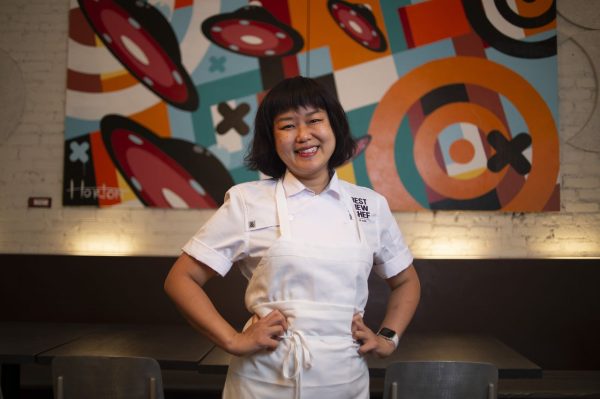
A very tasty treasure in Ann Arbor’s culinary ecosystem
One thing I’ve learned from traveling a lot over the years is that often, myself included, we can take local treasures for granted while we’re simultaneously letting ourselves be wowed by what we “discover” when we leave town. When I consider the context of the national culinary scene though, I’m reminded regularly of just how special the story of what Ji Hye and everyone at Miss Kim are doing really is. Here are three BIG reasons to make time to head over to the restaurant soon!
-
Gain a greater understanding of Korean cooking! While Korean barbecue, kimchi, and a mainstream version of bibimbob have gotten attention in the US in recent years, there is so, so much more to the amazing culinary traditions of the Korean peninsula. Ji Hye has done inspiring deep dives into the cooking of each of South Korea’s nine regions, as well as that of the impossible-for-any-of-us-to-visit-right-now North. She’s also gone back in history to study and cook food from the various Korean royal dynasties and to honor the influences of Japan and China. Each meal at Miss Kim then exemplifies our forty-year-long commitment to traditional food in a wonderfully memorable, exceptionally tasty way. Every visit is a chance to learn about the intricacies of what the thousands of years of rich Korean culture and history are all about.
-
The quality of Ji Hye’s cooking! Cooking well is not about headlines; to the contrary, it’s mostly about hard work, attention to detail, self-confidence, and an ability to learn from others while staying true to your own sensibilities. At Zingerman’s, we long ago committed to full-flavored food, which we define further to mean complexity, balance, and finish. Ji Hye’s work in the kitchen makes these come alive beautifully on every plate. Which is why food lovers from out of town consistently reach out to tell me how wonderful their meals at Miss Kim were. Kudos and respect to Ji Hye for working so hard and so successfully to master her craft!
-
Help support one of the many wonderfully positive immigrant stories in the U.S. I’m not here to argue formal immigration policy but it seems clear from any number of studies that the newest generations of immigrants—of which Ji Hye is one—are doing wonderful work to enrich the culture, economy, and educational work of the country. These are the positive stories of immigration, like the one in Malcolm Gladwell’s podcast, that are often not told, but certainly ought to be. Koreans have been coming to the U.S. and contributing positively to every part of the country, since the 1880s. The first significant wave of Korean immigration took place in the first years of the 20th century, about the same time my grandmother came to Chicago from Lithuania. Coming to a new place is not easy. We are all, in our own ways, moving into new “places” in our lives on a regular basis: not just new countries, but new jobs, new relationships, new communities, new stages of our lives. Ji Hye’s work to stay true to herself and yet adapt to local influences and ingredients is a model for the rest of us to learn from.
Whether you come to Miss Kim for lunch or dinner, whether you opt to dine or do carryout, you have the chance to benefit from all this and more with every visit. I feel fortunate to have someone as special as Ji Hye as a long-standing part of the ZCoB and here in Ann Arbor. In recent years, Miss Kim has gotten well-deserved recognition from Food and Wine, the James Beard Foundation, Bon Appétit, The New York Times, and more! Our town has been getting more and more recognition as one of the best places to live in the U.S. in great part for the richness of its cultural, and culinary, resources. Miss Kim, quietly, is a big part of what makes that happen. Kudos to Ji Hye and everyone in the restaurant for making the Miss Kim story so tasty and inspiring!
Book your next visit to Miss Kim!
Want more from Ari?
Sign up for Ari’s Top 5 e-newsletter and look forward to his weekly curated email—a roundup of 5 Zing things Ari is excited about this week—stuff you might not have heard of!
Terrific topping for gelato, cake, toast
 Here’s an easy and delicious new taste treat from the crew at the Candy Manufactory. The caramel we’ve been making for years as an ingredient in other confectionery work is now available to take home in 8-ounce cups. If you’re like me and making caramel is not part of your regular cooking routine, then grab some! Since the Candy crew has done all the work for us, the Caramel Sauce is excellent and easy to use.
The Candy Manufactory Caramel, like so much of what we craft around the ZCoB, is made special by the quality of the raw materials that go into it. We long ago made the commitment to cook and bake with Muscovado sugar from the island of Mauritius. Muscovado is essentially old-school brown sugar. Here in 2022, it’s much more work to produce but the flavor is far bigger, more complex, and delicious. Muscovado retains the sugar cane’s natural molasses, and adds great depth and complexity to this sauce, the Zzang! Bar, our Toasted Pecan Pie, the Butterscotch Pudding and Donuts at the Roadhouse, and many more. (We sell the Muscovado sugar at the Bakeshop and Deli as well for your home cooking and baking.) Caramel was likely first made in the Arab world—where sugar was well-established—over a thousand years ago by slowly cooking sugar with water. Milk would have come along much later, most likely in the middle of the 19th century.
This new Caramel Sauce is super tasty on gelato, with cakes, or tortes. Add it to coffee for a caramel latte. Drizzle a bit on French toast or pancakes. Steve Mangigian, managing partner at the Coffee Company, has been dipping slices of autumn apple into it!
Want more from Ari?
Sign up for Ari’s Top 5 e-newsletter and look forward to his weekly curated email—a roundup of 5 Zing things Ari is excited about this week—stuff you might not have heard of!