
Tag: ZINGTRAIN
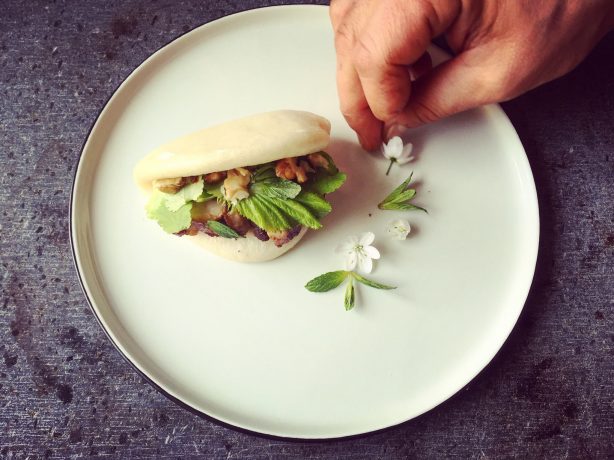
Back in November, on what would turn out to be Ji-Hye Kim’s last free day in a long time, ZingTrain eagerly interviewed her about what it meant to be a partner of the Zingerman’s Community of Businesses and opening our newest business—a Korean food restaurant—Miss Kim.
ZingTrain: Tell us the story. Start at the very beginning.
Ji-Hye Kim: I think to tell the story of any new business from the very beginning, you have to start at the point where someone realized they wanted to be a business owner. So that’s where I will start. Before coming to Michigan, I helped someone else open their business. I loved that entire experience. Working with practically no oversight. Creating the systems and an organizational culture from scratch. The freedom and sense of ownership that I felt. That experience is when I knew – I knew I wanted to own my own business. I suppose that’s where this story starts.
ZT: So why did you leave? Why did you walk away from all that?
JK: Well, I didn’t like the industry. That entire business was based on numbers. I wanted something more tactile, visceral, direct, honest and …. pleasurable! I hadn’t realized it yet but food is all those things and I’ve been longing for the Korean food I grew up with for a very, very long time.
ZT: How did you get to Zingerman’s?
JK: When I moved back to Ann Arbor, I lived a couple of blocks away from Zingerman’s Deli. I’d known about it as a student in Ann Arbor, but back then it was just “that expensive place I can’t afford.” One day, I walked into the Deli. I tend to be a pretty shy shopper – I don’t talk much and I mostly focus on the sign copy to make my choices. But before I even knew it, the person at the cheese counter had dismantled my usual armor of shyness and totally charmed me – and we were just talking about a piece of cheese! Funny thing is, I don’t even think he was trying, he was just telling me about the cheese. It was the best service I’d ever received.
Best of all, the cheese was outstanding! I was intrigued. Then I read a piece in the New York Times about Zingerman’s 25th anniversary. I was hooked. I started researching Zingerman’s and the more I read about it – the leadership style, the business model, being Open Book – the more interested I became in working there. And then there was food.
I was 27, going on 28, at the time. The years at the start-up had been intense in an industry I did not even like. So, I gave myself permission to “play” until I was 30. I figured it was low risk. Just long enough to scratch that food itch and then I would get “serious” with my life.
ZT: You’ve been at Zingerman’s for almost a decade now. You’re a partner at Zingerman’s and just opened our newest business. How did that happen?
JK: I started my life at Zingerman’s in the Retail Department at the Deli. It seemed only fitting given that a piece of cheese had changed everything. Besides, none of the other Zingerman’s businesses I applied to called me back! So I focused on learning every aspect of the retail business at Zingerman’s Deli. I learned how the numbers worked, how we took care of the food, the kinds of relationships we built with our producers and vendors and how we interacted with each other.
I took things at my own pace. Think of it as serious, engaged playing! Back then, I had no aspirations for partnership at Zingerman’s. Even though I didn’t know at the time that I wanted to open a restaurant, an Asian food restaurant seemed like a bit of stretch as a companion business for a Jewish delicatessen!
It wasn’t until someone else opened that door that I started considering it. One of my co-workers at the Deli, Kristen, put forth a vision for an Asian restaurant as part of the Zingerman’s Community of Businesses. She asked me if I was interested. And I walked through the door.
ZT: You mean you walked through that door and got on the Zingerman’s Path to Partnership?
JK: Back then the Path to Partnership wasn’t quite as formal and detailed as it is now. An Asian restaurant was definitely pushing the capacity of the process. So Kristen and I met with Ari and Paul and we figured out what the next steps were.
And then stuff just started happening. I realize now that this is one of the those intangible things – the power of vision, the power of being part of a connected community, the power of walking through an open door when you’re ready.
We decided that a food cart would be a low risk way of incubating and testing out the business we were proposing. The very next day someone told me that their friend was trying to sell a food cart! So we bought that cart and called it San Street. Then a local business owner decided that he wanted to open a food cart courtyard – Mark’s Carts. It came complete with a common commissary kitchen! And pretty soon we were one of the carts there, incubating our business.
Turns out that Mark’s Carts was not just an incubator for our idea, it was also a great incubator for being part of a community of businesses – perhaps with a little more dysfunction! We had a shared kitchen space and we had to self-organize to make it work. Much like at Zingerman’s, the company was awesome. We were a group of driven, scrappy, small business owners working hard to succeed. However, in contrast to Zingerman’s, we hadn’t exactly opted into the community and did not have common goals and principles. But we all wanted to make it work. And we did!
Most importantly, the food cart allowed Kristen and me to understand what it means to be a business owner. That’s when Kristen realized it was not for her. I, on the other hand, decided it was definitely for me!
The next four years are a bit of a blur. We really pushed the capacity of that food cart to its limit. We got a second food cart. We started catering events and doing pop-up dinners. Zingerman’s was pretty busy in those four years too. When we all emerged from those four whirlwind years, Zingerman’s had a much more formal and well-articulated Path to Partnership and I was ready to get on it.
ZT: Talk about the Path to Partnership process. What made you finally get on the Path to Partnership? What was it like?
JK: Becoming a partner at Zingerman’s is an interesting process. People have repeatedly asked me, “Did they make you jump through a lot of hoops?” My response : “Who’s they?”
To be honest, when I started on the Path to Partnership, I wasn’t a 100% certain that I wanted to be a partner and open a business within the Zingerman’s Community of Businesses. But like that other door that I walked through, I walked through this one. I figured that the act of walking through the door and being on the path would itself be the clarification I needed. And no matter the outcome, I would learn from it and grow as a person and future business owner.
It’s a very well designed process. It’s flexible. It allowed me to do things at my own pace which was important for me. It allowed me the time I needed to explore. It allowed me the space I needed to articulate the answers to “Who is this group that I am going to be a part of? What is their culture? How do they operate?”
And I got my answers. I held my own and did not go forward with each step in the process until I was ready. While I was on the Path to Partnership I saw our organization from an entirely different perspective. I got to know Zingerman’s (and myself!) at every level. Everyone offered to help. Everyone was on my side. And everyone was recruiting and advocating for even more people to be on my side. The organization was peppered with people proudly sporting San Street t-shirts!
The summary? The Path to Partnership process itself is the best representation of what it means to be a partner at Zingerman’s. It’s truly well designed.
ZT: What is it like becoming a Partner at Zingerman’s?
JK: Going through the Path to Partnership process you talk to a LOT of people. Every partner at every single business. You learn to advocate for yourself and your business. You learn to ask for help. Everyone you talk to has an opinion that you need to be able to meaningfully consider and then decide what you are going to do with. You’re asked to trust people with your personal future and your business vision and sincerely give them the opportunity to influence it. In other words, the process tells you exactly what it’s means to truly belong in a community.
And the trust. At Zingerman’s, you’ve got to buy in. And I’m not talking about the money, which you also need to do. Buy-in means that you buy into the way Zingerman’s operates – the vision, the guiding principles, open book, servant leadership. The whole thing. If you don’t like it, you don’t get to stand by the sideline and not comply. You also don’t get to maliciously obey. If you don’t like what you’re being asked to do, you bring a better option to the table and sell it to everyone else.
When I started on the path, I was not sure I was the best person to start a business within the Zingerman’s Community. I have a lone maverick side to me that enjoys making unilateral decisions. By the time I was done with all that talking and collaborating, I knew exactly what it would mean for this lone maverick to get herself 17 partners!
ZT: What were your biggest learnings from the Path to Partnership?
The most transformational thing I learned was this – Being a partner at Zingerman’s is not about relinquishing control, which had been my biggest concern.
I realized that I’m not an expert at everything and Zingerman’s was offering me many resources – not only the systems and processes that have been vetted over three decades, but also the collective wisdom and support of the entire organization. A team of 700+ people who were rooting for me to succeed and looking for ways to contribute to Miss Kim’s success.
I had imagined being independent and being part of the community as opposites. It’s more complex that that, even paradoxical. Being on the Path to Partnership, I learned that it’s about being both independent and functioning within a community at the same time. It’s about making better decisions by having access to more information and expertise than you might ever have had the capacity to gather as a small business owner. Being part of the community doesn’t mean that you lose autonomy. It does mean that you’re committing to being a part of the community, engaging in dialogue and giving and accepting help when needed. Nothing more and nothing less.
I also learned that dialogue itself is really useful. I might not use someone’s input, but being in dialogue significantly improved the quality of my decisions.
ZT: Which brings us to the best part. Tell us about the food.
JK: There aren’t many of absolutes in this organization because we dialogue a lot and make decisions by consensus – but one of the absolute absolutes is the quality of the food. It’s so inspiring to be part of an organization that holds you to that high of a standard and inspires you to keeping reaching for higher. We may not have a lot of experts on Korean food, but we have a lot of food experts here and they understand what good food tastes like!
Zingerman’s totally understood my obsession with the texture of the pork buns and tteok-bokki. My fascination with fermented food. Even my irritability on the misrepresentation of Kimchi in the western world! My numerous trips to Korea to research and learn, the many opportunities I took to go work in the kitchens of chefs more experienced than myself; at Zingerman’s no one ever questioned the ROI of that time and money.
Zingerman’s asks probing questions. What is the traditional version of the dish? What is the original form of this ingredient? How will you represent it here? Questions like these are important to me and totally par for the course at Zingerman’s. Taking the time to answer those questions has made for a much better menu at Miss Kim’s.
Why wouldn’t you want someone to walk into your restaurant, invest a lot of time and energy in evaluating every detail and then give you thoughtful feedback in a way that you understand and can hear? Now multiply that someone by 700 and you’ve got Zingerman’s. It’s like having hundreds of pairs of eyes and ears and millions and millions of taste buds!
If you would like to learn more about Zingerman’s Path to Partnership, please email [email protected] and we’ll send you a slew of really cool and useful stuff. You can also download our FREE webinars on the Path to Partnership online.
You can also read about the food at Miss Kim and see photos.
If just the thought of a “business seminar” puts your brain on snooze, we get it. The term brings on visions of stuffy rooms, mediocre food and endless presentations for us too!
But our ZingTrain seminars really are different—they’re designed to stimulate creativity to inspire real change. The Zingerman’s Experience, in particular, is a good starting place for any business owner, or really anyone who wants to learn the “secrets” that led to Inc. Magazine to call Zingerman’s “the coolest small business in America.”
Here are 6 (really good) reasons to attend The Zingerman’s Experience seminar :
1. You’ll learn all about what makes us tick—and how you can make your organization what you want it to be.
In other words, you’ll hear all about “Zingerman’s 12 Natural Laws of Business.” The 12 Laws are the reason Zingerman’s has become what it is today: a successful business with highly engaged employees. You can learn them, too, and adapt them to your organization. You’ll hear our take on connecting with customers, visioning, growing a great staff, good finance, and the benefits of servant leadership.
“I think our biggest takeaway was our need to re-do our vision, so that we know where we are going as a company. It is meant to inform all of our decisions, and knowing where we are going is key,” says Sarah Worley of Biscuit Love (maker of Bon Appetit’s “Best Sandwich of 2015), who took the seminar with her husband and business partner Karl Worley.
2. The seminar is always co-taught by Ari Weinzweig.
Ari is the co-founder of Zingerman’s Community of Businesses, which means he was there at the very beginning and you get to hear all about the story of how the businesses evolved pretty much from the epicenter of it all. Besides, Ari is great presenter—he’s always candid about the mistakes (mistakes can be beneficial!) that have come with success, and he leads attendees through soul-searching exercises that have the potential to enrich every type of organization. There are also plenty of opportunities to ask him your burning questions.
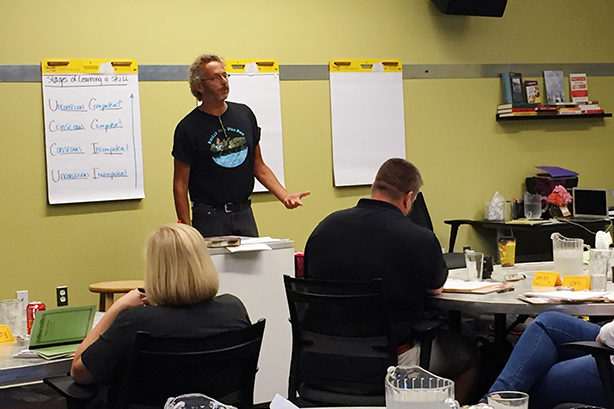
3. You’ll realize that even the most successful businesses aren’t perfect (a.k.a. Zingerman’s Natural Law #9)
It’s true. There’s no such thing as a perfect organization, and every single one—no matter how successful or well meaning—faces challenges. Getting creative with those challenges and growing a staff that can work past them is what makes for a resilient business. You’ll hear about some of the obstacles we’ve faced, the network of peers that you’ll meet in the seminar will also help you gain perspective and assess the strengths and weaknesses of your own organization.
4. You’ll meet (and learn from) people in different kinds of industries
At the a recent installment, in addition to folks from chocolate shops and bakeries, we also had people from the automotive industry, a kid’s dentistry group, and even academia.
When asked why she thought the seminar might apply to her daily work, Dr. Vicki Johnson-Lawrence, an assistant professor in Public Health and Health Sciences at University of Michigan-Flint, explained, “I’ve seen many academic teams work tirelessly to develop a structure that carried meaning for all of the people involved, from the overwhelmed student to the incredibly busy faculty lab director. Zingerman’s has successfully engaged and excited people across their organization to really care for the success of the organization, and I want to build a culture and team with these same attributes”
5.You’ll get a behind-the-scenes look at Zingerman’s
The Zingerman’s Experience includes tours of Zingeman’s Deli, Bakehouse, Creamery, Coffee Company, Mail Order and Cornman Farms, so you’ll get to experience the “vibe” at a host of very different Zingerman’s businesses and see how we work day to day. We’ll take you on a field trip to Zingerman’s Deli for lunch. During the two-day seminar, you’ll also interact with many of our employees, not just on the tours, but during an intimate panel discussion. Even better, you’ll be able to ask just about every employee you meet just about anything you like.

6. You’ll eat so much good food!
Breakfasts and lunches are catered by none other than Zingerman’s Deli and Zingerman’s Roadhouse. Treats from Zingerman’s Candy Manufactory, Creamery, and Bakehouse are served throughout the two days. Coffee from Zingerman’s Coffee Company will keep you energized and open to inspiration. And perhaps the best part, you’ll have dinner at Zingerman’s Roadhouse where you’ll have a chance to meet co-founding Partner Paul Saginaw and maybe even some of the other Zingerman’s Managing Partners.
If you’re interested in attending The Zingerman’s Experience or any of our other seminars, visit the ZingTrain website for more info—or give us a call at 734-930-1919.
ZingTrain’s 7th Annual Speaker Series kicked off August 31st with an engaging and enlightening talk from the renowned management leader, Peter Block. Ranging from personal introspection to the world at large, his talk Creating a Compassionate Economy, revolved around the necessity to eschew traditional methods of measuring personal and economic success for a more holistic and compassionate model.
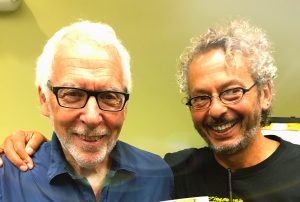
Ari introduced Peter Block with his own story of reading his book, The Empowered Manager in the early 1980’s. “The Empowered Manager shifted my thinking a lot,… it allowed me to think about management to get out of what Peter references as patriarchal or parental thinking to more of a peer-to-peer model.”
Ari went on to say how Peter’s writings led him to discover his own beliefs about his role as a leader. “[Peter writes] that the leader isn’t there to meet the expectations of the staff but to challenge people to own their freedom and to own their lives and in many ways I thought that was my responsibility in my work.”
Peter Block also brought friend and modern philosopher Peter Koestenbaum as his guest to the event. Both Block and Koestenbaum no longer frequently travel for speaking engagements, making this an extremely special opportunity for the Speaker Series’ attendees. To many laughs from the audience, Block said:
There’s a great quote I heard once in Russia, ‘Even the past is unpredictable’, and I thought that’s true!
Guests ranging from community activists to entrepreneurs to non-profit employees all packed the room to listen to Block and his unique approach to organizational development, management, and leadership. Guests were audibly surprised by some of Block’s musings on success and engagement.
“Everyone’s waiting on the second great transformation, for the second great revolution and it’s here. That’s what I thought I would talk about. There’s nothing to wait for. It’s here,” Block began. His comments centered on shifting the dominant narratives in the media and society from the idea that there isn’t enough and no one has enough, to a viewpoint of abundance through the lens of his own personal experiences as a corporate management consultant.
This is just one of the many planned speakers for ZingTrain’s seventh season. These speakers are brought by ZingTrain to Ann Arbor to bring their thought-provoking perspectives on business to spark ideas and dialogue.
Regular Speaker Series attendee, Holly Rutt of The Little Flower Co., recently told us:
My favorite thing about the series is how outside of the box the topics are compared to most business “seminars” it feels fresh and cutting edge to be delving into the philosophy/psychology of better business. The focus on servant leadership and open book management- as well as the importance of – self-management really rings true to me as the road to right livelihood and I love having these ZingTrain Speaker Series as many mini reminders to stay the course.
Maggie Bayless, Managing Partner of ZingTrain, has been heavily influenced by both Block and Koestenbaum’s philosophy on management and leadership. She explains further:
Peter Block and Peter Koestenbaum’s writings have deeply informed how we operate here at Zingerman’s—which means they are the basis for many of the organizational recipes and tools that we share through ZingTrain. It was an amazing privilege to host Peter Block for a Speaker Series and to create a venue for Peter Koestenbaum, Peter Block, Ari, Paul and a cross-section of Zingerman’s staff to be in dialogue. I expect this experience to be a highlight in ZingTrain’s and ZIngerman’s history for a long time to come.
Karissa Thacker on “The Art of Authenticity”
Shawn Murphy on “Optimism – The ‘New’ Leadership Strategy”
And The ChillPill Guys on Getting Going on Your Goals.For more information on these events and to see the whole schedule, please visit ZingTrain’s website.
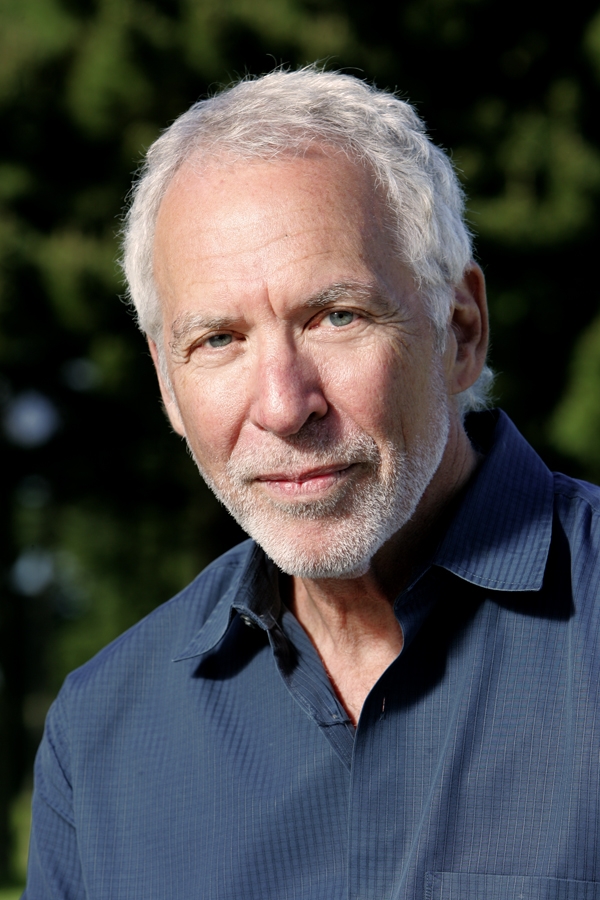
This blog post was written by Peter Block for the Zingerman’s Community site as a preview of the content of his Speaker Series session coming up on Wednesday, August 31.
Building Economically Viable Neighborhoods
Peter will talk about getting really serious about creating neighborhood economies that work for all. Especially in places which are persistently challenged even in good economic times. The session will focus concretely about a fundamental shift in narrative, from language of upward mobility, individualism and brokenness to a language of place, the commons and wholeness. He will talk about new measures of vitality, as opposed to the current annual income as the sole measure of well-being. He will discuss untapped sources of capital that support uncollateralized entrepreneurs and co-operative structures for everything.
Underlying all of this is a shift in thinking that is required to really address the popular symptoms of income disparity and debt burden. It is based, in part on his, John McKnight and Walter Breuggemann’s new book, “An Other Kingdom: Departing the Consumer Culture.” This shift in thinking opens the possibility of moving from a competitive, often predatory economy to an Economics of Compassion Initiative that is happening in Cincinnati.
What follows is the shift in thinking.
Shifting the Consumer Assumption
We want to tilt the economic system towards the common good and end the exiling effects of the current market system. To do this we need to question the basis of the free market consumer economy. The consumer economy is based on certain assumptions:
1. Whatever you have is not enough. If what you have is not enough, then you are not enough. If you have less, then obviously something is wrong with you. This is a scarcity worldview. Scarcity is the engine that drives our economy. Only what is scarce has value. This idea of scarcity is constantly marketed. It is what keeps us constantly wanting. We end up describing people by their average annual income. It also keeps an alternative future out of reach of people on the margin.
2. Whatever you need can be purchased. Everything can be outsourced. Want to raise a child, care for the elderly, be safe, be healthy? You can hire people and systems to do this. The service economy is a catchword for this. We have been distracted from our communal and neighborly capacity to produce much of what truly matters. Being poor in this context means that you do not have the means to outsource.
3. Labor is a commodity. A person can be purchased at the lowest cost and is expendable, replaceable and a holding action for automation. Capital chases cheap labor. It commodifies us. It dehumanizes us and separates us from the human soul that provides the labor. Community and the common good pay for this. In an economy that only rewards market value, if you live on the margin, or are elderly, or a child or youth, or unschooled, then you are declared useless.
4. Land is a commodity. It is useless if not developed and therefore has no market value. If land must be developed to have value, then nature is simply another tool of production. Climate change must be denied. This assumption rests on the belief that if we finally consume and exhaust the land, air and water, and patent nature’s seeds and scents, technology will provide us the genes and tools to adapt to the exhaustion and the engineered life. The land in marginal communities has been considered as waste. Wasteland. The neighborhood then has no economic prospects.
The Alternative Economy is Underway
The shift in the economic system is underway; an alternative system is all around us. It goes by many names: Economics of Happiness, Generosity Economy, Genuine Wealth, Gift Economy, Core Economy, Co-operative Economy, Social Economy. Sharing Economy. We are calling it a Compassionate Economy. All of these names place the common good, the well-being of all, at their center. They declare that there are cultural and spiritual values at the center of community that take precedence over market values. That these cultural and spiritual values are inherent in every place and every human being. That social relationships and social capital are more a measure of value than annual income. This is the shift.
To summarize, the distinctions between the beliefs of the compassionate economy and the market economy are:
1. Co-operation vs Competition. An economy based on local co-operation including the core economy of exchange and generosity, sometimes not monetized vs an economy based on competition, globally sourced advantages and measured only by monetized economic activity, called Gross Domestic Product.
2. Commonwealth vs Privatization. An economy giving priority to the common good and collective interests vs an economy maximizing privatization and individual rights. The “Free” in free market ideology is about freedom from limits and regulation. It is blind to “Free” as in life, liberty and the pursuit of happiness.
3. Gifts vs Deficiencies. The language of the possibilities, gifts and enterprise capacities of neighborhood residents vs the language of neighborhood problems, needs and deficiencies. Even the terms “poor” and “living in poverty” are a distorted and shrunken version of the full humanity of our neighbors.
4. Social vs Profit Purpose. Enterprises which primarily exist for the sake of employees, producers, customers and social good vs enterprises whose primary purpose is return to investors and owners. 140 million people in the US are member of some form of co-operative venture.
5. Local Knowledge vs Expert Knowledge. A belief in the inherent wisdom of local culture, social capital and the productive capacity of citizens vs a belief in commodification, development and resume laden expertise.
Zingtrain travels to Africa
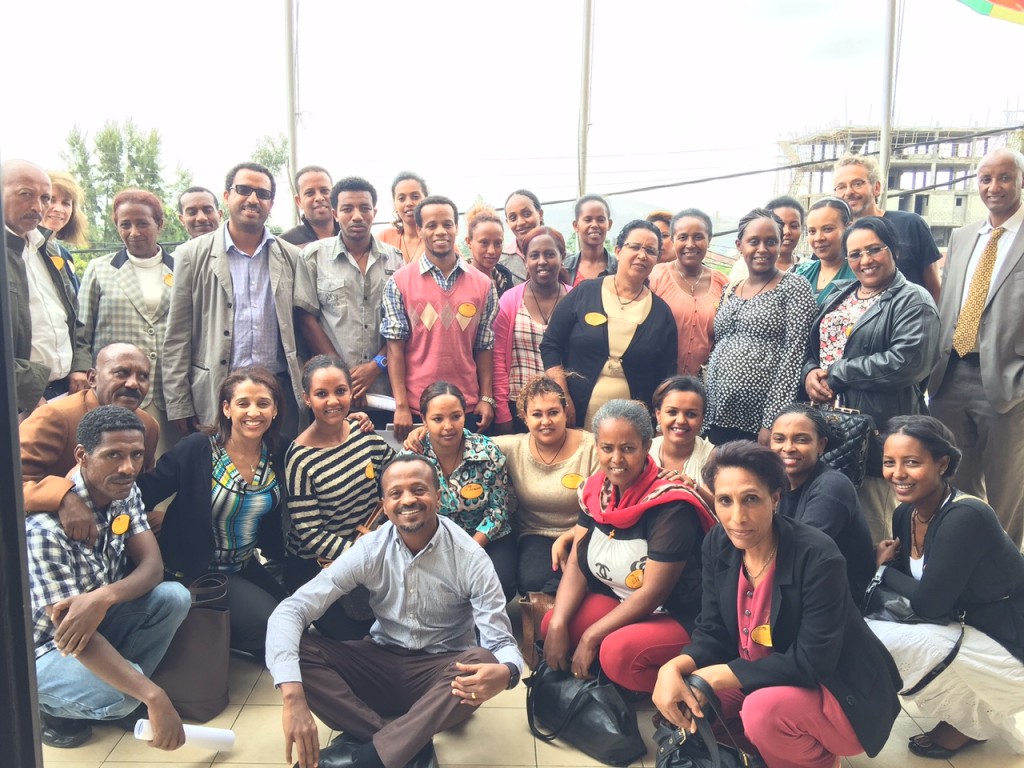
In May, ZingTrain had the privilege of being invited to teach in Ethiopia. And we’re not using the word privilege lightly here. Dr. Senait Fisseha is an inspiring and inspired doctor. Among the many roles Dr. Fisseha plays at the University of Michigan is the Executive Director of the Center for International Reproductive Health Training (CIRHT). And it was in that capacity that she asked ZingTrain to be part of the life-changing work she is doing in her native Ethiopia. To quote from a University of Michigan press releases:
“Dr. Fisseha has learned that well-trained OB-GYNs work as leaders in the health system and generate positive public health impacts including increased family planning provision, better pregnancy management, more facility-based deliveries, and better surgical outcomes. Our center will help empower women to make their own decisions about their own reproductive health, thereby choosing whether and when to start a family. Our ultimate goal is to help train future generations of capable and competent health care providers in many parts of Africa and South Asia who can deliver comprehensive reproductive health services, and also be advocates for the safest and best healthcare possible at every stage of a woman’s life. ‘Today, our center begins its new role in the developing world as we work with our partners in Ethiopia to ensure that incoming doctors, midwives and other health professionals are equipped to provide comprehensive reproductive health care that will save women’s lives,’ says Dr. Fisseha.”
Our contribution to Senait’s amazing work was to share our thoughts on Leadership, Change, and Organizational Culture with the visionary and determined healthcare professionals she works with in Africa. It is our hope that we contributed in some small way to their massive and much needed undertaking.
I interviewed Ari and ZingTrain’s Ann Lofgren who traveled to Ethiopia to teach. It was clear to me as we spoke that our conversation could have gone on for days. They were teeming with recognitions and realizations that came from this amazing opportunity. They saw how cultural differences play a role when you are training in a different nation, and came to understand the challenge in translating our values and techniques across that difference. They recognized the role that access to resources play in our success and were humbled by the honor of being able to contribute to such great work. What follows is a distillation of that conversation that could have gone on for days.
_____________________________________________________
Gauri: What were you doing in Ethiopia?
Ari: We were teaching ZingTrain content in collaboration with the Center for International Reproductive Health Training (CIRHT) and the Center of African Leadership Studies (CALS).
We did 3 sessions at St. Paul’s Hospital Millennium Medical College (SPHMMC) and one session for the directors of all the Ethiopian government ministries—from Agriculture to Transport to Health.
On Day 1 we taught Zingerman’s 12 Natural Laws of Business to about 35 members of the St. Paul’s Leadership team. On Day 2 we did 2 sessions on Servant Leadership—one for all the head nurses and the second for members of the hospital administration. What we presented to the directors of the ministries was a mix of the 12 Natural Laws and Servant Leadership.
How were those training topics chosen?
Ari: Well, the answer begins a while ago. Teddy Araya, who founded and runs the Center for African Leadership Studies, came to the U.S. as a part of his work with the University of Michigan. This was about a year and a half ago. He attended my ZingTrain Speaker Series session on Creating Creativity and after the session we got to talking and Teddy said to me, “ One day I will get you to Ethiopia.” And he did.
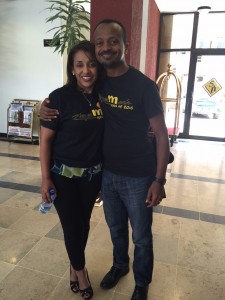
Teddy teaches Leadership and has been working with the cohort at the hospital on Leadership. He is an incredible teacher and trainer—he practically co-taught the session with me. And he’s doing great work with the team at St. Paul’s Hospital. Recognizing that the team he has been working with has not had the opportunity for extensive Leadership training, Teddy wanted to widen the range of Leadership ideas and concepts that they were being exposed to, he wanted to bring in a new perspective. And that’s the role we were playing.
Teddy is very committed to service—both internal service that co-workers give each other and external service to customers. The Ethiopian economy is booming and Teddy believes that for it to keep growing in a meaningful way, the next focus has to be on Service. Being a visionary, he is also very bought into the idea of Visioning and how we apply it to projects of all scales. That’s how Zingerman’s 12 Natural Laws of Business became part of the training we delivered. Because they touch on everything from Visioning to Service to Organizational Change.
Ann: I would reinforce that an important aspect for Teddy was to bring in someone from the outside because people listen and accept differently when they hear a fresh perspective from what they’ve been hearing over the years.
What resonated the most with your audience?
Ann: Going in we were just not sure how our ideas would translate across culture and language. We know that the way we use Visioning here at Zingerman’s is a pretty radical thing, Even when we teach it here in the US, with no cultural or language differences, we present the idea, we talk about how we do it, we set it all up and then we kind of hold our breath and wait.
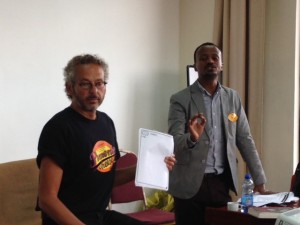
We did the same at St. Paul’s. Ari explained it to them. Teddy translated it into Amharic and helped with some of the cultural differences. And then we held our breath and waited, unsure that it was going to work at all.
But it did! Visioning was definitely what resonated with the group the most.
Yemisratch Abeje is a lovely woman who was in our training session on Day 1. On Day 2 she stood up and said to the team, “Yesterday changed everything.” And then she explained what she meant. She explained Visioning to her team. It was all in Amharic and we couldn’t understand a word she was saying but we all had goosebumps. She was almost crying. We were almost crying.
Ari: That moment really reinforced the statistic that over 90% of what we hear and learn is not the words. It really was pretty great – when we presented Visioning, they said the same things people say here. “It changed my life.” “Nothing will ever be the same again.” “I can’t believe I got this far without it.” “I can use it for anything—even my personal life.”
What resonated the least? What was hard to translate? Where did you have to change how we typically teach something?
Ari: The hardest thing—and it wasn’t that different from teaching in Slovakia—is that the audience all speak English but they understand it better than they speak it. Learning new ideas in a group is awkward anywhere. Learning in a language that is not the language you speak in is more so. And on our end, teaching in a culture that is not our culture is challenging. Metaphors don’t translate well. You’re concerned about being respectful in a culture you don’t understand, even if you studied it. And the humor, the humor doesn’t translate well!
Ann: The way we introduce the Zingerman’s 12 Natural Laws of Business is by talking about the Energy Crisis in the American workplace. The Energy Crisis was a challenging idea to convey. The great thing was that when they got it they totally got it but we had to go about it a different way.
Ari: There’s also this. In any place that has a lot of poverty, the notion of Energy Crises and choosing to do good work is hard to translate because the opportunity for people to create good work for themselves is much smaller. Sheer necessity plays a much bigger role in your choice of work. Our support systems, our opportunities, our advantages here are just so much more significant. And consequently you find a lot of good energy being directed at the infrastructure rather than creating good work.
Ann: I think that despite the lack of resources, despite the language barrier, despite the cultural challenge, what came through to us was their determination.
They truly appreciated the opportunity to be at the training. Because their resources are limited, I sensed that they appreciated the opportunity far more than their American counterparts might have. And that was big. That made what they were hearing even more important and it is clear to me that they are going to do something about it!
Ari: The truth is that they are trying to change the face of healthcare in Ethiopia. Senait is an awe-inspiring person, a testimony to the what one single person can achieve with vision and determination and drive. As I was prepping to teach the Natural Laws, the obvious dawned on me. Senait is a living example of all the Natural Laws. She is living in harmony with all of them. She provides Vision. She does the hard work no one else wants to do. She envisions and values and brings together the contributions of really diverse resources. Under her leadership, they are clearly building a cathedral, not just laying stone. They are changing the quality and focus of healthcare in terms of both content and attitude. They are trying to treat patients with respect and competence.
And that is what we were contributing to.
Business strategist and collborator Anese Cavanaugh at the ZingTrain Speaker Series
We recently caught up with Anese to ask her five questions:
Why are you so certain that everyone has a presence? Don’t some people have “bigger personalities” than others?
Everyone has a presence and we’re always always always having impact. We’re either contributing to or detracting from the energy of a room/situation/etc. even if that means we’re quiet and just holding space. You can have huge impact in a room, simply by the way you show up and the intention and energy you bring into that room. Yes, there are bigger personalities than others,and I find that’s only a very small part of presence — what I’m always interested in is how do they use that personality intentionally and so that it is a contributor vs. a detractor. We’ll be talking about this and how you use your presence super powers for good, not evil, no matter how big your personality or presence is.
Why do you think this notion of “presence” or “showing up” is so important? What kind of impact does it have?
It is the difference between us influencing others and getting the results and relationships we wish for – or not. And it is the difference between creating sustainable joy and fulfilment in our lives for ourselves or not. you have to show up for yourself well first in order to sustain being able to show up for others well too.
How did you come up with the IEP method?
There are 50,000 books out there on leadership and many approaches, I saw in many of them and so many of my clients that the tendency was to put self-care and energy as a last thing to pay attention to because they’re “soft stuff” and not “true leadership” skills. I couldn’t disagree more. To me a leader’s IEP is the difference between being a happy alive leader who people follow because they want to, vs. being burntout and followed because they have to. The latter doesn’t create life giving impact. So I blended my back ground in kinesiology and energy work (I used to work with athletes) into business and leadership practices and a bunch of other stuff over the last 14 years and created a methodology I thought would help create stronger and happier energized leaders.
How did you test the IEP method?
It’s tested everyday by me personally and it works. But besides myself, we’ve had thousands of people use it and integrate it into their life – in a way that’s authentic to them – and find that it serves beautifully. We’ve also had people who’ve gone through my programs who have their MBAs from Stanford and Harvard and others who’ve said this was the most powerful, meaningful, and effective leadership experience they’d ever had. “More valuable than an MBA.” We’ve integrated this content into schools and organizations around the globe, from Singapore to London to NYC, and everyone finds something from it they can align with and use for good in their leadership/life. The thing I like most about it is that while there is a “method” – it is truly up to each human to use the components of the method in their own authentic way – which is a core part of IEP – authenticity and alignment.
What is one take away that people can expect from your Speaker Series session?
A new relationship with what presence and showing up really means to them so they can use it to optimize their own impact and joy.
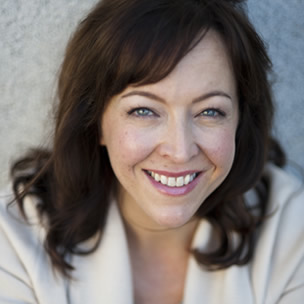
Anese Cavanaugh is the creator of the IEP Method (Intentional Energetic Presence) as well as a leadership and collaboration advisor, strategist, and thinking partner for business leaders in the design, service and innovation spaces. Through her speaking, writing and creative leadership programs, people learn how to optimize their leadership and presence, bringing their best selves to the table for greater collaboration, impact, and cultural success.
Anese Cavanaugh is a dynamic, highly sought after speaker who has been called “transformational.” Anese has appeared on stages across the country – Stanford University, the Inc. Women’s Summit, the Education Equals Partnership Annual Conference, and many others – all in service of Showing Up well and creating positive impact in the world. In addition to appearing in publications like The Huffington Post,CEO.com, and the NY Times, Anese writes regularly for Inc.com in her column “Showing Up”, has just released The IEP Survival Guide: First Aid for Your Presence”, and has a book due to release in late 2015 with McGraw-Hill. Anese will join us for the last ZingTrain Speaker Series of the season on Wednesday, June 24, 8-9am. See you there!