
Tag: ZINGTRAIN
On track june 2013
*ZAP = Zingerman’s Annual Plan

It’s annual planning season here at Zingerman’s.
And so, also at ZingTrain. Our fiscal year goes from August to July and each year we spend the months of April, May, June and a bit of July working on our plans for the upcoming year. That means visions, spreadsheets, flipcharts, whiteboards, meetings, conversations, communications, collaborations … you get the idea, and a whole lot of what we call, tying out – like making sure that Zingerman’s Bakehouse is plannin’ on baking as much bread as Zingerman’s Deli is plannin’ to sell as loaves and sandwiches.
And then, at the end of each year, we have a big party.
To celebrate being done with one year and planning the next and to get revved up about new the year. We call it the ZAP Wrap – we can be corny like that. Each business presents the highlights of the previous year and their big goals for the upcoming year. The Coveted Golden Zee award (Didn’t I tell you we can be corny?) is handed out with much pomp and circumstance to the business with the best presentation – determined by popular vote. The competition is intense but friendly; the presentations are multi-media – we’ve had video, audio, skits, powerpoint, rap – it’s a pretty creative group we have here.
But let’s start at the beginning.
I want to tell you a little bit about how we do our annual planning – because it’s a pretty neat process. it’s worked for us for years and although we fine tune it every year, we think we’ve got a pretty good thing going. So much so that it might very well be the next addition to the ZingTrain curriculum.
Annual planning starts with a Vision.
Like just about everything at Zingerman’s, no matter how big or small. Each business writes their vision for the upcoming year – more accurately, we revisit and tweak the 2 year vision we wrote for our business in the previous year. We make sure we’re still in alignment with the 2020 Vision for the Zingerman’s Community of Businesses. We might pump up one area or whittle down another based on what we’ve learned the previous year. We share it with our teams. We solicit input. We make changes and then away we go.
From the Vision we extract Goals.
We define a Goal as a specific way to achieve a component or aspect of our Vision. We might create more than one Goal to achieve a given component of the Vision.
For each Goal we identify Objectives.
We think of objectives as specific milestones on the way to achieving a Goal. Objectives are typically measurable. Goals can be too. Really, the most significant difference between a Goal and an Objective is the time frame. Goals span over longer timeframes than Objectives. Goals and Objectives can be of any nature – Financial, Social, Cultural, Service, Environmental, etc.
The next step is to identify Action Steps for each Objective.
Action Steps are the things we need to do to achieve the Objective, and therefore the Goal, and, finally, our Vision. Action Steps are where the rubber meets the road – each Action Step is accompanied by a start date, an end date and the name of the person/s responsible for its execution.
But wait, there’s more.
Besides, any Financial Goals, Objectives and Action Steps that we might have, we also develop our Financial Plans during these months – starting with revenue, and ending at net operating profit, we identify the numbers for each month and each revenue and expense category for the entire year.As well as other relevant measures like Capital Expenditures and Staffing Levels.
For numbers nerds like me, that is the best part of ZAP and what makes it different here at Zingerman’s, in my humble opinion, is that any revenue growth or expense reduction is driven by and ties out to the Vision, Goals and Objectives we write.
And then there’s the work.
We review our Action Steps, Objectives, Goals and Financials throughout the year in order to keep track of our progress, making updates and changes, as needed, based on emergent information and the day to day reality. While every business reviews the financials each week during our weekly staff meetings (we call them huddles, we’re an Open Book business) different businesses review their Action Steps differently – some review them as frequently as weekly and others, like ZingTrain, find it more meaningful to review quarterly. Whatever the review mechanism, what is important is that the Annual Plan is a living breathing, frequently referenced document that drives our behavior in very real and detailed ways for the entire year!
Feeling ZAPped? We are too!
That’s months of work paraphrased in a few paragraphs. I’m happy to answer any questions that may arise. I’d be more than happy to send you more information. I sure hope it was interesting to find out how we do things here. I’d love to find out how you do things there. Do email me (gthergaonkar AT
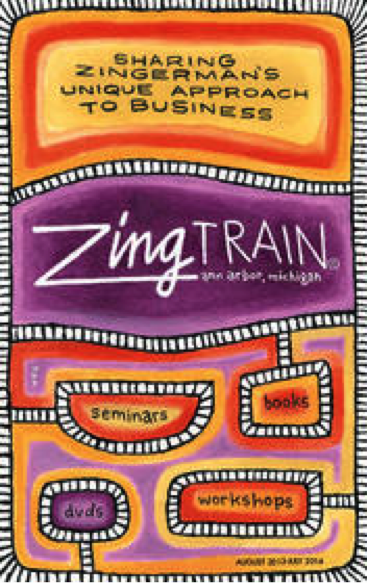
Our training catalog for August 2013 – July 2014 just came back from the printers and we think it might be our best lookin’ catalog ever!
Tag: ZINGTRAIN
It’s construction season!
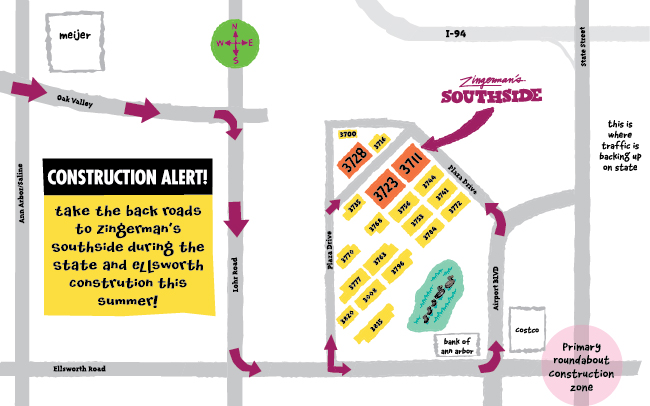
The orange barrels and cones are back, and this time it’s the intersection of State Rd. and Ellsworth Rd. that’s getting all the attention.
But don’t worry – we’re here to help!
Zingerman’s has created this handy map to help you navigate and avoid delays on your way to the Zingerman’s Bakehouse, Zingerman’s Creamery, Zingerman’s Coffee Company, or any of our other Southside businesses!
Use our map to get to Zingerman’s Southside with no delays and no hassles!
See you soon!
Tag: ZINGTRAIN

Creating A Vision of Greatness:
Imaging and documenting the future that you prefer
The story of Ari and Paul sitting on the bench in front of the Zingerman’s Deli and hatching a vision of growth through the creation of a Community of Businesses, rather than through franchising the Deli, is an important piece of Zingerman’s lore. Less well known, however, is the fact that we actively teach the process of visioning throughout the organization and use it regularly for projects both large and small. In addition, ZingTrain teaches Zingerman’s visioning approach to clients from around the world – in both public and private seminars and workshops. We define vision as “what success looks like, at a particular point in time in the future, documented with enough richness of detail that it’s clear when we’ve arrived.” Unlike the short “vision statements” found in traditional business books, our vision for Zingerman’s 2020 is about 7 pages long.
We believe that using visioning changes lives. We know it has changed us as an organization, and many of us have used visioning to change our personal lives as well. A vision is not a strategic plan but rather our destination. Strategic plans are important, but we believe they make no sense until there’s agreement on where we’re going.
One of the organizations we’ve worked with on visioning is Southern Foodways Alliance. We asked SFA Director, John T. Edge, to share his experience.
ZingTrain: Before we get into the interview, what would you like people to know about your organization?
John T: The Southern Foodways Alliance at the University of Mississippi documents, studies, and celebrates the diverse food cultures of the changing American South. We set a common table where black and white, rich and poor—all who gather—may consider our history and our future in a spirit of reconciliation.
When and how did you first hear about Zingerman’s and ZingTrain?
We learned about ZingTrain by falling in love with the Zingerman’s Community of Businesses. If you visit the Zingerman’s Roadhouse or Delicatessen, buy from zingermans.com, buy breads, buy cheese, or buy chocolates, you know that the folks on the other end of those transactions are customer service paragons. Somewhere along the way, we realized that SFA employees could learn a thing or six from Zingerman’s about customer service. That led us to ZingTrain.
What was the nature of that work?
Zingerman’s helped us craft our 2021 Vision of Greatness. It’s our lodestar.
How has your organization changed since working with ZingTrain?
We’re far more process oriented. And we’re far more focused on who we are and what we want to be when we grow up. Come to think of it, we’re closer to being all grownup.
Do you have any advice for an organization that is considering working with ZingTrain?
Trust the process. Read Ari’s books. Speak your mind. That vision of greatness thing will serve you very well.
Interested in learning more?
Check out these resources:
- Ari’s book, Zingerman’s Guide to Good Leading, Part 1: A Lapsed Anarchists Guide to Building a Great Business.
- Visioning Power Pack.
- For a copy of Zingerman’s 2020 vision, email ZingTrain.
- Read the Southern Foodways Alliance vision.
Tag: ZINGTRAIN
 2012 has been a year of much change at ZingTrain. We moved into our first-ever dedicated training space. We hired two wonderful new folks to join the ZingTrain team. We hosted our first guest speaker. And launched our series of free monthly call-ins. And that’s just listing the big stuff!
What has remained reassuringly consistent in 2012 is the core curriculum of our training, the foundation of all that we do here at ZingTrain – sharing Zingerman’s unique and uniquely successful approach to business through our seminars, workshops, and custom training.
It has been absolutely wonderful – during this time of much change – to hear over and over from our clients and seminar attendees that they find our training relevant, resonant and applicable, no matter what industry they work in.
Curricular Core and Constancy.
The intent behind ZingTrain and the ZingTrain curriculum has always been to share the tried and tested recipes, tips, techniques, and concepts that have worked for us over the years, and that we believe to be key to Zingerman’s success as a business.
Not surprisingly, the core content of our seminars and work- shops comes from material that is already being taught – formally and informally – to our staff. For our external seminars, we add content (and behind-the-scenes tours of our businesses) to make the Zingerman’s mission, values and culture explicit so that you can absorb our materials in the appropriate context – something we don’t do as formally in our internal training since our staff live in, are part of, and in fact create, our culture.
“Such an exceptional class. I loved the panel, Ann and Joanie did a wonderful job. Both days. Food was great. Room was comfortable. Information was life changing and applicable to all areas of my life.” – Seminar attendee from U of M Hospitals and Health
Way back then, when we opened our doors 18 years ago, the ZingTrain seminars focused on the content we felt most confident in: The Zingerman’s Experience seminar – an overview of who we are and what makes us tick. The Art of Giving Great Service, which is based on an internal class of the same name that is still taught to every single employee we hire. Bottom Line Training, where we reveal our Training Compact, which is all about how to develop and administer training that positively affects your bottom lines and Award-Winning Merchandising, which was all about how we create our unique, nationally recognized look and feel.
Curricular Change.
With time, came change. In several different ways.
Teaching is the fourth level of learning. A happy outcome of creating and teaching our seminars was that as we taught the material, we learned it in a new way! So we tweaked the material to make it better – and then realized that we could and should – make those same changes to our internal training. And so the material evolved.
Some of the curricular changes were driven by recurring questions from seminar attendees that we did not have the time to answer meaningfully during the seminar. For example, Working with Zing!, which addresses HR related questions, was born from questions that we encountered most often in the Art of Giving Great Service and Bottom Line Training seminars.
But, true to our core intent, it wasn’t until we had had a strong Human Resources manager at Zingerman’s for several years that we launched a seminar that shared our (now tried and validated) HR systems with other businesses. It was much the same with our Fun, Flavorful Finance seminar. To launch that one, we waited until we had successfully practiced Open Book Management for a few years and deeply and organizationally understood the resources and training needed to make it succeed.
“Good practical solutions. Very welcoming and a great positive environment. Nice to be around other like minded people with similar issues.” - Seminar attendee, June 2011
Other Changes Are Driven By, Well, Change.
In 2010, Ari wrote the first book in the Lapsed Anarchist Series: Zingerman’s Guide to Good Leading – A Lapsed Anarchists Approach to Building a Great Business. In it, he articulated the 12 Natural Laws of Business. The more we used and taught the 12 Natural Laws within the day-to-day work we were doing at Zingerman’s, the more we realized that they were the distillation of all that we were doing here. And so The Zingerman’s Experience seminar was redesigned to be based on the foundation of the 12 Natural Laws of Business.
Evolution is also how the Award-Winning Merchandising seminar became the Zingerman’s Marketing Secrets seminar. When we first offered the seminar, it was focused on merchandising because merchandising was what we did. We barely did any intentional marketing – a few ads here and there – but really much more of a focus on in-store displays and signage. Over the years we started doing more Marketing (though not advertising, we’re still not big on that). We hired a Marketing Manager and became far more intentional about our presence in the media and leveraging it. And as we evolved, the seminar evolved too.
As media evolves yet again, we’re getting more and more questions about online and web-based marketing. While we can share our approach to those in the seminar, we know we are not the experts – so we are partnering with an Ann Arbor company, The Whole Brain Group, whose primary business is helping companies attract clients and customers online.
And So, Back To The Curricular Core.
The more we teach, the more we recognize that there is never enough time to cover every single thing we want to teach in any one seminar. We strive, then, to identify what information will create the most value to the most diverse group of attendees. And then we design the presentation of that content so that during any given seminar we have the flexibility to present additional material or explore a slightly different path to suit the inclinations of a certain seminar audience or client.
At the end of the day, however, the core of what we are trying to do here at ZingTrain is not at all about telling you what you should do. It’s all about telling you what we do, why we do it, and how we do it. And we want to tell you in a way that makes it easy for you to absorb it and then adapt it, and if it is a good fit, apply it when you go back to your business.
“These 2 days have clarified who I am, what I do best, and how I’ll be moving forward in my next 5 years of business and life, and I am incredibly thankful. Thank-you!!! I can- not recommend them highly enough. Plus, the food will rock your world. — Mark Matson, Norwegian Squeegee – Meticulous Window & Gutter Cleaning, www.hireaviking.com
And what we like best about having that as the core of who we are is this: when you go back and apply what you’ve learned to your business, and then tell us all about it, we see our own systems and tools used in a whole new way, and then we learn from you! And implement your learning to our business, and a brilliant cycle continues …
Join us for a seminar in 2013. Connect with us and tell us how you’ve implemented what you learned from us. Feed the learning cycle!

Tag: ZINGTRAIN
This past week, the Zingerman’s Community of Businesses was very pleased to welcome author Toni Tipton-Martin to events at the Roadhouse and ZingTrain. Toni is an award-winning journalist, founder of the Jemima Code Project, and the author of the forthcoming Jemima Code book.
On Tuesday, Toni was the featured speaker at the 8th Annual African American Dinner, held at the Roadhouse. Guests were treated to a delicious menu created by Toni and Chef Alex, based on the recipes of Malinda Russell’s A Domestic Cook Book: Containing Useful Receipts for the Kitchen, self-published in 1866 in Paw Paw, Michigan and noteworthy for being the among first African American cookbooks.
Chef Alex began by talking about the menu, and going into detail about the creation and ingredients of each dish. Next, Ari talked about Zingerman’s long involvement with the Southern Foodways Alliance, where he was introduced to Toni and the Jemima Code Project. Finally, Toni talked about her inspiration for the Project, and her association with Jan Longone, curator of the Janice Bluestein Longone Culinary Archive at the University of Michigan’s Clements Library. Toni also spoke about her involvement with the SANDE Youth Project, a nonprofit food, nutrition, and cultural heritage program for under-served young people.
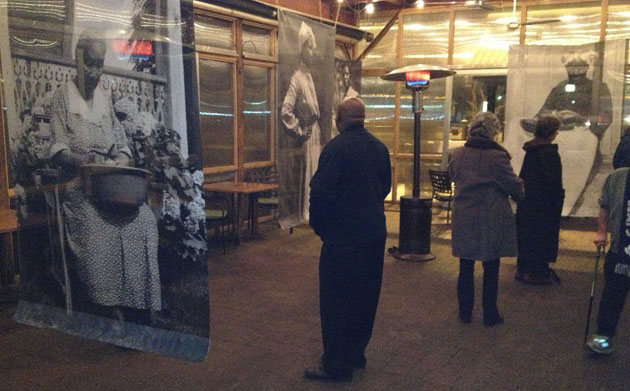
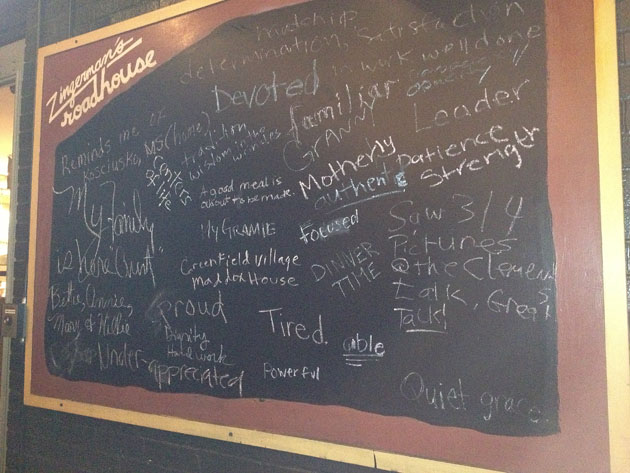
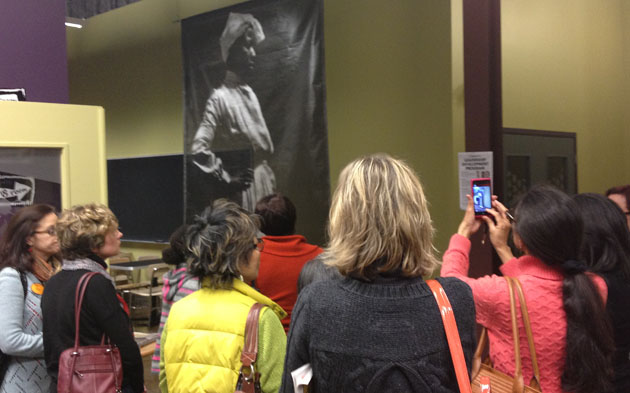
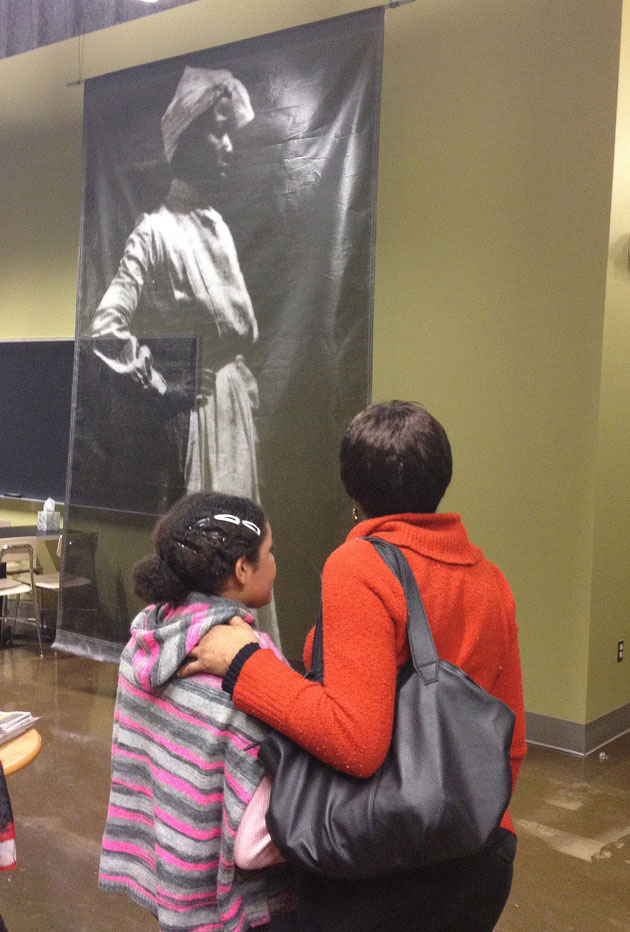
In addition, Toni was kind enough to bring “The Ladies,” eight-foot high photo blowups of the African American cooks and cookbook authors featured in the Jemima Code Project. The images were hung in a space adjacent to the dining room, and guests were encouraged to stroll through the huge portraits, and then share their impressions on a chalkboard at the far end of the exhibit. The photos were semi-transparent and evoked a powerful, almost ethereal presence in the room.
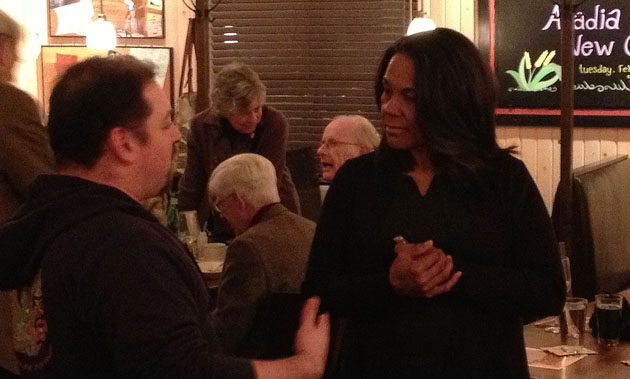
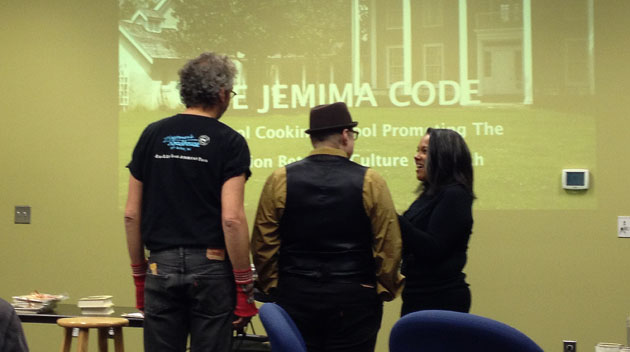
On Wednesday, Toni gave a presentation called “Deliciousness & Diversity” at the ZingTrain facility on Zingerman’s Southside campus. Toni went into more detail about the history of the Jemima Code Project, and her inspiration to begin. Her talk was accompanied by a slide show providing a primer in some of the disparaging ways African American chefs and cooks have been historically depicted in popular culture. Toni contrasted these unfortunate images with the actual histories of these talented, successful women, and illuminating their foundational and fundamental contributions to what we think of as “American cuisine.”
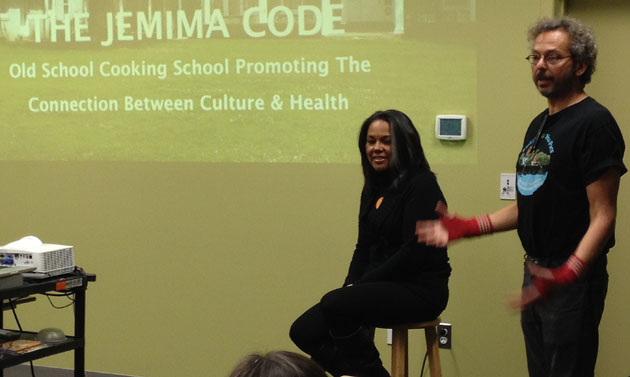
She talked further about founding the SANDE Youth Project, and the historic Austin residence currently being renovation as the organization’s new base. Next, she spoke about the Peace Through Pie program, which “provides a forum for community gatherings and community development, encouraging conversation and learning through the sharing of recipes, traditions, and pie.”
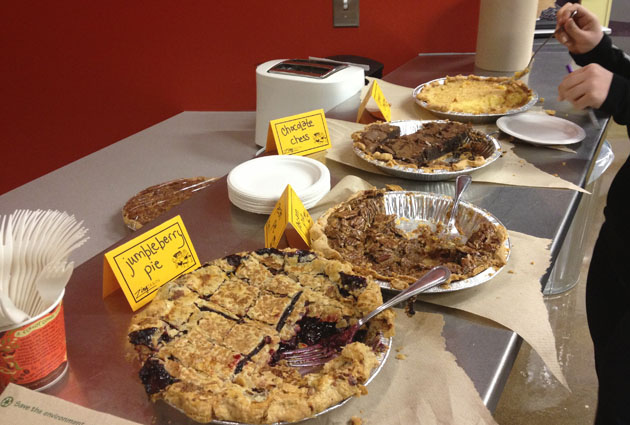
In keeping with this last theme, the Bakehouse and the Deli provided several delicious types of sweet and savory pie. And San Street and Cafe Memmi, Zingerman’s incipient Asian street food and Tunisian food businesses, also brought their own delicious variants on pie. The gathering was small and intimate, and Toni began by asking each guest to share who they were, why they’d decided to attend, and which pie(s) they’d chosen and why.
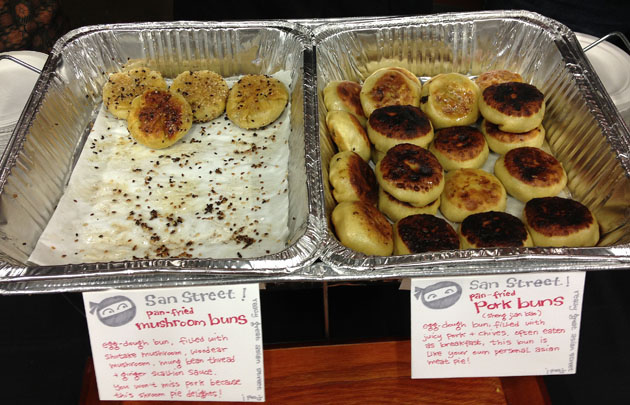
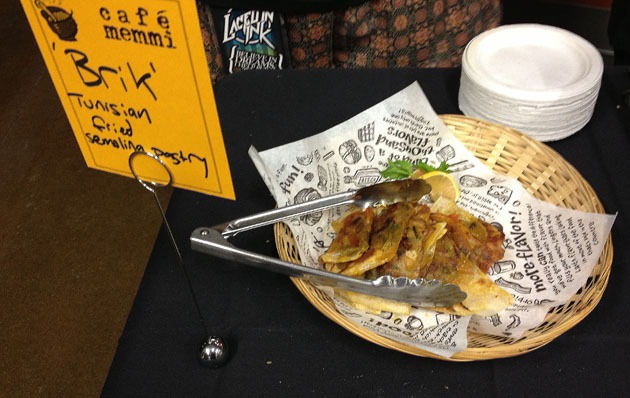
Toni elaborated on the motivation to use pie as both a metaphor, as well as a connection-building food:
- Pie is round, symbolizing inclusiveness.
- Pie is baked in a crust, which surrounds, envelopes, and comforts.
- Pie can hold vast diversity of ingredients.
- Most cultures have a form of pie.
Further, Toni talked about how food in general brings people together in mutual nourishment. Sharing food, breaking bread together, is an ancient ritual of cooperation and collaboration. It builds community. It helps bring needed social change, and it can be very empowering.
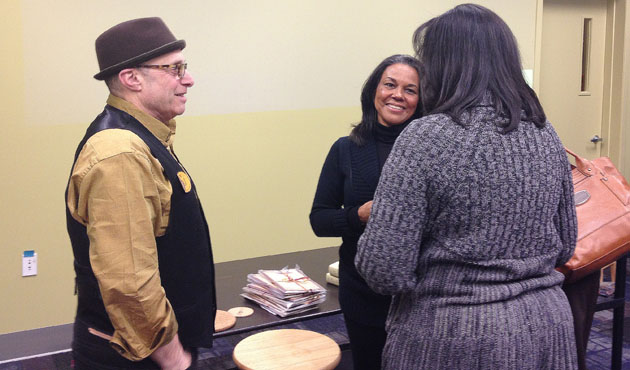
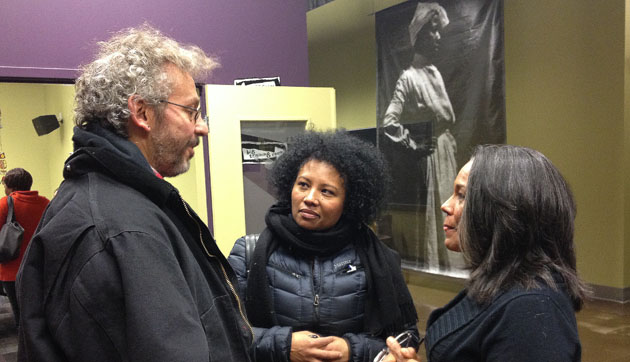
After her presentation, Toni graciously fielded questions late into the evening. Soon, the crowd drifted, still chatting, out of the conference room and into the lobby. People talked excitedly, sharing ideas and personal histories and recipes–all under the reserved, yet likely approving, gaze of one “The Ladies.”
Tag: ZINGTRAIN
 This coming Wednesday, January 23rd at 7pm, Award-Winning author of the Jemima Code, Toni Tipton-Martin, will give a presentation with Zingerman’s co-founder Ari Weinzweig entitled Deliciousness and Diversity at the ZingTrain facility located on our Southside campus, 3728 Plaza Drive in Ann Arbor.
Participants will taste a diversity of pies from the Zingerman’s Community of Businesses – not only the famous pies from Zingerman’s Bakehouse, or the pot pies from Zingerman’s Deli, but also pies from San Street and Café Memmi, Zingerman’s incipient Asian street food and Tunisian food businesses.
Following the food tasting, Toni will tell stories that debunk the myth of African-Americans limited to low-paying kitchen jobs, and instead show the vibrant history of black entrepreneurs in the food industry. Toni connects these past accomplishments of black cooks to modern concerns like time management, obesity, food injustice and poverty.
ALL PROCEEDS FROM THIS EVENT GO TO THE SANDE YOUTH PROJECT.
The SANDE Youth project is a 501c3 nonprofit food, nutrition, and cultural heritage program that is cooking up healthy futures for under-served young people through cultural enrichment, culinary activities, and community outreach.
Please do not miss this rare opportunity to meet a leading culinary historian, journalist and food activist. To reserve a spot at the seminar, please visit the ZingTrain site, or call 734-930-1919 for more information.
For more on The Jemima Code, visit http://www.thejemimacode.com or http://tonitiptonmartin.com or contact Toni Tipton-Martin at [email protected]