Local Asparagus, Carolina Gold Rice, and Tarragon Butter
A wonderful spring vegetarian entrée at the Roadhouse
’Tis the season! Asparagus is finally arriving here in Southeast Michigan after the recent days of chilly, gray weather, and since we have it for only about a month, it’s time to take advantage! The Chef’s Garden writes that “asparagus represents the hope of renewal and the optimism of what spring might bring.” And from the website Farmer-ish:
Nothing says you have hope for the future like planting asparagus. If you plant it from seeds, it takes three years before you can harvest any fruit. If you use crowns or plants, it takes two. And an asparagus plant lives for 15-20 years, so putting them somewhere means you cannot use that area for anything else for up to two decades.
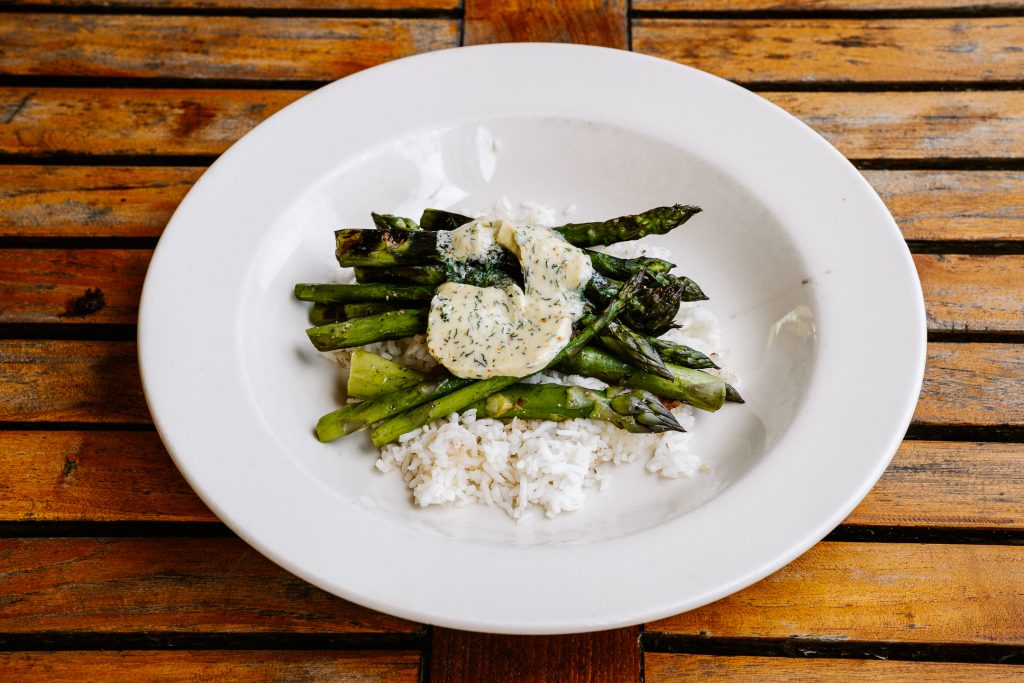
This tasty asparagus-focused main course is on the monthly specials list at the Roadhouse. For someone like me (and maybe you) who doesn’t eat a lot of meat and who, like food writer Micki Maynard, loves to see seasonal vegetables front and center, it’s a pretty terrific meal: a big handful of local asparagus, blanched and then grilled over oak, served over a bunch of that incredible organic Carolina Gold rice from Anson Mills, and topped with fresh-tarragon-scented Vermont Creamery Cultured Butter. If you’re in the mood for something more, it’s easy to add grilled chicken breast, broiled salmon, grilled wild-caught North Carolina shrimp, or a piece of dry-aged steak cooked on the oak-wood-fired grill.
Tarragon is not necessarily the most widely popular of fresh herbs around these parts, but Roadhouse Head Chef Bob Bennett and I are both longtime fans. Although it’s familiar by name to most every cook, to my taste, fresh tarragon is underappreciated and underutilized. There’s something almost magical to its aromatics, with its delicately bitter mintiness. As writer N. M. Kelby says, “Tarragon, with its gentle licorice, reminds us not to forget that miracles are possible.” (In these challenging times, there are many tangible action steps we can take, as I discuss above—and there’s little risk in adding a course in culinary miracles to our positive toolkit.)
The 13th-century Arab botanist Ibn al-Baytar wrote about tarragon’s use both as a culinary ingredient and as a sleep aid. Its cultivation in Europe dates only to the late 1500s, when it came to England from Siberia. In France, where it’s often called “the king of herbs,” tarragon is perhaps most famously used in Béarnaise sauce. It arrived in the U.S. in the early years of the 19th century, and it’s best known in American culinary history for its starring role in green goddess dressing, made in the 1920s at the Palace Hotel in San Francisco to honor the hit play of the same name. Tarragon is usually described as being licorice-like, but it’s also beautifully buttery, aromatic, and lively, with a bit of that “fresh-cut grass” quality one often gets from new-harvest olive oils. Honestly, I think I’m sort of stuck on the aroma. I love it on most everything!
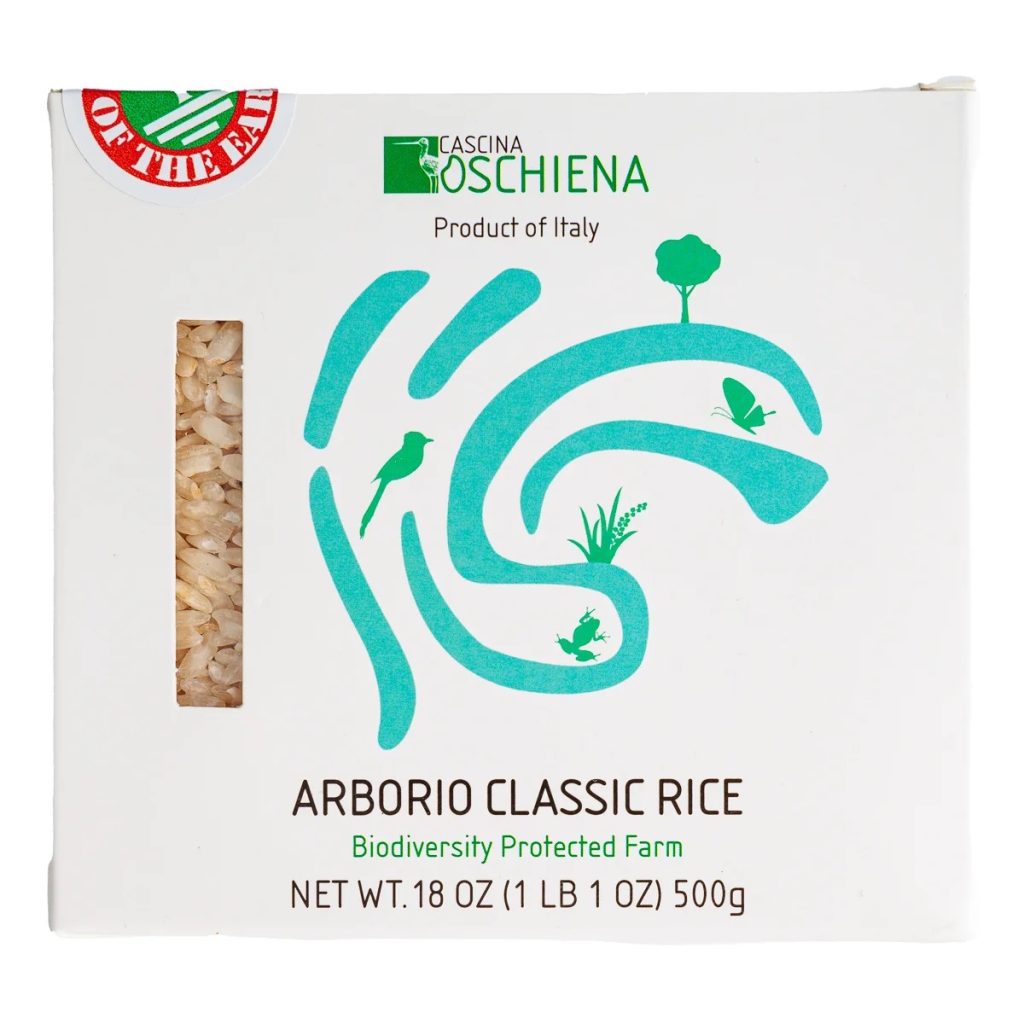
The Carolina Gold rice is, of course, truly remarkable—as wondrous an eating experience as savoring seasonal local asparagus each spring. Imported in the 17th century from West Africa—where rice cultivation had been done regularly and done well for hundreds of years—it was grown by enslaved people in South Carolina. Its fame meant that Carolina Gold was both served in the royal courts of Europe and prized on the plates of Americans of that era who “knew how to eat.” The wealth it created, however, went to the European planters, not the people who did the work to grow it.
After Emancipation in the U.S. in 1863 (giving rise to the high-hope period of post-Civil War Reconstruction that Sherrilyn Ifill describes in the lead essay), this super delicious but very labor-intensive varietal began to fade from use. What had been world-renowned in 1820 had essentially been forgotten by 1920 (coinciding with the Jim Crow era that robbed hope from so many African Americans). Fortunately, in the year 2000, some seeds were discovered in a seed bank in Arkansas, and, thanks to the good work of historian David Shields, Glenn Roberts from Anson Mills, and a handful of others, the old Carolina Gold rice was restored to production. What we get from Anson Mills today, in 2026, is organically grown, field-ripened (a lot of rice nowadays isn’t really fully ripened), and cold-milled for freshness right after we order it—and the germ (oil) is left in, which makes it way more flavorful.
Last but not least is the amazing asparagus—one of the highlights of the culinary calendar here in Michigan. So good, so green, so fresh, so delicious! The oak-wood smoke from the grill makes it even more special still. The lovely, herbaceous tarragon butter melting atop the hot-off-the-grill beef or asparagus is something to behold. Order a couple of buttermilk biscuits—made with that amazing Vermont Creamery Cultured Butter—on the side and dip the corner of one into the bits of butter that drip onto the plate.
This dish would be ideal—weather permitting—for a Father’s Day meal (book soon to reserve a table). As award-winning author Barbara Kingsolver writes,
Respecting the dignity of a spectacular food means enjoying it at its best. Europeans celebrate the short season of abundant asparagus as a form of holiday. In the Netherlands, the first cutting coincides with Father’s Day, on which restaurants may feature all-asparagus menus and hand out neckties decorated with asparagus spears.
P.S. The tarragon butter and asparagus show up on another entrée, too, this time alongside New York strip steak. And though it’s not on the menu … asparagus on a burger with tarragon butter would be awesome as well—an herb-enhanced version of the classic Wisconsin butter burger.
P.P.S. This tarragon mustard from France is beyond fantastic! It goes great in a vinaigrette on grilled asparagus with a little chopped hard-cooked egg.