Rekindling Hope on the Regular
How to weave the six elements of the Hope Star into our daily lives
Positive psychologist Dan Tomasulo says it well:
Hope is an act of courage. When we orient ourselves toward hope, we take actions that align with our most hopeful lives. This effect reverberates across our communities, causing people close to us to embody hope, too.
Still, given the rather shaky state of the world in which we’re living, many people I know are having a hard time staying hopeful. Their anxiety aside, I do believe that more hopeful times are upon us. As journalist Simon Tisdall wrote in The Guardian this past Sunday:
It may not feel like it, but hope is on the horizon.
I take Tisdall’s point. Difficult as it may be to detect, hope is indeed slowly but surely on the rise—which is a good thing. On further reflection, though, I’ll add that the “horizon” metaphor probably isn’t the best. It implies that there’s nothing for you and me to do but wait until hope comes closer. I suggest the opposite: the hope in question is one that we can all be—and, I feel, ought to be—actively working to make happen. Whether within each of us as individual humans, or within companies or countries, high hope levels are a prerequisite for well-being. Hope, I can see now, is one of the main factors that has helped to make our organization what it is. Without it, we would almost certainly have been out of business ages ago.
Recognizing that hope levels both rise and fall over time is, in and of itself, of great value. We are not, as history teaches us, stuck with the status quo. Henry Giroux, the scholar and cultural critic at McMaster University—quotes from whom both open and close the new pamphlet, “Why Democracy Matters”—wrote in a piece in Truthout last week,
Memory is a form of resistance. A society that cannot remember injustice is condemned to repeat it.
Taking this in the context of the recent Supreme Court decision on voting rights that I referenced last week, it’s pretty clear that we are not in a free-flowing, high-hope period of American history. Historian, essayist, and civil rights attorney Sherrilyn Ifill writes that “Black people went from the pinnacle of hope during Reconstruction to the ‘nadir’ of oppression and disenfranchisement in the early 20th century.” A hundred years later, after April’s Supreme Court ruling, that hope level may have fallen even further for many. Which makes this all the more important a time to invest energy in engaging with the idea of hope. After all, as Ifill emphasizes, the people have the power: “It was the demand and sacrifice of ordinary people—civil rights lawyers and activists who forced change—many at the cost of their livelihood and their lives—whose demands and sacrifices ushered in democracy in our country.” I’m confident we can, and will, do it again. As Tisdall suggests, we are currently winding down an era of low hope and—he and I both believe—entering into a more optimistically oriented one.
Sixty years ago, in his now famous “Ripple of Hope” speech, Robert F. Kennedy described a bit of what we are experiencing today:
There is a Chinese curse which says, “May he live in interesting times.” Like it or not, we live in interesting times. They are times of danger and uncertainty, but they are also the most creative of any time in the history of mankind.
Contrary to conventional wisdom, hope isn’t out of our control—it’s something we have far more influence over than most of us imagine. As I’ve come to understand over the years, hope is not a feeling; rather, it’s both a choice we make and an action we take. As the late Rabbi Jonathan Sacks said, “Hope is the belief that, together, we can make the world better.” I can say without hesitation that I hold this belief—and, as a result, I regularly make the choice to be hopeful and to work every day to turn that hope into a reality. My life is far, far better for it.
Interestingly, it wasn’t until my fourth book on leadership—The Power of Beliefs in Business—and many years of teaching through ZingTrain that I had even an inkling of how vital hope is in making what we do possible. My naivete on the subject was not, I now realize, uncommon, so I was fortunate that hope happened to come calling. For whatever reason, it seems I was ready to receive the message.
My personal journey with hope calls to mind the Nobel Prize–winning Peruvian writer Maria Vargas Llosa, who shared in a 1990 conversation with The Paris Review:
As far as I’m concerned, I believe the subject chooses the writer. I’ve always had the feeling that certain stories imposed themselves on me; I couldn’t ignore them, because in some obscure way, they related to some kind of fundamental experience.
Vargas Llosa’s statement makes me smile. For a long time, I labored under the widely held assumption that the writer would, of course, be in charge: authors determine what they’re going to do, and the essays, novels, poems, and plays they produce follow suit accordingly. The truth of the matter, though, is that it’s impossible to really know. Did I decide to study hope—or did hope quietly find me when I wasn’t even looking for it?
If, for the moment, we run with Vargas Llosa’s intriguing idea, then it was my good luck that hope—like humility, democracy, dignity, beliefs, and other concepts now close to my heart—had the generous consideration to choose me. Which means I carry the responsibility to spread the word—to teach and practice, as best I can, all the positive things that having hope makes possible. I’ve written far more about this topic in Secrets #44 and #45 in The Power of Beliefs in Business. What follows here is a briefer application of the key elements of that learning, updated for 2026.
One of the first things I discovered after hope called my name is that, without it, very little good happens in the world. As obvious as this may sound, it’s unfortunately not broadly understood. In the metaphorical organizational ecosystem model I’ve been working on for many years now, hope is akin to the sun. It’s essential to good living and good loving of any sort. And though it tends to get minimal attention in many contexts, what I’ve learned—and continue to learn—tells me that it should be the exact opposite. Hope is a subject we should be teaching to every six-year-old. We all need it, and we can all do it; there is nothing to lose and so much to gain. There is really no reason I can come up with not to make the active building of hope a fundamental part of our organizational activity.
In the trying times in which we find ourselves, hope becomes all the more critical to our existence. Headlines bounce back and forth, commentators speculate, and most people simply go about their daily lives without reflecting on hope one way or the other. And gradually, lacking the active engagement it requires, hope dims. Yet it does not, as I’ve learned over the last 10 years or so, have to be that way. We can, with a relatively small amount of effort, make hope a high priority. History professor Ruth Ben Ghiat, a global expert on authoritarianism, makes a strong case for action:
Hope is an essential part of anti-authoritarian strategy. It is the antidote to a deadly fatalism, to what Eric K. Ward calls the Other Big Lie: “The idea that we have already lost. … That we are helpless and hopeless in the face of all the bad news.”
Having studied it, written about it, and practiced it extensively for more than a decade, I know firsthand that higher levels of hope lead to greater resilience, more openness to change, stronger collaboration, better health, and increased happiness. So, given that it truly costs nothing, helping to make hope happen would seem to be the way that any effective leader—or, for that matter, any engaged person—would want to go.
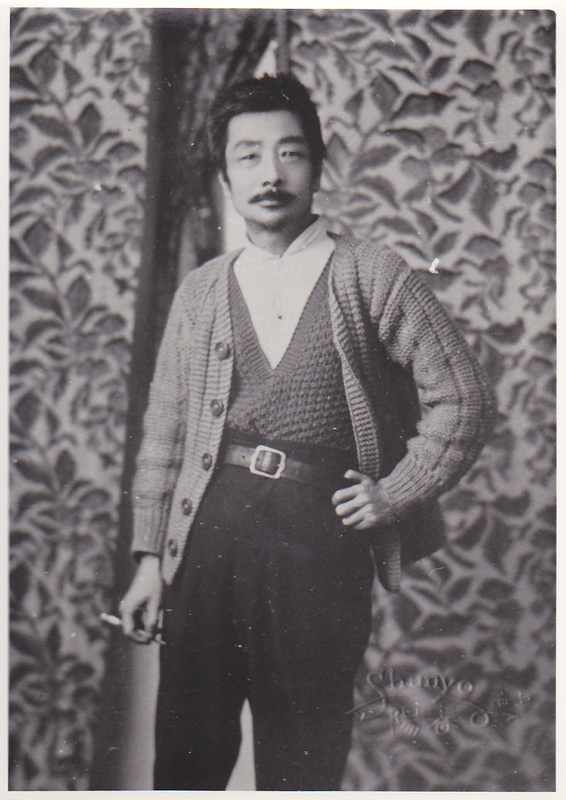
As has been true with my work around regenerative study, I learn more about hope with each passing year. And the most inspiring example I’ve found of late comes from a wholly unexpected source: the early-20th-century Chinese scholar Lu Xun (pronounced “Loo SHWUN”). Born Zhou Shuren in September 1881 to an impoverished scholarly-gentry family in Shaoxing—a city famed for its amber rice wine and located near Hangzhou, home of Dragon Well tea—Lu Xun is widely regarded as the founder of modern Chinese literature.
Looking back on his life’s work, I see that Lu Xun actively studied Chinese history, not just for the sake of knowing it, but rather with an eye to building a positive future on its foundation. In the spirit of Henry Giroux’s remarks about memory, he wrote in a 1906 essay, “There is no achievement of today that is not tied to the heritage of the past.” Like many writers in our own tumultuous time, he dealt with a great deal of social upheaval, as China made the challenging transition from ancient autocratic kingdom to modern nation-state. After the last empire fell in 1912, Lu Xun told the American journalist Edgar Snow, “Before the revolution we were slaves. And now we are the slaves of ex-slaves.” Snow, who saw the country as his “second home,” valued Xun’s work enormously, calling him the “key that taught me to understand China.”
Lu Xun was one of the first Chinese authors of his era to actively engage in political protest through his writing. His intellectual horizons had been expanded by his experience studying medicine in Japan and his wide exposure to Western literature, including English, German, and Russian authors. In 1918, inspired by the work of the Ukrainian-born Russian writer Nikolai Gogol, Lu Xun published the essay “Diary of a Madman” in a progressive Chinese journal called New Youth that promoted individual freedom, democracy, women’s rights, egalitarianism, and a down-to-earth approach to literature. Later, in 1930, he became a leader of the League of Left-Wing Writers, working tirelessly to combat oppression. Lu Xun argued that “whatever a revolutionary person writes is revolutionary literature”—making his long list of writings just that. He was greatly loved by China’s artistic community, and when he died of an asthma attack in 1936 at the age of 55, over 7,000 people marched in his funeral procession.
Throughout his writing life, Lu Xun regularly challenged the status quo, examining things that often went unquestioned and opening people’s minds to new ways of seeing. He used his work to illuminate what was going on around him, advocating for change with his pen. Lu Xun belonged to a movement of artists who pushed back against authoritarianism and fought for dignity, hope, and human rights. He was a radical in many ways, from embracing anarchist beliefs to being the first writer in Chinese history to publish his love letters. As Andrew Higgins wrote in The New York Times last month,
Lu Xun made his name a century ago as a coruscating critic of traditional Confucian culture, foreign bullying and the grandiose pieties of Chinese despots old and new.
Lu Xun’s grandson, Zhou Lingfei, told the Times that his grandfather’s “aim was to help the Chinese people stand up and rise above their circumstances, not to blindly copy the West or pander to prejudice.”
Hope, of course, underlies all of Lu Xun’s proactive work to make the world, and Chinese society, a better place. And while many people today have pulled back from such commitment, he shows us that it’s only our efforts that will make hope happen. The absence of hope, Lu Xun understood, creates indifference—what he called “shouting into an abyss,” which “generates … a peculiar hollow sense of desolation.” In a 1921 short story entitled “My Old Home,” he wrote,
… hope cannot be said to exist, nor can it be said not to exist. It is just like roads across the earth. For actually the earth had no roads to begin with, but when many men pass one way, a road is made.
As fraught as the global situation might seem these days, Lu Xun’s wise words are a powerful reminder—for me, for you, for anyone—that our collective dedication to building hope is what will make it so. And this is my call to all of us to amp up and ramp up an ever-more-hopeful reality. The more hope we create together, the more positive outcomes are almost certain to emerge.
Progressive business writer Carol Sanford, whose thought-provoking books and essays in the first quarter of the 21st century in many ways parallel Lu Xun’s in the first quarter of the 20th, writes extensively about what it means to be an effective regenerative leader. Hope, as you might guess, is an integral component. In The Regenerative Life, Sanford explains:
The role’s core value is to make hope possible. Hope becomes the ability to see another’s path or possibility when the path we are on becomes closed. Hope dies when we can see no way out or forward. This is because it is a core aspect of what it means to be human. We all want to have an effect on our worlds and to change what we see needs changing.
One of the many beautiful things I’ve learned from studying—and striving to embody—hope is that we can all contribute to this work in small but mighty and meaningful ways. In the words of Lu Xun, “When many men pass one way, a road is made.” I invite you to join me on the road to hope, and a more positive future for everyone.
Having spent so many years working with ZingTrain’s Maggie Bayless, I’ve seen how important it is to take lofty concepts, like hope, and turn them into practical, teachable, and repeatable action steps. Accordingly, “Secret #45: A Six-Pointed Hope Star” offers a simple, approachable framework that anyone interested can put into practice! The six “points of the star” are what we need to do to raise hope—in our colleagues, our children, our fellow citizens, and ourselves.
The Six-Pointed Hope Star: An Ode to Solar Power for the Soul
- Shine light on more positive futures. The emphasis here is on the plural. People with higher hope generally can see more than one positive future in front of them. Folks with lower hope, by contrast, usually see only one—and if/when that future falls apart, they tend to give up.
- Support people seeking multiple routes to get there. Again, the focus is on having a number of different paths by which we might attain the future we hope for. Individuals with only a single path to get where they want to go are far more likely to become disappointed and give up hope when that path doesn’t play out positively.
- Show people how much they matter for who they are, unrelated though that may be to their jobs. This one is very commonly missed within the modern workplace, where, in the face of industry and technology, individual humans are often made to feel irrelevant. High hope leans in the other direction, toward a (work) world where everyone matters.
- Help people see how much their work matters. People who do pointless work lose purpose and, over time, also lose hope. When we know that our work makes a meaningfully positive difference, our hope levels rise.
- Show off the small steps. Big successes nearly always start small. Lower-hope individuals tend to wait for the “home run” that never comes, while higher-hope folks understand that it’s a series of small victories strung together over a long period that lead to rewarding results.
- Show them the larger whole of which they’re a part. Everyone wants to be part of something greater than themselves. This is one of the key components that makes any thriving organization what it is.
All six of these, I’ll point out, add up to create the scenario for which Lu Xun advocated: many people pushing forward caringly toward positive outcomes to inspire hope. As he believed, momentum builds over time. And it strikes me that Lu Xun’s writings essentially fulfilled the six elements of the Hope Star for a Chinese populace struggling to get its sociopolitical footing during turbulent times in the early decades of the 20th century.
My challenge to myself, from the day I began exploring all this, was to do my best to apply the six points of the Hope Star for everyone I work with. I have not, I know, gotten it right every day. But it does give me a framework to aspire toward, one that’s easily tracked and, with rigor, relatively easily implemented. Don’t get me wrong—it takes work to make it happen—but at the end of the day, the effort is well worth it. Writer and activist Gloria Steinem made a related point in a commencement speech at Wesleyan back in 2022: “Hope is a form of planning. … [J]ust remember that what you do every day matters—what you say, what you encourage, what you oppose, what you imagine …”
If you’d like another take on how to make hope happen, here’s some wisdom from the Marginalian’s Maria Popova:
Along the way of life, I have discovered three things you can almost always do in your darkest hour that almost never fail to recover the light:
Learn something.
Help someone.
Feel it all.
These three practices also, I believe, build a road of hope!
And again, if there were ever a time for fostering hope, this is it. Hope is, without question, an effective antidote for autocracy. As Ruth Ben Ghiat writes,
Authoritarianism breeds fear, through the use of state repression, but also cynicism that can shade into nihilism. If nothing matters, and nothing will ever change, then far fewer people will be willing to risk everything to fight for a more just society. It is easier to submit, whether that means staying silent about the persecution of your compatriots or about negligent state policies that result in mass death.
Authoritarian leaders are pushing for the “re-education of Americans to put aside hope and accept the status quo,” she adds, evoking what the late, great University of Michigan psychologist Chris Peterson came to call “learned helplessness.” People are trained to prefer passivity, to wait for the autocrat to announce “brilliant” next steps. Here in the ZCoB (Zingerman’s Community of Businesses), we have long worked to go in the opposite direction—to create an organization in which everyone learns to act like a leader, to think for themselves, and to challenge the status quo where they feel it’s appropriate. Hope, as Ben Ghiat observes, is a prerequisite for making this happen—“an essential part of anti-authoritarian strategy.” Or, as social worker Paul Shattuck puts it, “When hopelessness is a form of oppression fabricated and promoted by those in power, choosing hope is a radical act of resistance and rebellion.”
To be clear, having hope does not mean embracing the idea, to quote writer Rebecca Solnit, “that everything was, or will be, fine.” Rather, hope’s power lies in its embrace of openness and possibility, and in the willingness to do the work to make that possibility come alive. This is, I see now, what Lu Xun devoted his own life’s work to. In her book Hope in the Dark, Solnit writes:
Hope locates itself in the premise that we don’t know what will happen and that in the spaciousness of uncertainty is room to act. When you recognize uncertainty, you recognize that you may be able to influence the outcomes. … It’s the belief that what we do matters even though how and when it may matter, who and what it may impact, are not things we can know beforehand.
John Patrick Weiss, a former police chief turned writer, noted in a recent piece for The Good Men Project that “wounded children become broken adults.” Conversely, of course, hopeful children are much likelier to become hopeful adults. So it seems clear that the more we teach hope and how to build it—to our young people, to our staffs—the better it will be for everyone. After all, hope is the natural state in which we as humans thrive. As Chilean poet Pablo Neruda once remarked, “You can cut all the flowers, but you cannot keep spring from coming.”
Another figure who has done a great deal of work on hope is public-interest lawyer Bryan Stevenson, founder and executive director of the Equal Justice Initiative, a human rights organization based in Montgomery, Alabama. His episode of the On Being podcast is one I’ve listened to and learned from many times now. Stevenson says on the show,
I am persuaded that hopelessness is the enemy of justice; that if we allow ourselves to become hopeless, we become part of the problem. … And if I’ve inherited anything from the generation who came before me, I have inherited their wisdom about the necessity of hope.
One of Stevenson’s suggestions for sparking hope is to “get proximate.” And if we apply the six elements of the Hope Star in every direction, we do just that. He adds,
I think hope is our superpower. Hope is the thing that gets you to stand up when others say, “Sit down.” It’s the thing that gets you to speak when others say, “Be quiet.” I never met a lawyer until I got to Harvard Law School. I had the hope I could be something I’d actually never seen anybody like me be. We built [the Legacy Museum] and [the National Memorial for Peace and Justice]—I didn’t know anything about museums and memorials, but I had this kind of idea that we could create a space that might be a truth-telling space that might help people reckon with this past. And because we had this hope—even starting an organization like [the Equal Justice Initiative] in a place like [Montgomery], it didn’t make sense if there wasn’t a hope dynamic pushing you.
And I think we have to have that. I get worried when I meet hopeless teachers or hopeless lawyers or hopeless politicians or hopeless advocates. Those are people who are not going to help us advance justice in the world.
It’s abundantly evident to me that hope is a crucial component in improving our companies, our communities, and our countries—in fact, it’s a necessity. As writer bell hooks has it, “Hope is essential to any political struggle for radical change when the overall social climate promotes disillusionment and despair.” In other words, if we want to make the world better, we need to have hope! Rebecca Solnit observes that while America as a nation claims many positive attributes, nevertheless “we’re poor in hope.” Ironically, this shortage can be corrected at no financial cost, and with comparatively little effort. The six elements of the Hope Star offer just what we need to make it happen—no need for government grants, no need for new leadership in Washington, no need to wait for anyone else to get going. We can just do it!
In that spirit, organizer and educator Mariame Kaba offers some inspiring words on transforming hope into a daily reality:
… [W]hen I would feel overwhelmed by what was going on in the world, I would just say to myself: “Hope is a discipline.” It’s less about “how you feel,” and more about the practice of making a decision every day, that you’re still gonna put one foot in front of the other … It’s work to be hopeful. It’s not like a fuzzy feeling. Like, you have to actually put in energy, time, and you have to be clear-eyed, and you have to hold fast to having a vision. It’s a hard thing to maintain. But it matters to have it, to believe that it’s possible to change the world.
I’m reminded of the power of history—and the continuum of activism—when Swedish environmentalist Greta Thunberg, who turned 23 this year, shares much the same set of beliefs about hope that Lu Xun did more than a century ago:
Once we start to act, hope is everywhere. So instead of looking for hope, look for action. Then, and only then, hope will come.
In the coming days, weeks, and months, I will redouble my own efforts to make hope happen within our organization and our community. The more we work on this together, the better the road we will build.
P.S. In last week’s e-news, I wrote about—and included a photo of—the strange building demolition (or, as I saw it, art installation) on a main Ann Arbor thoroughfare not far from the Bakehouse. I drove past again a few days ago. It’s gone.
P.P.S. One of the best ways I know to build hope is to share all these learnings more widely. To that end, Jenny Tubbs at Zingerman’s Press put together this terrific “Hope Booster Box.” If you’re looking for a good gift for Father’s Day or any other occasion, check it out!