Two-Kilo Country Multigrain from the Bakehouse
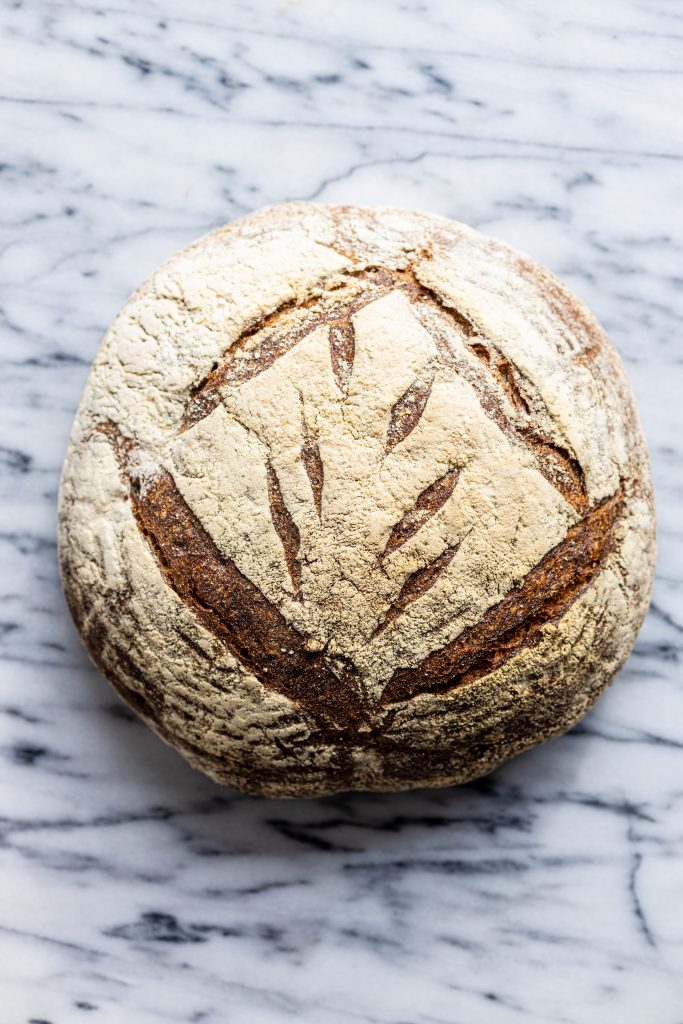
A beautiful, terrifically tasty bread
Somehow, within supermarket-driven American life in the 20th (and now 21st) century, bread became just another cheap commodity—something to drop in your shopping cart and later use to make toast, or sandwiches for school lunches, etc.
In the European tradition, bread always had the exact opposite status. Rather than a commodity, it was a token of communion—either literally, in the church, or figuratively, at secular family gatherings. Prayers were said over it. Everyone knew the taste of local wheat; they could tell what had been freshly milled and what had been in storage for too long. In times of need, people often lived on it—the average Russian in the 1890s, when my family was still living there, ate about six pounds of bread per day. Bread had substance, it was healthy, and it couldn’t have been more highly valued.
Maintaining this cultural memory is vitally important. Menorcan musician Anna Ferrer has a whole new album out that’s dedicated to honoring the four generations of traditional baking in her family. And this past week saw the passing of the remarkable Carlo Petrini, the Italian who founded Slow Food out of anger at McDonald’s expansion in Europe and then spent the rest of his life fighting to preserve, protect, and spread the word about traditional foods, their stories, what make them special, and why they matter.
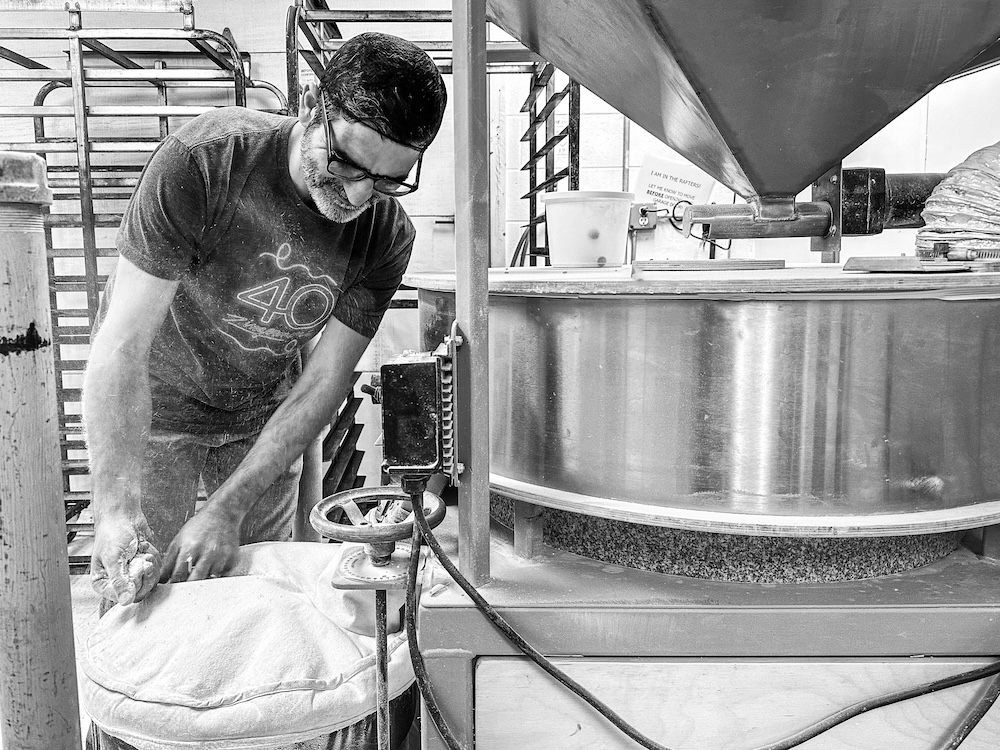
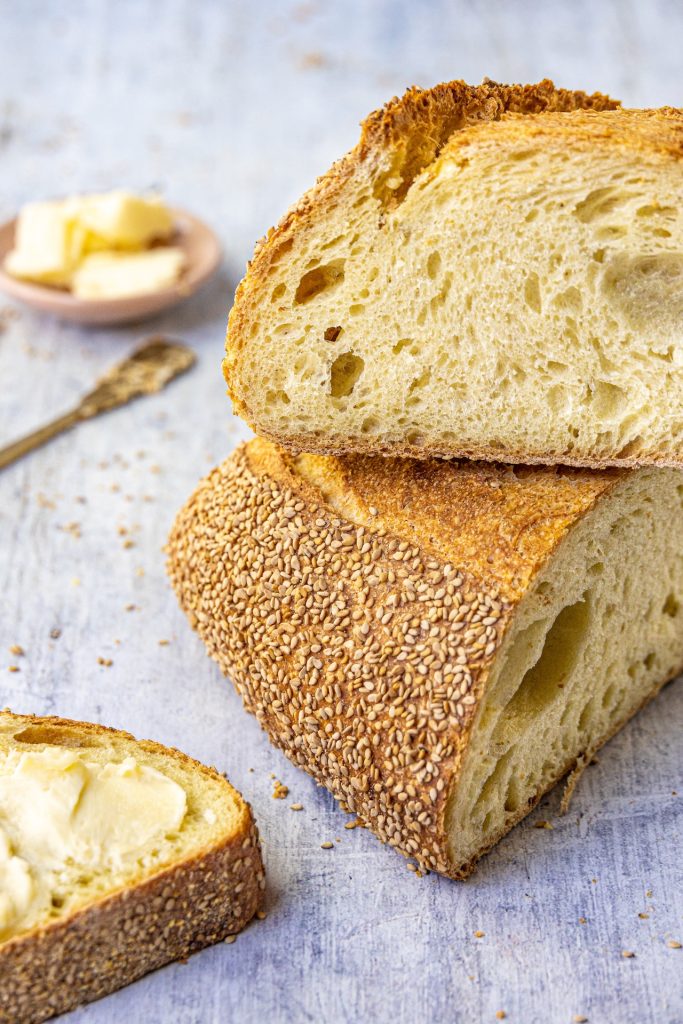
The Bakehouse’s large Country Miche—and its slightly smaller cousin, the Country Multigrain batard—is the kind of bread that both Carlo Petrino and Anna Ferrer would feel really good about. It’s made from regional grains, stone-milled here at the Bakehouse, and naturally leavened, meaning that no modern commercial yeast is used and the time from start to finish is over 20 hours—offering a flavor that is complex, full, and balanced; tastes of the soil; and is, quite simply, downright delicious. The Miche is a near-perfect manifestation of French food writer Maguelonne Toussaint-Samat’s statement in A History of Food that “really good bread makes you feel happy just to smell it, look at it, bite, chew, and swallow it.”
On the Balearic Islands, where Anna Ferrer’s family has been baking for so many years, the local wheat is known as xeixa. Here we’re currently working with Midwest-grown organic hard red spring wheat, rye, and buckwheat. The quartet come together to form a rich, compelling set of flavors. As nutritionist Karen Ansel explains, “Fresh-milled whole grain flour provides the goodness of all the parts of the grain, so it contains superior levels of fiber, magnesium, selenium, vitamin E, and phytonutrients.” Commercially milled flour can lose nearly 90% of its nutrients within three or four days of milling. Stone-milling allows us to capture the natural nutrients of the grains in the flour, and, in turn, by milling heirloom grains on-site, we have the chance to put all those natural nutrients into the bread—and both the bread and those of us who eat it benefit big-time. Hazim Tugun from the Bakehouse shares:
It’s a bread that is really alive with the grains, or maybe speaks for the grains. It’s beautiful, a sight to take in, and I love the aromas of the different grains, the sweet wheaty tones laced with the floral, grassy qualities of the buckwheat. It’s got just enough of a tang to really pop the multitude of flavors coming through—nutty, wheaty, maybe a touch earthy and spicy.
The Country Miche is so exceptional, it would be wholly at home in a top-notch French country bakery circa 1880. It’s old school all the way: nice big two-kilo loaves with a dark crust (which is so much more flavorful than a light crust—ask any traditional baker, and every one of them will tell you they always choose dark-crusted breads). The beautiful chestnut-colored crumb has big holes (which artisan bakers are always working to produce) and lovely flecks of bran. The aroma is lively, slightly sour, substantial but not strong, sturdy, and comforting. The bread’s flavor is big, almost meaty, very wheaty, complex, and fascinatingly full. I love it simply as is, toasted with great olive oil, and it’s perfect for sandwiches, too. It’s ideal for Mail Order shipping, or for taking to cottages or bringing on cross-country drives.
It’s also part of what Anna Ferrer, her family, and her fellow Menorcan people think of as the “the Sacred Triangle”: bread, olive oil, and sea salt. As the website Foodies on Menorca explains,
Bread, oil, and salt form a symbolic triangle that nourishes beyond the body. In many cultures, this ritual has represented hospitality and communal bonds. Sharing bread and salt is forging an alliance, recognizing one another, and celebrating life. In Menorca, the gesture is even stronger: xeixa bread roots us in the land, organic oil connects us to the landscape and biodiversity, and fleur de sel reminds us of the sea’s constant presence. Together, they create a perfect synthesis of the island spirit. …
Its strength lies not in sophistication, but in its ability to connect us with what is essential. Each bite is a full experience: the crunch of salt, the sweetness of bread, the freshness of oil. A harmony that reminds us that true cuisine begins with the quality of ingredients and respect for their origins.