New Potato Season Is Here!
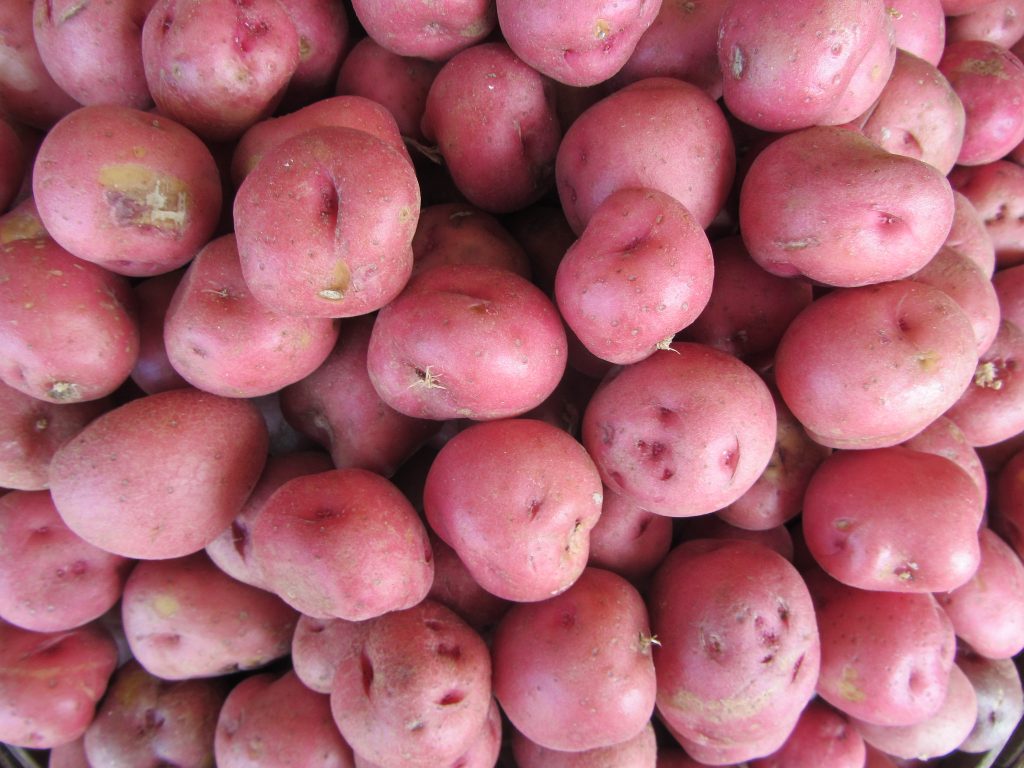
Hit the farmers market and cook some up at home in a matter of minutes
While tomatoes tend to get most of the glamour in midsummer gardens, I like to remind folks that this is also the height of the new potato season. It’s become one of my key culinary causes to help more people realize how special it is to get to eat a nice bowl of just-cooked new potatoes—I think they’re one of our more underrated and, for some reason, little-celebrated foods, even in this positive era of local seasonal produce! Many years ago, when I was discussing this with Rodger Bowser, longtime managing partner and head chef at the Deli, he said something along the lines of, “New potatoes are totally misunderstood. People think that every small potato the size of a golf ball is ‘new,’ but they’re not.” Well said—and, I think, very accurate.
To an experienced potato person, the fact that all small potatoes are not “new” is a given. But to most 21st-century Americans, “new,” as Rodger pointed out, has come to be considered a question of size rather than what it really ought to be—namely, a real-time adjective that refers to the newly dug potatoes that emerge from the ground only at the start of the summer season.
The main draw to new potatoes is how good they taste, which is very different from mature potatoes that have been stored for many months. How good is good? Well, two things I can tell you to put this in a personal context:
a) When new potatoes appear at the market, I like to eat them as often as I can—they’re just so darned delicious!
b) I’ve actually forgone putting anything on new potatoes other than a bit of salt or, at most, a small dab of Vermont Creamery Cultured Butter or a few drops of great extra virgin olive oil (the oil from the Boeri family, bottled under their nearly 100-year-old brand, ROI, has been terrific). Anything more than that seems to get in the way of how sweet and delicate they are.
What accounts for the difference between these new potatoes and those small-in-size-but-not-really-new potatoes we get the rest of the year?
I asked my good friend Molly Stevens, the cookbook author and podcaster, to explain this for me, since she wrote a whole book on potatoes and knows a lot more than I do. She wrote back:
The most important point to make is that new potatoes should be treated the way you would any fresh-from-the-market perishable produce. Because of their high water content, they spoil and wilt the same way a fresh tomato or summer squash would. I make the connection between green, spring onions and papery storage onions.
Makes sense, and it’s true. Really working with new potatoes is an entirely different potato experience than we get the other 10 or 11 months of the year.
Right now is the peak of the new potato season. You can tell true new potatoes, in part, because the skins are super thin—they can just be rubbed off the spuds, much like the skin of toasted walnuts. Please note that their shelf life is short. Real new potatoes like these don’t last all year; in fact, they don’t even last a month. As Molly said, you treat ’em like fresh produce, and you cook and eat ’em within a few days of when you buy them. I’m not a nutrition expert, but word is that new potatoes have higher nutrient levels than storage potatoes, too.
(By contrast, small (and large) potatoes that have been raised for storage are left in the ground all through the season, until the green leaves of the plant die. Basically, the plant is then starving for nourishment, so it stops growing. In the process, the skin thickens, and the potato essentially cures in the ground. After they’re dug, these potatoes are left out to dry, and their skins cure up further still. They’re also left above ground once they’re dug to further cure and dry some before being stored.)
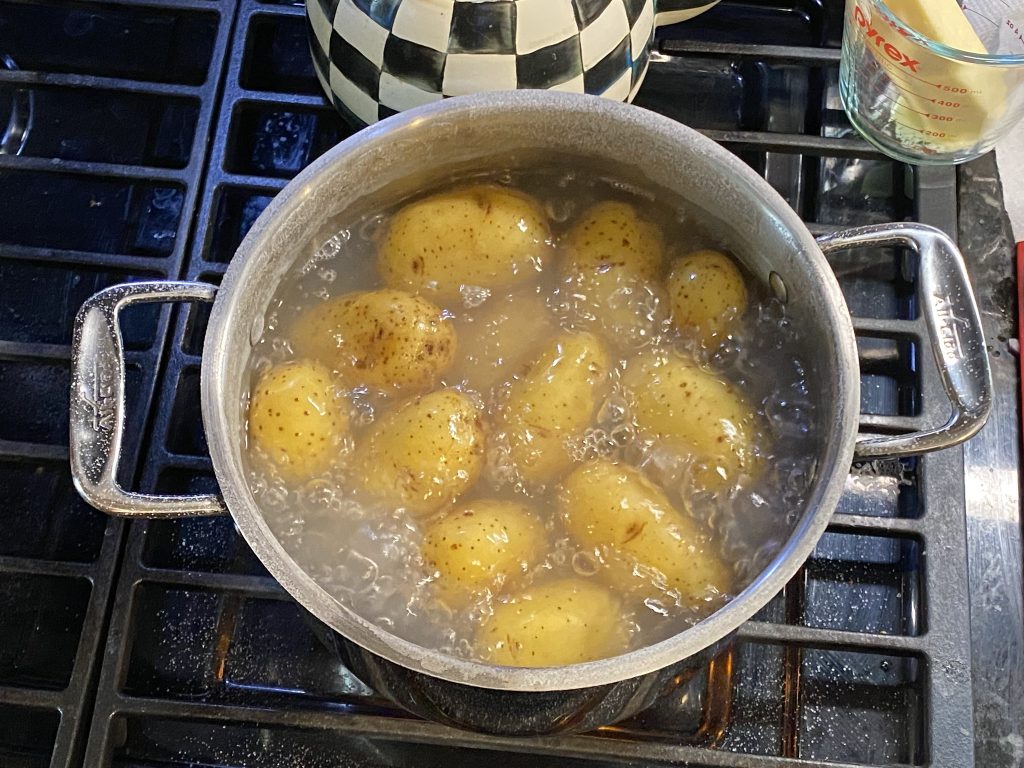
Molly’s favorite way to cook new potatoes is, she shared, by “seething” them. With this method, you just put the potatoes in a single-ish layer in a pan with a little water and a little butter, simmer covered until tender, and then boil off some of the liquid to reduce it for a sauce. If you like, you can add herbs and salt and pepper before eating. I tried it with the Vermont Creamery Cultured Butter, and sure enough, it’s pretty darned good. For a slightly more texturally interesting experience, I’ve also enjoyed ’em hot from the stovetop—just a bowl of new potatoes with a small mound of soft butter and a tiny pile of coarse sea salt on the side. Simply break open the potato, push it into the butter, and dip a corner of it in the salt. For a testament to the goodness of this simple dish, take the word of Peter Foynes, who runs the Butter Museum in Cork, Ireland. “New potatoes and butter with salt,” he said, “are the food of the gods.” It’s hard to get any better than that.