Syracuse Salt Potatoes to Make at Home
An upstate New York classic that features the season’s new potatoes
Speaking of new potatoes, Syracuse salt potatoes are my kind of food: Really simple. Intriguing history. Tasty to eat. And they give me a chance to enjoy the relatively brief seasonal appearance of one of the produce world’s most underappreciated offerings: new potatoes.
While, today, Syracuse is probably best known for its sports teams and for being the home of author George Saunders, at the end of the 18th century, Onondaga County, of which Syracuse is the county seat, supplied nearly all the salt in the (much-smaller-than-it-is-now) US. Hundreds of cords of wood were burned every day in “the Salt City” to fuel the flames which boiled the salt brine that came up from the underground springs in order to make saleable stocks of salt. By 1820 or so, so much hardwood had been burned that the companies switched to coal and used about 12 tons of that per day. The cost of the coal was so high that salt from the area gradually became way too expensive to be viable, and the saltworks were closed a century ago, in 1926.
Here’s an 1899 newspaper report that kvells lovingly about the local specialty of Syracuse salt potatoes. It was published on page 26 of the Syracuse Sunday Herald well over a hundred years ago—on Sunday, March 5, 1899, to be exact:
The salt potatoes of Syracuse rank with the baked beans of Boston, the terrapin of Baltimore, the scrapple of Philadelphia and the frankfurters of Milwaukee. They were born with the salt industry of the city. In the immense iron kettles in which the brine was slowly boiled into salt, the urchins of the First ward prepared feasts for a king. A few potatoes, a few ears of corn, access to a salt kettle and a little patience were the only requirements.
The corn and potatoes were dropped into the kettle, a wait of half an hour would bring a rich reward to the youthful epicures. Potatoes, mealy and bursting through their skins, with the salt clinging to them in particles that shone like miniature diamonds, tickled the palate in a meal that was not to be despised.
The Keeffe brothers in their younger days boiled potatoes in the old salt kettles. When they were older and added a barroom to the queer little old grocery shop of which they were proprietors, they bethought themselves of the salt potatoes of their boyhood, and salt potatoes formed the entire bill of fare of the lunch which they served with the foaming beer.
Salt potatoes were popular with the public, and a Syracusan who entertains a stranger without giving him a chance at the delicious delicacy is lacking in some of the fine points of hospitality.
Over time, salt potatoes turned into a regional delicacy—and the new potatoes I wrote about last week are key to the quality of the dish. As Just Good Eats writes,
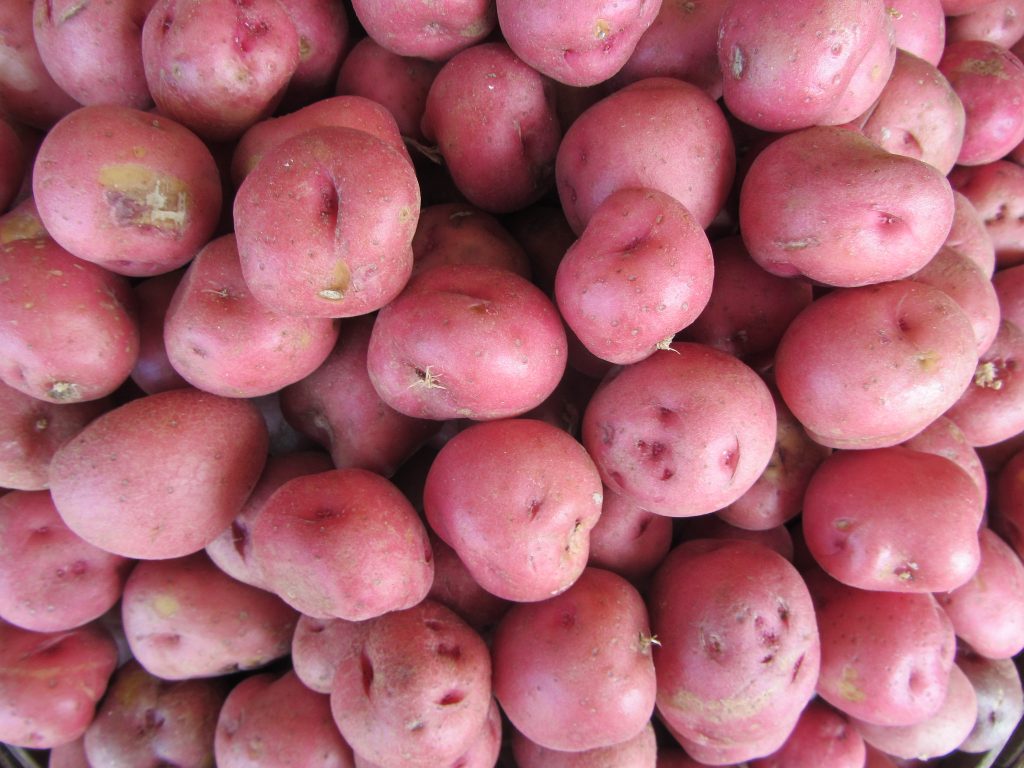
The consensus among the true believers is that “new” is also an important part of the perfect salt potato equation. New potatoes are simply immature potatoes of any variety, usually harvested in the spring and early summer. Key characteristics of new potatoes include their tender, parchment-like skin, which never needs to be peeled, and their moist creamy texture. Note that new potatoes are not the same as small potatoes. Small round red potatoes are often mistakenly identified as new, even by folks who have never heard of the controversy surrounding salt potatoes. I did some experimenting and have to agree with the regional experts. The taste and texture are magically different when you use new white potatoes.
I’m a novice salt potato maker, not an expert, so take everything I say here with—sorry—a large grain of you-know-what. I first heard about them from Kim Huffman, a longtime ZCoB customer who lived in the upstate New York area but used to come visit Ann Arbor regularly. She wrote me,
The potatoes are served all over around here. I can’t tell you how many roadside chicken BBQs I’ve been to that have them. Another interesting aspect of cooking them that way is that by saturating the potato, it stays whole and firm and doesn’t become flinty or crumbly as typical. Of course, a ladle of melted butter over three or four (or more!) golf-ball-sized potatoes is essential.
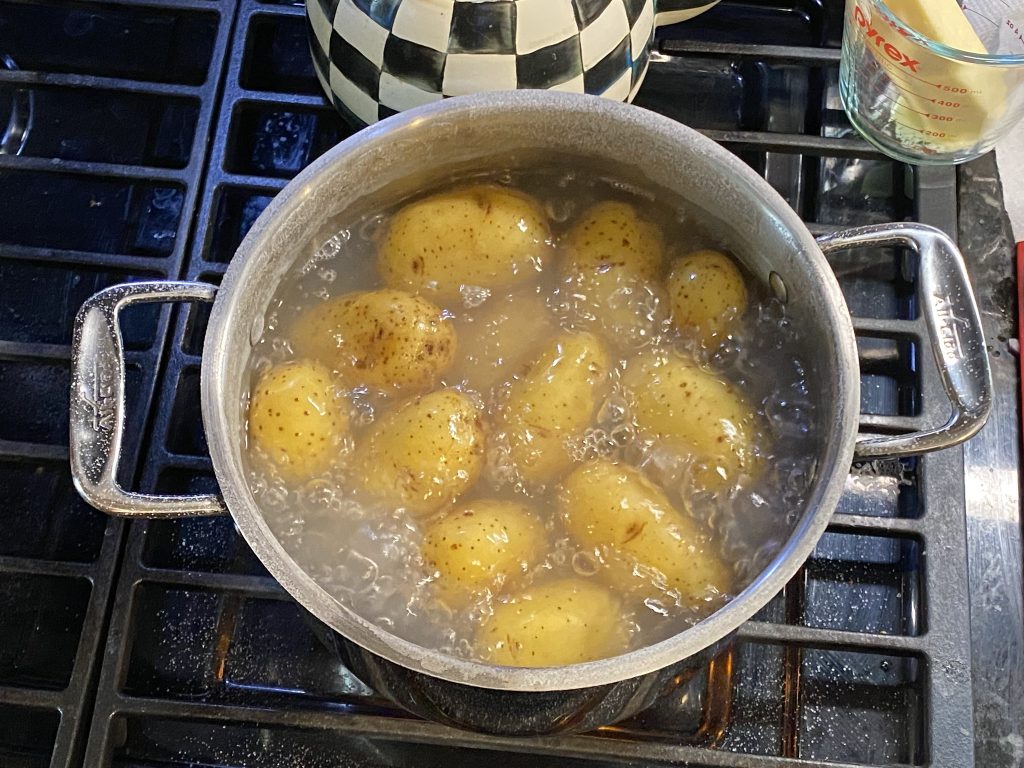
To make these, you basically cook new potatoes—which are out in the market here en masse this month—in very salty water. And I don’t mean water in which you add a bit more salt than you usually do—I mean about two quarts of water dosed up with over a pound of salt to cook a couple pounds of new potatoes. (I prefer French gray salt because of its high mineral content.) The idea is to oversaturate the water with salt, which means that you’ll be adding so much of it to the water that all the salt won’t actually dissolve.
One of the keys here is to let the just-cooked-till-tender potatoes rest on a dry cloth for a few minutes after you remove them from the hot salt water. While the spuds are setting up, a sort of “frosting” of salt will solidify on the surface of the skin, looking a little like frosted (sugared) grapes, if you happen to ever have seen those. Once they’ve rested for a minute or two, you serve them with a dish of melted butter for dunking—which, of course, around these parts right now, would almost certainly be Vermont Creamery Cultured Butter! Enjoy!
Today, it’s apparently quite common to buy bags of “salt potatoes” in which they pack the right amount of salt into packets to make it easier for the home cook. They’re also commonly sold already cooked at county fairs, accompanied by small wooden folks to spear them with. The melted butter into which the potatoes are dipped makes them a kind of humble inland man’s version of lobster. Unless you live in Syracuse, salt potatoes are almost certain to create a good bit of surprise and conversation at the table, too! You’re in for a treat. As journalist Breana Lai Killeen says,
Served simply with melted butter, they were astonishingly good; arguably the easiest, most delicious potatoes I’d ever had. I immediately understood why they’re so popular in upstate New York.