The Craft of Craft Flour at Zingerman’s Bakehouse
Here at Zingerman’s, our motto has long been, “You really can taste the difference!” That holds true when it comes to flour, too—which is one reason why the Bakehouse has worked hard in recent years to incorporate freshly milled flour into its beloved breads and pastries.
Beyond taste, there’s also the opportunity to support local farmers and educate the community about the ingredients that go into the bread they enjoy. In other words, it’s a win-win-win.
The use of whole-grain craft flour—rich in flavor and full of nutrients—is on the rise at bakeries throughout the country (as evidenced by this New York Times story from June!). But as usual, Zingerman’s Bakehouse was far ahead of the curve. In its early days, Frank Carollo, who co-founded the Bakehouse in 1992, began working with the Daily Grind, a grain mill then located nearby in Ann Arbor, as well as with a few wheat-growing farmers in the vicinity.
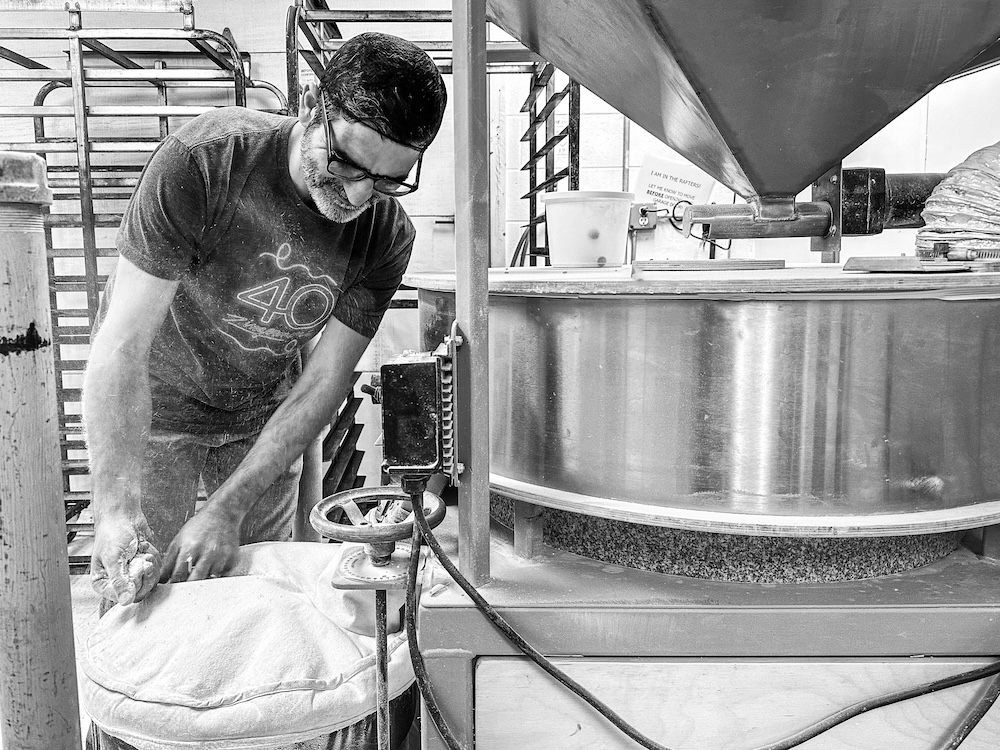
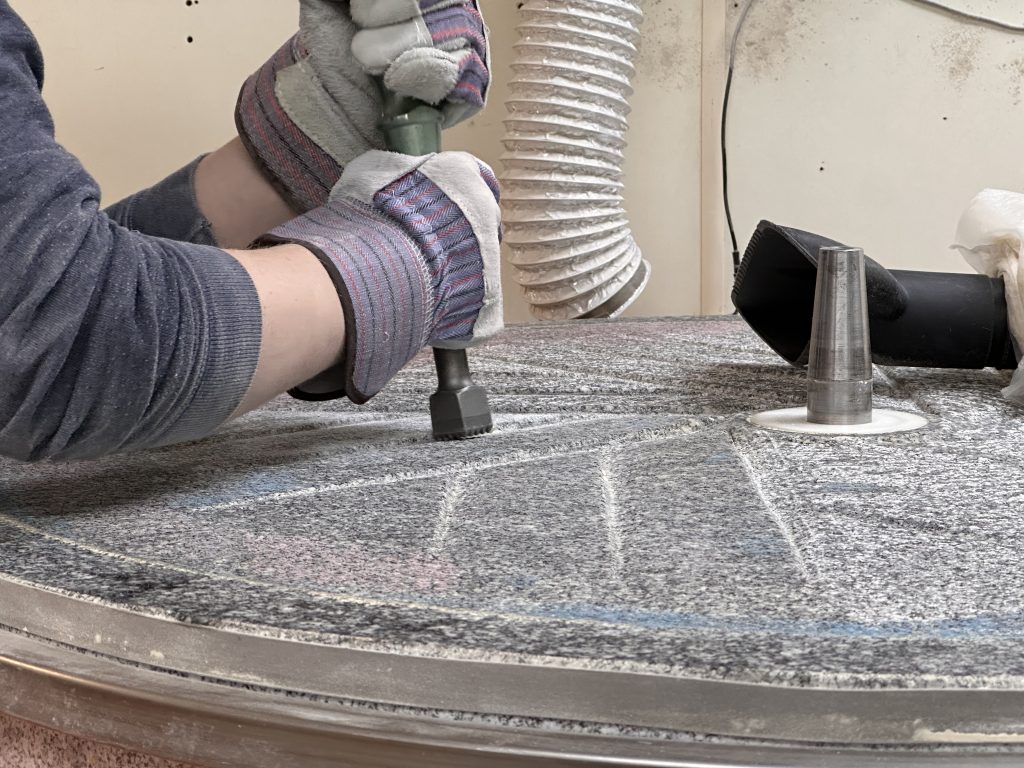
Flash forward to 2016, when Hazim Tugun joined the team as quality and innovation specialist, with a vision of further integrating freshly milled flour into the Bakehouse’s recipes and operations. Two years later, under the leadership of Carollo and Co-Managing Partner Amy Emberling, the Bakehouse purchased its first granite stone mill from Vermont-based New American Stone Mills.
“First we got the small, 26-inch mill, and then in 2020, we got a larger, 40-inch mill,” Hazim explains. “And that was a big push for us. We started milling our own flour and using it in our breads and pastries, showcasing them at the Westside Farmers’ Market, and even creating some new breads as well.”
One of those adventurous new breads, Hazim recalls, was an all-whole-grain fougasse—a rustic French flatbread—made with freekeh porridge and a bit of honey brushed with olive oil. “People loved it,” he says.
Finding the Farmers
The journey of freshly milled flour begins with locally grown wheat, and the Bakehouse is fortunate to have close partnerships with committed farmers in the region.
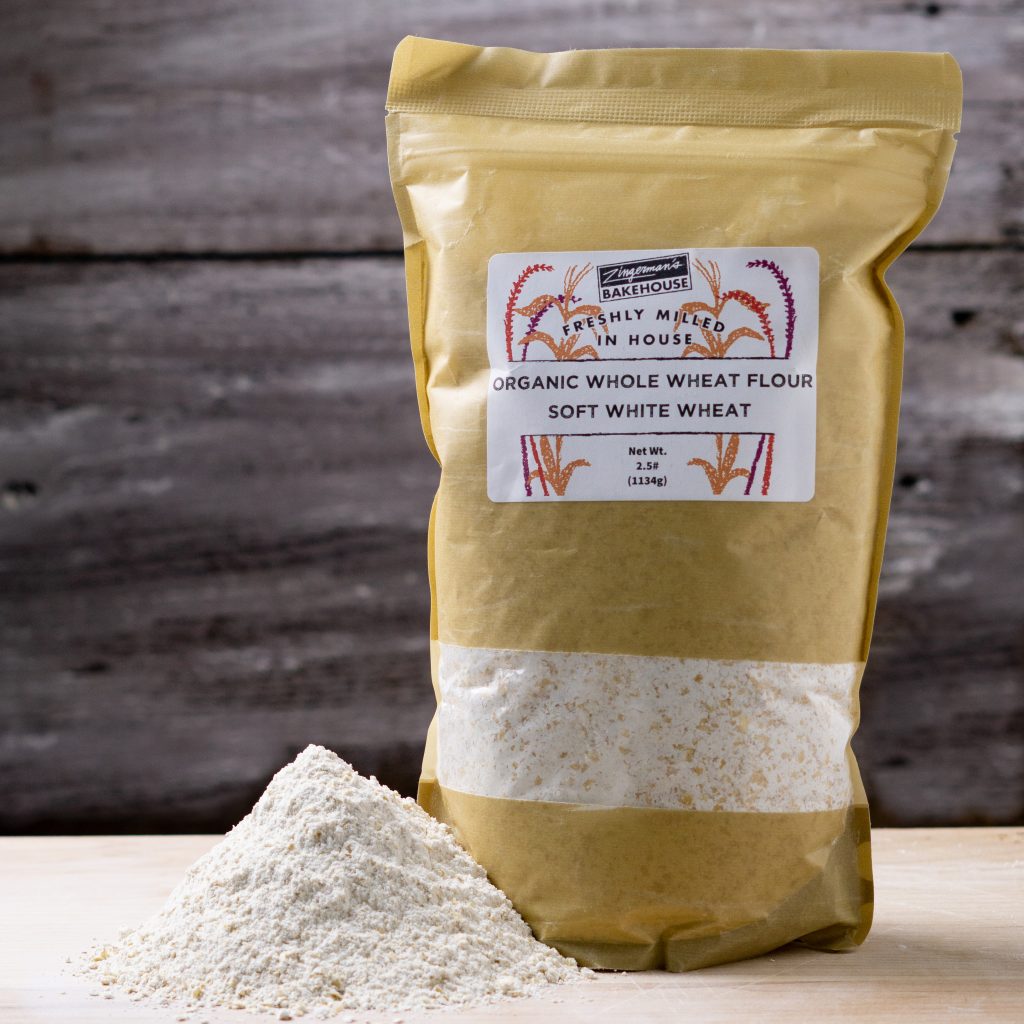
The Goetz brothers, who initially approached the Bakehouse back in 2023, have since provided heirloom Turkey Red wheat and hard red spring wheat harvested on their 300-acre farm in Riga, Michigan, less than an hour south of Ann Arbor. And a little ways north, in Frankenmuth, the Kischnicks—first introduced to Zingerman’s by former Chief Administrative Officer Ron Maurer, whose family farm Chris Kischnick tends—cultivate organic soft white wheat for the Bakehouse.
“The farmers grow the wheat, clean it, bag it, and truck it to us,” Hazim says, describing the farm-to-table process. “Then, at the Bakehouse, we put the wheat into the mills, it goes through the hopper and the granite stones, and out comes the freshly milled flour. We use it within two or three days at most. It goes into starters, into specific breads, and into a lot of pastries.”
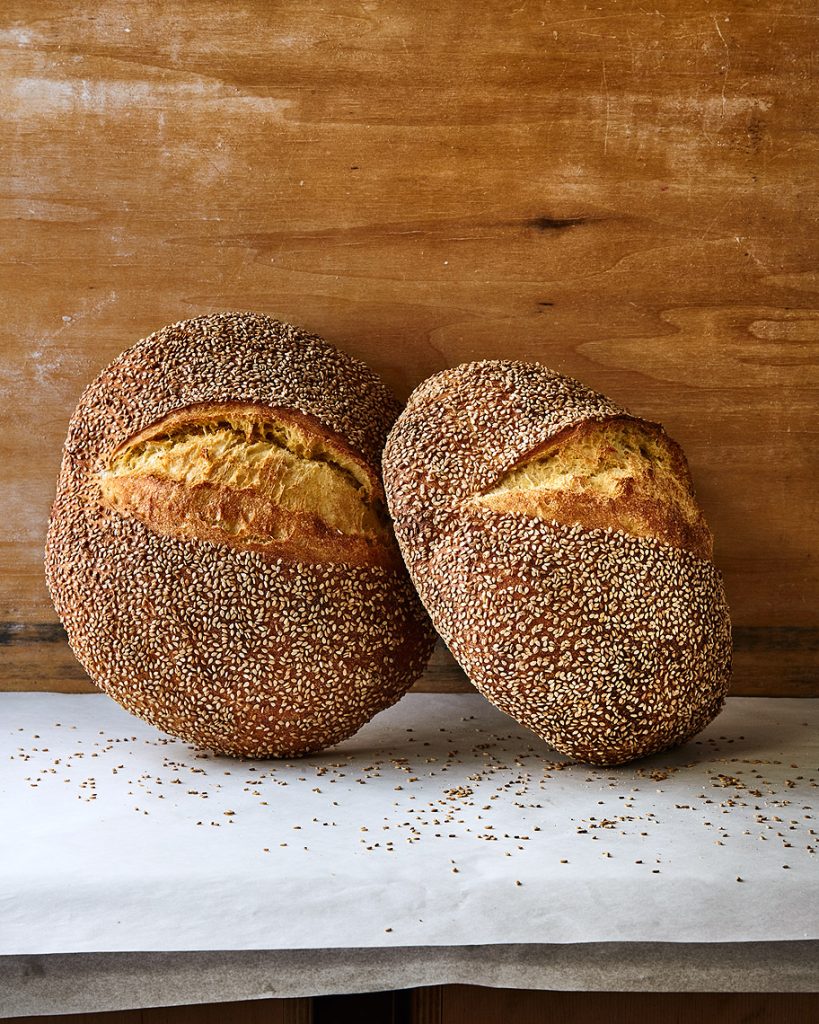
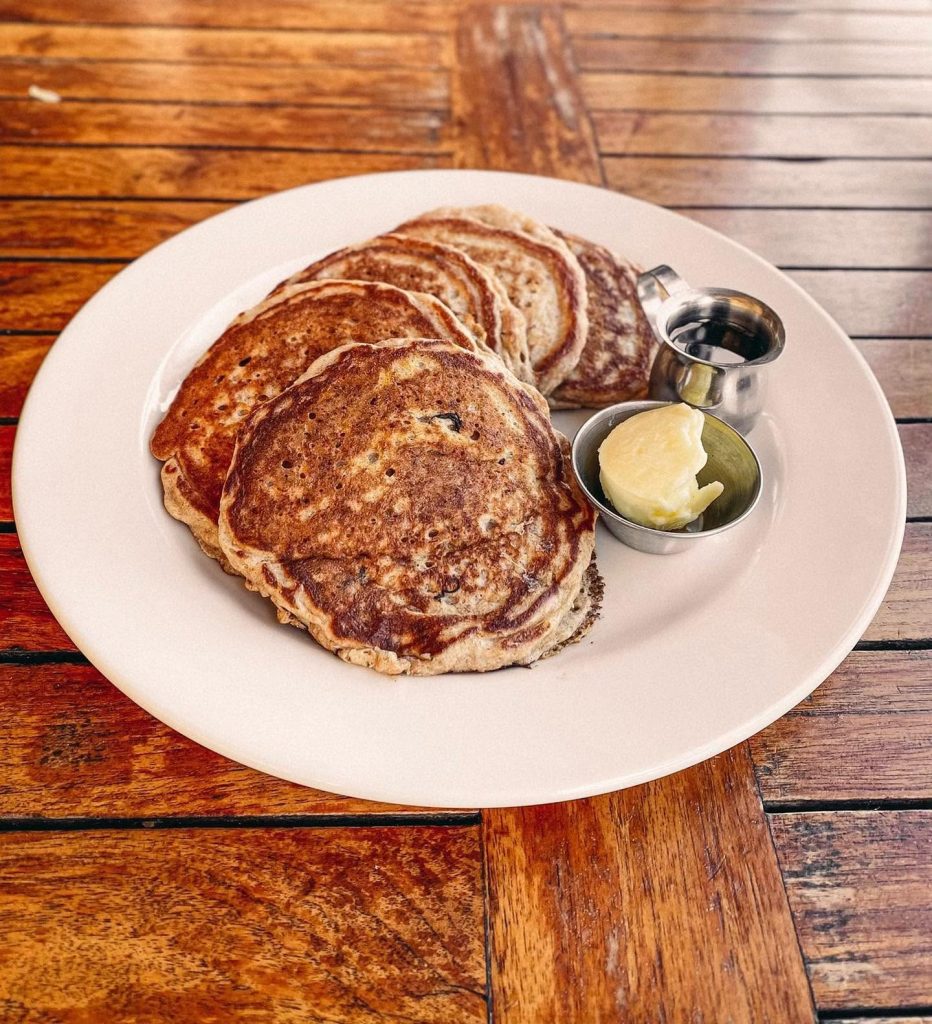
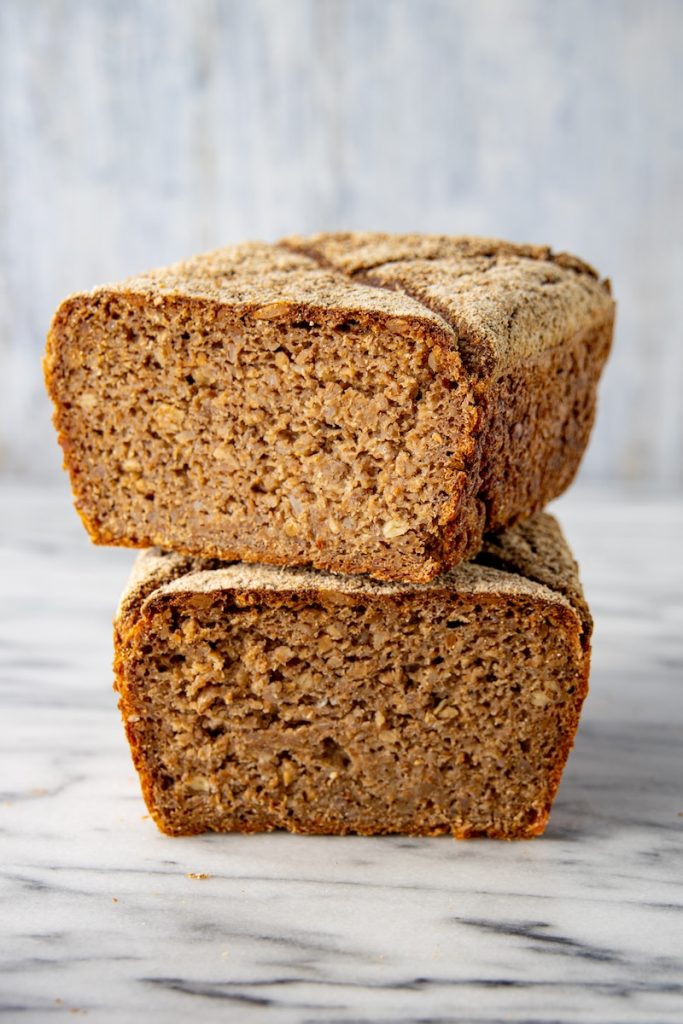
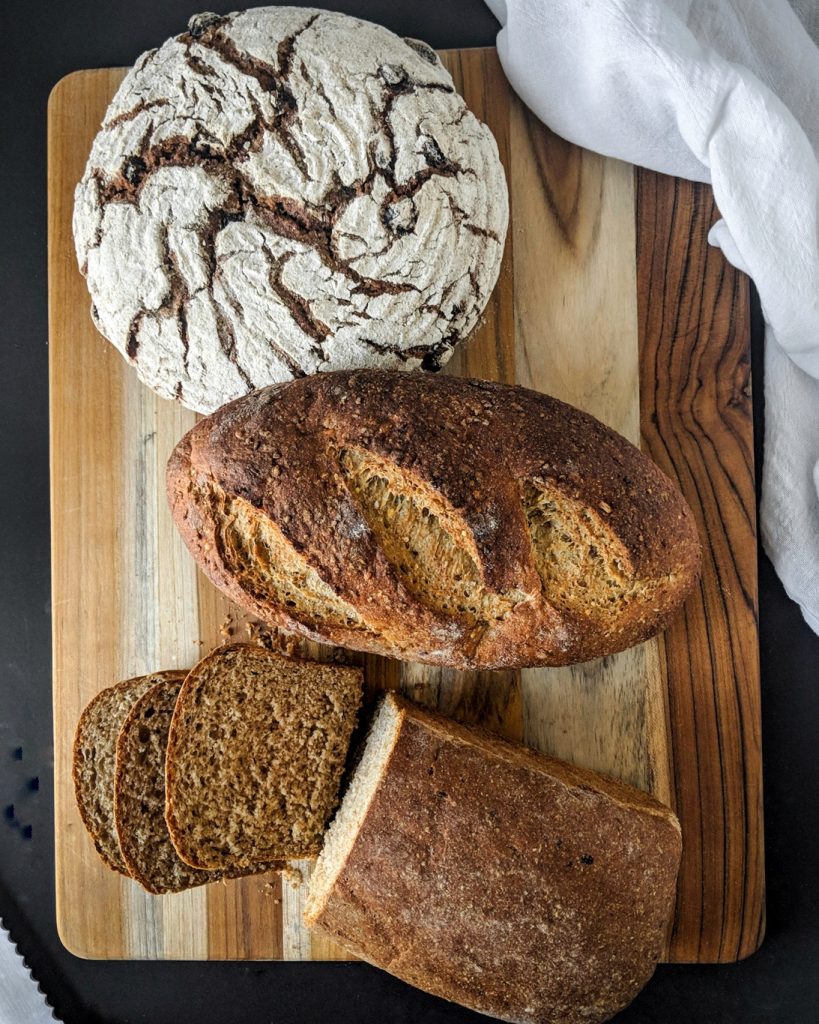
Popular products featuring the Bakehouse’s homemade flour include breads such as True North, Country Multigrain, and the new Huron Honey Wheat, as well as cookies, brownies, muffins, and fruit pie shells.
“We don’t do it as often, but one of my favorites is our Olive Oil Cake,” Hazim adds. “It’s made with freshly milled durum flour. So good.”
In addition to milling flour in-house, the Bakehouse sources craft flour from Janie’s Mill in Ashkum, Illinois, which also works hand in hand with regional farmers.
“Our goal is basically to strengthen this whole supply chain, and we feel very good about that,” Hazim says. “We can get flour from somebody like Janie’s Mill and support them as well, and they’re also supporting local farmers, and it’s still delicious stone-milled flour.”
Flour Power to the People
The Bakehouse continually strives to inform the community and increase awareness about the manifold benefits of using local flour and of promoting the farm-to-mill ecosystem.
“I learned from Dr. Stephen Jones at the WSU Breadlab that there used to be around 25,000 regional mills across the country over a century ago,” Hazim notes. Now, with the flour industry dominated by massive conglomerates that prioritize cost and efficiency over meaningful, mutually sustaining relationships with farmers, “there are maybe 100 of these mills left. That’s why bakeries like us are doing this work—to move the needle a little bit and fill that gap.”
Over the years, the Bakehouse has convened gatherings of farmers, millers, and bakers to discuss these vital issues, even hosting a special “Flour Power” event across the street at ZingTrain, with speakers including Amy Halloran, author of The New Bread Basket.
And at its BAKE! school, guests can take a Naturally Leavened (Sourdough) Breads class in which they learn how to make the Bakehouse’s classic Farm Bread and a 100-percent-whole-grain sourdough loaf—“to show them what these whole grains can bring to the table, literally,” Hazim says. “A lot of people get excited about it.”
Working with freshly milled flour does also come with its share of challenges. Paying local farmers what they deserve can mean higher costs, Michigan weather creates a trickier climate for growing wheat, and whole-grain flour itself can be less predictable and require more experimentation in the kitchen to get things right. Plus, commercial white flour has been the American standard for so long, many people are still only just becoming familiar with the different feel and richer flavor that craft flour offers.
The good news, though, is that momentum is clearly building, and Zingerman’s is proud to be a part of this exciting artisanal movement. Today, the Bakehouse uses about 260,000 pounds of freshly milled or locally milled flour per year—roughly 20 percent of its total supply—in an ever-wider array of products. It aims to increase that number to 35 percent by 2028.
“The flavor and aroma gains with this flour—to me, it’s like night and day,” Hazim says. “And in terms of the benefit to the community: Baking is something very primal. It’s sustenance. We depend on bread. And being able to make the connection between that sustenance and what can be produced on the land—in this area, where people are consuming this, where the baking is happening—I think that’s pretty amazing.”
Learn all about freshly milled flour and more over on the Bakehouse blog!
Photos by Corynn Coscia/Zingerman’s Bakehouse