
Tag: Ari’s Best Foods of 2011
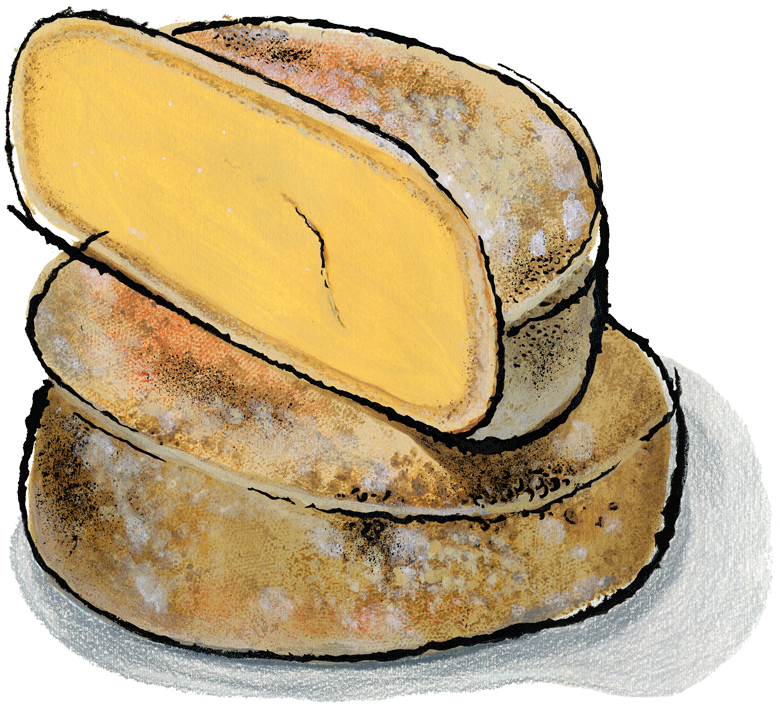
Wisconsin is probably best known around the world for its dairy. Though few people know it, back in the mid 1800s Wisconsin farmers were not thinking much about cows. Most farms had a cow or two, most cheese was made on the farm as a way to help feed the family. If you want the story in succinct headline form, check this one from the Milwaukee Sentinel 150 years ago (November 8, 1861 to be exact): “Wheat is king, and Wisconsin is the center of the Empire.”
Ed Janus tells the story more poetically in Creating Dairyland. “At first the pioneers came to make a home and a modest living from the land.” But, he adds, “then came the monoculture of King Wheat.” But, wheat would prove its own demise. The wheat crop collapsed only two decades after it began. Dairy, it turns out, is what saved the day.
The main engine of Wisconsin’s holistic development around dairy farming was actually an idea known as “Progressivism.” “Progressive reformers believed that livestock was to be the answer to the deficits created by wheat farming. Manure and grass would renew the soil, growing herds would create wealth for farmers, and investments in land, buildings, fences, and herds would restore the idea of building for the future.” Dairy farming and cheese making (over 80% of the state’s milk is made into cheese) saved Wisconsin.
By 1922 there were more than 2800 cheese plants in the state. But, of course, there are ups and downs in every story. Over the course of the 20th century although cheese production and sales continued to grow, Wisconsin moved from cutting edge to the middle of the market. Industrial giants like Kraft and Borden brought down prices but also made it harder for small farms and cheesemakers to survive. The drive for perfect cheese devolved into a drive for “defect free,” ever lower prices, and ever more consolidation into ever bigger cheese plants.
Times, happily, have changed. While so much of the country continued to slide downwards towards ever lower cost and commensurately low levels of quality, Wisconsin cheese is going in the opposite direction. The state that once toed the middle of the road has taken flight toward ever higher levels of cheese greatness. Wisconsin is, without a doubt, THE state that’s most supportive of its cheesemakers, that’s training and teaching far more than any other, and that’s generated more great new cheesemakers in the last twenty years than pretty much any other. Wisconsin may not be glamorous, but I think it’s the future of American cheese.
(more…)

As I was writing this I was about to head home from the Bakehouse when a family pulled up next to my car. I was loading up to leave and they were arriving but for a minute or two we were basically sharing the same space. As they gathered up their whole group (three generations it looked like) I heard one of the kids say really loudly, “I know what I want. I want a mint Cosmic Cake!” I was impressed. When a product that only we make, and that’s only been around the Bakehouse for maybe two years, has that kind of high name recognition from a ten year old, that’s a pretty great thing. One other thing I know too—that kid sure has good taste. These Cosmic Cakes are pretty terrific—a couple of thin layers of chocolate cake, sandwiched around fresh butter cream fillings, then all dipped into dark chocolate. The Bakehouse makes four flavors in all—vanilla, chocolate mint, peanut butter and banana.
This post is part of a series of Ari’s Best Foods of 2011.

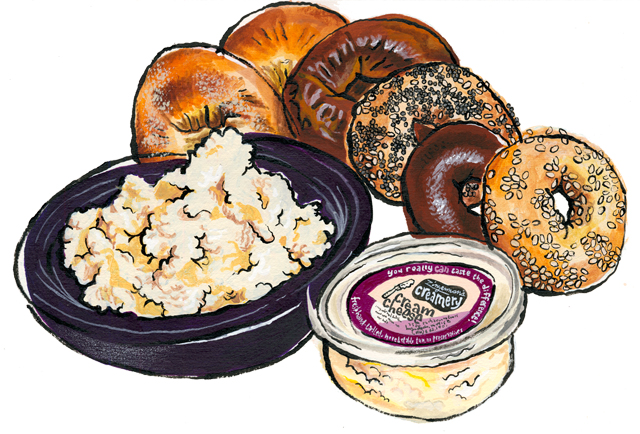
Our cream cheese, I know, is hardly anything new any more. We’ve been making it at the Creamery for over ten years now. But every time I taste it, I’m reminded how lucky I am to have it. While great cheese has become readily available all over the country, for whatever reasons, old style, hand-ladled, preservative-free cream cheese like this is still almost non-existent. This is truly a taste of what luxurious eating would have been like for my grandparents’ generation a hundred years ago. Toast up one of those incredible, board-baked bagels from the Bakehouse (poppy and sesame are my personal favorites), top with a generous layer of this cream cheese and you’ve got as good a way to start the day as I can imagine. In case you haven’t yet had it, this stuff is to commercial cream cheese what all those great artisan cheeses I’ve written about are to the prepacked slices of stuff that they sell in supermarkets. It’s made without any of the gums or preservatives you’ll find in most cream cheese, and the cheese makers at the Creamery use fresh milk from nearby Calder Dairy. They slow-pasteurize it over low heat and when it comes time to separate the curd from the whey, they ladle it by hand thus protecting the delicate texture of the curd. You really can’t find a fuller flavored cream cheese than this.
This post is part of a series of Ari’s Best Foods of 2011.
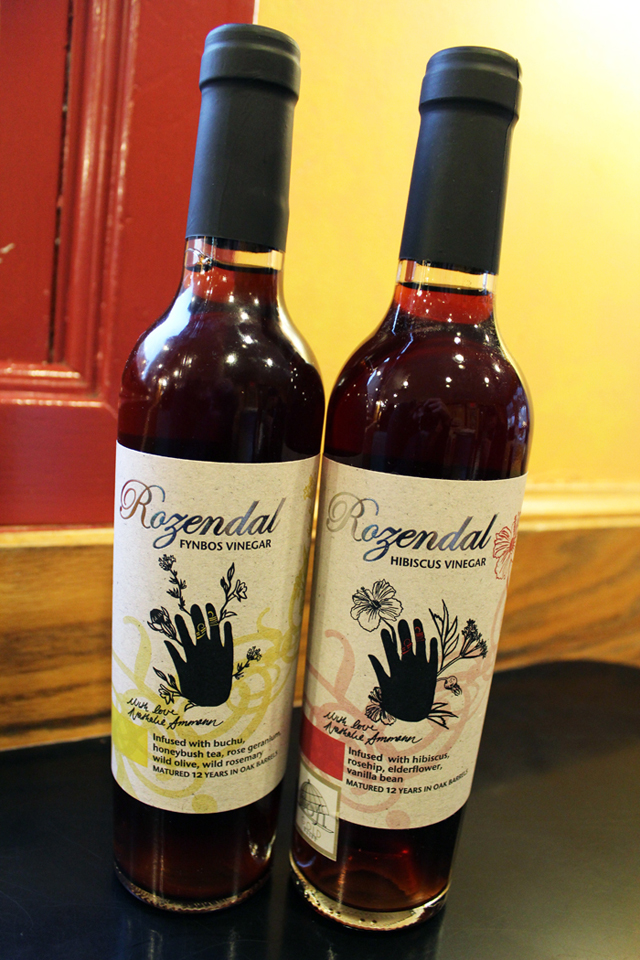
These are truly one of the best new things I’ve tasted in a long time. I think that I first tried the Rozendal vinegars three years ago at a food show. Their exceptional flavor caught my attention right off, but I think the fact they’re flavored made me doubt myself. I tried them again the next year and was still impressed but… again, I held back and failed to act on my instinct. We have a lot of good vinegars and I let my purist streak get in the way of getting them. Finally, this summer I tasted them for yet a third time with everyone at the Deli and Mail Order, and I was still impressed. I finally gave in. The third time was definitely the charm. I’m glad I finally got going—these are some pretty exceptional bottles of vinegar.
They’re made by the Amman family in Stellenbosch, on the southwest coast of South Africa. Long a grape grower and wine producer, Kurt Amman took the family farm organic in 1994. He went even further by going biodynamic back in 2001. Nothing about these vinegars—the method of conversion from wine, the decision not to pasteurize (to protect the positive acetobacters), many years of patient maturation, the careful selection of herbs and flowers for the infusion into the vinegar—is taken lightly. All of which has been translated into a truly spectacular and unique set of vinegars, so good I really could drink these by the shot glass.
The vinegars start with natural conversion of the Amman’s already well-made and nicely matured biodynamic wines. The move to vinegar is a process that alone takes many months. The natural conversion protects the flavors of the wine and also the natural health benefits of the vinegar. The herbs are then added to the vinegar and the infusions are allowed to mature another four or five years. The total maturation is about 12 years, all done in oak barrels. The results, as I said, are superb! Imagine maybe a depth and character of a great balsamic; the complexity, the soft, round, sweetness, the long lingering finish are all there in force. They’ve got big, slightly tingly, subtly sweet, fantastic flavors with great complexity and very, very long, very lovely finishes.
The Fynbos Vinegar is infused with an array of the region’s herbs and flower—South African honeybush, buchu, wild olive, wild rosemary, and rose geranium. The flavor is truly phenomenal. I’m worried now that I’ve started sipping I might drink the whole bottle. Like sipping a super long aged bourbon, there’s a loveliness, a long lingering sweetness, vanilla undertones from the oak, a succulence and smoothness that’s hard to explain. The hibiscus vinegar is equally excellent. It’s got elderflower, rosehip and again, vanilla.
This post is part of a series of Ari’s Best Foods of 2011.