
Tag: Miss Kim
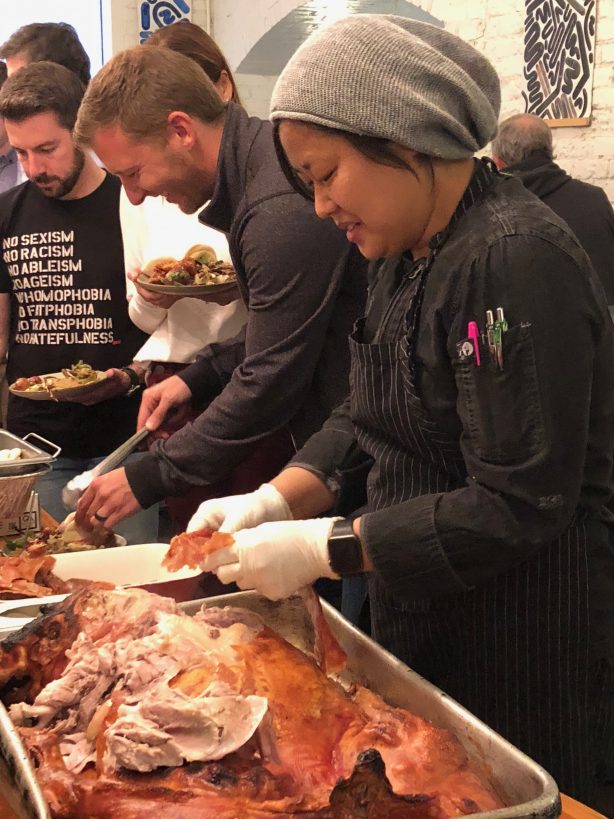
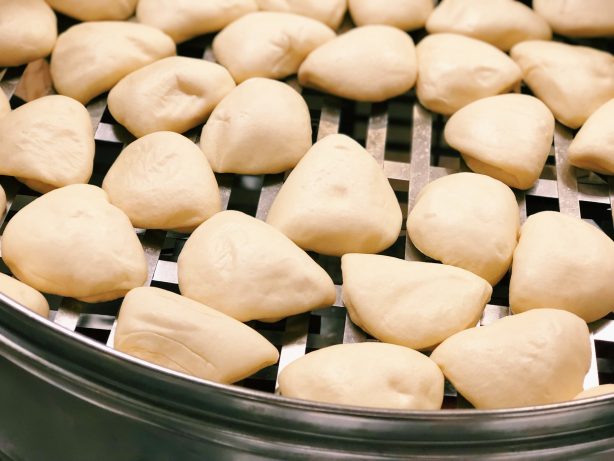
One of the most exciting things happening around the ZCoB right now is Miss Kim’s Suckling Pig Parties. The monthly event has already earned a lot of devotees, selling out each time. The really exciting part is that every party has a theme—so far, chef Ji Hye Kim has presented ssam, tacos, and just last night, she pulled out the big guns with buns! Long time fans of Miss Kim will remember that the restaurant got its start with San Street, a food cart specializing in buns at Mark’s Carts, and for this dinner, Ji Hye and her team let guests get creative with a spectacular spread of steamed buns along with pulled pork and condiments to fill them up. Plus, a bounty of delicious sides!
Here are some photos from last night’s dinner. Keep your eyes open for the theme of our next Suckling Pig Party on October 8. We’ll be announcing it on the Miss Kim website and Facebook page soon!
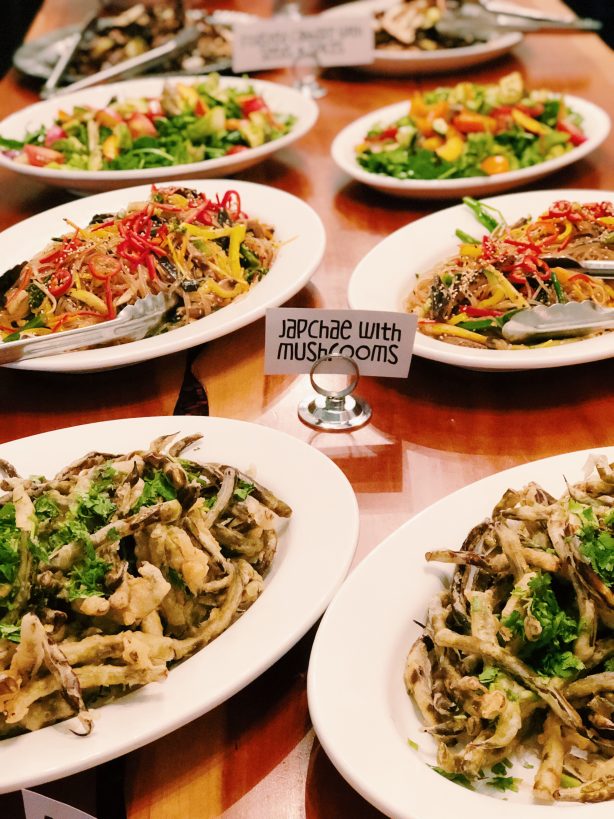
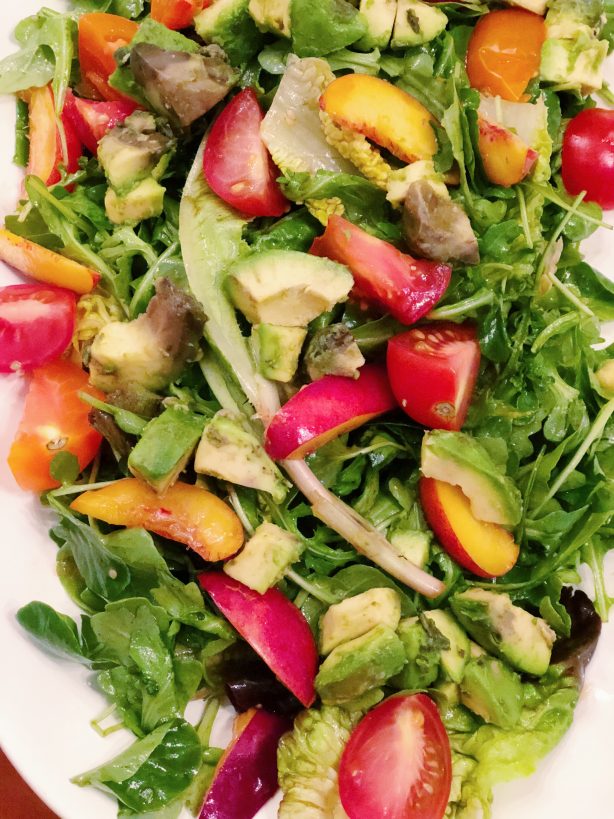
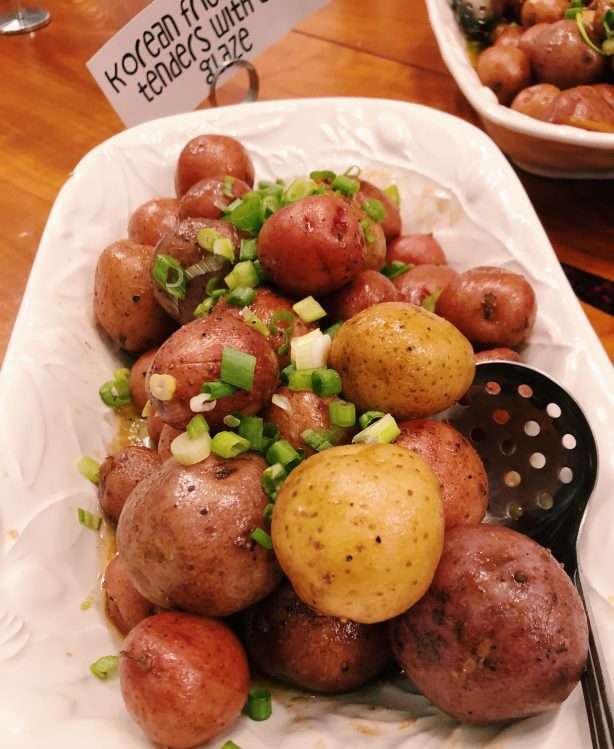
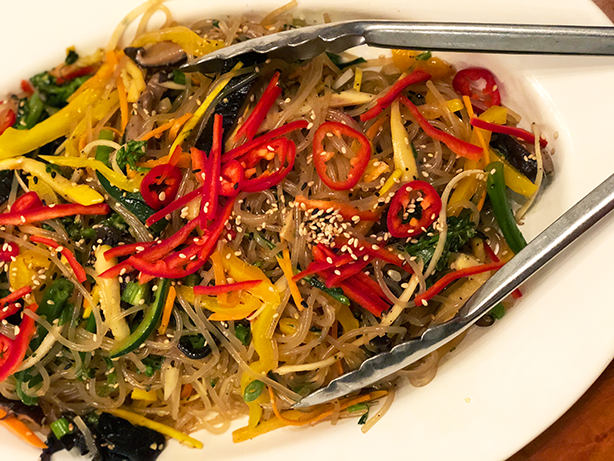
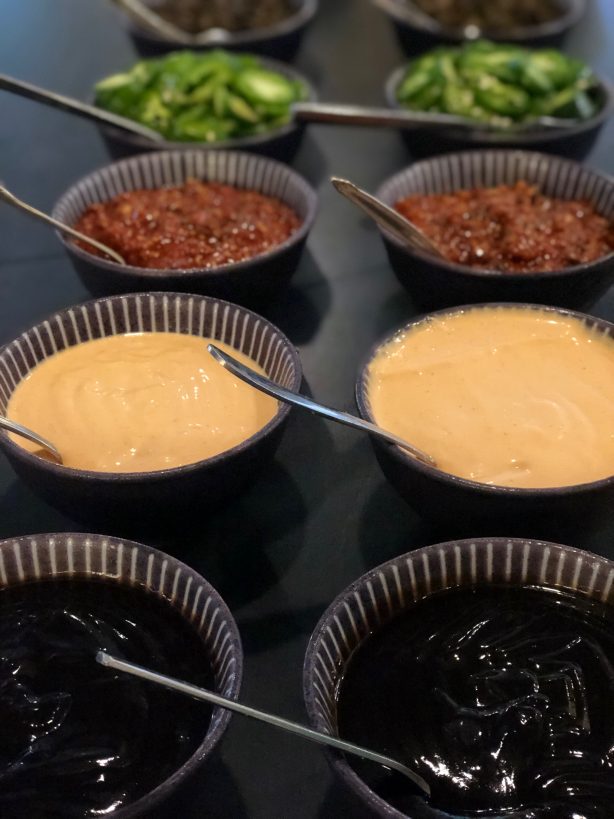
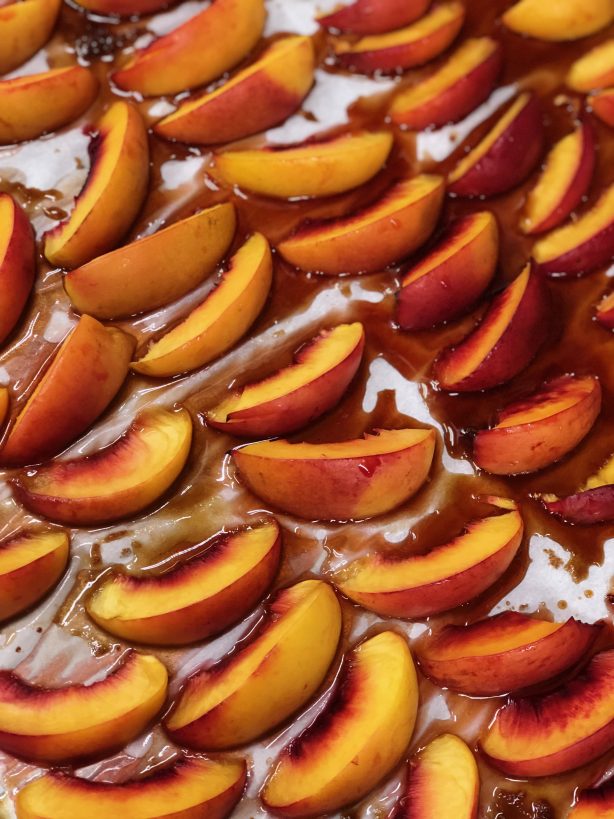
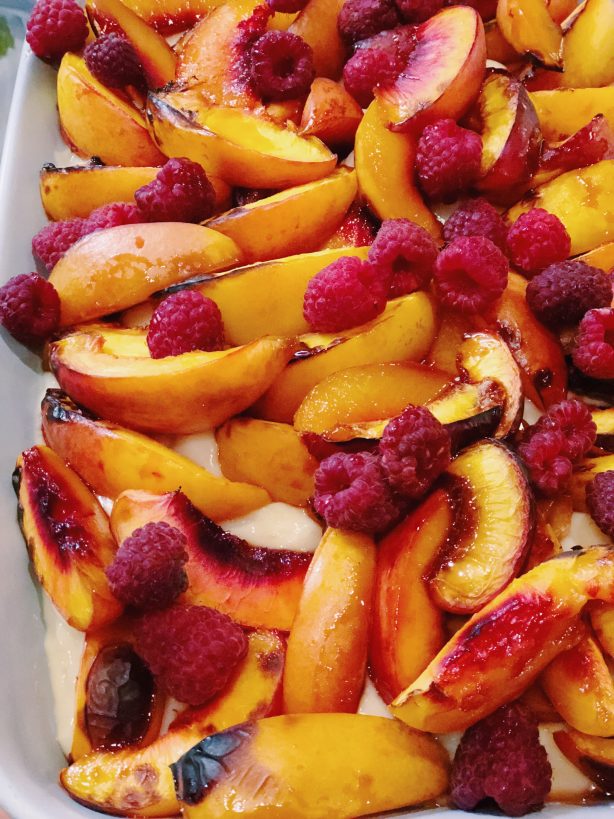
Don’t miss the next Miss Kim Suckling Pig Dinner! Visit the website for the next party announcement, and check out our list of upcoming dinners in the meantime!
Tag: Miss Kim
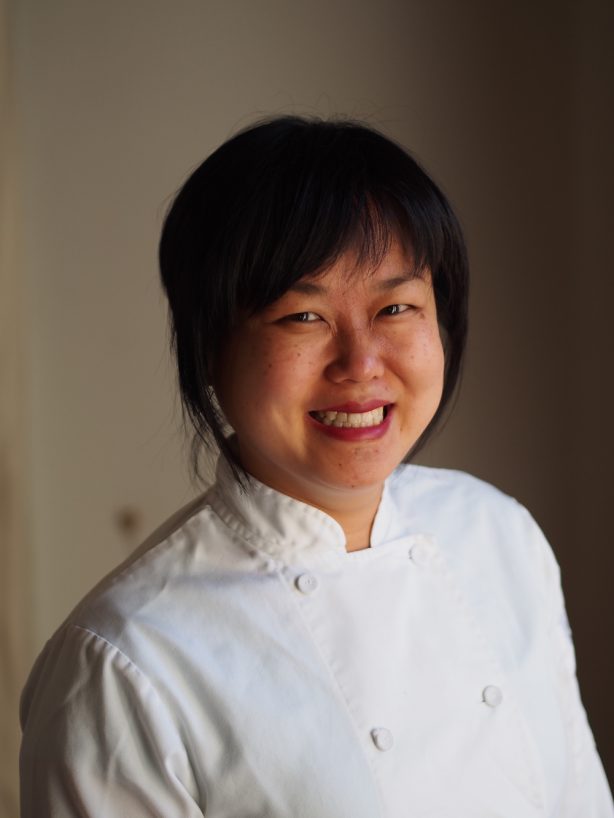
John Lennon once said, “A dream you dream alone is only a dream. A dream you dream together is reality.” I love the creative reality that emerges when two parts of our organization come together to make something magical happen. Like this—a special, never-happened-before event at the Roadhouse that will feature the amazing Ji Hye Kim, the managing partner and head chef at Miss Kim. While Ji Hye and her crew have built themselves an increasingly loyal (and vocally so—almost every day now someone stops me to say how much they love it) clientele for all the intricate and excellent flavors of traditional Korean food (some of it from centuries-old recipes), this special dinner will honor the food of the Korean-American community—a coming together of two rich culinary cultures to create a very memorable meal.
While it happened seemingly by accident that this dinner was the 222nd one we’ve scheduled at the Roadhouse, the number itself is significant. In a Tarot deck, 222 is an “angel number,” which, for those in the numerological know, “resonates with ancient wisdom, vision, idealism, and transformation.” It represents creation, the beginning of new things, of something special happening. 222, it turns out, is timely: it’s spring, a new season. It’s also the beginning of Miss Kim’s ascendance to the reputation that syncs up with the quality of food the restaurant is already providing. Stephen Satterfield, the nationally-recognized writer and founder of the incredible, New York Times-recognized Whetstone magazine (available for sale at the Roadhouse) says, “to dine at Miss Kim is to taste [Ji Hye’s] taste memory, her learned and earnest love of recrafting the food from which she is constituted, adapted for the place in which she stands.” Ji Hye’s food, he goes on to say, is “hyper-local, very seasonal, and as much an approach to life as it is a bowl of food.” This dinner will also be a celebration of all the cool new stuff that’s happening at the Roadhouse.
While she might have learned how to cook from her mom, Ji Hye learned how to cook “restaurant food” at the Roadhouse—this dinner is a chance for her to pay homage to her two culinary homes—Korea and the Roadhouse. The menu will feature dishes like LA galbi (marinated, BBQ-short ribs developed by Korean immigrants who settled in Los Angeles), a very special version of bibimbob that will feature Roadhouse pulled pork, mini burgers with quail eggs and napa kimchi, fries with tteokbokki and cheese curds, a special Roadhouse-inspired kimchi, a silken tofu stew, matcha chiffon cake from the Bakehouse, and more.
See the full menu for the dinner here.
Here’s a little snippet of the history of Korean immigration into the U.S. to give you some context for the dinner:
Ahn Chang Ho and Lee Hye-ryeon were the first Korean couple to immigrate to America—they came to the west coast in 1902—the same year in which the Deli’s historic building was built. Ahn Chang Ho, known also as Dosan, went on to become a significant social activist. Committed to bringing kindness and care into the immigrant community, he founded the Chinmokhoe Friendship Society in 1903, the first Korean organization in the continental United States. “To pick even one orange with sincerity in an American orchard will make a contribution to our country,” he declared. Later, he campaigned hard for Korean independence. Arrested by Japanese authorities, he was asked if he would cease his struggle. His response: “No, I cannot. When I eat, I eat for Korean independence. When I sleep, I sleep for Korean independence. This will not change as long as I live. As all the Korean people want their independence, Korean independence will become reality; as world opinion favors Korean independence, it will become reality; and as Heaven orders Korean independence, Korea will surely become independent.”
Join us for this special Korean-American meal!
Tuesday, April 10 at the Roadhouse 7:00 pm $75.00. Seats are limited! Check out the full menu here.
Tag: Miss Kim
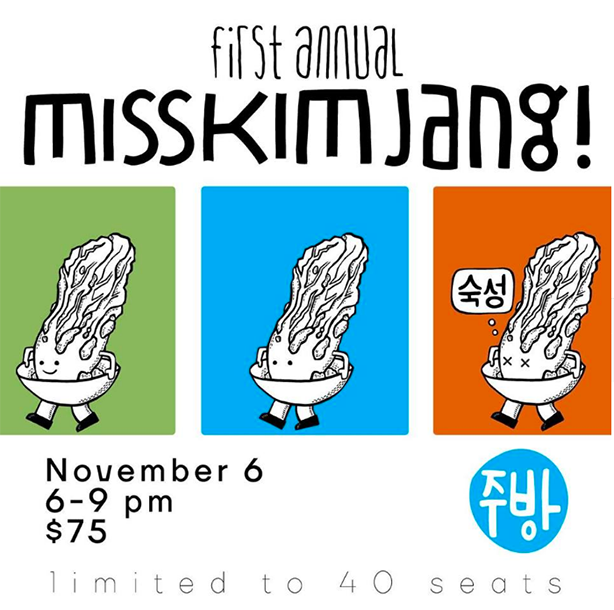
Our first annual MissKimJang is Monday, November 6 at Miss Kim. We’ll be celebrating our one year anniversary with this very special Korean tradition. Chef Ji Hye Kim will kick off the event by sharing her deep personal and culinary knowledge of kimchi and KimJang. Attendees will get to make their own kimchi, and we’ll have lots of food, too! Grab a seat before it sells out.
Here’s a preview from Ji-Hye Kim:
KimJang is the annual making and sharing of kimchi. It is an annual event that is at the very core of Korean community. In fact, in some ways almost the entire Korean year is marked by preparations for the annual ritual of KimJang. In spring, shrimp, anchovy and other seafood is set for salting and fermenting. In summer, sea salt is bought for the brine. In late summer, red chili peppers are dried and ground into powder. Finally, in late autumn, or the tenth moon of the Korean Lunar Calendar, it’s KimJang time! Communities coming together to work on the harvest and to make massive amounts of kimchi. Communities working hard together, all hands on deck, to ensure that every home has enough for the long, harsh winter to come.
At Miss Kim, we’re pretty passionate about kimchi and KimJang. In our minds, both are at the very core of what we’re trying to do at Miss Kim—to respectfully represent the Korean cuisine and culture and honor Korean traditions. Kimchi is an inexorable part of the former and KimJang an inexorable part of the latter.
Here’s what she had to say:
G: Why is making kimchi during KimJang relatable to life and death?
JI HYE KIM: The answer to that question starts in Rome. Yes. A story about kimchi and KimJang starts in Rome, Italy. Right before I opened the restaurant, I was living in an extended internship of sorts at the American Academy in Rome. The program was called the Rome Sustainable Food Project—Alice Waters’ brainchild and a brilliant experience.
In that way that life works, one of my fellow travelers at the American Academy was a Korean-American woman—a painter who just happened to be deeply interested in food!
I’d impulsively made a small batch of kimchi for one of the interns who was leaving the program—and now I wanted to make more. My new- found friend and I decided we’d have our own little version of KimJang right there in Rome.
We got all the vegetables we needed from the amazing Mercato Esquilino in Piazza Vittorio. It is one of the largest markets in Rome and is some- times called the immigrant’s market because you can get just about everything there—from traditional Italian produce and delicacies to mangoes and avocados. Then we went to a Korean shop for the ingredients of the filling and we got down to making kimchi.
It was while we were chatting and making kimchi that she said to me:“When you’re making, you have to walk the fine line between life and death.”Those words really resonated with me.Today, we make kimchi at Miss Kim all the time and those words ring even truer.When you brine the cabbage, it is no longer fresh and alive—the real skill in making kimchi is to preserve the crunchiness that the leaves have when the cabbage is alive. In doing so, we prolong its life. Or you could say, we suspend its death.
When I think of the tradition of KimJang, I think it is also walking the fine line between life and death. It’s a communal tradition that goes back so many centuries but it is also so individualistic—an ingenious form of self-expression while also creating community. But it is also a dying tradition. Making kimchi is really hard work— people don’t have the time or energy for all the prepping, brining and dressing that the process requires. The family recipes that were the vehicles for that self expression are being lost.
But, I firmly believe that the tradition of KimJang still has the capacity to survive, and thrive! As long as kimchi remains an essential part of Korean cuisine, KimJang will have a way to be part of Korean culture. Much like we do with the food and our local ingredients at Miss Kim, I’d like to inter- pret the tradition of KimJang and keep it alive in the restaurant.
G: You mentioned individualism and family recipes. At least in the west, kimchi is most popularly thought of as one thing. That red condiment that is served with Korean food. Explain it to us.
JHK: When we say “in the West,” we’re talking about Napa Cabbage kimchi. That’s the kimchi everyone thinks about when they think about Korean food. But kimchi in Korean food can be made of any number of salted and fermented vegetables. Kimchi is the idea of preserving vegetables when they are in season so that they can be eaten all year long. Just about every culture has this tradition of preservation to prepare for the winter months—be it vegetables, meats, or milk.
The most common and the most consumed form of kimchi, is indeed, Napa cabbage kimchi. KimJang occurs in late autumn because it’s when the Napa cabbage and Mu radish are in season. But even within Napa cabbage kimchi, there are variations. Hundreds, if not thousands of recipes, varying by region, wealth, family and ultimately, the individual making the kimchi. Even when the ingredients are exactly the same, self-expression comes through the proportion of the ingredients. There are over 200 documented recipes for kimchi because every fam- ily does it differently.
My mother’s kimchi was her signature. And it said a lot about her. She preferred to honor the flavors of the ingredients rather than subdue them with seasoning. That she came from a region of Korea (around Seoul) where they emphasize clean, subtle flavors, tend to serve small- er portions and have a keen eye for presentation. There’s a definite regionality to kimchi. The farther south you go, the spicier, funkier and punchier the kimchi gets. The farther north you go, the milder it gets.
G: Tell us your very first memory of KimJang.
JHK: I remember my mother sitting in a room and kind of think- ing out loud. It was the day before KimJang. Should we do 50 heads of cabbage or 100 heads of cabbage? My child brain might very well be embellishing or exaggerating those numbers but I was tiny back then—maybe 4 or 5 years old…
This was in Seoul. Back then we lived in an old fashioned house in one of the crowded, older neighborhoods. Our house was old and needed updating. My mother just about hated it, but I have a lot of great memories of that house. My mom’s little outdoor area where she kept her fermented sauces and pastes—witches potions they looked like, with mold and floating bits—brewing in those rustic black pots of hers. Miso pastes, soy sauce, you name it. I remember the feeling of abundance that KimJang brought. There were so, so many heads of Napa cabbage. The kimchi was made outside on the veranda, not in the kitchen. All the women and all the cabbage wouldn’t have fit in our kitchen!
I remember women coming to our house from the neighborhood. I remember them squatting in the yard. The piles and piles of Napa cabbage—heads cut in half. Brine. Drain. Make the filling separate- ly. Fish sauce. Mu Radish—sweet and juicy from the cooler fall tem- peratures, unlike the spicier summer radish. Four or five women to a large mixing bowl—more like a big tub when I think about it.
I remember the vibrant colors. White. Purple. Green. Bright red plastic gloves bought by the dozen. All the women wearing them. I remember the searing red of the chile flakes—my mother would sun dry the chiles on picnic mats all summer while they were in season. But most of all, I remember the feeling of community. The laughing and talking. The hard, hard work. I remember how there was this unspoken but very tangible awareness that we would be eating what was being made for months and months and months.
G: What does KimJang mean to you?
JHK: Back then, when I was a little kid, what I recall is that KimJang was a lot of work but I didn’t do any. I remember my mother, fingers glistening with spices, popping these bite sized Napa cabbage wraps into my mouth. ‘It’s delicious,’ she’d say, which was strange because it was that spicy, pungent, salty filling and cabbage. But I always obediently opened my mouth. Later we’d have it with braised pork belly for dinner.
I remember that when it was KimJang time, my mom didn’t seem as stressed out as usual, even when she was planning it. She would catch me stealing the sweet mu radishes and eating them like Asian pears and teasingly warn me about the terrible flatulence it was going to give me.
And I remember there was just a lot of talking and laughter and it was really powerful to see all these women do their work. It was their day. Unlike when they cooked for the Korean festivals, there wasn’t any- one to serve afterwards, even them- selves. And the social and cultural hierarchy didn’t matter. There were all equals, hanging out and having fun. I loved witnessing that and now I long to recreate it.
G: How has KimJang changed?
JHK : When I was in the second grade we moved from our traditional house in the old neighborhood to an apartment complex in a more modern neighborhood. We still did KimJang but the community thing was hard to pull off in an apartment complex. I don’t remember those magical moments in the yard but I do remember this—I remember being asked to keep watch while my mom and my aunties [the bio- logical variety and the neighborhood variety!] dug a hole in the flower beds of the apartment complex and buried these giant jars of kimchi (I could have fit in them) and then cover them with leaves.
The story of KimJang when we came to America? [laughs] It gets really sad. My mother worked 18 hours a day. She still did KimJang but it was completely different. Back in Seoul, during KimJang season, guys would appear in our neighborhood with pickup trucks and megaphones to announce their presence. My mom would go out and get our Napa cabbage from them. Or she would go to the largest vegetable market in Seoul to get the cabbage—imagine a farmer’s market on steroids! Needless to say, this is not what happened once we moved to America. Instead, most Korean Americans we knew just drove a few miles to a Korean grocery store and bought jars of pre-made kimchi.
Even in Korea, there are now a million sources of pre-made kimchi— kimchi factories! And for the slightly more diligent or picky, thousands of sources of the components of kimchi. You can just make the filling at home and buy pre-brined cabbage.
No matter if in America or Korea, I cannot imagine my mother buying pre-made kimchi. She knows too well that the texture and flavor of kimchi is all in the brining, so even when we came to America, she still made our kimchi from scratch but it was not seasonal and definitely not as communal. She might have had help from my brother and shared it with my aunt but it didn’t feel like the magical communal event we used to have when we were in Seoul.
G: You’re hosting your own version of KimJang, MissKimJang, in the restaurant in November. What are you trying to do with it? What are you trying to make of it?
JHK: In some ways, we’re trying to do the same thing that we do with the food. Honor Korean cuisine and tradition in our little corner of Michigan—with its signature seasons and produce. We try to study and read as much as we can so that we might understand the intent behind and evolution of the recipes and be able to thoughtfully interpret and evolve them for Michigan. We try to serve food that evokes feelings just as much as we’re trying to authentically represent the flavors.
And I’d say, that’s what we’re trying to do with this annual tradition of MissKimJang.
Don’t miss a chance to experience this fun, cultural event. We only have 40 spots for MissKimJang, so grab yours today!
Tag: Miss Kim
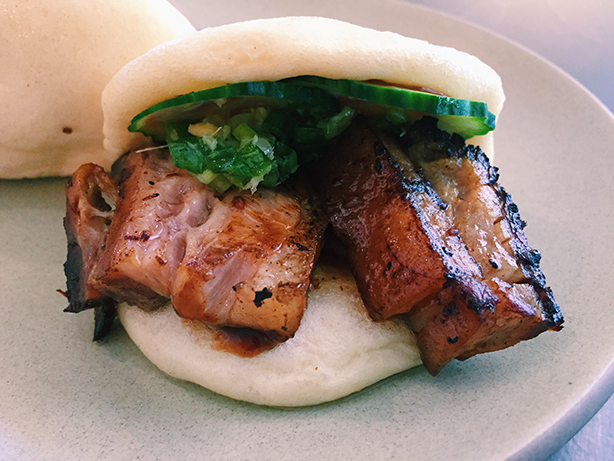
Miss Kim is now open for lunch! A bit more laid back than dinner, the new daytime menu includes a lots of delectable choices, from rice bowls to sandwiches. And it’s not strictly Korean, either.
“It’s more casual, fun in atmosphere but also in our food. For dinner we’re focusing on the tradition of Korean cuisine—for lunch we are finding inspiration everywhere!” says Ji Hye Kim, Managing Partner of Miss Kim.
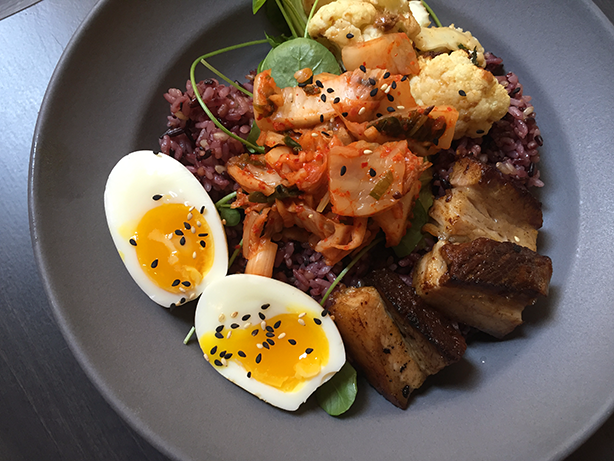
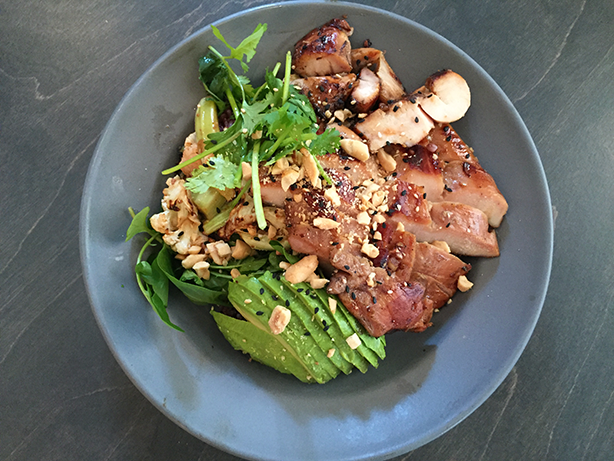
The bowls on the menu are perfect for warmer weather and can be served as a rice bowl (multi-grain purple rice at the moment!) or salad. The Kimchi Pork Bowl includes roasted pork belly, a six-minute egg, a pile of house kimchi, and seasonal veggies. There’s also the a delicious Garlic Chicken Bowl and Tofu Avocado with wasabi soy sauce for a little kick.
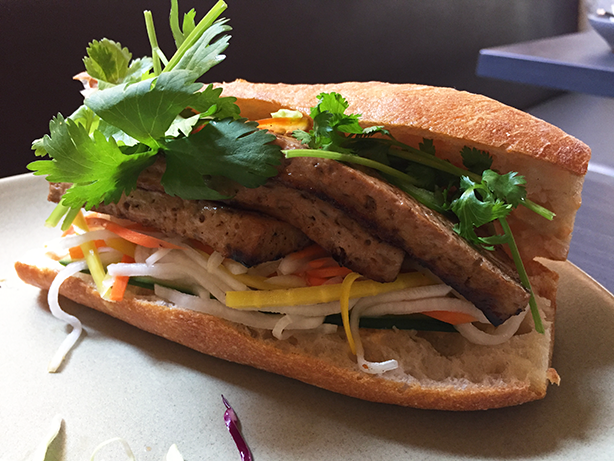
Sandwiches also get an upgrade with Miss Kim’s Banh Mi. Served on Zingerman’s Bakehouse baguettes (made with rice flour especially for Miss Kim), they come filled with chicken, slow-roasted pork shoulder or tofu along with traditional banh mi extras, like cucumber, pickled radish and carrots, cilantro and jalapeno. We added sriracha mayo, too.
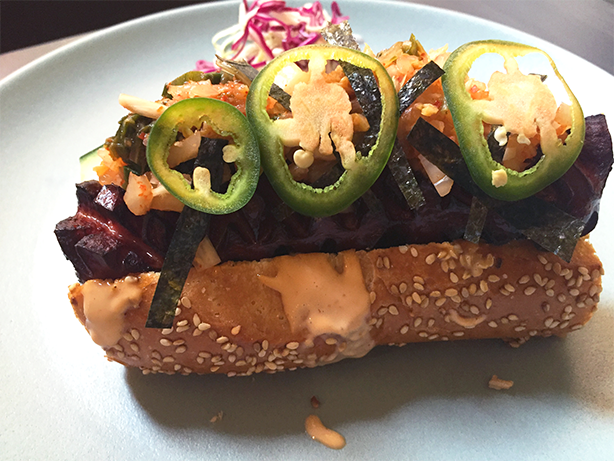
The Hot Korean Dog is fun, and it’s definitely an early favorite. The jumbo hot dog is cut strategically to add delicious crunchy bits. It literally drips with that sriracha mayo we mentioned and is topped with kimchi, jalapeno, cucumbers, and roasted seaweed. Don’t miss it!
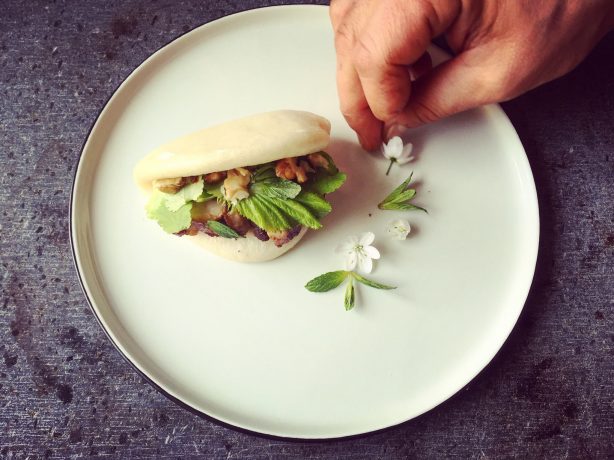
Fans of Miss Kim predecessor San Street will be happy to see that the buns are on the menu. Pork belly with hoisin sauce and ginger scallions as well as mushroom with sriracha mayo are available—the best part is that one order come with two, so you don’t have to choose!
Miss Kim is open for lunch Tuesday-Sunday, 11:oo-2:30. 415 N 5th Ave, Ann Arbor
Tag: Miss Kim
Last month, we celebrated Women’s History Month by asking the women partners of Zingerman’s Community of Businesses to give us their best advice. We posted their responses on our Zingerman’s Community Instagram and thought it’d be fun to recap their wise words here. Here’s what they had to say:
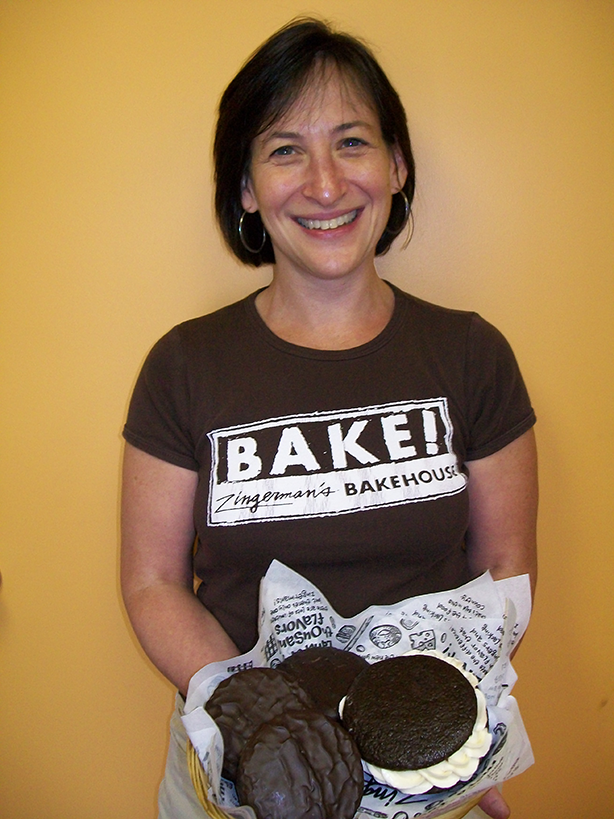
Amy Emberling, Co-Managing Partner of Zingerman’s Bakehouse
“During my first experiences in the food world in the late 1980s, it was clear that in some restaurants gender bias lived strong, as is the case today. I thought it was bizarre. I just ignored it and forged ahead. I recommend this as a strategy. Don’t engage with it except if necessary to call it out. Don’t embody it!”
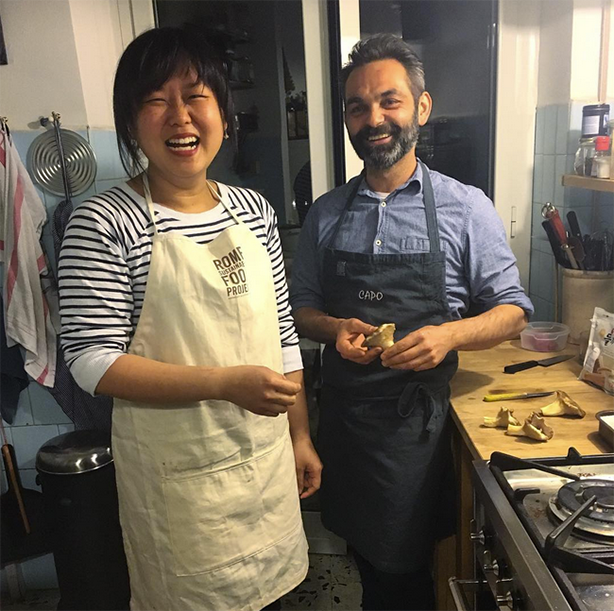
Ji Hye Kim, Managing Partner of Miss Kim
“I am not a native speaker. I am not a native. I’ve been a woman all my life, and I’ve been an immigrant ever since the age of 13. I had fancied myself as a fighter, with this idea that I have to go after what I want, because no one ever is going to hand it to me. In much of my personal experience, this has been true. But I know that with the right people and community like Zingerman’s, I can tune out all the noise, even internal ones calling me to be a fighter. I can just focus on being a leader and building something wonderful and delicious together.”

Aubrey Thomason, Managing Partner of Zingerman’s Creamery
“Do not be afraid, do not back down. If they tell you that you are loud, direct, abrasive, and competitive, you are probably doing it right! There are times to be soft and times to be hard, and over time you will learn to balance those things. But first you need to know what you are talking about, be fearless and direct, command attention.”
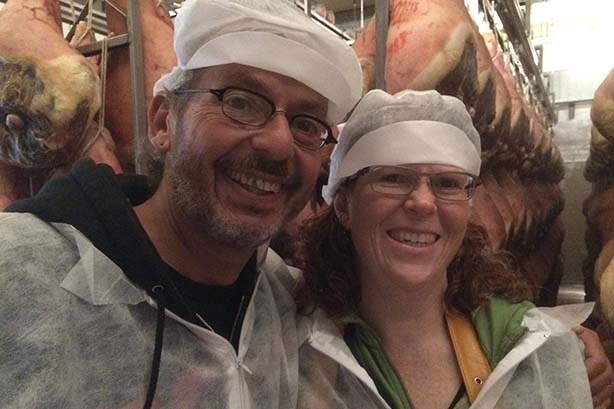
Grace Singleton, Co-Managing Partner at Zingerman’s Deli
“If I was going to give advice to any woman trying to move up the ranks or own their own business, I’d say believe in yourself first and foremost—you can do anything you set your mind to. Work hard. Nothing great comes easy, don’t lose sight of your goals—it’s easy to get sidetracked—and don’t be afraid to ask for help from others by sharing your vision of success.”
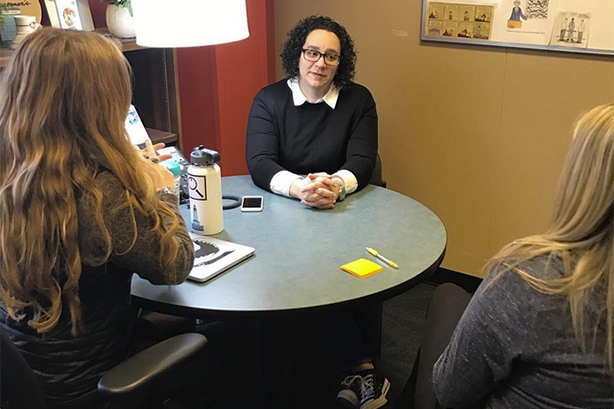
Toni Morell, Co-Managing Partner of Zingerman’s Mail Order
“Never let anyone tell you what is and is not possible. You can be confident and kind, strong and humble. You only learn from your mistakes—you will make them, so get ready to learn. Don’t be afraid to say what you think. You don’t have to know all the answers, but be willing to admit when you don’t. Let your passions guide you. You set the organization’s tone, so be careful you are setting the right one.”
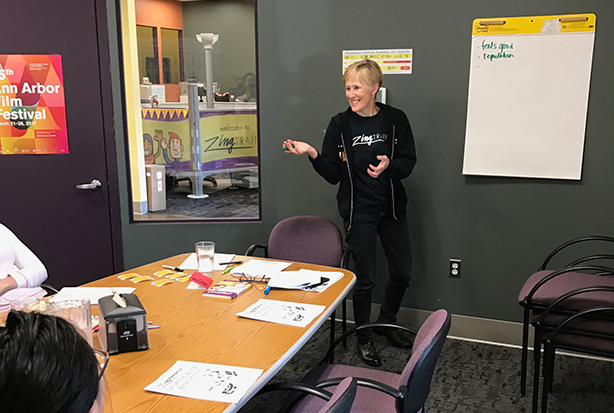
Maggie Bayless, Managing Partner of ZingTrain
“I grew up in an academic family and for years thought there was something a little sleazy about being in business—that corporations were out to take advantage of people. As I found myself in a variety of different jobs, however, I began to see that there were good businesses as well as bad businesses….Now, 23 years after starting ZingTrain, I have the opportunity to meet entrepreneurs and business leaders from around the world, and I’m completely convinced that small businesses can be an incredible catalyst for positive social change.”
Tag: Miss Kim
Back in November, on what would turn out to be Ji-Hye Kim’s last free day in a long time, ZingTrain eagerly interviewed her about what it meant to be a partner of the Zingerman’s Community of Businesses and opening our newest business—a Korean food restaurant—Miss Kim.
ZingTrain: Tell us the story. Start at the very beginning.
Ji-Hye Kim: I think to tell the story of any new business from the very beginning, you have to start at the point where someone realized they wanted to be a business owner. So that’s where I will start. Before coming to Michigan, I helped someone else open their business. I loved that entire experience. Working with practically no oversight. Creating the systems and an organizational culture from scratch. The freedom and sense of ownership that I felt. That experience is when I knew – I knew I wanted to own my own business. I suppose that’s where this story starts.
ZT: So why did you leave? Why did you walk away from all that?
JK: Well, I didn’t like the industry. That entire business was based on numbers. I wanted something more tactile, visceral, direct, honest and …. pleasurable! I hadn’t realized it yet but food is all those things and I’ve been longing for the Korean food I grew up with for a very, very long time.
ZT: How did you get to Zingerman’s?
JK: When I moved back to Ann Arbor, I lived a couple of blocks away from Zingerman’s Deli. I’d known about it as a student in Ann Arbor, but back then it was just “that expensive place I can’t afford.” One day, I walked into the Deli. I tend to be a pretty shy shopper – I don’t talk much and I mostly focus on the sign copy to make my choices. But before I even knew it, the person at the cheese counter had dismantled my usual armor of shyness and totally charmed me – and we were just talking about a piece of cheese! Funny thing is, I don’t even think he was trying, he was just telling me about the cheese. It was the best service I’d ever received.
Best of all, the cheese was outstanding! I was intrigued. Then I read a piece in the New York Times about Zingerman’s 25th anniversary. I was hooked. I started researching Zingerman’s and the more I read about it – the leadership style, the business model, being Open Book – the more interested I became in working there. And then there was food.
I was 27, going on 28, at the time. The years at the start-up had been intense in an industry I did not even like. So, I gave myself permission to “play” until I was 30. I figured it was low risk. Just long enough to scratch that food itch and then I would get “serious” with my life.
ZT: You’ve been at Zingerman’s for almost a decade now. You’re a partner at Zingerman’s and just opened our newest business. How did that happen?
JK: I started my life at Zingerman’s in the Retail Department at the Deli. It seemed only fitting given that a piece of cheese had changed everything. Besides, none of the other Zingerman’s businesses I applied to called me back! So I focused on learning every aspect of the retail business at Zingerman’s Deli. I learned how the numbers worked, how we took care of the food, the kinds of relationships we built with our producers and vendors and how we interacted with each other.
I took things at my own pace. Think of it as serious, engaged playing! Back then, I had no aspirations for partnership at Zingerman’s. Even though I didn’t know at the time that I wanted to open a restaurant, an Asian food restaurant seemed like a bit of stretch as a companion business for a Jewish delicatessen!
It wasn’t until someone else opened that door that I started considering it. One of my co-workers at the Deli, Kristen, put forth a vision for an Asian restaurant as part of the Zingerman’s Community of Businesses. She asked me if I was interested. And I walked through the door.
ZT: You mean you walked through that door and got on the Zingerman’s Path to Partnership?
JK: Back then the Path to Partnership wasn’t quite as formal and detailed as it is now. An Asian restaurant was definitely pushing the capacity of the process. So Kristen and I met with Ari and Paul and we figured out what the next steps were.
And then stuff just started happening. I realize now that this is one of the those intangible things – the power of vision, the power of being part of a connected community, the power of walking through an open door when you’re ready.
We decided that a food cart would be a low risk way of incubating and testing out the business we were proposing. The very next day someone told me that their friend was trying to sell a food cart! So we bought that cart and called it San Street. Then a local business owner decided that he wanted to open a food cart courtyard – Mark’s Carts. It came complete with a common commissary kitchen! And pretty soon we were one of the carts there, incubating our business.
Turns out that Mark’s Carts was not just an incubator for our idea, it was also a great incubator for being part of a community of businesses – perhaps with a little more dysfunction! We had a shared kitchen space and we had to self-organize to make it work. Much like at Zingerman’s, the company was awesome. We were a group of driven, scrappy, small business owners working hard to succeed. However, in contrast to Zingerman’s, we hadn’t exactly opted into the community and did not have common goals and principles. But we all wanted to make it work. And we did!
Most importantly, the food cart allowed Kristen and me to understand what it means to be a business owner. That’s when Kristen realized it was not for her. I, on the other hand, decided it was definitely for me!
The next four years are a bit of a blur. We really pushed the capacity of that food cart to its limit. We got a second food cart. We started catering events and doing pop-up dinners. Zingerman’s was pretty busy in those four years too. When we all emerged from those four whirlwind years, Zingerman’s had a much more formal and well-articulated Path to Partnership and I was ready to get on it.
ZT: Talk about the Path to Partnership process. What made you finally get on the Path to Partnership? What was it like?
JK: Becoming a partner at Zingerman’s is an interesting process. People have repeatedly asked me, “Did they make you jump through a lot of hoops?” My response : “Who’s they?”
To be honest, when I started on the Path to Partnership, I wasn’t a 100% certain that I wanted to be a partner and open a business within the Zingerman’s Community of Businesses. But like that other door that I walked through, I walked through this one. I figured that the act of walking through the door and being on the path would itself be the clarification I needed. And no matter the outcome, I would learn from it and grow as a person and future business owner.
It’s a very well designed process. It’s flexible. It allowed me to do things at my own pace which was important for me. It allowed me the time I needed to explore. It allowed me the space I needed to articulate the answers to “Who is this group that I am going to be a part of? What is their culture? How do they operate?”
And I got my answers. I held my own and did not go forward with each step in the process until I was ready. While I was on the Path to Partnership I saw our organization from an entirely different perspective. I got to know Zingerman’s (and myself!) at every level. Everyone offered to help. Everyone was on my side. And everyone was recruiting and advocating for even more people to be on my side. The organization was peppered with people proudly sporting San Street t-shirts!
The summary? The Path to Partnership process itself is the best representation of what it means to be a partner at Zingerman’s. It’s truly well designed.
ZT: What is it like becoming a Partner at Zingerman’s?
JK: Going through the Path to Partnership process you talk to a LOT of people. Every partner at every single business. You learn to advocate for yourself and your business. You learn to ask for help. Everyone you talk to has an opinion that you need to be able to meaningfully consider and then decide what you are going to do with. You’re asked to trust people with your personal future and your business vision and sincerely give them the opportunity to influence it. In other words, the process tells you exactly what it’s means to truly belong in a community.
And the trust. At Zingerman’s, you’ve got to buy in. And I’m not talking about the money, which you also need to do. Buy-in means that you buy into the way Zingerman’s operates – the vision, the guiding principles, open book, servant leadership. The whole thing. If you don’t like it, you don’t get to stand by the sideline and not comply. You also don’t get to maliciously obey. If you don’t like what you’re being asked to do, you bring a better option to the table and sell it to everyone else.
When I started on the path, I was not sure I was the best person to start a business within the Zingerman’s Community. I have a lone maverick side to me that enjoys making unilateral decisions. By the time I was done with all that talking and collaborating, I knew exactly what it would mean for this lone maverick to get herself 17 partners!
ZT: What were your biggest learnings from the Path to Partnership?
The most transformational thing I learned was this – Being a partner at Zingerman’s is not about relinquishing control, which had been my biggest concern.
I realized that I’m not an expert at everything and Zingerman’s was offering me many resources – not only the systems and processes that have been vetted over three decades, but also the collective wisdom and support of the entire organization. A team of 700+ people who were rooting for me to succeed and looking for ways to contribute to Miss Kim’s success.
I had imagined being independent and being part of the community as opposites. It’s more complex that that, even paradoxical. Being on the Path to Partnership, I learned that it’s about being both independent and functioning within a community at the same time. It’s about making better decisions by having access to more information and expertise than you might ever have had the capacity to gather as a small business owner. Being part of the community doesn’t mean that you lose autonomy. It does mean that you’re committing to being a part of the community, engaging in dialogue and giving and accepting help when needed. Nothing more and nothing less.
I also learned that dialogue itself is really useful. I might not use someone’s input, but being in dialogue significantly improved the quality of my decisions.
ZT: Which brings us to the best part. Tell us about the food.
JK: There aren’t many of absolutes in this organization because we dialogue a lot and make decisions by consensus – but one of the absolute absolutes is the quality of the food. It’s so inspiring to be part of an organization that holds you to that high of a standard and inspires you to keeping reaching for higher. We may not have a lot of experts on Korean food, but we have a lot of food experts here and they understand what good food tastes like!
Zingerman’s totally understood my obsession with the texture of the pork buns and tteok-bokki. My fascination with fermented food. Even my irritability on the misrepresentation of Kimchi in the western world! My numerous trips to Korea to research and learn, the many opportunities I took to go work in the kitchens of chefs more experienced than myself; at Zingerman’s no one ever questioned the ROI of that time and money.
Zingerman’s asks probing questions. What is the traditional version of the dish? What is the original form of this ingredient? How will you represent it here? Questions like these are important to me and totally par for the course at Zingerman’s. Taking the time to answer those questions has made for a much better menu at Miss Kim’s.
Why wouldn’t you want someone to walk into your restaurant, invest a lot of time and energy in evaluating every detail and then give you thoughtful feedback in a way that you understand and can hear? Now multiply that someone by 700 and you’ve got Zingerman’s. It’s like having hundreds of pairs of eyes and ears and millions and millions of taste buds!
If you would like to learn more about Zingerman’s Path to Partnership, please email [email protected] and we’ll send you a slew of really cool and useful stuff. You can also download our FREE webinars on the Path to Partnership online.
You can also read about the food at Miss Kim and see photos.