
Tag: New Harvest Olive Oils

Regenerative, rhapsodic, and really delicious!
While winter is not a great time of year here for fresh produce here in Ann Arbor, this is the season in which, slowly but surely, new-harvest olive oils continue to show up on our shelves. I love them all! Each new arrival makes my culinary day. And this one from the folks at Frantoio Grove is especially fine. The aroma alone is amazing—like smelling salts to bring me back from the stress of the news. Feeling uncentered? Stop for a few seconds and smell the oil!
The Frantoio Grove oil is produced in California, about half an hour south of San Jose. There, the fifth and sixth generations of the Martin family are quietly crafting some of this country’s most delicious olive oil. It’s produced using regenerative farming techniques, and its flavor is beyond terrific. While the 2025 harvest is newly arrived, the Martins are definitely not new to the land. The family began growing grapes on the farm all the way back in the 1870s. The Frantoio Grove olives were planted about twenty years ago now by Jeff (the fifth generation) and Pam Martin. They dove deep into a single varietal—the Frantoio, which is the classic olive of Tuscany, putting in about 3,500 trees that first year. As is the way with olive trees, it took a good five years to get oil—2010 was the first meaningful pressing.
For many years, the Martins grew the olives organically, and then a few years ago, they decided to raise the quality of the oil and their care for the land further. Patrick (the sixth generation) explains how they took it to the next level:
We are the only olive grove + mill like this in the world so far, and we are very excited about the program. We’ll be releasing our flagship oil shortly, which will feature the ROC mark. Our goal is to build resilient ecosystems on the farm and produce robust, high polyphenol oil that is wildly expressive but also low on the bitterness and astringency that comes from stressed trees, and this year, early in our harvest, we realized we had exceeded even our own expectations.
I say with certainty that the Martins have hit their mark. The newly arrived new-harvest oil is totally terrific. Like listening to music on an exceptional sound system, it’s really remarkable—everything about it seems clearer, cleaner, more coherent, and very compelling. It’s intensely green and peppery, but in an especially balanced and surprisingly gentle way. A little nuttiness with lots of low notes to go with the beautiful bitterness that comes with early harvests like this. It has hints of green apple, and I’ve also heard it described as having notes of persimmon and pistachio, too. Whatever descriptors you decide to use, the oil is exceptional.
The 2025 Olio Nuovo is lovely on toast for breakfast, especially when topped with the bright-colored, amazing apricot jam from the South of France that the folks at Olbia make. Great on salads, bruschetta, or the Tuscan way, on a just-off-the-grill steak (rare is how they’d cook it there). I’m an advocate for trying it on a simple spaghetti (Rustichella, Mancini, or Gentile). All you need is oil, garlic if you like, lots of freshly ground black pepper, and some grated sheep milk Pecorino, or, alternatively, a bunch of creamy fresh ricotta.
Buy a bottle
P.S. The “regular” 2025 harvest Frantoio Grove oil which, while not Olio Nuovo, happens to also be amazing! It should arrive at the Deli in the next few weeks.
The excellence of Enzo’s early-harvest oil arrives in Ann Arbor
Some foods are so seasonal that they’re only available for a few weeks a year, even in the Industrial Age. Three of my favorites come to mind. Michigan strawberries in June. Fresh Great Lakes smelt in April. And new-harvest olive oil in the fall! Though I could eat all three of them happily year-round, the natural reality is that the window in which we can enjoy them is relatively short!
New-harvest oils are always extra peppery because of the abundance of polyphenols that are present in high ratios right after the oils are pressed. They’re big, bold, and beautiful, with grassy greenness that gives them a considerable wow factor. Unlike wines, which will generally stay stable in the bottle, olive oil softens in flavor a small bit every day. From one day to the next, you probably wouldn’t notice, but by the time the new-harvest oil is a couple months old, it will have lost a fair bit of its natural peppery pungency. It will, mind you, still be delicious—just less intense than when it first came out of the press. Which means that now, not after the holidays, and not next spring or summer, is the premier time to appreciate its full flavor!
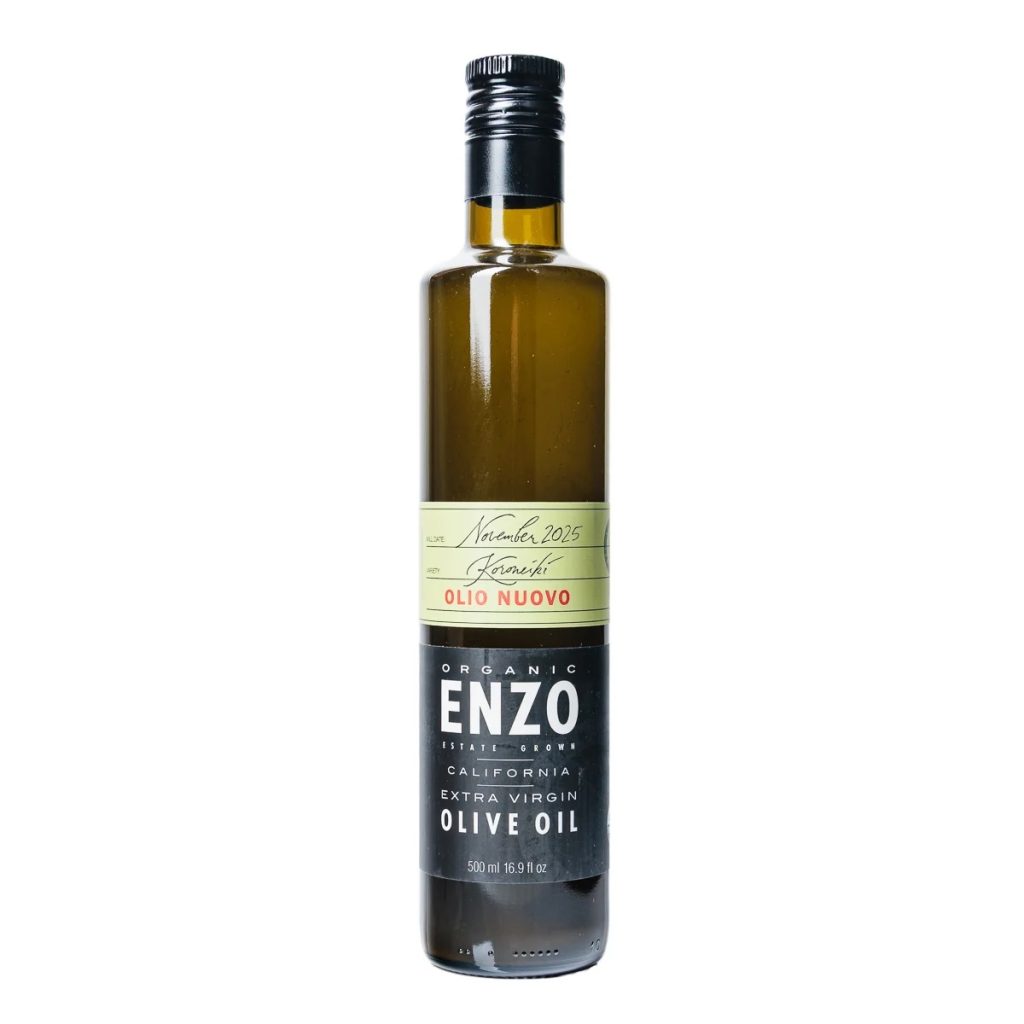
One of my favorite times of the annual culinary calendar has officially arrived in Ann Arbor: The first new-harvest olive oil of the 2025 season has hit the Deli’s shelves! This year it’s a super-tasty oil from the Ricchiuti family—the fourth generation to work the family’s farms. Their oil, packaged under the label Enzo, is named for the great-grandfather of Vincent Ricchiuti, the creative successor to this inspiring family legacy. Made from Koroneiki olives, it’s so good that a few years ago it made Food & Wine’s “Five Favorite New California Olive Oils” list.
The new-harvest oil is fantastic on anything you like to drizzle olive oil on—bruschetta, pasta, vegetables, fish, steak! Use it to take your popcorn to a whole new level. Try it on toasted Paesano bread. Pour it onto a nice slice of good feta or a bowl of fresh ricotta. If you want a great breakfast, toast a thick slice of bread, pour on a bit of olive oil, and spread it with one of the wonderful jams or honeys we have on hand. It’s edgy, engaging, and excellent!
One little-known note on new-harvest olive oil: Although they never taught me this in Hebrew school growing up, in the years after we began working with great olive oils, it became clear to me that the Chanukah miracle is actually tied to the arrival of new-harvest olive oil. Think about it. The priests were waiting for more “holy oil” to arrive at the Temple. In pretty much every culture, what is offered first is always the first fruits of a harvest. What time of year are olives harvested in the Northern Hemisphere? And what holiday happens around the same time? Add all these questions together and the obvious answer is that the Maccabees were waiting to bring the new-harvest olive oil to the Temple to relight the Eternal Light with the “holy oil” we hear about when the Chanukah story is told.
By the way, if you want to taste the oil in action, swing by the Roadhouse for the Cal-Fiorentina dry-aged, pasture-raised steak. Finished with a generous dose of the Enzo new-harvest oil, it’s fantastic. To give some context, La Fiorentina is the classic steak dish of Florence. Combining “La Fiorentina” with the California origins of the oil, we got … Cal-Fiorentina!
Whether you’re at the Deli, the Roadhouse, or your house, if you like attention-grabbing green oils like I do, do not miss this one.
Buy a bottle
Welcome to Cooking with Grace! This is where Grace Singleton, a managing partner at the Deli, shares her favorite products and delectable home cooking tips with us. This week, she tells us about the new harvest olive oils that just hit the shelves at Zingerman’s Deli.
I always get excited when we receive the new harvest olive oils, and I get my first taste of how the past season has impacted the flavor of the olives and the oil pressed from them.
Olive oil harvests in the Northern Hemisphere generally happen in late fall, and as with all agricultural harvests, there’s a lot of work to be done in a short amount of time. The fruit must be picked when it’s at the perfect ripeness and flavor, the weather must be watched closely to make sure there isn’t too much (or too little) rain or cold, and pests (like the dreaded olive fly which has been a continuing problem in Europe) have to be monitored for. You also have to make sure you have all the people and equipment needed to process the harvest. There’s different levels of mechanization used in olive picking and oil pressing—but for the most part, there are always long days of work for as many of your friends, family and workers as you can bring together to help.
But there’s joy in it, too. There’s a celebration surrounding the harvest—a celebration of all the people who come together to make it happen (with many shared family meals to help offset the long hours of work). Of course, there’s also the excitement of tasting the first fruits of all the labor as every year yields a different result in flavor.
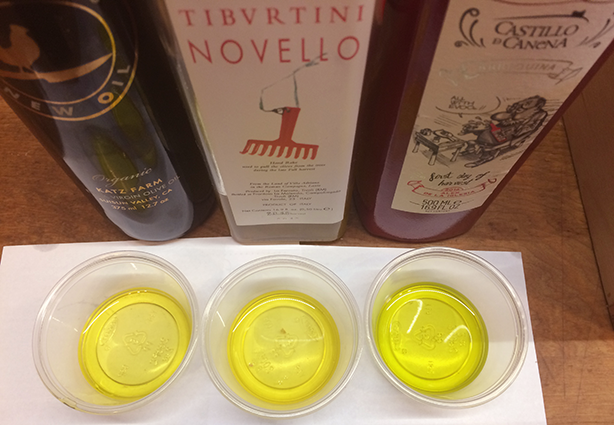
Right now, we have a limited supply of three new harvest olive oils, which can be called olio nuovo or novello depending on the producer and country of origin, on the shelves right now. Come in for a first taste of what’s to come later this spring once the remainder of the harvest is blended, rested, sometimes filtered, and then bottled for us. These are the freshest oils you will get a chance to taste, and they are all exceptional and quite different from each other.
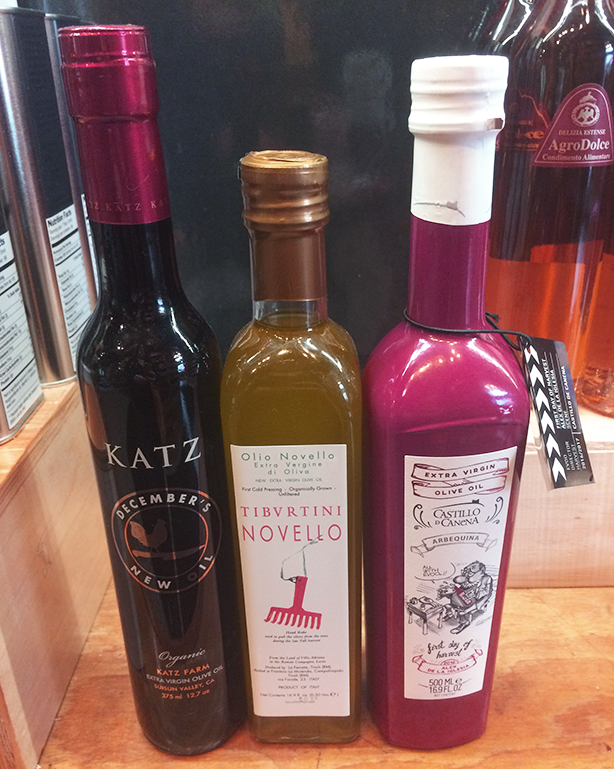
Castillo de Canena: “First day of harvest” Spain-Arbequina olives. These folks not only make amazing quality oil, they also have beautiful and unique packaging that really stands out on our shelves and makes a lovely gift. This oil has a super-silky mouthfeel with a quick burst of bitter picante flavors that hit your mouth first and then settle into arugula heat mixed with a spice similar to a Hungarian hot paprika. The aroma on this oil is big—with fresh cut grass and tomato dominating the scent.
Tiburtini Novello: Hand-harvested, organically grown, and unfiltered after pressing. With notes of almond in the beginning with a smooth, thick mouth feel, this oil has a nutty buttery aroma. It has quite a lot of heat in the back of the mouth and is balanced with a clarified butter flavor and some macadamia nut on the finish.
Katz December’s New Oil: Suisun Valley, California. Leccino olives from the first day of production on October 26th, and Frantoio from November 5th and 12th were blended to make this unfiltered oil. This oil has a fairly mild aroma with a fresh green spiciness. It smells and tastes alive. The mouth feel is silky, and the flavors are buttery with a developing heat that spreads through the mouth from the tip of the tongue, to the side, the back and ends in a savory taste. The heat fades to more vegetal flavors of cooked greens and artichoke. The bitter and the spicy flavors do a wonderful dance on the tongue, each in balance and taking turns leading. The heat is similar to that of a good cassia cinnamon heat: subtle yet present.