
Tag: ZINGERMAN’S DELI

Great to eat, no meat, and handmade on the island of Evia
Looking for a lovely confection that’s well suited to the summer heat? I’m happy to report we have a fantastic new arrival from Greece that will fill the bill beautifully! Made to do well in the very hot Aegean climate, dried fig salami is super tasty!
We get them from longtime friend and importer, Vivianna Karamanis at Hellenic Imports. Everything we get from Vivianna is very, very good and these dried fig salami are up there with my favorites. Here’s a bit of the backstory:
My husband Theo loves figs and whenever he was visiting me in the U.S. he would always buy fig cakes, but he really didn’t enjoy the quality or firmness of the product. He would go on and on about the quality of dried Greek figs, specifically from the island of Evia. Upon heading back to Greece, he started researching the local fig farms and their products from Evia. He met with a lady who was making fig salamis by hand with her partner. We worked closely with them, but with a twist. Instead of just a pack of dried figs, we made them into these great salamis.
The woman who works with the figs is based in a small facility in Athens. She controls everything from beginning to end, meaning she visits the farms/farmers on the island and checks the harvest, she works with very specific producers, and it has helped as they commit their harvest to her—many Greek farmers feel most comfortable working that way. She handles the production and oversees the packaging. Despite how popular the product has become for us she still insists on doing most of the product using traditional methods.
We only use figs from the island of Evia which I believe is the key ingredient to the “juiciness and sweetness” of this product. Only simple, raw ingredients are used to make the product making it a high-fiber, healthy snack. There are no added sugars or salts and they are certified by the Non-GMO Project. It makes for the ideal cheese companion.
Evia is the second largest island in Greece, as Vivianna says, “just a bridge away” from Athens. It lies off the country’s east coast, in the Aegean Sea. The figs come from various farms, but they are all grown in and around the town of Kymi on the central east coast of the island. Evia has a long history and has, at various points, been ruled by Athens, the Roman Empire, Venice, the Ottoman Empire, and more! Since early in the 15th century, there has been a sizable Albanian population.
We have four of these fantastic, dried fig salami on hand. All are great. The Aleppo pepper with orange is probably my favorite but they’re all fine! Each has a touch of sweetness and a bit of spice and all are excellent!
- Cinnamon + Pistachios
- Aleppo Pepper + Orange Zest
- Almonds + Black Pepper
- Aleppo Pepper + Smoked Paprika
I love them on their own, and they’re beyond terrific on cheese boards—I’ve yet to find a cheese they don’t pair well with. A nice little gift, a great addition to your provisioning for a camping trip, something special to keep on the counter for late-night nibbling, and a wonderful sweet to serve while trying to channel the wisdom of ancient Greek philosophers during consensus-seeking meetings.
Snag this fig salami
. 
Find deep discounts during the Summer Sale at Mail Order and the Deli
Every July, at Mail Order and the Delicatessen, we drastically discount dozens of products (nearly one for every day of summer) and savvy shoppers gather their go-tos like preserves and olive oil. The Summer Sale is an annual tradition that folks look forward to all year, for stockpiling staples (like Ortiz tuna from Spain, the perennial best-seller) to be sure, but also to plan ahead for future gift-giving. (Did you know? When you shop online at zingermans.com, you can purchase items during the sale and schedule to ship them at a later date!)
With so many items on sale, it can be hard to know where to begin. Start with these 10 Summer Sale highlights:
 Lemon Olive Oil – Look for Colona Lemon Oil at the Deli or Agrumato Lemon Olive Oil at Mail Order. In both cases, the artisans actually press olives and citrus together—no citrus-flavoring or infusing here. Brush it on top of almost any just-broiled fresh fish. Wonderful in vinaigrettes, marinades, or drizzled over simple pasta or good bread. Lynn O. shares, “The lemon oil elevates everything I put it on from salad to popcorn.”
- Zingerman’s Peranzana Olive Oil – Made by Marina Colonna on her ancient estate a little over 100 miles due east of Rome in Italy’s Molise region from hand-picked Peranzana olives pressed the same day they’re taken from the tree.
- Col. Pabst Worcestershire Sauce – This sauce recipe was created by Colonel Gustave Pabst, son of Pabst brewery founder Captain Fredrick Pabst. Kate Quartaro, Gustave’s great-granddaughter, has used the recipe to create a small batch Worcestershire sauce. It has more than 20 ingredients, including malt amber lager from Milwaukee’s own Lakefront Brewery. Guest Jean T. dubbed it “delicious” and admitted to enjoying it “just by the spoonful standing at my kitchen counter.”
- Brooklyn Delhi Achaars – These plant-based, small-batch sauces are rooted in time-honored Indian culinary traditions and layered with a modern spin, like using less salt, so the flavor of the produce is really able to shine through.

- Koeze Peanut Butter – Made on the other side of the state in Grand Rapids, Jeff Koeze sources great Virginia peanuts, blanches and roasts them, adds a touch of sea salt, and then grinds them. The result is an intensely flavorful traditional peanut butter with far more personality than the commercial stuff. Guest Robert D. declared, “The Koeze Peanut Butter is the best out there. It is the platonic ideal of peanut butter.”
- Organic Portuguese Sea Salt – This delicate salt comes from the southern tip of Portugal, where sea salt has been collected and exported since the 11th century, though was waning in popularity. The folks at Belamondil have revived the traditional methods—refashioning salt pools and harvesting with centenary salt pans. This has restored the local ecosystem in the process, helping to bring birds like egrets and herons back to the area.
- Marcona Almonds – The king of the almonds, these rich, meaty Marconas from Spain are skinned, oil-roasted, and then kissed with sea salt. Not only is Mail Order’s Brad Hedeman never without a couple of bags in his pantry, he admits to storing them at the top of the pantry so his kids don’t spot them! (Lest you think this is harsh, guest Sara S. lamented, “I should have ordered more bags of the Marcona almonds. My ten-year-old ate them all in about 15 minutes!”)
- Pistacchiosa – Sicilian pistachios are blended with extra virgin olive oil to give this sweet spread an exceptionally smooth texture. Spoon it over cheesecake, drizzle over fresh goat cheese, or spread on warmed bread. (Or go for a spoonful straight from the jar!). At a Deli tasting event, the Bakehouse’s Corynn Coscia’s then-6-year-old rated it a 100 on a scale of 1 to 10.
- Wild Fennel Pollen – Fennel pollen is exactly what it sounds like—pollen from the flowers of a fennel plant! Sweet, pungent, and everything best about fennel. Delightful with fresh cheeses, ripe tomatoes, and pork. Guest Alicia C. raved, “Used a little of the Wild Fennel Pollen to season my whole roast chicken and it took the flavor and aromatics to a whole new level! This truly is a magic spice that makes anything you put it on so much more wonderful! Where has this been all my life?!”

- Moon Shine Trading Co. Tupelo Honey – This honey comes from north Florida, along the Apalachicola River basin, where bees feed on the pale green flowers of the Ogeechee tupelo, a shrubby tree that grows in the swamps. Beekeepers mount hives on 14-foot platforms, then harvest the honey on barges! The resulting honey is fruity and floral, smooth and pourable—a real treat on pancakes!
The annual Summer Sale goes through July 31 (If you like last-minute shopping, you have until midnight Eastern time.) So load up on all of these items and loads more full-flavored, deeply discounted foods and gifts. Fill the freezer. Cram the cabinet. Get ahead on gifting.
Shop the Summer Sale in person at the Deli or online at shop.zingermansdeli.com for pick up or local delivery. Shop from Mail Order online at zingermans.com to ship an order anywhere in the country.
Should you be reading this in August, well, mark your calendar for next year’s Summer Sale!
This originally appeared in the May / June edition of Zingerman’s News.
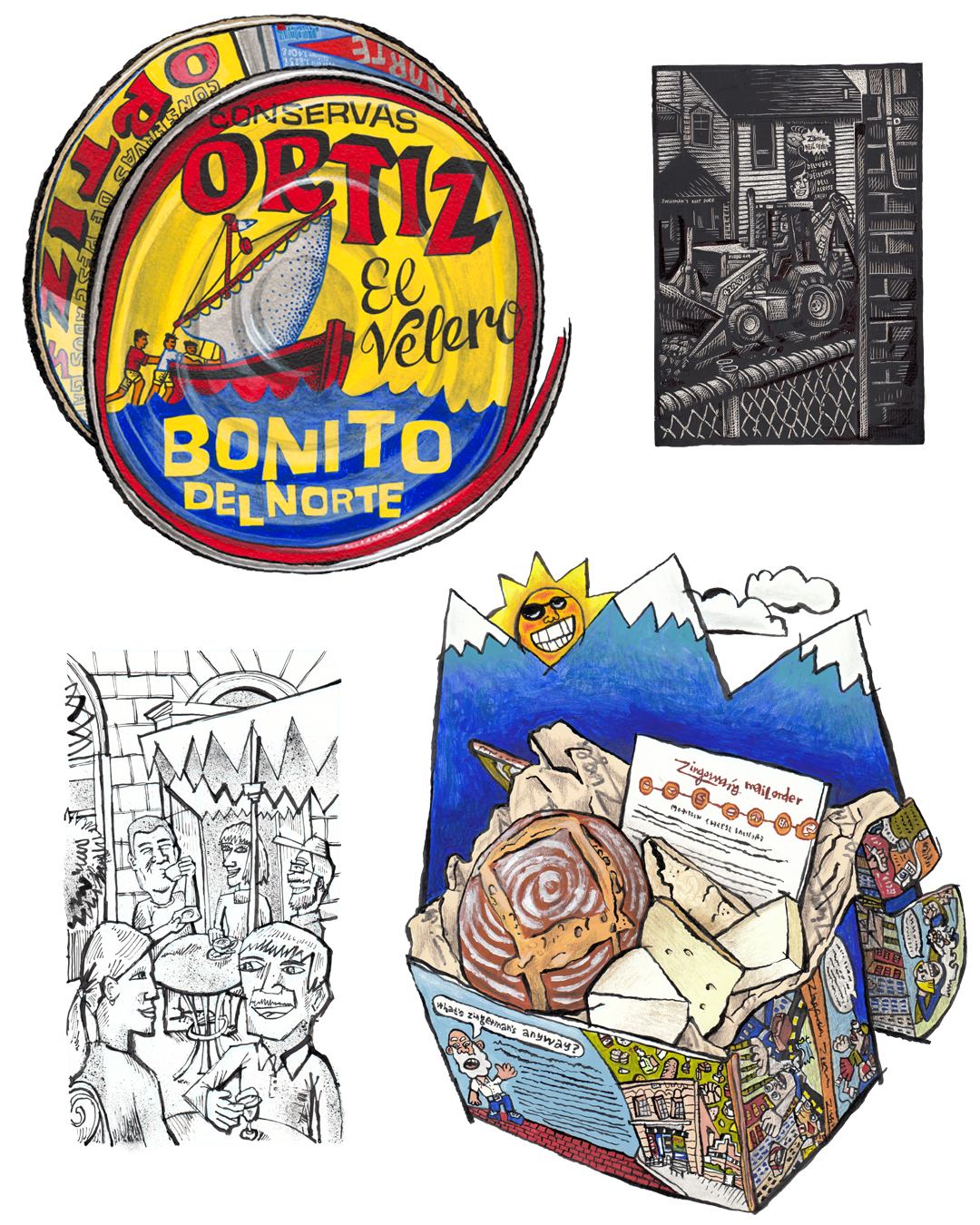
Warning: this news may increase your need for a nosh! Zingerman’s aesthetic is instantly recognizable and well-known here in Ann Arbor and across the country, due to our unique use of hand-painted images gracing the windows of our flagship Deli, the walls of Zingerman’s Roadhouse, the pages of our catalog, and beyond. It’s all thanks to the hand-painted art that comes from the illustrators at Zingerman’s Creative Services* (or ZCS for short), part of Zingerman’s Service Network, a business that provides shared services to the Zingerman’s Community of Businesses. Illustrator Ian Nagy helped develop Zingerman’s distinctive style; he joined the Zingerman’s team a few years after the Deli first opened (and still works here today!). Over the years, several other illustrators have also contributed to our catalog of one-of-a-kind artwork; now, that artwork is for sale!
These are all original pieces of handmade art, not prints, so you won’t find them anywhere else! Hand-done in pencil, ink, and/or paint, each one captures the spirit of fun, food, and community that is Zingerman’s. You’ll be amazed at how their delicious details and colors come to life up close and in person. Claim your very own exclusive piece of Zingerman’s, and check back often, we’re always adding more pieces.
Meet the Artist
While multiple people have created artwork for Zingerman’s over the years, the first collection of artwork available for purchase is all the work of Ian Nagy, a lifelong artist and illustrator. He’s a 6-time Print Magazine award winner and his work is published in a dozen books. Born and raised in Ann Arbor, Ian joined the Zingerman’s team in 1991 and continues to be an immeasurable contributor to the brand. As he puts it, “I draw food for money! Best job ever.” …perhaps that’s in part because he often gets to eat the subject!
From zany characters like Grandpa Pickle and Bacon Detective to artful still-lifes of artisan olive oil bottles and packages of coffee beans, Ian has created thousands of images in his career thus far—each packed like a Zingerman’s gift box with beauty, whimsy, and the unexpected. Ian shared more about his process on an episode of Michigan Public’s Stateside (starting at 31:00), explaining that his goal is always to make the food feel fun and approachable. Essentially, if you’re at all familiar with Zingerman’s, you’ve certainly seen Ian’s work. As Zingerman’s co-founder Ari Weinzweig concurs:
You will likely have seen his work all over the walls of our businesses. It’s featured in every Mail Order catalog you get in the post, on print newsletters, menus, clothing, posters, and packages. You’ve maybe seen it on our various delivery vehicles and in Zingerman’s emails that are delivered to your inbox. I see his other stunningly beautiful scratchboards every time I stock or sign one of the Zingerman’s Press pamphlets or books, or hand out one of my business cards. Ian’s art is there, too, whenever I show someone the new Zingerman’s snowboards and skis made by the artisan producer Gilson Snow in Pennsylvania. And it’s also been in front of me a lot lately with the fantastic label he drew for the new RoHo Joe Stout that Mothfire Brewing is making for us. When I open my closet at home, Ian’s art is in abundance printed on the wealth of Zingerman’s t-shirts and sweatshirts I have hanging there.
AADL Art Exhibit
In addition to being able to peruse (and purchase) Zingerman’s artwork online, the initial compilation of over 100 Ian Nagy originals, hand-selected from our archives, is featured in an exhibit at the downtown branch of the Ann Arbor District Library. Experience their delicious details and colors up close and in person… but please do not lick the art.
The Art of Zingerman’s: A Feast for the Eyes will run through April 18, 2024. The exhibit is free and open 10 am to 8 pm daily. All pieces purchased during that time will remain up and part of the exhibit for its duration. After the exhibit closes, purchased artwork will be available for pick up or shipped out, starting on April 20, 20204. (Find pick-up information here.) Ari calls the exhibit “one of the most meaningful achievements of our many years in business,” adding it’s a measure of success that we have
created a workplace where a pathbreaking artist who’s been in residence in a food business in a small town in the American Midwest for the last 33 years can put their daily practice and ethos on the walls for others to absorb and appreciate.
Pick out the piece that belongs on your wall!
*Zingerman’s Delicatessen sells large-scale painted promotional posters. Shop those here.
To keep up with the buzz on all of the latest happenings in the Zingerman’s Community, follow us on social media: @zingermanscommunity on Instagram and Facebook, and @zingermans on X (formerly Twitter).
Great Zingerman’s gift for a T-shirt lover you love!
Given that he was born and raised in Japan and I grew up in the American Midwest, author Haruki Murakami and I seem to have a surprising number of things in common. As I wrote about last summer, we each run every day, write a lot, and got our career starts in food service. We both, I’ve learned from reading, also have prodigious piles of books and music. The thing I didn’t know until Tammie told me last year is that he and I both have a LOT of T-shirts. Murakami, much to my happy surprise, even did a book about his—Murakami T: The T-Shirts I Love. He writes that:
T-shirts are one of those objects that just naturally pile up. They’re cheap, so whenever an interesting one catches my eye, I invariably buy it—plus people give me various novelty T-shirts from around the world. Which is how, before I even realized it, the number of T-shirts in my life has skyrocketed, to the point where there is no room in my drawers for them anymore.
It sounded so familiar that I laughed out loud when I read it. Maybe you can relate. If you, like me and Haruki Murakami, have a hard time turning down a great T-shirt that you know you don’t exactly need but really like—or if you know someone like me or Murakami who has a hard time resisting a good T-shirt—we now have a great way for you to have at it.
This new option came online thanks to the creative thinking of the folks at Underground Printing here in Ann Arbor. Rishi Narayan, the co-founder, has been a big Zingerman’s fan for years and we’re very appreciative of Rishi’s work as well. As you’ll see in this piece, we have a great many shared values. I smile too when I think about Underground Printing because they originally opened up at 1114 S. University in Ann Arbor, the same building in which, back in 191l two young anarchists, Abraham Seltzer and Eugene Chatterton, ran a restaurant for a year called “Seltzer and Chatterton.” Underground moved across the street a few years ago when the building was going to be replaced by a high rise, but the positive anarchist spirit still resides in their organizational culture.
Last year Rishi and crew came up with this creative new program: We put the T-shirts on these sites. You order. They print what you want and ship it straight to you!
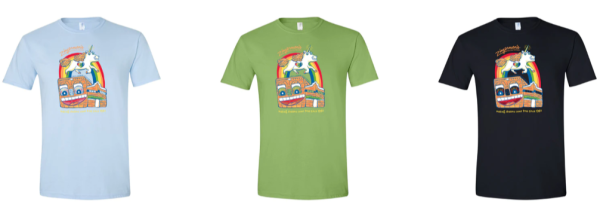
There are two Zingerman’s T-shirt stores up right now, and maybe more on the way. On the Deli site, there’s the long-popular Zingerman’s Deli Rainbow Unicorn shirt, illustrated by Ian Nagy. And I’ve always loved the one from Next Door with a lovely visual listing of coffee drinks across the front, illustrated by a former Deli staffer named Kayo. Just this week, we added a special new hoodie, also beautifully done by Ian, that’s dedicated to my late, deeply appreciated, and much-missed friend Daphne Zepos. You can read about Daphne’s far too early passing in the Epilogue of Part 3. Part of her legacy is the Daphne Zepos Teaching Endowment—it was created out of a vision she dictated when she was in her final days. $10 from each shirt goes to the fund.
The Roadhouse T-Shirt shop has the new and beautiful “Blacks in Culinary” T-shirt that I and others have been wearing of late. It’s taken from a section of Patrick-Earl Barnes’ amazing art piece of the same name that’s hanging on the north wall of the Roadhouse’s “Fireplace Room.” We donate $10 from the sale of each shirt to the African American Cultural and Historical Museum of Washtenaw County! You’ll also see the great Roadhouse “cartoon” shirts—the Biscuits, the Nashville Hot Chicken, and the New Mexico Green Chiles. Additionally, you’ll find, for the first time, a new, black and blue version of the Belief Cycle T-shirt some of you have seen me wearing. The original was created by Underground as an appreciation for me after I spoke to their leadership team about beliefs a few years ago! Many folks have asked to buy a shirt with the Belief Cycle, and now you can!
If you’re looking for a different gift, or you just, like me and Haruki Murakami, have a hard time passing up a good T-shirt, check out these two sites and order up soon! Maybe, now that I think about it, I’ll order some to send to Mr. Murakami in appreciation of his wonderful work!
Shop Deli T-shirts
Shop Roadhouse T-shirts
P.S. Here’s a podcast I did with Rishi! For historical context, it was recorded in January 2020, and released two weeks after the start of the pandemic!
Want more from Ari?
Sign up for Ari’s Top 5 e-newsletter and look forward to his weekly curated email—a roundup of 5 Zing things Ari is excited about this week—stuff you might not have heard of!
Zingerman’s Delicatessen is thrilled to announce its partnership with Ferndale Market, a third-generation family farm in Minnesota. Ferndale Markets allows the birds to be free-range when Minnesota’s weather allows: April through November.
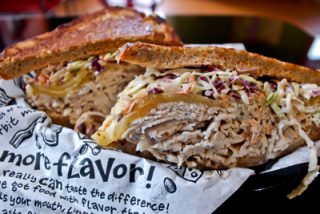
We’re sure you’ll enjoy the improved flavor of our roast turkey, especially in the Deli’s second-largest seller: the #18 Georgia Reuben! This longtime favorite is a grilled turkey Reuben loaded with coleslaw, real Swiss Emmenthal, our housemade Russian dressing, and served on hand-sliced, double-baked Bakehouse rye bread.
While it’s not quite as popular as our corned beef Reuben, our turkey Reuben sales still translate to an amazing amount of roast turkey every year: 30,000 pounds! There are lots of other ways to enjoy the roast turkey on our menu – for example, the #73 Tarb’s Tenacious Tenure & on our deli trays.
The Quest for Better Turkey
Zingerman’s is always working to improve the quality of our ingredients. When I first started at the Deli, we were buying our turkey from a major supplier in the industry. While the turkey was pretty good, my business partner Rick Strutz was sure there was something better available. We started asking for samples of roast turkey from as many suppliers offering whole roasted turkey breast as we could find. We tasted many samples, but we weren’t finding anything that was consistently better than what we were already using.
 I think I may have given up on finding a better turkey, but Rick didn’t. He started talking to our supplier, Grobbel (previously UMD United Meat and Deli), about the possibility of making a roast turkey we could use. We were already familiar with the care they put into producing exceptional products – we’ve been buying our corned beef from them since the day the Deli opened.
Here’s an example of their attention to detail: the original owner of the company, Sy Ginsburg, made sure to spend time at the Deli with Ari & Paul when they first opened to teach them, as Sy puts it, “how to make a good sandwich!” Sy taught Ari & Paul how to cook, trim, and slice corned beef, and would even drop off our early orders himself, since UMD didn’t distribute to Ann Arbor yet. Sy would load the cases of corned beef into his station wagon, and time his deliveries during lunch so he could help Ari & Paul work the line, and help Zingerman’s put out an exceptional product.
When we asked Sy and his business partner, Scott, about making roast turkey, they weren’t just open to it, they helped us figure out how to do it. Adding a new product isn’t an easy thing for a facility to handle, especially when its not already set up to handle turkey, so they had to reach out to some friends in the industry and see what was possible. At first, they had to add shifts for production on Saturdays and Sundays, days they were normally closed, since turkey couldn’t be produced in a USDA plant at the same time as corned beef. It took a couple of years, but when all was said and done, we had a much better tasting turkey breast than we had before. We also had a chance to deepen a relationship with an already close supplier, and to help them add a new product to sell to their other accounts.
Continuous Improvement: Turkey Edition
Like any other product we sell at Zingerman’s, we are always looking for ways to improve flavor and quality.
Grobbel had been sourcing birds with no added hormones or antibiotics, but ultimately, the birds were still sold on the commodity market. While there were standards set for how the birds are raised and processed, they come from different farms across the US. This is a typical model, and an economical approach to providing a consistent, high volume product, but I was interested to see if there was a chance to work one-on-one with a farmer, to improve the quality of the birds, and to forge a stronger one-on-one relationship with a supplier of one of our year’s largest volume purchases.
In November of 2017, I had the opportunity to tour Ferndale Market, John Peterson’s third generation, broad-breasted white turkey farm in Cannon Falls, Minnesota. Ferndale Market is a unique farm, letting the birds outside to be free-range as long as the weather was not too severe. In general, the farm lets the poults (baby birds) out in the spring to be free-range until Thanksgiving. When the birds are outside, they have unlimited access to 20 acres of pasture, which gives them exercise and access to insects and grass to eat, which diversifies their diet. These wandering birds are strong and healthy and are a fed custom diet free from growth promoters. Instead of using commodity feed, Ferndale Market works with a nutritionist and a veterinarian to take a proactive approach to the birds’ health using probiotics, prebiotics, and herbs and herbal supplements. Herbal supplements like yuca and oregano boost the immunity of the animals and allow Ferndale Market to go fully antibiotic-free.
To maintain the health of the pasture, the birds are moved to different sections of pasture every week through a movable support system featuring portable shelters, feeders, and drinkers. By moving these support systems as they roam, the pasture has time to regenerate after being fertilized by the birds. Thanks to the natural fertilization from the birds, Ferndale Market has eliminated the need for chemical fertilizers and manure management.
I was impressed with the farm’s practices and thought there might be a way we could work together.
You Really Can Taste the Difference
At Zingerman’s, we always rely on taste to make decisions about the food we buy. I was hopeful that by working with a single farm we could form a long-term relationship with a producer, improve the flavor of the turkey we sell, and make a positive economic impact for an independent farmer by providing a consistent demand. But first, we needed to do some taste tests.
We started with a small batch test. Scott at Grobbel helped organize its production team to make just 10 cases for us, and John of Ferndale Market worked on supplying the birds. The first test was very promising. The consistency of the texture and the overall quality levels were equal to what we were already serving, and the flavor was better! Once the small-batch test was complete, we wanted to test out a full batch, sourcing a full combo bin of turkey breasts to process (2,000 pounds). This would allow everyone involved (Zingerman’s Deli, Grobbel, and Ferndale Market) to test all aspects of the potential change in supply. For example, what shipping routes and rates are available from Minnesota to Michigan? When should the shipment land to coordinate with the processing? How are the birds packaged prior to shipping? We would also be able to see if there were any yield issues with these birds when we compared a full batch yield to what we were currently using, and working through a whole pallet of roasted turkey at Zingerman’s Deli (about 10-12 days of usage) would let us see if there were any variations in the consistency of the product and if we had any quality or yield issues when we sliced the turkey for use on our sandwiches. We did a few more taste tests, and the results were consistently better tasting than our existing supplier.
After almost 2 years of work, discussion, and product testing, I am thrilled to announce we now source all of our turkey from a single-family farm: Ferndale Market. The new turkey exceeds our previous turkey specs and we can now say it’s fully antibiotic-free, and seasonally free-range, still with no-added-growth hormones, and now we also have a direct connection to the farmer and the family raising the birds. The birds are free-range 8 months of the year, and when they are indoors they are in a spacious cage-free setting with plenty of room to roam about.


The Importance of Relationships in Business
One of the things I am most proud of about how Zingerman’s does business is the relationships we have with our producers and vendors. We partner with people and try to find ways that we can all be successful by working together and communicating openly.
When you’re talking about sourcing and processing 30,000 pounds of turkey breasts every year, it’s really amazing to have the ability as the end-user to talk to the producer, and to the processor, and to work on the details in tandem. Typically when you source products on that scale, the industry isn’t set up for open communication and discussion, and it can often feel like there isn’t any desire to hear feedback on the product.
The reality is, this approach to growing and caring for turkeys takes more time and costs more. Ferndale Market recoups the higher costs of their approach by finding specific buyers like Zingerman’s Deli. When independent farmers have the ability to stay independent and sell directly to others at a fair price, they’re able to produce a higher quality product, sustain their families, and have a sustainable approach to land management as well. If John wasn’t independent, he wouldn’t be able to raise the birds how his grandfather did.
In addition to having access to an intentionally-raised product, these close relationships to our vendors help us learn about the history and the people behind these artisan labors of love.
Recently, John told me a little bit about his grandfather who started the farm. John’s grandfather passed away 30 years ago and John knows he’d be proud of what they’re doing on the farm, but he thinks he’d also say, “What’s the big deal, this is the way we’ve always farmed.”
Zingerman’s Delicatessen is happy to be a small part of Ferndale Market’s legacy and to support its thoughtful approach to raising quality turkey.
Come by to try some of our new roasted turkey today!
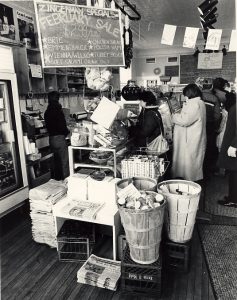
Everyone asks us this question. The short answer is, we made it up. The long answer goes like this:
When we first started talking about opening the business back in fall of ’81 we wanted a name that would convey the sense of a good local deli something that would sound “Jewish,” and offer anyone who heard it the sense that this was a real delicatessen. In theory I suppose that, since we’re both Jewish, we might have opted to use either my last name or Paul’s. But, unfortunately neither of our last names were of any value in this area. Mine is unpronounceable—not a great way to go into business. Paul’s last name is Saginaw, an anglicized version of “Sagin Or,” which is Hebrew for “seer of light.” In Michigan “Saginaw” is anything but “Jewish.” Instead, the name is immediately associated with either the city of the same name, a mid-sized industrial town north of Detroit, or the Indian tribe after which the city was named. Nobody hears Saginaw and thinks “corned beef sandwich.”
Instead, we decided to name the Deli after Hannah Greenberg, a regular at the fish market. As Paul describes her, she was an elderly Jewish woman, no more than four foot ten inches tall and about 95 pounds, with an assortment of pink curlers seemingly permanently attached to her head. She used to stop by the market every Saturday to pick up some smoked chubs. Each week, almost like clockwork, she’d complain about how bad the chubs had been the previous week with lines like, “Oy, you almost killed me with all the bone… Give me two more.”
Getting ready to open, we had a neon Greenberg’s sign—green of course—made up for the front window. We designed our first print ad to run in the local paper announcing the impending opening of Greenberg’s Delicatessen. And then about ten days before we were due to open —which would put us in the first week of March 1982—the phone rang.
I answered politely, “Good afternoon, Greenberg’s, can I help you?”
A sort of rude, pushy-sounding guy on the other end demanded, “Let me talk to Mr. Greenberg.”
“There is no Mr. Greenberg,” I answered honestly.
Not put off in the least, he pushed ahead: “Well where’d ya get the name then?”
“Do you like it?” I asked all too innocently.
“Yeah I like it,” he shot back. “It’s mine and you can’t use it.”
I distinctly remember getting one of those sort of really sick, sinking feelings.
Turns out Mr. Greenberg had registered the name “Greenberg’s Delicatessen” with the state office up in Lansing a few weeks before we’d decided to use it. He was planning to open in the Detroit suburbs sometime in the spring. We pleaded, reasoned, and begged him to let us use it. After all, we weren’t going to open any other stores—just the one in Ann Arbor a good thirty miles from where he was. We were nice guys, we assured him. And we certainly wouldn’t give him any grief. But he was adamant. He was on his way to national fame and franchising. Greenberg’s was his name and there was no way in hell he was gonna let us use it.
Frustrated and, probably a little flipped out, we retreated to Paul’s house to figure out what to do. We’d already run the Greenberg’s ad in the paper. We already had the neon sign for the window. And now, a week before we were supposed to open, we were suddenly nameless. We sat on the floor of Paul’s living room, drank a couple of beers and tested out hundreds of different names. After a few hours, we still didn’t have one but we had at least decided that we wanted to go with a name that either began with an “A” or a “Z” so that the store would be easy to find in alphabetical lists and in the Yellow Pages. Finally, we opted for Zingerman’s. It sounded Jewish enough. And, as everyone now says with a chuckle, it had “zing.”
One thing we still weren’t sure about was whether we should spell it the European way, with two “n’s” or with one. Paul called his grandfather to ask his opinion. Didn’t take him but a second to decide: “with one ‘n’, of course, so it’ll be easier for them to write the checks.” Paul’s grandfather was a very wise man.
The story culminated in sandwich #1—Who’s Greenberg Anyways; your choice of corned beef or pastrami along with homemade chopped liver, Russian dressing, and lettuce on double baked Jewish rye from the Bakehouse. All these years later, it’s still my favorite sandwich.
Another Wonderful Greenberg
Hannah Greenberg, it turns out, was not the only great Greenberg. Although we didn’t know him at the time, Hugh Greenberg would have been worthy of the same name as well. Hugh passed away in October of 2013—I’m pretty sure I must have met him on one of his many visits to the Deli but I know about him directly now only because of the wonderful words shared by his friends and family. Hugh clearly was a very positive figure in the community, a caring entrepreneur and a nice guy. He was one of the leaders of the Jewish community in Detroit, founder of three different successful businesses. One writer referred to him as “a giant of a leader.” Another said, “he was a giant in his service to goodness.” Next time you order a Who’s Greenberg Anyways, maybe hold half of the sandwich up and raise a “toast” to Hugh’s generous soul.