Juneteenth Dinner Features Recipes and Stories from the African Diaspora
Zingerman’s Roadhouse and University of Michigan Library honor Ann Arbor’s Ella E. Hall
Guest Mary Lynn Heid drove four hours south from Charlevoix, Michigan, to Ann Arbor to attend “From Freedom to the Table,” the third annual Juneteenth dinner hosted by Zingerman’s Roadhouse. Seated next to this reporter at the event, she said she wouldn’t have missed it.
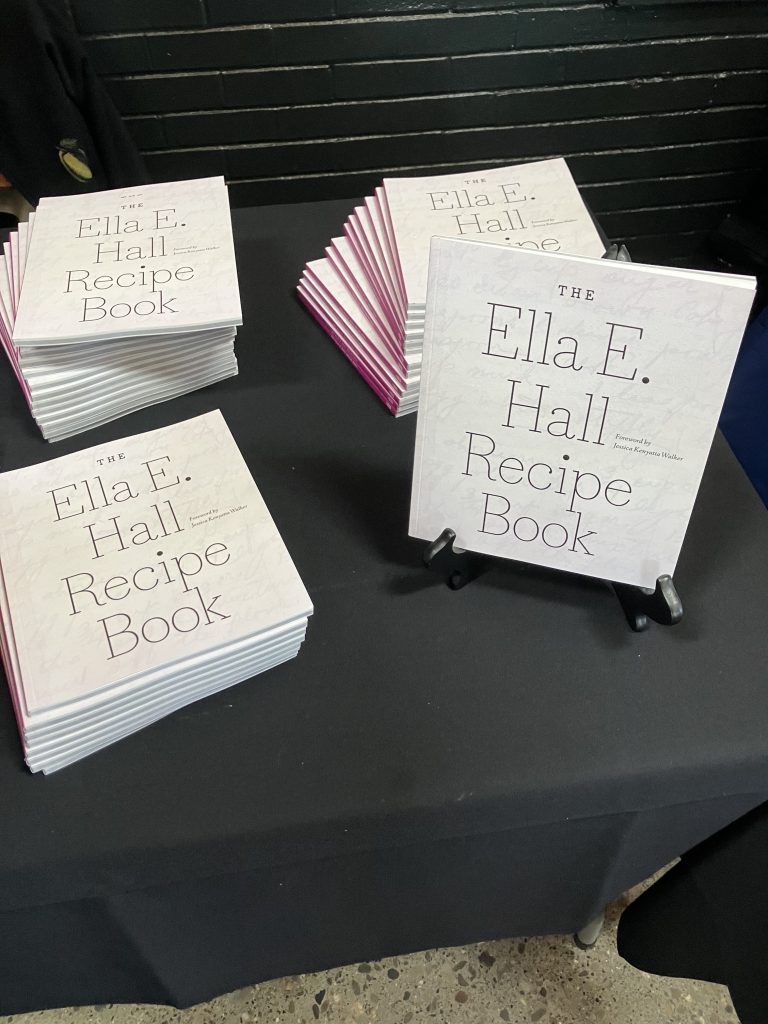
And no wonder: this was a particularly special celebration—held on June 16, 2026, in partnership with the University of Michigan Library—honoring the life and legacy of Ella E. Hall, a trailblazing African American cook and landlord in early-20th-century Ann Arbor. (Hall lived in the Old Fourth Ward, just a few blocks from where Zingerman’s Deli stands today.) Hall’s personal journal of recipes, housed within the library’s Janice Bluestein Longone Culinary Archive, was recently published for the very first time by U-M Press as The Ella E. Hall Recipe Book.
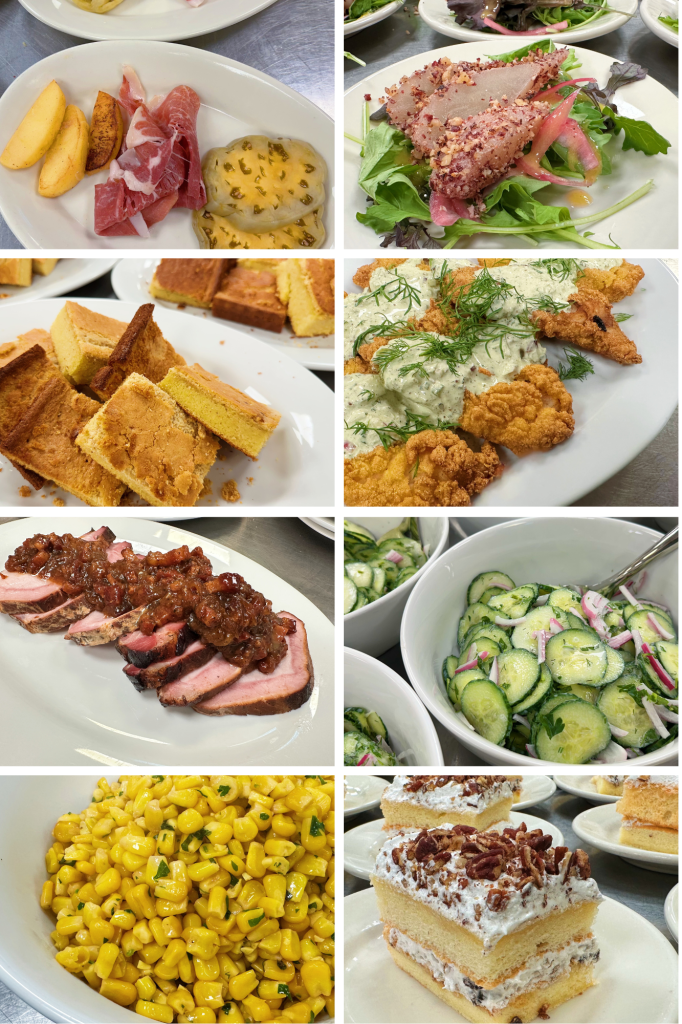
Attendees of the dinner, who packed two rooms at the Roadhouse, were treated to a bountiful menu curated by Head Chef Bob Bennett to pay tribute to Hall’s recipes and Black food heritage. Appetizers included pickled green tomatoes and country ham, poached pear and red walnut salad, and hearty corn bread, followed by an array of family-style entrées and sides: catfish and ramp remoulade, sorghum-glazed pork loin, buttermilk cucumbers, and fried Michigan corn. To top it all off: a sweet slice of vanilla-frosted, fig-and-pecan-filled Lady Baltimore Cake, prepared for the occasion by Zingerman’s Bakehouse.
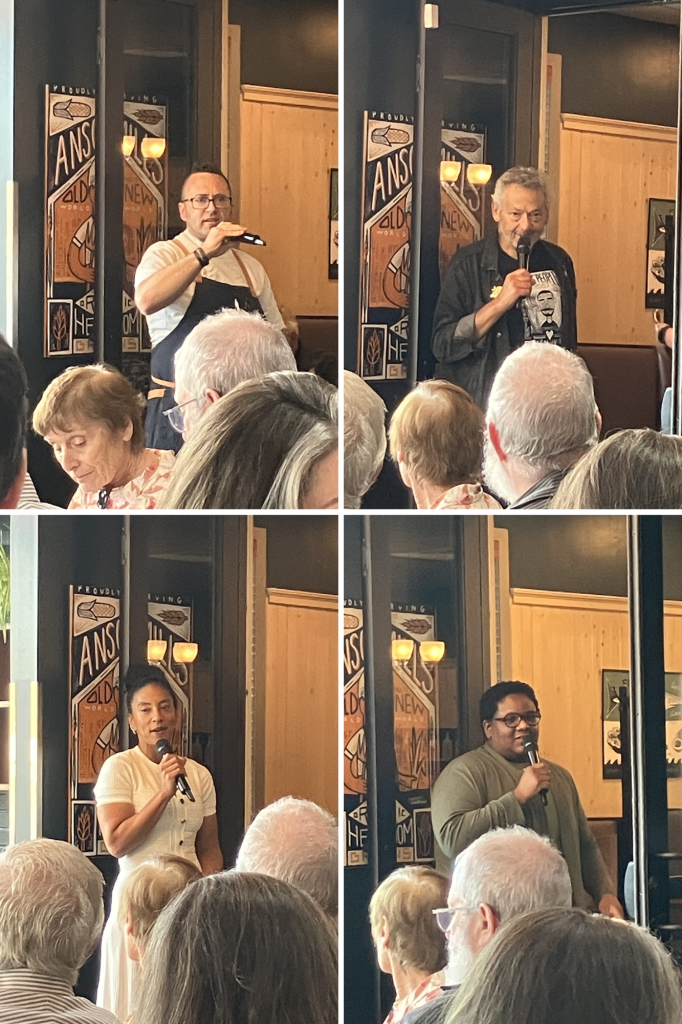
The evening’s nourishment extended well beyond the culinary. Zingerman’s co-founder Ari Weinzweig—wearing a T-shirt that commemorated his late friend Melvin Parson, founder of We the People Opportunity Farm in Ypsilanti—spoke about the deep significance of events like the Juneteenth dinner, especially in today’s fraught political climate.
“It’s incredibly important for us to continue this work and honor the history, honor the tradition, honor the community more than ever,” Ari said. “I really don’t know how you can have democracy without diversity, without equity, and without inclusion,” he added to enthusiastic applause.
Ari then introduced Elizabeth Hinton, an eminent author and professor of history, Black studies, and law at Yale University who grew up in Ann Arbor—and once worked as a server at the Roadhouse!
“My sister, Melina, who is now back working at the Roadhouse after many years, is one of the people who opened this restaurant, and when I was home in Ann Arbor in the summers while getting my PhD [at Columbia University], I would serve alongside her,” Hinton explained. “And then her daughters worked here. So Zingerman’s has been part of our family for a long time, and, as we know, chosen family is your family as well.”
Hinton shared eloquent insights into the historical importance of Juneteenth—celebrated annually on June 19 to mark the end of slavery in the United States in 1865—as well as the centrality of food to the Black experience.
“The kitchen has always been one of the earliest freedom schools for Black Americans,” Hinton said. “And the foods that we have passed down from generation to generation carry with them our survival and our creativity and our hope.
“Tonight’s menu extends that freedom outward from Ella Hall, whose recipes and whose culinary genius are the inspiration for the meal, to the broader traditions of Black cooking, Black women’s culinary expertise, and African diasporic foodways. This dinner and food are the perfect way to celebrate Juneteenth.”
Later, guests heard from Jessica Kenyatta Walker, assistant professor of Afroamerican and African studies and American culture at U-M, who penned the foreword to The Ella E. Hall Recipe Book. Walker recalled leading a summer class for gifted high school students, offered through the Telluride Association, and taking them on a tour of We the People Opportunity Farm.
“We learned from Melvin [Parson] and everyone who was there in a course called ‘From Agriculture to Abolition,’” Walker said. “We then went to Zingerman’s and had an opportunity to eat the very food that we saw being grown. And I just have to say asé to Melvin as an ancestor, to Ella Hall, to all of our ancestors whose stories they try to erase, but they never will be erased.”
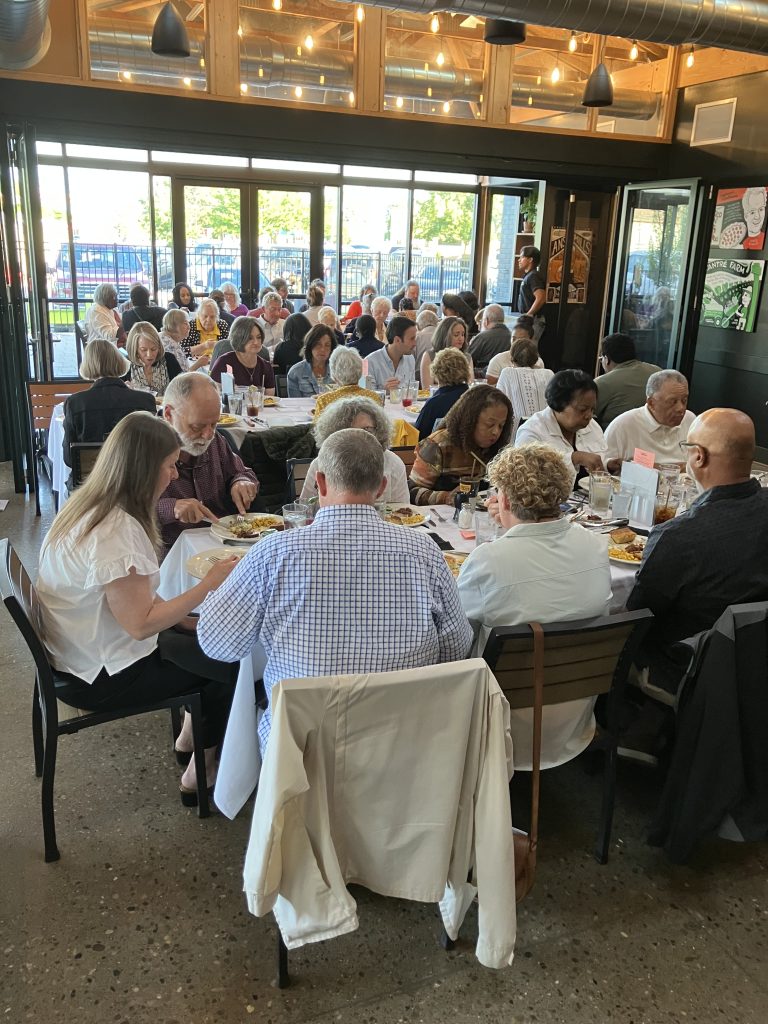
The stories of these ancestors were very much alive at the Roadhouse dinner—in the profound lineage of the delicious food, in the vibrant conversations taking place among speakers and guests, and in the spirit of gathering and connection that filled the air.
This reporter happened to be seated directly across from Lisa R. Carter, dean of libraries and university librarian at U-M, who expressed her gratitude and appreciation for the powerful event. A portion of the proceeds from ticket sales will go to benefit the library.
“The University of Michigan Library is so grateful to Zingerman’s for hosting us and for valuing the history of foodways and the Longone collection,” Carter said. “We’re really thrilled that Zingerman’s is willing to highlight these amazing stories, to make people curious about where we come from, where we’re going, and what brings us all together.”
A century after Ella E. Hall handwrote her treasured recipes in her journal, they’re still bringing us together. And this Juneteenth, Zingerman’s was honored to play a part in preserving her vital story and the rich culinary heritage of the African American community.
Zingerman’s Roadhouse Blacks in Culinary T-shirts, with original artwork by renowned artist Patrick-Earl Barnes, are available here. $10 of every purchase will go to the African American Cultural and Historical Museum of Washtenaw County.