We Do Our Best Work When We’re Part of Great Organizations
Getting situated, Situationists, the ’60s, and sustainable hog farmers
In the first week of December 1967, philosopher and author Raoul Vaneigem published his now-classic work The Revolution of Everyday Life. Born in March 1934 in the small Belgian town of Lessines (where the artist René Magritte was also born back in 1898), Vaneigem died in Barcelona seven weeks ago, on July 28, at the age of 92. While his moment of fame may well have passed, Vaneigem’s call to action against living life unthinkingly and sticking with sheep-like adherence to social norms seems pretty timeless. In an obituary in the New York Times in August, Adam Nossiter called The Revolution of Everyday Life a “cri de coeur against mindless work, materialism, and authority.”
Back when his book first came out in the late ’60s, Vaneigem’s work was a big inspiration for young people in France during the fabled uprisings of May 1968. Many carried copies of The Revolution of Everyday Life with them everywhere they went—just as, in “Why Democracy Matters,” I describe toting Timothy Snyder’s On Tyranny around with me over the last two years. Nossiter notes about Vaneigem’s writing,
The world of mindless work, of materialism, of authority; the state’s instruments of control and repression—these were the targets of Mr. Vaneigem’s poetic prose, honed into easily remembered phrases that were well-suited for a street demonstration or a university wall.
Vaneigem’s prose, it turns out, is also well suited to serve as a guide for figuring out an effective way forward half a century later, in the first month of fall 2026.
In the world of mid-20th-century art and philosophy, Vaneigem was a member of a small group of intellectual cognoscenti known as the Situationists. Officially formed in 1957 with the publication of their charter, Report on the Construction of Situations, and lasting until 1972, the Situationists had what seems to be an outsized influence on the era’s thought, creativity, and politics. In an essay published last year, author Kimberly Drew, co-editor of the book Black Futures, says of the Situationists that they had an “audacious dream of a freer, more imaginative society—one where life itself was art.” Or, much as I write in the pamphlet “The Art of Business,” Raoul Vaneigem makes the point that “art must merge with life.”
For me, at least, the Situationists’ language was more than a little bit esoteric. When it comes down to it, though, the core of their work could be condensed to what the magazine Designboom describes effectively as
challenging the passive role assigned to people in modern society. Instead of simply following the routes, functions, images, and routines laid out for them, they imagined inhabitants who could wander, interfere, improvise, and collectively reshape the environments around them.
In other words, per their name, their main message was: if you change your situation, take charge of your circumstances, and engage with the world in intriguing and thought-provoking ways, your life is likely to get a whole lot more interesting. By contrast, if you stay in the socially approved ruts, boredom, lethargy, and disengagement are almost certain to follow. As Vaneigem said in a 2009 interview with journalist Hans Ulrich Obrist, “The worst would be the unawareness of life.”
Rather than focusing on the consumerist approach of buying “better things,” the Situationists suggested that our most effective course of action is, again, to change the situations we are in. Instead of lamenting the low quality of our current constructs, they advocated for action, calling on us to consider what benefits would emerge if we put ourselves into different conditions. Shift our surroundings for the better, they said, and many other positive changes are nearly certain to follow. As Vaneigem made clear, even just beginning the process toward a more engaged existence is, in and of itself, significant. “To desire a different life,” he wrote, “is already that life in the making.”
This core belief of the Situationists is, it seems, back in the news again. No, students are not out demonstrating in the streets of Paris. This time, the call to caringly and creatively alter our situations is coming from a couple of super smart, progressive American business thinkers.
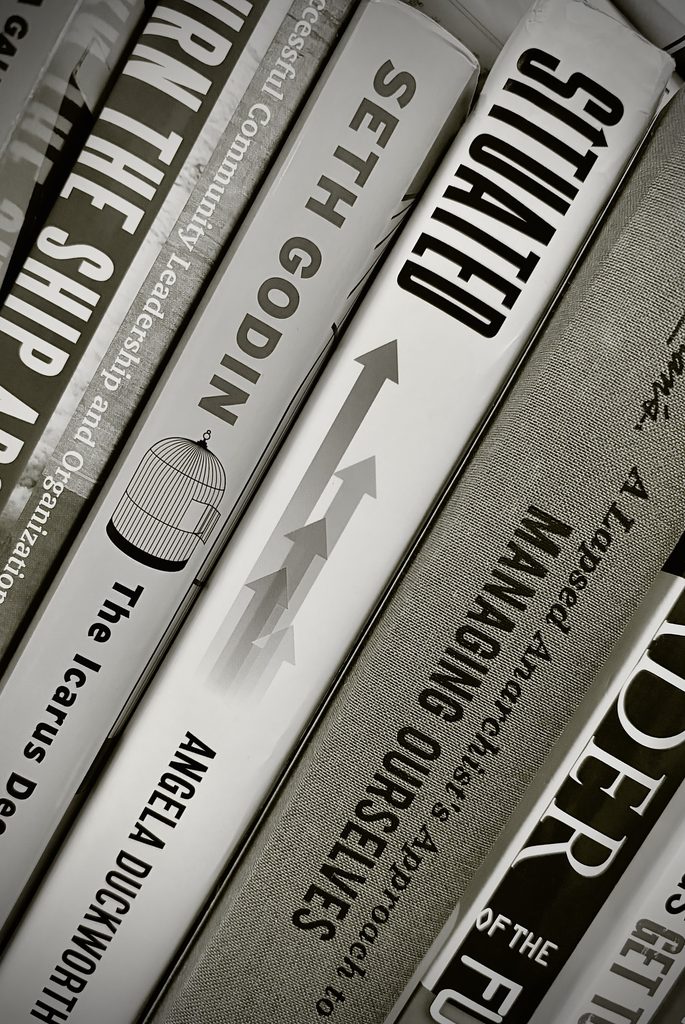
My friend Seth Godin, the marketing guru, author, and all-around insightful individual, has a terrific new book that was released earlier this week, entitled The Knot: Problems Can Be Solved. Describing its content, he writes,
Willpower and self-control are a mystery—we’re influenced far more by our situation, by the culture around us, and by everything that’s come before.
Willpower, self-control, and the willingness to work one’s butt off to get to a passionately pursued goal is what another friend of mine—psychologist, scientist, and author Angela Duckworth—came to call “grit.” Angela addressed the subject in her now internationally known TED Talk back in 2013, and then, again, in the national bestseller Grit, published three years later. The second part of Seth’s wise statement is the subject of Angela’s new book, Situated: Find the People and Places That Bring Out Your Best. As Angela explains, “What I’ve learned is that situations wield enormous influence—and yet, strangely, we’re largely oblivious to their power.”
When I wrote the essay “Twelve Natural Laws of Building a Great Business” back in 2010, it was based mostly on an intuitive sense of what worked, and what didn’t work, in the world. My business partner Paul had shared the idea in a broad sense, and his comments started me studying. Eventually, the list of the Natural Laws of Business came to life. And while I didn’t have a formally researched set of statistics to back up what seemed super clear to me, there was definitely data—I listened to numerous interviews, and I’ve spent years studying organizations, so the list was certainly not made up on a whim.
Now Angela Duckworth’s many years of scientific research seem to be backing up the Natural Laws. A kid from South Jersey who worked her way into becoming, as leadership guru Mel Robbins puts it, “a pioneering researcher, a bestselling author, and a total powerhouse in the field of human performance,” Angela has contributed enormously to 21st-century business thinking. Grit has had a major impact on the work world, with Angela introducing the concept of “grit” as a combination of passion and perseverance in pursuit of a closely held goal. As she says, everyone who’s achieving at a high level in any field is putting in a ton of work—and they all, the book makes clear, have grit. I agree. (If they like to eat, of course, they might also have grits—see below!)
In the context of the Natural Laws, I’ve long looked at the quality of grit as a blend of three:
- Natural Law #2: What we work at, sell, or serve needs to be compelling. Not just kind of good—compelling!
- Natural Law #7: People who get to greatness do all the little things everyone else knows they should do but doesn’t feel like doing.
- Natural Law #11: Anyone who gets to greatness has put in a lot more work and has stuck with that work over the long haul.
Add all three of those Natural Laws together, and, the way I see it, you’ve got grit.
Angela’s new book, Situated—which I have conveniently situated on the corner of the table at which I’m typing—is the follow-up to Grit. Highly recommended, like all of Angela’s work, Situated is a 320-page collection of data and personal anecdotes and experiences that together illustrate the validity of yet another Natural Law, #4: “People do their best work when they’re part of a great organization.”
I have known in my heart for a long time that this is true—and, for that matter, I’ve been living it for over 44 years! Angela Duckworth’s diligent science demonstrates it in a much more data-driven way. As she says, “I study successful people. They have one habit in common.” That habit? They get themselves into healthy, supportive situations.
Situated teaches us about what Angela calls “situational agency.” Her powerful message is that the more we put ourselves in situations where good things are likely to happen, the better our lives are likely to go. Again, I couldn’t agree more! Shortly after Situated came out, Angela posted:
My research shows that the situation shapes you—but you have the power to shape it first. How?
1. Set up your personal space.
2. Pick your peers.
3. Attract mentors.
4. Choose your culture.Getting situated means finding the people and places that bring out your best. … To realize your potential, you also need to get situated.
What Angela lays out here could be seen as what a 21st-century situationist—with a small “s”—needs to do to get to greatness. It’s why, in hindsight, I was right to follow my post-graduation intuition to steer clear of moving home to Chicago while I figured out what I was going to do next—and, instead, I stayed here, in the very different ecosystem of Ann Arbor.
Angela imagines all this in the form of a “three-box model,” a construct she co-created with Stanford psychologist James Gross, which looks something like this:
1. Situation. Since, as I write in The Power of Beliefs in Business, all our beliefs are learned (and not genetic), then the people we’re around will have a huge impact on which beliefs we develop.
2. Thoughts. Angela uses the term “thoughts” here, but within the ZCoB (Zingerman’s Community of Businesses), we would say “beliefs.” Every action we take is based on our beliefs, and no one can do great, “gritty” work unless they believe in what they’re doing.
3. Actions. This is where willpower kicks in and our grit gets going, fueled by the healthy situations we’ve put ourselves in and the positive beliefs we’ve formed as a result.
A few days ago, I found myself in a situation that fulfilled all four of Angela’s recommendations above. Actually, I didn’t just “find myself” in it; for all the good reasons she details in her new book, I consciously decided to become part of it. I was in Des Moines, Iowa, for the annual Niman Ranch Farmer Appreciation gathering this past weekend. The crowd of 300 or so probably consisted of about half hog farmers and a handful of beef ranchers, with the rest made up of folks like me, who’ve been buying Niman Ranch beef and pork for years (nearly a quarter century on the Roadhouse menu, in our case); advisors to the company; and Niman field staff, who coach farmers on best practices for sustainable farming. Saturday morning, I gave a keynote on “Key Elements of the Zingerman’s Experience,” one of which is our effort to live and work in harmony with the Natural Laws of Business.
After I spoke, I sat in the audience and spent the rest of the day listening and taking notes. And over the course of the six hours that followed, I heard a wealth of evidence to support the fact that the Natural Laws are as valid as ever. The evidence of Natural Law #4—once again, to wit, “People do their best work when they’re part of a great organization”—was particularly prominent at the Niman gathering. Speaker after speaker shared how much they valued being part of the Niman network, and how being connected to like-minded farmers—and integrated into a values-centered operation with strict quality-focused protocols that ensure proper space, fresh air, and feed for the hogs—makes such a big difference. The good news, too, is that the Niman network is growing—the good work done by one farmer draws in their neighbors as well. As Niman Ranch staffer Nick Tarpoff, who has led the recent work to develop the organization’s regenerative beef program, says.
Peer pressure is real. Neighbors see what a great farmer is doing, and after a while, they start asking what we’re doing because our land is doing better.
During dinner Saturday evening, one farmer talked about how being with Niman Ranch encouraged him to start “farming with the intent of helping others in mind.” It’s work, he said, that creates “a living system that regenerates itself.” Another farmer noted, “We started two years ago, and I wouldn’t want to be anywhere else. It’s letting me live my passion. It feels like home.”
By being in Des Moines for the Niman event, I realize now, I hit all four of Angela’s aforementioned, data-backed bullet points:
- I did my usual personal setup: Journaling in the morning. Going out of my way to find good coffee to get the day going well. Having time on my own later in the afternoon to exercise.
- I picked my peers—in this case, 300 or 400 folks deeply committed to practicing sustainable agriculture and producing high-quality pork.
- There were plenty of mentors in the group, most prominently Paul Willis, the fifth-generation Iowa hog farmer who had the idea to make all this happen 31 years ago. EatingWell magazine hailed Willis as a 2020 American Food Hero. As Timothy Snyder writes, “A tiny bit of courage, a tiny bit of truth, can change history.” And that’s exactly what Paul Willis was willing to do. He says,In the early days, people were a little skeptical, but somehow we have built Niman Ranch into the resilient and thriving brand it is today. It’s been a long haul, and the work was never easy but always rewarding. I’m so proud of Niman Ranch and thankful to our customers, partners, and friends who have been with me for this wild ride.
- Finally, I had chosen a choice culture, one that was caring, kind, generous, hardworking, and eager to learn and contribute back to the community—both their own community at home and the Niman Ranch community.
Thirty-one years ago, of course, none of this existed. Back then, the Niman Ranch pork program was just an idea that Paul Willis had. Hog farming was on the same industrial track as most of the rest of the American food system, and raising hogs in confinement was quickly becoming the new normal. Rather than stay stuck in the status quo, he took action to change the situation.
After graduating from the University of Iowa, Willis joined the Peace Corps in the late ’60s, and would have been serving overseas when Raoul Vaneigem’s book came out. After a couple of years, he returned home and began working on his fifth-generation family farm in Thornton, Iowa. As he explains, “We were typical Iowa farmers, planting corn, soybeans, oats, and other crops in the spring and harvesting in the fall. I decided to expand and bought five pigs and a sow.” Willis grew his farm population up to about 300 pigs. This was in the ’80s and early ’90s, when factory-raised pork, “the other white meat,” was taking over the business. As he tells it, “The conditions were terrible. The smell could make you faint. I did not want to raise animals that way.”
In 1994, he reached out to Bill Niman, a longtime friend, who was already raising more sustainable, flavorful beef out in California and distributing it to quality-focused restaurants. The rest, as one might say, is history. As Niman Ranch’s hog-farming program grew, it remained committed to these three principles:
- Environmental: Traditional family farmers use methods that have been passed down from generation to generation, allowing for the preservation of the land and care for the animals.
- Economic: Farmers are paid a premium price … providing the small farmer a viable livelihood that its small, rural community, although ideal for raising animals, cannot provide.
- Social: Keeping generations of family farmers on their land and in their local community so that those communities can thrive.
In the process, Paul Willis altered the situation for what are now about 600 small farms across the Midwest. All in all, Niman Ranch created an enticing, energizing, highly positive and productive ecosystem—an ecosystem that, slowly but surely, more and more caring people want to be a part of. To be clear, Niman has no patent on raising hogs sustainably, or handling them in more humane ways—one can do this work on one’s own, and there are certainly farmers who’ve opted to go in that direction. And yet, every year, more hog farmers join the Niman network.
Thanks to Niman’s work, hog farmers are now better situated, and they’re living out the benefits of Natural Law #4. Which brings us back to our original point: the better the circumstances of our situation and the healthier our ecosystem, the better we’re going to do. Niman Ranch pretty clearly offers just that kind of scenario for the folks who join its network. As Angela Duckworth writes,
It is the number and quality of our intimate peers, rather than our distant acquaintances, that so powerfully influence our long-term health and happiness. In addition to providing companionship, our closest peers define what feels normal. Their habits, standards, and outlook become the water we swim in, shaping our own behavior without us even noticing.
This is, I believe, what Paul Willis has helped to make happen.
It’s also, I hope, what happens for folks who come to work here in the ZCoB: they enter a better situation, and can benefit from the opportunities for learning and growth available within our always imperfect but generally more positive ecosystem. This is certainly the experience that Roadhouse manager Kendall Monaghan shared in the piece I wrote late last month.
So what sorts of situations impact us? The simple answer is, all of them!
- Whom we spend time with, both at work and outside of it
- What we read, listen to, and look at
- How easy we make it for ourselves to do the things we want to do, and how hard we make it to do what we don’t want to be doing
Helping people do their best work when they’re part of a great organization—i.e., getting them meaningfully “situated”—is, literally, what I do for a living. I’m very conscious of how I spend my time, and, collectively, we have spent four and a half decades creating an ecosystem that brings out the best in (most of) us. Nearly all our days pass in positive, healthy situations—here in the ZCoB, with partners like the Niman Ranch network, et cetera. In this sense, our work has made us—in terms that anyone who reads Angela Duckworth and Seth Godin (both of whom, coincidentally, were speakers at last week’s Oslo Business Forum) would understand—small-“s” situationists.
How, then, do I make sure my time is going toward what matters most? See Secret #37 on time management for a lot more on the subject. Two strategies I’ll share here:
1) I look at every minute I spend as an investment—not in money, but in making my life ever more what I want it to be. Which makes me all the more conscious of the settings I’m in.
2) I long ago realized that I could, for down-to-earth, practical purposes, break my time out into three broad categories:
- Interactions that increase my energy
- Those that are good distractions, but from which no real energy is created
- Those that drag my energy down
I can say with confidence that nearly all my energy—though never 100 percent, of course—is expended in the first category. I’ve spent years trimming and shaping my situations so that nearly no time at all is wasted on those that are energy-neutral or, worse, negative. As a result, all day long, my energy is being increased, in essence, by the situations in which I am working, living, and loving. Reading about Raoul Vaneigem? Increases energy. Reading Seth Godin and Angela Duckworth’s great new books? Absolutely energy-boosting! Spending a weekend working with the Niman Ranch community? Totally energizing as well! So while I may well be physically tired (I often am), the reality is that my energy is almost always on the rise!
We must remember, too, that Natural Law #4 also works in reverse: people are at their worst when they’re part of an unhealthy organization. Autocracy annihilates spirit. Rita Flores (whose real name is Margarita Konovalova), a former member of the group Pussy Riot who was forced to collaborate with the Russian FSB (secret police) until she covertly fled the country last month, shares that, on a surface level,
Moscow is booming; restaurants, bars, and clubs are opening, and there are a huge number of events. But those people who understand things have empty eyes and speak empty words. People who have stayed in Russia have accepted the rules of a game. You go to a gallery, and every artwork may as well come with a sign saying ‘we were forbidden from saying anything.’ … There are artists who used to make strong statements, and in 2026, they are drawing flowers in a vase.
On a brighter front, I’m happy to have Natural Law #4 validated in such fine form by a scientist of Angela Duckworth’s caliber. Like Niman Ranch’s diligent work to raise hogs in harmony with nature, it’s another bit of encouragement for us to work in harmony with human nature as well. And it has something positive in common with the approach of the mid-20th-century Situationists, of whom the website Libcom.org says,
They saw in moments of true community the possibility of a future, joyful, and un-alienated society.
With inspiration from people like Angela Duckworth, Seth Godin, Paul Willis, and others of their creative, caring ilk, it’s clear to me that we can all become something akin to effective “situationists,” and turn those moments of true community into a daily revolutionary reality. The revolution will not have to be as raucous as the May 1968 demonstrations on which Raoul Vaniegem’s writings were so influential, but I hope it will be longer-lasting! So let’s get situated, get started, and make a quiet revolution in our everyday lives.