Tag: COFFEE
Paying homage to one of Ann Arbor’s great leaders
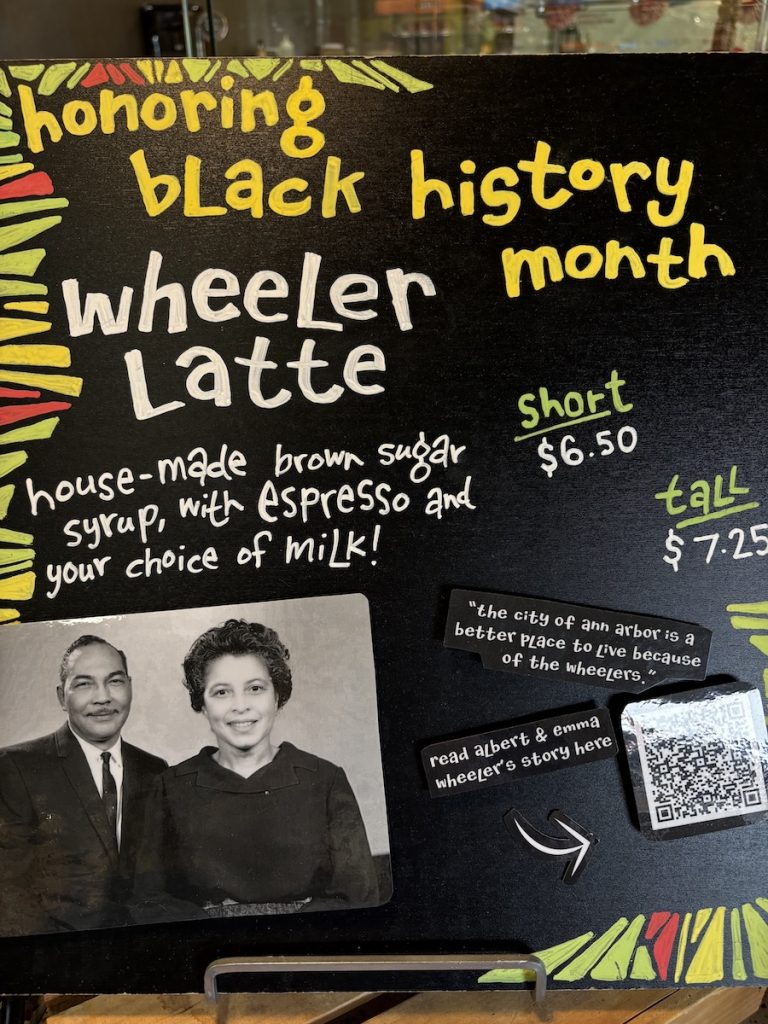
A super-tasty coffee drink. An important part of Ann Arbor history. The practical application of a promise beyond ableness. An homage to Ann Arbor’s first Black mayor. A way to support a good cause in the process! It all comes together in the Coffee Company’s Wheeler Latte.
On Monday, April 7, 1975, Albert Wheeler was elected mayor of Ann Arbor. Wheeler’s election was historic. He was the city’s first—and so far, only—Black mayor.
Many non-Black residents of the city may not realize that, in the years leading up to Wheeler’s election, Ann Arbor remained segregated through a series of largely unspoken social norms that are still not talked about much today. As an Ann Arbor News reporter later wrote:
Far away from the segregated lunch counters and water fountains of the Deep South, Ann Arbor was wrestling with its own brand of racism in the 1940s and 1950s. Blacks moving to town were only shown houses in the North Fourth Avenue area, a grimy neighborhood heavy with the odor of slaughterhouses and coal-fired plants. Jobs for African Americans at the University of Michigan usually got no better than cleaning floors or operating elevators.
Mayor Wheeler was born in St. Louis in 1915. He studied biology at Lincoln University, an HBCU (historically Black colleges and universities) in Pennsylvania, and then came to Ann Arbor in the late 1930s to study at the University of Michigan’s School of Public Health. When he moved to Ann Arbor, the Great Depression was winding down and the geopolitical tension in Europe that was about to turn into World War II was increasing. In 1945, when Wheeler and his wife, Emma, attempted to buy a house, the banker urged them to consider only Black neighborhoods. Nevertheless, the couple persevered in pursuing the home they hoped to live in. In 1952, Dr. Wheeler became the first Black professor at the university to gain tenure and went on to have a remarkable career as an educator and researcher.
The Wheelers, motivated in part by the poor treatment they received as they tried to purchase property, would go on to be instrumental in founding Ann Arbor’s chapter of the NAACP. Al first ran for mayor, unsuccessfully, in 1970. He then ran again in 1975 and won. As mayor, Wheeler worked to change beliefs about what a city government is supposed to do. Many have credited him with instilling the idea that city government should be involved in human services. He assisted disadvantaged citizens and advocated for significantly increased services for all residents. Wheeler’s path was not an easy one. To connect this idea to the essay above, I’ll mention that a PBA drove his work. He was determined to make a positive difference for people of color both at the university and throughout town.
Even in our fairly “liberal” city, Wheeler faced verbal and physical threats. He pushed forward anyway, especially in improving public housing. The Ann Arbor News noted that “a pattern of scattered public housing on small sites throughout Ann Arbor is another Wheeler legacy” and that Wheeler “worked to avoid the large, isolated housing projects that other cities built with public funds.”
Wheeler explained his deep dedication to working for civil rights in the city in terms of dignity: “I thought I was working for what I was entitled to as a human being.” His daughter Mary McDade, an appellate court judge in my home state of Illinois, told Michigan Public Radio about how her father consistently led with positive beliefs: “He recognized that as women and as Black people, it was going to be an uphill struggle to do anything in this life.” And yet, McDade says, “he was constantly reminding us that if you used your brains, if you applied yourself, there was nothing that you couldn’t do.”
In 1987, five years after we opened the Deli, Summit Park, located a few blocks to the north of us, became Wheeler Park. The plaque at the park says it well: “The city of Ann Arbor is a better place to live because of the Wheelers.” Albert Wheeler passed away in 1994, at the age of 78.
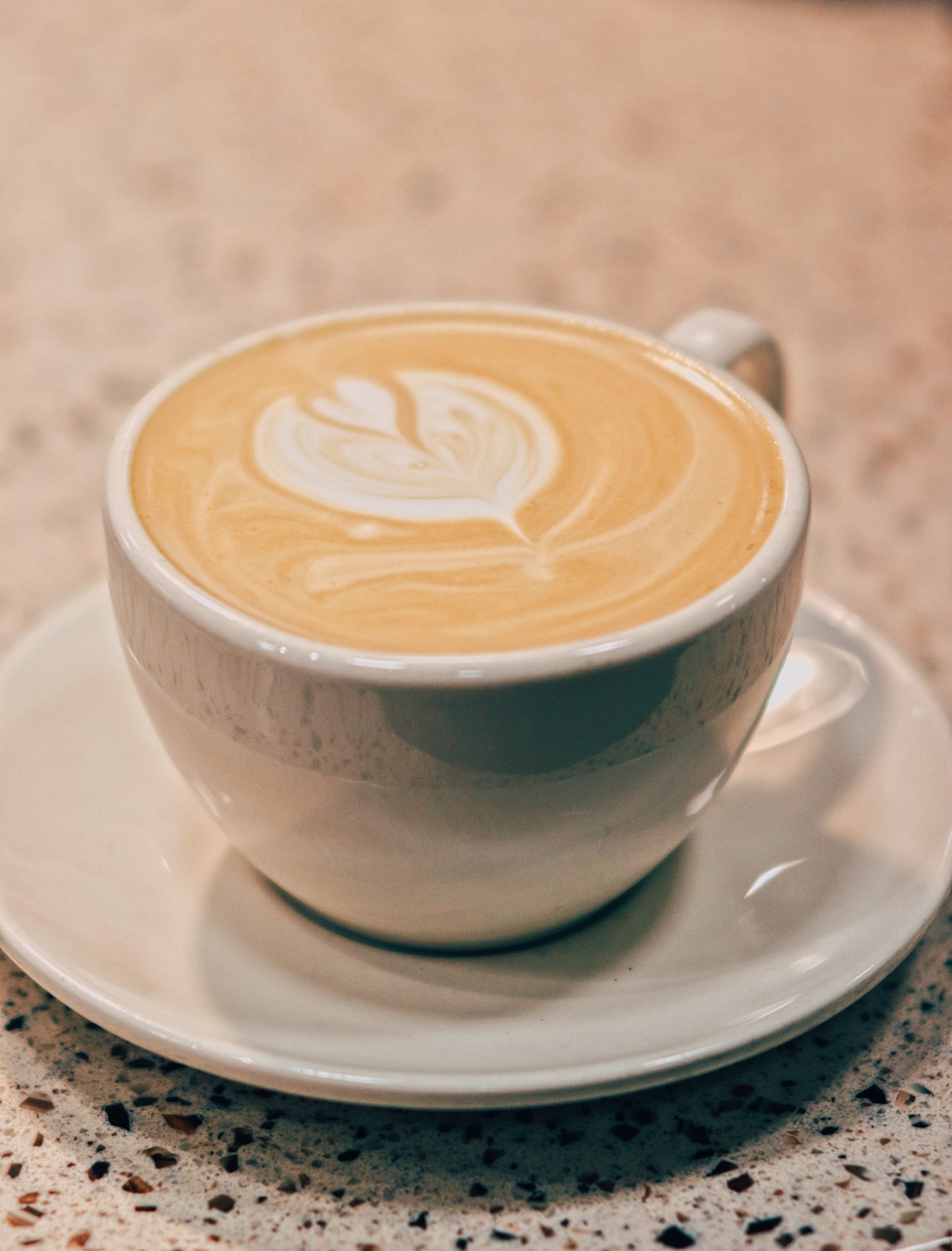
To mark the 51st anniversary of Al Wheeler becoming mayor, the Coffee Company created the Wheeler Latte. It’s a super-tasty coming-together of the Coffee Company’s Espresso Blend #1, a house-made Demerara brown sugar syrup, and steamed milk from Calder Dairy in Carleton, Michigan.
As we see it, the Wheeler Latte is a tribute to Mayor Wheeler’s wonderful work in the 20th century and a recognition of what we can all do to build on his caring community contributions. Order one up this week and toast the mayor’s memory. It’s a great way to salute the social improvements that he worked so hard to make happen—and that all of us remain responsible for today! To sweeten the deal, the Coffee Company is donating $1 from every Wheeler Latte to the local chapter of the NAACP.
Have one ready and waiting

Tree Town Blend: a fantastically flavorful cup of coffee that does the town proud
Looking for a good coffee to perk up your mornings this month? Something to welcome fall and sip while you watch some football? The Coffee Company crew has crafted a blend that’s caught my attention. The 2025 “vintage” of our annual, autumn-only Tree Town Blend is especially remarkable. This year, they’ve added some exquisite African coffees, bringing even more depth and complexity to an already outstanding blend.
“Tree Town,” as many of you know, is the long-standing nickname for Ann Arbor. Founded in 1824, it was named for the wives of the village’s founders, both named Ann, and the stands of burr oak trees in the area. The “Tree Town” moniker derived from the high volume of trees in the city. Until the arrival of Europeans, most of this part of the world—originally home to the Ojibwe people—would have been fully forested.
Like the town for which it’s named, the Tree Town Blend is a medium roast that’s marvelously well-rounded with great personality. This year’s blend includes beans from our friends at the amazing Daterra Estate in Brazil, along with coffee from Kenya, Rwanda, Burundi, and Guatemala. The Coffee Company crew says,
It tastes of caramel, stone fruit, cocoa. Complex and juicy. Clean, crisp and balanced in filter methods. We love both the V60 Pour Over and Chemex. A press pot yields a bright and juicy cup.
The 2025 Tree Town, to my taste, has a nice roundness that makes it really accessible to most any coffee drinker, but also a lot of complexity that makes it appealing to connoisseurs. Brewed as espresso, the Tree Town is especially toasty! A pour over is fruity! In every form, it has a great chocolatey finish. It makes you want to come back for more—like a visit to Tree Town! The Tree Town Blend is available brewed at the Coffee Company on Plaza Drive, as well as at the Roadhouse and Roadshow, and in bean form at all three locations plus the Deli. You won’t see the Tree Town Blend on the Zingermans.com Mail Order site, but if you email us at [email protected], we’ll be happy to send this taste of the town your way!
Try the Tree Town

Twenty years of brewing up beautiful cups of coffee
If you’ve never tried one of the “alternative brew methods” on the Big Brew Board at the Coffee Company, let me invite you here to try one. Each really does yield its own flavor characteristics, and if you have a couple extra minutes to wait while the crew custom grinds and brews your beans to order, I think you’re in for a treat! You really can taste the difference.
Lately, I’ve been particularly enamored of what’s known as AeroPress brewing. Historian Timothy Snyder notes that “anniversaries take hold of the imagination, especially the round ones.” This is a “round anniversary” in every sense of the word—it’s about a round brewing tool, the coffee from which will be served in round cups. And this year marks the 20th anniversary of Alan Adler’s AeroPress. To this day, the AeroPress remains one of the best methods of brewing coffee yet to be developed.
By the time Alan Adler was 13, he had invented a new electronic measuring technology. He loved sailboats and aerodynamics, and, among others of his dozens of inventions, he created what’s known as the Skyro, a long-distance flying ring. Back in the early 2000s, Adler found himself repeatedly frustrated by how bad his experiences with home coffee makers were. A couple years and over 30 prototypes later, Adler released his work into the world when the AeroPress debuted at a show in Seattle in the fall of 2005. Adler figured out how to use air pressure to shorten the amount of time needed to brew and, in the process, cut down on bitterness and increase the flavor.
Shortly after its introduction, AeroPress began winning raves and continues to have a big following two decades down the road. Last year, the World AeroPress Championship celebrated its 15th anniversary with over 5,000 people coming to compete in nearly 200 events! Matthew Bodary, long-time manager at the Coffee Company shares,
I remember in the early days here at our cafe, around 2011, we served the AeroPress and were one of the first places in town you would see them around. People would sometimes meet it with apprehension. At first glance, it can look a little gimmicky. “The frisbee guy created a giant plastic-ish syringe thing that brews coffee?”… But the results spoke for themselves. It makes really tasty coffee consistently with minimal brewing fuss or cleaning. It’s also more or less indestructible. For that reason, it has developed a strong following among travelers, backpackers, campers, and people who just want to move on from breaking another glass French press.
Maybe more than any other single-cup brewer I know of, the AeroPress rewards experimentation in recipe development. Dose, grind size, stirring and turbulence, brew time. With the AeroPress especially, you can get great results from a wide range of starting points. You also have that added element of applying gentle pressure. Some examples here. We do the “inverted” method in the shop to extend the full immersion brew time a bit.
If you want to treat yourself to a terrific cup of coffee to kick off the New Year, swing by the Coffee Company in the next couple days and order some of your favorite beans brewed using the AeroPress method. I had a cup of AeroPress Roadhouse Joe the other day and it was so good.
Have your brew waiting for you
P.S. If you want to start doing AeroPress brewing at home, we sell the brewers at the Coffee Company and the Deli!

Nearly 500 years of tradition makes for a great tasting coffee
If you come to the Coffee Company regularly, you might well have seen a strange sort of contraption sitting off to the right of the pastry case. If you don’t know it, it seems a bit like something one might expect to find ensconced in some sort of super secret sci-fi lab. It’s a kind of crazy-looking contraption, an array of glass beakers and pipes all set into a wooden frame that’s about four and a half feet high. In fact, it’s what we use to make our Kyoto Cold Brew.
Kyoto Cold Brew is a method that dates to the early years of coffee making outside of its Ethiopian homeland. While the name would understandably lead to the conclusion that it was created in Japan, it was likely developed by 17th-century Dutch sailors! They needed a way to prepare coffee on months-long voyages. As the most common creation story goes, someone figured out that pouring cold water slowly over ground coffee beans would do the trick.
The Kyoto brewer comes with three sections: a bigger water chamber up at the top, a tube that holds coffee grounds and a filter in the middle, and last but not least, the carafe at the base where the finished coffee is collected. The brew is indeed made using cold water that’s allowed to fall, one drip at a time, over ground coffee. The low temperature and super slow extraction mean that there’s almost no oxidation of the coffee during the brewing, making for a super smooth cup that enhances a coffee’s natural fruit, takes out a lot of the bean’s bitterness, and leaves in lots of lovely caramelly notes. I drink it straight as it is, but you can add milks, syrups, and sweeteners as you do to any coffee!
Place an order for pick-up at the Coffee Company.
P.S. The Coffee Company’s decaf done in the Kyoto Cold Brew is remarkably tasty, too!
To keep up with the buzz on all of the latest happenings in the Zingerman’s Community, follow us on social media: @zingermanscommunity on Instagram and Facebook, and @zingermans on X (formerly Twitter).
The Coffee Blend Creating a Buzz Around the Zingerman’s Community
Roadhouse Joe Coffee is the house brew at Zingerman’s Roadhouse, specially created by Zingerman’s Coffee Company for the Roadhouse’s 2003 opening. (Are you new to Zingerman’s? The Roadhouse is our full-service restaurant and bar on Ann Arbor’s west side, known for its mac and cheese, barbecue, and more.) As Zingerman’s co-founder Ari Weinzweig tells it:
Back then, we were already working to get going on what was soon to be opened as Zingerman’s Roadhouse. Our intention, as per the vintage neon sign (done by Mark Chalou, “Mr. Neon,” with old neon tubes he found in a warehouse in Detroit), was to serve “Really good American food.” To go with it, we knew we would also need a really good American cup of coffee, a cup that consistently would please nearly every (no one gets ’em all) palate. The result was—and still is, decades down the road—Roadhouse Joe.
Roadhouse Joe is beloved in its original form, of course, but its popularity has continued to grow throughout the Zingerman’s Community of Businesses (ZCoB), too, as over the years, Roadhouse Joe has evolved to be a key ingredient in other Zingerman’s-made products. Here are all of the ways you can enjoy it, from the original coffee blend that started it all to an improvement made from a buzz-worthy switch and more.
1. Roadhouse Joe Coffee
Comprised of not just one type of bean, but an ever-evolving combination, Roadhouse Joe has remained one of the Coffee Company’s most popular blends since its debut. “The point of a blend—as opposed to the many single origins we do,” Ari explains, “is that we can adjust it a bit regularly to keep the flavor profile consistent.” Currently, the Roadhouse’s signature coffee (psst: weekly breakfast Blue Plate Specials include a free cup!) is a crowd-pleasing blend of Papua New Guinea, Costa Rican, Indian, and Brazilian Peaberry beans. Designed to complement food from breakfast through dessert, the Coffee Company describes this blend as emphasizing body and balance over sharpness and acidity. Steve Mangigian, long-time managing partner and head roaster at the Coffee Company says,
I believe today’s Roadhouse Joe is one of the best blends on the market. It’s smooth, rich, full-bodied, clean, and craft-roasted to highlight the nuances of each of the coffees in the blend. India for a little pepper and spice, Brazil for its nuttiness, Costa Rica for the body and richness, and Papua New Guinea for adding a solid base of cocoa; all designed to complement each other when it strikes the palate!
Enjoy a cup at the Roadhouse or visit the Coffee Company to taste the difference in brewing methods. At the Coffee Company, you’ll notice their Big Brew Board, a board that outlines the different flavor profiles each type of coffee can have depending on its preparation. Of the Roadhouse Joe, the Coffee Company crew says, “Amazing in a Chemex, which highlights the sweetness and complexity. The Aeropress gives it a wonderful thicker body with a nice dried fruit finish. In the press pot, we noted flavors of rye, wood, and spice.” To brew up a batch at home, pick up some beans at the Coffee Company or Deli, or ship a bag to your favorite coffee connoisseur.
2. Rhode Island Coffee Milk
Coffee milk is a cold drink made with coffee syrup and milk. The Roadhouse’s version starts by slowly cooking Roadhouse Joe coffee and sugar until it reduces to a rich, thick syrup, and then the housemade syrup is mixed with milk and cream from Calder Dairy. As the name suggests, coffee milk is the official beverage of Rhode Island, but it has a pretty solid local following, too, at least among Roadhouse regulars. And, interestingly enough, it actually has a local connection, too. Janice Longone was an esteemed food historian who most of her life in Ann Arbor. She hosted a radio show, “Adventure in Gastronomy,” on Michigan Radio, founded the Culinary Historians of Ann Arbor, and donated her extensive culinary archive to the University of Michigan, which became the Janice Bluestein Longone Culinary Archive. And, as she mentioned one day in passing to Ari, her uncle invented coffee milk. As Ari explains:
Jan’s Uncle Meyer was a Russian-Jewish immigrant who loved to tinker with things. And, according to legend, he took the Rhode Island love for strong, sweet coffee—likely based in the heavy concentration of both Italians and Portuguese people living there—and turned it into a cold drink.
Head to the Roadhouse to try Ann Arbor’s take on an East Coast classic. When the weather’s nice, we recommend sipping yours outside in Roadhouse Park.
3. Red Rage Barbecue Sauce
Red Rage also made its debut when Zingerman’s Roadhouse opened, but the recipe had been in development for years—decades, actually! This barbecue sauce was created by Chef Alex Young, a James Beard Award-winning chef, and former Roadhouse managing partner and chef, when he was just 13 years old! As the story goes, like a typical teenager, Alex invited friends over one day when his parents were out of town. In perhaps a not-so-typical teenage move though, it was a hundred people that were invited over… for a barbecue! He made the first version of the Red Rage we know and love today (and presumably ticked off his folks in the process!). Its name is likely due to the fact that it’s a tomato-based sauce with a kick, but we like the idea that it could have originated from a rager that had Young’s parents seeing red!
The recipe has been tweaked slightly over the years, mainly to swap in higher-quality ingredients, as we love to do here at Zingerman’s. Its fantastic full flavor comes from spices (like Turkish Urfa pepper, Tellicherry black pepper, chipotle peppers, and Mexican piquin peppers) that are balanced out with some sweetness (Muscovado brown sugar, molasses, and honey) and acidity (ketchup and apple cider vinegar), plus some pilsner and Roadhouse Joe coffee, of course. Don’t let the name (or those chile peppers) leave you concerned that indulging in a little BBQ will leave your mouth on fire. As Mo Frechette, Zingerman’s Mail Order managing partner says, “There is heat, but it’s a creeping, seeking heat that never gets in the way of the food.”
Head to the Roadhouse to enjoy Red Rage on a rack of ribs. Ship a bottle to a fellow BBQ lover from Mail Order, or order a few for yourself and pick up your order from their Warehouse Shop. Or mix up a batch for yourself at home. Use it on your favorite barbecued meats of course, but also try it slathered on a burger, drizzled into a burrito, swirled into mac and cheese, or as a more flavorful stand-in for ketchup with fries.
4. Spicy Coffee Rub
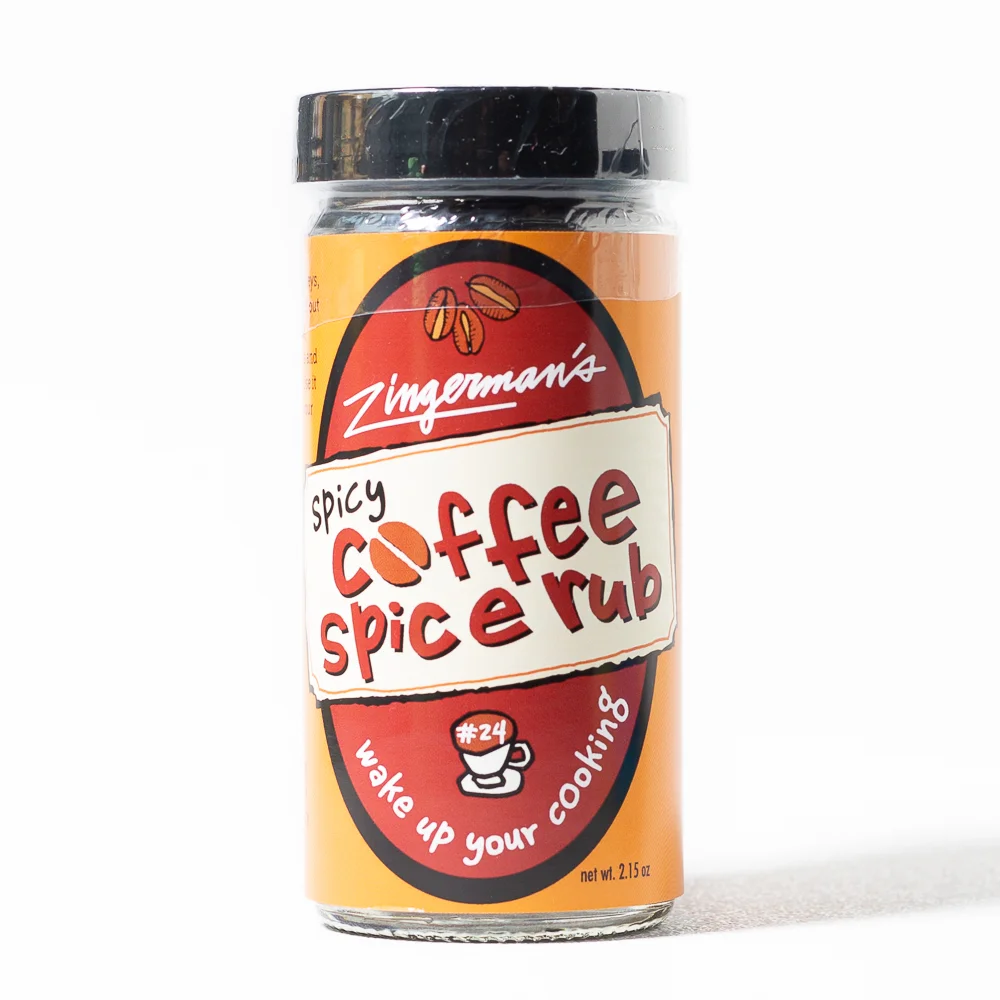
This intensely flavorful blend is packed with Urfa pepper, Tellicherry black pepper, cloves, sea salt, and yes, Roadhouse Joe coffee. Just like Red Rage, the Spicy Coffee Rub was created by Alex Young a few years after the Roadhouse opened. Young developed it with turkey in mind, so it was initially used on roast turkeys and a turkey sandwich dubbed the Dexter Reuben. Francine Maroukian lauded the blend in Esquire magazine as a way to make your Thanksgiving turkey memorable, saying, “One little jar will leave your turkey succulent and beautifully browned. Believe us, your guests will appreciate the gesture.” (Should you prefer to let someone else handle the bird, coffee spice-rubbed turkey reappears on the Roadhouse’s Thanksgiving To-Go menu—and, fair warning—then quickly sells out). The spice blend’s versatility was quickly uncovered though, so over the years it’s been featured in all sorts of Roadhouse specials including chicken, pork, and wild boar.
If you’re ready to wake up your cooking, grab a jar of Spicy Coffee Rub at the Deli or have Zingerman’s Mail Order ship you one. Follow Ari’s lead and try it on catfish, potatoes, or roast chicken (find his recipe for Roast Chicken with Bacon and Spicy Coffee Spice Rub on page 200 of Zingerman’s Guide to Better Bacon).
5. Coffee Gelato (aka Roadhouse Joe-lato)
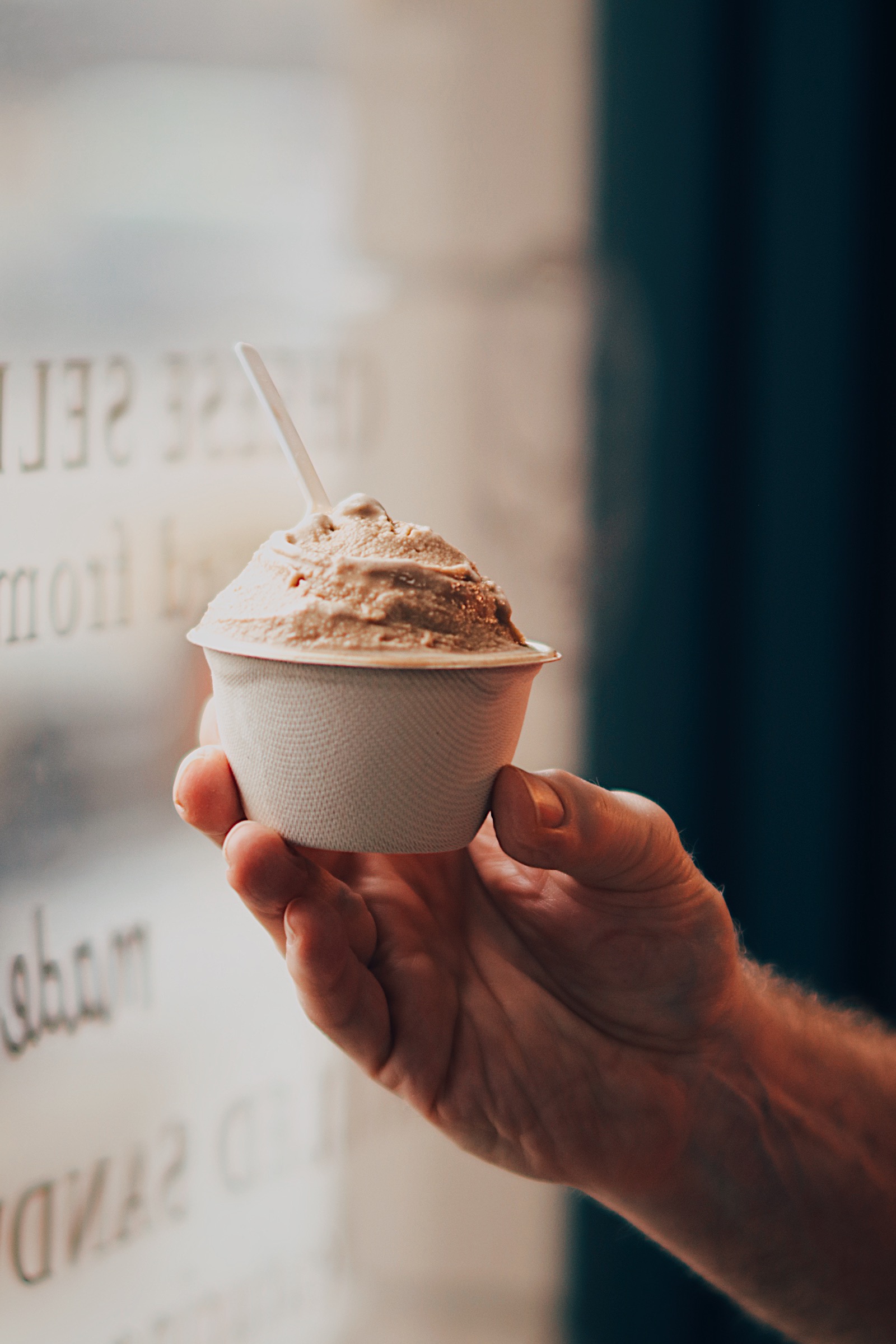
It doesn’t take much to imagine Roadhouse Joe’s smooth flavor churned into a creamy batch of gelato, especially if you typically take your coffee with a splash of cream or milk. Luckily for all of us, there’s no imagination necessary, since that’s what the Creamery is doing! In 2023, they updated their coffee gelato to feature Roadhouse Joe—quickly earning itself the nickname of Roadhouse Joe-lato. Using this best-selling brew along with milk and cream from Calder Dairy—one of the last farmstead dairies in Michigan—and demerara sugar created a gelato with a jolt of big, well-balanced coffee flavor. Gelato & Retail Manager Lexi Stand declares, “It tastes so good!”
Pretty sure we don’t need to tell you how to savor a scoop of gelato, but just in case… try one straight up, paired with another Creamery gelato like Vanilla or Chocolate Hazelnut, or doused in espresso for an affogato with serious pick-me-up power. Pick up a pint at the Cream Top Shop or the Deli, or enjoy a scoop for dessert at the Roadhouse. Flavors in the Creamery’s case vary, but when you spot the Coffee Gelato you can enjoy a scoop or two on the spot. Or, enjoy it in one of the many other ways they finesse their frozen treats, like in a shake, malt, float, or frozen cooler—in which the flavor of your choice is blended with any soda flavor.
6. Mothfire RoHo Joe Stout
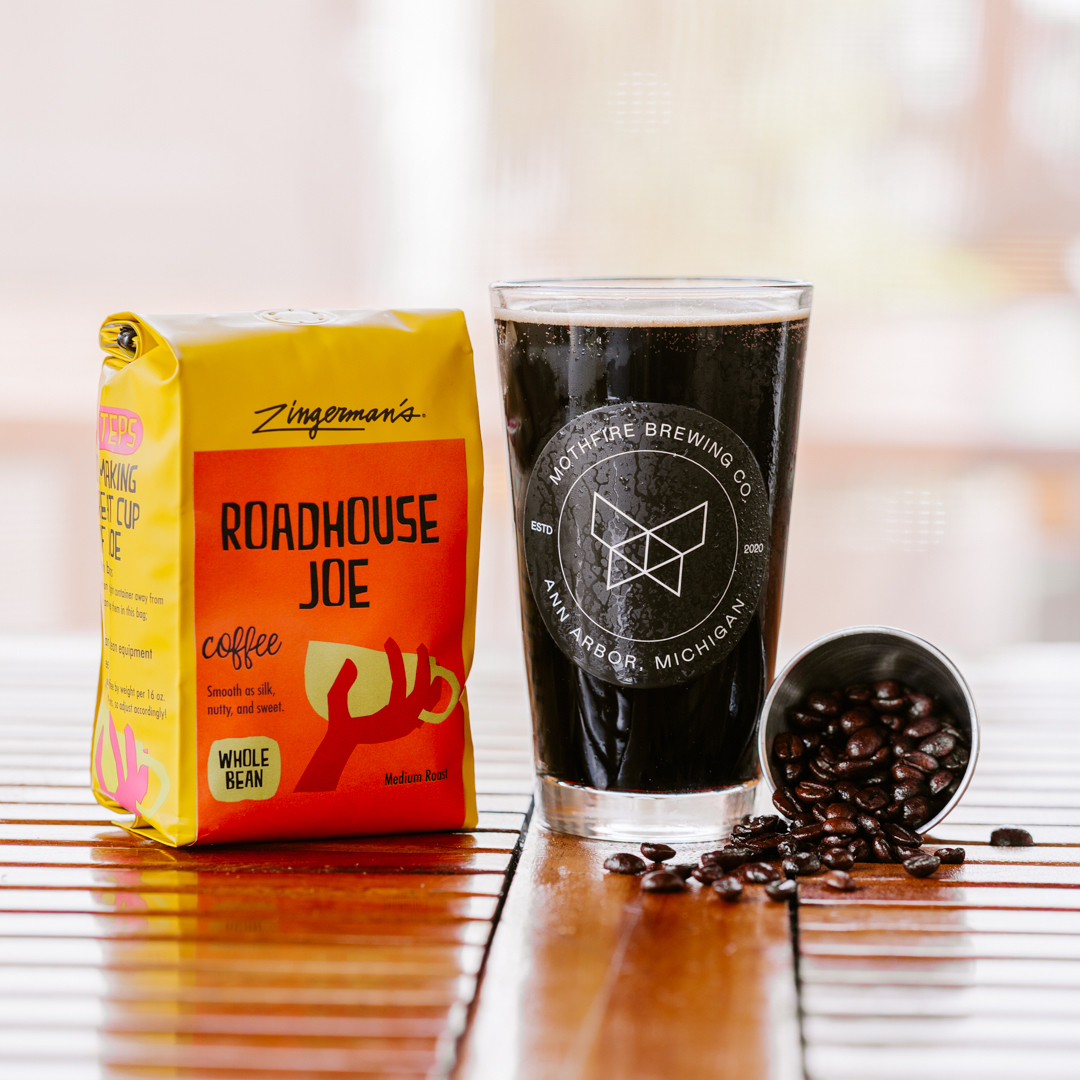
Not only has Roadhouse Joe conquered flavor sensations from savory spices to sweet treats, but it’s also proved that it can move from coffee mug to pint glass (or tulip glass as the case may be, but you get what we were going for, right?). Mothfire Brewing Company has been making a rich, roasty stout with Roadhouse Joe since 2021. This flavorful collaboration began at the picnic tables in Roadhouse Park, when Mothfire head brewer Alexis Jorgensen started envisioning what the recipe might look like. As Ari describes:
The beer really is something special. When you sip the stout, the coffee comes through without dominating the whole drink; it hints clearly of coffee, and yet it’s something else altogether. The RoHo Joe Stout has a good hint of vanilla, a touch of sweetness, and all the grain-forward fullness you’d expect in a good stout!
The sweetness is due to the brew, of course, but perhaps also to the bond of Ann Arbor townie businesses who share a passion for great ingredients and community. As Noah Kaplan, one of Mothfire’s founders, elaborates:
We believe that craft breweries are an essential part of a community’s culture. A place to create beers and atmospheres that are truly unique to the region, and a place to bring people together. We focus on collaboration, creativity, and quality craftsmanship. We also focus on using local ingredients and building on local culture.
We definitely don’t need to tell you how to drink a beer. (Other than to enjoy this sensational sipper responsibly, but you already know that.) Try the RoHo Joe Stout on draft or pick up a 4-pack at the Roadhouse. Cans are also available at Mothfire Brewing Company, select Plum Market locations, and (soon) other Zingerman’s locations.
Who knows where Roadhouse Joe might moonlight next!
To keep up with the buzz on all of the latest happenings in the Zingerman’s Community, follow us on social media: @zingermanscommunity on Instagram and Facebook, and @zingermans on X (formerly Twitter).
|
|